
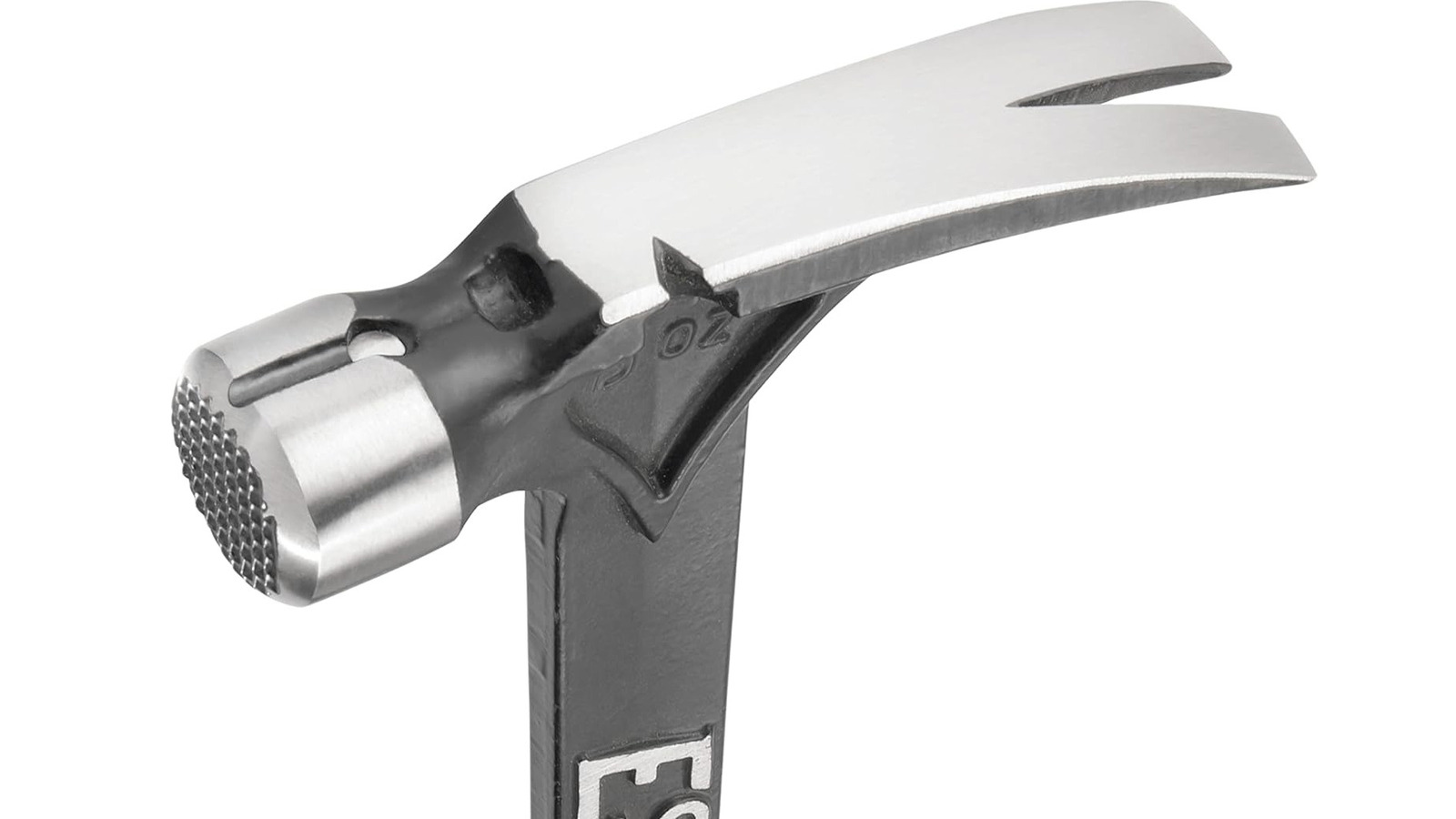
A waffle head hammer is a framing hammer with a raised, grid-like pattern on its striking face. Its main purpose is to help the hammer grip a nail head during framing and rough construction work, which can reduce glancing blows and missed strikes.
In the United States, carpenters commonly use waffle face hammers for framing houses, decks, sheds, and other wood structures. The trade-off is clear: the textured face can improve control, but it leaves a visible waffle-shaped mark in the wood. For finish carpentry, a smooth-face hammer is usually the better choice.

What Is a Waffle Head Hammer?
A waffle head hammer has a face covered with small raised ridges or squares. Tool makers also call this a milled face, checkered face, or textured face.
The pattern gives the striking face more edges than a flat hammer face. When the face contacts a nail head, those ridges can help keep the hammer from sliding off, especially when the nail is driven at an angle or when the user is working quickly.
A typical waffle head framing hammer includes:
- A heavy steel head
- A textured striking face
- A claw for pulling nails
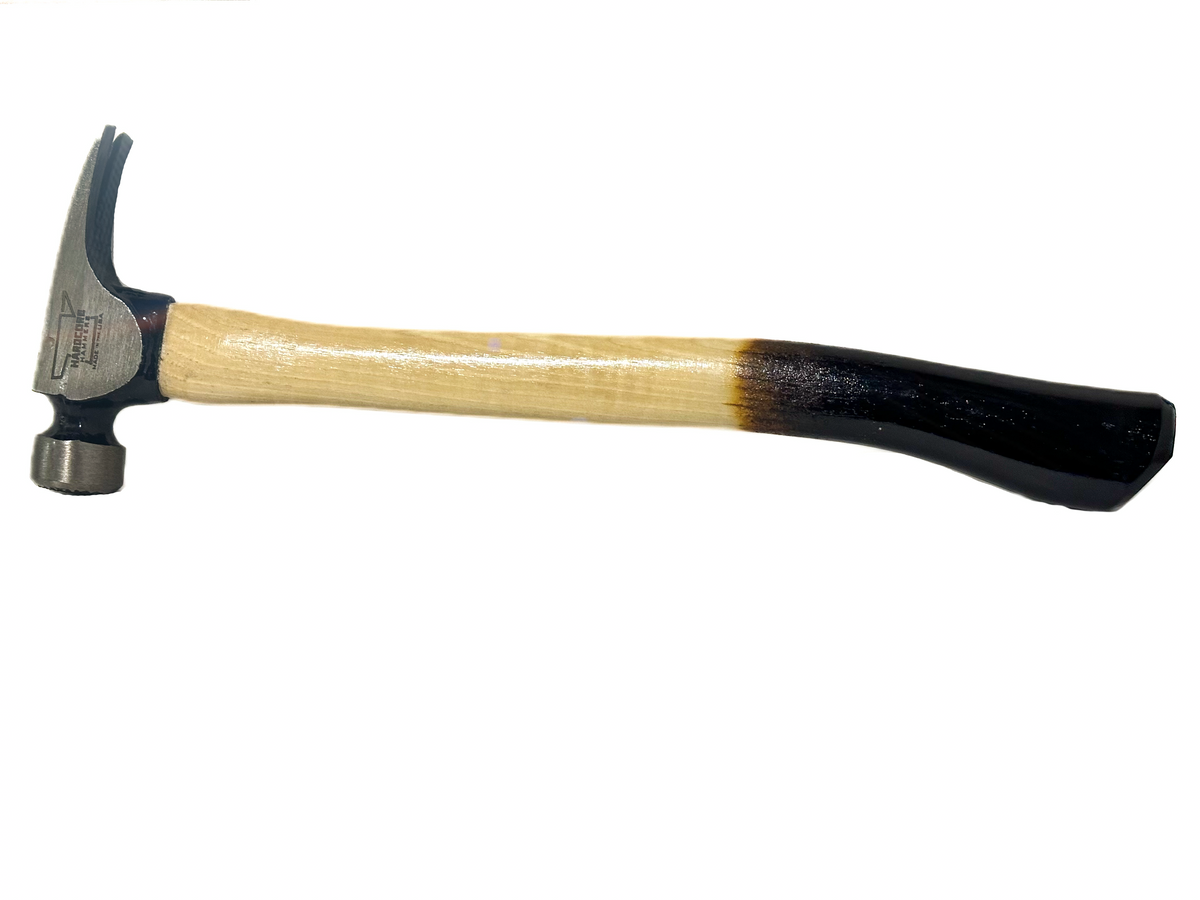
- A handle made from wood, fiberglass, or steel
- A face size and head weight suited to framing work
The waffle pattern is usually found on framing hammers, not on small finish hammers or general household hammers.
Waffle face versus smooth face
The difference is simple:
| Feature | Waffle face | Smooth face |
|---|---|---|
| Nail control | Helps reduce sliding on the nail head | Requires more precise contact |
| Wood surface | Leaves a noticeable pattern if it hits the wood | Leaves a smaller, less distinct mark |
| Common use | Framing and rough construction | Trim, finish carpentry, and general work |
| Main advantage | Grip and fast nail driving | Cleaner appearance |
| Main drawback | Can damage visible wood | May glance more easily if poorly aimed |
A waffle face does not make the hammer hit harder. The hammer’s weight, swing speed, balance, and the user’s technique determine most of the driving force.
What Is the Main Purpose of a Waffle Head Hammer?
The main purpose of a waffle head hammer is to improve contact between the hammer face and the nail head during rough framing.
The raised pattern can help the face catch the nail head instead of sliding across it. This is useful when:
- Driving large framing nails
- Working above shoulder height
- Setting nails at awkward angles
- Driving many nails in a short time
- Working on rough lumber where small marks are not a concern
- Framing walls, roofs, floors, decks, or sheds
A waffle face may also help a new user keep the hammer centered on the nail. It does not replace good technique, but it can provide a small margin for error.
Why the pattern can reduce glancing blows
A smooth hammer face is flat. If it strikes the edge of a nail head, it may slide off and hit the wood beside the nail. The textured face has raised sections that can catch the nail head more effectively.
This effect has limits. A waffle head cannot correct:
- A badly angled swing
- A bent nail
- A nail that is too small for the hammer
- A loose or damaged hammer head
- Poor control caused by fatigue
- Striking with the edge of the hammer face
The hammer still needs to meet the nail squarely. Think of the waffle pattern as added traction, not a substitute for accuracy.

When Should You Use a Waffle Face Hammer?
Use a waffle face hammer when speed and nail control matter more than the appearance of the wood.
Good uses
A waffle head hammer is well suited to:
House framing
Framing crews often drive many nails into structural lumber. Small surface marks are usually hidden by drywall, siding, roofing, or trim.Deck and shed construction
The textured face can help with repeated nail driving in outdoor structures, where the wood surface may later be covered or painted.Rough carpentry
It works well for temporary forms, blocking, bracing, and other work where surface appearance is not the main concern.Demolition and repair work
The hammer can drive nails and pull them with its claw. However, do not use the hammer as a pry bar unless the manufacturer designed the claw for that purpose.Work with large nails
A framing hammer often pairs with common framing nails, including nails used for structural wood connections. Always follow the plans, building code, and fastener requirements for the project.
When should you avoid it?
Avoid a waffle face when the hammer may strike a visible finished surface. Examples include:
- Installing door or window trim
- Building furniture
- Setting cabinet parts
- Installing decorative molding
- Working with finished hardwood
- Driving brads or small finish nails
- Repairing painted or stained surfaces
A waffle face can leave deep marks that are hard to sand away. A smooth-face finish hammer, nail set, or pneumatic nailer may be more suitable.
If you must use a waffle hammer near finished wood, place a scrap block between the hammer and the work only when the task allows it. Do not use a soft block if it makes the nail unstable or creates a safety risk.

Does a Waffle Head Hammer Drive Nails Better?
A waffle head hammer may help the user make more consistent contact, but it does not automatically drive nails better than a smooth hammer.
Performance depends on several factors:
- Hammer weight
- Head balance
- Handle length
- Handle material
- Nail size and type
- Wood hardness
- Swing control
- User fatigue
- The angle of the nail
A heavier hammer can deliver more energy per swing, but it may also cause fatigue sooner. A lighter hammer may be easier to control but require more swings. The best choice is the one you can control safely for the task.
A simple force and energy explanation
A hammer transfers motion into the nail when it strikes the nail head. In basic terms, a heavier head moving at a higher speed carries more kinetic energy.
The waffle pattern does not add much useful energy. Its role is mainly to help maintain contact at impact. The practical benefit is better control, not a stronger blow.
This distinction matters because some people assume that a waffle face makes a hammer more powerful. That claim is not established simply by looking at the face pattern. A textured face may help prevent a slip, but the hammer still needs suitable weight, balance, and technique.

Waffle Head Hammer Versus Smooth Face Hammer
Choose between the two based on the surface you are striking and the level of control you need.
Choose a waffle face when:
- You are framing with dimensional lumber
- The wood will be covered, painted, or hidden
- You need good nail-face contact
- You are driving many large nails
- Small dents do not affect the project
Choose a smooth face when:
- The wood will remain visible
- You are doing finish carpentry
- You are installing trim or molding
- You need to avoid marks around the nail
- You are working with small finish nails
A common approach is to keep both types available. Use the waffle hammer for structural framing, then switch to a smooth-face hammer for visible work.
What about a nail set?
A nail set is useful when you need to drive a nail head below the wood surface without striking the wood directly with the hammer face. This is common in finish carpentry.
The usual process is:
- Drive the nail nearly flush with a smooth-face hammer.
- Place the nail set on the nail head.
- Tap the nail set with the hammer.
- Fill the small hole with suitable wood filler.
Do not use a waffle hammer directly on a finished surface and expect the pattern to disappear after filling. The surrounding dent may be larger than the nail hole.

How to Use a Waffle Head Hammer Safely
Use a waffle head hammer with eye protection, a secure grip, and a stable work position. The U.S. Occupational Safety and Health Administration requires employers to keep hand tools in safe condition and remove defective tools from service under 29 CFR 1926.301.
Follow these steps:
Inspect the hammer.
Check that the head is tight and that the handle has no cracks, splits, severe wear, or loose parts.Choose the right nail.
Use a nail suited to the wood and the connection. Do not substitute a framing nail for a fastener required by a structural plan.Hold the nail correctly.
Keep your fingers away from the expected path of the hammer. For small nails, start the nail with light taps or use a tool that keeps your fingers clear.Stand in a stable position.
Keep both feet balanced and avoid leaning too far from a ladder, platform, or roof edge.Start with light strikes.
Set the nail before using full swings. This reduces the chance of bending the nail or striking the wood beside it.Strike the nail head squarely.
Use the center of the hammer face. Do not deliberately strike with the edge of the waffle face.Stop when control decreases.
Fatigue increases the chance of missed strikes and hand injuries. Take a break or change tasks.Store the hammer safely.
Keep it where the face and claw cannot injure someone or damage other tools.
Do not use a damaged hammer. A loose head can fly off, and a cracked handle can fail during a hard swing.

Common Mistakes With Waffle Face Hammers
The most common mistake is using a waffle face on a surface that must remain clean.
Other mistakes include:
- Assuming the textured face makes the hammer more powerful
- Using a framing hammer for delicate trim work
- Striking the nail with the edge of the face
- Continuing to use a hammer with a loose head
- Choosing a head weight that causes early fatigue
- Using the claw to pry materials beyond its intended capacity
- Holding a small nail too close to the striking area
- Ignoring the fastener requirements for a structural connection
A waffle face can also create a false sense of security. It may reduce sliding, but a missed swing can still injure a hand or damage the work.
What if the hammer keeps missing the nail?
Check the simplest causes first:
- Make sure the nail is standing straight.
- Confirm that the hammer face is large enough for the nail.
- Slow the swing and use the center of the face.
- Check whether the handle or head is damaged.
- Try a different hammer weight if the tool feels hard to control.
- Stop if pain or numbness develops in the hand, wrist, or elbow.
If the nail bends repeatedly, the problem may be the nail, the wood, the angle, or the way the nail is being started. A textured face will not solve every nail-driving problem.
How to Choose a Waffle Head Framing Hammer
Choose a waffle head hammer by matching its weight and design to the work, not by choosing the most aggressive-looking face.
Consider these factors:
| Factor | What to look for | Why it matters |
|---|---|---|
| Head weight | A weight you can control for repeated swings | Reduces fatigue and missed strikes |
| Balance | The head should not feel awkward or unstable | Improves accuracy |
| Handle | Wood, fiberglass, or steel with a secure grip | Affects comfort and vibration |
| Claw design | Straight or curved, depending on the work | Changes nail pulling and prying ability |
| Face size | Large enough for the nails you use | Makes contact easier |
| Build quality | Tight head and undamaged handle | Helps prevent tool failure |
| Project type | Rough framing or visible finish work | Determines whether marks are acceptable |
For most users, control matters more than maximum weight. A hammer that feels too heavy can slow the work and increase the risk of an errant strike.
Wood handles may feel comfortable and can be replaced on some models. Fiberglass handles often resist splitting but may transmit more vibration. Steel handles can be durable, but the grip and vibration control become especially important.
No single handle material is best for every user. Try to choose a hammer that fits your hand and allows a relaxed, controlled swing.
Frequently Asked Questions
Does a waffle head hammer leave marks?
Yes. The raised pattern can leave a grid-shaped mark if the hammer face touches the wood. The mark may be shallow or deep, depending on the force of the strike and the type of wood.
Is a waffle head hammer only for framing?
No, but framing is its main use. It can also work for decks, sheds, rough repairs, and demolition. It is a poor choice for visible finish work because of the marks it can leave.
Is a waffle face better than a smooth face?
Neither is better for every job. A waffle face favors nail control and rough construction. A smooth face favors a clean surface and finish work.
Can I use a waffle hammer on finished wood?
You can, but it is risky. Even a glancing contact can leave a noticeable mark. Use a smooth-face hammer or a nail set when the wood’s appearance matters.
Does a waffle head prevent bent nails?
No. It may help the hammer stay on the nail head, but bent nails can result from poor alignment, hard wood, the wrong nail, or an angled strike. Start the nail straight and use controlled swings.
What size waffle head hammer should I use?
Choose a head weight that you can swing accurately for the full task. A heavier framing hammer may suit large nails and fast structural work, while a lighter model may offer better control for occasional repairs. The manufacturer’s instructions and the project requirements should guide the final choice.

Key Takeaways
- A waffle head hammer has a textured, grid-like striking face.
- Its purpose is to improve grip on nail heads during rough framing.
- It can help reduce glancing blows, but it does not make the hammer more powerful.
- The face can leave visible marks in wood.
- Use it for framing, decks, sheds, and rough construction.
- Use a smooth-face hammer or nail set for trim, furniture, and finished wood.
- Inspect the hammer before use and stop using it if the head or handle is damaged.
Conclusion
The purpose of a waffle head hammer is simple: to give the hammer face more grip on the nail head during fast, rough construction work. That makes it useful for framing and structural carpentry, where speed and control matter more than a flawless wood surface.
Its main limitation is the same feature that gives it traction. The raised face can leave marks. Choose a waffle head for rough work, and choose a smooth face when the wood will remain visible.
Sources consulted
- Occupational Safety and Health Administration: Hand tools — 29 CFR 1926.301
- ANSI/ASME B107 hand tool standards overview
- Manufacturer product documentation for framing hammers, including descriptions of milled and smooth striking faces.