

Use a hacksaw by securing the material, fitting the blade correctly, and making steady forward strokes.
Learning how to use a hacksaw is simple, but good results depend on small details. The right blade, safe hand position, steady pressure, and proper support can turn a rough cut into a clean one. This guide explains the process clearly, including common mistakes, material choices, safety tips, and practical lessons from real workshop use.
What Is a Hacksaw?
A hacksaw is a hand tool made for cutting metal, plastic, conduit, pipe, bolts, and other tough materials. It has a rigid frame and a thin, toothed blade held under tension.
Most hacksaw blades are made from high-carbon steel or bi-metal materials. Bi-metal blades are often more durable because they combine flexible steel with harder teeth.
A standard hacksaw usually has these parts:
• Frame: Holds the blade in place.
• Handle: Gives you a firm grip and better control.
• Blade: Does the cutting work.
• Blade pins: Fit into the holes at each end of the blade.
• Tensioning screw or lever: Tightens the blade.
• Thumbwheel: Adjusts blade tension on many models.
A hacksaw cuts when its teeth remove small pieces of material during the forward stroke. It is not meant to work like a wood saw. Slow, controlled strokes are safer and usually produce a better cut.
Choose the Right Hacksaw Blade
Blade choice has a major effect on how to use a hacksaw successfully. Blades are commonly described by teeth per inch, or TPI.
Use these general guidelines:
• 14 to 18 TPI: Best for thick metal, heavy pipe, and large sections.
• 18 to 24 TPI: Good for general-purpose cutting.
• 24 to 32 TPI: Better for thin sheet metal, small tubing, and narrow bolts.
The blade should have at least two or three teeth touching the material at all times. If only one tooth engages the workpiece, the tooth can catch and break.
For example, a thin piece of sheet metal needs a fine-tooth blade. A coarse blade may grab the metal and leave a jagged edge. A thick steel bar needs a coarser blade so the gullets between the teeth can clear chips.
Check the blade before use. Replace it if you see missing teeth, cracks, heavy rust, or a dull cutting edge. A dull blade requires more force, slips more easily, and can damage the material.

How to Install a Hacksaw Blade
Before learning how to use a hacksaw, make sure the blade is installed correctly. Most hacksaw blades cut on the forward stroke, so the teeth should point away from the handle.
Follow these steps:
Loosen the tensioning screw or release the blade lever.
Remove the old blade if one is installed.
Place one blade hole over the pin near the handle.
Fit the other blade hole over the pin at the far end of the frame.
Tighten the tensioning screw until the blade feels firm.
Check that the blade sits straight in the frame.
A properly tensioned blade should make a clear, tight sound when lightly plucked. Do not over-tighten it. Too much tension can bend the frame or break the blade.
If the blade feels loose, it may twist during the cut. That can cause a crooked line or make the blade jump. I have found that a quick tension check saves more time than trying to correct a bad cut later.

Prepare the Work Area and Material
Safe cutting starts before the first stroke. Clear your bench and make sure the material cannot move.
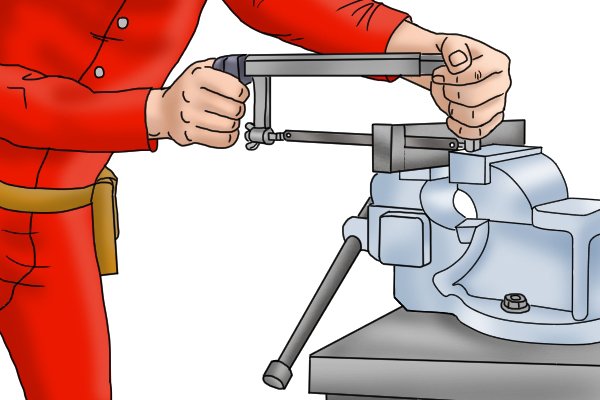
Use a bench vise whenever possible. Place the workpiece so the cut is close to the vise jaws. This reduces vibration and prevents the material from flexing.
Before cutting, complete these steps:
• Measure the length carefully.
• Mark the cut with a pencil, marker, or scriber.
• Use a square to draw a straight line around pipe or bar stock.
• Clamp the workpiece firmly.
• Keep the waste section supported if it is long or heavy.
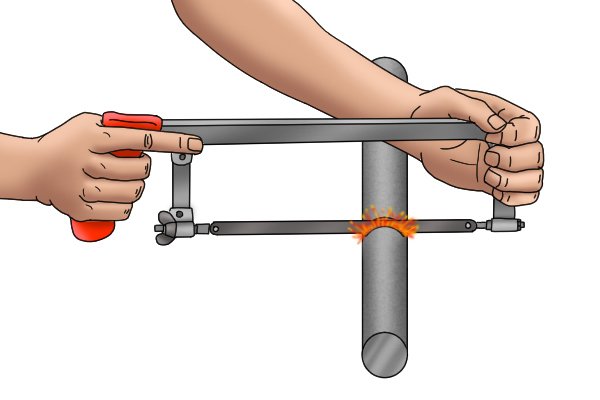
For pipe, mark the full cutting path around its surface. This helps you keep the blade square as you move around the pipe.
Wear safety glasses to protect your eyes from metal chips. Avoid loose clothing, dangling jewelry, and gloves that can catch in the blade. Gloves may help with sharp edges, but they should fit well and never reduce your control.
Good lighting also matters. A clear view of the mark helps you follow the line without leaning your face close to the work.

How to Use a Hacksaw: Step-by-Step
The best way to understand how to use a hacksaw is to follow a steady process. Let the teeth do the work instead of forcing the tool.
1. Mark the cut line
Mark the exact location of the cut. For a straight cut, use a square or ruler. On round material, mark a complete line around the surface.
A small starter notch can help. Place the blade on the line and make two or three gentle strokes. This creates a shallow groove that guides the blade.
2. Hold the hacksaw correctly
Hold the handle with your dominant hand. Place your other hand on the front of the frame to guide the tool.
Keep both hands behind the blade. Do not place your fingers near the cutting path.
Hold the hacksaw level with the workpiece. A square blade usually gives a cleaner result than one held at an angle.
3. Start with short strokes
Begin with short, slow strokes. Use light pressure until the blade creates a clear groove.
Starting too fast is a common mistake. The blade can wander, especially on smooth steel or round pipe. Once the groove is established, increase the stroke length.
4. Use steady forward pressure
Apply pressure during the forward cutting stroke. Release most of the pressure as you pull the hacksaw back.
Do not press hard on the return stroke. The teeth are designed to cut in one direction, and extra pressure on the return can dull them or make the tool slip.
5. Use the full length of the blade
Move the hacksaw through most of the blade length. Long, smooth strokes help spread wear across the teeth.
Short, fast strokes may feel quicker, but they often create heat and wear one small section of the blade. A controlled rhythm is more efficient.
6. Slow down near the end
As the blade approaches the far side of the material, reduce pressure. Support the waste piece so it does not break away and damage the final edge.
For thin material, use light strokes and a fine-tooth blade. This prevents the teeth from catching.
7. Inspect and smooth the edge
After the cut, remove sharp burrs with a file or deburring tool. Run a file away from your body and keep your hands clear of the edge.
This final step makes the part safer to handle and improves its fit if it will connect to another piece.
How to Cut Different Materials
The basic method stays the same, but each material needs a slightly different approach.
Cutting steel and iron
Use a quality bi-metal blade for steel. Keep the blade straight and use moderate pressure.
Hard steel may require slower strokes. Do not use oil unless the blade or material manufacturer recommends it. Lubricant can reduce friction, but it can also make the workpiece slippery and difficult to control.
Cutting aluminum
Aluminum is softer than steel but can clog the blade teeth. Use a blade with suitable, fairly fine teeth and clean the blade if chips build up.
Light pressure works best. Heavy pressure can pack soft aluminum into the tooth spaces.
Cutting copper and brass
Copper and brass cut easily with a fine or medium-tooth blade. Secure the material well because these metals can flex or vibrate.
A sharp blade is especially helpful. Dull teeth may crush the metal instead of cutting it cleanly.
Cutting plastic and PVC
Use a fine-tooth blade for plastic pipe. Move at a steady pace and avoid pushing too hard.
Fast cutting can create heat. Heat may soften plastic and cause the cut to close around the blade. Let the blade cool if the material begins to melt.
Cutting bolts and threaded rod
When learning how to use a hacksaw on a bolt, thread a nut onto the bolt before cutting. Make the cut, then remove the nut over the cut end.
The nut can help restore slightly damaged threads. Still, inspect the threads carefully and file away any burrs.

Common Hacksaw Mistakes to Avoid
Many poor cuts come from technique rather than the tool. Watch for these common problems:
• Using the wrong TPI: Large teeth can tear thin material, while fine teeth can clog in thick stock.
• Installing the blade backward: A backward blade will not cut properly and may slip.
• Cutting without support: Movement causes rough cuts and broken blades.
• Using too much force: Pressure can bend the blade and increase the chance of slipping.
• Taking very short strokes: This wears one section of the blade quickly.
• Ignoring the cut line: Check your progress often instead of waiting until the end.
• Reusing a damaged blade: Missing or cracked teeth make the tool unsafe.
• Holding the material by hand: Even small pieces can move suddenly during a cut.
One lesson from hands-on work is that patience usually beats strength. When a cut feels difficult, stop and check the blade, tension, TPI, and workpiece support before pushing harder.
Hacksaw Safety Tips
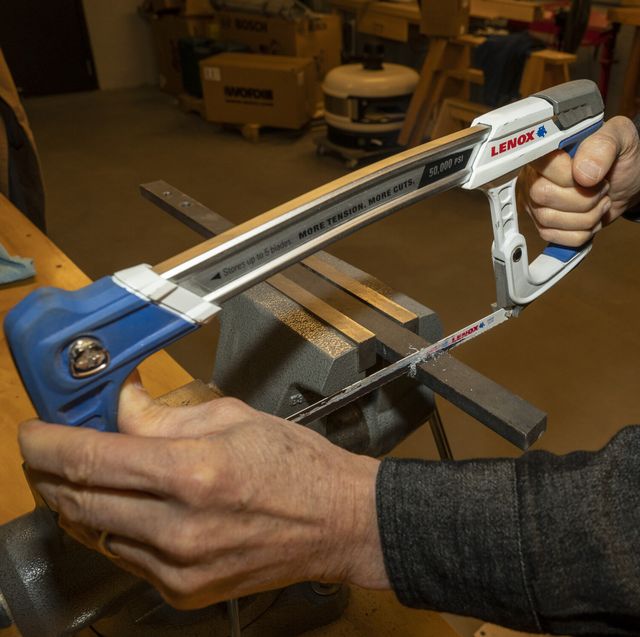
A hacksaw is simple, but its blade can cause deep cuts. Use basic workshop safety habits every time.
• Wear safety glasses or other suitable eye protection.
• Secure the workpiece in a vise or clamp.
• Keep both hands behind the blade.
• Keep your fingers away from the cutting line.
• Inspect the frame and blade before use.
• Replace blades with broken or missing teeth.
• Keep the floor and bench free of trip hazards.
• Cut away from your body when possible.
• Use controlled strokes instead of sudden movements.
• Let the blade stop before setting the hacksaw down.
Metal edges can remain sharp after cutting. Handle the workpiece carefully and remove burrs with a file.
If the blade breaks, stop at once. Do not reach toward the broken section until the tool and workpiece are stable.
These habits match basic hand-tool safety principles used in professional shops. Always follow the safety instructions supplied with your specific tool and any rules at your workplace.
:max_bytes(150000):strip_icc()/SPR-types-of-saws-5409526-7-X-Hacksaw-8a18e4b2946e4d16b3a40789e9656359.jpg)
How to Get a Straighter, Cleaner Cut
A straight cut comes from control, not speed. Keep the blade aligned with the mark and avoid twisting the frame.
Use these practical tips:
• Make a shallow starter groove first.
• Keep the workpiece close to the vise jaws.
• Check the blade angle after every few strokes.
• Use a square when starting a cut on flat stock.
• Rotate pipe slowly instead of forcing the blade sideways.
• Support long material to reduce vibration.
• Finish with light strokes.
For very precise work, leave a small amount of extra material and finish the edge with a file. This approach is safer than trying to cut exactly on the final line in one motion.
When I teach beginners, I compare the blade to a train on a track. The first groove is the track. Once it is straight, the blade has less chance of wandering.
Hacksaw Maintenance and Storage
A clean, well-maintained hacksaw is easier and safer to use. Wipe metal dust from the frame after each job.
Loosen the blade slightly before long-term storage. This reduces stress on the frame and blade. Store spare blades in a dry place where their teeth cannot damage other tools.
Check these parts regularly:
• Blade tensioning screw
• Frame joints
• Handle
• Blade pins
• Frame alignment
Replace any part that is bent, cracked, or loose. Do not try to straighten a badly damaged frame by force.
Keep spare blades organized by TPI and material type. This makes it easier to choose the right blade when you begin a project.
When to Use a Hacksaw Instead of Another Tool
A hacksaw is useful because it is affordable, portable, and quiet. It works well when you need one or two cuts without setting up a power tool.
Use a hacksaw for:
• Cutting threaded rod
• Trimming metal pipe
• Shortening bolts
• Cutting plastic conduit
• Removing damaged fasteners
• Making small repairs in tight spaces
A hacksaw may not be the best choice for large projects or thick materials. A reciprocating saw, band saw, angle grinder, or tubing cutter may work faster. Power tools also create extra hazards, such as sparks, noise, kickback, and flying debris.
Choose the tool that fits the material, cut quality, workspace, and safety needs. The hacksaw is often the best choice when control matters more than speed.
Frequently Asked Questions About How to Use a Hacksaw
Which way should hacksaw teeth point?
The teeth should usually point away from the handle. This allows the blade to cut during the forward stroke, which is the standard method for most hacksaws.
How tight should a hacksaw blade be?
The blade should be tight enough to stay straight and resist twisting. Do not overtighten it, because excessive tension can damage the frame or cause the blade to break.
Can you use a hacksaw to cut wood?
You can, but a hacksaw is not designed for efficient wood cutting. A hand saw, backsaw, or reciprocating saw with a wood blade will usually produce a faster and cleaner result.
Why does my hacksaw blade keep breaking?
Blade breakage often comes from excessive pressure, poor tension, twisting, or an unsupported workpiece. The wrong tooth count can also cause the blade to catch, especially in thin material.
How do you cut a pipe straight with a hacksaw?
Mark a complete line around the pipe, secure it close to the vise jaws, and begin with short strokes. Keep the blade square and rotate the pipe as needed rather than twisting the hacksaw.
Should you use oil when cutting metal with a hacksaw?
Sometimes a small amount of suitable cutting fluid can reduce friction on certain metals. However, oil can make the workpiece slippery, so follow the tool and material guidance and maintain a firm grip.
Conclusion
Knowing how to use a hacksaw comes down to choosing the right blade, securing the material, keeping the blade straight, and using smooth forward strokes. Start slowly, let the teeth cut, and reduce pressure as you finish the cut.
A hacksaw may look basic, but careful technique makes it powerful and precise. Practice on scrap material first, inspect your tools, and treat every cut with respect. Try these steps on your next small repair, then explore more hand-tool guides to build your workshop skills.
