How Many Teeth Per Inch Should A Hacksaw Blade Have: Guide
For most metal cutting, choose a hacksaw blade with 18 to 24 teeth per inch.
Knowing how many teeth per inch should a hacksaw blade have helps you cut faster, reduce blade damage, and get a cleaner result. The right choice depends on the material, its thickness, and whether you are making a rough cut or a fine cut. After years of seeing blades used in workshops and home repair jobs, I have found that tooth selection is often more important than cutting force.
What does teeth per inch mean on a hacksaw blade?
Teeth per inch, or TPI, tells you how many cutting teeth fit along one inch of the blade. A blade with 14 TPI has large, widely spaced teeth. A blade with 32 TPI has smaller teeth packed closely together.
The TPI rating affects three key things:
• Cutting speed
• Surface smoothness
• The type and thickness of material the blade can cut
Large teeth remove more material with each stroke, so low TPI blades cut quickly through thick stock. Small teeth remove less material per stroke but give better control on thin metal.
When people ask how many teeth per inch should a hacksaw blade have, they are usually choosing between 14, 18, 24, and 32 TPI. These sizes cover most household, automotive, plumbing, and general metalworking tasks.
A good rule is to keep at least three teeth engaged in the work at all times. If only one or two teeth touch the material, the teeth can catch, snag, or break. If too many teeth sit in the cut, chips may clog the spaces between them.
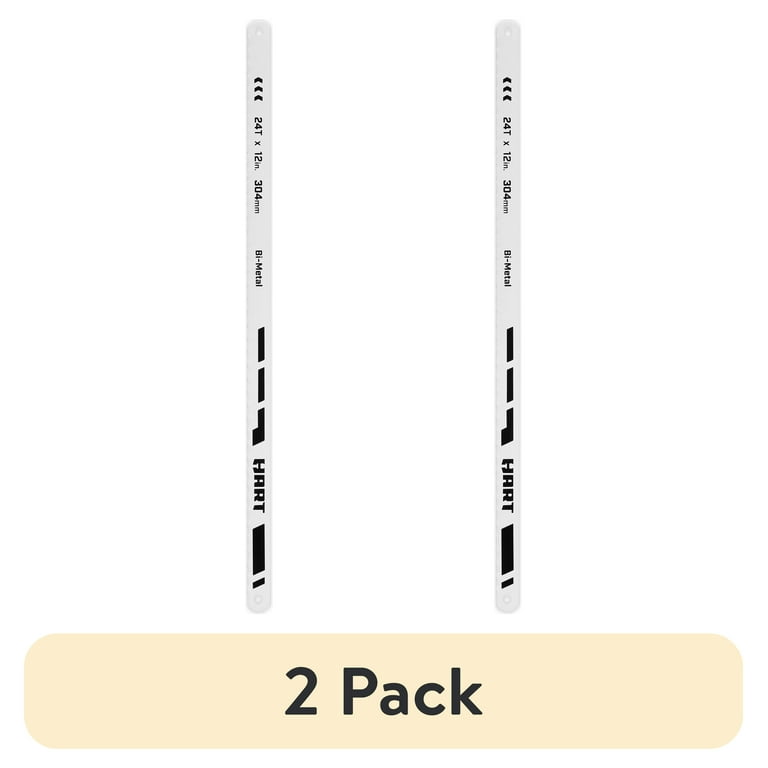
The best hacksaw blade TPI for common jobs
For general metal cutting, an 18 or 24 TPI blade is the safest starting point. It works well on many pipes, threaded rods, brackets, bolts, and sheet metal pieces.
Here is a simple guide:
| Material or job | Recommended TPI |
|---|---|
| Thick steel bar or heavy wall pipe | 14 TPI |
| Medium steel, aluminum, or brass | 18 TPI |
| General-purpose metal cutting | 18 to 24 TPI |
| Thin wall tubing | 24 TPI |
| Sheet metal | 24 to 32 TPI |
| Small wire, thin tubing, or delicate parts | 32 TPI |
| Plastic or soft materials | 10 to 18 TPI, depending on thickness |
The answer to how many teeth per inch should a hacksaw blade have is not always one number. A 14 TPI blade may be excellent for a thick steel bar but frustrating on thin sheet metal. A 32 TPI blade may produce a clean cut on thin tubing but clog quickly in thick stock.
For a basic home toolbox, keep one 18 TPI blade and one 24 TPI blade. Add a 32 TPI blade if you often cut thin metal.
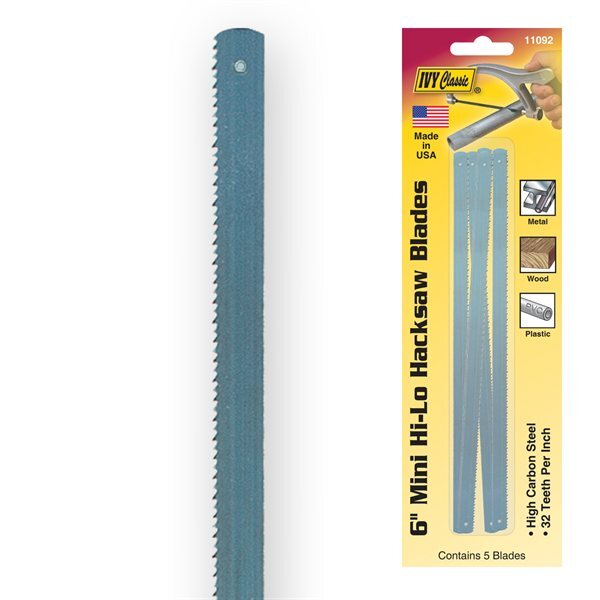
How material thickness changes the right TPI
Material thickness is one of the most important factors in hacksaw blade selection. Thick material needs deeper tooth gullets, which are the spaces between teeth. These gullets hold and clear the chips created during the cut.
Use a lower TPI blade for thick material:
• 14 TPI for thick steel bars and heavy pipe
• 18 TPI for medium stock and general repairs
• 24 TPI for thinner metal and small tubing
• 32 TPI for very thin sheet, wire, and delicate sections
A useful cutting rule is to keep three to six teeth inside the material at one time. For example, a 1/8 inch wall tube may work well with a 24 TPI blade. A thin 20 gauge sheet may need 32 TPI because a 14 TPI blade could grab the edge and bend it.
This rule explains how many teeth per inch should a hacksaw blade have better than material names alone. A “steel tube” can be thick or thin, and each version may need a different blade.
The blade should not feel like it is skating over the surface. If it makes a harsh, rough bite, the TPI may be too low. If it barely removes material and clogs with fine chips, the TPI may be too high.
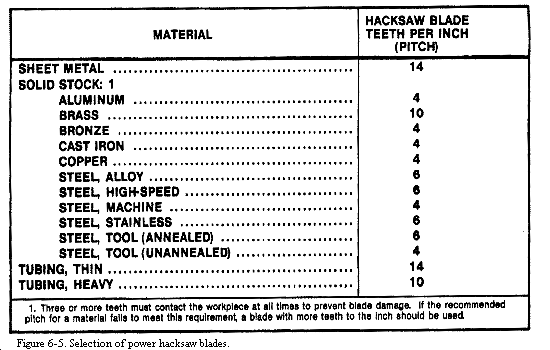
Choosing between 14, 18, 24, and 32 TPI blades
Each common hacksaw blade size has a practical role.
14 TPI blades
A 14 TPI blade has large teeth and deep gullets. It is suited to thick steel, cast iron, heavy aluminum, and large pipe.
It cuts aggressively, but it can catch on thin material. Use steady pressure and avoid twisting the frame during the cut.
18 TPI blades
An 18 TPI blade is a strong general-purpose choice. It handles structural steel, threaded rod, copper pipe, aluminum stock, and medium wall tubing.
If you want one blade for varied repair work, 18 TPI is often the best compromise between speed and control.
24 TPI blades
A 24 TPI blade is useful for thin wall pipe, sheet metal, small angle iron, and many automotive parts. It gives a smoother cut than an 18 TPI blade.
This is often the best answer for how many teeth per inch should a hacksaw blade have when the material thickness is not known. It is forgiving and works well for common household jobs.
32 TPI blades
A 32 TPI blade has fine teeth for thin metal and precision work. It works well on small tubing, thin brackets, conduit, and narrow sections.
Do not use it on thick steel unless you have a specific reason. The small gullets can fill with chips, which slows cutting and creates excess heat.
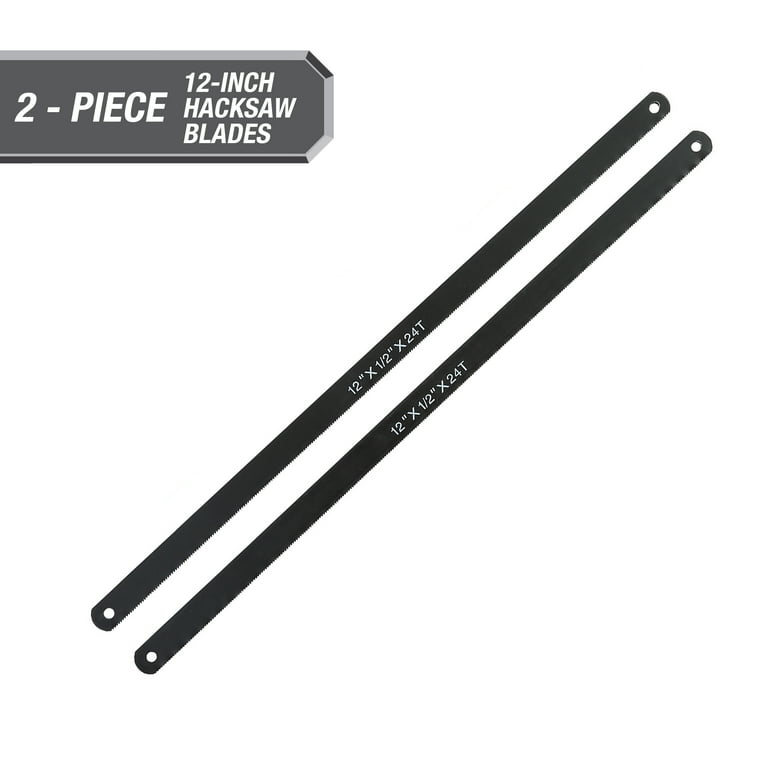
Should you use a coarse or fine hacksaw blade?
A coarse blade has fewer teeth per inch. A fine blade has more teeth per inch.
Choose a coarse blade when:
• The material is thick
• Cutting speed matters most
• The material produces large chips
• You need to remove a lot of metal
Choose a fine blade when:
• The material is thin
• The cut must be clean
• The workpiece is small or fragile
• You want to reduce tooth grabbing
The answer to how many teeth per inch should a hacksaw blade have often comes down to chip clearance. Coarse teeth act like a large shovel. Fine teeth act more like a small file. The shovel is better for deep material, while the file gives more control on thin surfaces.
For soft aluminum, a blade with larger teeth can prevent clogging. For hard steel, a fine bi-metal blade may last longer, but only if the material is thin enough for the tooth pattern.

Blade types and how they affect performance
TPI is important, but blade construction also matters. Two blades with the same TPI may perform very differently because of their materials and tooth design.
Carbon steel blades
Carbon steel blades are affordable and suitable for light work. They are common in basic tool kits.
They may wear quickly when cutting hard steel, stainless steel, or repeated sections of thick metal.
High speed steel blades
High speed steel teeth resist wear and heat better than basic carbon steel. They are useful for tougher materials and repeated cutting.
These blades can cost more, but their longer service life may make them economical for regular workshop use.
Bi-metal blades
Bi-metal blades combine a flexible spring steel body with hard cutting teeth. This design helps the blade bend without snapping while keeping the teeth sharp.
For many users, a bi-metal blade is the best all-purpose option. It is especially helpful when cutting steel, stainless steel, threaded rod, and mixed materials.
Even the best construction cannot fix the wrong TPI. When deciding how many teeth per inch should a hacksaw blade have, select the tooth count first, then choose the strongest practical blade type.
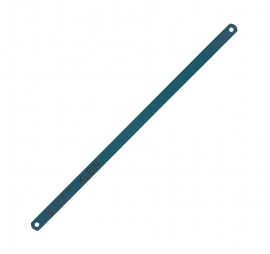
How to use a hacksaw blade correctly
The correct TPI will not help much if the blade is installed or used poorly. Follow these steps for a better cut:
-
Select the blade based on material thickness and hardness.
-
Install the blade with the teeth pointing forward, toward the cutting stroke. Most hacksaw frames cut on the push stroke.
-
Tighten the blade until it is firm and straight. Do not over-tighten a lightweight frame.
-
Mark the cut with a scribe, pencil, or marker.
-
Start with short, gentle strokes to create a groove.
-
Keep the blade square to the workpiece unless the design calls for an angled cut.
-
Use long strokes that use as much of the blade length as possible.
-
Apply steady pressure on the forward stroke and release pressure on the return stroke.
-
Let the teeth cut. Excess force only creates heat and shortens blade life.
-
Support the workpiece close to the cut to limit vibration.
One mistake I often see is pressing harder when the blade slows down. That usually makes the cut worse. A better approach is to check whether the blade is dull, clogged, loose, or using the wrong TPI.

Common mistakes when selecting hacksaw TPI
Choosing how many teeth per inch should a hacksaw blade have becomes easier when you avoid these common errors.
Using fine teeth on thick material
A 32 TPI blade may look precise, but it can clog in thick steel. The cut becomes slow, hot, and tiring.
Using coarse teeth on thin sheet metal
Large teeth can catch the edge of thin material. They may bend the sheet, break teeth, or make the cut wander.
Cutting with too few teeth engaged
If fewer than three teeth contact the material, each tooth takes too much force. This can lead to tooth stripping and rough cuts.
Pushing too hard
A hacksaw is not meant to work like a demolition tool. Moderate pressure lets the teeth form and clear chips properly.
Reusing a dull blade
A dull blade often produces heat, noise, and a polished-looking cut instead of clean chips. Replacing it is usually faster than forcing it through the work.
Ignoring blade length
Most hand hacksaws use 10 or 12 inch blades, with 12 inches being common. Make sure the replacement blade matches the frame and has enough usable length for your stroke.
Hacksaw blade selection for specific materials
Different materials respond to teeth in different ways. Here are practical starting points.
Steel
Use 18 to 24 TPI for most steel tubing, brackets, bolts, and flat stock. Choose 14 TPI for thick sections and 32 TPI for thin sheet.
Stainless steel
Stainless steel is tough and can harden if overheated. A sharp bi-metal blade with 18 to 24 TPI usually works well. Use slow, steady strokes and avoid pressing so hard that the surface hardens.
Aluminum
Aluminum is soft but can clog blade gullets. An 14 or 18 TPI blade often clears chips better than a very fine blade. Light cutting fluid can help, but keep the work area clean and controlled.
Copper and brass
These softer metals usually cut well with 18 to 24 TPI. Support thin copper pipe carefully so it does not collapse.
Plastic
A coarse blade can work well on thick plastic, while a fine blade may reduce splintering on thin pieces. Test a small area first because some plastics melt from friction.
When deciding how many teeth per inch should a hacksaw blade have for an unfamiliar material, start with a medium blade, make a short test cut, and inspect the chips and edge.
How to make a hacksaw cut faster and cleaner
A few simple habits can improve both speed and accuracy.
• Clamp the work securely in a vise
• Use a sharp blade with the correct TPI
• Keep the frame straight and square
• Make full-length strokes
• Use cutting fluid on suitable metals
• Clear chips from deep cuts
• Stop if the blade overheats
• Finish with light strokes near the final break-through
For long cuts, rotate the workpiece when possible. This can prevent the blade from binding in a deep slot.
On a job involving thin-wall steel tube, I have found that a 24 TPI bi-metal blade gives a cleaner edge than a coarse blade. On thick solid bar, switching to 14 or 18 TPI saves time and prevents the fine teeth from filling.
The best answer to how many teeth per inch should a hacksaw blade have is practical, not theoretical. The blade should cut with a steady rhythm, create visible chips, and stay cool enough to control.
When to replace a hacksaw blade
Replace the blade when it shows clear signs of wear or damage.
Look for:
• Rounded or missing teeth
• A cut that takes much longer than normal
• Excessive squealing
• Burning or discoloration
• A blade that wanders even when held square
• Repeated tooth clogging
• Cracks near the mounting holes
A damaged blade can slip and cause injury. Wear safety glasses, keep both hands on the saw when possible, and avoid placing fingers near the cut line.
Blade life depends on the material, pressure, lubrication, and blade quality. There is no fixed number of cuts that applies to every job.
Frequently Asked Questions About How Many Teeth Per Inch Should a Hacksaw Blade Have
Is 18 TPI or 24 TPI better for a hacksaw?
An 18 TPI blade is better for thicker, faster cuts, while a 24 TPI blade gives better control on thinner metal. For general home repairs, 24 TPI is often the more versatile choice.
How many teeth per inch should a hacksaw blade have for steel?
Use 18 to 24 TPI for most steel work. Choose 14 TPI for thick steel and 32 TPI for thin sheet or small tubing.
Can a 32 TPI hacksaw blade cut thick metal?
It can cut thick metal, but it is usually slow and may clog with chips. A coarse 14 or 18 TPI blade is normally more efficient for thick stock.
How many teeth should touch the material during a cut?
Try to keep at least three teeth engaged in the material. Three to six teeth in the cut usually provides a good balance between control and chip clearance.
Should hacksaw blade teeth point forward or backward?
For most standard hand hacksaws, the teeth point forward because the blade cuts on the push stroke. Check the frame design if you are using a specialty saw.
What TPI hacksaw blade is best for thin sheet metal?
A 24 or 32 TPI blade is usually best for thin sheet metal. The fine teeth reduce grabbing and help produce a smoother edge.
Is a bi-metal hacksaw blade worth buying?
Yes, especially for regular work or hard metals. Bi-metal blades combine a flexible body with wear-resistant teeth, so they often last longer than basic carbon steel blades.
Conclusion
For most jobs, how many teeth per inch should a hacksaw blade have comes down to material thickness. Use 14 TPI for thick stock, 18 TPI for general work, 24 TPI for thin metal, and 32 TPI for very thin or delicate material.
Remember the three-tooth rule, keep the blade tight, use steady strokes, and avoid forcing the cut. Start with an 18 or 24 TPI bi-metal blade for a versatile toolbox, then add other sizes as your work requires. Try the right blade on your next project, and share your results or questions with other tool users.
Recent Tool Guides
 Hammer
How To Hammer Flowers Onto Paper: Easy Guide
Learn how to hammer flowers onto paper with simple steps, helpful tips, and beautiful results for...
Read Guide → Wrench
How To Use A Hex Wrench: Easy Step-By-Step Guide
Learn how to use a hex wrench correctly with simple steps, helpful tips, and common mistakes...
Read Guide → Hacksaw
How To Cut Curtain Pole With Hacksaw: Easy Guide
Learn how to cut curtain pole with hacksaw safely and neatly. Follow simple steps for accurate...
Read Guide → Wrench
How To Use A Husky Torque Wrench: Easy Guide
Learn how to use a Husky torque wrench correctly with simple steps, torque settings, and safety...
Read Guide → Hammer
How To Hold A Hammer: Safe Grip Guide
Learn how to hold a hammer with the right grip, stance, and technique for safer, more...
Read Guide → Hacksaw
How To Cut Flexible Metal Conduit With Hacksaw: Easy Guide
Learn how to cut flexible metal conduit with hacksaw safely and cleanly. Follow simple steps for...
Read Guide →