

Hacksaw blades are made from hardened carbon steel, high-speed steel, bi-metal steel, or carbide-grit materials.
Knowing what are hacksaw blades made of helps you choose the right blade, cut faster, and avoid early tooth wear. The blade’s steel type, tooth design, hardness, and coating all affect how well it cuts wood, metal, pipe, plastic, or stainless steel. This guide explains each material in simple terms, with practical tips for safe and accurate blade selection.
What Are Hacksaw Blades Made Of?
Most hacksaw blades are made from steel. However, the exact material can vary based on the blade’s quality, purpose, and tooth design.
A standard blade may use one type of steel throughout. A premium blade may combine two steels to create a flexible back and a hard cutting edge. Some specialty blades use abrasive carbide grit instead of traditional teeth.
The main materials include:
• Low-carbon or mild steel for basic, low-cost blades
• High-carbon steel for general cutting and better wear resistance
• High-speed steel, often called HSS, for hard metals and longer tooth life
• Bi-metal steel for flexibility, strength, and professional use
• Carbide-grit material for very hard, brittle, or abrasive materials
The answer to what are hacksaw blades made of is not limited to one metal. Manufacturers select materials to balance hardness, toughness, flexibility, heat resistance, and cost.
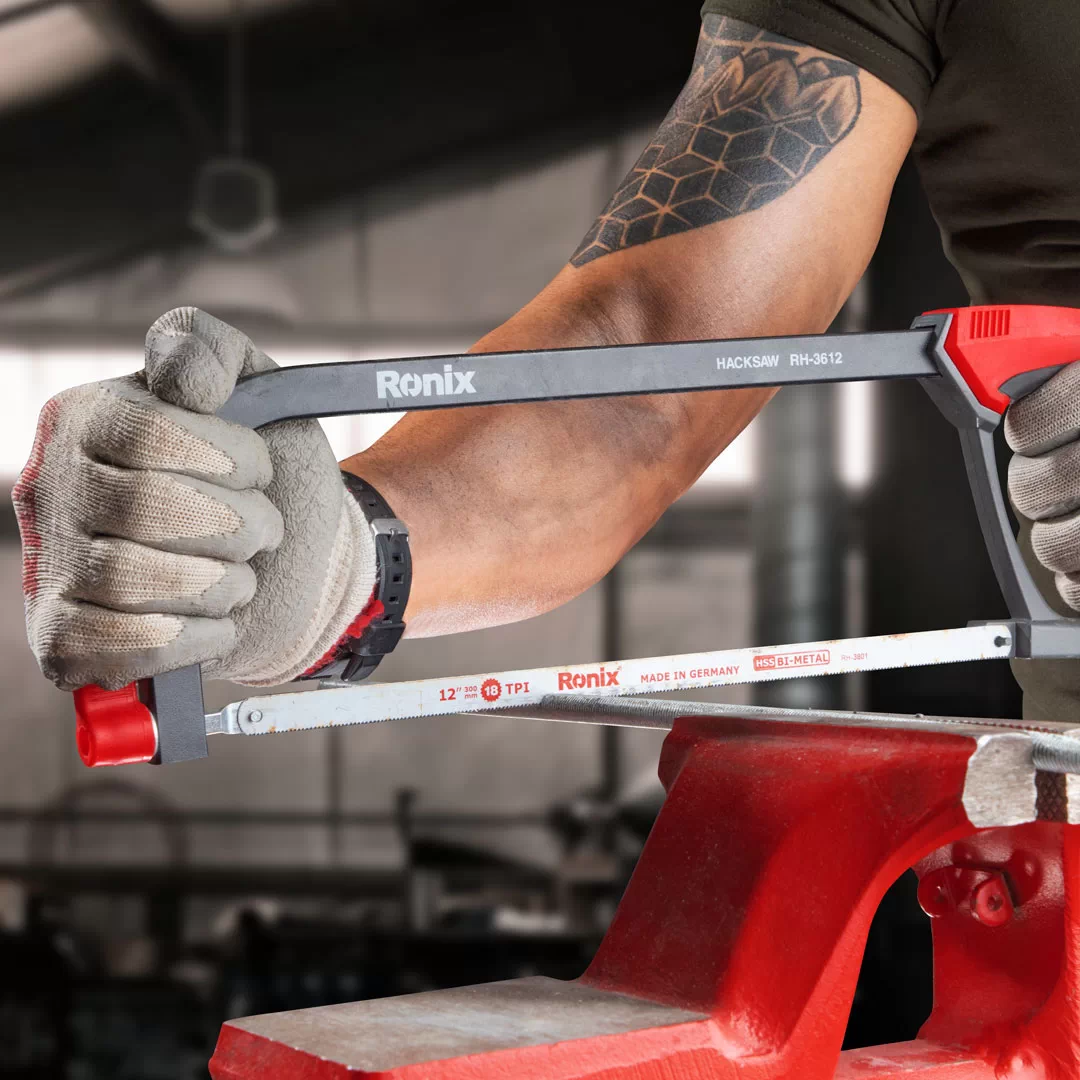
The Main Materials Used in Hacksaw Blades
Carbon steel
Carbon steel is common in traditional hacksaw blades. It contains iron and carbon, with the carbon content adjusted to change the blade’s strength and hardness.
Low-cost carbon steel blades are suitable for light work, such as cutting thin metal, plastic pipe, conduit, or small bolts. They are easy to produce but can dull or break faster than better blades.
High-carbon steel is harder and usually lasts longer. It works well for regular home repairs and workshop tasks. Still, a high-carbon blade can snap if you twist it or apply too much side pressure.
High-speed steel
High-speed steel is a harder alloy steel that can resist heat and wear. It is often used on the teeth or cutting edge of higher-grade blades.
HSS contains alloying elements such as chromium, molybdenum, tungsten, or vanadium. These elements help the steel keep its hardness during cutting. This matters because friction can create heat at the tooth tips.
HSS blades are useful for cutting:
• Tool steel
• Stainless steel
• Hardened bolts
• Alloy steel
• Other tough metals
The trade-off is that very hard steel can be less flexible. A pure HSS blade may break if bent, twisted, or poorly mounted.
Bi-metal steel
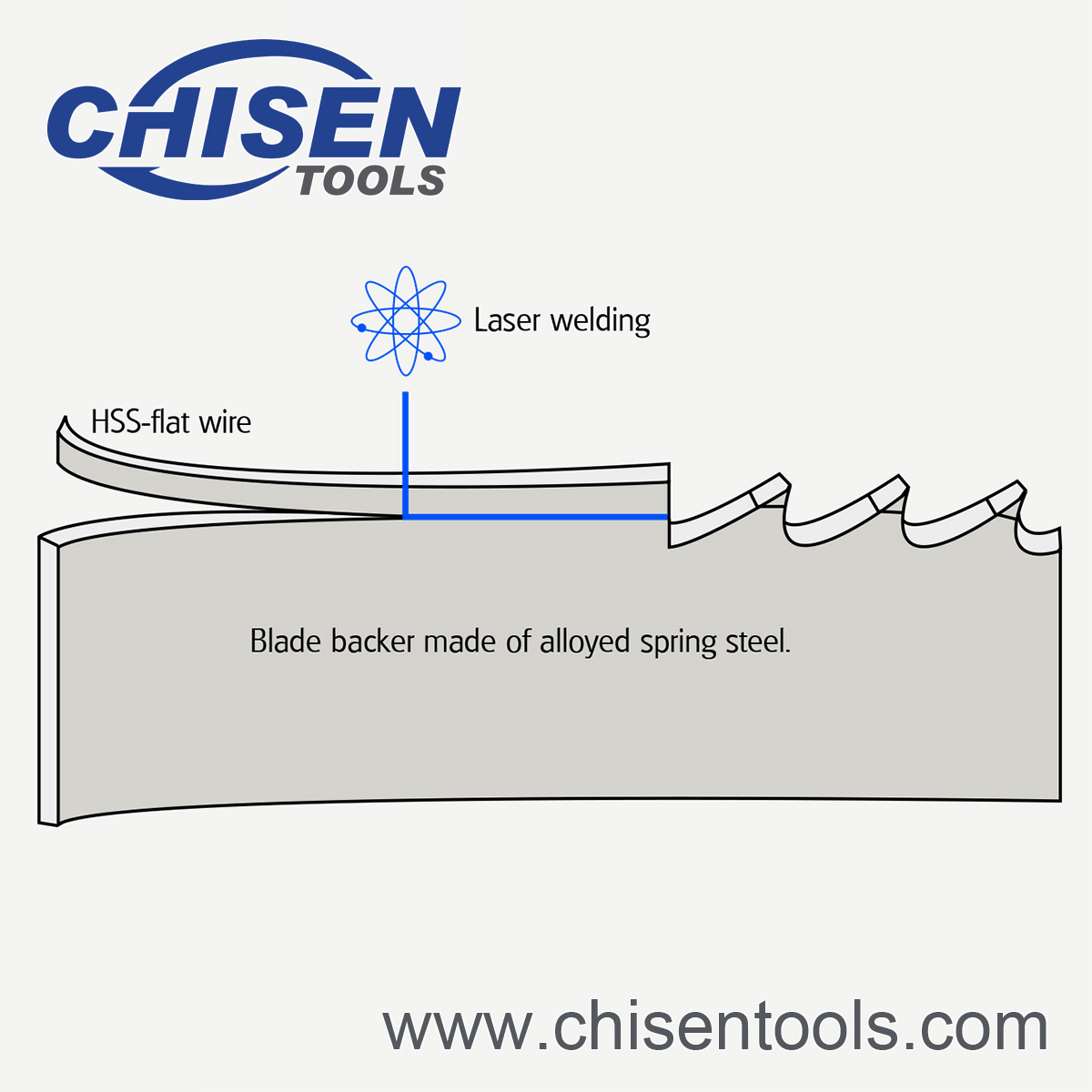
Bi-metal blades combine two types of steel. The cutting edge usually contains HSS, while the flexible back uses spring steel or another tough alloy.
Manufacturers commonly join the two materials through electron-beam welding. This creates a blade with hard teeth and a flexible body. It is similar to putting a sharp knife edge on a springy handle.
Bi-metal blades are popular because they offer:
• Long tooth life
• Better resistance to tooth breakage
• Good flexibility
• Improved performance on stainless steel and thick metal
• Safer use in demanding workshops
When people ask what are hacksaw blades made of, bi-metal construction is one of the most useful answers for modern, high-quality blades.
Carbide-grit materials
Some hacksaw-style blades do not have normal pointed teeth. Instead, they use carbide grit bonded to the edge.
Tungsten carbide is extremely hard and resists wear. A carbide-grit blade can cut materials that quickly damage ordinary steel teeth, including hardened steel, fiberglass, ceramic products, and certain composites.
These blades cut more like a file or abrasive tool than a standard saw. They may produce fine dust and need controlled pressure. They are also more expensive and may cut more slowly through soft metal.

How Hacksaw Blade Construction Affects Performance
Material is only one part of a hacksaw blade. The blade’s construction also affects speed, control, and service life.
A typical hacksaw blade has three key areas:
• The back, which provides flexibility
• The body, which supports the teeth
• The teeth, which remove material from the workpiece
The teeth are usually hardened more than the back. This allows them to stay sharp while the body bends slightly under normal use.
A blade that is too hard may cut well but break easily. A blade that is too soft may bend safely but lose its teeth quickly. Good blade design finds the middle ground between hardness and toughness.
Heat treatment
Manufacturers heat and cool steel in controlled ways to change its properties. Hardening improves tooth wear resistance. Tempering reduces brittleness and helps the blade survive vibration and light bending.
This process explains why two blades that look similar can perform very differently. The steel grade matters, but the heat treatment matters too.
Tooth pitch
Tooth pitch means the number of teeth per inch, or TPI. Common hacksaw blade sizes include 14, 18, 24, and 32 TPI.
Use these general guidelines:
• 14 TPI for thick stock and fast cutting
• 18 TPI for medium metal and general work
• 24 TPI for thin metal, tubing, and sheet material
• 32 TPI for very thin sheet, small tubing, and delicate cuts
Keep at least three teeth engaged with the material during a cut. If too few teeth touch the workpiece, the teeth may catch and break.
Tooth shape and set
The tooth set is the slight side-to-side angle of the teeth. This creates a kerf, or narrow cut path, so the blade body does not bind.
Some blades use a regular tooth pattern. Others use a wavy set, which helps reduce vibration when cutting thin metal. The tooth shape may also be designed for faster cutting, smoother cuts, or better chip removal.
What Coatings Are Used on Hacksaw Blades?
Some hacksaw blades receive a surface treatment or coating. These treatments can reduce friction, protect the blade from corrosion, or improve heat resistance.
Common surface treatments include:
• Black oxide, which helps reduce glare and offers mild corrosion protection
• Bright polished finishes, which create a smooth surface
• Titanium-based coatings, which may improve wear resistance
• Paint or lacquer on the blade body for storage protection
A coating does not turn a poor blade into a premium blade. The core steel, tooth hardness, welding quality, and tooth design remain more important.
Coated blades can still rust if stored in damp conditions. Wipe the blade after use and keep it dry. A light protective oil can help prevent corrosion during long storage.
How Blade Materials Compare
The best material depends on the job. There is no single blade that performs perfectly on every material.
| Blade material | Main benefit | Best use | Main limitation |
|---|---|---|---|
| Low-carbon steel | Low price | Light home repairs | Dulls quickly |
| High-carbon steel | Good general strength | Mild steel and plastic | Can break under twisting |
| High-speed steel | Hard cutting edge | Tough and hard metals | Less flexible |
| Bi-metal steel | Hard teeth with flexible back | Professional metal work | Costs more |
| Carbide grit | Extreme wear resistance | Hardened or abrasive materials | Slower and more costly |
This comparison gives a practical answer to what are hacksaw blades made of, but it also shows why the material must match the task.
For example, a basic carbon steel blade may be fine for cutting a thin copper pipe. It is a poor choice for repeated stainless steel cuts. A bi-metal blade would cost more at first but may save time and reduce blade changes.

Choosing the Right Hacksaw Blade
Start by identifying the material you need to cut. Then consider its thickness, hardness, shape, and location.
Use this simple process:
- Identify the workpiece material. Check whether it is mild steel, stainless steel, aluminum, copper, plastic, or a composite.
- Measure its thickness. Thin material needs a finer tooth pitch.
- Select the blade material. Choose carbon steel for light work, HSS or bi-metal for tough metal, and carbide grit for very hard or abrasive materials.
- Check the blade length. The blade must fit the hacksaw frame correctly.
- Choose the right TPI. Make sure several teeth contact the workpiece at all times.
- Inspect the tooth pattern. A wavy set can help with thin sheet and vibration.
- Use the proper tension. A loose blade wanders, while excessive tension can cause breakage.
A common mistake is choosing a coarse blade because it appears faster. Coarse teeth can grab thin tubing and rip out teeth. A finer blade often gives a cleaner, more controlled cut.
Another mistake is using a fine blade on thick stock. The small gullets fill with chips, which slows cutting and creates heat.

Practical Tips for Longer Blade Life
Even the best blade can fail when used incorrectly. Cutting technique often matters as much as what are hacksaw blades made of.
Use steady, moderate pressure. Let the teeth remove the material instead of forcing the frame through the cut. Heavy pressure can bend the blade, strip teeth, and create excess heat.
Keep the blade straight. Sideways movement is one of the fastest ways to break a hardened tooth. If the cut begins to wander, stop and reset the blade rather than twisting it back into line.
Helpful habits include:
• Secure the workpiece firmly
• Install the teeth so they point forward
• Keep the blade tight in the frame
• Use long, smooth strokes
• Apply cutting fluid to tough metals when suitable
• Clean chips from the cut area
• Replace blades with missing or damaged teeth
• Wear eye protection and cut-resistant gloves when appropriate
In workshop testing, one lesson appears again and again: forcing a dull blade does not make it cut faster. It only creates heat and frustration. A fresh blade with the correct TPI usually saves more time than extra muscle.
For stainless steel, use slow and steady strokes. Do not pause in one spot while pressing hard, because stainless steel can work-harden. Once the surface hardens, the next blade may struggle even more.

Safety Considerations When Using Hacksaw Blades
A hacksaw blade can cause cuts, punctures, and eye injuries. Broken teeth or blade fragments can also become sharp projectiles.
Before cutting, inspect the blade for cracks, rust, missing teeth, or bent sections. Do not use a blade that shows serious damage. A damaged blade may break without warning.
Follow these safety steps:
• Wear safety glasses
• Clamp the workpiece securely
• Keep both hands away from the cutting path
• Use a stable stance
• Keep the blade properly tensioned
• Avoid sudden force
• Replace damaged blades promptly
• Store spare blades where children cannot reach them
Use extra care with bi-metal and HSS blades. Their hard teeth cut well, but that hardness can make broken sections sharp and brittle.
How to Tell What a Hacksaw Blade Is Made Of
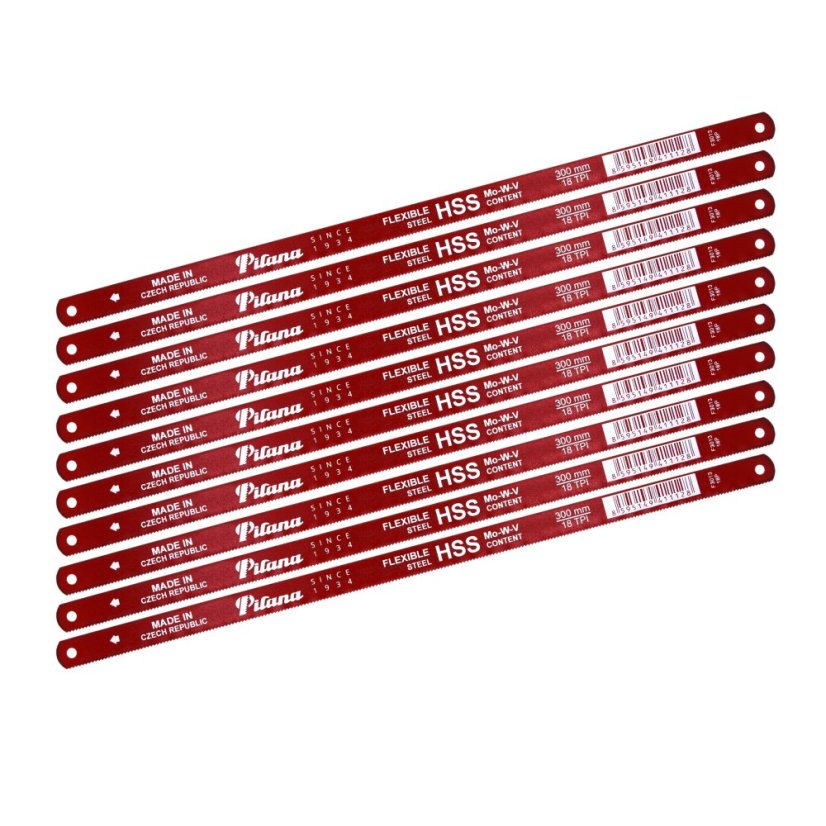
Packaging usually provides the clearest information. Look for terms such as carbon steel, HSS, bi-metal, flexible, or carbide grit.
You can also check for these clues:
• Bi-metal blades often show a two-tone body or a marked welded edge
• HSS blades may be labeled with the steel grade or “HSS”
• Carbon steel blades are often sold as economy or general-purpose blades
• Carbide-grit blades have a rough, file-like edge rather than sharp saw teeth
• TPI and blade length are usually printed on the package
Visual inspection alone cannot confirm the exact alloy or heat treatment. Two blades can have the same color and tooth pattern but use different steel grades.
For industrial work, rely on the manufacturer’s technical data sheet. Look for information about material compatibility, TPI, hardness, recommended cutting speed, and operating limits.

Frequently Asked Questions About What Are Hacksaw Blades Made Of
Are hacksaw blades made of stainless steel?
Most hacksaw blades are not made entirely from stainless steel. They are more commonly made from carbon steel, high-speed steel, or bi-metal steel because these materials offer better tooth hardness and wear resistance.
What is the best material for a hacksaw blade?
Bi-metal steel is often the best all-purpose choice for demanding metal work. It combines hard HSS teeth with a flexible alloy-steel back, but a basic carbon steel blade may be enough for light home repairs.
Are hacksaw blades hardened?
Yes, the teeth are usually hardened to resist wear. The blade body may be tempered or left more flexible so it can handle normal tension and movement without breaking.
Can a hacksaw blade cut hardened steel?
A high-speed steel or bi-metal blade can cut some hardened steel. Very hard steel may require a carbide-grit blade, an abrasive wheel, or a specialized cutting machine.
What does TPI mean on a hacksaw blade?
TPI means teeth per inch. A higher TPI gives a smoother cut on thin material, while a lower TPI removes material faster from thick stock.
Why do hacksaw blades break?
Blades often break because of excessive tension, side pressure, twisting, poor alignment, or the wrong tooth pitch. A blade can also break when too few teeth engage the workpiece.
Can hacksaw blades cut plastic?
Yes, many hacksaw blades can cut plastic pipe and sheet plastic. A medium or fine TPI blade usually gives better control and reduces the chance of tearing or melting the plastic.
Conclusion
Hacksaw blades are mainly made from carbon steel, high-carbon steel, high-speed steel, bi-metal steel, or carbide-grit materials. Their performance depends on more than the metal alone; tooth pitch, heat treatment, blade tension, coating, and cutting technique also play major roles.
For light jobs, carbon steel may be enough. For tough metal and frequent use, bi-metal blades offer a strong balance of flexibility and tooth life. Choose the blade by matching its material and TPI to the workpiece, then use steady pressure and proper safety gear.
The next time you buy a blade, read the material label instead of choosing by price alone. Explore more tool guides, share your cutting experience, or leave a comment about which blade works best in your shop.
