

Yes, a hacksaw is good for metal because its fine, hardened teeth can cut many common metal materials.
Knowing whether a hacksaw is good for metal helps you choose the right tool for the job. A hacksaw can make clean cuts in steel, aluminum, copper, brass, threaded rod, pipe, and metal hardware when you use the correct blade, steady pressure, and safe technique. This guide explains how it works, where it performs best, and when another tool is a better choice.
Is a hacksaw good for metal?
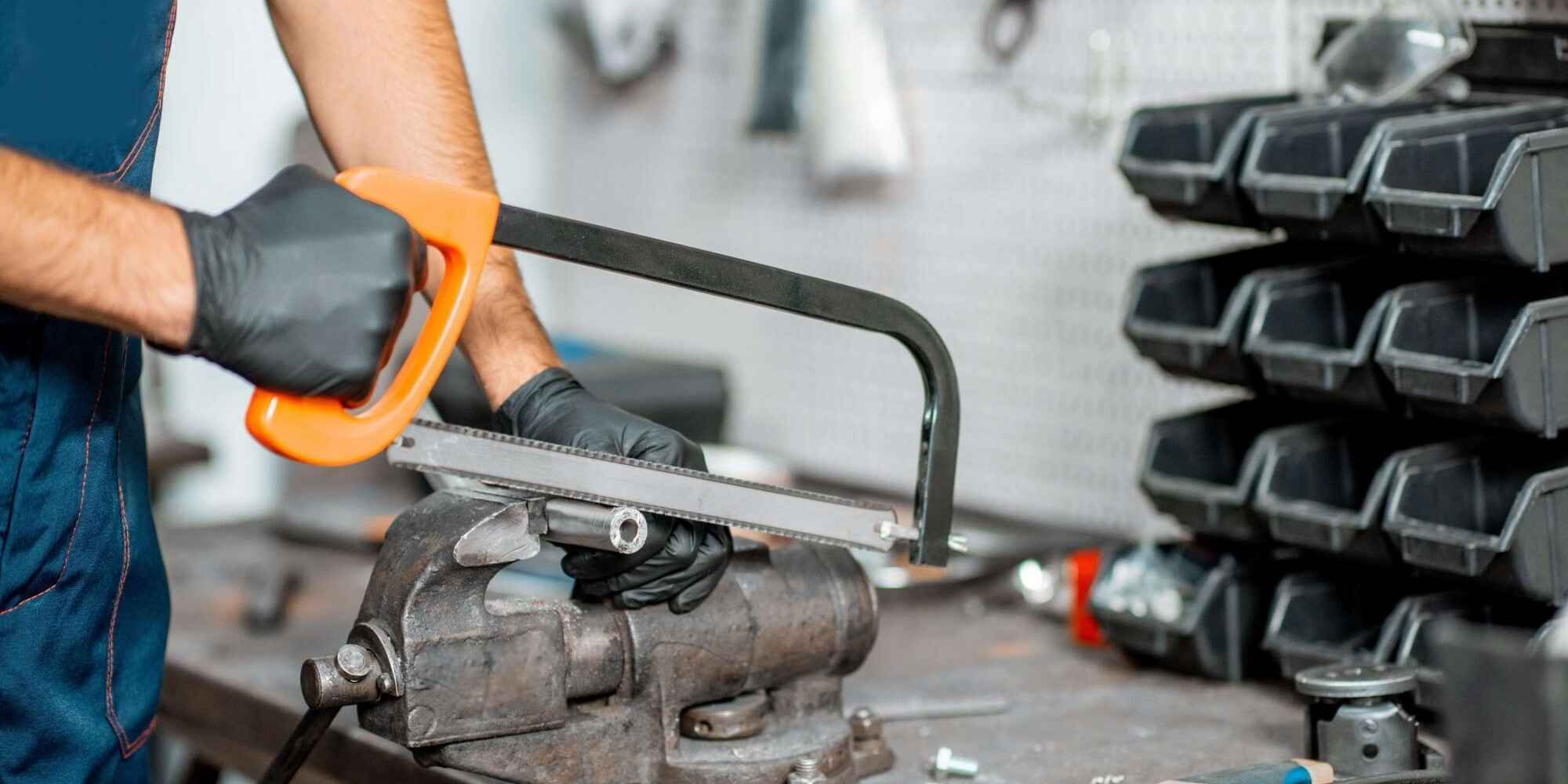
Yes, a hacksaw is good for metal, especially for small jobs, repairs, and cuts that do not need power tools. It uses a narrow blade with many small teeth. These teeth remove tiny bits of metal with each stroke.
A standard hacksaw is simple, low-cost, and easy to control. It does not need electricity, batteries, or compressed air. That makes it useful at home, in a workshop, on a job site, or during emergency repairs.
A hacksaw works well for cutting:
- Steel bolts and threaded rod
- Copper and brass pipe
- Aluminum bar and sheet
- Steel tubing and conduit
- Metal brackets and flat stock
- Nails, screws, and small chains
- Plastic pipe with a suitable blade
The main limit is speed. A hacksaw cuts metal more slowly than an angle grinder, reciprocating saw, or band saw. Still, slower cutting can be an advantage when accuracy and control matter.

How does a hacksaw cut metal?
A hacksaw cuts through metal by using repeated back-and-forth strokes. The blade teeth act like many tiny chisels. Each tooth removes a small amount of material and creates a narrow cut called a kerf.
The blade must be harder than the metal being cut. Most quality hacksaw blades use high-carbon steel or bi-metal construction. Bi-metal blades combine a flexible steel back with a hardened high-speed steel cutting edge.
This design gives the blade two useful traits:
- Flexibility helps reduce sudden blade breaks.
- Hardened teeth help the blade cut tough metal.
- Small teeth create a smoother cut.
- A thin blade removes less material.
- Proper tension keeps the blade straight.
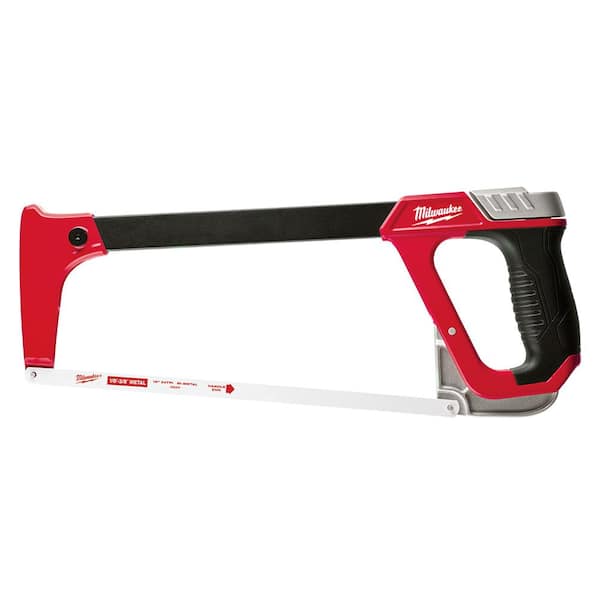
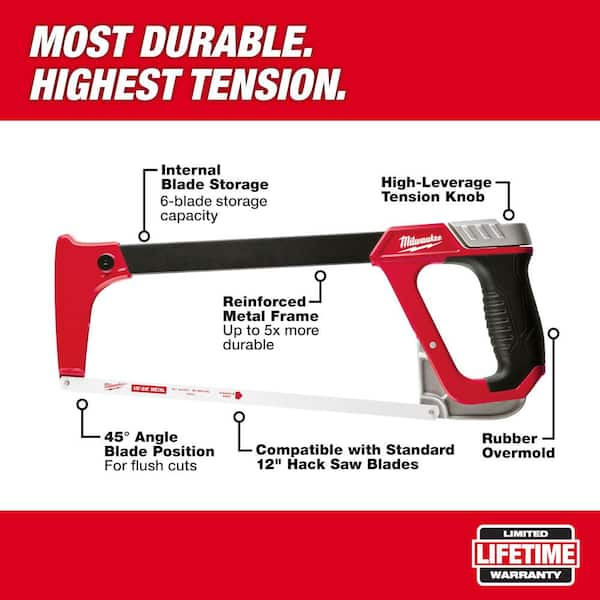
The frame holds the blade under tension. A loose blade may bend, wander, or break. A blade that is too tight may snap when you apply pressure.
A hacksaw usually cuts on the forward stroke. Install the blade so its teeth point away from the handle. Some specialty blades can cut in either direction, but standard blades are designed for a forward cutting stroke.
What metal can a hacksaw cut?
A hacksaw can cut many common metals, but the blade type and technique must match the material. Softer metals are usually easier to cut. Harder alloys take more time and can wear the teeth quickly.
Mild steel
Mild steel is one of the best materials for a hacksaw. You can cut bolts, angle iron, flat bar, conduit, and small steel pipe with a sharp blade.
Use steady strokes and avoid forcing the blade. Too much force can bend the blade or strip its teeth.
Stainless steel
A hacksaw can cut stainless steel, but it requires patience. Stainless steel can work-harden when you rub or press against it without cutting properly.
Use firm, even strokes. Do not stop and rub the blade in the same groove for too long. A sharp bi-metal blade with about 18 to 24 teeth per inch often works well for small stainless parts.
Aluminum
Aluminum is soft and cuts quickly. However, its chips can clog the blade teeth. A blade with larger, widely spaced teeth can help clear the chips.
Use light pressure. If the blade becomes packed with aluminum, stop and clean it before continuing.
Copper and brass
Copper and brass are also suitable for hacksaw cutting. Their softer structure allows the teeth to work quickly.
Support thin tubing well. Without support, the tube may bend or flatten instead of receiving a clean cut.
Hardened steel
A normal hacksaw may struggle with hardened steel, tool steel, and thick alloy steel. If the blade skates across the surface, the material may be harder than the blade.
For hardened metal, consider an abrasive cut-off wheel, carbide tool, band saw, or professional machining service. Do not keep forcing a hacksaw blade that cannot bite.

Choosing the right hacksaw blade for metal
Blade selection often determines whether a hacksaw works well. The key measurement is teeth per inch, or TPI.
A blade with fewer teeth has larger gullets. These spaces help remove chips from soft or thick material. A blade with more teeth makes a finer cut and works better on thin metal.
Use these general guidelines:
- 14 TPI works for thick, soft metal and large aluminum pieces.
- 18 TPI suits medium-thickness steel, copper, and brass.
- 24 TPI works well for thin steel, conduit, and small tubing.
- 32 TPI suits very thin sheet metal, wire, and delicate parts.
Keep at least two or three teeth inside the workpiece during the cut. If only one tooth contacts the metal, it may catch and break. If too many teeth contact thick material, chips may clog the blade.
Bi-metal blades are often the best general choice. They cost more than basic carbon steel blades, but they usually last longer and resist breakage better.
How to use a hacksaw to cut metal
Good technique makes a major difference. A hacksaw should glide through the material instead of acting like a pry bar.
Follow these steps:
- Mark the cut with a scribe, marker, or layout dye.
- Clamp the metal firmly in a vise.
- Choose a blade with the correct TPI.
- Install the blade with the teeth pointing forward.
- Tighten the blade until it is straight and firm.
- Place the blade on the waste side of the mark.
- Start with short, light strokes to create a groove.
- Use long strokes that engage most of the blade.
- Apply steady pressure on the forward stroke.
- Release pressure slightly on the return stroke.
- Keep the blade straight and level.
- Slow down as the cut nears completion.
- File away sharp burrs after the cut.
The frame should move in a smooth line. Do not twist the handle from side to side. Twisting causes uneven wear and can crack the blade.
For long cuts, let the blade do the work. A useful rule is to use firm pressure but never enough force to make the frame flex.
Tips for getting a cleaner metal cut
A clean cut starts before the blade touches the workpiece. Marking, clamping, and blade choice all affect the result.
Try these practical tips:
- Use a sharp blade. Dull teeth create heat and require extra force.
- Clamp the work close to the cut. This reduces vibration.
- Keep the cut square by watching both sides of the blade.
- Use a guide block for repeated straight cuts.
- Apply a small amount of cutting oil to steel or stainless steel.
- Do not use excessive oil on aluminum because chips may stick.
- Clean chips from the blade with a brush, not your fingers.
- Rotate round stock during the cut if one side starts to bind.
- Leave a little extra material, then file to the final size.
A common mistake is starting with long, hard strokes. This can make the blade jump and damage the edge. Short strokes create a starting groove, much like drawing a straight line before cutting paper.
Another mistake is using a coarse blade on thin sheet metal. The teeth can snag the sheet and bend it. Choose a finer blade and support the metal near the cut.
Common hacksaw problems and how to fix them
Even a good blade can perform poorly when the setup is wrong. Most cutting problems have a simple cause.
The blade keeps breaking
A blade may break because it is too tight, installed at an angle, or twisted during the cut. It may also be worn out or damaged.
Replace the blade and check the frame tension. Keep the stroke straight, and avoid turning the handle while cutting.
The cut wanders
A wandering cut often comes from weak clamping, a dull blade, or uneven pressure. The blade may also be too coarse for the material.
Clamp the work more firmly and begin with a shallow groove. Use long, even strokes once the groove is established.
The blade gets hot
Heat can result from too much pressure, a dull blade, or a cutting speed that is too fast. Excessive heat reduces blade life and may discolor the metal.
Reduce pressure, use a sharper blade, and apply suitable cutting fluid. Let the blade cool if it becomes too hot to touch safely.
The teeth fill with chips
Soft metals such as aluminum and copper can clog the gullets. When this happens, the blade stops cutting efficiently.
Use a blade with fewer teeth per inch. Clean the teeth often and keep the workpiece supported.
The cut is rough
A rough cut may come from a coarse blade, a loose frame, or a rushed finish. Thin metal can also vibrate during cutting.
Use a finer blade, increase blade tension carefully, and finish the edge with a flat file.

Hacksaw safety when cutting metal
A hacksaw is safer than many power tools, but it can still cause cuts, eye injuries, and hand strain. Metal chips and broken teeth can travel quickly.
Wear these basic items:
- Safety glasses with side protection
- Work gloves when handling sharp stock
- Hearing protection near loud tools
- Closed-toe work shoes
- A dust mask when filing or creating fine metal dust
Keep your free hand away from the blade path. Never hold a small workpiece in your hand while cutting it. Secure it in a vise or clamp.
Inspect the tool before use. Make sure the frame is not cracked and the blade is not bent. Replace blades with missing or damaged teeth.
Safety guidance from OSHA and standard hand-tool practices supports using the right tool, securing the work, and wearing suitable eye protection. Cutting oil can also make the work safer by reducing heat, but keep it away from open flames and clean spills promptly.

Hacksaw versus other metal-cutting tools
A hacksaw is not always the fastest choice. The best tool depends on the material, cut length, accuracy, noise level, and available power.
Hacksaw versus angle grinder
An angle grinder cuts much faster and handles thicker metal. It can also remove welds and make rough cuts.
However, grinders create sparks, noise, dust, and a wider kerf. A hacksaw gives better control for small cuts and does not need electricity.
Hacksaw versus reciprocating saw
A reciprocating saw is useful for demolition, pipe work, and awkward cuts. It works quickly but can vibrate heavily.
A hacksaw is quieter and easier to guide. It is often better for a precise cut on a small piece.
Hacksaw versus band saw
A band saw makes accurate, repeatable cuts and works well in a professional shop. It is faster for production work.
A hacksaw costs less and takes up little space. It is a practical choice for occasional repairs.
Hacksaw versus bolt cutters
Bolt cutters are made for cutting certain rods, bolts, chains, and soft metal. They are fast but can crush or deform the cut ends.
A hacksaw creates a more controlled cut. It is usually better when the finished edge matters.

Is a hacksaw good for metal in home repairs?
Yes, a hacksaw is good for metal in many home repair tasks. It can cut a stuck bolt, shorten a curtain rod, trim a threaded pipe, or adjust a metal shelf bracket.
It is also useful when a power tool would be excessive. For example, cutting one small bolt with an angle grinder may create more risk and mess than the task requires.
In practical shop work, one lesson stands out: most poor hacksaw cuts come from rushing the setup. When the work is clamped tightly and the blade matches the metal, even a basic hacksaw can produce a neat result.
A hacksaw is less suitable for:
- Very thick steel plate
- Long production cuts
- Hardened tool steel
- Large structural beams
- Fast demolition work
- Cuts that need a perfectly machined finish
For these jobs, use a powered saw, abrasive wheel, plasma cutter, or machine tool. Choose based on the metal and the final result, not just the tool you already own.
How long does a hacksaw blade last?
Blade life depends on the metal, thickness, pressure, blade quality, and cutting technique. A quality bi-metal blade can last through many small cuts, while a low-cost blade may wear quickly on stainless steel.
Replace the blade when it becomes dull, skips across the surface, overheats easily, or needs excessive force. A dull blade is not only slower. It also makes the cut less accurate and increases the chance of a slip.
Store spare blades where they will not rub against other tools. Keep them dry to prevent rust. A small blade case can protect the teeth and help you carry several TPI choices.
Frequently Asked Questions About Is a Hacksaw Good for Metal
Can a hacksaw cut through steel?
Yes, a hacksaw can cut mild steel, steel bolts, conduit, and small steel tubing. Use a sharp bi-metal blade with the right TPI and clamp the steel firmly before cutting.
What is the best hacksaw blade for metal?
A bi-metal blade is a strong general choice for metal. Use about 18 TPI for medium metal, 24 TPI for thin steel, and 32 TPI for very thin sheet or small tubing.
Should hacksaw teeth point forward or backward?
Standard hacksaw teeth should point forward, away from the handle. The blade normally cuts during the forward stroke.
Can a hacksaw cut stainless steel?
Yes, but stainless steel takes more effort than mild steel. Use a sharp fine-tooth blade, steady pressure, and cutting oil when suitable.
Why does my hacksaw blade keep breaking?
The blade may be too tight, bent, dull, or twisted during use. A loose workpiece can also cause vibration that breaks the blade.
Is a hacksaw better than an angle grinder for metal?
A hacksaw is better for quiet, controlled cuts on small pieces. An angle grinder is faster for thick metal and heavy work, but it creates sparks, noise, and more dust.
Can a hacksaw cut aluminum?
Yes, a hacksaw cuts aluminum well. Use a blade with fewer teeth per inch and clean the teeth often to prevent soft aluminum chips from clogging them.
Conclusion
A hacksaw is good for metal when the material, blade, and cutting method match the task. It works especially well on small steel, aluminum, copper, brass, tubing, bolts, and threaded rod.
Choose the right TPI, clamp the work securely, keep the blade straight, and use steady pressure. For thick, hardened, or high-volume work, switch to a powered cutting tool.
With a sharp blade and a little patience, a basic hacksaw can solve many metal-cutting jobs safely and accurately. Try these techniques on your next repair, and share your favorite hacksaw tips or questions in the comments.
