What Is A Junior Hacksaw: Uses And Best Tips
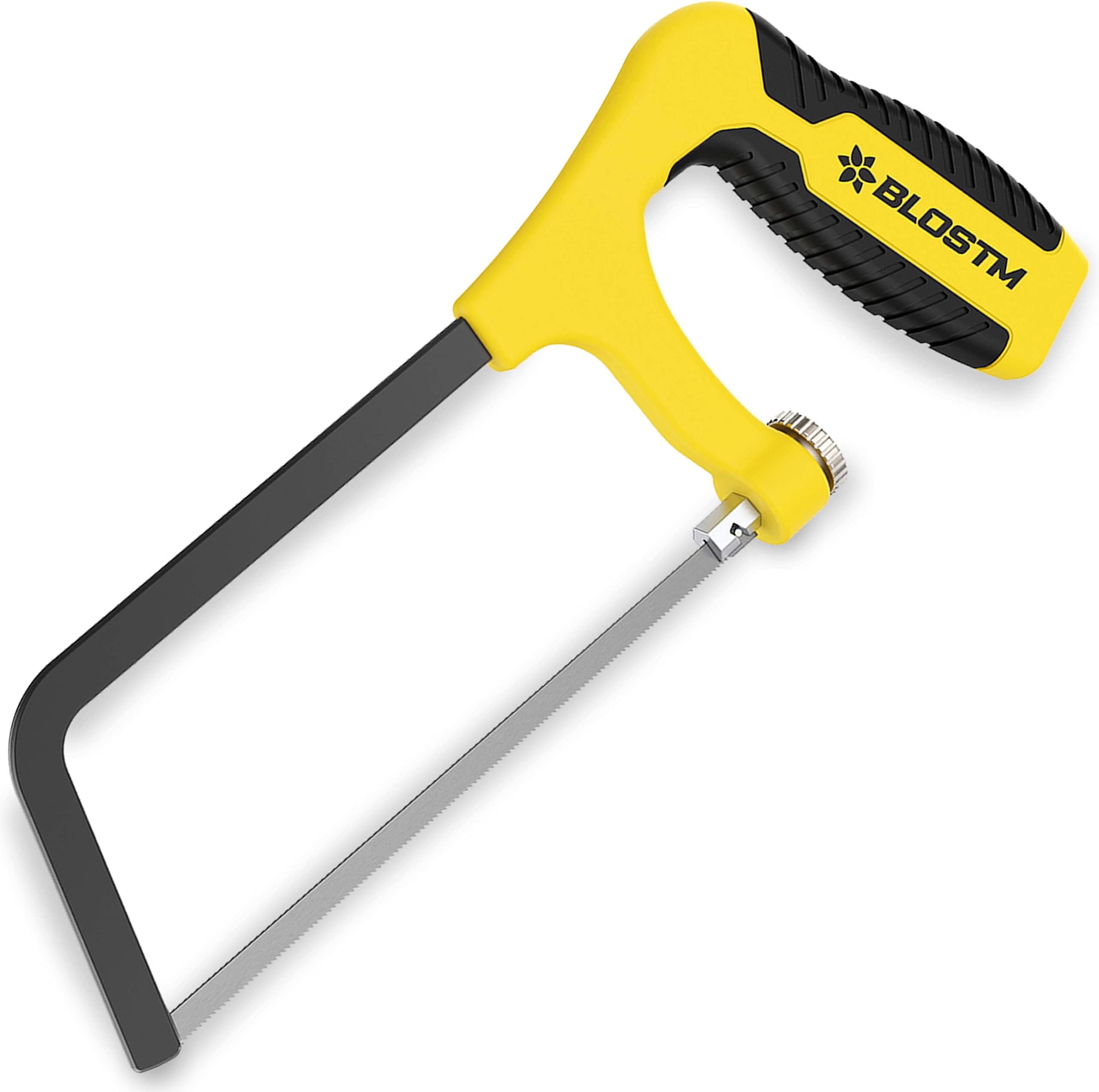
A junior hacksaw is a small hand saw made for cutting light metal, plastic, wood, and other thin materials. It has a compact metal frame and a narrow, replaceable blade with small teeth. In the United States, stores may also call it a mini hacksaw, small hacksaw, or compact hacksaw.
Unlike a full-size hacksaw, a junior hacksaw fits into tight spaces and is easier to control for small jobs. It is useful for home repairs, model work, plumbing tasks, electrical work, crafts, and light shop work. Its small size is also its main limit: it cuts more slowly and handles less material than a standard hacksaw.

Junior Hacksaw: Quick Answer
A junior hacksaw is a compact frame saw with a short, narrow blade. You move it back and forth by hand to cut materials such as:
- Thin steel and aluminum
- Copper and plastic pipe
- Bolts, screws, and threaded rod
- PVC and other plastic parts
- Small wood or composite pieces
- Craft and model materials
Most junior hacksaws use blades about 6 inches long, although sizes and mounting systems vary by brand. The frame may hold the blade with fixed pins, slots, or a simple tension system.
The tool works much like a full-size hacksaw. The key difference is scale. A junior hacksaw gives you better control in small areas, but its shorter blade removes less material with each stroke.
What Does a Junior Hacksaw Look Like?
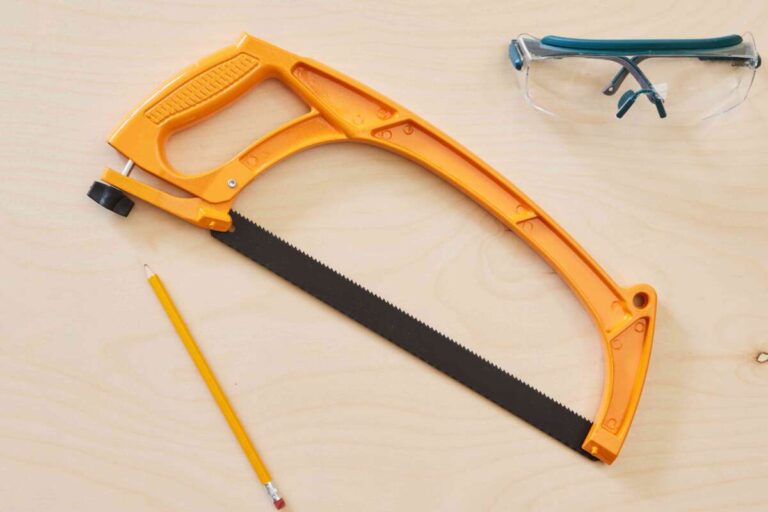
A junior hacksaw has four main parts:
- Frame — The rigid body that supports the blade.
- Blade — The toothed strip that cuts the material.
- Handle — The part you hold while sawing.
- Blade mounts or pins — The points that hold the blade in the frame.
Some models have an adjustable frame. Others use a fixed frame made for one blade length. Many compact designs use a straight handle at one end and a blade that runs in line with the handle.
The blade is usually made from hardened steel or high-speed steel. Some blades have a flexible back with hardened teeth. This design helps the teeth cut while reducing the chance that the whole blade snaps under normal hand pressure.
Blade teeth and tooth pitch
Hacksaw blades are described by teeth per inch, or TPI. A higher TPI blade has smaller teeth. A lower TPI blade has larger teeth.
| Blade size | Typical use |
|---|---|
| About 14–18 TPI | Thicker metal or softer material |
| About 24 TPI | General-purpose metal cutting |
| About 32 TPI | Thin sheet metal, small tubing, and fine cuts |
The correct rule is simple: keep at least two or three teeth in contact with the workpiece during the cut. If too few teeth touch the material, the blade can catch and snag. If the material is very thin, use a finer blade.

What Is a Junior Hacksaw Used For?
A junior hacksaw is best for small cuts where a powered tool would be too large, too noisy, or too aggressive. It gives you direct control over the cut and does not need electricity or batteries.
Common uses include:
Cutting small metal parts
you can use a suitable blade to cut:
- Small bolts
- Steel or aluminum strip
- Threaded rod
- Wire conduit
- Thin tubing
- Brackets and light hardware
A junior hacksaw can cut metal, but it is not intended for large structural sections or thick solid bar. Those jobs take too long by hand and may require a full-size hacksaw, band saw, reciprocating saw, or another suitable tool.
Cutting plastic pipe
A fine-tooth blade can cut PVC, ABS, and similar plastic pipe. After the cut, remove the burrs with a file, deburring tool, or fine sandpaper. A smooth end helps fittings seat properly.
Do not use the saw on a pressurized pipe. Shut off the supply and drain the line first. If the pipe carries gas, refrigerant, or a hazardous fluid, follow the relevant work rules or use a qualified professional.
Cutting wood and craft materials
A junior hacksaw can cut thin wood, plastic sheet, foam board, and some composite materials when the blade is suitable. It is not a replacement for a wood saw. The small blade may clog, bend, or wear fast in thick wood.
Trimming screws and bolts
One of the most useful home repairs is trimming a bolt or screw that sticks out too far. Thread the nut onto the fastener before cutting. After the cut, remove the nut to help restore the damaged thread at the end.
Protect nearby surfaces from scratches. A piece of cardboard or thin scrap wood can act as a shield.
How to Use a Junior Hacksaw
A clean cut begins with the right blade, a firm workpiece, and light pressure. Follow these steps.
1. Choose the right blade
Match the blade to the material and thickness. Use a fine-tooth blade for thin metal and tubing. Use a coarser blade for thicker, softer material.
Check that the blade is sharp and free of cracks. A dull blade needs more force and is more likely to bind.
2. Mark the cut
Use a pencil, marker, scriber, or layout tool. Mark the line around the material when possible. A line on only one face may not be enough for a square cut.
For a pipe or round stock, mark the full way around it. This gives you a guide as the blade moves around the surface.
3. Secure the workpiece
Clamp the material in a vise or hold it with a suitable fixture. Keep the cut close to the support point. This reduces vibration and prevents the workpiece from moving.
Never hold a small metal part in your hand while cutting toward your fingers. The blade can slip when it breaks through.
4. Install the blade correctly
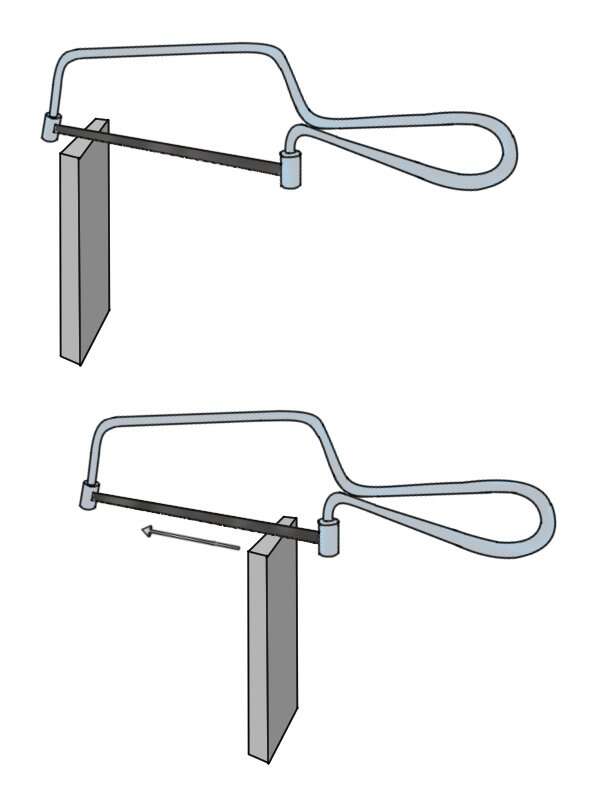
Most hacksaw blades cut on the forward stroke. Point the teeth away from the handle unless the tool maker states otherwise.
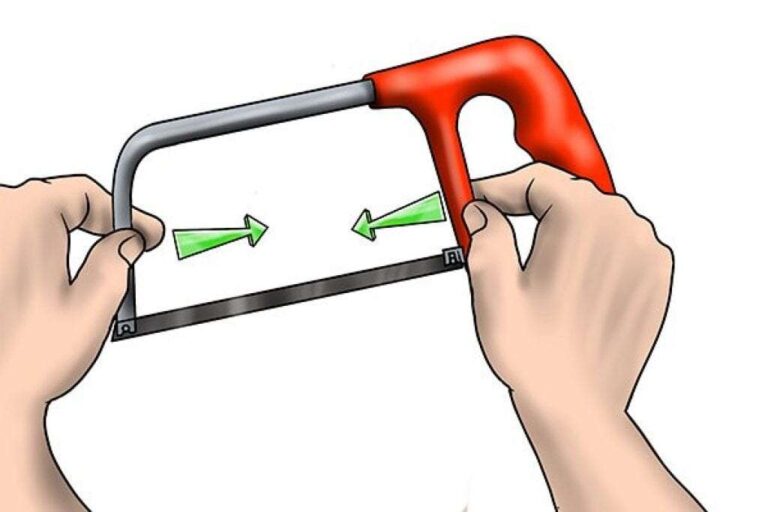
Tighten the blade so it stays straight. It should not twist or sag during the cut. Do not over-tighten a small frame, because excess tension can damage the frame or snap the blade.
5. Start with short strokes
Place the blade on the waste side of the mark. Use short, light strokes to create a shallow groove. This groove helps guide the blade.
Once the groove is established, use longer strokes that make good use of the blade. Keep the blade aligned with the cut. Let the teeth do the work rather than forcing the frame.
6. Use steady pressure
Apply pressure on the cutting stroke and reduce pressure on the return stroke. Keep the blade moving at a steady pace.
If the blade chatters, binds, or wanders, stop and check the setup. The workpiece may be loose, the blade may be dull, or the blade may have too few teeth for the material.
7. Finish the cut carefully
As the blade reaches the far side, reduce pressure. The material may break through suddenly. Support both sides of the cut so the workpiece does not fall and tear the last section.
Remove sharp burrs with a file or deburring tool. Wear eye protection during this step.
Junior Hacksaw vs. Full-Size Hacksaw
Both tools use a narrow toothed blade, but they serve different needs.
| Feature | Junior hacksaw | Full-size hacksaw |
|---|---|---|
| Frame size | Compact | Larger |
| Common blade length | Often about 6 inches | Often about 10–12 inches |
| Best for | Small parts and tight spaces | Larger stock and longer cuts |
| Control | High for small work | Better reach and faster cutting |
| Cutting speed | Slower on thick material | Faster on larger material |
| Portability | Very easy to carry | Still portable, but bulkier |
| Blade capacity | Usually limited by the small frame | More blade options and sizes |
Choose a junior hacksaw when access and control matter most. Choose a full-size hacksaw when the material is thicker, the cut is longer, or you need to remove more material with each stroke.
A junior hacksaw is also different from a mini reciprocating saw. A reciprocating saw uses a powered motor and moves the blade rapidly. It can cut faster, but it creates more noise, vibration, and risk of damaging nearby parts.
How to Choose a Junior Hacksaw
The best junior hacksaw depends on the work, not just the lowest price. Check these features before buying.
Blade length and fit
Confirm the blade length and mounting style. Replacement blades are not always interchangeable between frames. A common size may be easy to find, but unusual mounts can limit your choices.
Frame strength
A rigid frame keeps the blade straight. A flexible frame can make the cut wander and may lose tension during use.
Handle comfort
Look for a handle that gives you a firm grip without sharp edges. A small saw can create hand fatigue during long cuts, especially if the handle is narrow or smooth.
Blade availability
A useful saw is one you can keep supplied with blades. Check whether the tool accepts common replacement blades and whether the blades suit the materials you plan to cut.
Adjustable tension
Some frames let you adjust blade tension. This can improve control and make blade changes easier. A fixed frame may be simpler and less costly, but it gives you fewer adjustment options.
Blade quality
A high-quality blade usually holds its teeth longer and cuts with less effort. For metal work, look for blades made for the material and choose a tooth pitch that keeps several teeth in the cut.

Common Junior Hacksaw Problems
The blade keeps breaking
Possible causes include:
- Too much downward force
- A loose or twisted frame
- A blade installed backward
- A cut that is too tight for the blade
- A workpiece that moves during cutting
- A blade with too few teeth in contact
Stop cutting when the blade breaks. Remove the fragments with care, then inspect the frame and install a new blade.
The saw will not cut
Check whether the blade is dull or installed backward. Then confirm that the blade matches the material. A fine blade can struggle in thick stock, while a coarse blade can snag thin sheet metal.
Do not solve the problem by pushing harder. Excess force increases heat, wear, and the chance of a slip.
The cut is not straight
A wandering cut often comes from poor support, a loose blade, or starting without a guide groove. Mark the work clearly, secure the material, and begin with short strokes.
Keep the frame square to the workpiece. If you tilt the frame, the blade may cut at an angle or bind in the groove.
The blade gets hot
Heat can result from too much pressure, a dull blade, or cutting too fast. Stop and let the blade cool. For some metals, a suitable cutting lubricant may help, but follow the blade and material guidance. Do not apply liquid near electrical equipment or where it could create a slip hazard.
Junior Hacksaw Safety Tips
A junior hacksaw is simple, but its blade has sharp teeth and can cause cuts. Use basic hand-tool safety:
- Wear safety glasses when cutting or removing burrs.
- Secure the workpiece before you start.
- Keep your free hand away from the blade path.
- Check the blade for cracks, missing teeth, or bends.
- Replace damaged blades instead of trying to straighten them.
- Use the right blade for the material.
- Keep fingers behind the blade and away from the cut.
- Carry the saw with the blade pointed away from your body.
- Store spare blades where they cannot cut skin.
- Clean metal dust and sharp offcuts from the work area.
For coated, painted, or unknown materials, consider the dust and fumes created by cutting. Do not cut materials that may contain asbestos, lead-based coatings, or other hazardous substances unless you have the proper controls and training.

Frequently Asked Questions
Is a junior hacksaw the same as a mini hacksaw?
Usually, yes. In the United States, “mini hacksaw” and “junior hacksaw” often describe the same type of compact hand saw. The exact frame shape, blade length, and mounting system can differ by brand.
Can a junior hacksaw cut steel?
Yes, with a blade made for steel and a suitable tooth pitch. It works best on thin steel, small fasteners, tubing, and light stock. It is not efficient for thick steel plate or large solid bar.
Can it cut PVC pipe?
Yes. A fine-tooth blade can cut PVC and other common plastic pipe. Support the pipe, keep the cut square, and remove burrs before joining the pipe to a fitting.
Which way should the hacksaw blade face?
On most junior hacksaws, the teeth face away from the handle. The blade cuts on the forward stroke. Check the tool’s instructions if the frame uses an unusual mounting system.
How long does a junior hacksaw blade last?
There is no fixed service life. Blade life depends on the material, thickness, tooth pitch, pressure, and cutting frequency. Replace the blade when it becomes dull, skips, binds, bends, or requires much more force than before.
Is a junior hacksaw better than an angle grinder?
Neither tool is always better. A junior hacksaw is quieter, does not create sparks, and gives good control for small cuts. An angle grinder is faster for many metal jobs but creates sparks, dust, noise, and a greater need for guarding and protective equipment.
Key Takeaways
- A junior hacksaw is a compact hand saw with a replaceable toothed blade.
- It is useful for small cuts in metal, plastic, wood, and similar materials.
- It offers better access and control than a full-size hacksaw.
- Choose the blade by material thickness and teeth per inch.
- Secure the workpiece and use light, steady pressure.
- Wear eye protection and replace damaged blades at once.
Conclusion
A junior hacksaw is a small but useful hand tool for controlled cuts in tight spaces. It works well for bolts, thin tubing, plastic pipe, light metal, and craft materials. Its limits are clear: it is slower than a full-size or powered saw and is not suited to thick stock.
For the best result, use a sharp blade with the right tooth pitch, clamp the work securely, and let the blade cut with steady strokes. If the material is thick, hazardous, pressurized, or structural, choose a more suitable tool or seek qualified help.
Recent Tool Guides
 Hammer
How To Hammer Flowers Onto Paper: Easy Guide
Learn how to hammer flowers onto paper with simple steps, helpful tips, and beautiful results for...
Read Guide → Wrench
How To Use A Hex Wrench: Easy Step-By-Step Guide
Learn how to use a hex wrench correctly with simple steps, helpful tips, and common mistakes...
Read Guide → Hacksaw
How To Cut Curtain Pole With Hacksaw: Easy Guide
Learn how to cut curtain pole with hacksaw safely and neatly. Follow simple steps for accurate...
Read Guide → Wrench
How To Use A Husky Torque Wrench: Easy Guide
Learn how to use a Husky torque wrench correctly with simple steps, torque settings, and safety...
Read Guide → Hammer
How To Hold A Hammer: Safe Grip Guide
Learn how to hold a hammer with the right grip, stance, and technique for safer, more...
Read Guide → Hacksaw
How To Cut Flexible Metal Conduit With Hacksaw: Easy Guide
Learn how to cut flexible metal conduit with hacksaw safely and cleanly. Follow simple steps for...
Read Guide →