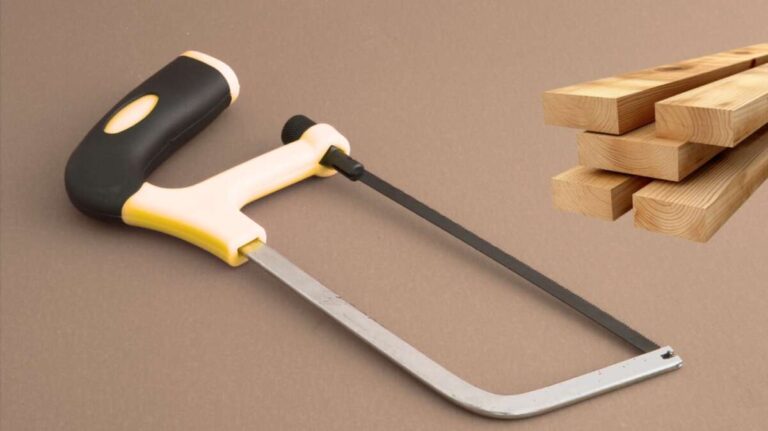
Which Hacksaw Blade For Metal: Choose The Right One
For most metal cutting jobs in the United States, the best starting point is a 24-teeth-per-inch (TPI) bi-metal hacksaw blade. It works well on common steel, aluminum, copper, brass, conduit, threaded rod, and metal tubing.
Change the TPI when the metal is very thin or very thick. Use a 32-TPI blade for thin sheet metal and small tubing, an 18-TPI blade for thicker stock, and a 14-TPI blade for large, solid pieces. Choose a blade with at least two or three teeth in the metal at all times.

What the TPI rating means
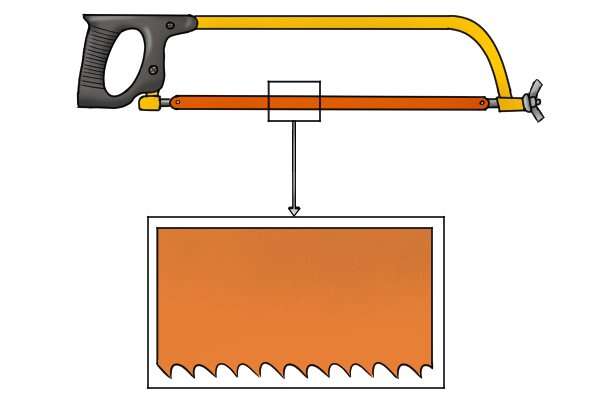
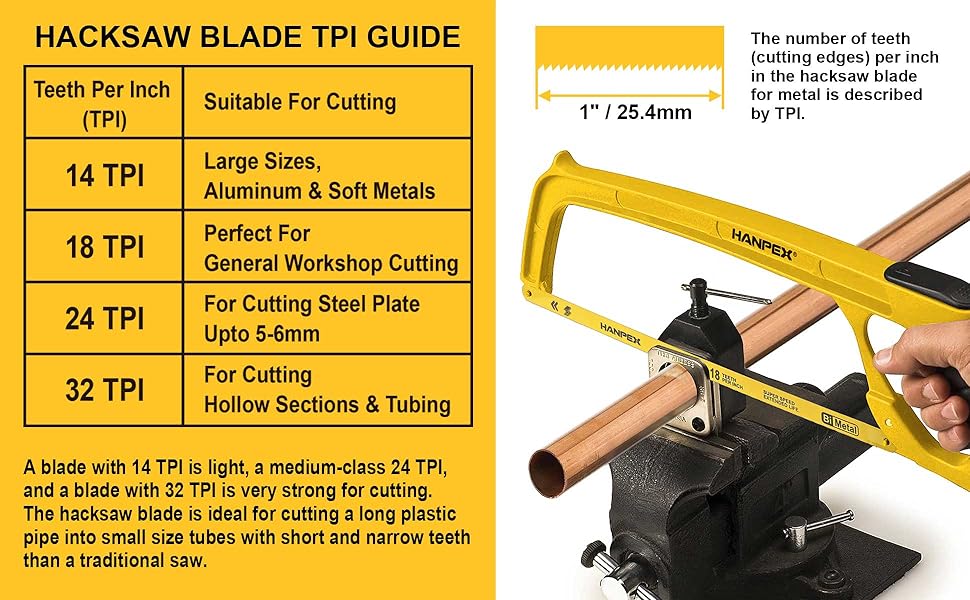
TPI means teeth per inch. It tells you how many teeth fit within one inch of the blade.
A higher TPI blade has smaller teeth. It makes a smoother cut and works better on thin metal. A lower TPI blade has larger teeth. It removes metal faster and works better on thick stock.
The right TPI helps prevent two common problems:
- Too few teeth: The blade may catch, snag, or break teeth.
- Too many teeth: The blade may clog with chips and cut very slowly.
A simple rule works for most jobs: keep two or three teeth engaged with the workpiece during each stroke. This is especially useful when cutting thin wall tubing, sheet metal, and metal straps.
Hacksaw blade TPI chart
| Metal thickness or type | Recommended TPI | Typical U.S. examples |
|---|---|---|
| Thin sheet metal, wire, small tubing | 28–32 TPI | HVAC sheet, metal brackets, thin-wall tube |
| General-purpose metal work | 18–24 TPI | Bolts, conduit, angle iron, small pipe |
| Medium-thick steel or aluminum | 14–18 TPI | Flat bar, larger tubing, thick-wall pipe |
| Large solid stock | 10–14 TPI | Heavy bar, thick plate, large steel sections |
These ranges are starting points, not strict limits. The best choice also depends on the metal type, the blade material, and whether you are cutting solid stock or hollow tubing.

The best hacksaw blade for common metals
The metal itself affects blade choice. A blade that works well on mild steel may not be the best option for stainless steel, aluminum, or hardened fasteners.
Mild steel
For mild steel, use an 18- to 24-TPI bi-metal blade. A 24-TPI blade is a good general choice for bolts, brackets, conduit, and small steel tubing.
Use 14- to 18-TPI for thick steel bar or plate. The larger teeth clear chips more easily and reduce clogging.
Stainless steel
Stainless steel is tougher to cut than mild steel. It can harden when overheated or rubbed without enough cutting action.
Choose a bi-metal blade with variable or regular 18–24 TPI. Use steady pressure and avoid forcing a dull blade. A sharp bi-metal blade is usually a better choice than a basic carbon-steel blade.
Do not let the blade scrape back and forth with little pressure. That can create heat and make the surface harder to cut.
Aluminum
Aluminum is soft, but it can clog the teeth. Use an 18- to 24-TPI blade for most aluminum parts. For thin aluminum sheet, use 24–32 TPI.
Keep the teeth clean. A light coat of cutting lubricant made for metal can reduce buildup, but check the product label first. Some lubricants are not suitable for every metal or work setting.
Copper and brass
Copper and brass usually cut easily with an 18- to 24-TPI blade. Use 24–32 TPI for thin tubing and sheet.
A blade with fine, sharp teeth helps prevent rough edges on soft metals. Do not press too hard, since soft metal can deform under the blade.
Hardened bolts and tool steel
For hardened bolts, use a high-quality bi-metal blade, often in the 18–24 TPI range. A standard carbon-steel blade may dull quickly.
If the bolt is extremely hard, a hacksaw may be the wrong tool. An abrasive wheel, reciprocating saw blade designed for hardened metal, or professional cutting method may work better. Wear eye protection because hardened metal can produce sharp chips.
Cast iron
Cast iron is hard and brittle. A coarse blade may work for some small pieces, but the cut can be slow and rough.
Use a sturdy blade and clamp the work firmly. For large or thick cast-iron parts, a hacksaw may not be practical. Consider a tool designed for heavy metal cutting.

Bi-metal, carbon steel, or high-speed steel?
Blade material affects cutting life, tooth strength, and price.
Bi-metal blades
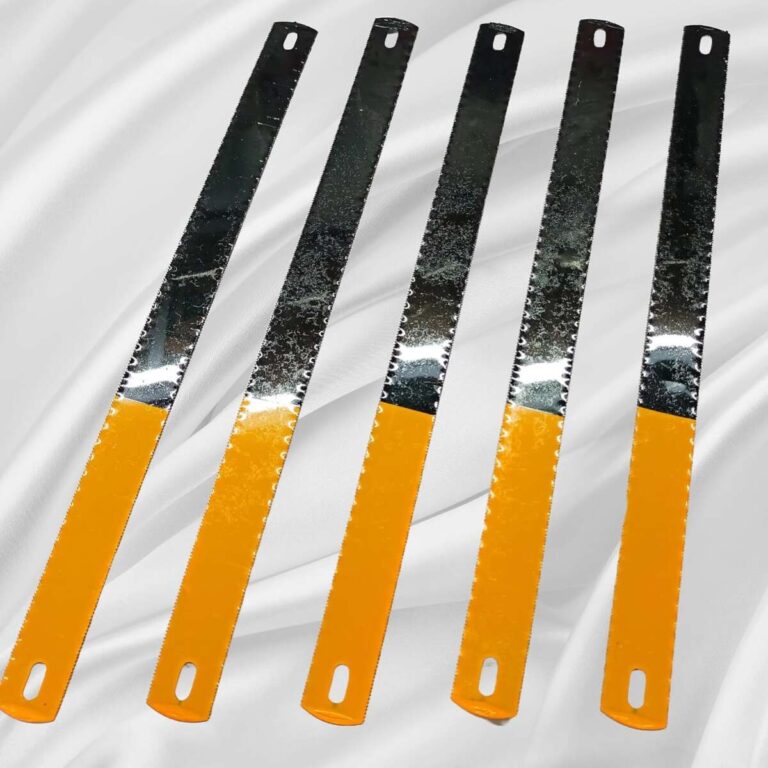
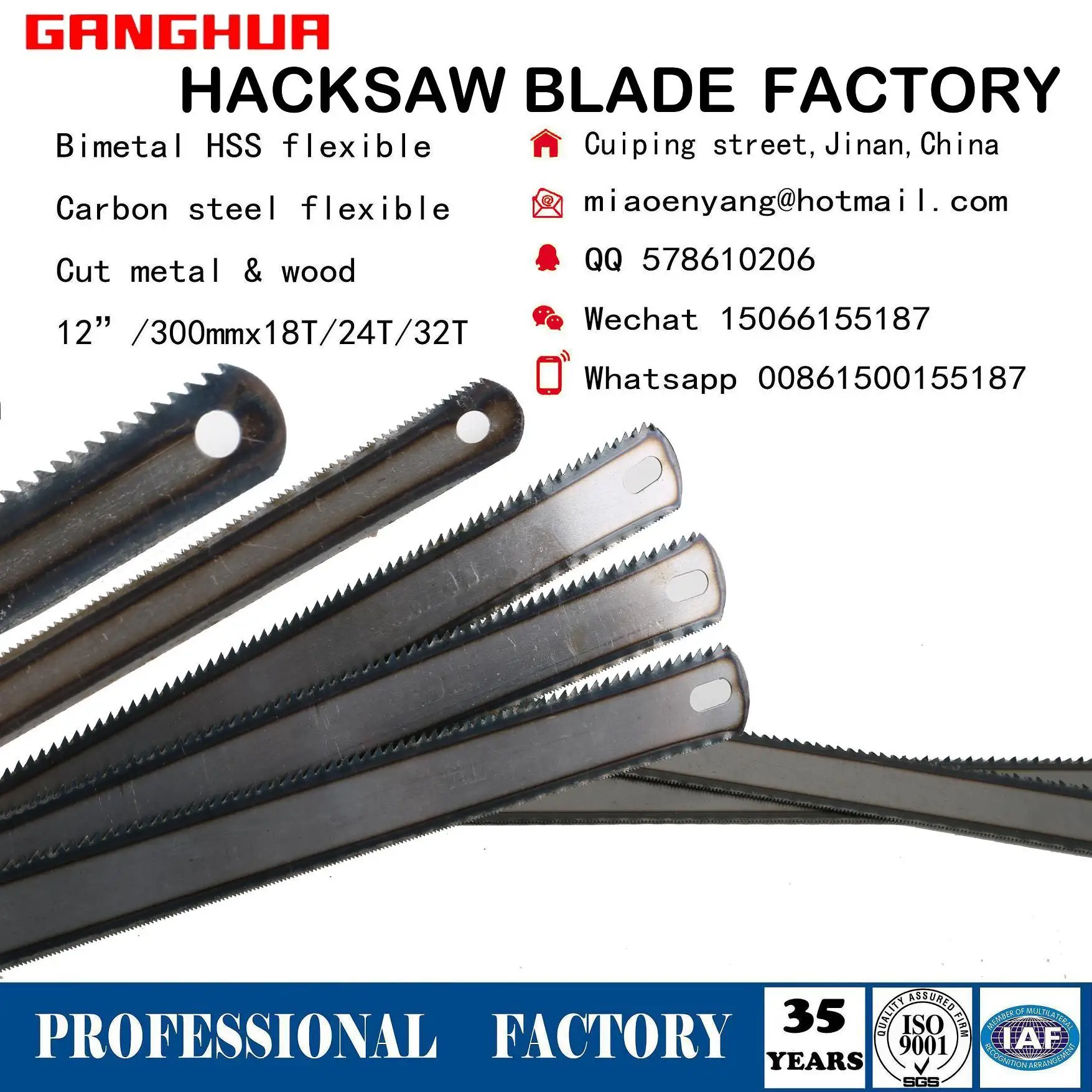
A bi-metal blade combines two metals. The blade back is usually a flexible spring steel, while the teeth use a harder high-speed steel.
This design gives the blade:
- Flexible backing
- Hard, wear-resistant teeth
- Better resistance to tooth breakage
- Longer life in many metal-cutting tasks
For regular home repair, plumbing, automotive, fabrication, and maintenance work, a bi-metal blade is usually the best all-around choice.
Carbon-steel blades
Carbon-steel blades usually cost less. They can work for light jobs, soft metals, plastic, and occasional cutting.
They are more likely to dull or break when used on thick steel, stainless steel, or hardened fasteners. They make sense when low cost matters more than blade life.
High-speed steel blades
High-speed steel, or HSS, is hard and resists wear. Some blades use HSS teeth or an HSS cutting edge.
The trade-off is that very hard cutting edges may be less forgiving if the blade twists or the frame is used poorly. For most users, a bi-metal blade with HSS teeth offers a useful balance.
Variable-pitch blades
A variable-pitch blade changes the tooth spacing along the blade. For example, the blade may vary between fine and coarse tooth sizes.
Variable-pitch blades can reduce vibration and work well across changing metal thicknesses. They are useful when one job includes several types of stock, such as thin tubing and thicker brackets.
How to choose the right hacksaw blade
Use this five-step method before you start cutting.
1. Identify the metal
Ask whether the workpiece is:
- Mild steel
- Stainless steel
- Aluminum
- Copper or brass
- Cast iron
- A hardened fastener
- A coated or painted metal part
If you are unsure, begin with a quality 24-TPI bi-metal blade. It is a safe general starting point for many small metal jobs.
2. Measure the thickness
For solid stock, measure the full cutting thickness.
For tubing, measure the wall thickness, not the outside diameter. A large tube with a thin wall needs a finer blade than a small solid bar.
This distinction matters. A 2-inch tube with a thin wall may need 24 or 32 TPI, while a 1-inch solid bar may need 14 or 18 TPI.
3. Select the TPI
Use the thickness to select the tooth size:
- Thin material: 28–32 TPI
- General work: 18–24 TPI
- Thick material: 14–18 TPI
- Very thick solid stock: 10–14 TPI
Check that at least two or three teeth will remain in the cut. If only one tooth touches the metal, the blade may chatter or catch.
4. Choose the blade length and frame fit
Common hand hacksaw blades are about 10, 12, or 14 inches long, with 12 inches being a common U.S. size. The blade must match the frame’s mounting points.
Do not install a blade that is too short or too long for the frame. The blade should fit tightly without forcing the frame out of shape.
5. Choose blade quality
For occasional light work, carbon steel may be enough. For repeated work or hard metal, choose bi-metal.
Inspect the blade before use. Do not use one with missing teeth, cracks, severe rust, or a bent body.

How to use a hacksaw blade correctly
The correct blade can still fail if the cut is started or supported poorly.
- Secure the workpiece. Clamp it in a vise so it cannot move. Support tubing close to the cut to reduce vibration.
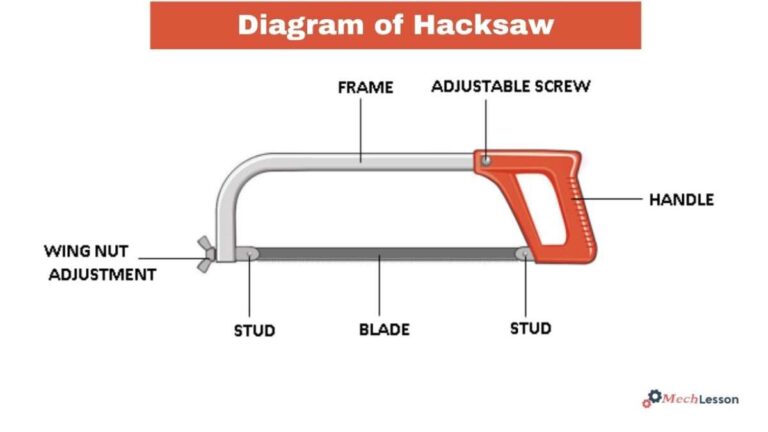
- Install the blade with the teeth pointing forward. Most hacksaws cut on the forward stroke.
- Tighten the blade. It should be firm and straight, but do not over-tighten the frame.
- Mark the cut line. Use a scribe, marker, or layout tool suited to the surface.
- Start with short, light strokes. Make a shallow groove before using the full blade length.
- Use steady pressure on the forward stroke. Reduce pressure on the return stroke.
- Use long strokes when possible. This spreads wear across more teeth.
- Keep the blade square. A tilted blade can twist, bind, and break.
- Let the blade cut at its own pace. Excessive force creates heat and dulls the teeth.
- Finish the cut with control. Support the piece so it does not fall and pinch the blade.
A small amount of cutting fluid may help on some steel jobs. Use only a product suitable for the metal and work area. Keep fluids away from electrical tools and clean the workpiece after cutting.

Signs that the blade or technique is wrong
The cut tells you a lot about the problem.
The blade skips or grabs
Possible causes include:
- Too few teeth are engaged
- The workpiece is loose
- The blade is dull
- You are using too much pressure
- The blade is not tight
- The frame is not square to the work
Try a finer TPI, clamp the material more firmly, and use lighter strokes.
The blade cuts very slowly
The TPI may be too fine for thick metal. A dull blade, low pressure, or an incorrect blade material can also cause slow cutting.
For thick steel, move from 24 TPI to 18 or 14 TPI. Do not jump to a very coarse blade if the workpiece is thin.
The teeth clog with metal
Clogging is common with aluminum, copper, brass, and other soft metals. The blade may have teeth that are too fine, or the cut may lack lubrication.
Use a suitable cutting lubricant and clean the teeth. For thick soft metal, try a slightly coarser blade.
The blade breaks
A broken blade often points to twisting, loose clamping, excess force, or a poor-quality blade.
Install the blade straight. Keep both hands aligned with the frame, and do not turn the frame while the blade is inside the cut.
The cut wanders
A wandering cut can result from a dull blade, poor starting groove, loose material, or uneven pressure.
Start a clear groove with short strokes. Keep the blade square and use the full blade length once the groove is established.

Common hacksaw blade mistakes
Avoid these errors to extend blade life and improve cut quality.
Using a coarse blade on thin metal
Large teeth can grab thin sheet or tubing. They may leave too few teeth in contact with the work.
Choose a finer blade when the wall is thin.
Using a fine blade on thick stock
A fine blade has many small teeth, but it may remove material slowly and clog. It can also overheat under heavy pressure.
Use a lower TPI for thick, solid metal.
Cutting without a vise
Holding metal by hand makes the workpiece vibrate. It also increases the chance of a slip injury.
Clamp the work whenever possible. If clamping is not possible, use a stable support and keep your free hand away from the cut line.
Reusing a dull blade
A dull blade does not become useful again through extra pressure. It produces heat, wastes time, and can slip.
Replace it when the teeth are rounded, missing, clogged, or no longer produce a clean cut.
Ignoring the finish
A hacksaw leaves sharp burrs. Run a file or deburring tool along the cut edge after removing the workpiece.
Wear safety glasses during cutting and deburring. Gloves may help with sharp edges, but keep them away from moving power tools.

Safety limits and good practice
A hacksaw is a simple hand tool, but metal edges and chips can cause serious injuries.
Wear safety glasses with side protection. Use hearing protection when the work takes place near loud machinery. Secure long stock so it cannot swing or drop.
Do not use a damaged frame or blade. Replace a blade after it breaks rather than trying to repair it. Keep the saw under control as the cut finishes, since the frame can move suddenly when the metal separates.
Follow the safety instructions for any lubricant, clamp, vise, or powered tool used near the job. U.S. workplace users should also follow their employer’s tool safety program and applicable Occupational Safety and Health Administration guidance.

Quick decision guide
Choose the blade that matches both the metal thickness and the cutting conditions:
- One general-purpose blade: 24-TPI bi-metal
- Thin sheet or thin-wall tubing: 28–32 TPI
- Small steel bolts and conduit: 18–24 TPI
- Thick steel bar or plate: 14–18 TPI
- Large solid stock: 10–14 TPI
- Stainless steel or hardened fasteners: quality bi-metal, usually 18–24 TPI
- Soft aluminum, copper, or brass: 18–32 TPI, with a suitable lubricant if needed
If the workpiece is thin enough that only one tooth touches the cut, use a higher TPI blade. If the workpiece is thick and the fine blade clogs or overheats, use a lower TPI blade.
FAQs about hacksaw blades for metal
Is a 24-TPI hacksaw blade good for metal?
Yes. A 24-TPI bi-metal blade is a strong general-purpose choice for many metal jobs, including bolts, conduit, brackets, small tubing, and light steel stock. Use a finer blade for very thin metal and a coarser blade for thick solid stock.
Is a higher TPI better for metal?
Not always. Higher TPI is better for thin metal because more teeth stay engaged. Lower TPI is better for thick metal because the larger spaces between teeth clear chips more easily.
Should hacksaw blade teeth point forward or backward?
The teeth should usually point forward, away from the handle. A standard hacksaw cuts on the forward stroke. Follow the instructions for specialty frames that use a different blade arrangement.
Can you use a hacksaw blade to cut stainless steel?
Yes. Use a sharp bi-metal blade, often 18–24 TPI. Clamp the stainless steel firmly, use steady pressure, and avoid rubbing the blade without cutting action because heat can make the surface harder.
How long should a metal hacksaw blade last?
There is no fixed number of cuts. Blade life depends on the metal, thickness, TPI, pressure, lubrication, and blade quality. Replace the blade when cutting becomes slow, the teeth look rounded, or the blade starts to skip.
What is better for cutting thick metal: a hacksaw or an angle grinder?
A hacksaw is quieter and gives good control, but it is slower. An angle grinder is faster for many thick cuts but creates sparks, noise, dust, and a hot edge. Choose based on the work area, material, required finish, and safety controls.
Final recommendation
For most U.S. home repair and maintenance work, start with a 12-inch, 24-TPI bi-metal hacksaw blade. Move to 28–32 TPI for thin sheet or tubing and 14–18 TPI for thick steel or solid stock.
Clamp the metal, keep two or three teeth in contact, cut with steady forward pressure, and replace the blade when it becomes dull. That combination matters more than choosing the most expensive blade.
Sources and further reading
- OSHA: Hand and Power Tools
- OSHA: Hand Tools—General Requirements
- Bahco: Hand Hacksaw Blades
- Lenox: Hacksaw Blades
- ANSI Webstore: Hand Tool Standards
Recent Tool Guides
 Hammer
How To Hammer Flowers Onto Paper: Easy Guide
Learn how to hammer flowers onto paper with simple steps, helpful tips, and beautiful results for...
Read Guide → Wrench
How To Use A Hex Wrench: Easy Step-By-Step Guide
Learn how to use a hex wrench correctly with simple steps, helpful tips, and common mistakes...
Read Guide → Hacksaw
How To Cut Curtain Pole With Hacksaw: Easy Guide
Learn how to cut curtain pole with hacksaw safely and neatly. Follow simple steps for accurate...
Read Guide → Wrench
How To Use A Husky Torque Wrench: Easy Guide
Learn how to use a Husky torque wrench correctly with simple steps, torque settings, and safety...
Read Guide → Hammer
How To Hold A Hammer: Safe Grip Guide
Learn how to hold a hammer with the right grip, stance, and technique for safer, more...
Read Guide → Hacksaw
How To Cut Flexible Metal Conduit With Hacksaw: Easy Guide
Learn how to cut flexible metal conduit with hacksaw safely and cleanly. Follow simple steps for...
Read Guide →