Which Way Does The Blade Go On A Hacksaw: Blade Direction
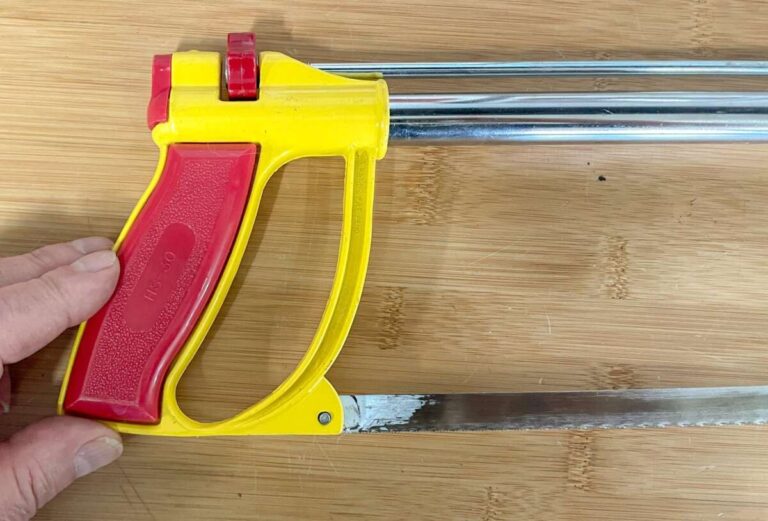
On a standard hacksaw, install the blade with the teeth pointing away from the handle. The teeth should point toward the front end of the frame.
This setup makes the blade cut on the forward push stroke. The return stroke brings the saw back without cutting. If the teeth point toward the handle, the saw may feel dull, skip across the metal, or bend the blade.

How to Tell Which Way a Hacksaw Blade Goes
Look at the small teeth along the blade. The pointed tips should face the end of the hacksaw frame farthest from the handle.
A simple rule works for most standard hacksaws:
Teeth face forward, away from the handle.
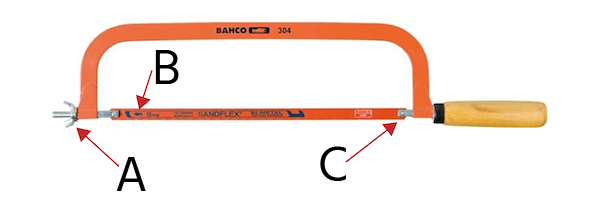
The handle is the part you hold. The front of the hacksaw is the end with the blade tension knob, wing nut, or adjustment screw.
Most hacksaw blades are made for a push cut. When you press the saw forward, the teeth remove a small amount of material. When you pull the saw back, use light pressure so the blade does not snag or bend.
Some blades have an arrow stamped on the side. If so, follow the arrow and the instructions on the package. The arrow usually points in the cutting direction.

Why Hacksaw Teeth Face Away From the Handle
A hacksaw blade is normally tensioned so it stays straight while you push it through the workpiece. The teeth are set to cut as the frame moves forward.
This design gives you better control because:
- The frame supports the blade during the cutting stroke.
- The teeth bite into the metal instead of dragging over it.
- The blade is less likely to buckle under normal use.
- The handle stays behind the cutting edge, where you can guide it.
Hacksaws use thin blades. Unlike a thick hand saw, a hacksaw blade can bend if you force it in the wrong direction. Correct tooth direction and steady pressure help the blade stay straight.
A blade mounted backward may still move through soft material, but it will not cut as intended. It can also make the saw feel unusually hard to use.
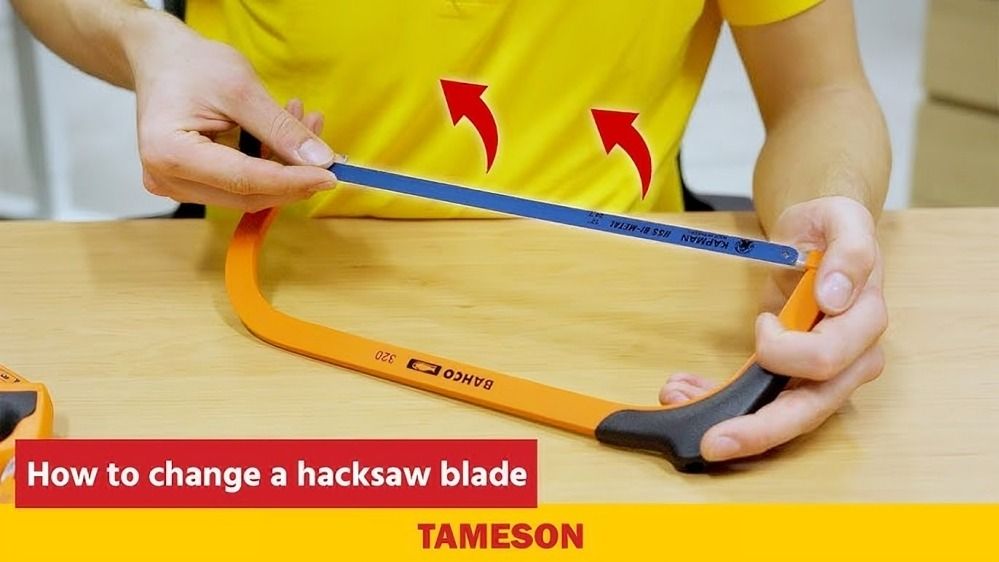
How to Install a Hacksaw Blade Correctly
Follow these steps for a full-size hacksaw or most adjustable metal-cutting frames.
1. Put on eye protection
Wear safety glasses before changing or using the blade. Small metal chips can break away during cutting.
Keep your fingers away from the teeth. Even a small hacksaw blade can cause a painful cut.
2. Release the blade tension
Turn the tension knob or wing nut counterclockwise until the old blade becomes loose.
Do not try to remove a tight blade by twisting it sideways. Release the tension first. This lowers the chance of bending the frame or cutting your hand.
3. Remove the old blade
Lift the blade out of the mounting pins at each end of the frame. Some frames use open slots, while others use small pins that pass through holes in the blade.
If the blade snapped, inspect the frame for bent parts before installing a new one.
4. Check the new blade
Find the teeth and identify the pointed tips. If the blade has an arrow, read the marking before fitting it.
For a normal hacksaw, the teeth should point:
- Away from the handle
- Toward the front of the frame
- In the direction of the push stroke
5. Fit the blade onto the mounting pins
Place one blade hole over the pin at the front of the frame. Then fit the other hole over the rear pin near the handle.
Do not force the blade sideways. If the holes do not line up, loosen the tension adjuster further.
6. Tighten the blade
Turn the tension knob or wing nut clockwise. Tighten the blade until it feels firm and straight.
The blade should not hang loose, but do not overtighten it. Excess tension can damage the blade, frame, or mounting parts.
7. Check the blade by hand
With the saw away from the workpiece, gently touch the side of the blade with one finger. It should feel firm, like a tight wire.
Do not press hard on the teeth. The blade should sit straight in the frame and should not twist from end to end.

How Tight Should a Hacksaw Blade Be?
A hacksaw blade should be tight enough to stay straight during a cut. It should not move loosely from side to side.
There is no single tension number that fits every hacksaw. Frame design, blade length, blade thickness, and the tension system all change the correct setting.
Use these practical checks:
| Check | What you should see |
|---|---|
| Blade alignment | The blade runs straight from one mounting point to the other |
| Side movement | The blade has little side-to-side play |
| Cutting test | The blade starts a clean cut without wandering |
| Frame condition | The frame does not bend or twist under normal hand pressure |
If the blade rattles, increase tension slightly. If the blade breaks soon after installation, check for excessive tension, sideways force, a damaged blade, or a bent frame.
Never test tension by snapping or striking the blade. A broken blade can move suddenly and cause an injury.

How to Use a Hacksaw After Installing the Blade
Secure the material before you cut. Use a vise, clamp, or another suitable method so the workpiece cannot move.
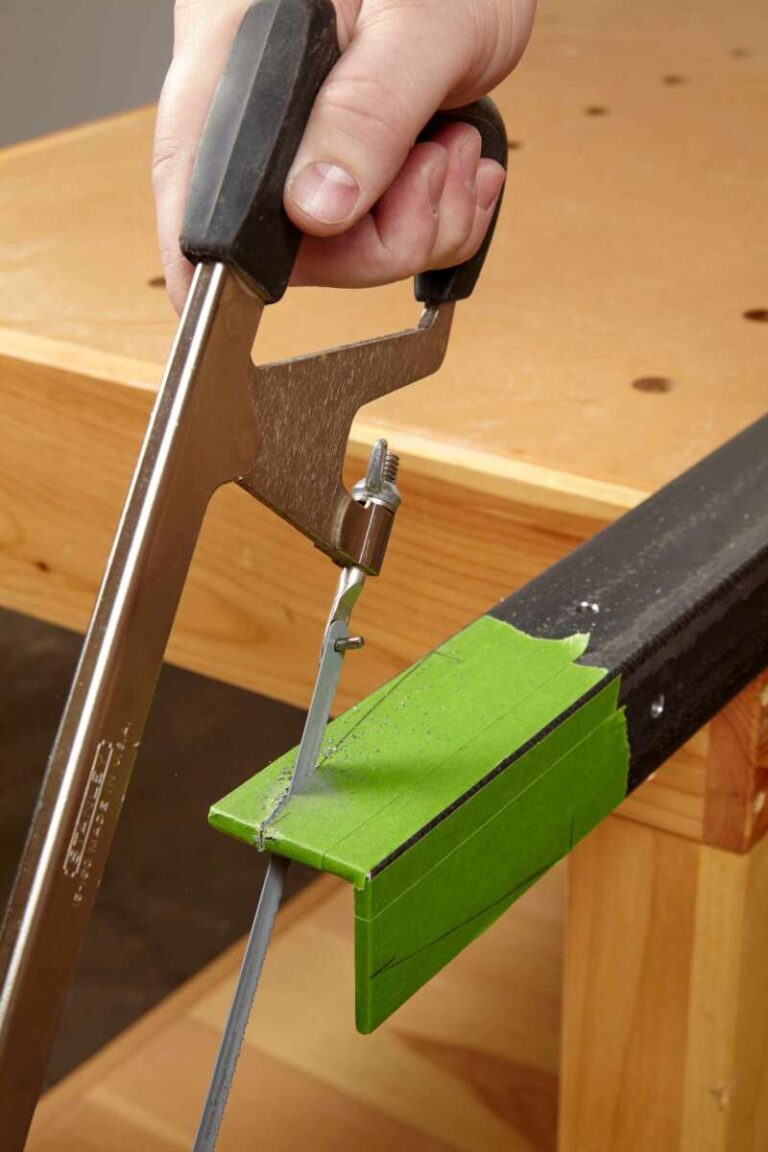
Place the blade on the cut line. Hold the saw with one hand on the handle and, when the frame allows it, the other hand near the front for control.
Start with short, light strokes. Once the blade creates a shallow groove, use longer strokes that use as much of the blade as practical.
Follow these cutting habits:
- Keep the blade straight with the cut line.
- Push forward with moderate pressure.
- Reduce pressure on the return stroke.
- Let the teeth do the cutting.
- Keep both hands clear of the blade path.
- Slow down near the end of the cut.
A hacksaw cuts best when the blade moves in a smooth line. Pressing too hard can strip teeth, bend the blade, or cause the frame to twist.
What If the Hacksaw Blade Is Installed Correctly but Will Not Cut?
If the teeth point away from the handle and the saw still performs poorly, check the blade and the cutting method.
The blade may be too fine
A blade with very fine teeth can cut thin metal well, but it may clog or cut slowly in thicker stock. A blade with very coarse teeth may catch on thin material.
As a general guide, try to keep at least two or three teeth in the material during the cut. If only one tooth contacts the workpiece, the blade may snag. If too many teeth are buried, the blade may clog.
The blade may be dull
Metal-cutting blades wear out. A dull blade needs more force and may polish the surface instead of making a clean cut.
Replace the blade if:
- The teeth look rounded or missing.
- The saw requires much more pressure than before.
- The blade slides without forming a groove.
- The cut wanders even when the saw is held straight.
The blade may be loose
A loose blade can vibrate and wander. Tighten it slightly, then check its alignment.
The material may be moving
A moving workpiece wastes cutting force and can bend the blade. Clamp the material close to the cut line.
You may be using too much pressure
Heavy pressure does not always make a hacksaw cut faster. It can force the blade sideways and damage the teeth.
Use a steady push. If the blade binds, stop and check the cut rather than forcing it.
The blade may be the wrong type
Standard hacksaw blades are made for metal, plastic, and some other materials. They are not a substitute for a wood saw, drywall saw, or specialized cutting tool.
Use the blade type recommended for the material and the frame.

Hacksaw Blade Direction for Different Types of Frames
Most full-size hacksaw frames use the same direction: teeth away from the handle. However, some compact tools have different frame shapes or blade systems.
Standard hacksaw
Install the blade with the teeth pointing away from the handle. This is the usual push-cut arrangement.
Mini hacksaw
Many mini hacksaws also use a blade with teeth pointing away from the handle. Because designs vary, inspect the tool and follow the maker’s marking.
Junior hacksaw
A junior hacksaw often uses a narrow blade held by small pins or clips. The teeth commonly face away from the handle, but the frame may place the handle differently from a full-size hacksaw.
Compact or specialty saw
Some compact saws use replaceable blades with a specific orientation. Follow the arrow, diagram, or printed instructions supplied with that tool.
The safest rule is not based on the frame’s color or shape. Identify the handle, find the cutting-direction marking, and confirm how the blade locks into the frame.

Common Mistakes When Installing a Hacksaw Blade
Installing the teeth toward the handle
This is the most common mistake. The saw may slide over the material or cut very slowly.
Fix: Turn the blade around so the teeth point away from the handle, unless the tool’s instructions state otherwise.
Tightening the blade too much
Over-tightening can break the blade or damage the frame.
Fix: Tighten until the blade is firm and straight. Do not use a wrench on a hand-tight tension knob unless the manufacturer specifically allows it.
Using the wrong blade length
A blade that is too short may not reach both mounting points. A blade that is too long may not tension correctly.
Fix: Use the length listed for the hacksaw frame. Common full-size frames often use 12-inch blades, but the frame’s specifications control.
Cutting with a loose frame
A loose handle or damaged frame can make the blade twist.
Fix: Inspect the frame, handle, pins, and tension mechanism before cutting.
Pushing during the return stroke
Pulling hard can make the teeth catch and bend the blade.
Fix: Use firm pressure on the forward stroke and light pressure while returning.
Cutting without eye protection
Metal chips and broken teeth can travel toward the face.
Fix: Wear safety glasses and keep bystanders away from the cutting area. OSHA’s hand-tool guidance also requires employers to maintain tools in safe condition and remove damaged tools from service where applicable. See OSHA 29 CFR 1910.242.

Key Takeaways
- Install a standard hacksaw blade with the teeth pointing away from the handle.
- The teeth should point toward the front of the frame.
- A normal hacksaw cuts on the forward push stroke.
- Tighten the blade until it is firm and straight, but do not overtighten it.
- Wear eye protection and secure the workpiece before cutting.
- Follow the tool maker’s instructions when an arrow or specialty blade indicates a different setup.
FAQs
Should hacksaw teeth face up or down?
For most hacksaws, the teeth should face forward, away from the handle. Whether they appear to face up or down depends on how you hold or position the frame. Direction toward the front matters more than “up” or “down.”
Does a hacksaw cut on the push or pull stroke?
A standard hacksaw cuts on the push stroke. The blade teeth point away from the handle so they can remove material as you move the saw forward.
Can I use a hacksaw blade backward?
You can physically mount some blades backward, but a standard hacksaw blade will not cut as designed. It may slide, snag, or make the blade more likely to bend. Use the direction shown by the tool or blade instructions.
How do I know when to replace a hacksaw blade?
Replace it when the teeth are dull, missing, rounded, or clogged, or when the saw no longer cuts smoothly with normal pressure. A blade that repeatedly bends may also need replacement after you check the frame and cutting technique.
How many teeth should a hacksaw blade have?
Choose the tooth spacing for the material thickness. Fine teeth suit thin metal, while coarser teeth suit thicker material. Aim to keep at least two or three teeth engaged in the workpiece during the cut.
Conclusion
A standard hacksaw blade goes on with its teeth pointing away from the handle. That direction lets the blade cut during the forward push stroke and gives the frame proper support.
After installation, check that the blade is straight, firm, and correctly seated on both mounting pins. Secure the material, wear eye protection, and use smooth forward strokes with light pressure on the return stroke.
Recent Tool Guides
 Hammer
How To Hammer Flowers Onto Paper: Easy Guide
Learn how to hammer flowers onto paper with simple steps, helpful tips, and beautiful results for...
Read Guide → Wrench
How To Use A Hex Wrench: Easy Step-By-Step Guide
Learn how to use a hex wrench correctly with simple steps, helpful tips, and common mistakes...
Read Guide → Hacksaw
How To Cut Curtain Pole With Hacksaw: Easy Guide
Learn how to cut curtain pole with hacksaw safely and neatly. Follow simple steps for accurate...
Read Guide → Wrench
How To Use A Husky Torque Wrench: Easy Guide
Learn how to use a Husky torque wrench correctly with simple steps, torque settings, and safety...
Read Guide → Hammer
How To Hold A Hammer: Safe Grip Guide
Learn how to hold a hammer with the right grip, stance, and technique for safer, more...
Read Guide → Hacksaw
How To Cut Flexible Metal Conduit With Hacksaw: Easy Guide
Learn how to cut flexible metal conduit with hacksaw safely and cleanly. Follow simple steps for...
Read Guide →