

Yes, a hand saw can cut through metal when fitted with the right blade and used with steady pressure.
The real answer to “can a hand saw cut through metal” depends on the saw, blade, metal type, thickness, and cutting method. A standard wood saw will usually struggle, but a metal-cutting hacksaw can cut steel, aluminum, copper, brass, and many thin metal parts with good accuracy. This guide explains how to choose the right tool, cut safely, avoid common mistakes, and know when a power tool is the better choice.

Can a hand saw cut through metal?
Yes, a hand saw can cut through metal, but it must have teeth made for metal. The most common tool for this job is a hacksaw. It uses a thin, hardened blade with many small teeth that slowly remove metal as you push and pull the saw.
A typical wood saw has large, widely spaced teeth. Those teeth are made to clear soft wood chips. They can catch, bend, or break when used on steel. A metal cutting blade has finer teeth that spread the cutting force across a larger area.
A hand saw works best for:
• Metal pipe and tubing
• Threaded rod and bolts
• Sheet metal
• Aluminum angle and flat bar
• Copper and brass pieces
• Small steel brackets
• Plastic-coated metal parts
The thickness of the metal matters. Thin stock and small tubes may take only a few minutes. Thick steel bar can take much longer and may require a powered tool.
Which hand saw is best for cutting metal?
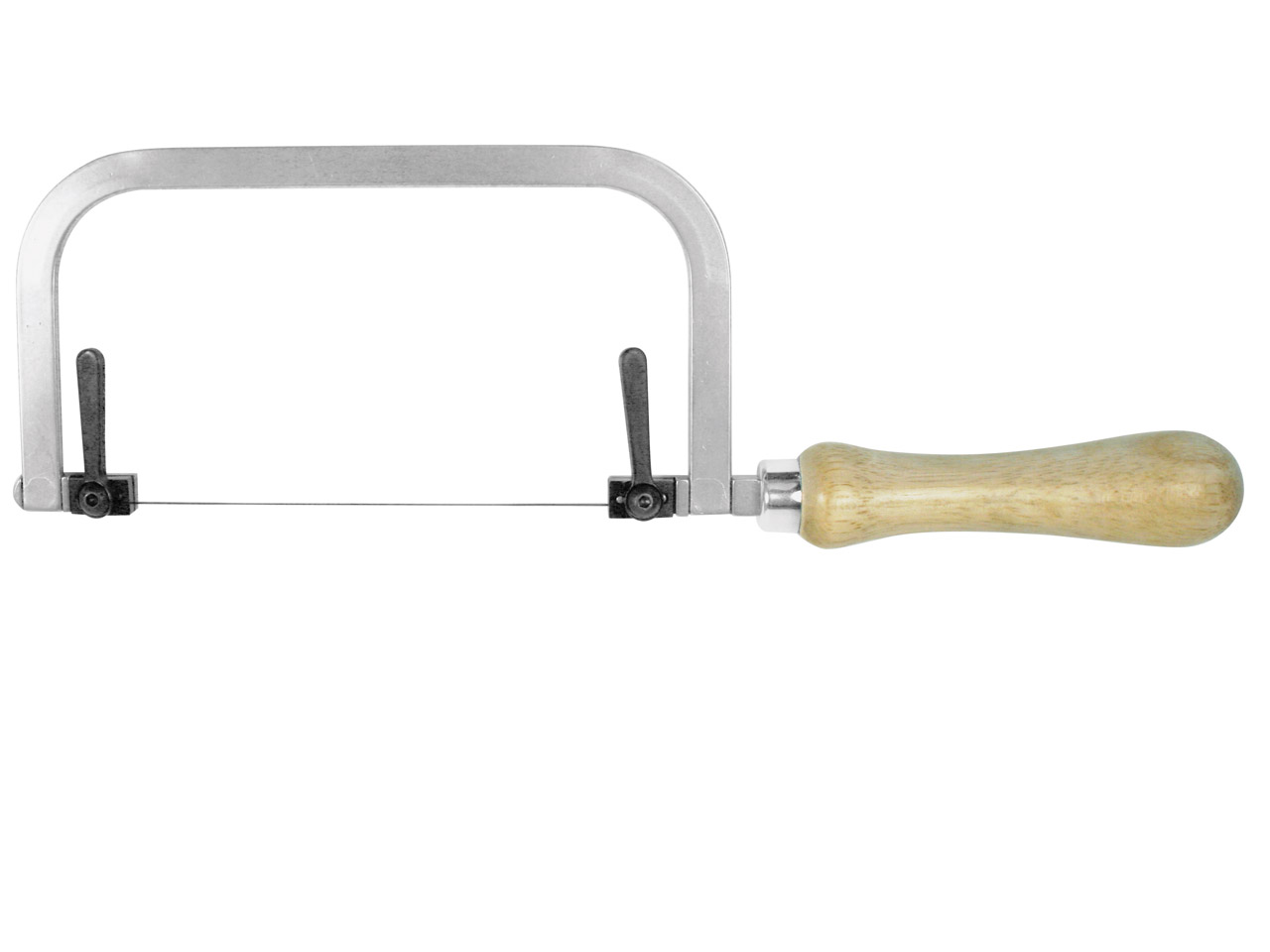
The best hand saw for metal is usually a hacksaw with a suitable bi-metal blade. A frame hacksaw holds the blade under tension, which helps it stay straight and reduces bending during the cut.
You may also see these useful options:
Standard hacksaw
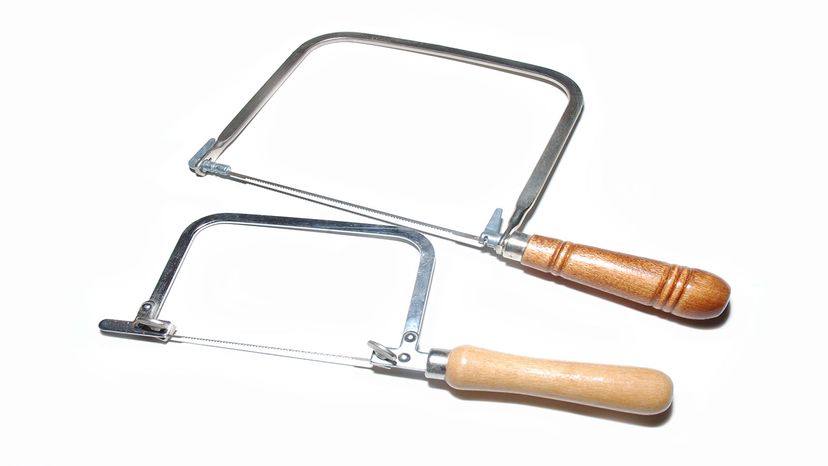
A standard hacksaw has a rigid frame and a replaceable blade. It is affordable, simple, and useful for most home repairs. Many models accept 10-inch or 12-inch blades.
Mini hacksaw
A mini hacksaw has a short handle and a small blade. It works well in tight spaces, such as inside a cabinet or between two pipes. It is slower and offers less control for long cuts.
Junior hacksaw
A junior hacksaw uses a smaller blade with a compact frame. It suits light work, thin sheet metal, and small hardware.
Metal cutting bow saw
A bow-style metal saw can handle longer cuts. It is less common for basic home use but can be useful in a workshop.
Reciprocating hand saw
Some specialty manual saws use a narrow metal cutting blade. They can reach tight spaces, but they are not usually as versatile as a standard hacksaw.
Avoid using a regular wood saw for metal. Even if it starts the cut, the teeth may become dull quickly or catch in the material.
Choosing the right metal cutting blade
Blade selection has a major effect on speed, cut quality, and safety. The key features are tooth count, blade material, and tooth shape.
Tooth count
Hacksaw blades are often rated by teeth per inch, or TPI. Choose the tooth count based on the thickness of the metal.
• 14 TPI works for thick steel, cast iron, and large metal sections.
• 18 TPI suits medium steel, aluminum, and general workshop use.
• 24 TPI works well for thin wall tubing and sheet metal.
• 32 TPI suits thin sheet metal, small bolts, and delicate cuts.
Try to keep at least three teeth in contact with the metal at all times. If too few teeth touch the work, the blade may catch. If the teeth are too fine for thick metal, the cut can become slow and clogged.
Blade material
Bi-metal blades are often the best all-purpose choice. They combine a flexible steel backing with hardened teeth, so they resist snapping while staying sharp.
High-carbon steel blades cost less and work for light jobs. They may wear faster, especially when cutting hard steel or stainless steel.
Blade condition
A dull blade creates heat, friction, and frustration. It also encourages people to push harder, which can bend the blade or cause a slip.
Replace the blade if:
• The teeth look rounded
• The saw produces more heat than chips
• The blade wanders from the cut line
• You must use heavy force
• The teeth are missing or uneven

How to cut metal with a hand saw
Learning can a hand saw cut through metal is useful, but technique determines the result. Follow these steps for a clean and safe cut.
1. Measure and mark the cut
Use a permanent marker, scribe, or soapstone to mark the cut line. For a straight cut, wrap a strip of paper around round tubing and trace its edge. This creates a more even guide line.
Measure twice before cutting. A hand saw removes material, so you cannot put the metal back after an incorrect cut.
2. Secure the metal
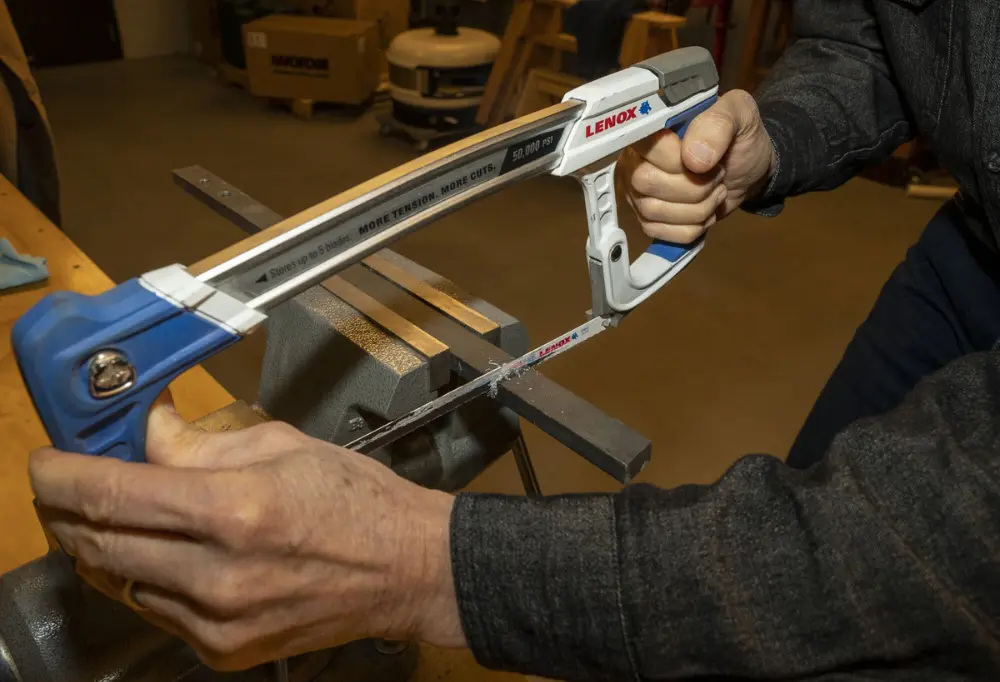
Clamp the work firmly in a vise. Place the cut as close to the vise jaws as practical. This reduces vibration and prevents the metal from bouncing.
Do not hold the work in your hand while cutting. The blade can slip, and the loose piece may move without warning.
For thin sheet metal, place the sheet between two pieces of scrap wood. This supports the metal and reduces bending.
3. Install the blade correctly
Most hacksaw blades cut on the forward stroke. The teeth should point away from the handle. Tighten the frame until the blade feels firm, but do not overtighten it.
A loose blade may twist and wander. An extremely tight blade can break under impact.
4. Start with slow strokes
Place the blade on the mark and use short, gentle strokes to create a starting groove. Keep the blade at a low angle until the groove is established.
Once the groove is clear, use longer strokes. Let the teeth do the work instead of forcing the blade through the metal.
5. Keep steady pressure
Apply light pressure on the forward stroke and release pressure as you pull back. Do not press hard on the return stroke because it can wear the teeth without improving the cut.
Keep the saw aligned with the mark. Smooth, even strokes are usually faster than aggressive strokes.
6. Slow down near the end
The final part of the cut can break suddenly. Reduce pressure as the metal becomes thin. Support the cut-off piece so it does not bend, fall, or tear the remaining metal.
7. Remove sharp edges
After the cut, use a metal file or deburring tool to smooth the edge. A fresh cut can be sharp enough to cause a serious cut, even when it looks clean.

Can a hand saw cut different types of metal?
A hand saw can cut many common metals, but each material behaves differently. The correct blade and technique will make the job easier.
Steel
Mild steel is one of the most common materials cut with a hacksaw. Use a bi-metal blade and steady strokes. Thick steel may require patience because steel resists the teeth more than softer metals.
Stainless steel
Stainless steel is tougher and can harden if you press too hard or let the blade rub without cutting. Use a sharp, fine-tooth blade and maintain a steady pace.
Avoid stopping in the middle of a cut while applying pressure. This can create excess heat and make the surface harder to cut.
Aluminum
Aluminum is soft and easy to cut, but it can clog the blade. A blade with a suitable tooth pattern helps prevent chips from packing between the teeth.
Clean the blade if aluminum buildup begins to reduce cutting action. A light cutting lubricant may also help, if the blade manufacturer allows it.
Copper and brass
Copper and brass cut easily with a fine-tooth blade. These metals can deform, so clamp them firmly and avoid crushing thin tubing in the vise.
Cast iron
Cast iron is hard and brittle. It can be cut with a hacksaw, but the process is slow. A coarse blade and firm support are important.
Sheet metal
Thin sheet metal needs support. Without it, the sheet may vibrate, bend, or grab the blade. Sandwiching it between scrap wood can produce a smoother cut.

Do you need lubricant when cutting metal?
Lubricant is not always required, but it can help in some cases. It reduces friction, controls heat, and may extend blade life.
Use a small amount of suitable cutting oil on hard steel, stainless steel, or thick stock. Do not flood the blade. Too much oil can make the handle slippery and collect metal chips.
For aluminum, use a lubricant only if it is suitable for aluminum and compatible with the blade. Some products can make chips stick to the teeth instead of clearing them.
Keep the work area clean. Wipe away excess oil and remove metal chips with a brush, not your bare hand.

Common mistakes to avoid
Many problems happen because the wrong blade or technique is used. Avoid these common errors when deciding can a hand saw cut through metal for your project.
• Using a wood saw on metal: The large teeth are not designed for hard material.
• Choosing the wrong TPI: Teeth that are too coarse can catch, while teeth that are too fine can clog.
• Cutting without a vise: Movement makes the cut uneven and increases the risk of injury.
• Pushing too hard: Force can bend, break, or dull the blade.
• Using a dull blade: A dull blade creates heat and makes the work much slower.
• Ignoring the cut-off piece: The piece may drop or pinch the blade at the end.
• Cutting too close to your hand: Keep both hands behind the blade path.
• Skipping deburring: Fresh metal edges can cause deep cuts.
• Rushing stainless steel: Excess heat and pressure can harden the surface.
One lesson I have seen repeatedly in workshop repairs is that people often blame the saw when the real problem is poor support. Once the metal is clamped firmly and the blade is chosen correctly, the same cut usually becomes much easier.
Metal cutting safety tips
A hand saw is quieter and less dangerous than many power tools, but it still deserves respect. Metal chips and sharp edges can cause eye and hand injuries.
Wear:
• Safety glasses with side protection
• Work gloves when handling the metal
• Closed-toe shoes
• Hearing protection if the work area is loud
Gloves can protect you from sharp edges, but keep them away from the moving blade. Do not wear loose clothing, jewelry, or anything that can catch on the saw.
Inspect the tool before use. Make sure the handle is secure, the frame is not cracked, and the blade has no bends or missing teeth.
Metal filings can be sharp. Use a brush or vacuum designed for workshop debris to clean them up. Never blow filings with compressed air near your face or other people.

When should you use a power tool instead?
A hand saw is a good choice for occasional cuts, tight spaces, and jobs that require control. It is also useful when noise, sparks, or electrical access are concerns.
A power tool may be better when:
• You need many repeated cuts
• The metal is thick
• The material is hardened steel
• The cut must be completed quickly
• You need to cut large pipe or structural steel
• The project requires many long, straight cuts
Possible alternatives include an angle grinder with a cut-off wheel, a reciprocating saw with a metal blade, a band saw, or a portable metal-cutting saw.
Power tools cut faster, but they also create more noise, sparks, heat, and debris. Use the correct guard, blade, eye protection, and work position. Check the tool manual before cutting unfamiliar materials.
For a single small cut, a hacksaw is often safer and simpler than setting up a power tool.
How long does it take to cut metal by hand?
The time depends on the material, thickness, blade, and your technique. A small bolt may take less than a minute. A thin tube may take several minutes, while thick steel bar can take 10 minutes or more.
The goal is not to use maximum speed. A steady rhythm helps the teeth remove material without overheating. If the blade stops producing chips, check its sharpness, alignment, and tooth count.
In my experience, the biggest time saver is starting the groove carefully. A straight starting groove keeps the blade on track and prevents wasted effort later. Rushing the first few strokes often leads to a crooked cut and more work.
Frequently Asked Questions
Can a regular hand saw cut metal?
A regular wood hand saw is not suitable for cutting metal. Use a hacksaw or another hand saw fitted with a blade designed for metal.
Can a hand saw cut through steel?
Yes, a hacksaw can cut through mild steel, stainless steel, and some other steel products. Use a sharp bi-metal blade, clamp the work securely, and choose the TPI for the metal thickness.
Can a hand saw cut through aluminum?
Yes, aluminum is generally easy to cut with a hacksaw. Use a suitable fine or medium tooth blade and clean the teeth if soft aluminum begins to clog them.
What is the best hacksaw blade for metal?
A bi-metal blade is a strong general-purpose choice. Select 18 TPI for many medium metal cuts, 24 TPI for thin material, and 32 TPI for small bolts or thin sheet metal.
Should hacksaw teeth face forward or backward?
Hacksaw teeth normally face forward, away from the handle. The blade cuts during the push stroke, so confirm the direction before tightening the frame.
Can a hand saw cut through thick metal?
A hand saw can cut thick metal, but the process may be slow and tiring. For thick steel or repeated cuts, a band saw, reciprocating saw, or angle grinder may be more practical.
Is it safe to cut metal with a hacksaw?
Yes, when you secure the work, wear eye protection, use a sound blade, and control the cut. Always deburr the finished edge because freshly cut metal can be extremely sharp.
Conclusion
A hand saw can cut through metal when you use the right tool, blade, and technique. A hacksaw with a sharp bi-metal blade is suitable for many home repairs, including bolts, tubing, sheet metal, aluminum, copper, and mild steel.
Mark the cut, clamp the work, start slowly, and let the teeth do the work. Choose a power tool only when the metal is too thick, the job is too large, or speed matters more than simple manual control.
Now that you know can a hand saw cut through metal, choose the correct blade and try your next small metal-cutting project with confidence. Explore more workshop guides, and share your cutting tips or questions in the comments.
