

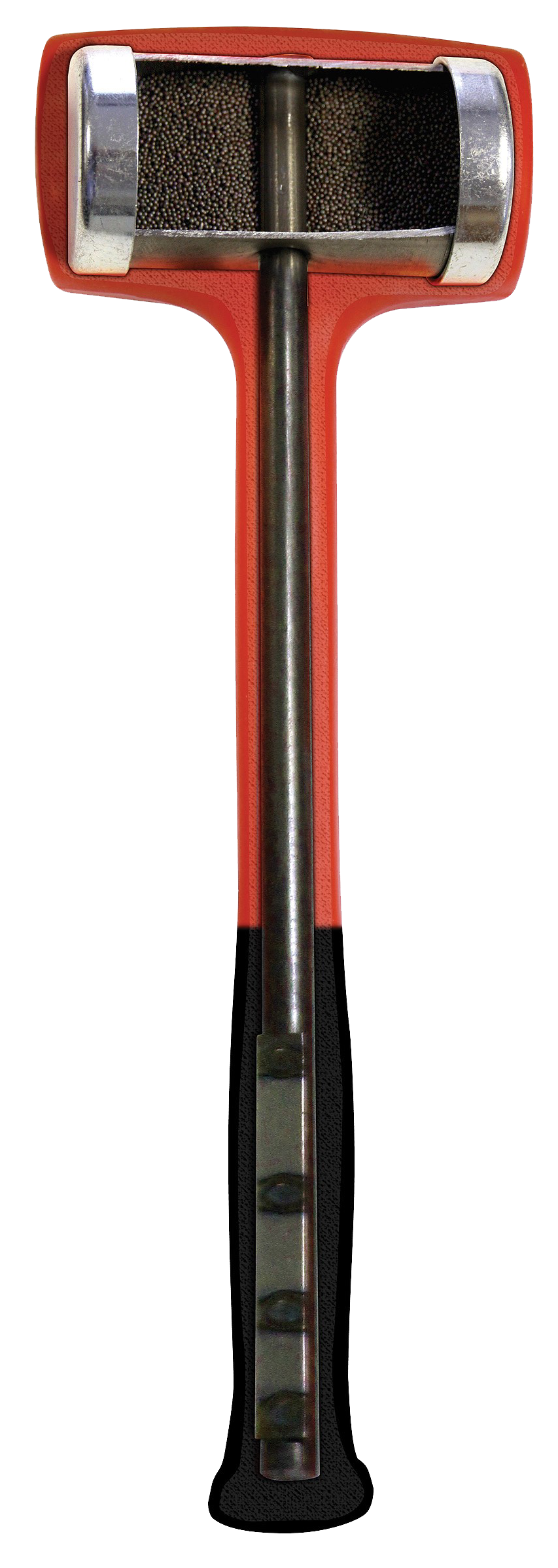
In the United States, a dead blow hammer is common in auto shops, maintenance rooms, woodworking shops, and home garages. Its head is hollow and partly filled with loose material, usually steel shot, lead-free metal pellets, or sand. When you strike a surface, the fill moves inside the head and helps reduce rebound.
A typical dead blow hammer contains:
- A tough outer head or striking shell
- Loose shot, pellets, or granular fill inside the head
- One or more striking faces
- A handle made from steel, fiberglass, wood, or a polymer blend
- A sealed cavity that keeps the fill inside
The name “dead blow” does not mean the hammer has no bounce at all. It means the hammer greatly limits rebound compared with a standard solid hammer. This gives the user better control and transfers more of the blow to the workpiece.

What Is Inside a Dead Blow Hammer?
A dead blow hammer has a hollow head filled with loose particles. The particles shift when the hammer hits, absorb some energy, and slow the head after impact.
The exact contents depend on the design and brand. Common fill materials include:
- Steel shot
- Stainless steel shot
- Lead-free metal pellets
- Sand
- Mineral or synthetic granules
- A blend of small particles
Many modern dead blow hammers use steel or lead-free metal fill. Older or specialty designs may use other materials. Manufacturers do not always publish the exact fill type or amount, so do not assume that every hammer contains steel shot.
The hollow head
A standard claw hammer has a mostly solid metal head. A dead blow hammer has a cavity inside the head. That cavity may run through the main body of the hammer or sit behind separate striking faces.
The cavity must be sealed. If it leaks, the hammer can lose its dead blow effect and may become unsafe to use. A sealed head also prevents dust, moisture, and loose particles from escaping.
The loose fill
The fill acts like a moving mass. At the instant of impact, the particles continue moving inside the head. Their movement counters some of the force that would otherwise push the hammer back toward the user.
The fill also creates a short delay in how the head responds after impact. That delay helps the hammer stay against the workpiece instead of bouncing away.
The handle and grip
The handle supports the head and helps the user control the swing. Depending on the model, it may be made from:
- Forged steel
- Fiberglass
- Hardwood
- Reinforced nylon
- Rubber-covered composite material
A rubber or thermoplastic grip can improve comfort, but the grip does not create the dead blow effect. The hollow, filled head is the key feature.

How Does a Dead Blow Hammer Work?
A dead blow hammer reduces rebound by combining a hollow head with moving internal mass. The outer head delivers the initial strike, while the loose fill absorbs and redistributes part of the impact energy.
Here is the basic sequence:
- You swing the hammer toward the workpiece.
- The outer head contacts the surface.
- The loose fill shifts inside the head.
- The moving fill reduces the speed of the head after impact.
- The hammer stays in contact longer and rebounds less.
A normal hammer can act like a spring when it hits a hard surface. The head and target deform slightly, then release energy. Some of that energy sends the hammer back toward the user.
A dead blow design interrupts part of that spring-like response. The moving particles collide with the inside of the head and with one another. This converts some impact energy into small internal movements, sound, heat, and friction.
Why the hammer still delivers force
Reduced rebound does not mean reduced usefulness. A dead blow hammer can still deliver a strong blow, especially when the head has enough mass behind it.
Its main advantage is control. The hammer is less likely to bounce, skid, or leave a series of unwanted marks. That makes it useful for tasks such as:
- Seating bearings
- Aligning machine parts
- Removing stuck components
- Adjusting sheet metal
- Assembling furniture
- Positioning tiles or pavers
- Installing parts without heavy marring
Does a dead blow hammer increase impact force?
Not automatically. A dead blow hammer does not create energy from nowhere. The energy comes from the user’s swing and the mass of the hammer.
The practical benefit is that more of the user’s effort can go into the workpiece instead of returning as rebound. The result may feel like a stronger, cleaner hit, but the hammer is mainly improving energy control and reducing bounce.
Why the internal fill matters
The size, weight, and movement of the fill affect performance. Fine particles may move differently from large metal shot. A heavier fill can make the head feel more controlled, while a lighter fill may produce less damping.
Because manufacturers use different designs, two hammers with the same outside size may not feel the same. Head weight, fill amount, face material, and handle design all matter.

Main Parts of a Dead Blow Hammer
A dead blow hammer has several parts that work together. The head and internal fill control impact behavior, while the handle and faces determine how the tool feels and what surfaces it can contact.
| Part | Purpose | Common materials |
|---|---|---|
| Outer head | Holds the internal fill and transfers impact | Steel, aluminum, nylon, polyurethane |
| Internal cavity | Provides space for the moving fill | Enclosed metal or polymer chamber |
| Fill | Reduces rebound and absorbs impact energy | Steel shot, metal pellets, sand, granules |
| Striking face | Contacts the workpiece | Polyurethane, nylon, rubber, copper, steel |
| Handle | Connects the head to the user’s hand | Steel, fiberglass, wood, composite |
| Grip | Adds comfort and control | Rubber, thermoplastic, textured polymer |
| Seals or plugs | Keep the fill inside the head | Metal, polymer, bonded closures |
Striking faces
Many dead blow hammers have soft or semi-soft faces. These faces help prevent dents and scratches on finished surfaces.
Common face materials include:
- Polyurethane
- Nylon
- Rubber
- Copper
- Brass
- Aluminum
- Hardened steel
Some models have interchangeable faces. Others use a permanent polymer cover around the head. A replaceable face can extend tool life, but only if the correct replacement is available and installed as directed.
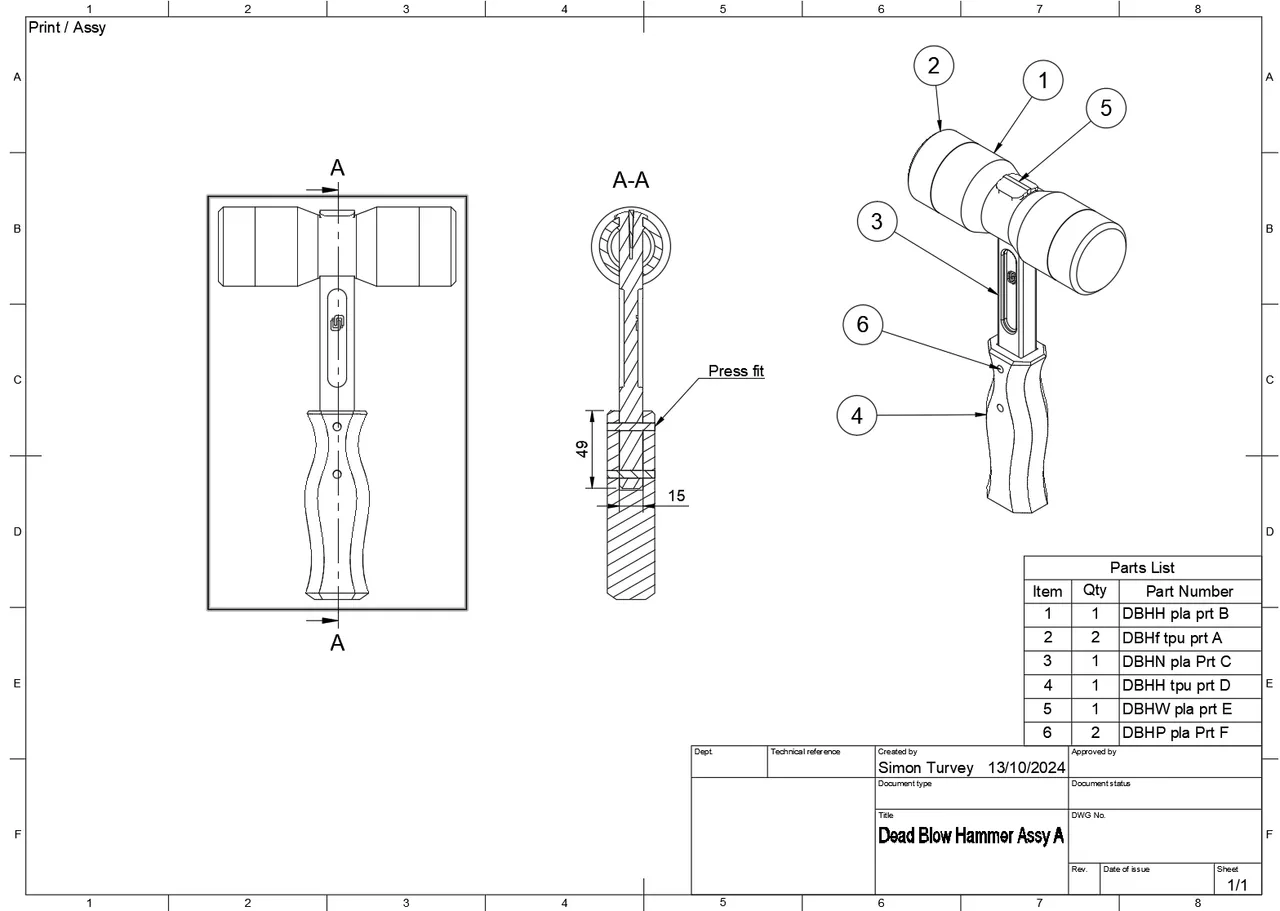
One-piece and two-piece designs
A one-piece design often has a molded or coated outer body around the internal cavity. It may be simple and durable, but damage to the face can make the whole tool difficult to repair.
A two-piece design may use a separate head, fill chamber, and replaceable face. This can make maintenance easier, but it adds parts that may loosen or wear.
Handle construction
A steel handle may be strong and compact, but it can transmit more vibration to the hand. Fiberglass and composite handles can reduce some vibration and may resist weather better than untreated wood.
A wood handle can feel comfortable and may be replaceable. However, it can split, loosen, or swell if stored in poor conditions.
What Materials Are Used in Dead Blow Hammers?
Dead blow hammers use different materials for the head, fill, faces, and handle. The best material depends on the workpiece, the required force, and the risk of sparks or surface damage.
Steel shot
Steel shot is dense, so a small amount can add substantial mass. It is common in industrial-style dead blow tools.
Steel fill can rust if moisture reaches it. A sealed hammer should protect the fill during normal use, but a cracked or cut head can allow water inside.
Lead-free metal fill
Some manufacturers use lead-free metal pellets to avoid the handling concerns linked with lead. The exact alloy may not be disclosed in general product descriptions.
Do not cut open a hammer to identify its fill. The material may be under pressure, mixed with dust, or difficult to contain safely.
Sand and granular fill
Sand and other granular materials can damp impact and reduce rebound. They may be lighter than metal fill, so the hammer may need a larger cavity to reach the desired weight.
Granular fill can also change behavior if it becomes wet or compacted. The effect depends on the material and the way the head is sealed.
Polymer faces
Polyurethane and nylon faces are useful when the workpiece must not receive deep dents. They are common for assembly, maintenance, and alignment work.
A soft face is not suitable for every job. It may deform when used against sharp edges, hot parts, rough castings, or surfaces that require a hard impact.
Copper and brass faces
Copper and brass faces are softer than steel and can help protect certain metal surfaces. However, they wear over time and may leave marks or transfer material.
Always check the manufacturer’s instructions before using a face on a critical surface.

Dead Blow Hammer vs. Rubber Mallet
A dead blow hammer contains moving internal fill. A rubber mallet normally has a solid or foam-filled head without loose shot.
Both tools can reduce surface damage, but they behave differently.
| Feature | Dead blow hammer | Rubber mallet |
|---|---|---|
| Internal fill | Usually loose shot or granules | Usually solid rubber or polymer |
| Rebound control | Generally very good | Varies with rubber hardness |
| Impact feel | More controlled and firm | Softer and springier |
| Typical use | Alignment, machinery, automotive work | Assembly, flooring, light shaping |
| Surface protection | Depends on face material | Usually good on delicate surfaces |
| Available force | Often higher for the same size | Often lower, depending on design |
A dead blow hammer is usually the better choice when rebound control matters. A rubber mallet may be better when the work needs a softer, broader touch.
Neither tool is automatically safer for every task. The face must match the workpiece, and the hammer must be rated for the force you plan to use.

How to Choose the Right Dead Blow Hammer
Choose a dead blow hammer by matching its weight, face material, handle, and head shape to the task. A heavier tool is not always better because it can damage parts or reduce control.
1. Choose the head weight
Light models are easier to control and suit small parts, trim, and light assembly. Medium models work well for general maintenance and automotive tasks. Heavy models are useful for stubborn parts, large assemblies, and industrial work.
A heavy hammer can cause more damage if the face slips or the target is fragile. Use the lightest hammer that can complete the job without repeated excessive strikes.
2. Match the face to the surface
Use a softer face for painted, polished, finished, or easily dented parts. Use a harder face when the workpiece can tolerate more impact and the manufacturer allows it.
Check for these details before buying:
- Face hardness
- Face diameter
- Replaceability
- Chemical resistance
- Temperature limits
- Compatibility with the target surface
3. Consider sparks and contamination
A standard steel-headed hammer may not suit work near flammable vapors or materials that must remain free of iron contamination. Specialty non-sparking tools exist, but “non-sparking” does not mean risk-free.
For hazardous locations, follow the site’s rules and use a tool approved for that specific environment. A general-purpose dead blow hammer is not automatically suitable for explosive atmospheres.
4. Inspect the handle
Look for a handle that is straight, secure, and free of cracks. A comfortable grip can help prevent the tool from twisting during impact.
Avoid a hammer with:
- A loose head
- A split or swollen wood handle
- Exposed internal fill
- A torn face
- Deep cuts in the outer shell
- A grip that allows the hand to slide

How to Use a Dead Blow Hammer Safely
Use a dead blow hammer with eye protection, a stable workpiece, and the correct face. The tool reduces rebound, but it does not remove the risk of flying chips, slipping parts, or hand injuries.
Follow these steps:
- Inspect the hammer. Check the head, face, handle, and grip.
- Inspect the target. Remove loose debris and confirm that the part can withstand the impact.
- Support the workpiece. Keep it on a stable surface or secure it in a vise when appropriate.
- Wear eye protection. Chips can break off from the workpiece even when the hammer face is soft.
- Use controlled swings. Start with light strikes and increase force only when needed.
- Keep your free hand clear. Do not hold a small part close to the impact zone.
- Use the correct face. Never assume a soft face can safely strike every material.
- Stop if the tool changes. A new rattle, split, leak, or loose face is a reason to remove the hammer from service.
Never use a dead blow hammer as a substitute for a press when pressing force could bend, crack, or eject a part. Do not use it to strike live electrical equipment, pressurized parts, or damaged components unless a qualified procedure specifically permits it.

Common Problems With Dead Blow Hammers
Most dead blow hammer problems come from face wear, head damage, loose parts, or use on the wrong surface. A visible change in sound or rebound can be a warning sign.
The hammer becomes more bouncy
Possible causes include:
- The internal fill has shifted or compacted
- The head has cracked
- The fill has leaked out
- The hammer is being used on a very hard surface
- The face has become too hard or damaged
A dead blow hammer should not be expected to eliminate all rebound. However, a sudden change from its normal behavior suggests damage or wear.
The hammer makes an unusual rattle
A small amount of internal movement is normal. A sharp rattle, grinding sound, or loose internal part is not necessarily normal.
Inspect the outer shell and face. If the head is cracked or the fill can escape, stop using the tool. Do not drill, weld, or pry open the head to repair it.
The face is mushroomed or torn
A damaged face may leave marks or expose the harder head beneath it. Replace the face if the design permits. Otherwise, replace the hammer.
Do not continue using a polymer-faced hammer after the face has split deeply. A damaged face can separate during impact.
The hammer leaves marks
Marks may result from:
- A face that is too hard
- Dirt trapped between the face and workpiece
- A damaged face
- Excessive force
- Metal transfer from a copper or brass face
- A workpiece that is softer than expected
Clean the contact surfaces and try a suitable replacement face. Test on a noncritical area first when the surface finish matters.
Can You Take Apart a Dead Blow Hammer?
Most dead blow hammers are not designed for user disassembly. The fill chamber is often sealed, molded, welded, or crimped during manufacture.
Taking one apart can create several problems:
- Loose pellets may scatter
- Dust may become airborne
- The head may lose its seal
- The tool may no longer have the correct balance
- The repaired head may fail during impact
- The fill may contain a material you cannot identify safely
If the hammer is damaged, replace it unless the manufacturer provides an approved face or component replacement procedure. Do not refill the head with random materials. The weight, fill volume, and internal movement affect the tool’s performance.
This is especially important with older tools. Their fill may not be clearly labeled, and visual inspection cannot reliably identify every internal material.

Frequently Asked Questions
Is a dead blow hammer filled with sand?
Sometimes, but not always. Many dead blow hammers use steel shot or other metal pellets. Some use sand or granular material. The exact fill depends on the manufacturer and model.
Are dead blow hammers safe for delicate surfaces?
They can be safer than solid steel hammers when they use a suitable soft face. However, no hammer is automatically safe for every surface. Dirt, excessive force, a damaged face, or the wrong face material can still cause damage.
Does a dead blow hammer have less force than a regular hammer?
It can deliver substantial force, but its main design goal is to reduce rebound and improve control. The actual impact depends on the hammer’s mass, swing speed, face, and target.
Why does my dead blow hammer still bounce?
Some rebound is normal. A hard target, worn face, damaged shell, changed internal fill, or poor striking angle can increase bounce. If the behavior changed suddenly, inspect the tool and stop using it if the head or face is damaged.
Can I use a dead blow hammer on metal?
Yes, many are made for metalwork. Use a face that will not damage the part, and confirm that the hammer is suitable for the material and task. Avoid striking hardened surfaces unless the tool and procedure specifically allow it.
Key Takeaways
- A dead blow hammer has a hollow head filled with loose shot, pellets, sand, or another granular material.
- The moving fill helps reduce rebound and improves control.
- The head, face, fill, handle, and grip all affect performance.
- The hammer does not eliminate impact energy or make every task safe.
- Match the face and weight to the workpiece.
- Replace a hammer with a cracked head, leaking fill, damaged face, or loose handle.
- Do not open or refill a sealed dead blow hammer.
Conclusion
The main feature inside a dead blow hammer is a sealed cavity containing loose fill. When the hammer strikes, that fill moves inside the head and absorbs part of the rebound energy.
This design makes the tool useful for controlled blows, alignment, assembly, automotive repair, and maintenance. The best results come from choosing the right weight and face, using eye protection, and removing the tool from service when the head or face shows damage.