

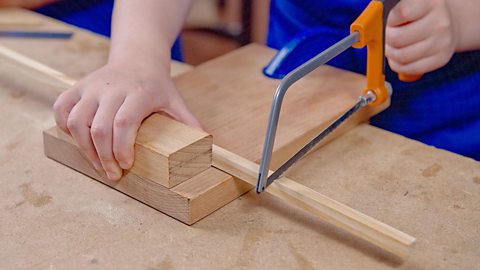
Use a fine-tooth hacksaw, secure the wood, mark the cut, and guide the blade with slow, steady strokes.
A hacksaw is made for metal, but it can cut small pieces of wood when you use the right blade and technique. Learning how to use a hacksaw to cut wood helps with quick repairs, craft projects, thin trim, dowels, plywood, and other light tasks when a wood saw is not available. This guide explains the safest method, the best blade choice, common mistakes, and when another saw is the better tool.
Can You Use a Hacksaw to Cut Wood?
Yes, you can use a hacksaw to cut wood, but it is not the ideal tool for most lumber. A hacksaw has a narrow metal-cutting blade with small teeth. These teeth remove less material than the larger teeth on a hand saw, so the cut may take longer.
A hacksaw works best on:
• Thin wood strips
• Small dowels
• Balsa wood
• Craft wood
• Thin plywood
• Wood trim
• Small branches
• Plastic and wood composite pieces
A hacksaw is less useful for:
• Thick boards
• Large sheets of plywood
• Long rip cuts
• Heavy framing lumber
• Fast construction work
The main limitation is speed. A hacksaw can make a clean cut in thin wood, but it may clog with sawdust and heat up during long cuts. Think of it as a small pocket tool, not a replacement for a circular saw, jigsaw, or standard handsaw.
Choose the Right Hacksaw Blade
The blade controls the quality, speed, and safety of the cut. Hacksaw blades are rated by teeth per inch, or TPI. A higher TPI means smaller teeth and a finer cut.
For cutting wood with a hacksaw, choose a blade with about 18 to 24 TPI. This range gives you enough cutting power while helping reduce rough splintering.
Use these general guidelines:
• 18 TPI works well for softwood and thicker craft pieces.
• 24 TPI gives better control on thin wood and trim.
• 32 TPI is useful for very thin material, but it cuts slowly.
• Blades with damaged, dull, or missing teeth should be replaced.
Make sure the blade is tight in the frame. A loose blade can bend, wander, or break. The teeth should usually point away from the handle so the hacksaw cuts on the forward push stroke.
Many hacksaw frames accept blades in one direction only. Check the blade position before cutting. If the teeth face the handle, the saw may still move through the wood, but the action will feel awkward and the blade may not cut as designed.
Tools and Safety Equipment You Need
Good preparation makes learning how to use a hacksaw to cut wood much easier. Gather your tools before you start so you do not need to hold the workpiece and search for equipment at the same time.
You will need:
• A hacksaw with a secure frame
• A sharp 18 to 24 TPI blade
• A pencil or marking knife
• A ruler or combination square
• A clamp or sturdy workbench
• Safety glasses
• Hearing protection for longer cutting sessions
• A sanding block or file
• A dust mask when cutting treated, painted, or dusty wood
Wear safety glasses because small chips can leave the blade at surprising speed. Keep loose sleeves, jewelry, and long hair away from the blade.
Never hold a small piece of wood in your hand while cutting it. The blade can slip near the end of the cut and injure your fingers. Clamp the piece firmly, but do not crush soft wood with excessive pressure.
If the wood has old paint, chemical treatment, or an unknown finish, avoid creating dust until you know what it contains. Some older coatings and treated materials can release harmful particles when cut. When in doubt, stop and choose a safer material or use proper respiratory protection and ventilation.
.jpg)
How to Use a Hacksaw to Cut Wood
Follow these steps for a controlled, clean cut.
1. Mark the Cut Line
Measure the wood carefully and mark the cutting line with a sharp pencil. Use a square to draw a straight line across the full width of the piece.
For better accuracy, mark the waste side of the line. The waste side is the part you plan to remove. This keeps the final piece from becoming too short.
A small notch on the line can also help. Place the blade on the waste side and make a shallow groove with two or three light strokes. This groove gives the blade a track and reduces wandering.
2. Secure the Wood
Place the wood on a stable workbench. Let the waste section extend slightly beyond the bench edge, then clamp the good section firmly.
Keep the clamp close to the cut, but leave enough room for the hacksaw frame to move. If the wood vibrates, add a second clamp or support the far end.
The wood should not move when you press it with one hand. Movement causes rough cuts and can make the blade bind.
3. Set Your Body Position
Stand with your feet balanced and your shoulders facing the cut. Hold the hacksaw handle with your dominant hand. Place your other hand on the frame if you need more control, but keep it away from the blade path.
Keep your wrist straight. Let your arm guide the saw rather than forcing it with your shoulder. A relaxed grip gives you more control and reduces fatigue.
4. Start With Short Strokes
Place the middle of the blade on the waste side of the line. Use short, gentle forward strokes to create a starting groove.
Do not start with long, hard strokes. The blade may slide across the surface and scratch the wood. Once the groove is clear, gradually increase the stroke length.
This is one of the most useful lessons when learning how to use a hacksaw to cut wood: the first few strokes are about control, not speed.
5. Use Steady Forward Strokes
Push the hacksaw forward with light pressure. Then release pressure as you pull it back. Most hacksaw blades are designed to cut on the forward stroke.
Use as much of the blade length as the cut allows. Long, even strokes help the teeth wear evenly and reduce heat. Let the teeth do the work instead of pressing down hard.
Keep the blade aligned with the marked line. Check the top and side of the wood from time to time. A blade can follow the line on one face while drifting on another.
6. Reduce Pressure Near the End
When only a small amount of wood remains, slow down. Support the waste piece so it does not tear away and split the good section.
Use short strokes and light pressure for the final part. Once the blade passes through, do not twist the hacksaw. Twisting can damage the edge or bend the blade.
7. Smooth the Cut
Inspect the cut edge after removing the wood. Use a sanding block with medium-grit sandpaper to remove splinters. Finish with fine-grit paper if the edge will be visible or handled often.
For a small craft project, a few passes with 120-grit sandpaper may be enough. For a smoother finish, follow with 180-grit or 220-grit paper.
:max_bytes(150000):strip_icc()/SPR-types-of-saws-5409526-7-X-Hacksaw-8a18e4b2946e4d16b3a40789e9656359.jpg)
Tips for a Straighter, Cleaner Cut
A hacksaw can make a neat wood cut when you control the blade from start to finish. These small adjustments make a noticeable difference.
• Support the wood on both sides of the cut when possible.
• Keep the blade square to the face of the wood.
• Use a guide block for repeated cuts.
• Replace the blade when it becomes dull or begins to snag.
• Cut slightly outside the final line, then sand to exact size.
• Apply steady pressure instead of pushing harder when the cut slows.
• Clear sawdust from the groove if it begins to pack between the teeth.
• Keep the hacksaw frame straight rather than rocking it side to side.
For repeated cuts, clamp a scrap block beside the cutting line. The block acts as a simple guide and helps keep the hacksaw square.
When I work through a small cut by hand, I check the blade angle after every few strokes. It is easy to focus on the line on top and forget that the blade may be leaning through the wood. A quick angle check often saves more time than correcting a crooked cut later.
Common Mistakes to Avoid
Many poor cuts come from technique rather than the tool itself. Avoid these errors when learning how to use a hacksaw to cut wood.
Using a Dull Blade
A dull blade needs extra force. That force can bend the blade, tear the wood, and cause your hand to slip. Replace the blade when it becomes slow, catches repeatedly, or produces more heat than usual.
Cutting Without Clamping
Holding wood by hand is unsafe and reduces accuracy. The workpiece may shift as the blade enters the cut. Always secure the wood to a bench or use a suitable vise.
Pressing Too Hard
Heavy pressure does not always make the hacksaw cut faster. It can flatten the teeth, bend the blade, and create a crooked groove. Use moderate pressure on the forward stroke and little pressure on the return stroke.
Starting With Long Strokes
Long strokes on a flat surface can make the blade skid. Start with short strokes until a clear groove forms. Then lengthen the motion as the cut becomes stable.
Ignoring Grain Direction
Wood grain can guide or resist the blade. Cutting across the grain is often easier for a hacksaw than cutting along the grain. When cutting with the grain, watch for splitting and support the wood well.
Cutting Too Close to the Final Line
If the blade crosses the finished line, the piece may be too short. Leave a small amount of extra material and sand down to the final measurement.
Using the Wrong Blade for the Material
A fine hacksaw blade can cut wood, but it may clog in soft, resinous wood. A coarse blade can cut faster, but it may leave a rough edge. Match the blade to the material and the finish you need.

Hacksaw Versus Other Wood Cutting Tools
A hacksaw is useful in a limited role. Choosing the right tool improves both safety and results.
| Tool | Best use | Main advantage |
|---|---|---|
| Hacksaw | Thin wood, dowels, trim, and small repairs | Compact and widely available |
| Handsaw | Boards and general wood cutting | Faster and better suited to wood |
| Coping saw | Curves and small cutouts | Excellent control on curved cuts |
| Jigsaw | Curves, openings, and sheet goods | Fast and versatile |
| Circular saw | Long, straight cuts | Efficient for large boards |
| Miter saw | Crosscuts and angled cuts | Fast and precise for repeated angles |
| Utility knife | Thin craft wood and veneer | Clean control on very thin stock |
Use a standard handsaw when cutting ordinary boards. Use a jigsaw for curves or interior openings. A circular saw is usually the better option for long, straight cuts in plywood or dimensional lumber.
The best answer to how to use a hacksaw to cut wood is sometimes knowing when not to use one. If the cut is long, the wood is thick, or the job requires many pieces, choose a tool designed for woodworking.
Cutting Different Types of Wood
Different wood types behave in different ways. Adjust your technique based on the material.
Softwood
Pine, cedar, and fir usually cut easily. However, soft fibers can tear near the exit side. Use light pressure and support the wood close to the cut.
Hardwood
Oak, maple, and other hardwoods require more time. Use a sharp blade, steady strokes, and patience. Do not force the hacksaw if the teeth begin to bind.
Plywood
Plywood can splinter because of its thin layers and changing grain direction. Mark the cut clearly, clamp the sheet firmly, and place masking tape over the line if the surface finish is important.
Dowel and Round Stock
Round wood can roll under the blade. Clamp it in a V-shaped block or secure it between two pieces of scrap wood. Start the groove at the top, then rotate the dowel slightly as the cut develops.
Pressure-Treated or Painted Wood
Avoid cutting unknown or old finishes without checking the material first. Use ventilation and suitable protection, and wash your hands after handling dusty material.

How to Maintain a Hacksaw
A well-maintained hacksaw is easier and safer to use. Clean sawdust from the frame after each project. Check that the handle, tension mechanism, and blade pins are secure.
Store the hacksaw where the blade will not be bent or struck. If the blade is rusty, cracked, or missing teeth, replace it rather than trying to restore it for a precise cut.
Do not use oil on the blade unless the blade manufacturer recommends it. Oil can collect sawdust and create a sticky paste between the teeth. A clean, dry blade is usually best for ordinary wood.
Before each cut, inspect:
• Blade tension
• Tooth direction
• Frame condition
• Handle security
• Workpiece stability
• Clamps and supports
These checks take less than a minute and can prevent a damaged workpiece or hand injury.
Is Cutting Wood With a Hacksaw Safe?
Cutting wood with a hacksaw is generally safe when the workpiece is secured and you use eye protection. The greatest risks are blade slips, splinters, broken blades, and accidental contact with the cutting path.
Keep both hands behind the blade teeth. Never place a finger in front of the hacksaw to guide the cut. If the blade binds, stop moving it, release pressure, and inspect the cut rather than forcing the tool.
Also avoid cutting wood near electrical cords, flammable liquids, or unstable surfaces. A hacksaw does not create sparks in normal use, but the surrounding workspace should still be clean and controlled.
Safety guidance from workplace authorities consistently emphasizes eye protection, stable workholding, and correct tool use. These basic habits apply at home as well as in a professional workshop.

Frequently Asked Questions About How to Use a Hacksaw to Cut Wood
Can a hacksaw cut through thick wood?
A hacksaw can cut thick wood, but the process will be slow and tiring. For boards thicker than a small trim piece, a handsaw, jigsaw, or circular saw is usually safer and more efficient.
What hacksaw blade is best for cutting wood?
An 18 to 24 TPI blade is a practical choice for many small wood cuts. Use a finer 32 TPI blade for thin material and a sharp, clean blade for the best results.
Which way should the hacksaw teeth face?
The teeth should normally point away from the handle. This allows the blade to cut during the forward push stroke, which is how most hacksaws are designed to work.
Can you use a hacksaw to cut plywood?
Yes, a hacksaw can cut thin plywood, especially for small repairs or craft work. Clamp the plywood firmly, use a fine-tooth blade, and support the surface to reduce splintering.
Why does my hacksaw keep slipping on the wood?
The blade may be starting on a flat surface without a groove, or you may be using too much pressure. Begin with short, light strokes and create a small notch before making longer strokes.
How do you prevent wood from splitting with a hacksaw?
Clamp the wood well, use a sharp fine-tooth blade, and slow down near the end of the cut. Supporting the waste side also helps prevent the fibers from tearing away.
Conclusion
A hacksaw can cut wood when the piece is small, the blade is sharp, and the work is carefully secured. Mark the cut, choose an 18 to 24 TPI blade, start with short strokes, keep the blade square, and reduce pressure as you finish.
Use a hacksaw for light repairs and small projects, but choose a handsaw or powered saw for thick wood and long cuts. Practice on scrap material first, then apply the method to your project with patience and care. Explore more woodworking guides, share your experience, or leave a comment with the type of wood you plan to cut.
