

Use a sharp, properly tensioned blade, secure the metal, and make steady full strokes without forcing the cut.
Learning how to use a hacksaw to cut metal is useful for home repairs, plumbing work, automotive projects, and light fabrication. A hacksaw is simple, but good results depend on the right blade, safe setup, correct pressure, and patience. This guide explains the process from choosing a blade to finishing and deburring the cut.
What Is a Hacksaw?
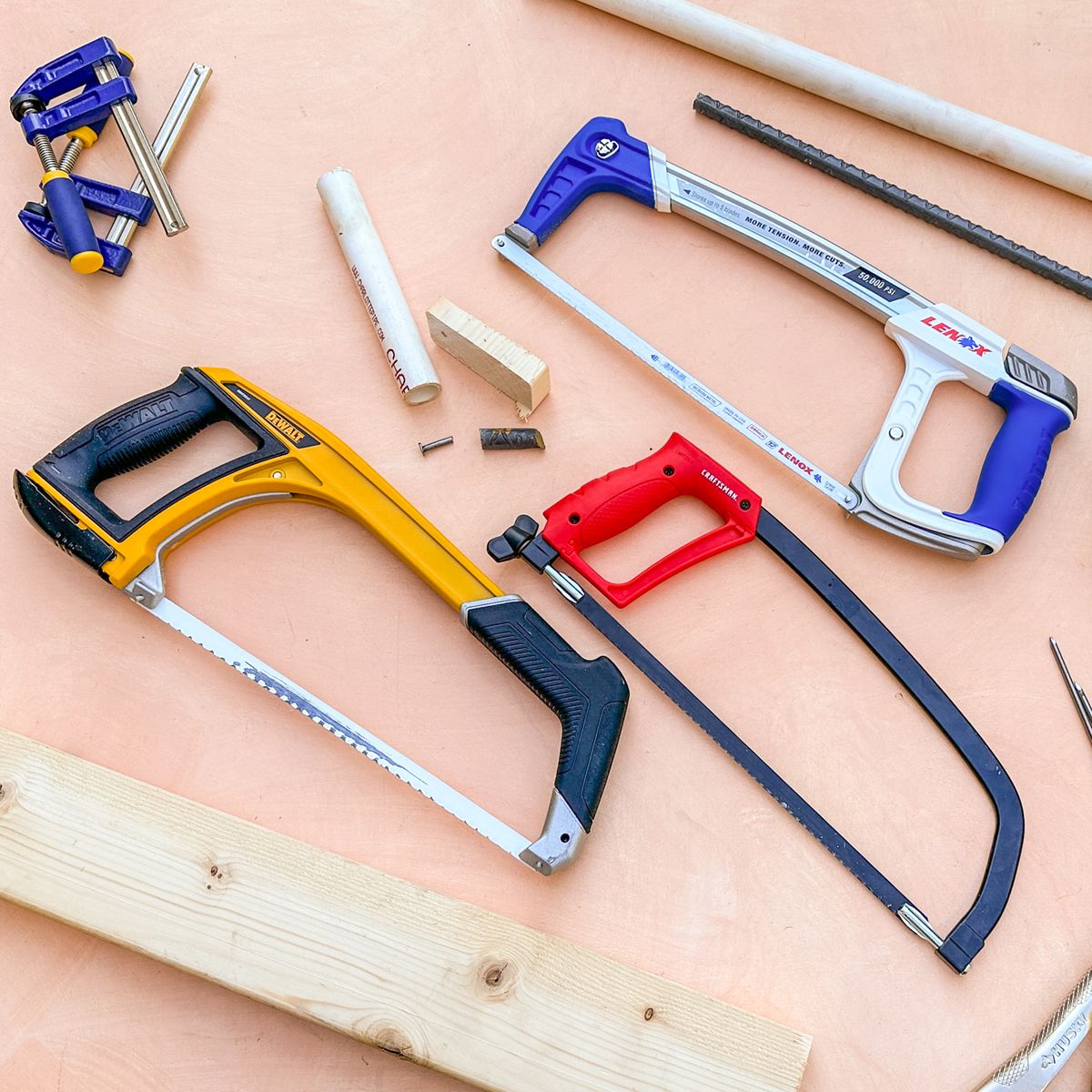
A hacksaw is a hand tool with a thin, toothed blade held inside a metal frame. Most standard hacksaws use blades that are about 12 inches long, although compact versions are also available.
The blade cuts when you push it across the metal. The teeth remove small chips with each stroke. Unlike a powered saw, a hacksaw gives you more control and creates less noise, which makes it useful for small jobs and precise cuts.
Common materials that a hacksaw can cut include:
• Mild steel
• Stainless steel
• Aluminum
• Copper
• Brass
• Threaded rod
• Bolts and screws
• Metal tubing
• Thin sheet metal
A hacksaw is best for light to medium metal stock. It is not the fastest choice for thick steel plate, repeated production cuts, or large structural sections.

Choose the Right Hacksaw Blade
Blade choice has a major effect on cutting speed, control, and blade life. Hacksaw blades are rated by teeth per inch, or TPI. Common options include 14, 18, 24, and 32 TPI.
Use these general guidelines:
• 14 TPI works well for thick aluminum, large pipe, and heavy steel sections.
• 18 TPI suits medium-thickness steel and general repair work.
• 24 TPI is a good all-purpose choice for thin wall tubing and small metal parts.
• 32 TPI works best for thin sheet metal, small tubing, and narrow bolts.
At least two or three teeth should touch the workpiece during each stroke. If only one tooth contacts the metal, the tooth can catch and break. If too many teeth are buried in thick metal, the blade may clog and cut slowly.
For most household projects, an 18 or 24 TPI bimetal blade is a strong choice. Bimetal blades combine a flexible spring-steel backing with harder high-speed steel teeth. They usually resist breaking better than low-cost carbon steel blades.
Check the blade before use. Replace it if the teeth are dull, missing, rounded, or uneven. A dull blade makes you push harder, which increases slipping and reduces control.

Gather the Tools and Safety Equipment
Before learning how to use a hacksaw to cut metal, prepare a stable work area. A secure setup is safer and usually produces a straighter cut than extra force.
You will need:
• A hacksaw with a firm frame
• The correct replacement blade
• A bench vise or strong clamp
• A tape measure or ruler
• A permanent marker or scribe
• A metal file or deburring tool
• Safety glasses
• Hearing protection when the cut creates a loud ringing sound
• Work gloves for handling sharp edges
Safety glasses are essential because small metal chips can fly from the cut. Keep both hands behind the blade path, and make sure the frame does not contact nearby objects during the stroke.
Do not hold small metal pieces in your hand while cutting. The blade can slip at the end of the stroke and cut your fingers. Secure even small parts in a vise, leaving only the needed cutting area exposed.
Keep loose sleeves, jewelry, hair, and cords away from the work area. Good lighting also matters. You should be able to see the mark, the blade, and the vise jaws clearly.
How to Use a Hacksaw to Cut Metal
The following method works for most small metal cutting tasks. Take your time during the setup because careful preparation prevents most common mistakes.
1. Measure and Mark the Cut
Measure the part twice before cutting. Mark the cut line with a permanent marker, machinist’s scribe, or fine-point paint marker.
For a more visible line, wrap masking tape around round tubing and align the tape edges. On flat stock, use a square to draw a straight line across the full width.
If the finished size matters, mark the waste side of the line. This leaves room for filing. Cutting directly on the final measurement can make the part slightly too short.
2. Install the Blade Correctly
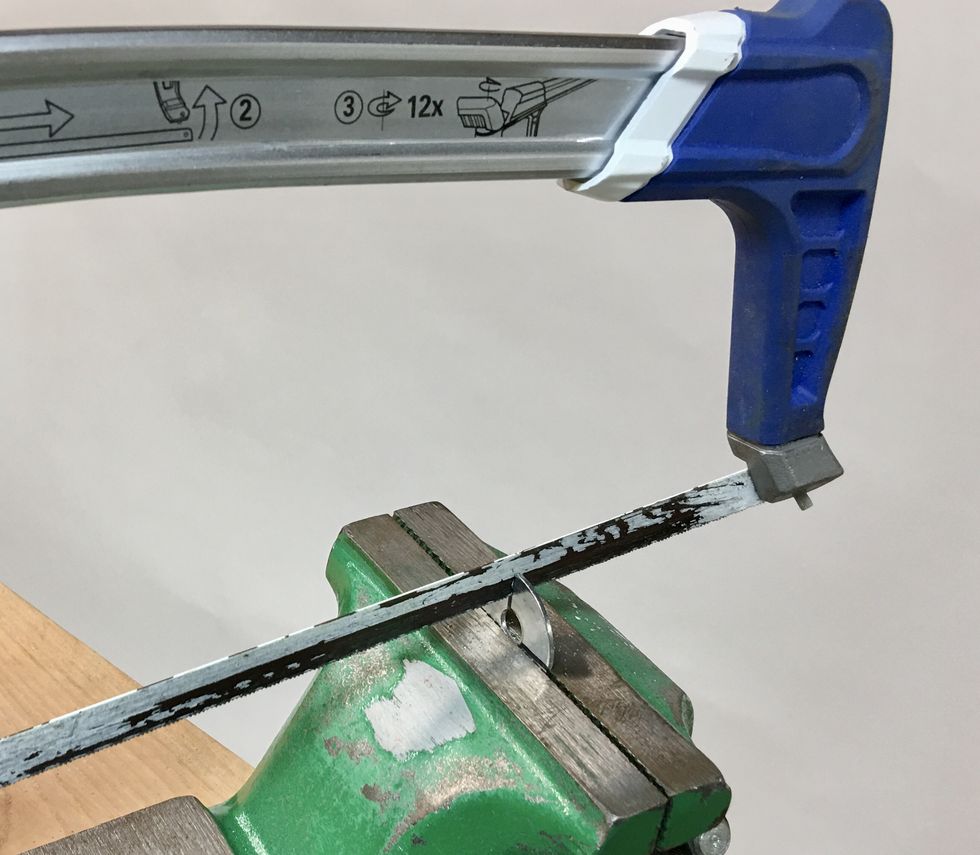
Most hacksaw blades have teeth that point away from the handle. The saw cuts on the forward push stroke, so the teeth should face toward the front of the frame.
Tighten the blade until it feels firm and does not twist easily. Do not overtighten it. Excessive tension can bend the frame or cause the blade to snap.
Many modern hacksaws allow the blade to be installed in a horizontal or vertical position. Use the position that gives you the clearest path and the most comfortable wrist angle.
3. Secure the Metal in a Vise
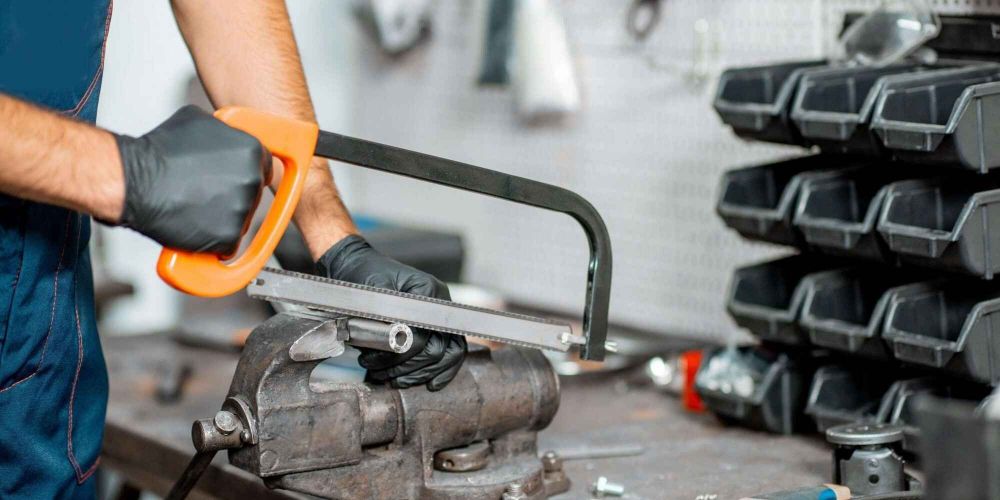
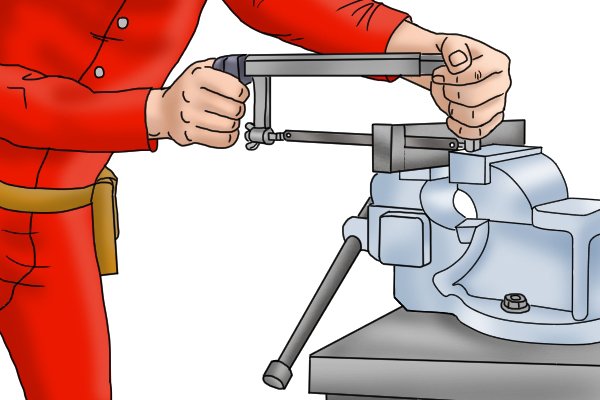
Place the metal in the vise with the cut line close to the jaws. Less exposed material means less vibration and bending.
For a round tube, place it firmly between the jaws without crushing it. Use soft jaw covers, wood, or thin cardboard if the surface must remain clean.
Support long material so it does not swing or pull down during the cut. A loose workpiece can twist, pinch the blade, or spoil the cut.
4. Create a Starting Notch
Hold the hacksaw at a slight angle and make two or three light strokes across the marked line. This creates a shallow groove called a starting notch.
The notch keeps the blade from wandering across the surface. Once the groove is established, gradually bring the saw to a more level position.
Do not start with hard, fast strokes. A slow start gives you control and protects the blade teeth.
5. Use Long, Smooth Strokes
Apply firm but moderate pressure on the forward stroke. Lift or reduce pressure on the return stroke so the teeth do not drag unnecessarily.
Use as much of the blade length as the workpiece allows. Long strokes spread wear across more teeth and usually cut faster than short sawing motions.
Keep the frame aligned with the cut line. Let the blade do the work. If the saw squeals, binds, or stops producing chips, reduce pressure and check the blade.
6. Maintain a Straight Cut
Watch the blade from above and from the side. Use your mark as a guide, but also check that the blade remains square to the metal.
If the cut begins to angle, stop and correct it early. A small error near the start can become a large angle at the other side.
For a thick piece, you can make a shallow groove around the part by rotating it in the vise. This approach helps keep the cut aligned on round stock.
7. Finish the Cut Carefully
As the blade approaches the far side, reduce pressure. Thin metal can break suddenly, and heavy pressure may bend the final section or tear the edge.
Support the waste piece if it could fall. Continue with short, controlled strokes until the cut is complete.
Remove the part only after the blade stops moving. Freshly cut metal may be hot, sharp, or covered with small burrs.
How to Cut Different Types of Metal
The basic method for how to use a hacksaw to cut metal stays the same, but each material behaves differently.
Steel
Steel requires steady pressure and a sharp blade. An 18 or 24 TPI bimetal blade is suitable for many small steel parts.
Use cutting oil if the manufacturer allows it and if the work area can remain clean. A small amount of oil can reduce heat and friction, but too much oil can make the handle slippery.
Stainless Steel
Stainless steel can harden if you rub the blade across it without removing material. Use firm, steady strokes and avoid stopping in the middle of a cut for long periods.
Do not use a dull blade. A sharp 24 or 32 TPI bimetal blade often works better than a coarse blade on thin stainless steel.
Aluminum
Aluminum is soft, but it can clog the teeth. A blade with fewer teeth per inch often clears chips better on thick aluminum.
Clean the blade if aluminum builds between the teeth. Do not force the saw, since clogged teeth can slide instead of cutting.
Copper and Brass
Copper and brass cut easily, but thin pieces can bend. Support the material close to the cut and use a fine-tooth blade for thin sections.
A light touch helps prevent crushing. The goal is to remove material, not squeeze the workpiece.
Threaded Rod and Bolts
When cutting threaded rod, place a nut on the rod before sawing. After the cut, remove the nut by turning it over the fresh end.
The nut can help restore minor thread damage. Still, file the end lightly and check that the nut starts smoothly. Never force a damaged nut onto the threads.
:max_bytes(150000):strip_icc()/SPR-types-of-saws-5409526-7-X-Hacksaw-8a18e4b2946e4d16b3a40789e9656359.jpg)
Common Mistakes to Avoid
Many poor hacksaw cuts come from setup errors rather than a lack of strength. Avoid these common problems when learning how to use a hacksaw to cut metal.
• Using a blade with the teeth facing the handle. The saw will feel awkward and may not cut correctly.
• Choosing too few teeth for thin metal. The blade may catch and damage the workpiece.
• Using too many teeth for thick stock. The teeth can clog and cut very slowly.
• Holding the material by hand. The workpiece can shift or the blade can slip.
• Taking short, rapid strokes. This creates heat and wears a small area of the blade.
• Pressing too hard. Excess pressure can break teeth and produce an angled cut.
• Cutting past the layout line. Removing too much metal cannot be reversed.
• Ignoring blade tension. A loose blade wanders, while excessive tension can cause breakage.
• Finishing with full force. The material may snap and create a sharp, torn edge.
A common workshop lesson is that speed comes from smooth motion, not brute force. When a blade begins to bind, stop and inspect the setup instead of pushing harder.
How to Make a Straighter and Cleaner Cut
A hacksaw can make accurate cuts when you control the three main factors: alignment, support, and pressure.
Start with a clear line that fully surrounds the area you need to cut. Place the workpiece so the line is close to the vise jaws. Keep the saw frame square and use long strokes.
For extra accuracy, begin with shallow strokes on one side. Once the groove is stable, deepen it across the full width. On larger round stock, rotate the piece as the groove develops.
Avoid twisting the handle. Let the blade remain in one plane. Twisting creates a wider cut, damages the teeth, and can make the blade snap.
A small amount of cutting fluid may help with steel and stainless steel. Follow the fluid manufacturer’s instructions, keep it away from your hands and handle, and clean the workpiece afterward.
How to Finish the Cut Edge
A freshly sawn edge often has burrs. A burr is a thin, sharp ridge of metal left beside the cut.
Clamp the part securely and use a metal file to smooth the edge. Push the file away from your body with controlled strokes. A flat file works for flat stock, while a round file can clean the inside of tubing.
For small burrs, a deburring tool can remove the sharp edge quickly. Sandpaper may help with light finishing, but it should not replace a file when a large burr remains.
Check the edge with your eyes and, carefully, with a gloved finger. Do not run a bare finger along a freshly cut edge.
Clean away metal chips before using the part. A small chip can damage threads, scratch a mating surface, or become embedded in skin.

Troubleshooting Hacksaw Problems
If the blade does not cut, first check its direction and condition. The teeth should point forward, and the blade should be tight and sharp.
If the blade keeps slipping sideways, improve the starting notch and reduce pressure. The workpiece may also be loose or too far from the vise jaws.
If the blade breaks often, check for excessive tension, twisting, or force. The wrong TPI can also cause breakage, especially when only one tooth contacts thick metal.
If the cut is rough, inspect the blade for missing teeth and make longer strokes. A rough finish may also mean that the material moved during cutting.
If the metal heats up quickly, slow down and reduce pressure. Let the tool and workpiece cool when needed. Heat can make the blade dull faster and may discolor some metals.

When to Use a Power Tool Instead
A hand hacksaw is a good choice for occasional cuts, tight spaces, and jobs that require control. It is also useful when noise, sparks, or electrical power are concerns.
A powered tool may be better when you need to cut thick stock, make many identical cuts, or work with large pipe. Options include a reciprocating saw, angle grinder, band saw, or metal-cutting chop saw.
Powered tools also bring greater risks. They can create sparks, high noise, hot fragments, and fast-moving parts. Use the guard, correct blade, eye protection, and ventilation recommended by the tool manufacturer.
Do not use a hacksaw for a task that requires more capacity than the frame and blade can safely provide. Patience is valuable, but forcing a hand tool through heavy material can cause injury or damage.
Frequently Asked Questions About How to Use a Hacksaw to Cut Metal
Which way should the hacksaw blade face?
The teeth should point away from the handle and toward the front of the hacksaw. A standard hacksaw cuts on the forward push stroke.
What TPI hacksaw blade is best for metal?
An 18 or 24 TPI bimetal blade works well for many general metal cuts. Use a higher TPI for thin metal and a lower TPI for thick material.
Should you use oil when cutting metal with a hacksaw?
A small amount of suitable cutting fluid can reduce friction and heat on steel or stainless steel. It is not always needed, and the workpiece must remain secure and the handle dry.
Why does my hacksaw blade keep breaking?
Frequent breakage often comes from excessive tension, twisting, heavy pressure, or a loose workpiece. The blade may also be too fine for the material or already damaged.
How do you cut metal straight with a hacksaw?
Mark the cut with a square, clamp the metal close to the vise jaws, and begin with light strokes to form a notch. Keep the frame square and use long, steady strokes without twisting.
Can a hacksaw cut stainless steel?
Yes, a sharp bimetal hacksaw blade can cut stainless steel. Use steady pressure and avoid rubbing without cutting, because stainless steel can harden when overheated or worked improperly.
How do you remove sharp edges after sawing metal?
Use a metal file or deburring tool to remove burrs from the cut edge. Work slowly, wear eye protection, and check the edge before handling the part.
Conclusion
Knowing how to use a hacksaw to cut metal comes down to a few reliable habits: choose the right TPI, install the blade with the teeth facing forward, secure the workpiece, start with a shallow notch, and use smooth full strokes. Finish by filing away burrs and inspecting the cut.
The best results come from control rather than force. Practice on scrap metal first, then apply the same method to your repair or project. Use this guide as a reference, and explore more metalworking techniques as your confidence grows.
