How Long Is A Hammer: Size, Types, And Uses
A hammer is usually 10 to 18 inches long, but the exact length depends on its type and job. In the United States, a common 16-ounce claw hammer is often about 13 to 16 inches long from the end of the handle to the face of the head.
A small tack hammer may be less than 10 inches long. A framing hammer may reach 18 inches. A sledgehammer can be 24 to 36 inches long, or more.
For the most useful answer, measure the hammer from the bottom of the handle to the striking face of the head.

Typical Hammer Lengths in the United States
Hammer length changes with the hammer’s purpose. A short handle gives better control in tight spaces. A long handle gives more swing speed and leverage, but it needs more room and care.
| Hammer type | Common length in the U.S. | Typical use |
|---|---|---|
| Tack or upholstery hammer | 8–10 inches | Small nails, tacks, and fabric work |
| Small claw hammer | 10–13 inches | Light home repairs |
| Standard claw hammer | 13–16 inches | General repairs and nail driving |
| Framing hammer | 16–18 inches | Framing walls, decks, and other wood work |
| Ball-peen hammer | 10–14 inches | Metal work and shaping |
| Brick hammer | 10–14 inches | Cutting and setting masonry |
| Club hammer | 10–14 inches | Light demolition and masonry |
| Sledgehammer | 24–36 inches | Heavy demolition and driving large objects |
| Long-handled sledgehammer | 36–48 inches or more | High-impact outdoor and construction work |
These are common ranges, not fixed standards. The same type of hammer may have several handle lengths and head weights.
A hammer’s listed size often refers to the weight of its head, not its total length. For example, a “16-ounce claw hammer” has a head that weighs about 1 pound. It does not mean the hammer is 16 inches long.

How Long Is a Standard Claw Hammer?
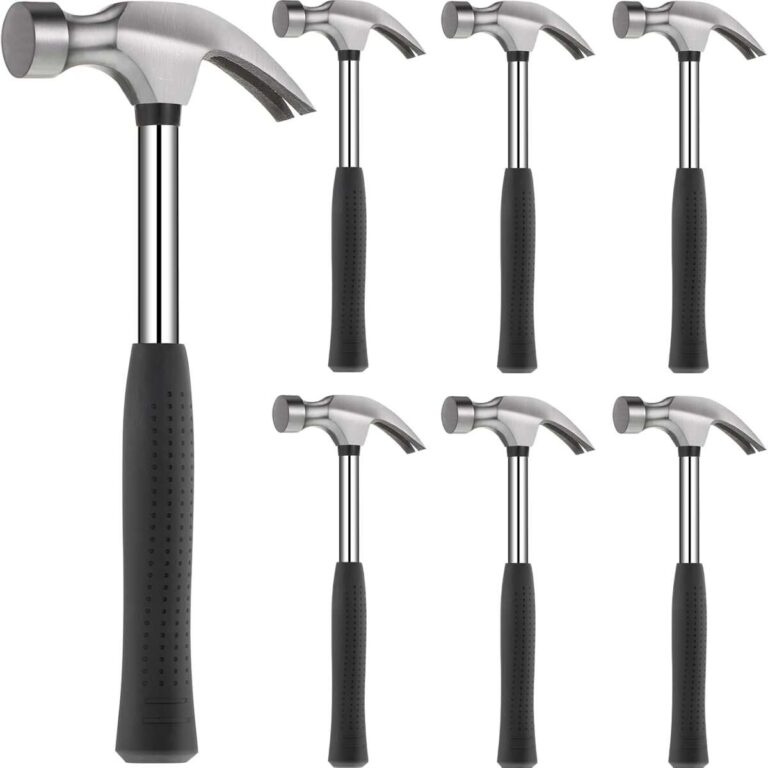
A standard claw hammer is usually 13 to 16 inches long. This is the most common answer when someone asks, “How long is a hammer?”
A general-purpose claw hammer normally has:
- A steel striking face
- A claw for pulling nails
- A wood, fiberglass, or composite handle
- A head weight of about 8 to 20 ounces
- A total length of about 13 to 16 inches
A 16-ounce claw hammer is a common choice for homeowners because it balances force and control. A lighter 8- or 12-ounce model may be easier to handle for small repairs. A heavier 20-ounce hammer can drive nails faster but may cause more fatigue or damage if used poorly.
Some U.S. tool makers list a 16-ounce claw hammer at about 13.75 inches, while others make similar tools closer to 16 inches. Handle shape, claw style, head design, and grip material all affect the final measurement.
Standard claw hammer size guide
| Head weight | Approximate total length | Best fit |
|---|---|---|
| 8 ounces | 10–13 inches | Small nails and light repairs |
| 12 ounces | 12–14 inches | Crafts and general household work |
| 16 ounces | 13–16 inches | General home maintenance |
| 20 ounces | 14–17 inches | Larger nails and heavier wood work |
These measurements are typical examples. Always check the product specifications when length matters for storage, transport, or tool compatibility.
How Long Is a Framing Hammer?
A framing hammer is commonly 16 to 18 inches long. Its longer handle helps create more striking force when driving large nails into framing lumber.
Framing hammers also tend to have:
- Heads weighing about 20 to 32 ounces
- A straight or curved claw
- A textured or milled striking face on many models
- A handle built for repeated, forceful swings
The longer handle is useful on a construction site, where the user often needs to drive long nails into studs, joists, and roof framing. It can feel awkward for small indoor repairs, especially in narrow spaces.
A framing hammer is not automatically better than a standard claw hammer. It is better for high-volume wood framing. For occasional household work, the added weight and length may reduce control.
How Long Is a Sledgehammer?
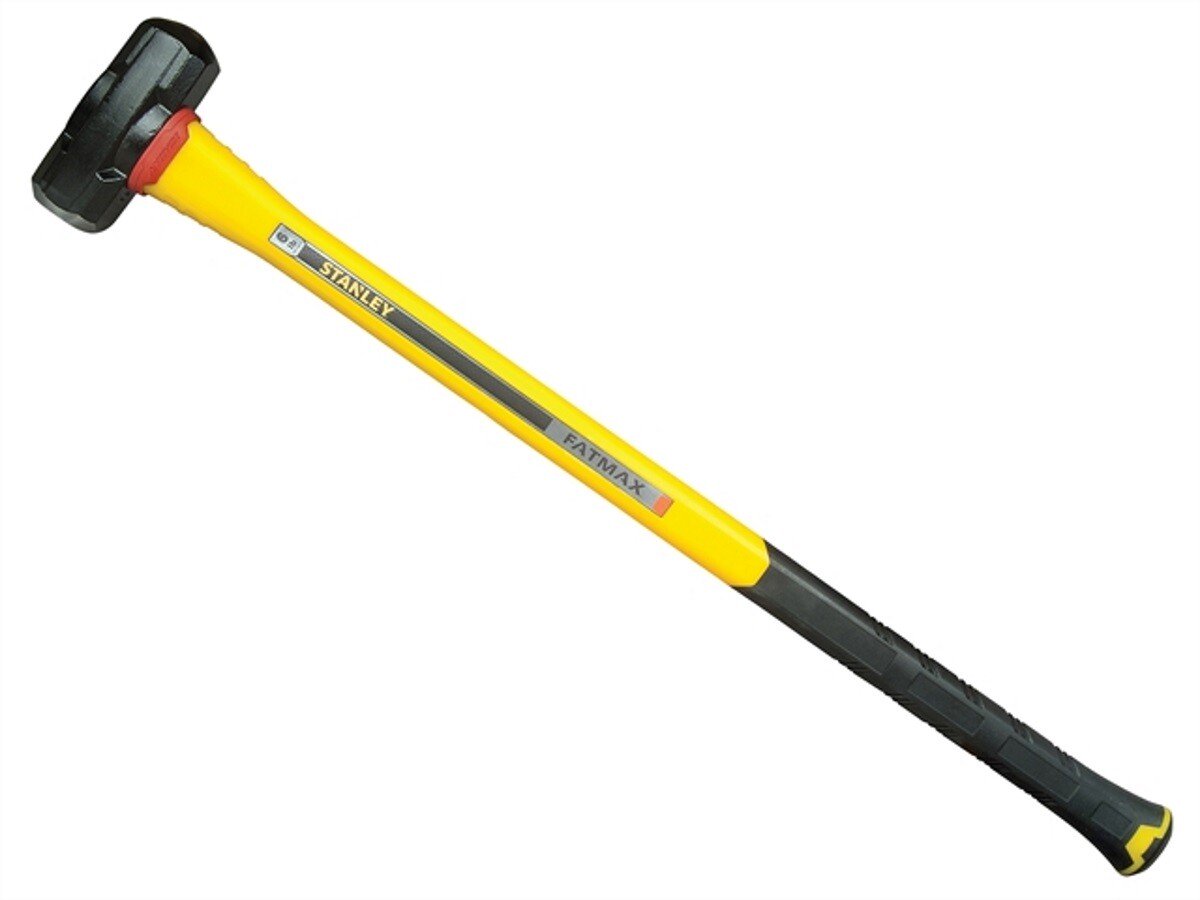
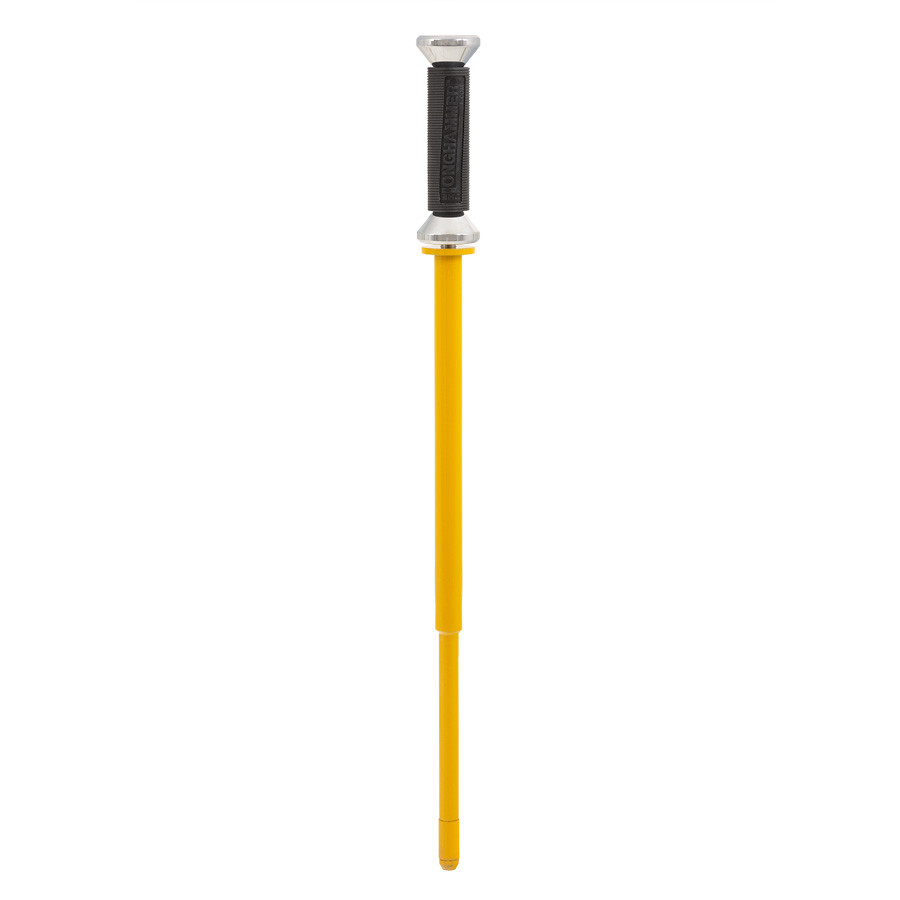
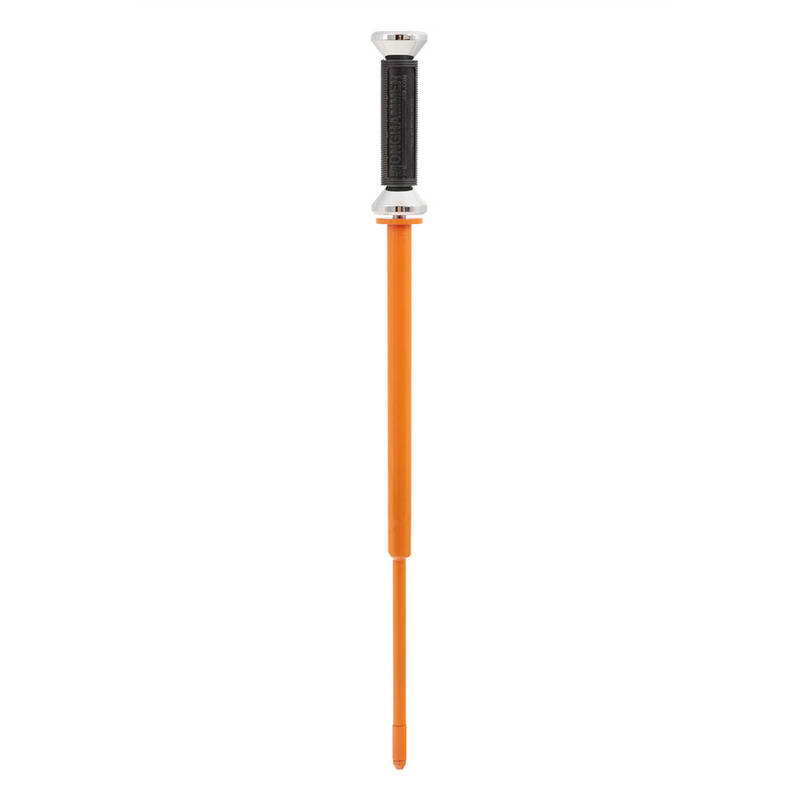
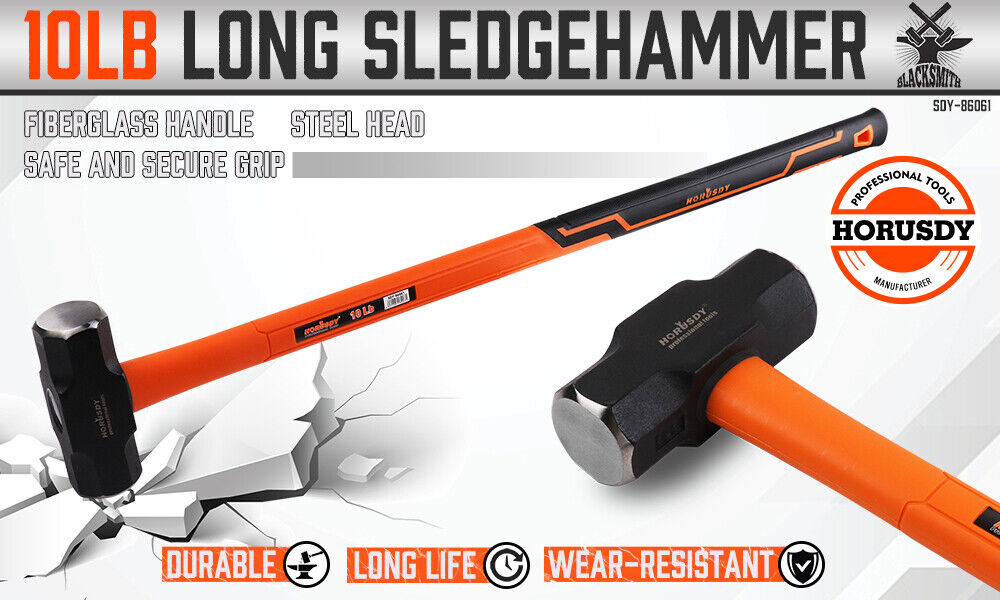
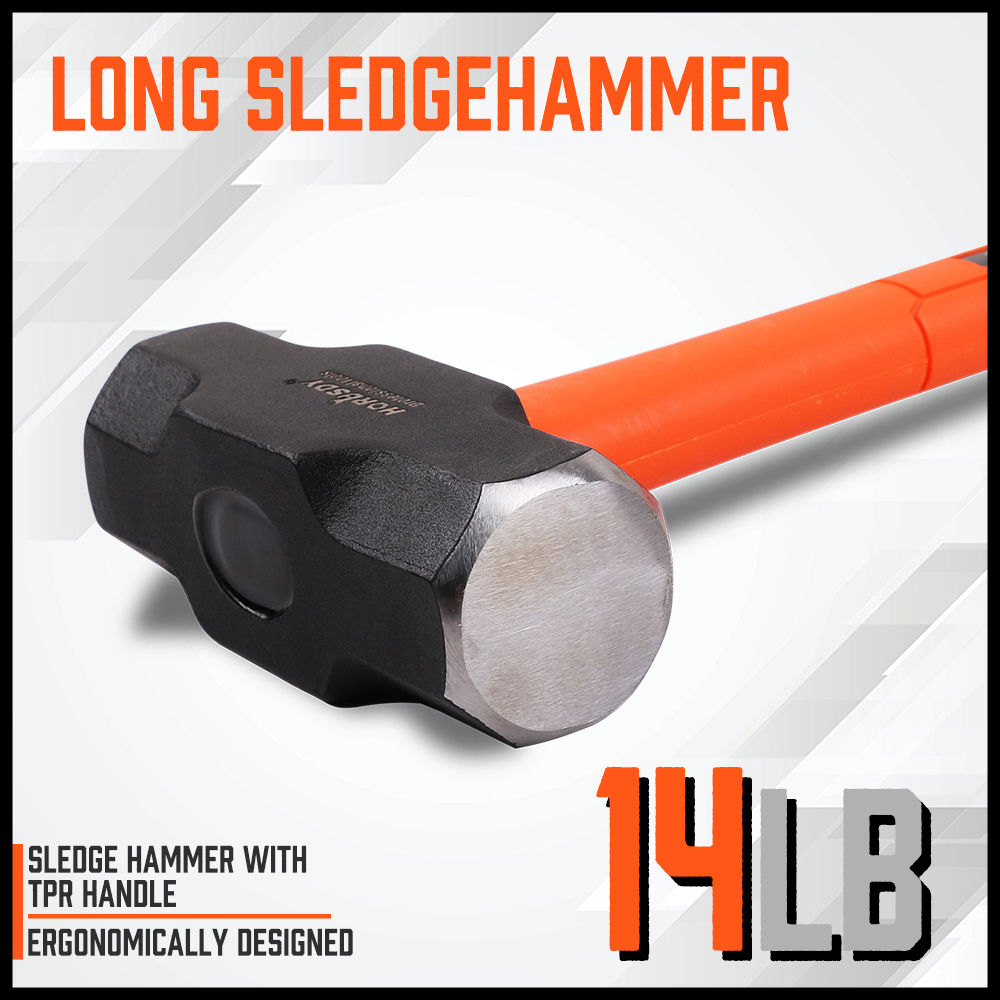
A sledgehammer is usually 24 to 36 inches long. Heavy-duty models may have handles that are 48 inches long or more.
Sledgehammers are different from claw hammers. They have a large, heavy head with striking faces on one or both ends. They are used for demolition, breaking masonry, driving stakes, and other high-impact work.
Common sledgehammer lengths include:
- 12 to 18 inches: Short club-style models
- 24 to 30 inches: Medium demolition and masonry work
- 36 inches: Full-size general-purpose sledgehammers
- 48 inches or longer: Heavy outdoor and construction work
A longer sledgehammer can produce more force because the handle gives the swing greater leverage. It also needs more clearance. Do not use a long sledgehammer in a cramped space or near people, glass, wiring, plumbing, or unstable materials.
How Long Are Ball-Peen, Tack, and Other Hammers?
Special-purpose hammers are often shorter than standard claw hammers. Their size reflects the control needed for detailed work.
Ball-peen hammer
A ball-peen hammer is commonly 10 to 14 inches long. It is used for metal work, shaping, riveting, and striking punches. Smaller models may have handles under 10 inches.
Tack hammer
A tack hammer is often 8 to 10 inches long. Its small head and short handle make it easier to control when placing upholstery tacks, picture nails, or other small fasteners.
Brick hammer
A brick hammer is usually 10 to 14 inches long. One end has a flat face, and the other has a sharp blade for scoring or breaking brick and masonry.
Club hammer
A club hammer often measures 10 to 14 inches. It has a compact, heavy head and works well for light demolition, masonry tasks, and driving cold chisels designed for hammer use.
Dead-blow hammer
A dead-blow hammer is often 12 to 16 inches long. Its head may contain shot or another internal material that reduces rebound. Length varies by head weight and intended use.

How to Measure a Hammer Correctly
Measure a hammer along its full length from the end of the handle to the front striking face.
Follow these steps:
- Place the hammer on a flat surface.
- Put the end of a tape measure at the bottom of the handle.
- Extend the tape along the handle and head.
- Stop at the center of the striking face.
- Record the measurement in inches.
Do not measure only the wooden or fiberglass handle. The head adds several inches to the total length.
For a curved claw hammer, keep the tape measure along the tool’s central line. Measuring around the curve can produce a number that is longer than the hammer’s true end-to-end length.
Why the measurement matters
Total length affects:
- Swing speed
- Striking force
- Control
- Storage space
- Reach
- User fatigue
- Safety clearance
A 16-inch hammer may fit in a tool bag but not in a narrow drawer. A 36-inch sledgehammer may deliver strong blows but need a large storage area and a clear swing path.
Does a Longer Hammer Hit Harder?
A longer hammer can create more striking force, but length is only one factor. Head weight, swing speed, user control, and the material being struck also matter.
A longer handle gives the head a wider arc. That can increase the speed of the head at impact. However, the user must control the larger swing. A hammer that is too long or heavy may lead to missed strikes, damaged surfaces, or hand and shoulder strain.
For most household repairs, choose the shortest hammer that can do the job well. Use a heavier or longer hammer when you need its added force and have enough room to swing safely.
Simple size comparison
Imagine two claw hammers:
- Hammer A: 14 inches long with a 16-ounce head
- Hammer B: 18 inches long with a 20-ounce head
Hammer B may deliver more impact, but it will also feel heavier and require more space. Hammer A may be easier to control for cabinet work, trim, and small repairs.
The best choice depends on the task, not on length alone.

Which Hammer Length Should You Choose?
Choose a hammer by matching its length and head weight to the work.
| Task | Practical choice |
|---|---|
| Hanging a picture | 8–12 ounce hammer |
| Small household repairs | 12–16 ounce claw hammer |
| Building a small wood project | 12–16 ounce claw hammer |
| Framing a wall or deck | 16–18 inch framing hammer |
| Upholstery work | 8–10 inch tack hammer |
| Metal shaping | 10–14 inch ball-peen hammer |
| Light masonry work | 10–14 inch brick or club hammer |
| Breaking concrete or demolition | 24–36 inch sledgehammer |
A shorter hammer is often the safer choice in a small room. A longer tool may strike with more force, but it can also hit nearby walls, pipes, wiring, or another person.
If you are unsure, start with a medium claw hammer around 14 to 16 inches long. It covers many basic repair jobs without being as tiring as a heavy framing hammer.
Hammer Length, Handle Material, and Comfort
Two hammers with the same total length may feel very different. Handle material, grip shape, balance, and head weight affect comfort as much as the measurement does.
Wood handles
Wood handles are traditional and can feel light in the hand. They may absorb some vibration, but they can split, loosen, or break if damaged or poorly maintained.
Fiberglass handles
Fiberglass handles are common on household and construction hammers. They resist splitting and often include a rubber grip. A damaged fiberglass handle should still be replaced because hidden damage can weaken the tool.
Composite handles
Composite handles may combine several materials for grip and vibration control. Their feel varies by design.
Before using any hammer, inspect the handle and head. Do not use a hammer with a loose head, cracked handle, badly mushroomed striking face, or damaged grip.

Common Mistakes When Comparing Hammer Lengths
The most common mistake is treating head weight as handle length. A 16-ounce hammer is not necessarily 16 inches long.
Other mistakes include:
- Measuring only the handle
- Comparing a framing hammer with a tack hammer
- Ignoring the head weight
- Choosing a longer hammer for a tight workspace
- Assuming all 16-ounce hammers have the same length
- Using a claw hammer for tasks that require a sledgehammer
- Using a damaged hammer because it “still works”
- Striking hardened steel with a hammer not designed for that purpose
Product listings may show handle length, overall length, head weight, or shipping dimensions. Check which measurement the manufacturer gives before comparing tools.

Hammer Safety Basics
Use eye protection when striking metal, masonry, nails, or hardened objects. Wear gloves only when they improve your grip and do not create a snag hazard.
Before swinging, check the area around and behind you. Keep other people outside the tool’s swing path. Hold the hammer near the end of the handle when you need greater force, and move your grip closer to the head when you need more control.
Never strike a hammer with another hammer unless the tool manufacturer allows that use. Do not use a damaged hammer. Replace it if the head is loose, the handle is cracked, or the striking face has dangerous chips or sharp deformation.
For demolition, wear safety glasses, hearing protection, work boots, and any additional protective equipment required by the job. Stop if the material behaves unpredictably or if you cannot maintain a clear swing path.
Frequently Asked Questions
Is a 16-inch hammer too long for home use?
No. A 16-inch claw hammer is a common household size. It may be longer than needed for small nails or tight spaces, but it offers a useful balance of reach, force, and control.
How long is a 16-ounce hammer?
A 16-ounce hammer is often about 13 to 16 inches long, depending on its type and design. “16-ounce” describes the approximate head weight, not the total length.
How long is a hammer handle?
The handle alone is often shorter than the hammer’s listed overall length. On a standard claw hammer, the handle may measure roughly 11 to 14 inches, while the full tool measures about 13 to 16 inches. Exact dimensions vary.
What is the longest common hammer?
Long-handled sledgehammers are among the longest common hammers. Many are 36 inches long, while heavy-duty models may reach 48 inches or more.
Is a longer hammer safer?
Not always. A longer hammer may provide more leverage, but it also creates a wider swing and can be harder to control. Choose the length that gives enough force while allowing a clear, controlled swing.
Conclusion
Most hammers used for general repairs in the United States are about 10 to 18 inches long. A standard claw hammer is usually 13 to 16 inches, a framing hammer is often 16 to 18 inches, and a sledgehammer commonly ranges from 24 to 36 inches.
To find the right size, identify the job first. Then compare total length, head weight, handle material, workspace, and your ability to control the tool. For a typical home toolbox, a 12- to 16-ounce claw hammer around 14 to 16 inches long is a practical starting point.
Recent Tool Guides
 Hammer
How To Hammer Flowers Onto Paper: Easy Guide
Learn how to hammer flowers onto paper with simple steps, helpful tips, and beautiful results for...
Read Guide → Wrench
How To Use A Hex Wrench: Easy Step-By-Step Guide
Learn how to use a hex wrench correctly with simple steps, helpful tips, and common mistakes...
Read Guide → Hacksaw
How To Cut Curtain Pole With Hacksaw: Easy Guide
Learn how to cut curtain pole with hacksaw safely and neatly. Follow simple steps for accurate...
Read Guide → Wrench
How To Use A Husky Torque Wrench: Easy Guide
Learn how to use a Husky torque wrench correctly with simple steps, torque settings, and safety...
Read Guide → Hammer
How To Hold A Hammer: Safe Grip Guide
Learn how to hold a hammer with the right grip, stance, and technique for safer, more...
Read Guide → Hacksaw
How To Cut Flexible Metal Conduit With Hacksaw: Easy Guide
Learn how to cut flexible metal conduit with hacksaw safely and cleanly. Follow simple steps for...
Read Guide →