Can A Hammer Drill Be Used As An Impact Driver: The Truth
For homeowners, DIYers, and tradespeople in the United States, the short answer is no—not in the true sense. A hammer drill can drive screws when its hammer mode is turned off, but it does not create the same twisting impact as a real impact driver.
A hammer drill and an impact driver use different impact systems:
- A hammer drill strikes forward to help drill into masonry.
- An impact driver strikes in the direction of rotation to help drive screws and bolts.
You may use a hammer drill for light or medium screw-driving work if it has a clutch and variable speed. However, it will not offer the same torque, control, or fastener protection as an impact driver.

Hammer Drill vs. Impact Driver: What Is the Difference?
A hammer drill and an impact driver may look similar, but their internal mechanisms do different jobs.
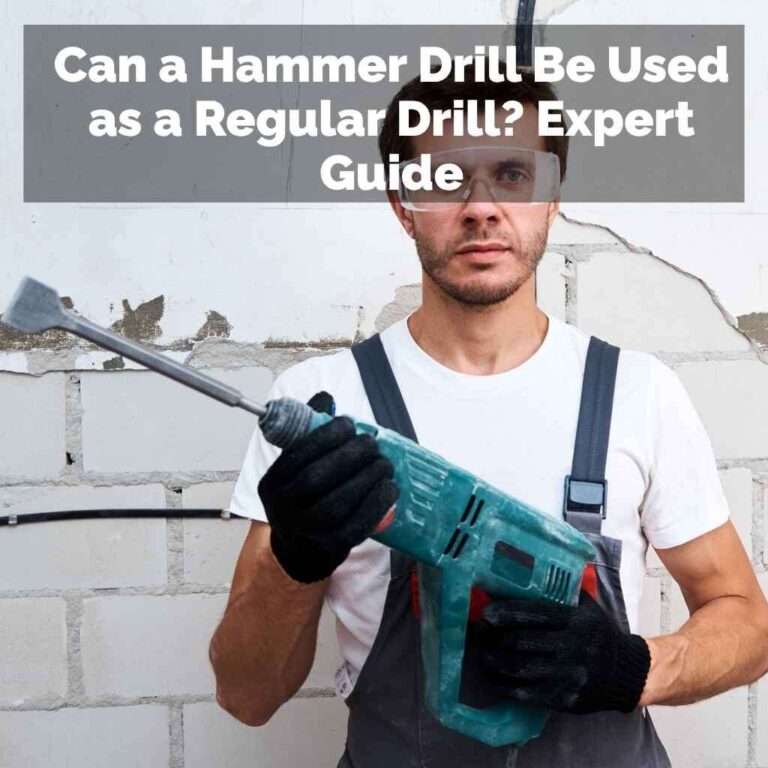
A hammer drill adds short, forward blows to the drill bit. These blows help the bit break through brick, block, concrete, and other masonry. The drill still spins, but it also moves back and forth along the bit’s axis.
An impact driver adds short, twisting blows to the bit. These rotational impacts help turn screws, lag bolts, and other fasteners with less strain on the motor and the user’s wrist.
| Feature | Hammer drill | Impact driver |
|---|---|---|
| Main job | Drilling masonry and general holes | Driving screws, bolts, and lag fasteners |
| Impact direction | Forward and backward | Clockwise and counterclockwise |
| Typical chuck | Three-jaw chuck or keyless chuck | Quick-change 1/4-inch hex socket |
| Clutch | Common on drill/driver models | Often controlled by trigger and impact mechanism |
| Best materials | Wood, metal, brick, block, and concrete | Wood, metal, decking, framing, and fasteners |
| Driving control | Usually precise at low speed | High torque with reduced reaction force |
| Masonry drilling | Yes, when hammer mode is engaged | No, not as a primary function |
The key difference is where the impact force goes. A hammer drill sends force into the material. An impact driver sends force through the fastener.

Can You Drive Screws With a Hammer Drill?
Yes. You can drive screws with many hammer drills, as long as the tool has a standard drill mode and suitable speed control.
A hammer drill with a clutch can work much like a regular drill/driver when:
- The hammer function is switched off.
- The tool is set to a low speed.
- The clutch is set to a suitable level.
- The bit fits securely in the chuck.
- The fastener does not require extreme torque.
This setup works well for tasks such as:
- Assembling furniture
- Installing cabinet hardware
- Driving small wood screws
- Hanging shelves
- Drilling pilot holes and then driving screws
- Light home repair
The drill may struggle with long screws, structural screws, lag bolts, or repeated fastening in dense wood. It can also place more twisting force on your hand because it lacks the rotating impact system found in an impact driver.
Turn hammer mode off
Do not use the hammer setting to drive screws. The forward blows can:
- Damage screw heads
- Break driver bits
- Strip soft screws
- Damage delicate materials
- Reduce control
- Cause the bit to slip from the fastener
The hammer setting is for masonry drilling, not fastening.
Use the clutch when possible
The clutch helps limit torque. When the fastener reaches resistance, the clutch slips instead of allowing the drill to keep turning at full force.
Start with a low clutch setting and increase it only when needed. This approach helps prevent overdriving screws into wood or damaging the screw head.
Why a Hammer Drill Is Not a True Impact Driver
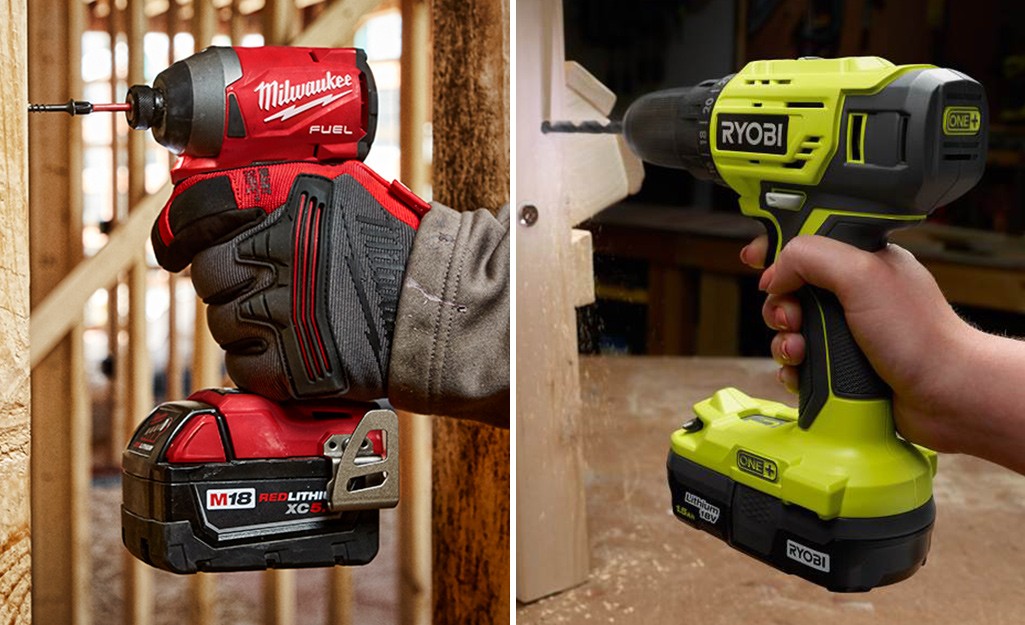
A hammer drill cannot become an impact driver simply by using an impact-rated bit or socket adapter.
An impact driver contains a spring, hammer, and anvil system designed to deliver repeated rotational blows. These parts engage when the fastener resists turning. The result is high turning force with less continuous reaction force sent back through the handle.
A hammer drill does not use this same system. Its hammer mechanism moves along the drill’s length. It helps the bit chip masonry, but it does not create the twisting blows needed for heavy fastening.
This difference affects several practical results:
- A hammer drill may stall sooner on a large fastener.
- Your wrist may feel more twisting force.
- The motor may heat up during demanding fastening.
- The chuck may loosen under vibration.
- The fastener or bit may suffer damage.
- Work may take longer.
A hammer drill can perform the basic action of turning a screw. It cannot reproduce the mechanical advantage of an impact driver.
What about an impact-rated bit?
Impact-rated bits are built to tolerate the repeated twisting forces produced by an impact driver. They are often more flexible and less likely to snap under impact use.
Using an impact-rated bit in a hammer drill is allowed if the bit fits the chuck. But the bit does not change the tool’s operating system. The hammer drill remains a hammer drill.
Also, impact-rated does not mean indestructible. A bit can still break if it is worn, used at an angle, or forced into a damaged screw head.

When Should You Use a Hammer Drill Instead?
Use a hammer drill when you need to drill holes in masonry or when one tool must handle several light-duty jobs.
A hammer drill is often the better choice for:
- Brick walls
- Concrete block
- Mortar joints
- Tile backer board, with the correct bit and setting
- Wood and metal drilling
- Small home projects
- Occasional screw driving
For masonry, use a masonry bit and engage the hammer setting only when the tool and bit are designed for that work. Let the tool do the cutting. Excessive pressure can slow drilling and damage the bit.
A hammer drill is also useful when you need a general drill/driver but occasionally drill into masonry. In that case, its clutch, chuck, and ordinary drill mode may be more useful than the hammer feature alone.
When is an impact driver the better choice?
Choose an impact driver when you regularly drive long or thick fasteners. It is especially useful for:
- Deck construction
- Wood framing
- Fencing
- Cabinet installation with many fasteners
- Structural screws
- Lag screws
- Long self-tapping screws
- Removing stubborn bolts with the proper accessories
An impact driver is not automatically better for every screw. Its high torque can damage small screws, soft wood, plastic parts, and delicate hardware if you use too much force.
For small screws, a drill/driver may offer better control. For repeated heavy fastening, an impact driver usually offers better speed and less hand strain.

How to Use a Hammer Drill as a Drill/Driver
If an impact driver is not available, you can use a hammer drill for ordinary screw driving. Follow this process.
1. Check the tool
Confirm that the tool has:
- A standard drill mode
- Variable-speed control
- A clutch, if possible
- A secure chuck
- A battery or power cord in good condition
If the tool is a rotary hammer with an SDS chuck, it may not be suitable for ordinary screw driving. A rotary hammer is designed mainly for concrete drilling and chiseling. It is not the same as a compact hammer drill/driver.
2. Switch off hammer action
Set the mode selector to the drill or screw symbol. Do not use the hammer symbol for driving fasteners.
If the tool has a separate mechanical switch, make sure the hammer action is fully disengaged.
3. Select the correct bit
Use a driver bit that matches the screw head:
- Phillips bit for Phillips screws
- Square bit for square-drive screws
- Torx bit for star-drive screws
- Nut driver for compatible hex-head screws
A bit should fit the screw with little movement. A poor fit increases the chance of cam-out, which happens when the bit slips out and damages the screw head.
4. Set a low speed
Use low speed for starting the screw. This gives you more control and reduces the chance of stripping the head.
You can increase speed after the screw starts, but keep the bit straight and apply steady pressure.
5. Start with a low clutch setting
Place the tip into the fastener and squeeze the trigger slowly. Increase the clutch setting only if the tool stops before the screw reaches the desired depth.
For a long or large fastener, drill a pilot hole when the material or screw instructions call for one.
6. Stop at the correct depth
Stop when the screw is flush, slightly countersunk, or at the depth required by the project. Do not keep driving after the fastener is seated.
For structural fasteners, follow the instructions from the fastener maker. Some projects require a specific driver, pilot hole, washer, or torque method.
Signs the setup is working
The setup is suitable when:
- The bit stays engaged with the screw.
- The drill does not overheat.
- The clutch stops the screw at the desired depth.
- The screw head remains undamaged.
- The material does not split or crack.
- The fastener reaches full depth without excessive force.
If the drill stalls, smells hot, or repeatedly strips screw heads, stop and change the method.

Can You Use an Impact Driver for Drilling?
Yes, but only with the right accessories and for suitable jobs.
An impact driver accepts 1/4-inch hex-shank accessories. You can use it with:
- Impact-rated drill bits
- Hex-shank spade bits
- Nut drivers
- Impact-rated socket adapters
- Impact-rated sockets
- Some step bits made for impact use
Do not place ordinary drill bits or standard socket adapters in an impact driver unless the accessory maker specifically approves them. Regular accessories may break under repeated twisting impacts.
An impact driver is useful for making small holes and driving fasteners. It is not a full replacement for a drill because:
- It may have less control at very low torque.
- It may damage delicate bits.
- It may create oversized or rough holes in some materials.
- It usually lacks a traditional clutch.
- It can overdrive small screws quickly.
For clean, controlled drilling, use a drill/driver. For high-torque fastening, use an impact driver.

Common Mistakes to Avoid
Several mistakes can make a hammer drill unsafe or ineffective for screw driving.
Leaving hammer mode on
This is the most common error. The forward hammer blows can damage the fastener and the work surface. Always check the mode selector before driving.
Using a hammer drill for large structural fasteners
A hammer drill may drive a large screw slowly, but repeated heavy use can strain the motor and chuck. A suitable impact driver is usually the better tool.
Using the wrong bit
A bit that does not match the screw head will slip. Replace worn bits instead of pressing harder.
Holding the tool at an angle
Keep the bit aligned with the fastener. An angled bit can strip the head or snap.
Using standard sockets on an impact driver
Standard sockets can crack or shatter under impact force. Use sockets and adapters marked for impact use.
Ignoring the fastener instructions
Structural screws, concrete anchors, and other specialty fasteners may require a specific bit, hole size, embedment depth, or installation method. The tool alone does not determine whether the connection is safe.
Treating an impact driver as a torque wrench
An impact driver can tighten a fastener beyond the correct level. When a project specifies a final torque value, use a calibrated torque wrench after the initial installation, if the fastener maker permits that method.
Forgetting personal protection
Wear safety glasses when drilling or driving. Use hearing protection during long or loud work. Secure loose clothing and keep hands away from rotating accessories.

Quick Decision Guide
Use this table to choose the right tool for the task.
| Task | Best tool | Can a hammer drill do it? |
|---|---|---|
| Drill small holes in wood | Drill/driver | Yes, with hammer mode off |
| Drill metal | Drill/driver | Yes, with the correct bit |
| Drill brick or block | Hammer drill | Yes, with hammer mode on |
| Drive cabinet screws | Drill/driver | Yes |
| Drive long deck screws | Impact driver | Sometimes, but not ideal |
| Drive lag screws | Impact driver | Usually not the best choice |
| Remove tight bolts | Impact driver | A hammer drill is usually unsuitable |
| Install small hardware | Drill/driver | Yes |
| Drive concrete screws | Drill/driver or impact driver | Possible, with the correct accessory and method |
| Drill large holes with a hole saw | Drill/driver with adequate power | Sometimes, but check the tool limits |
The simplest rule is this: use a hammer drill for forward-impact masonry work and an impact driver for rotational-impact fastening.
Frequently Asked Questions
Can a hammer drill replace an impact driver?
A hammer drill can replace an impact driver for light screw driving, but not for heavy or repeated fastening. It can turn screws, yet it lacks the rotational impact mechanism that gives an impact driver its higher fastening ability.
Can I use an impact driver bit in a hammer drill?
Yes, if the bit fits the hammer drill’s chuck and the hammer function is off. The impact-rated bit may be more resistant to twisting, but it will not make the hammer drill function like an impact driver.
Will using hammer mode drive screws faster?
No. Hammer mode is not designed to improve screw driving. It adds forward blows that can damage the screw, bit, or workpiece.
Is a hammer drill stronger than an impact driver?
Neither tool is simply stronger in every situation. A hammer drill is better for masonry drilling. An impact driver is usually better for high-torque screw and bolt driving. Tool strength depends on the task, accessory, speed, and fastener.
Can a rotary hammer be used as an impact driver?
Usually, no. A rotary hammer is made for heavy masonry drilling and chiseling. Some specialized models may accept additional accessories, but you must follow the exact manufacturer instructions. Do not assume that an SDS rotary hammer can safely replace an impact driver.
Final Answer
A hammer drill can drive screws, but it cannot truly be used as an impact driver because its hammer action moves forward instead of twisting.
Use a hammer drill with hammer mode off for light fastening, pilot holes, and general home repairs. Use an impact driver for long screws, lag bolts, decking, framing, and repeated high-torque work. If you need both masonry drilling and heavy fastening, keep both tools available or choose a tool set that includes a hammer drill/driver and an impact driver.
Recent Tool Guides
 Hammer
How To Hammer Flowers Onto Paper: Easy Guide
Learn how to hammer flowers onto paper with simple steps, helpful tips, and beautiful results for...
Read Guide → Wrench
How To Use A Hex Wrench: Easy Step-By-Step Guide
Learn how to use a hex wrench correctly with simple steps, helpful tips, and common mistakes...
Read Guide → Hacksaw
How To Cut Curtain Pole With Hacksaw: Easy Guide
Learn how to cut curtain pole with hacksaw safely and neatly. Follow simple steps for accurate...
Read Guide → Wrench
How To Use A Husky Torque Wrench: Easy Guide
Learn how to use a Husky torque wrench correctly with simple steps, torque settings, and safety...
Read Guide → Hammer
How To Hold A Hammer: Safe Grip Guide
Learn how to hold a hammer with the right grip, stance, and technique for safer, more...
Read Guide → Hacksaw
How To Cut Flexible Metal Conduit With Hacksaw: Easy Guide
Learn how to cut flexible metal conduit with hacksaw safely and cleanly. Follow simple steps for...
Read Guide →