

Yes, a sharp hacksaw with the right blade can cut steel by hand, though thick stock takes time and effort.
The answer to “can a hacksaw cut steel” depends on the steel’s thickness, hardness, shape, and the blade you use. With the right setup, a hacksaw can make clean cuts through steel pipe, bolts, threaded rod, sheet metal, and small bars. This guide explains the tools, methods, safety steps, and limits so you can work with confidence.

Can a hacksaw cut steel?
Yes, a hacksaw can cut steel. A hacksaw uses a fine-tooth blade made for metal. As you push and pull the blade across the workpiece, its small teeth remove thin chips of steel.
A hacksaw works best on small or medium steel parts. It is useful for home repairs, plumbing work, automotive jobs, and light fabrication. It does not need electricity, so it remains handy when power tools are not available.
The key factors are:
• Blade quality and tooth count
• Steel thickness and hardness
• Steady cutting pressure
• A secure workpiece
• Proper cutting speed
A hacksaw may cut through a thin steel tube in less than a minute. A thick steel bar may take several minutes. Hard tool steel can dull a standard blade very quickly.

What types of steel can a hacksaw cut?
A hacksaw can cut many common steel products. However, some types need a stronger blade or a different tool.
Mild steel
Mild steel is the easiest steel for a hacksaw to cut. It includes many steel brackets, flat bars, angle iron, bolts, and tubes used in general construction.
A sharp bimetal blade cuts mild steel well. Use a steady rhythm instead of forcing the blade.
Stainless steel
A hacksaw can cut stainless steel, but the job may feel slower. Stainless steel can harden when excessive pressure or heat builds up during cutting.
Use a sharp, high-quality bimetal blade. Keep the blade moving, and avoid rubbing it in one place without making progress.
Galvanized steel
Galvanized steel has a zinc coating over the steel surface. A hacksaw can cut it, but the cut edge loses its protective coating and may rust.
After cutting, remove sharp burrs and protect the exposed edge with a suitable metal primer or corrosion-resistant coating.
Hardened steel
Hardened steel is much more difficult to cut with a standard hacksaw. Examples include some tool steel, hardened shafts, and high-strength fasteners.
A hacksaw may still work if the steel is only partly hardened, but the blade will wear quickly. An abrasive cut-off wheel, reciprocating saw, or angle grinder is often a better choice.
Which hacksaw blade is best for steel?
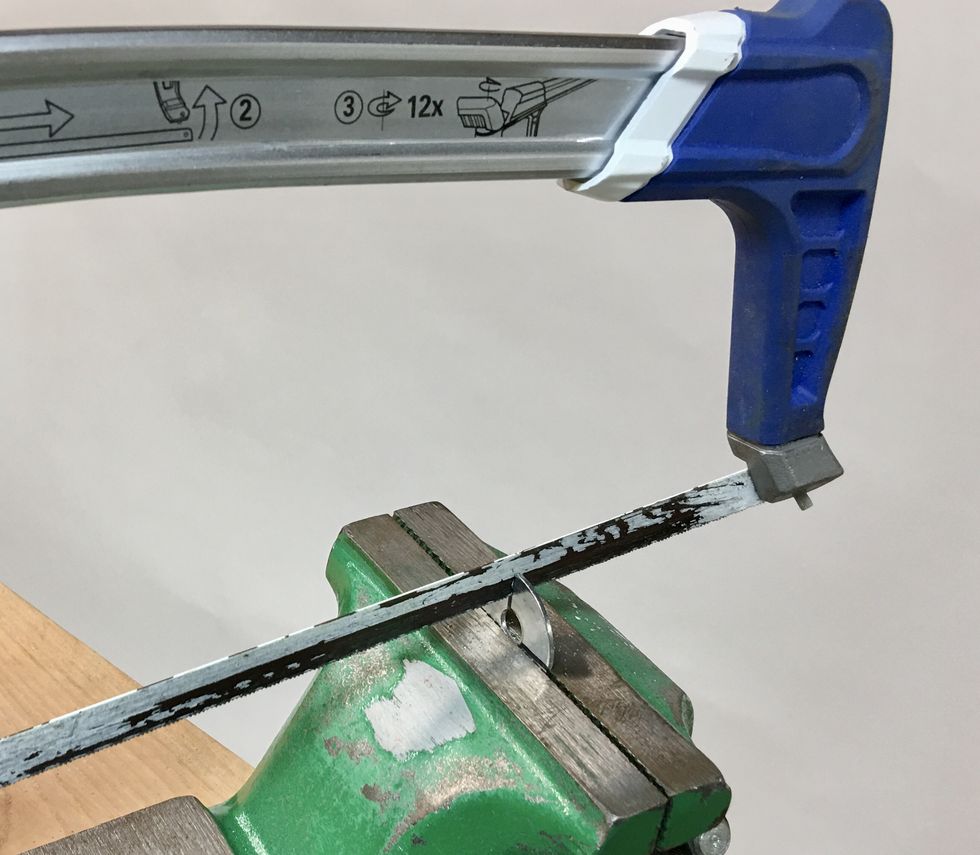
The best hacksaw blade for steel is usually a sharp, high-quality bimetal blade. Bimetal blades combine a flexible spring-steel body with hardened high-speed steel teeth.
This design helps the blade resist breaking while keeping its teeth hard enough to cut metal. Carbon steel blades cost less, but they often dull or break sooner.
Choose the right teeth per inch
Hacksaw blades are commonly sold in 14, 18, 24, and 32 teeth per inch, or TPI.
• 14 TPI works for thick steel and large sections.
• 18 TPI suits medium steel stock and general repairs.
• 24 TPI is a good choice for thin-wall tubing and sheet metal.
• 32 TPI works for thin sheet, small bolts, and narrow parts.
Try to keep at least three teeth engaged with the workpiece during each stroke. If too few teeth touch the steel, the blade may catch and break. If too many teeth touch, chips can pack between them and slow the cut.
Blade direction matters
Most hacksaw blades are designed to cut on the forward stroke. Install the blade with the teeth pointing away from the handle.
Set the blade tight in the frame. A loose blade can wander, twist, or snap. Do not over-tighten it, because excessive tension can damage the frame or cause the blade to fail.

How to cut steel with a hacksaw
Good technique makes a major difference. The process is simple, but small details can save time and prevent damaged blades.
1. Mark the cut
Use a permanent marker, scribe, or soapstone to mark the cut line. Wrap masking tape around a tube to create a straight guide.
For a precise cut, mark all sides of the material. This helps you keep the blade square as it passes through.
2. Secure the steel
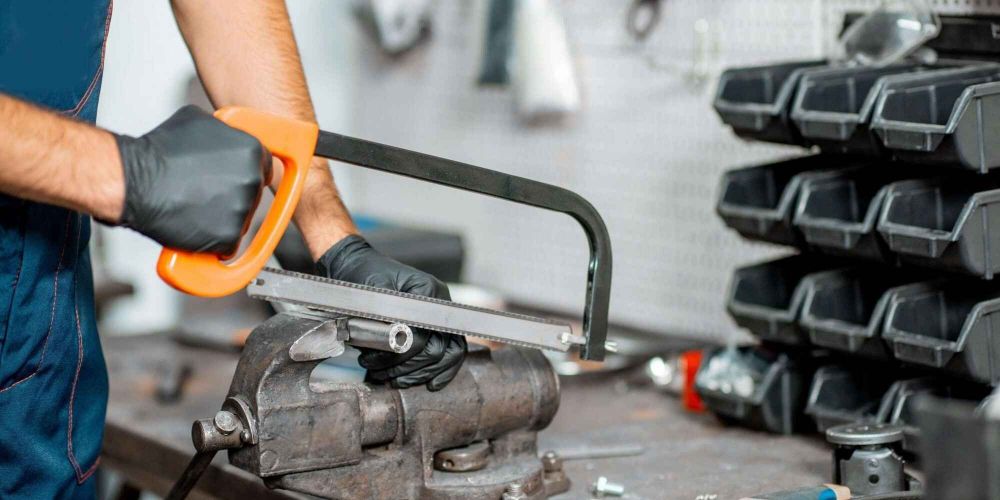
Clamp the steel firmly in a vise. Place the cut line close to the vise jaws, but leave enough room for the hacksaw frame.
A loose workpiece wastes effort and creates vibration. It can also make the blade jump out of the cut.
3. Start with a shallow notch
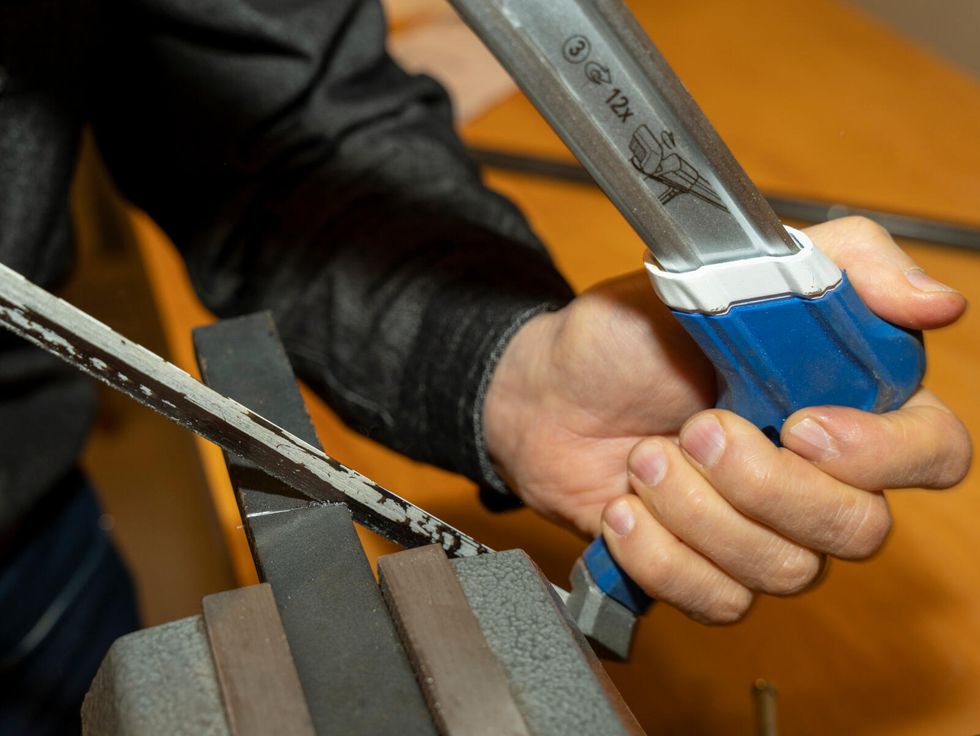
Hold the hacksaw at a low angle and make several light strokes. This creates a small groove that guides the blade.
Once the groove is established, raise the blade and use longer strokes. Avoid starting with heavy pressure, since the blade can slip across the steel.
4. Use long, steady strokes
Use most of the blade length with each stroke. Long strokes spread wear across more teeth and help remove chips.
Apply firm pressure on the forward stroke. Reduce pressure on the return stroke. Let the teeth cut the steel instead of trying to force the blade through it.
5. Keep the blade straight
Hold the hacksaw square to the workpiece unless the design requires an angled cut. Twisting the frame can bend the blade and produce a crooked cut.
If the blade begins to bind, stop and check the cut. Do not twist the handle to force it free.
6. Slow down near the end
Support the cut-off section as the blade nears the bottom of the cut. This prevents the falling piece from bending the blade or tearing the final section.
Finish with light strokes. The last few teeth can break if you push too hard.

Should you use cutting oil on steel?
Cutting oil can help when sawing thick steel or stainless steel. It reduces friction, carries heat away, and helps the teeth move through the material.
For thin steel, oil is often not necessary. Too much oil can make the workpiece slippery and collect metal chips.
Use a small amount of suitable cutting fluid when:
• The cut is long or deep
• The steel is stainless or hard
• The blade becomes hot
• The teeth begin to drag
Apply the fluid to the cut line, not the entire tool. Stop if the blade becomes too hot to touch safely. A hot blade can lose hardness and dull faster.
Some materials should not be cut with ordinary oil. Check the product label and workplace guidance before using a cutting fluid.
Common mistakes when cutting steel with a hacksaw
Many poor cuts come from technique rather than the tool. Avoid these common errors.
Using the wrong blade
A coarse blade on thin sheet metal can snag and tear the material. A very fine blade on thick steel can clog with chips and cut slowly.
Match the TPI to the material thickness. When uncertain, an 18 or 24 TPI bimetal blade is a useful general-purpose choice.
Pushing too hard
Heavy pressure may feel productive, but it can bend the blade and strip its teeth. It also creates more heat.
Use steady force and let the teeth do the work. A slower, controlled stroke usually gives a faster overall result.
Cutting with a dull blade
A dull blade slides across the surface instead of creating clean chips. It may squeal, heat up, or leave a polished groove.
Replace the blade when the cut becomes slow, the teeth look rounded, or you need much more pressure than before.
Failing to clamp the work
If the steel moves, the blade can catch. This can damage the cut and injure your hand.
A vise is best. If you do not have one, use strong clamps and place the work on a stable surface.
Ignoring burrs
A fresh steel cut often leaves sharp edges. Run a mill file, deburring tool, or fine abrasive over the edge before handling the part.
Wear gloves when moving rough steel, but do not rely on gloves near rotating power tools.

Hacksaw safety when cutting steel
Wear safety glasses or a face shield. Small steel chips can fly from the cut, especially when a tooth breaks.
Keep both hands on the hacksaw handle and frame when possible. Keep fingers away from the blade path and maintain a balanced stance.
Basic safety steps include:
• Clamp the workpiece securely.
• Check that the blade is tight and undamaged.
• Wear eye protection.
• Keep loose clothing away from the work.
• Remove burrs after cutting.
• Store blades safely when not in use.
• Use ventilation if cutting coated or painted steel.
Galvanized, painted, or plated steel may release harmful fumes when heated. A hand hacksaw produces less heat than a grinder, but you should still avoid breathing dust or coating particles. Safety guidance from occupational health authorities consistently recommends eye protection, good ventilation, and control of metal dust and chips.

When should you use another tool?
A hacksaw is economical and precise, but it is not ideal for every steel-cutting job.
Choose a different tool when:
• The steel is very thick.
• You need many repeated cuts.
• The material is hardened.
• The cut must be completed quickly.
• You need a long, perfectly straight cut.
A reciprocating saw with a metal-cutting blade is useful for large pipe and awkward locations. An angle grinder with an abrasive or thin cut-off wheel works well for thick bar and structural steel, but it creates sparks, noise, and more heat.
A band saw often gives the cleanest repeatable cuts. A cold saw can make fast, accurate cuts in production work. For thin sheet, aviation snips, electric shears, or a nibbler may be better than a hacksaw.
The best tool is not always the fastest one. It should match the material, the cut quality you need, your workspace, and your safety controls.
How long does it take to cut steel with a hacksaw?
Cutting time depends on the cross-sectional area and hardness of the steel. A small bolt may take less than a minute with a fresh blade. A one-inch steel bar may take several minutes of steady work.
The first cut often feels slow because you are creating the guide groove. Once the blade reaches full depth, the process becomes smoother.
A practical workshop test is to count your strokes rather than force the blade. If the cut stops getting deeper after many strokes, check the blade, add a little cutting fluid, or inspect the workpiece for movement.
Frequently Asked Questions About Can a Hacksaw Cut Steel
Can a hacksaw cut a steel bolt?
Yes, a hacksaw can cut most mild-steel bolts. Use an 18 or 24 TPI bimetal blade, secure the bolt in a vise, and protect the threads with a nut if you may need to restore them later.
Can a hacksaw cut stainless steel?
Yes, but stainless steel usually takes more time than mild steel. Use a sharp bimetal blade, steady pressure, and cutting fluid when the cut is long or the material becomes hot.
Can a hacksaw cut thick steel?
A hacksaw can cut thick steel, but the work may be slow and tiring. For heavy bar, structural steel, or repeated cuts, a band saw, reciprocating saw, or angle grinder is usually more practical.
What TPI hacksaw blade should I use for steel?
Use 14 TPI for thick steel, 18 TPI for general steel work, and 24 or 32 TPI for thin sheet and small parts. Aim to keep at least three teeth in contact with the workpiece.
Why does my hacksaw blade keep breaking?
A blade may break because it is loose, over-tightened, twisted, dull, or forced through the steel. Clamp the work securely, use smooth strokes, and keep the blade straight in the cut.
Can a hacksaw cut hardened steel?
It may cut lightly hardened steel, but standard blades often dull quickly. For strongly hardened steel, use a tool and blade rated for that material, such as an abrasive wheel or specialized power saw.
Conclusion
A hacksaw can cut steel when you use the right blade, steady technique, and secure setup. Mild steel is the easiest target, while stainless, thick, and hardened steel require more patience or a stronger cutting tool.
Choose the correct TPI, mark the cut, clamp the work, and use smooth forward strokes. Wear eye protection and remove sharp burrs when the cut is complete. If you found this guide useful, explore more metalworking tips or share your own steel-cutting experience in the comments.
