Can A Hacksaw Cut Leaf Springs: Safe Cutting Guide
Yes, a hacksaw can cut a leaf spring. However, it will be slow work because leaf springs are made from tough, hardened spring steel. A sharp bi-metal blade, a firm vise, steady pressure, and patience are key.
For a project in a U.S. garage, a hacksaw is useful when you need one clean cut and do not have a powered metal saw. Do not cut a leaf spring while it is still installed on a vehicle. The spring can hold stored energy, and the cut can create sharp edges or release sudden tension.
This guide explains which blade to use, how to cut the spring, when another tool makes more sense, and how to avoid common mistakes.

Why a Hacksaw Can Cut a Leaf Spring
A hacksaw can cut leaf spring steel because its teeth remove small chips of metal with each stroke. The process is slow, but it does not rely on heat.
Leaf springs are usually made from hardened or tempered steel. This lets them flex under the weight of a vehicle without bending permanently. That strength also makes them harder to cut than mild steel tubing, sheet metal, or ordinary flat bar.
A hacksaw does not need to soften the metal. It only needs teeth that are harder than the material and enough pressure to keep those teeth cutting.
The main limits are:
- Cutting speed: A hand saw may take several minutes or longer.
- Blade wear: Spring steel can dull poor-quality blades quickly.
- Work holding: A loose spring will move and waste effort.
- Cut location: A thick spring takes more strokes than a thin spring.
- Blade choice: A dull, coarse, or low-quality blade may skate across the surface.
A hacksaw also has one useful advantage: it cuts cold. That matters because intense heat can affect the temper of spring steel. A powered abrasive wheel can cut much faster, but it may heat the nearby metal enough to change its properties.
This does not mean every leaf spring can be cut with equal ease. A thick truck spring may be difficult by hand, while a thin trailer or passenger-car spring may be manageable.

What You Need Before Cutting
Gather the right tools and secure the spring before making the first stroke. Preparation usually matters more than raw cutting force.
Required tools
Use:
- A strong bench vise
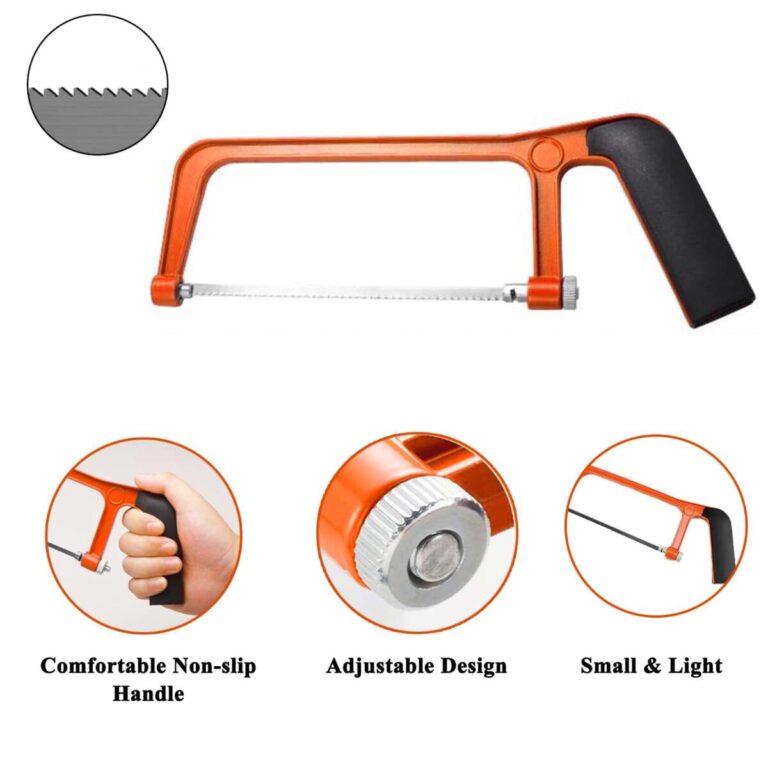
- A quality hacksaw frame
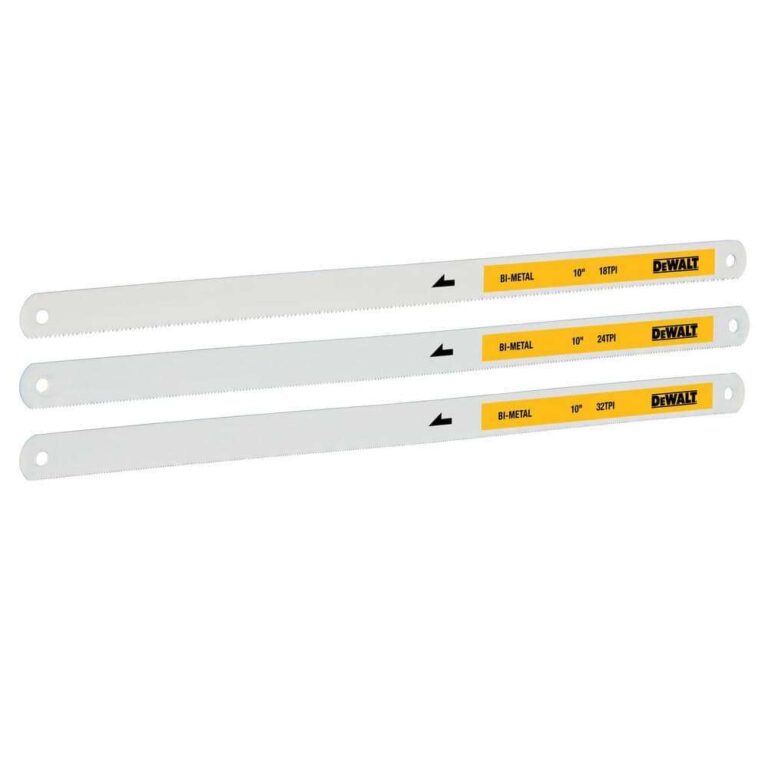
- One or more spare bi-metal blades
- A permanent marker or scribe
- A steel rule or square
- Cutting oil or light machine oil
- A wire brush or file
- Work gloves
- Safety glasses or a face shield
- Hearing protection if using a power tool
- Clamps, if the spring does not fit the vise well
A full-size hacksaw is better than a small junior hacksaw for thick spring steel. It gives you a longer stroke and better control.
Choose the correct blade
For most leaf springs, start with a bi-metal blade in the 18-to-24 teeth-per-inch range.
Use the following guide:
| Leaf spring condition | Useful blade range |
|---|---|
| Thin spring steel | 24–32 teeth per inch |
| Medium spring steel | 18–24 teeth per inch |
| Thick spring steel | 14–18 teeth per inch |
The blade should have at least two or three teeth touching the material at all times. If the teeth are too coarse, they can catch and break. If they are too fine, they can fill with chips and cut very slowly.
A bi-metal blade combines a tough blade body with harder high-speed-steel teeth. It usually lasts longer than a basic carbon-steel blade.
Check the spring
Before cutting, inspect the leaf spring for:
- Cracks
- Deep rust pits
- Sharp broken edges
- Clamps or brackets that may still hold tension
- Bushings, bolts, or mounting parts
- Paint or grease that may hide the cut line
If the spring came from a vehicle, remove it completely first. Support the vehicle with properly rated jack stands, follow the vehicle service instructions, and never rely on a hydraulic jack alone.

How to Cut a Leaf Spring With a Hacksaw
The safest method is to remove the spring, clamp it firmly, mark the cut, and use slow full strokes.
1. Remove the leaf spring
Do not cut the spring on the vehicle. Remove it from the suspension and place it on a stable work surface.
If the spring is part of a spring pack, treat the pack as loaded until you confirm that its clamps, center bolt, and mounting parts are no longer holding tension. If you are not sure how to release the pack safely, stop and ask a qualified suspension technician.
2. Mark the cut line
Measure from a known edge and mark the line with a scribe or permanent marker. A square helps you mark a straight line around the spring.
Wrap masking tape around the spring to create a visible guide. The tape is not a substitute for measurement, but it makes the line easier to follow.
Leave enough material for filing. A hacksaw cut may wander slightly, especially near the end of the cut.
3. Clamp the spring
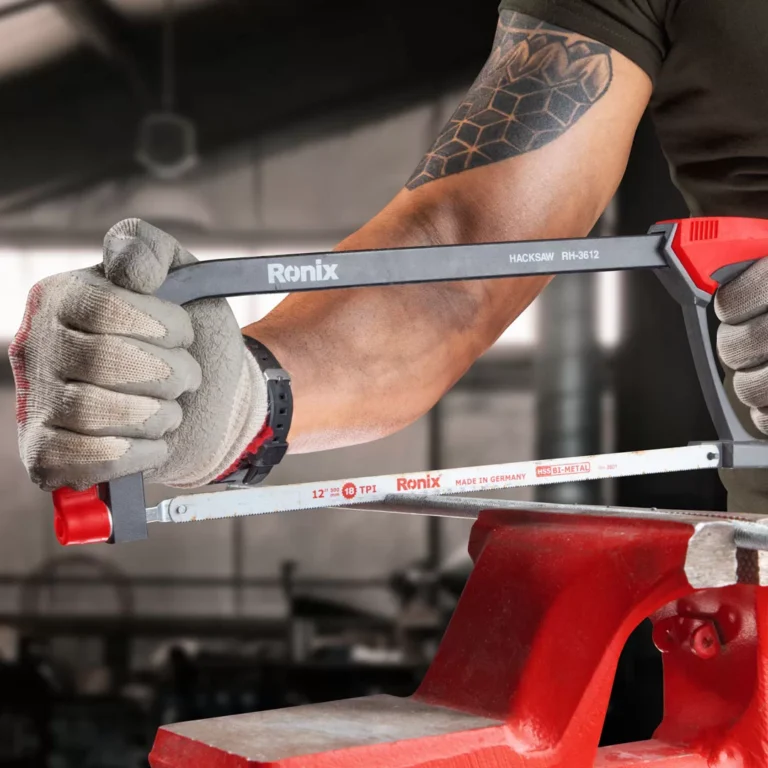
Place the spring in a heavy vise. Keep the cut line close to the vise jaws, but leave enough space for the hacksaw frame.
The spring must not vibrate. Movement makes the blade skip, slows the cut, and increases the chance of a broken blade.
Use scrap steel, aluminum, or wood between the vise jaws and finished surfaces if you need to protect them. Do not clamp so lightly that the spring can shift.
4. Start a shallow groove
Hold the hacksaw with both hands. Start with short, light strokes to create a groove across the marked line.
This first groove keeps the blade from sliding across the hardened surface. Once the groove is established, use longer strokes.
Keep the blade square to the spring unless your design calls for an angle. Check both sides from time to time. A cut that looks straight on top may drift on the bottom.
5. Use steady pressure
Push on the forward stroke and reduce pressure on the return stroke. Let the teeth cut; do not force the frame.
Use the full length of the blade when possible. Long, even strokes wear the teeth more evenly and remove chips better than short, fast strokes.
Apply a small amount of cutting oil when the blade begins to drag. Wipe away excess oil if it makes the handle slippery.
If the blade squeals, skates, or produces only fine dust, check these points:
- The blade may be dull.
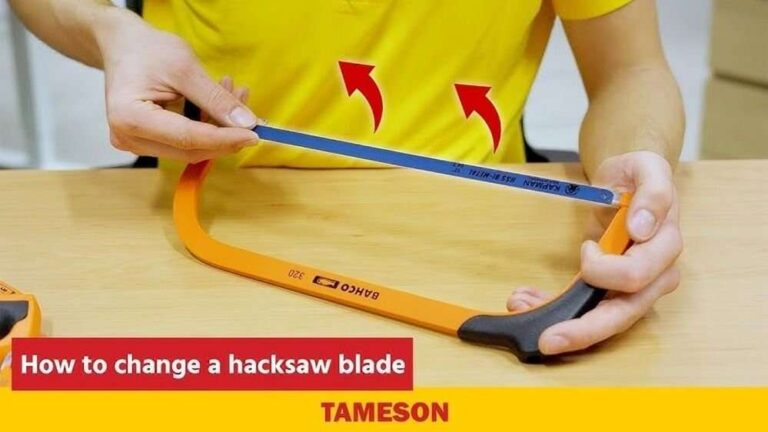
- The blade may be installed backward.
- The spring may be moving.
- The teeth may be too fine or too coarse.
- You may be pushing too hard.
- The cut may not be square.
6. Support the final section
When the cut is nearly complete, support the loose section. This prevents the remaining metal from bending and pinching the blade.
Do not twist the hacksaw to break the last connection. Finish the cut with controlled strokes. Twisting can damage the blade and leave a jagged edge.
7. File and inspect the edge
After the cut, remove burrs with a flat file. Round sharp corners slightly if the part will be handled or fitted near wiring, hoses, or other metal parts.
Clean the cut and inspect it for:
- Cracks that extend beyond the cut
- Large chips
- A severe angle
- Heat discoloration
- Sharp burrs
- A section that became thin from grinding or filing
A dark blue or purple heat mark may show that the metal became very hot. A hacksaw normally produces little heat, so unusual discoloration deserves attention.
When a Hacksaw Is the Right Tool—and When It Is Not
A hacksaw is a good choice for occasional work, but it is not always the fastest or best tool.
| Tool | Main advantage | Main drawback |
|---|---|---|
| Hacksaw | Low cost and little heat | Slow and tiring |
| Reciprocating saw | Faster for thick sections | Vibration and blade control |
| Angle grinder with cutoff wheel | Very fast | Sparks, noise, dust, and heat |
| Portable band saw | Fast, controlled, and fairly cool | Costs more and needs room |
| Abrasive chop saw | Straight, repeatable cuts | High heat, sparks, and noise |
| Oxy-fuel or plasma cutter | Fast on suitable steel | Heat can change the steel and requires skill |
For one cut, a hacksaw may be practical. For several thick springs, a reciprocating saw with a metal-cutting blade or a portable band saw will save time.
A cutoff wheel can make the cut quickly, but it demands more safety control. Wear eye and face protection, keep flammable materials away, and avoid inhaling metal dust. Sparks can travel farther than expected in a garage.
Avoid using a torch simply because it appears faster. Leaf springs depend on controlled heat treatment. Heating the cut area can alter hardness and strength. That may not matter for scrap, but it matters if the material will be used for a load-bearing or flexing part.
The deciding question is not only, “Can the tool cut it?” Ask, “Will the tool leave the steel suitable for its next use?”

Safety Limits and Common Mistakes
The greatest risk is often not the blade. It is stored spring energy, poor support, or using the cut piece for a job it cannot safely perform.
Do not cut an installed spring
A mounted leaf spring supports vehicle weight and may be under load even when the vehicle appears still. Cutting it in place can cause movement, a falling vehicle, or a sudden release of force.
Remove the spring first. If removal requires releasing U-bolts, shackles, or spring-pack hardware, follow the vehicle maker’s service procedure.
Do not use a damaged spring without inspection
A cut does not repair a cracked or badly rusted spring. Deep corrosion can reduce the remaining cross-section. A crack may grow when the part is loaded.
If the piece will carry weight, resist impact, or flex repeatedly, have the design and material checked by a qualified professional. A homemade spring component can fail without much warning.
Do not overheat the steel
Short breaks help reduce fatigue, but they do not make a hacksaw cut dangerous from heat in the same way a torch or grinder can. Stop if the blade or work becomes unusually hot.
If you switch to a grinder or chop saw, avoid holding the tool in one place. Do not quench very hot spring steel in water unless a proper heat-treatment process calls for it. Rapid cooling can make steel brittle.
Do not force a dull blade
Forcing a dull blade increases the chance of:
- A broken blade
- A crooked cut
- Hand strain
- Slipping from the cut line
- Damage to the vise or workpiece
Replace the blade when it stops making clean chips. A new blade is usually cheaper than repairing a damaged hand or ruined part.
Do not assume the cut piece is safe for suspension use
A shortened leaf spring may have a different length, arc, load path, and stress pattern. Cutting changes how the spring carries force. It can also remove a mounting eye, center-bolt hole, or other feature that controls alignment.
Do not install a modified spring on a road vehicle unless the design has been properly engineered and tested. Suspension failure can cause a loss of control.

What to Do if the Hacksaw Will Not Cut
If the blade only scratches the surface, begin with the simple checks.
- Check the blade direction. Most hacksaw blades cut on the forward stroke. Reverse the blade if it is installed backward.
- Check blade tension. A loose blade can bow and skip. Tighten it according to the frame design.
- Use a fresh bi-metal blade. Hardened spring steel quickly exposes a poor blade.
- Improve the work holding. Move the cut close to the vise jaws and support the free end.
- Create a deeper starting groove. Use short strokes until the blade tracks.
- Reduce pressure. Let the teeth cut instead of skating over the steel.
- Add a small amount of cutting oil. Too much oil can make the handle or work slippery.
- Change the tooth count. A medium or thick spring may cut better with an 18 TPI blade than a very fine blade.
- Switch tools if needed. A reciprocating saw or band saw may be the sensible choice for thick material.
If the spring shows blue heat marks, cracks, or severe blade chatter, stop and inspect the work. Do not hide damage under paint or use the piece in a critical application.

Key Takeaways
- Yes, a hacksaw can cut a leaf spring.
- Leaf spring steel is tough, so the cut may be slow.
- Use a sharp bi-metal blade, usually about 18–24 TPI.
- Remove the spring from the vehicle before cutting.
- Clamp it close to the cut and use steady, full strokes.
- File away burrs after the cut.
- Avoid torches and excessive heat if the steel will be used again.
- Do not use a modified spring in a vehicle suspension without proper engineering review.
Frequently Asked Questions
Can a hacksaw cut hardened spring steel?
Yes. A hacksaw with a sharp bi-metal blade can cut hardened spring steel, but the work will be slower than cutting mild steel. Firm clamping and a shallow starter groove make the largest difference.
How long does it take to cut a leaf spring by hand?
The time depends on thickness, hardness, blade quality, and the quality of the setup. A thin section may take a few minutes. A thick truck leaf spring can take much longer and may require more than one blade.
Should I use a fine-tooth or coarse-tooth hacksaw blade?
Use a blade that keeps at least two or three teeth in contact with the steel. In many cases, 18–24 TPI works well. Very thin material may need a finer blade, while very thick material may cut better with 14–18 TPI.
Can I cut a leaf spring with an angle grinder?
Yes, a grinder with a metal cutoff wheel can cut one much faster than a hacksaw. It creates sparks, noise, dust, and heat, so use proper eye and face protection and keep flammable materials away. Avoid overheating the remaining steel.
Can I reuse the cut leaf spring on a vehicle?
Do not assume it is safe. Cutting changes the spring’s length and stress pattern. A modified spring may fail or alter vehicle handling. Use only a properly designed and professionally evaluated suspension component.
Conclusion
A hacksaw can cut a leaf spring, but it requires the right blade, a solid vise, and patience. The safest approach is to remove the spring, secure it firmly, mark the cut, use controlled strokes, and file the finished edge.
For a single noncritical project, a hacksaw is a low-cost option. For thick springs or repeated cuts, a band saw or reciprocating saw is more practical. If the spring will return to a vehicle or carry a serious load, stop treating the cut as a simple metalworking task and get qualified suspension guidance before using it.
Recent Tool Guides
 Hammer
How To Hammer Flowers Onto Paper: Easy Guide
Learn how to hammer flowers onto paper with simple steps, helpful tips, and beautiful results for...
Read Guide → Wrench
How To Use A Hex Wrench: Easy Step-By-Step Guide
Learn how to use a hex wrench correctly with simple steps, helpful tips, and common mistakes...
Read Guide → Hacksaw
How To Cut Curtain Pole With Hacksaw: Easy Guide
Learn how to cut curtain pole with hacksaw safely and neatly. Follow simple steps for accurate...
Read Guide → Wrench
How To Use A Husky Torque Wrench: Easy Guide
Learn how to use a Husky torque wrench correctly with simple steps, torque settings, and safety...
Read Guide → Hammer
How To Hold A Hammer: Safe Grip Guide
Learn how to hold a hammer with the right grip, stance, and technique for safer, more...
Read Guide → Hacksaw
How To Cut Flexible Metal Conduit With Hacksaw: Easy Guide
Learn how to cut flexible metal conduit with hacksaw safely and cleanly. Follow simple steps for...
Read Guide →