What’s A Hacksaw: Uses, Types, And Buying Guide
Introduction
A hacksaw is a small hand saw used in American homes, garages, workshops, and job sites to cut metal and some hard plastics. It has a thin, replaceable blade held in a rigid frame. Unlike a wood saw, a hacksaw uses small teeth and works best with steady, light strokes.
If you need to cut a threaded rod, steel tube, copper pipe, plastic pipe, or a metal bolt, a hacksaw may be the right tool. It is slower than a power saw, but it gives you good control and does not need electricity or a battery.
What is a hacksaw?
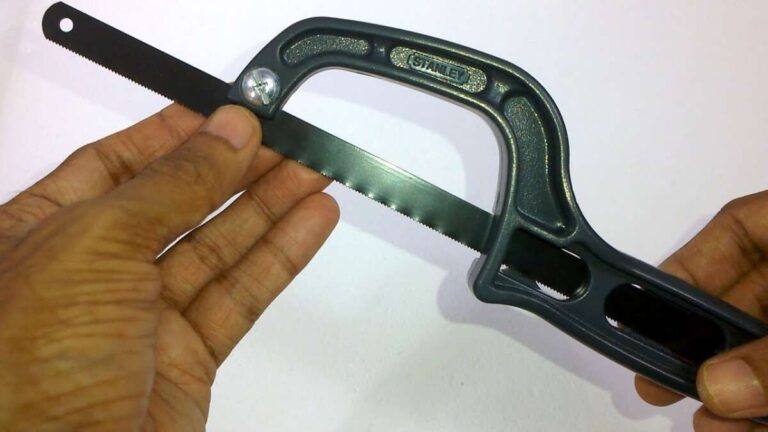
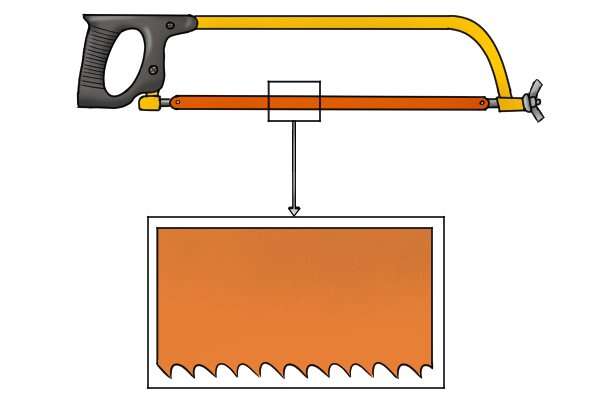
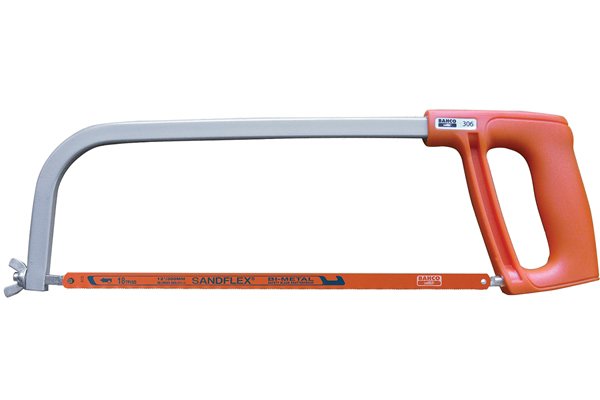
A hacksaw is a manual frame saw with a narrow, fine-toothed blade. The blade is placed under tension between the front and rear ends of the frame. Most hacksaw blades cut on the forward push stroke, while the return stroke resets the saw.
A standard hacksaw has these main parts:
- Frame: Holds the blade straight and supports the saw.
- Handle: Gives you a firm grip and helps control the cut.
- Blade: A thin strip of hardened steel with small teeth.
- Blade pins: Small pins at each end of the blade that fit into the frame.
- Tensioning screw or lever: Tightens the blade so it does not bend during a cut.
- Blade adjuster: Lets the frame fit different blade lengths on some models.
The term “hacksaw” usually means a full-size hand saw with a metal frame. A junior hacksaw is a smaller version with a lighter frame and shorter blade. It works well for small jobs, thin metal, crafts, and tight spaces.
What does a hacksaw cut?
A hacksaw can cut many common materials, including:
- Mild steel
- Stainless steel
- Aluminum
- Brass
- Copper
- Steel bolts and threaded rod
- Metal conduit
- Thin-wall metal tubing
- PVC and other hard plastics
- Some composite materials
The correct blade matters. A blade made for metal can cut plastic, but it may melt thin plastic if you push too hard. A blade with too few teeth can catch on thin stock. A blade with too many teeth can clog or cut very slowly in thick material.
A hacksaw is not the best tool for thick structural steel, large pipes, hardened tool steel, or long production cuts. A reciprocating saw, band saw, angle grinder, or cold saw may be more suitable for those jobs.
Why is it called a hacksaw?
The word “hack” means to cut roughly or with repeated blows. A hacksaw makes a cut through many short tooth strokes rather than one long slicing motion. The name describes the tool’s action, not a special type of metal.
How does a hacksaw work?
A hacksaw removes material as its teeth move across the workpiece. Each tooth acts like a tiny cutting edge. The frame keeps the blade straight, and the tension keeps it from folding or wandering.
Most standard hacksaw blades have teeth angled to cut when you push the saw away from your body. This is called the cutting stroke. The blade should move freely on the return stroke, so do not force it backward.
The teeth are described by TPI, or teeth per inch. TPI helps you match the blade to the material thickness.
| Blade size | Common use |
|---|---|
| 14 TPI | Thick metal and heavy stock |
| 18 TPI | Medium metal, brackets, and pipe |
| 24 TPI | Thin metal, conduit, tubing, and general use |
| 32 TPI | Very thin sheet metal and fine cuts |
As a basic rule, at least three teeth should touch the workpiece during the cut. If only one or two teeth engage, the blade may snag or lose teeth. If too many teeth engage in thick stock, the gullets between the teeth can fill with chips.
Many modern hacksaw blades use bi-metal construction. A tough spring-steel backing supports a strip of high-speed steel teeth. This design can resist tooth breakage while keeping a hard cutting edge. A carbon-steel blade may cost less, but it can be less durable in demanding work.

What is a hacksaw used for?
A hacksaw is useful when you need a controlled cut and the material is too hard for a wood saw. It is especially helpful when the workpiece is already installed and a powered tool would be awkward or unsafe.
Common uses include:
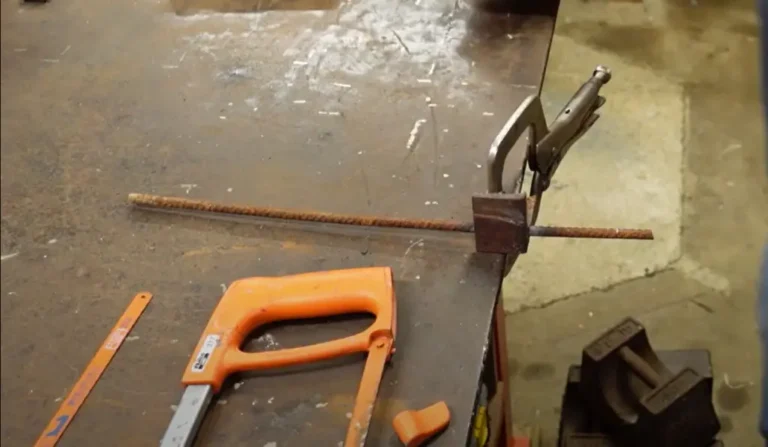
Cutting bolts and threaded rod
A hacksaw can shorten a bolt or cut threaded rod to length. Before cutting, thread a nut onto the rod. After the cut, remove the nut slowly. The nut can help realign the threads at the cut end.
Protect the threads with tape or a soft jaw if the finished threads matter. File away the sharp burr after cutting.
Cutting metal pipe and conduit
A hacksaw can cut copper pipe, thin steel pipe, aluminum tube, and electrical conduit. Mark the cut all the way around the pipe when possible. This helps keep the blade square.
After cutting, remove the burr inside and outside the pipe. A burr can damage wire insulation, restrict fluid flow, or create a sharp edge.
Cutting plastic pipe
A hacksaw can cut PVC and similar rigid plastic pipe. Use light pressure and clean strokes. Heavy pressure can crack the pipe or make the blade wander.
After the cut, deburr the edge. For plumbing work, a clean, square cut helps the fitting seat properly.
Cutting brackets, screws, and small metal parts
A hacksaw can cut angle brackets, flat bar, small chains, screws, nails, and hardware. Clamp the part close to the cut. A loose part can vibrate, grab the blade, or produce a rough cut.
Removing damaged fasteners
A hacksaw can cut a slot into a damaged screw head. You can then try a flat-head screwdriver. This method works only when you can reach the screw head without damaging nearby parts.
Cutting through a stuck bolt
When a bolt will not come out, you may cut through the bolt or nut. Check what sits behind the fastener first. A hacksaw can damage wires, seals, painted surfaces, or other parts hidden from view.
How to use a hacksaw correctly
Use this process for most small cutting jobs.
1. Choose the right blade
Match the TPI to the material and its thickness. Use a coarser blade for thick metal and a finer blade for thin stock.
Check the blade before installation. Do not use one with missing teeth, deep rust, cracks, or a bent body.
2. Install the blade in the correct direction
For most standard hacksaws, point the teeth away from the handle. The saw should cut as you push it forward.
Some specialty frames or blades may use a different setup. Follow the instructions for that tool if they differ.
3. Tighten the blade
Turn the tensioning screw or use the frame lever until the blade is firm. It should not flap or twist from normal hand pressure.
Do not over-tighten the blade. Excess tension can damage the frame or cause a blade to break. A broken blade can create a sharp, fast-moving edge.
4. Mark the cut
Use a marker, pencil, or scribe. For a square cut on pipe, wrap paper around the pipe and align the edges. The paper can act as a simple guide.
Measure twice. A hacksaw removes material, so you cannot put the cut-off piece back.
5. Secure the workpiece
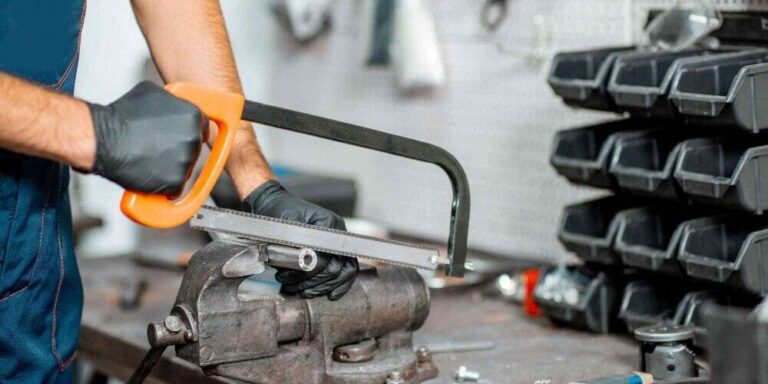
Place the material in a vise or clamp. Support it close to the cut to reduce vibration.
For a thin piece, place it between wood scraps or use soft jaws. Do not hold the workpiece in your hand while sawing. The blade can slip toward your fingers.
6. Start with a shallow notch
Hold the saw at a low angle and make a few light strokes. This creates a small groove that guides the blade.
Once the groove is clear, raise the saw and use longer strokes. Keep the blade aligned with the mark.
7. Use steady pressure
Apply pressure on the forward stroke. Ease off on the return stroke. Let the teeth do the cutting.
Use most of the blade length instead of moving only a short section. Long strokes spread wear across more teeth and usually make the cut smoother.
8. Slow down near the end
As the blade nears the far side, support the cut-off piece. Reduce pressure so the material does not snap and tear.
A final light stroke often gives you a cleaner edge.
9. Remove burrs
Use a file, deburring tool, or fine abrasive to smooth the edge. A cut edge may be sharp even when it looks clean.
A successful cut is straight enough for the job, free of dangerous burrs, and made without bent teeth or damage to nearby parts.

Hacksaw safety tips
A hacksaw is simple, but its blade can cause deep cuts. Use basic hand-tool safety every time.
- Wear safety glasses or other suitable eye protection.
- Clamp the workpiece before cutting.
- Keep both hands behind the blade teeth.
- Keep fingers away from the cut line.
- Replace a damaged blade instead of forcing it.
- Keep the handle dry and free of oil.
- Use a stable stance and controlled strokes.
- Keep other people away from the cutting path.
- Clean metal chips with a brush, not your bare hand.
- Wear gloves when handling sharp metal, but do not let loose glove material touch the blade.
- Keep long hair, jewelry, and loose clothing away from the work area.
The Occupational Safety and Health Administration requires suitable eye or face protection where workers face eye or face hazards from flying particles. Home users should follow the same basic principle: a cutting operation can send small metal chips toward the eyes.
Do not use a hacksaw to cut energized electrical wiring. Turn off power, verify that the circuit is de-energized, and follow applicable electrical safety rules. If you cannot confirm that the circuit is safe, stop and contact a qualified electrician.
Do not cut sealed, pressurized, or unknown containers. Do not cut into gas lines, refrigerant lines, or pipes that may hold pressure unless the system has been made safe by a qualified person.
How to choose the right hacksaw
Choose a hacksaw based on the material, access, cut length, and amount of work.
Full-size hacksaw
A full-size frame is the normal choice for household repairs and shop work. It gives you a longer blade and more control over the cut.
Look for:
- A rigid frame
- Comfortable handle
- Reliable blade tension
- Easy blade replacement
- A frame that accepts common blade lengths
- A blade with the right TPI for your work
Junior hacksaw
A junior hacksaw fits small hands and tight spaces. It is useful for light cuts, thin stock, model work, and small repairs.
Its shorter blade and lighter frame make it less suitable for thick metal or long cuts.
Compact or mini hacksaw
A compact hacksaw may hold only part of a standard blade. It can reach narrow spaces, but the exposed blade needs careful handling.
It is useful for trimming plastic pipe, cutting small hardware, and working where a full frame will not fit.
Adjustable hacksaw
An adjustable frame can accept more than one blade length. This can be useful if you already have several blade sizes.
The frame should still hold the blade straight and tight. An adjustable feature is not helpful if it makes the saw flex during a cut.
Powered alternatives
Consider another tool when the cut is long, the material is thick, or you need many identical cuts.
| Tool | Best fit | Main trade-off |
|---|---|---|
| Hacksaw | Small jobs and controlled cuts | Slow for thick or repeated work |
| Reciprocating saw | Demolition and installed materials | More vibration and less control |
| Angle grinder | Fast cuts and heavy metal | Sparks, noise, and more kickback risk |
| Portable band saw | Repeated metal cuts | Costs more and needs power |
| Tubing cutter | Clean cuts on suitable round tubing | Works only within its size and material limits |
| Bolt cutter | Some soft bolts, chain, and rod | Can crush or deform the material |
A hacksaw is often the better choice when you need a quiet tool, a low-cost option, or a cut near delicate parts. A powered tool may save time, but it also creates more noise, motion, heat, or sparks.

Common hacksaw problems and fixes
The blade bends during the cut
Likely causes:
- The blade is loose.
- You are pushing too hard.
- The workpiece is not secure.
- The blade is not square with the cut.
Fix: Tighten the blade, clamp the material, and use lighter strokes. Start a new groove if the first one has wandered badly.
The teeth strip or break
Likely causes:
- The blade has too few teeth for thin material.
- Too much pressure is being used.
- The blade is installed backward and forced.
- The material is hardened or unusually tough.
Fix: Use a finer blade for thin stock. Keep several teeth in contact with the work. Replace the blade if its teeth are damaged.
The cut is rough
Likely causes:
- A coarse blade is being used on thin material.
- The blade is worn.
- The workpiece moves while cutting.
- The saw is being lifted or twisted.
Fix: Use the correct TPI, secure the work, and keep the frame straight. Finish with a file if the edge does not need to remain saw-cut.
The blade binds
Likely causes:
- The cut closes around the blade.
- The workpiece is unsupported.
- The blade is twisted.
- The saw is pushed too hard.
Fix: Stop cutting and remove the saw carefully. Support the workpiece on both sides of the cut, then restart with lighter pressure.
The cut takes too long
Likely causes:
- The blade is dull.
- The blade has the wrong TPI.
- The material is too thick for a hand hacksaw.
- Only a short section of the blade is being used.
Fix: Install a fresh blade, use longer strokes, and consider a powered tool for repeated or heavy work.
Hacksaw FAQs
Can a hacksaw cut wood?
Yes, but it is not the right choice for most wood. Its fine teeth can cut thin wood or plastic in a pinch, but a wood saw removes material faster and usually leaves a better result.
Can a hacksaw cut stainless steel?
Yes. Use a sharp, quality blade designed for metal, often with bi-metal construction. Use steady pressure and avoid stopping in one spot, because excess heat and rubbing can make the cut harder.
Which way do hacksaw teeth face?
On most standard hacksaws, the teeth face away from the handle. The blade then cuts on the forward push stroke. Check the frame or blade instructions if you are using a specialty saw.
How tight should a hacksaw blade be?
The blade should be tight enough to stay straight and resist light finger pressure. It should not flap, twist, or bow during normal cutting. Avoid excessive tension, which can damage the frame or cause a blade to fail.
Can you sharpen a hacksaw blade?
Usually, no. Hacksaw teeth are small and often hardened. Replacing the blade is faster and more reliable than trying to file each tooth. A damaged or dull blade should be recycled or discarded according to local rules.
How long does a hacksaw blade last?
There is no fixed service life. Blade life depends on the material, thickness, blade quality, pressure, and amount of cutting. Replace the blade when it cuts slowly, wanders, loses teeth, or requires unusual force.
Key takeaways
- A hacksaw is a hand-operated frame saw for cutting metal and hard plastic.
- Its replaceable blade normally cuts on the forward push stroke.
- Choose blade TPI based on material thickness.
- Clamp the workpiece and use light, steady strokes.
- Wear eye protection and replace damaged blades.
- Use a powered saw or another tool for thick material, long cuts, or repeated work.
Conclusion
A hacksaw is a practical tool for small, controlled cuts in metal, pipe, conduit, bolts, threaded rod, and hard plastic. Its design is simple: a rigid frame holds a fine-toothed blade under tension.
The best results come from three choices: use the right blade, secure the material, and let the teeth cut without heavy force. For a short repair in an American garage or workshop, a well-set hacksaw can often do the job safely and cleanly.
Recent Tool Guides
 Hammer
How To Hammer Flowers Onto Paper: Easy Guide
Learn how to hammer flowers onto paper with simple steps, helpful tips, and beautiful results for...
Read Guide → Wrench
How To Use A Hex Wrench: Easy Step-By-Step Guide
Learn how to use a hex wrench correctly with simple steps, helpful tips, and common mistakes...
Read Guide → Hacksaw
How To Cut Curtain Pole With Hacksaw: Easy Guide
Learn how to cut curtain pole with hacksaw safely and neatly. Follow simple steps for accurate...
Read Guide → Wrench
How To Use A Husky Torque Wrench: Easy Guide
Learn how to use a Husky torque wrench correctly with simple steps, torque settings, and safety...
Read Guide → Hammer
How To Hold A Hammer: Safe Grip Guide
Learn how to hold a hammer with the right grip, stance, and technique for safer, more...
Read Guide → Hacksaw
How To Cut Flexible Metal Conduit With Hacksaw: Easy Guide
Learn how to cut flexible metal conduit with hacksaw safely and cleanly. Follow simple steps for...
Read Guide →