What Is Power Hacksaw: Uses, Benefits And Buying Guide
Introduction
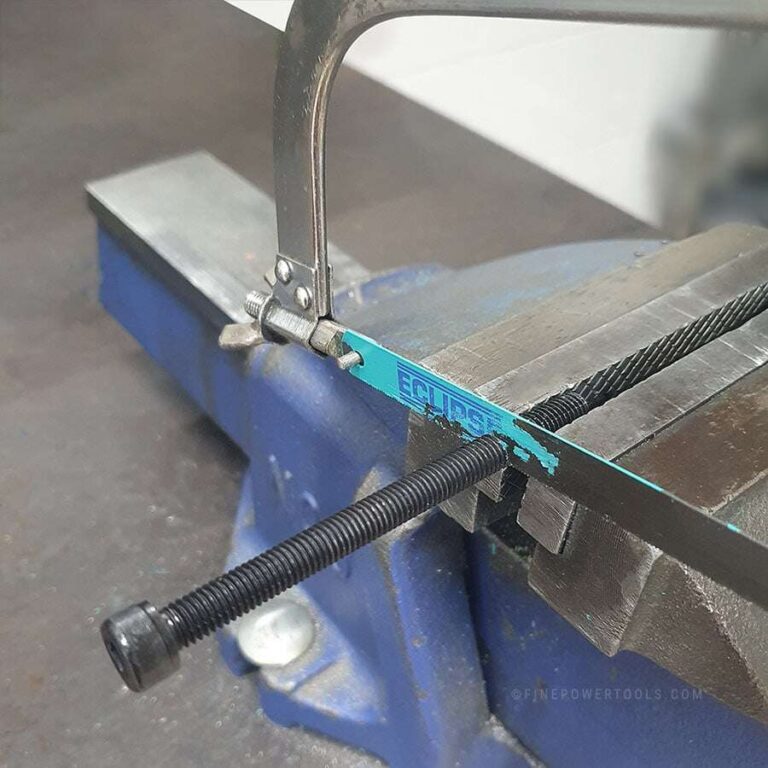
A power hacksaw is a machine tool that cuts metal with a straight, back-and-forth blade stroke. Unlike a hand hacksaw, it uses a motor, crank, and saw frame to make repeated cuts with steady pressure. In the United States, power hacksaws are found in machine shops, maintenance departments, fabrication shops, farms, and older industrial facilities.
They are best suited for cutting steel, aluminum, brass, copper, pipe, bar stock, and other solid metal shapes. The machine holds the work in a vise while the blade moves through the material. This makes cutting more consistent and less tiring than using a hand tool.
A power hacksaw is simple, durable, and often less costly to maintain than a metal-cutting band saw. However, it usually cuts more slowly and leaves the blade moving through open air during part of each cycle.
What Is a Power Hacksaw?
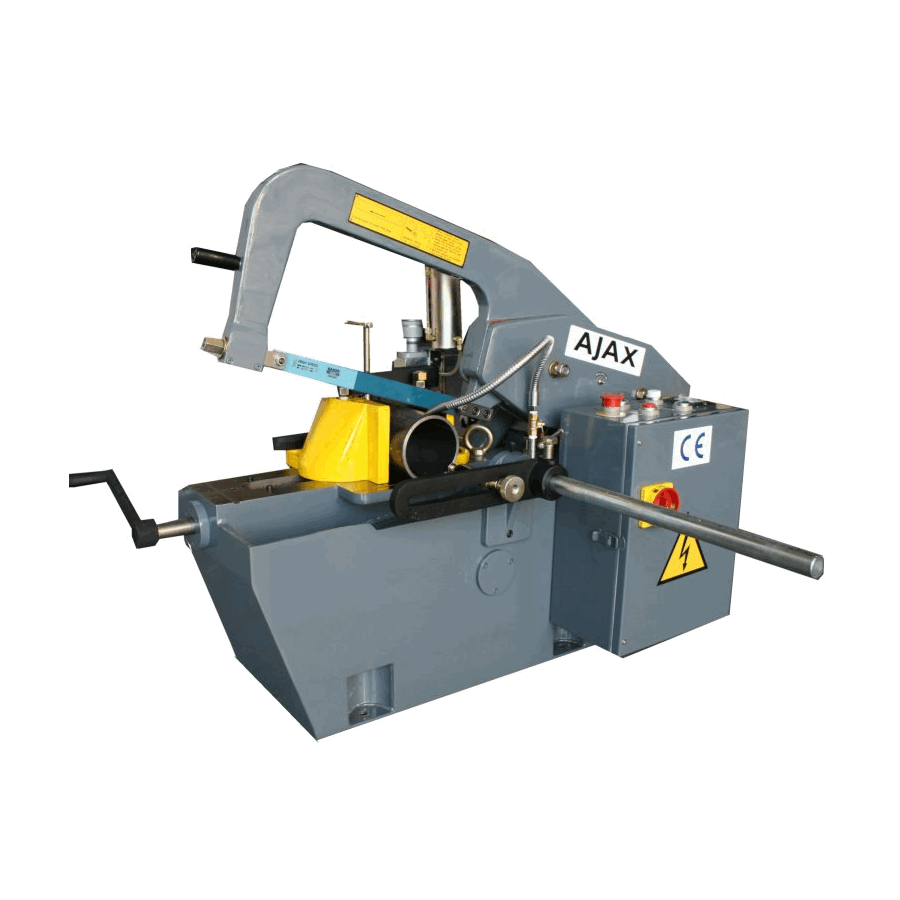
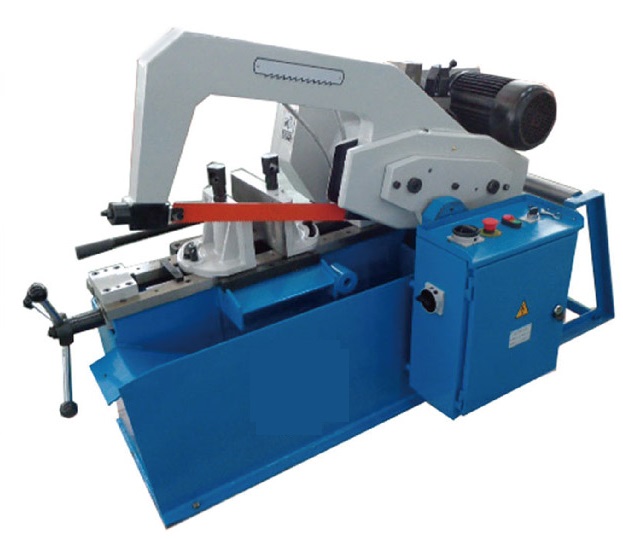
A power hacksaw is a motor-driven metal-cutting saw that uses a reciprocating blade. The blade moves forward and backward across the workpiece, much like a manual hacksaw, but the machine supplies the cutting force and motion.
The workpiece stays fixed in a vise. As the blade moves across the metal, its teeth remove a small amount of material on each forward stroke. On the return stroke, the blade normally lifts slightly or reduces contact to limit tooth wear.
Most power hacksaws use a crank mechanism to turn the motor’s rotary motion into the straight-line motion of the saw frame. A weighted frame or controlled feed system applies pressure to the work.
Simple definition
A power hacksaw is:
A powered reciprocating saw that cuts metal with a toothed blade held in a rigid frame.
The term can sometimes cause confusion. A power hacksaw is not the same as:
- A handheld reciprocating saw
- A portable band saw
- A stationary metal-cutting band saw
- A cold saw
- An abrasive chop saw
The main difference is the blade motion. A power hacksaw uses a blade that travels back and forth. A band saw uses a continuous loop. A cold saw uses a circular blade.

How Does a Power Hacksaw Work?
A power hacksaw works by converting motor rotation into repeated blade strokes. The motor turns a pulley, gearbox, or crank. The crank then moves the saw frame forward and backward.
The machine cuts during the working stroke. During the return stroke, the blade may lift away from the metal. This action helps protect the teeth and reduces friction.
The main parts are:
| Part | Function |
|---|---|
| Motor | Supplies power to the cutting mechanism |
| Drive system | Transfers motor power through belts, gears, or a gearbox |
| Crank | Changes rotary motion into reciprocating motion |
| Saw frame | Holds and guides the blade |
| Blade | Removes metal from the workpiece |
| Vise | Clamps the work securely |
| Feed system | Lowers the blade into the work at a controlled rate |
| Coolant system | Reduces heat and carries chips away on some models |
| Base and table | Support the machine and workpiece |
The blade does not cut simply because it moves fast. Tooth shape, tooth pitch, blade tension, feed pressure, material type, and cutting fluid all affect the result.
The cutting cycle
A typical cycle follows these steps:
- The operator clamps the material in the vise.
- The motor starts the crank and saw frame.
- The blade moves forward through the material.
- The teeth remove chips during the cutting stroke.
- The blade returns and may lift slightly.
- The feed system lowers the frame for the next stroke.
- The cycle continues until the cut is complete.
- The machine stops or the operator switches it off.
This motion is slower than a continuous band saw, but it places relatively little heat into the work when the blade and feed are set correctly.

What Materials Can a Power Hacksaw Cut?
A power hacksaw can cut many common metals, including mild steel, carbon steel, stainless steel, aluminum, brass, copper, and some cast materials. The correct blade and cutting method depend on the material.
Common material choices
- Mild steel: A general-purpose bi-metal blade works well.
- Stainless steel: Use a sharp, heat-resistant blade and steady feed pressure.
- Aluminum: Use a blade with a suitable coarse pitch to reduce tooth clogging.
- Brass and copper: Choose a blade designed for nonferrous metals.
- Cast iron: Cutting may create brittle chips and dust. Use suitable protection and follow the machine and blade maker’s guidance.
- Hardened steel: A standard power hacksaw may not be suitable. Check the material hardness and blade limits first.
The machine must also have enough capacity for the shape being cut. A large solid bar needs more cutting time than a thin wall tube. A bundled group of small parts may require special clamping so the pieces cannot shift.
Do not assume that a blade rated for steel will work well on every metal. Blade makers specify tooth form, pitch, material, and speed ranges for a reason.

Power Hacksaw vs. Band Saw: Which Is Better?
A power hacksaw is usually slower but mechanically simple. A band saw is usually faster and better for repeated production cuts. The better choice depends on the material size, cut volume, shop space, and maintenance needs.
| Feature | Power hacksaw | Metal-cutting band saw |
|---|---|---|
| Blade motion | Back and forth | Continuous loop |
| Typical speed | Slow | Moderate to fast |
| Production work | Limited to moderate | Moderate to high |
| Machine design | Simple and durable | More complex |
| Blade use | Blade reverses each cycle | Teeth remain in continuous motion |
| Noise | Often moderate | Varies by machine |
| Long stock | Works well with proper support | Works well with proper support |
| Maintenance | Often straightforward | Requires tracking and tension checks |
| Best use | General repair and low-volume cutting | Repeated, faster cutting |
A power hacksaw can make sense for a small U.S. repair shop that cuts steel only a few times each week. A band saw may be more suitable for a fabrication business that makes dozens or hundreds of cuts per day.
Abrasive saws can cut quickly, but they create sparks, dust, noise, and a heat-affected edge. Cold saws can make fast, clean cuts, but they often cost more and need rigid setup conditions.

How to Use a Power Hacksaw Safely
Use a power hacksaw only after reading the machine’s manual and checking its guards, vise, blade, and emergency stop. OSHA machine-guarding rules require employers to protect workers from hazards such as rotating parts, nip points, and flying chips. In the United States, workplace use should also follow the employer’s safety program and applicable OSHA requirements.
Before starting
-
Inspect the machine.
Check the blade, frame, guards, belts, wiring, vise, and coolant system. -
Choose the correct blade.
Match the blade pitch and material to the workpiece. -
Check blade tension.
A loose blade can wander or break. Excessive tension can damage the blade or machine. -
Secure the workpiece.
Tighten the vise firmly. Keep the material supported on both sides when long stock could tip or vibrate. -
Remove loose items.
Keep rags, jewelry, gloves, and loose clothing away from moving parts. -
Set the feed.
Begin with a light, controlled feed. Increase it only if the machine cuts smoothly. -
Set coolant if required.
Use the fluid specified for the material and machine. Keep coolant off electrical parts.
During the cut
- Keep your hands away from the blade and moving frame.
- Do not hold the work by hand.
- Do not push the frame down by force.
- Stop the machine before clearing chips.
- Use a brush, hook, or pliers for chips. Never use bare fingers.
- Watch for unusual vibration, blade noise, smoke, or a wandering cut.
- Do not leave the machine running unattended unless the equipment is designed for that operation and workplace rules allow it.
Safety glasses with side protection are a basic requirement in most shop settings. A face shield may provide added protection when chips or coolant could strike the face. Hearing protection may also be needed, depending on measured shop noise.
Gloves need special care. Loose gloves can catch in moving machinery. Follow the employer’s hazard assessment and the machine maker’s instructions rather than assuming gloves are always safer.
How to Choose the Right Blade
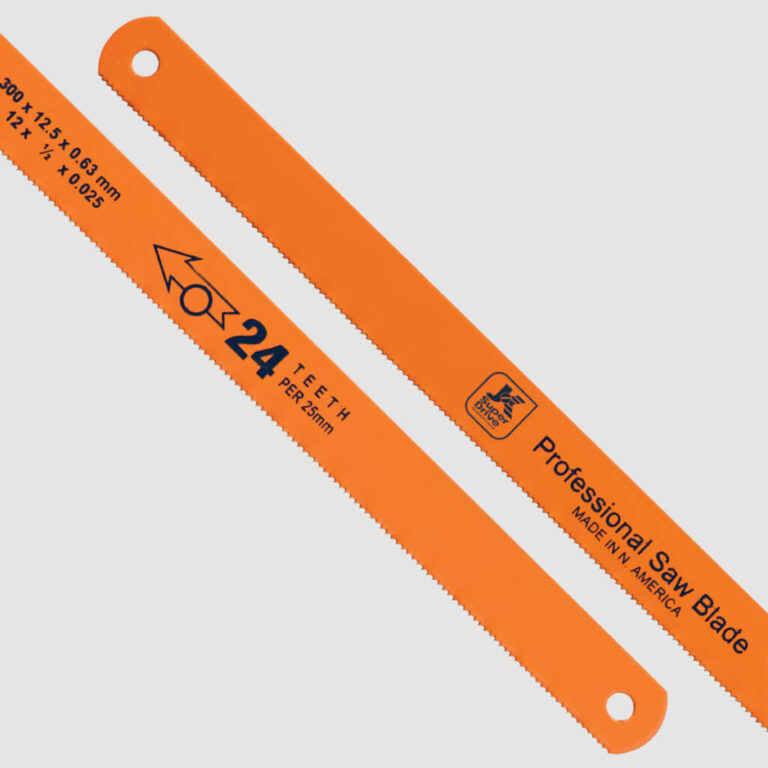
The blade must match the workpiece size, shape, hardness, and cutting method. Blade pitch means the number of teeth per inch, often written as TPI.
Use a tooth pitch that keeps several teeth engaged in the work at the same time. If the pitch is too coarse, the blade may catch and strip teeth. If it is too fine, chips can clog the gullets and slow the cut.
A practical starting guide is:
| Workpiece condition | General blade approach |
|---|---|
| Thin-wall tubing or sheet | Fine pitch |
| Medium solid bar | Medium pitch |
| Large solid bar | Coarser pitch |
| Aluminum or soft metal | Pitch that clears chips well |
| Stainless steel | Sharp bi-metal blade with steady feed |
These are starting points, not universal settings. The blade manufacturer’s chart should take priority.
Bi-metal blades
Bi-metal blades combine a tough backing material with high-speed-steel teeth. They are often a useful general-purpose choice because they resist tooth breakage and tolerate varied shop work.
Carbon steel blades
Carbon steel blades may cost less and can work for light-duty cutting. They are more likely to wear or break under demanding conditions.
Blade length and width
The blade must fit the saw frame. Check:
- Blade length
- Blade width
- Blade thickness
- Mounting hole size
- Tooth direction
- Maximum machine capacity
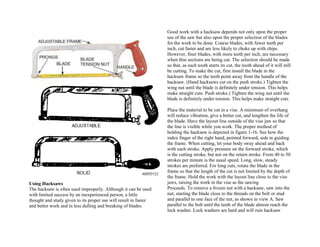
Install the blade with the teeth facing the correct direction. On many power hacksaws, the teeth face into the cutting stroke, but the machine manual is the final authority.

Power Hacksaw Speed, Feed, and Cutting Time
Cutting speed is the speed at which the blade teeth travel through the material. Feed is the pressure or downward movement that forces the blade into the work.
Power hacksaw manufacturers may list strokes per minute rather than surface feet per minute. A machine with a fixed stroke length and stroke rate has a defined blade travel rate, but only part of the cycle produces useful cutting.
For a simple estimate:
Approximate cutting time = material width ÷ average cutting rate
This is only a planning estimate. Real time also includes the return stroke, blade lift, setup, clamping, and the final break-through.
Example
Suppose a blade cuts through a 2-inch-wide mild-steel bar at an estimated average rate of 0.5 inch per minute:
2 inches ÷ 0.5 inch per minute = about 4 minutes
The real cycle may take longer because the blade does not cut at the same rate throughout the stroke.
Start with the machine’s recommended speed and a moderate feed. Reduce feed if:
- The blade squeals
- Teeth strip
- The cut wanders
- The frame vibrates
- The motor slows sharply
- The workpiece moves in the vise
Increase feed only when the blade produces useful chips without excessive heat, vibration, or tooth damage.

Common Power Hacksaw Problems and Fixes
Most cutting problems come from the blade, workholding, feed, or material setup.
The blade breaks
Possible causes include:
- Incorrect blade tension
- Excessive feed pressure
- Loose work in the vise
- Blade mounted backward
- Blade hitting an obstruction
- Incorrect blade size
- Machine misalignment
Stop the machine before inspecting the cause. Do not replace the blade without checking why it failed.
The cut wanders
A wandering cut may result from:
- A dull blade
- Loose blade tension
- Poor vise alignment
- Excessive feed
- Inadequate support for long stock
- Incorrect tooth pitch
Check the blade first, then the vise and stock support.
The blade strips teeth
Tooth stripping often occurs when the blade pitch is too fine for a thick section, the workpiece moves, or the operator applies too much pressure. Use a suitable coarse pitch and clamp the material firmly.
The machine cuts slowly
A slow cut may come from a dull blade, low feed, wrong blade pitch, poor coolant flow, or a hard section in the material. Some recycled or salvaged metal may have welds, scale, or hardened areas that affect cutting.
The metal becomes very hot
Excess heat can indicate too much friction, a dull blade, insufficient coolant, excessive speed, or too much feed pressure. Stop if the blade shows discoloration or the machine produces smoke.

Power Hacksaw Maintenance
Routine maintenance helps preserve cut quality and reduces unexpected breakdowns. Follow the service schedule in the machine manual.
Regular checks may include:
- Cleaning chips from the vise and table
- Inspecting the blade and frame
- Checking blade tension
- Lubricating approved pivot points
- Inspecting belts, pulleys, and gears
- Checking coolant level and condition
- Cleaning coolant screens or filters
- Checking electrical cords and controls
- Confirming that guards remain secure
- Checking vise alignment
Disconnect and isolate the machine before maintenance. Use the employer’s lockout/tagout procedure when servicing equipment where unexpected startup could cause injury. OSHA’s control-of-hazardous-energy rules are especially relevant to industrial maintenance work.
Do not use compressed air to blow metal chips toward yourself or other workers. A brush, vacuum rated for the material, or approved chip tool is usually safer.

Advantages and Limitations of a Power Hacksaw
A power hacksaw offers several practical benefits:
- Simple operating principle
- Strong performance on common steel stock
- Steady cuts compared with a hand hacksaw
- Useful for repair and maintenance work
- Often durable in low-volume service
- Straightforward blade replacement
- Lower heat than many abrasive cutting methods
Its limits also matter:
- Slower than many band saws
- Not ideal for high-volume production
- Reciprocating motion can create vibration
- Blade travel requires clearance around the machine
- Large or irregular work may need special support
- Poor setup can cause blade breakage and inaccurate cuts
- Older machines may lack modern guarding and controls
The best use case is usually low- to medium-volume metal cutting where durability and simple operation matter more than maximum speed.

Frequently Asked Questions
Is a power hacksaw the same as a reciprocating saw?
No. A power hacksaw is usually a stationary machine with a vise, rigid frame, and controlled feed. A handheld reciprocating saw is a portable tool used for demolition, construction, pipe work, and other mobile cutting tasks.
Can a power hacksaw cut wood?
Some machines may cut wood with a suitable blade, but a standard metal-cutting power hacksaw is designed for metal. Use a tool designed for the material and follow the manufacturer’s limits.
How often should a power hacksaw blade be replaced?
Replace the blade when it becomes dull, skips, wanders, overheats the work, or loses teeth. The exact service life depends on the blade type, material, feed, coolant, and operator setup.
Should coolant always be used?
No. Coolant can help with many steel and stainless-steel cuts, but the correct fluid depends on the material and machine. Some materials and applications may require dry cutting. Follow the blade and machine instructions.
Why does the blade cut on one stroke but not the other?
Many power hacksaws are designed to cut mainly on the forward stroke. The return stroke may lift the blade or reduce its contact with the work. This limits friction and protects the teeth.
Conclusion
A power hacksaw is a stationary metal-cutting machine that uses a motor-driven, back-and-forth blade. Its vise, frame, crank, feed system, and blade work together to produce controlled cuts in steel and other metals.
It is a strong choice for repair shops, maintenance work, farms, and low-volume fabrication. A band saw may be better when speed and production output matter most. Whatever machine you use, correct blade selection, firm workholding, controlled feed, guarding, and safe chip removal are essential.
Before cutting, check the machine manual, confirm the blade is suitable, secure the work, and inspect the guards and controls. Those simple steps protect both the operator and the machine.
Recent Tool Guides
 Hammer
How To Hammer Flowers Onto Paper: Easy Guide
Learn how to hammer flowers onto paper with simple steps, helpful tips, and beautiful results for...
Read Guide → Wrench
How To Use A Hex Wrench: Easy Step-By-Step Guide
Learn how to use a hex wrench correctly with simple steps, helpful tips, and common mistakes...
Read Guide → Hacksaw
How To Cut Curtain Pole With Hacksaw: Easy Guide
Learn how to cut curtain pole with hacksaw safely and neatly. Follow simple steps for accurate...
Read Guide → Wrench
How To Use A Husky Torque Wrench: Easy Guide
Learn how to use a Husky torque wrench correctly with simple steps, torque settings, and safety...
Read Guide → Hammer
How To Hold A Hammer: Safe Grip Guide
Learn how to hold a hammer with the right grip, stance, and technique for safer, more...
Read Guide → Hacksaw
How To Cut Flexible Metal Conduit With Hacksaw: Easy Guide
Learn how to cut flexible metal conduit with hacksaw safely and cleanly. Follow simple steps for...
Read Guide →