When Does A Hacksaw Blade Perform Its Cutting Action: Guide
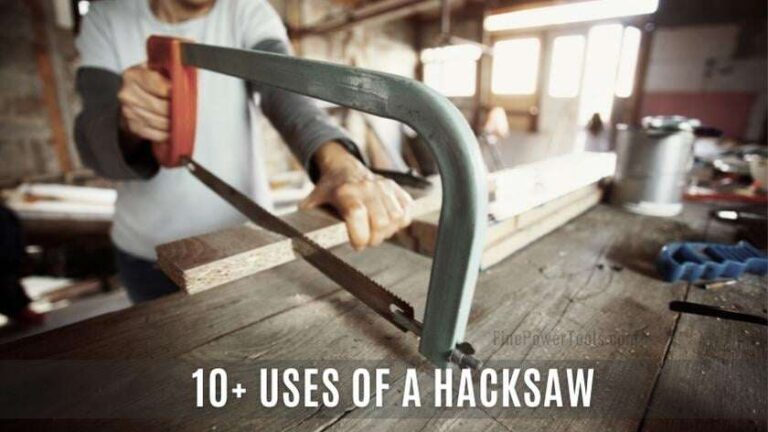
In a typical U.S. hand hacksaw, the blade performs its cutting action on the forward push stroke. The teeth face forward, so they remove metal, plastic, or other material as you push the saw away from your body. On the return stroke, release pressure and bring the blade back lightly.
This simple detail affects cutting speed, blade life, safety, and cut quality. If you press hard on both strokes, the blade may dull fast, bind, bend, or break.
The short answer: a hacksaw cuts on the push stroke
A standard hacksaw blade cuts when its teeth move forward through the workpiece under light pressure. The teeth act like many small chisels. Each tooth removes a tiny chip as it passes across the material.
During the return stroke, the blade should do little or no cutting. Lift it slightly, or reduce pressure, as you pull it back. This keeps the teeth from dragging and helps prevent snagging.
The usual cutting cycle is:
- Place the blade on the cut line.
- Push the saw forward with steady pressure.
- Let the teeth remove material.
- Ease off pressure.
- Pull the saw back lightly.
- Repeat the cycle.
The blade should not cut only at its tip. Use long, smooth strokes that allow several inches of the blade to pass over the work. This spreads wear across more teeth.
Why the forward stroke cuts
A hacksaw blade has teeth with a set direction. On a normal hand hacksaw, the tooth points face away from the handle. That direction gives the teeth a cutting edge on the forward stroke.
As you push, the tooth edge bites into the work. The tooth then shears off a small chip. The next tooth follows and removes another chip. Hundreds of teeth repeat this action until the cut passes through the material.
The blade does not cut because of heat or friction alone. Friction creates heat, but the main action is controlled chip removal by the teeth.
What happens on the return stroke?
The return stroke mainly moves the blade back into position for the next cut. If you pull back with force, the teeth can catch in the cut. This can:
- Bend the blade
- Damage or round the teeth
- Make the saw jump
- Widen the cut
- Increase the chance of a broken blade
For that reason, use pressure on the push stroke and very little pressure on the pull stroke.
Some hacksaw blades have teeth designed to cut in both directions. These blades are less common in basic hand hacksaw work. Always check the tooth direction and the blade maker’s instructions before changing your technique.
How to use the cutting stroke correctly
The best technique combines forward pressure, a long stroke, and a stable workpiece. A sharp blade cannot make a clean cut if the material moves or the frame twists.
1. Secure the workpiece
Clamp the material in a vise before sawing. Keep the cut close to the vise jaws when possible. This limits vibration and reduces bending.
For long stock, support the free end. A loose pipe or metal bar can move as the blade reaches the middle of the cut.
2. Choose the right blade
select the tooth count based on the material and its thickness.
| Blade pitch | Common use | Cutting guidance |
|---|---|---|
| 14 teeth per inch | Thick steel, cast iron, heavy stock | Use for large sections with enough tooth contact |
| 18 teeth per inch | Medium-thick steel and aluminum | A useful general choice for heavier work |
| 24 teeth per inch | Thin-wall tubing, sheet metal, common repair work | Helps keep several teeth in the cut |
| 32 teeth per inch | Thin sheet, small tubing, thin metal | Reduces the chance of tooth grabbing |
As a basic rule, keep at least two or three teeth in contact with the workpiece during the cut. If one large tooth strikes a thin edge by itself, it may catch and break.
Tooth count is not the only factor. Blade material, tooth shape, blade tension, and the workpiece material also affect performance.
3. Install the blade with the teeth facing forward
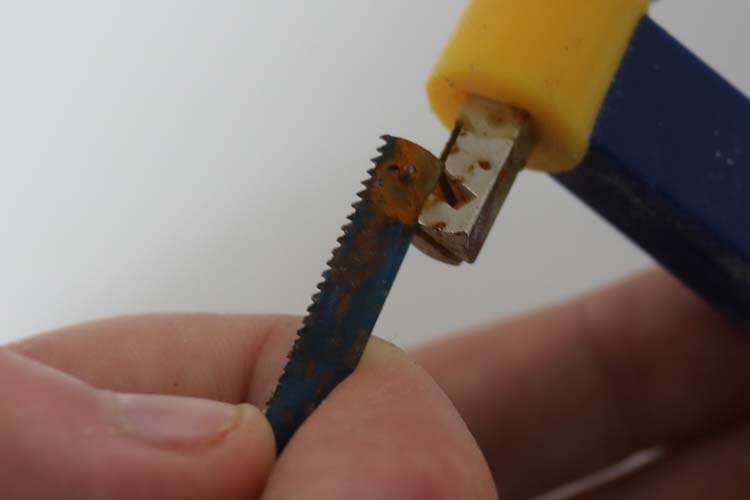
Fit a normal hacksaw blade so the teeth point away from the handle. Tighten the frame until the blade is firm and straight.
A blade that is too loose may wander and twist. A blade that is excessively tight can fail when it receives a shock or side load. Follow the frame maker’s instructions if the tool provides a tension setting or adjustment guide.
4. Start with short strokes
Place the blade on the marked line and use a few short, gentle strokes to create a narrow starting groove. Keep the blade aligned with the line.
Once the groove forms, use longer strokes. Long strokes make better use of the blade and help keep wear even.
5. Push with steady pressure
Apply moderate pressure as you move the blade forward. Let the teeth do the work. The correct force depends on the blade, material, and tooth pitch.
If the blade squeals, bends, or stalls, do not simply press harder. Check the blade tension, tooth direction, material support, and blade condition.
6. Ease off at the end
Near the bottom of the cut, reduce pressure. The remaining section may break suddenly. A lighter finish helps prevent rough edges and keeps the blade from twisting.
How to tell whether the blade is cutting properly
A hacksaw is working well when it produces small chips, follows the cut line, and moves through the material at a steady rate.
Look for these signs:
- The blade stays straight in the frame.
- The cut remains close to the marked line.
- The teeth produce visible chips or fine filings.
- The frame does not need excessive force.
- The blade does not bind during the return stroke.
- The material stays firm in the vise.
A blade that only rubs may be dull, too fine for the material, installed backward, or used with too little stroke length.
A blade that catches may have too few teeth in the cut. It may also be bent, loose, or exposed to side pressure.
Why a blade may seem not to cut
| Symptom | Likely cause | Practical check |
|---|---|---|
| Blade slides without removing material | Dull teeth or wrong blade | Inspect teeth and match the blade to the material |
| Blade binds | Too much pressure, crooked stroke, or loose work | Straighten the stroke and clamp the work firmly |
| Teeth break quickly | Too few teeth in contact or excessive force | Use a finer blade for thin stock and reduce pressure |
| Cut wanders | Loose frame or side pressure | Tighten the blade and keep the frame square |
| Blade becomes hot | Fast strokes, heavy pressure, or poor tooth choice | Slow down and use a suitable blade |
| Saw cuts slowly | Fine blade on thick stock or worn teeth | Choose a coarser blade when the material allows |
Lubrication can help in some metal-cutting jobs, but use it only when appropriate for the material and blade instructions. Keep oils away from areas where they create a slip or fire hazard.
Does a hacksaw cut on the pull stroke?
A normal hand hacksaw does not perform its main cutting action on the pull stroke. Its teeth usually face forward, which makes the push stroke the cutting stroke.
Some tools look similar but work differently. A Japanese pull saw, for example, cuts on the pull stroke. A reciprocating saw may use a blade designed for a particular cutting direction. A powered hacksaw may also use a different motion from a hand frame.
Do not assume that every saw blade cuts in the same direction. Check the teeth and the tool instructions.
Hand hacksaw versus powered hacksaw
The term “hacksaw” can describe more than one tool:
- Hand hacksaw: Usually cuts on the forward push stroke.
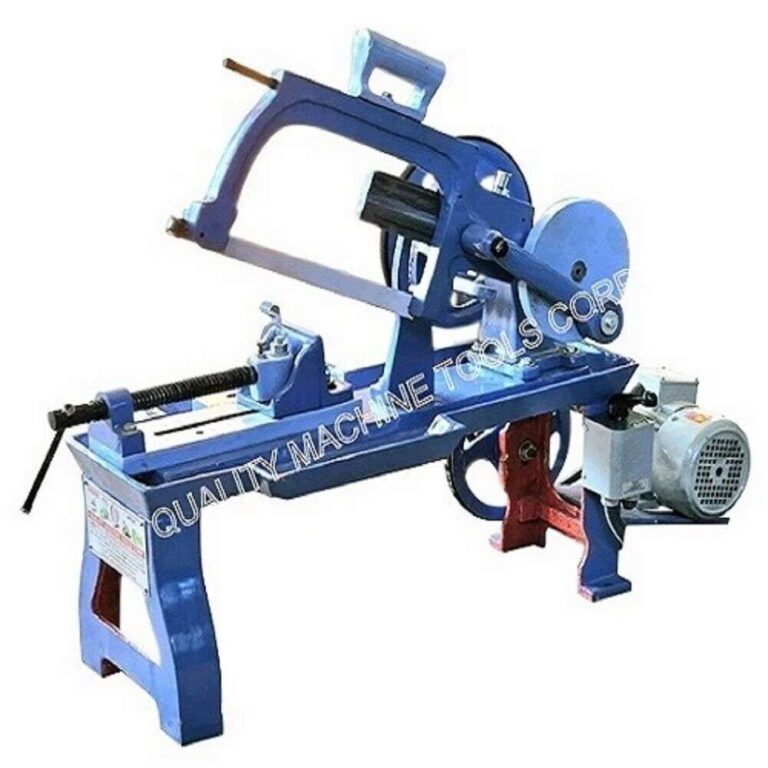
- Powered hacksaw: Uses a motor and a reciprocating frame. The blade cuts during the stroke set by its tooth direction and machine design.
- Mini hacksaw: Usually uses a small blade that cuts on the push stroke, but the exposed frame may change how you hold it.
- Bi-directional blade: May cut during both directions, depending on its tooth design.
For powered equipment, keep hands clear of the moving blade and follow the machine manual. Never apply hand pressure to a powered blade unless the manufacturer specifically permits that action.
How stroke length and speed affect cutting
A hacksaw cuts best with smooth, controlled strokes rather than fast, short pumping. The stroke should use much of the available blade length without hitting the frame against the workpiece.
A useful hand-saw rhythm is:
- Forward: steady pressure and moderate speed
- Back: light pressure and controlled return
- Repeat: keep the frame aligned
Fast strokes can create heat and fatigue. Very slow strokes with excessive force can load the teeth and make them grab.
The correct speed changes with the material. Softer metals, such as aluminum, can clog a fine blade. Hard steel may need slower strokes and a blade made for harder stock. Thin material needs enough teeth in the cut to prevent snagging.
A simple example
Suppose you are cutting thin-wall steel tubing with a 14-teeth-per-inch blade. Only one or two large teeth may contact the wall. Those teeth can grab the edge and break.
A 24- or 32-teeth-per-inch blade gives more teeth contact. Each tooth removes less material, so the cut starts more smoothly. The finer blade may cut more slowly, but it can produce better control and fewer broken teeth.
This is a practical trade-off: coarse teeth remove material faster from thick stock, while fine teeth control thin stock better.
Common mistakes that reduce cutting performance
Pressing on the return stroke
This makes the teeth drag backward. It can dull the blade and cause the frame to jump. Reduce pressure as soon as the forward stroke ends.
Using the wrong tooth pitch
A blade with too few teeth can catch thin material. A blade with too many teeth can clog or cut slowly in thick material. Match the tooth pitch to the material thickness.
Using a short, choppy stroke
Short strokes wear only a small part of the blade. That area becomes dull while the rest of the teeth remain unused. Use as much blade length as the work allows.
Allowing the workpiece to move
Movement absorbs the force that should reach the teeth. It also makes the cut wander. Use a vise, clamp, or suitable support.
Twisting the frame
Keep the blade square to the work unless the cut requires a planned angle. Side pressure can buckle or snap a hacksaw blade.
Continuing with a dull blade
A dull blade needs more force. That extra force raises the chance of slipping, bending, and injury. Replace a blade when it no longer forms chips with normal pressure.
Hacksaw safety in a U.S. workshop
Wear safety glasses when cutting metal. Small chips and broken teeth can travel quickly. Use gloves only when they do not create a snag risk around moving equipment; gloves are not a substitute for control or eye protection.
Inspect the frame and blade before use. Do not use a blade with cracks, severe bends, missing teeth, or loose mounting ends.
Keep the workpiece clamped. Position your hands away from the blade path, and keep your body balanced so a slip does not drive your hand into the cut.
For powered hacksaws, follow the manufacturer’s guard, lockout, and operating instructions. The U.S. Occupational Safety and Health Administration provides general hand and power tool guidance, but the tool’s specific manual remains important because machine designs differ.
Frequently asked questions
Should hacksaw teeth face forward or backward?
For a normal hand hacksaw, the teeth should face forward, away from the handle. This lets the blade cut as you push.
How much pressure should you use on a hacksaw?
Use enough forward pressure to make the teeth form chips, but not so much that the blade bends or binds. Use very little pressure on the return stroke.
Can a hacksaw cut wood?
It can cut wood in an emergency, but a hacksaw blade is made mainly for metal and some plastic. A wood saw will usually cut wood faster and with less clogging.
Why does my hacksaw blade keep breaking?
Common causes include excessive pressure, side loading, loose or overly tight tension, too few teeth in the work, a crooked stroke, or a damaged blade.
Is a finer hacksaw blade always better?
No. A fine blade works well on thin stock, but it may cut slowly or clog in thick or soft material. Choose the coarsest blade that keeps several teeth engaged in the cut.
Key takeaways
- A standard hand hacksaw cuts mainly on the forward push stroke.
- Release pressure on the return stroke.
- Install the blade with its teeth facing forward.
- Match tooth pitch to material thickness.
- Keep the workpiece clamped and the frame straight.
- Use long, smooth strokes instead of fast, forceful ones.
- Replace blades that are dull, bent, cracked, or missing teeth.
Conclusion
A hacksaw blade performs its cutting action when its forward-facing teeth move through the work under controlled pressure. In normal hand use, that means the push stroke does the cutting and the return stroke resets the blade.
For a clean, safe cut, secure the work, choose the right tooth pitch, use long strokes, and let the teeth remove the material. If the saw binds or fails to produce chips, check the blade direction, tension, condition, and tooth count before adding more force.
Recent Tool Guides
 Hammer
How To Hammer Flowers Onto Paper: Easy Guide
Learn how to hammer flowers onto paper with simple steps, helpful tips, and beautiful results for...
Read Guide → Wrench
How To Use A Hex Wrench: Easy Step-By-Step Guide
Learn how to use a hex wrench correctly with simple steps, helpful tips, and common mistakes...
Read Guide → Hacksaw
How To Cut Curtain Pole With Hacksaw: Easy Guide
Learn how to cut curtain pole with hacksaw safely and neatly. Follow simple steps for accurate...
Read Guide → Wrench
How To Use A Husky Torque Wrench: Easy Guide
Learn how to use a Husky torque wrench correctly with simple steps, torque settings, and safety...
Read Guide → Hammer
How To Hold A Hammer: Safe Grip Guide
Learn how to hold a hammer with the right grip, stance, and technique for safer, more...
Read Guide → Hacksaw
How To Cut Flexible Metal Conduit With Hacksaw: Easy Guide
Learn how to cut flexible metal conduit with hacksaw safely and cleanly. Follow simple steps for...
Read Guide →