Are Hacksaws Good For Cutting Nails: Safe Uses And Tips
Introduction
A hacksaw can cut a metal construction nail, but it is usually not the best tool for the job. It works well when a nail is exposed, fixed in place, and too tough or awkward to remove. For most jobs, nail nippers, end-cutting pliers, or a reciprocating saw are faster and easier.
If you mean human fingernails or toenails, the answer is no. A hacksaw is too rough and hard to control. Use nail clippers or a fine nail file instead.
This guide explains when a hacksaw makes sense, how to use one safely in a U.S. home or workshop, and which tool is better for each type of nail.

First, identify which “nail” you need to cut
The right answer depends on whether you mean a metal fastener or a human nail.
| Type of nail | Can a hacksaw cut it? | Better choice |
|---|---|---|
| Common steel construction nail | Yes | End-cutting nippers or a reciprocating saw |
| Finishing nail | Yes, but often unnecessary | Pliers or a nail set |
| Hardened masonry nail | Sometimes, with the correct blade | Abrasive cutting wheel or suitable power tool |
| Roofing nail | Yes, if exposed | Pliers, nippers, or a reciprocating saw |
| Stainless steel nail | Yes, but it may cut slowly | Bi-metal hacksaw blade or metal-cutting tool |
| Fingernail or toenail | Technically possible, but unsafe and unsuitable | Nail clippers or a nail file |
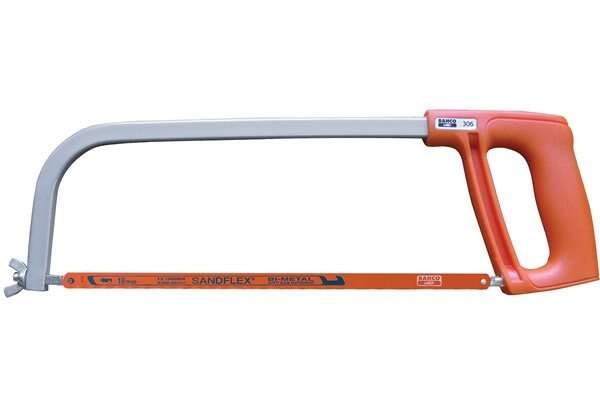
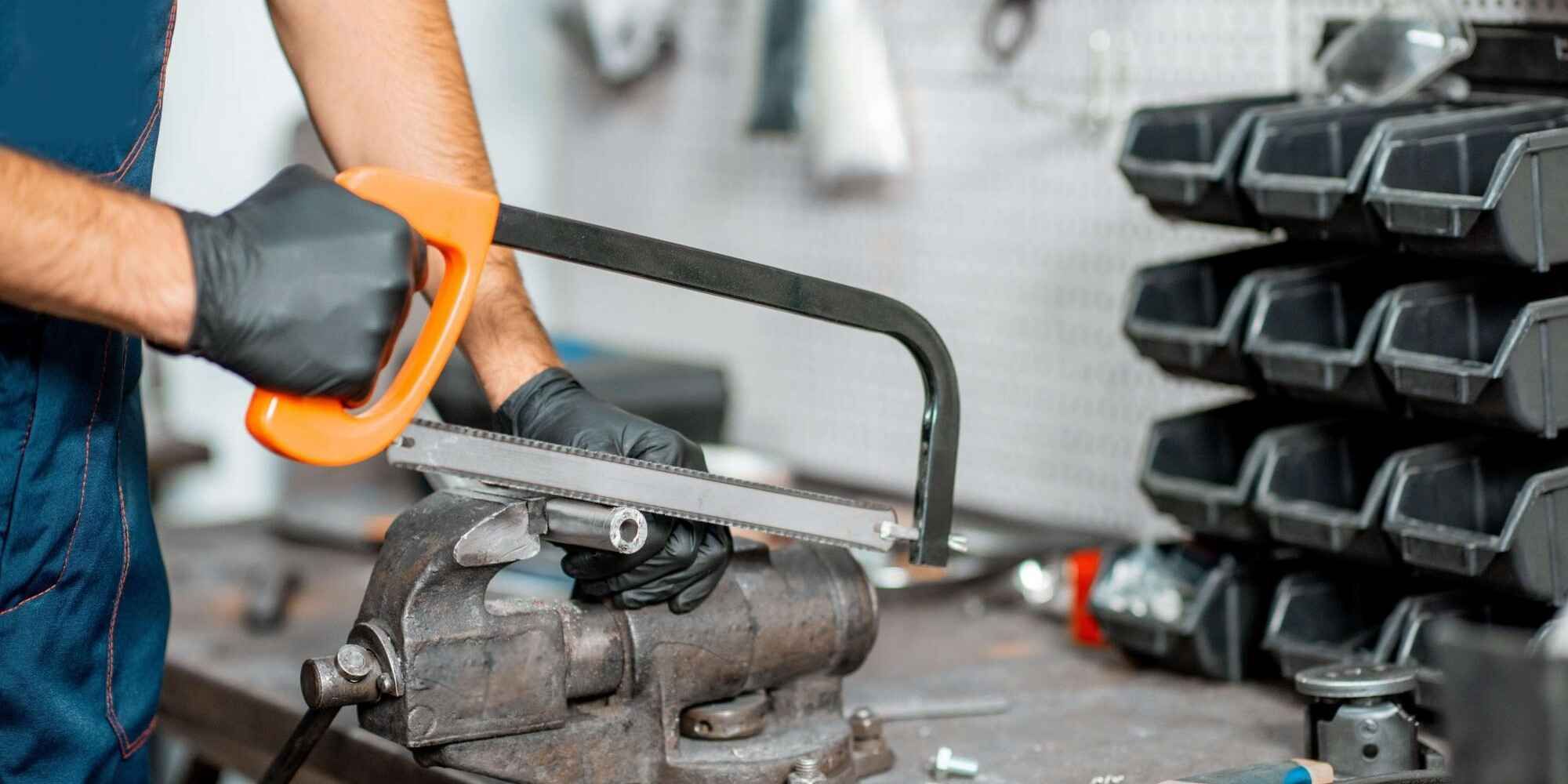
A hacksaw uses a narrow, toothed blade to remove metal through repeated strokes. It does not cut by crushing the nail, so it can leave a fairly clean cut when the workpiece is held firmly.
The main limits are access, blade wear, and control. A hacksaw may be useful for one exposed nail, but it becomes slow when you must cut many nails or work in a tight space.
Are hacksaws good for cutting metal nails?
A hacksaw is a reasonable choice for cutting an exposed metal nail, especially when you need a low-cost hand tool and only have a few cuts to make.
It is most useful when:
- The nail sticks out from wood, metal, or another solid surface.
- You cannot safely pull the nail out.
- You want to cut the nail without using a power tool.
- The nail is made from ordinary steel or another hackable metal.
- You can hold the material steady and keep your hands away from the blade.
A hacksaw is less useful when the nail is flush with a surface. The frame can block access, and the remaining stub may still need to be filed, punched below the surface, or removed with pliers.
What happens when you cut a nail with a hacksaw?
The blade removes small amounts of metal with each stroke. As the cut deepens, the kerf—the narrow slot made by the blade—becomes wider. Near the end of the cut, the nail may bend or snap.
That final snap can leave a sharp point. Always treat the cut end as dangerous until you have removed or covered it.
The nail’s material also matters. Ordinary construction nails are often easier to cut than hardened nails, masonry fasteners, or some stainless steel nails. A dull blade can slip, heat up, and make the job take much longer.

How to cut a metal nail with a hacksaw
Use this method only when the nail is accessible and the material is stable. Wear safety glasses because small metal chips can fly during cutting.
What you need
- A hacksaw with a tight blade
- A sharp blade made for metal
- Safety glasses
- Work gloves, when they do not create a snag hazard
- Pliers or locking pliers
- A file or abrasive pad
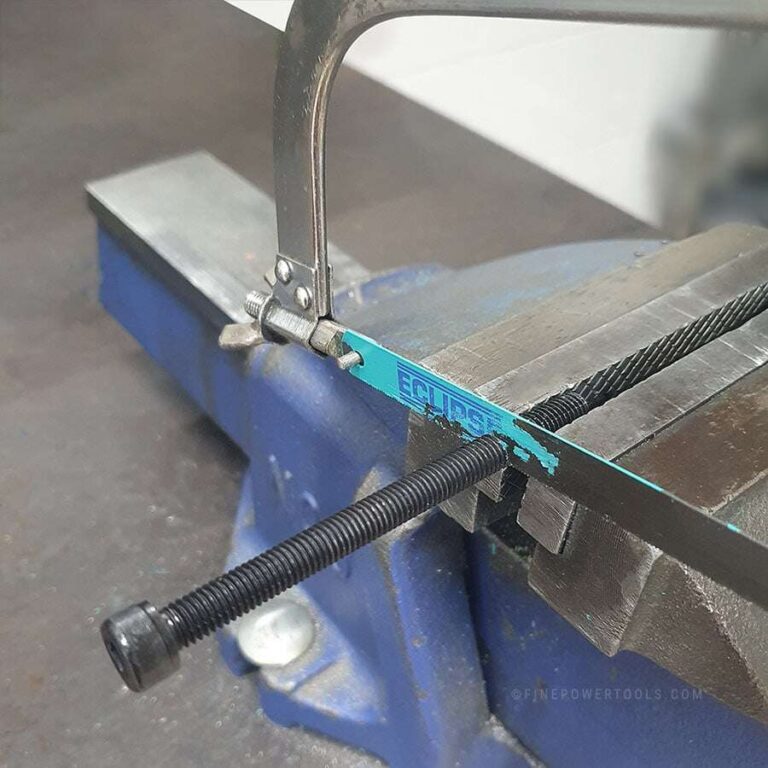
- A clamp, vise, or other way to secure the work
- A dust mask if cutting creates visible dust or debris
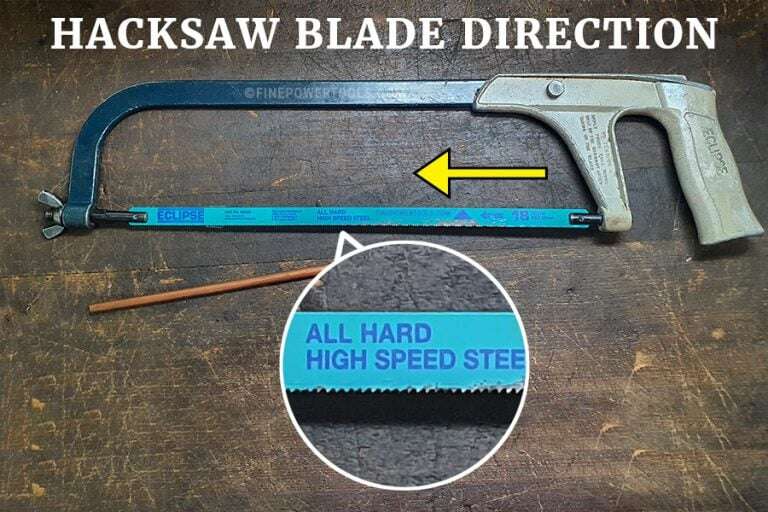
A general-purpose metal-cutting blade is suitable for many common nails. Blades with finer teeth usually give better control on thin metal. Choose a blade that fits the hacksaw frame and replace it if the teeth are worn, missing, or clogged.
Steps
-
Check the nail and the area around it.
Look for electrical wires, plumbing, gas lines, or hidden parts that the blade could reach. If the nail is in a wall, ceiling, floor, or structural member, do not cut blindly. -
Decide whether removal is safer.
If you can pull the nail out without damaging the material, removal may be simpler than cutting it. If the nail is bent, trapped, or holding a part in place, cutting may be more practical. -
Secure the work.
Clamp the loose material or hold the nail with pliers. Do not place your fingers close to the planned cut. A moving nail can catch the blade and cause a sudden slip. -
Mark the cut.
Mark the point where you want the nail to end. If the cut must be flush, leave a tiny amount of material for final filing rather than forcing the blade against the surface. -
Start with short strokes.
Set the blade on the mark and make light back-and-forth strokes. Short strokes help create a small groove and keep the blade from wandering. -
Use steady, full strokes.
Once the groove is established, use controlled strokes across as much of the blade as the space allows. Let the teeth do the work. Pressing too hard can bend the blade or damage the teeth. -
Support the nail near the cut.
Hold the waste end with pliers if possible. This reduces vibration and helps prevent the nail from snapping unpredictably. -
Stop before the final break.
Slow down when only a small section remains. Support both sides, then finish the cut with light strokes. -
Remove the sharp edge.
Use a metal file to smooth the cut end. If the nail is no longer needed, pull out the remaining piece or drive it below the surface with a nail set. -
Inspect the area.
Check for loose metal, sharp burrs, damaged wood, and movement in the repaired part. Clean up metal filings with a suitable brush or vacuum.
Signs the cut is going well
- The blade stays in the groove.
- The nail does not move much.
- The blade produces small, even filings.
- You can maintain a controlled rhythm.
- The blade remains cool enough to touch after a short pause.
Stop if something goes wrong
Stop cutting if the blade keeps slipping, the nail begins to twist, the workpiece moves, or the blade becomes hot and difficult to control. Re-secure the work, change the blade, or select a different tool.

Which tool is better than a hacksaw?
A hacksaw is not automatically the best tool just because it can cut the nail. The better choice depends on access, nail size, the number of cuts, and the finish you need.
| Tool | Best use | Main advantage | Main limitation |
|---|---|---|---|
| End-cutting nippers | Cutting or pulling exposed nails from wood | Fast and simple | May damage the surface |
| Diagonal cutters | Small, thin nails and wire-like fasteners | Easy to control | Not ideal for large or hardened nails |
| Locking pliers | Holding and twisting a nail | Strong grip | Usually slower than cutting |
| Reciprocating saw | Many nails or nails in tight spaces | Fast for repeated cuts | Needs power, blade control, and more safety care |
| Oscillating tool | Flush cuts near a surface | Good control in tight areas | Slower for thick metal |
| Angle grinder | Hardened fasteners and heavy cuts | High cutting power | Sparks, noise, heat, and greater risk |
| Hacksaw | A few exposed nails | Low cost and no electricity | Slow and requires room for strokes |
For a nail sticking out of a board, end-cutting nippers are often the simplest option. For nails hidden behind a panel or embedded in a demolition project, a reciprocating saw with a metal-cutting blade may save time.
Do not choose a power tool only because it is faster. A power tool can create sparks, loud noise, hot metal, and flying fragments. Use it only when the work area and tool are suitable.

Can you use a hacksaw on fingernails or toenails?
You should not use a hacksaw on human nails. A hacksaw blade is designed for metal, not for controlled personal grooming.
Human nails are made mainly of keratin. A hacksaw can catch, tear, or leave a rough edge rather than making a clean, comfortable cut. It can also scrape the skin around the nail and make small injuries more likely.
For normal nail care:
- Use clean nail clippers for fingernails.
- Use toenail clippers for thicker toenails.
- Cut toenails mostly straight across to reduce the chance of an ingrown nail.
- Use a fine nail file to smooth rough edges.
- Do not share nail tools without cleaning them.
- Do not cut into the skin or the corners of the nail.
People with diabetes, poor circulation, reduced feeling in the feet, or a history of foot wounds should ask a qualified health professional about safe toenail care. The American Academy of Dermatology Association also provides general nail-care guidance.

Hacksaw safety when cutting nails
The main hazards are sharp fragments, blade slips, hand injuries, and hidden utilities. Basic control matters more than speed.
Follow these precautions:
- Wear safety glasses or safety goggles.
- Use a blade that is tight and in good condition.
- Keep both hands behind the blade teeth.
- Secure the material before cutting.
- Keep bystanders away from the cutting path.
- Do not cut toward your body.
- Do not use a damaged frame or loose handle.
- File the cut edge before handling the nail.
- Remove metal filings with care.
- Keep sparks away from fuel, solvents, sawdust, and other flammable materials.
If you are cutting a nail installed in a wall, floor, cabinet, or structural part, first consider what may be behind it. A hacksaw blade can contact wiring or plumbing. If the work affects a load-bearing part or you cannot identify what the nail is holding, stop and ask a qualified contractor for help.
Can a hacksaw cut a nail flush?
Sometimes, but the hacksaw frame may prevent the blade from reaching the exact surface. If the nail projects far enough, cut it close and file the remainder.
For a truly flush cut in a tight space, an oscillating tool or a reciprocating saw may provide better access. Use the tool with a blade designed for metal and protect nearby surfaces from accidental contact.
Can a hacksaw cut a hardened nail?
It may, but the process can be slow and may wear the blade quickly. A hardened fastener may require a high-quality bi-metal blade or a powered metal-cutting tool.
Do not force the blade. If the teeth stop cutting or the metal becomes excessively hot, stop and reassess the tool and blade. An angle grinder can handle some hardened metal, but it creates sparks and requires stricter control.

Common mistakes to avoid
Using a wood blade
A hacksaw needs a metal-cutting blade. A blade with the wrong tooth design may cut poorly, snag, or wear out quickly.
Cutting without securing the nail
A loose nail can vibrate and pull the blade sideways. Clamp the material or grip the nail with pliers where practical.
Pressing too hard
Heavy pressure does not always make cutting faster. It can bend the blade and damage the teeth. Use steady pressure and let the blade work.
Cutting too close to a finished surface
A blade can scratch wood, tile, paint, or metal around the nail. Leave a small amount for filing when the surface must remain clean.
Ignoring the cut end
A newly cut nail can be sharper than the original point. Smooth it, remove it, or cover it before the area is used.
Using a hacksaw for many nails
For repeated work, hand-cutting can be tiring and inefficient. Choose a suitable powered tool if you understand its hazards and can control it safely.

Quick decision guide
Use a hacksaw when:
- You need to cut one or a few exposed metal nails.
- You do not have access to power.
- The workpiece can be secured.
- You can reach the nail with straight blade strokes.
- A slower cut is acceptable.
Choose another tool when:
- You need to cut many nails.
- The nail is flush with a surface.
- The nail is hardened or unusually thick.
- The area is too tight for a hacksaw frame.
- The nail is near hidden wires, pipes, or fragile finishes.
- You need a clean, damage-free result.
For human fingernails or toenails, use nail clippers or a file—not a hacksaw.
FAQs
Can a hacksaw cut through a roofing nail?
Yes. A hacksaw can cut an exposed roofing nail, but pliers, end-cutting nippers, or a reciprocating saw may be more practical. Wear eye protection because roofing nails can bend and release sharp fragments.
What hacksaw blade should I use for nails?
Use a sharp metal-cutting blade that fits the frame. A bi-metal blade is a useful general option for many steel nails. Finer teeth can provide better control on smaller nails, while a coarser blade may cut thicker metal more quickly.
Is it better to pull out a nail or cut it?
Pull the nail when removal will not damage the material and you can grip it safely. Cut it when the nail is trapped, bent, inaccessible from the back, or holding a part that must stay in place.
Can wire cutters cut nails?
Some heavy-duty cutters can cut small, soft nails, but ordinary wire cutters may be damaged. Check the tool’s rated capacity and do not use it on large or hardened nails.
Can I cut a nail with a Dremel tool?
A rotary tool with a suitable metal-cutting disc can cut some nails. It creates sparks and hot fragments, so wear eye protection, secure the work, and keep flammable material away from the cutting area.
Conclusion
A hacksaw is good enough for cutting exposed metal nails in small numbers, especially when you want a simple hand tool. It is not the fastest choice, and it may not reach nails that are flush or hidden.
Use end-cutting nippers for easy exposed nails, a reciprocating or oscillating tool for tight or repeated cuts, and a proper file to remove sharp edges. Never use a hacksaw on fingernails or toenails; use clean nail clippers or a file instead.
Before cutting, secure the work, check for hidden utilities, wear eye protection, and choose a blade made for metal.
Recent Tool Guides
 Hammer
How To Hammer Flowers Onto Paper: Easy Guide
Learn how to hammer flowers onto paper with simple steps, helpful tips, and beautiful results for...
Read Guide → Wrench
How To Use A Hex Wrench: Easy Step-By-Step Guide
Learn how to use a hex wrench correctly with simple steps, helpful tips, and common mistakes...
Read Guide → Hacksaw
How To Cut Curtain Pole With Hacksaw: Easy Guide
Learn how to cut curtain pole with hacksaw safely and neatly. Follow simple steps for accurate...
Read Guide → Wrench
How To Use A Husky Torque Wrench: Easy Guide
Learn how to use a Husky torque wrench correctly with simple steps, torque settings, and safety...
Read Guide → Hammer
How To Hold A Hammer: Safe Grip Guide
Learn how to hold a hammer with the right grip, stance, and technique for safer, more...
Read Guide → Hacksaw
How To Cut Flexible Metal Conduit With Hacksaw: Easy Guide
Learn how to cut flexible metal conduit with hacksaw safely and cleanly. Follow simple steps for...
Read Guide →