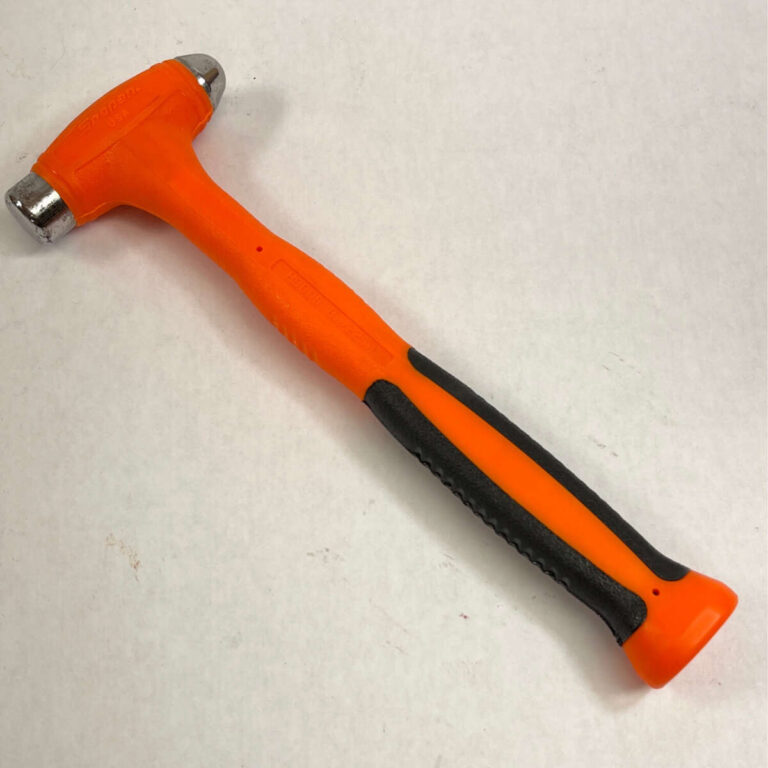
Who Invented The Claw Hammer: History And Origins
In the United States, David Maydole is commonly credited with developing the modern claw hammer around 1840. He was a blacksmith and tool maker from Norwich, New York. His design combined a striking face with a curved claw for pulling nails.
That answer needs one important detail: Maydole did not invent the first hammer or the first tool used to pull nails. Hammers are thousands of years old, and claw-like nail pullers existed before the 19th century. Maydole’s contribution was helping create and popularize the balanced American claw hammer used by carpenters, builders, and homeowners.

The short answer: David Maydole developed the modern claw hammer
David Maydole is the name most often linked to the American claw hammer. He worked as a blacksmith in Norwich, New York, and later became known for making strong, well-balanced hammers.
The exact date is often given as 1840, although historical accounts do not always agree on whether that date marks the first claw hammer, the start of Maydole’s hammer work, or the development of his improved design.
The safest historical answer is:
David Maydole is widely credited with developing the modern American claw hammer, but he was not the first person to combine a hammer with a nail-pulling claw.
This distinction matters because the claw hammer has a long design history. Many tools evolved from earlier hammers, nail pullers, and blacksmithing tools. No single surviving record proves that one person invented every part of the tool from scratch.
Maydole’s importance comes from the design’s practical success. His hammers were known for a head and handle arrangement that gave users good balance, useful striking power, and a claw that could remove nails.

What is a claw hammer?
A claw hammer is a hand tool with two main working ends:
- A flat or slightly rounded face for driving nails
- A split, curved claw for pulling nails or lifting small objects
The claw is usually divided into two tapered points. A user can slide the split under a nail head, then pull back on the handle to lift the nail.
Most claw hammers also have:
- A steel head
- A wood, fiberglass, or composite handle
- A hole called the eye, where the handle fits through the head
- A wedge or other method that helps secure the handle
The claw gives the hammer a second job. It is not only a striking tool. It is also a basic nail-removal tool.
Why the claw has a split
The split lets the user catch the nail shank or head. The curved shape then works like a small lever.
When the handle moves backward, the claw presses against the wood. The nail rises as the claw rotates. This is a simple example of mechanical advantage: a small hand movement at the handle can create a stronger pulling force at the nail.
The trade-off is that the claw can leave a mark in the wood. For finished trim or furniture, a pry bar with a protective block may be a better choice.
Claw hammer versus framing hammer
A claw hammer is a broad category. different claw hammers serve different jobs.
| Type | Typical feature | Common use |
|---|---|---|
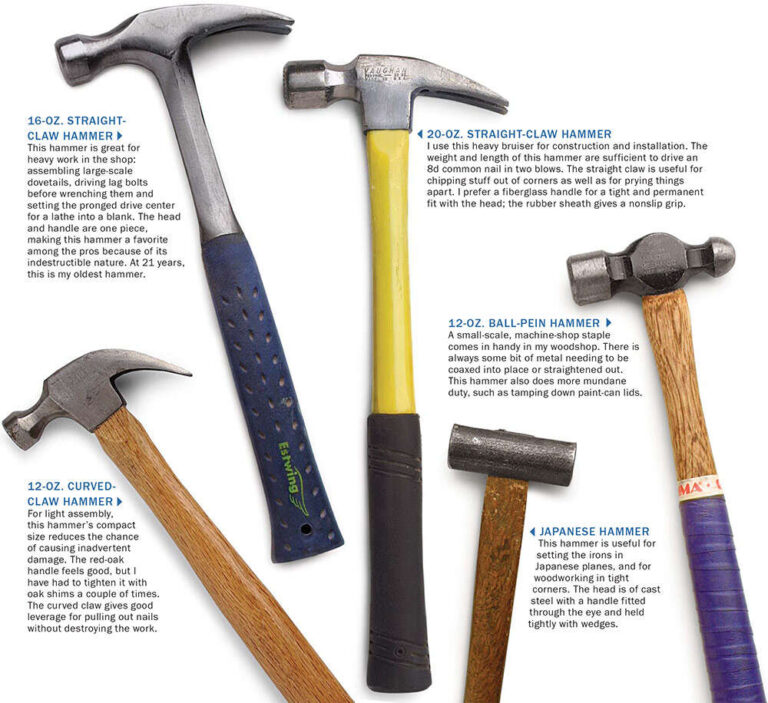
| Curved-claw hammer | Curved claw and moderate face | General repairs and nail pulling |
| Straight-claw hammer | Straighter claw | Framing, prying, and rough construction |
| Rip hammer | Straight claw with a heavier head | Framing and demolition |
| Finish hammer | Smaller, smoother face | Trim and finish work |
| Tack hammer | Small head | Light fastening and upholstery |
The common household claw hammer usually has a curved claw. A framing hammer often has a straighter claw and a heavier head.

How the claw hammer developed
The claw hammer developed through several stages rather than through one clearly documented invention.
Ancient hammers came first
Early hammers used stone, wood, or other hard materials. Later hammers used bronze and iron. These tools could shape metal, break material, and drive wedges.
The basic hammer form is simple: a heavy head transfers force to a smaller target. That design appeared in many cultures long before modern nails became common.
Nails created a need for nail pullers
As builders used more nails, they also needed ways to remove damaged or misplaced nails. Early nail-pulling tools could look different from modern hammer claws.
Some were separate pry tools. Others combined a striking face with a gripping or lifting section. This gradual development makes it hard to name one first claw-hammer inventor.
Historical drawings, tool collections, and old trade records show that hammer forms changed over time. They also varied by country, trade, and task.
American tool makers refined the design
During the 19th century, American blacksmiths and tool makers improved hand tools for construction and general repair. Better steel, mass production, and standardized tool shapes helped make the claw hammer more widely available.
David Maydole became strongly associated with this period. His company made hammers in Norwich, New York, and helped establish the balanced American hammer as a recognizable tool form.
The modern claw hammer is therefore best understood as an evolved design that Maydole helped refine and popularize.
What did David Maydole actually contribute?
David Maydole’s main contribution was not the basic idea of striking with one end and pulling with the other. His contribution was the practical design and manufacture of a hammer that workers could use efficiently.
Accounts of Maydole’s work commonly emphasize:
- Good balance between the head and handle
- A strong connection between the head and handle
- A useful claw shape
- A durable striking face
- Reliable production for working users
A well-balanced hammer is easier to control than one with poor weight distribution. That can improve accuracy and reduce wasted motion during repeated work.
Maydole’s name became associated with a high-quality American hammer. His company’s history is one reason many modern articles describe him as the inventor of the claw hammer.
Still, “inventor” can be too strong if it suggests that no earlier clawed hammer existed. A more precise description is:
David Maydole was an important American developer and maker of the modern claw hammer.
That wording separates a documented American contribution from a claim about the first claw tool ever made.
Is there a patent proving Maydole invented it?
No single, widely accepted patent record settles the entire question of who invented the claw hammer.
A patent can prove that a person claimed a particular improvement at a particular time. It does not automatically prove that the person created every earlier version of a tool.
For this topic, the historical evidence comes from a mix of:
- Company history
- Tool-making records
- Historical tool collections
- Trade references
- Later accounts of American tool makers
- Surviving examples of earlier hammers and nail pullers
That evidence supports Maydole’s importance, but it does not support the claim that he invented the first hammer with any kind of claw.
Why the Maydole story is often simplified
Many online summaries use a simple sentence: “David Maydole invented the claw hammer in 1840.” It is easy to understand, but it leaves out the design’s earlier history.
There are three reasons the story is often simplified.
1. The modern tool has a clear American identity
The curved-claw hammer became strongly associated with American carpentry and general construction. That makes Maydole a natural figure in the tool’s history.
2. Tool designs rarely appear from nowhere
A hammer may have been improved by one maker while similar tools already existed elsewhere. Historical tools often develop through small changes made by many craftspeople.
3. “Invented” can mean different things
The word may refer to:
- The first known example
- The first patented version
- The first commercially successful version
- The person who improved the design
- The maker who made the tool widely known
For the claw hammer, these meanings do not point to the same person.
The most accurate answer depends on the question. If you mean the modern American claw hammer, Maydole is the standard answer. If you mean the first hammer with a nail-pulling feature, the evidence does not support one certain inventor.
How the claw hammer works
The hammer’s two ends use different forms of force.
The face delivers a short, direct impact. The claw uses leverage. When the claw catches a nail, the handle acts as a lever and the head acts as a pivot against the surface.
This explains why the claw works best when:
- The claw fits under the nail head.
- The claw grips the nail firmly.
- The hammer head has a stable contact point.
- The user pulls with controlled force.
A short claw may give less leverage but better control. A long, curved claw may pull nails more easily but can damage the work surface.
Safe nail removal
For ordinary repair work:
- Check that the nail is not holding a structural part in place.
- Wear eye protection, especially if the nail is rusty or bent.
- Set the claw under the nail head.
- Pull the handle back slowly.
- Place a scrap block under the hammer head if you need more leverage and want to protect the surface.
- Stop if the handle, head, or claw shifts.
Do not strike the hammer head with another hardened steel hammer unless the tool maker permits it. Metal fragments can break away at high speed.
Do not use a claw hammer as a chisel, pry bar, splitting wedge, or wrench. The tool may fail, and the user may lose control.
Common mistakes about who invented the claw hammer
Mistake 1: Saying Maydole invented all hammers
Maydole did not invent the hammer. Hammer tools existed for thousands of years before the 19th century.
Mistake 2: Treating 1840 as a proven starting date
The year 1840 is widely repeated in connection with Maydole. It should be treated as a commonly cited date for his development or early work, not as conclusive proof that the first claw hammer appeared that year.
Mistake 3: Assuming every claw hammer is a Maydole design
Modern claw hammers vary by head weight, claw shape, handle material, and intended use. A household trim hammer and a framing hammer may look related but perform different jobs.
Mistake 4: Confusing a claw hammer with a nail puller
A claw hammer includes a striking face. A nail puller may be a separate tool designed mainly for extracting nails. Earlier nail-pulling tools do not have to look like modern claw hammers.
Mistake 5: Ignoring regional tool history
The American claw hammer is only one part of a wider tool history. European and American tools used different names and forms. A claim about the “first” tool must state which region and design it means.
Frequently asked questions
Did David Maydole invent the claw hammer?
David Maydole is widely credited with developing the modern American claw hammer around 1840. However, he was not necessarily the first person to make a hammer with a claw or another nail-pulling feature.
Where was David Maydole from?
David Maydole was a blacksmith and tool maker associated with Norwich, New York. His hammer-making work helped establish the town as an important name in American hand tools.
When was the first claw hammer made?
There is no universally accepted date for the first claw hammer. Hammers are ancient, and nail-pulling features appeared in different forms before the modern American design became established.
Why does a claw hammer have two ends?
The face drives nails and other fasteners. The claw pulls nails and can provide limited prying force. The two ends let one tool handle both installation and removal.
Is a claw hammer the same as a framing hammer?
No. A framing hammer often has a heavier head, a longer handle, and a straighter claw. A general-purpose claw hammer usually has a curved claw and is better suited to household repairs and finish work.
Sources and historical limits
The Maydole attribution is commonly supported by American tool-making histories and the history of the Maydole hammer company. Broader hammer development can be checked against reference works such as Encyclopaedia Britannica’s entry on hammers and collections from the Smithsonian National Museum of American History.
These sources support two separate conclusions:
- The hammer is an ancient tool with many historical forms.
- David Maydole is strongly associated with the development of the modern American claw hammer.
They do not prove that Maydole created the first nail-pulling hammer in human history. That stronger claim remains not established.
Conclusion
The best answer to “who invented the claw hammer?” is David Maydole, if the question refers to the modern American claw hammer.
The fuller answer is more careful: Maydole helped develop and popularize the balanced claw hammer in the United States during the 19th century, but the basic idea of combining a hammer with a nail-pulling feature likely evolved over time.
For practical purposes, think of Maydole as a major American designer and maker—not the sole inventor of every claw hammer that came before him.
Recent Tool Guides
 Hammer
How To Hammer Flowers Onto Paper: Easy Guide
Learn how to hammer flowers onto paper with simple steps, helpful tips, and beautiful results for...
Read Guide → Wrench
How To Use A Hex Wrench: Easy Step-By-Step Guide
Learn how to use a hex wrench correctly with simple steps, helpful tips, and common mistakes...
Read Guide → Hacksaw
How To Cut Curtain Pole With Hacksaw: Easy Guide
Learn how to cut curtain pole with hacksaw safely and neatly. Follow simple steps for accurate...
Read Guide → Wrench
How To Use A Husky Torque Wrench: Easy Guide
Learn how to use a Husky torque wrench correctly with simple steps, torque settings, and safety...
Read Guide → Hammer
How To Hold A Hammer: Safe Grip Guide
Learn how to hold a hammer with the right grip, stance, and technique for safer, more...
Read Guide → Hacksaw
How To Cut Flexible Metal Conduit With Hacksaw: Easy Guide
Learn how to cut flexible metal conduit with hacksaw safely and cleanly. Follow simple steps for...
Read Guide →