What Qualifies A Hammer As A Sledgehammer: Key Facts
A hammer is generally called a sledgehammer when it has a heavy, double-faced striking head mounted on a long handle for delivering powerful blows. In the United States, there is no single federal rule that sets one exact weight, length, or shape for every sledgehammer.
The name comes from the tool’s design and intended use, not one fixed measurement. A small sledgehammer may weigh 2 pounds, while a large model may weigh 20 pounds or more. What matters most is the combination of a heavy head, strong handle, striking faces, and a purpose built for high-force impact.
The Main Features of a Sledgehammer
A sledgehammer has four main traits: a heavy head, one or two striking faces, a durable handle, and a design made for forceful blows.
1. A heavy striking head
The head gives a sledgehammer its power. Most heads are made from forged steel. The striking ends are often hardened to resist wear, while the center may be shaped to reduce weight and improve balance.
Common U.S. sledgehammer weights include:
- 2 pounds
- 3 pounds
- 4 pounds
- 6 pounds
- 8 pounds
- 10 pounds
- 12 pounds
- 16 pounds
- 20 pounds or more
These are common market sizes, not legal limits. A 2-pound tool may be sold as a mini sledgehammer, while a 10-pound tool is a full-size sledgehammer for heavier work.
2. One or two flat striking faces
A classic sledgehammer has a flat face at both ends of the head. This design lets the user strike with either end and supports controlled, direct impact.
The faces may be:
- Flat
- Slightly crowned
- Square or round
- Hardened for repeated impact
The face should be smooth and free from dangerous cracks, deep chips, or large raised edges. A damaged face can send metal fragments into the air when it strikes another hard object.
3. A long, strong handle
A sledgehammer handle is longer than the handle on a claw hammer or tack hammer. The added length lets the user build more speed and use a two-handed swing.
Common handle materials include:
- Hickory
- Fiberglass
- Composite materials
- Steel, in some specialty designs
Handle length varies with head weight and intended use. Small sledgehammers may have handles around 12 to 24 inches long. Large models may have handles 30 to 36 inches long or more.
4. A high-impact purpose
A sledgehammer is made to break, drive, bend, loosen, or move tough material. Typical work includes:
- Breaking concrete or masonry
- Driving stakes
- Removing posts
- Shaping metal
- Demolishing structures
- Separating stuck parts
- Driving wedges
- Striking a punch or chisel designed for impact
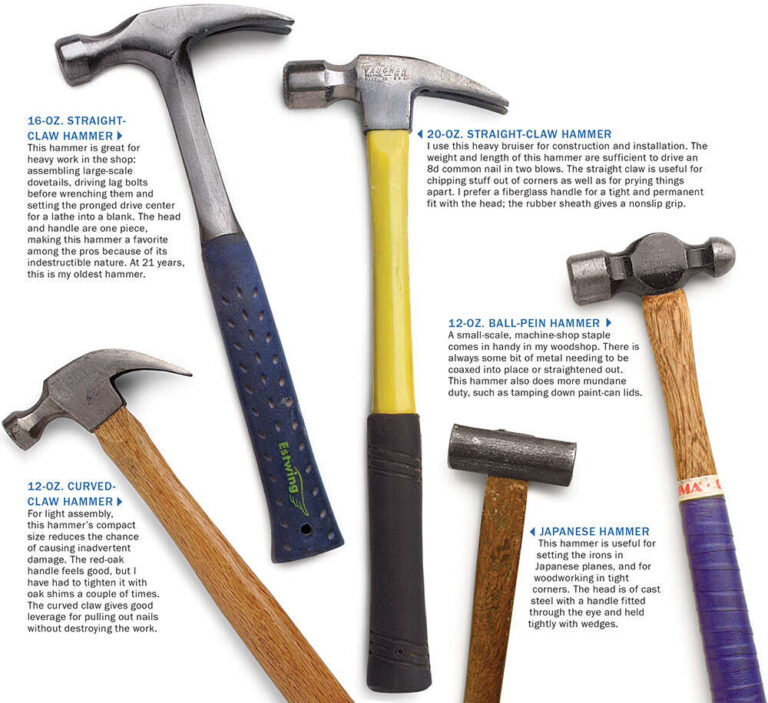
The tool’s purpose helps separate it from other heavy hammers. A tool with a heavy head but a cutting blade may be a splitting maul. A short tool with one flat face may be a club hammer.
Is There a Specific Weight That Makes a Hammer a Sledgehammer?
No. Weight alone does not determine whether a hammer is a sledgehammer.
A hammer does not become a sledgehammer at exactly 4 pounds, 8 pounds, or any other number. Manufacturers use names such as “mini sledge,” “hand sledge,” and “full-size sledgehammer” to describe different sizes.
A useful practical guide looks like this:
| Tool type | Typical head weight | Typical handle | Common use |
|---|---|---|---|
| Tack or light hammer | Less than 1 lb | Short | Light fastening work |
| Club hammer | About 1–4 lb | Short | Masonry and light demolition |
| Mini sledgehammer | About 2–6 lb | Short to medium | Tight spaces and general impact work |
| Full-size sledgehammer | About 6–16 lb | Long | Demolition, posts, and heavy impact |
| Heavy sledgehammer | About 16 lb or more | Long | Major demolition and driving work |
These ranges overlap. A manufacturer may call a 3-pound tool a club hammer, a drilling hammer, or a mini sledgehammer. Product names are not always used in the same way.
The better test is to look at the whole tool:
- Does it have a heavy steel striking head?
- Does it have one or two impact faces?
- Is the handle made for two-handed or high-force use?
- Is it intended for driving, breaking, or heavy striking?
If the answer is yes to most of these questions, the tool functions as a sledgehammer even if its label uses another term.
How a Sledgehammer Differs From Other Hammers
The closest tools can look similar. Their head shape, handle length, and intended work provide the clearest differences.
Sledgehammer vs. club hammer
A club hammer is shorter and lighter. It is often used with one hand for light masonry work, chisels, punches, and small demolition tasks.
A sledgehammer usually has:
- A longer handle
- A heavier head
- A larger swing
- More power from two-handed use
The line between a large club hammer and a mini sledgehammer is not sharp. The names often depend on the maker and the intended market.
Sledgehammer vs. drilling hammer
A drilling hammer is usually short-handled and balanced for one-handed use. It is designed for striking drills, punches, and chisels.
A sledgehammer is longer and is built for a wider swing. A long-handled sledgehammer should not be used to strike a hand-held punch unless the punch and work setup are designed for that force.
Sledgehammer vs. splitting maul
A splitting maul has a wedge-shaped blade for splitting wood. One side may look like a hammer face, but the blade is the key feature.
A sledgehammer has flat striking faces and is not designed to split logs. Using a sledgehammer for wood splitting can waste effort and increase the chance of a glancing blow.
Sledgehammer vs. dead-blow hammer
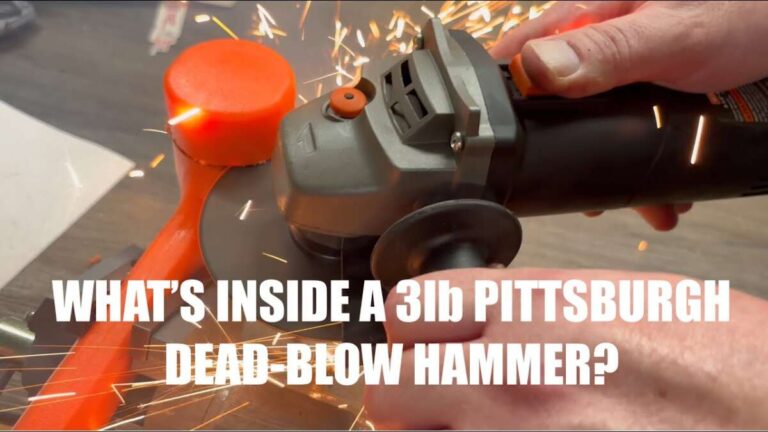
A dead-blow hammer is designed to reduce rebound. Many dead-blow hammers use a hollow head filled with shot or another moving material.
A sledgehammer normally has a solid steel head and delivers a strong, direct impact. It is chosen when force matters more than low rebound or surface protection.
Sledgehammer vs. mallet
A mallet has a softer head made from rubber, plastic, wood, or another material. It is used when the workpiece must avoid dents or sparks.
A steel sledgehammer is for high-impact work. It can damage finished surfaces, brittle parts, and delicate machinery.
What Is the Difference Between a Sledgehammer and a Heavy Hammer?
The term heavy hammer is broad, while sledgehammer describes a more specific tool style.
A heavy hammer may include:
- A blacksmith’s hammer
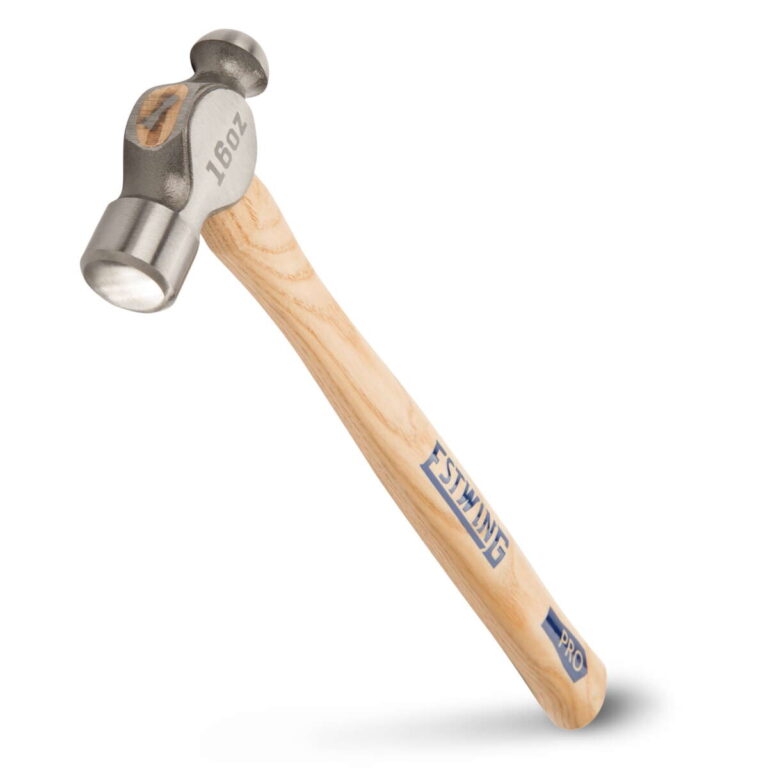
- A machinist’s hammer
- A cross-peen hammer
- A club hammer
- A dead-blow hammer
- A sledgehammer
A sledgehammer usually has a long handle and a broad, flat striking face. A blacksmith’s hammer may be just as heavy but may have a peen, a shaped face, or a shorter handle for forging work.
This distinction matters because the head shape controls how force reaches the work. A flat sledgehammer face spreads impact across a broad area. A peen concentrates force along a narrow line.
Why Handle Length Matters
Handle length affects swing speed, control, reach, and user fatigue.
A longer handle can create more head speed. In simple terms, the head travels through a larger arc before impact. That can increase the energy delivered to the work, but it also makes the tool harder to control.
A shorter sledgehammer may be better when:
- Space is limited
- The work is close to the ground
- The user needs more control
- The target is small
- A full swing is not safe
A longer sledgehammer may help when:
- The user needs more reach
- The target requires strong impact
- There is room for a safe swing
- The user can control the tool with both hands
More length is not always better. A tool that is too heavy or too long can cause poor swings, missed targets, and loss of balance.
What Materials Are Used in Sledgehammers?
The head is usually forged steel. The handle may be wood, fiberglass, or a composite material.
Hickory handles
Hickory has long been used for striking tools because it can absorb some shock and flex under load. A wood handle can be replaced if the head remains in good condition.
Inspect a wood handle for:
- Cracks
- Soft spots
- Splits
- Loose fit
- Severe dents
- Signs of drying or rot
Fiberglass and composite handles
Fiberglass handles resist moisture and do not split in the same way as wood. Many include a shock-absorbing grip or sleeve.
A fiberglass handle still needs inspection. Look for exposed fibers, deep cuts, swelling, looseness, or damage near the head.
Steel handles
Steel-shaft hammers can be strong, but they may transmit more vibration to the user. A steel handle may also be difficult or impossible to replace in the same way as a wood handle.
The handle material does not decide whether the tool is a sledgehammer. It affects comfort, maintenance, vibration, and service life.
How to Tell if a Hammer Is Safe to Use
A sledgehammer should be removed from service when the head, handle, or striking face is damaged.
Before use, check the following:
- Head security: Make sure the head does not move on the handle.
- Handle condition: Look for cracks, splits, deep cuts, and bends.
- Striking face: Check for chips, severe mushrooming, or large raised edges.
- Grip: Make sure the grip is clean and not excessively worn.
- Balance: Hold the tool in a safe position and check for unusual looseness.
- Work area: Remove people and objects from the swing path.
A loose head is a serious warning sign. Do not try to solve the problem with tape, glue, or a makeshift wedge. Replace the handle or have the tool repaired using the correct parts and method.
“Mushrooming” occurs when the edge of a striking face spreads outward after repeated impact. That raised metal can break off during use. A damaged face should be repaired by a qualified tool service or replaced when repair is not suitable.
The U.S. Occupational Safety and Health Administration requires employers to maintain hand tools in safe condition under its hand-tool rules, including 29 CFR 1926.301 for construction work. OSHA rules do not create one universal definition of a sledgehammer, but they support the basic safety principle: damaged striking tools should not remain in service.
How to Use a Sledgehammer Safely
Use a sledgehammer only when the target, tool, and work area are suitable for high-impact force.
Wear safety glasses or a face shield when chips, dust, or fragments may be produced. Use hearing protection in loud areas. Gloves may improve grip, but they do not replace good control or safe distance.
Follow these practices:
- Use both hands for a long-handled sledgehammer.
- Stand with stable footing.
- Keep other people outside the swing and rebound zone.
- Check behind and above the target before swinging.
- Let the tool do the work instead of forcing an awkward swing.
- Strike the target squarely.
- Stop if the head loosens or the handle changes shape.
- Keep the striking face away from people and fragile surfaces.
Do not strike hardened steel with a regular hardened hammer unless the tool and procedure are designed for that purpose. The impact can cause chips or fragments to fly. A manufacturer’s instructions or a workplace safety procedure should control specialized work such as metal forging, demolition near utilities, or striking punches and chisels.
Never use a sledgehammer near buried gas lines, electrical lines, water pipes, or other hidden services until the area has been checked. In the United States, the proper utility-locating process depends on the state and job site. Call 811 before digging or driving stakes where underground utilities may be present.
Does a Sledgehammer Need Two Flat Faces?
No. Two flat faces are common, but they are not an absolute requirement.
Some sledgehammer-style tools have:
- One striking face and one wedge
- A slightly rounded face
- Different face sizes
- A specialized head for rail, masonry, or metal work
A tool with a wedge end may be a splitting maul, wedge hammer, or specialty demolition tool rather than a standard sledgehammer. The key question is the tool’s intended function.
For general use, two flat faces make the tool versatile. For a specialized task, the head shape may be more important than the word printed on the package.
Can a Regular Hammer Become a Sledgehammer?
Usually, no. Adding a longer handle to a regular hammer does not automatically make it a sledgehammer.
A regular hammer head may not be designed for the higher force created by a longer handle. Its eye, face, handle connection, and balance may fail under that load. Modifying a hammer can also remove safety features or create an unpredictable tool.
Use a tool designed for the force of the job. If a light hammer is not working, move to a club hammer, mini sledgehammer, or full-size sledgehammer based on the target and available space.
Do not use a claw hammer for heavy demolition. Its narrow face and claw are not intended for the same impact pattern as a sledgehammer.
A Simple Test for Identifying a Sledgehammer
When the label is unclear, use this practical test:
Step 1: Examine the head
Look for a heavy steel head with a broad striking face. A blade, claw, peen, or soft face suggests another hammer type.
Step 2: Check the handle
A handle made for a two-handed swing points toward a sledgehammer. A very short handle points toward a club or drilling hammer.
Step 3: Consider the intended work
If the tool is meant to break, drive, or deliver powerful direct blows, it likely functions as a sledgehammer.
Step 4: Check the manufacturer’s description
The maker’s product name and instructions can clarify whether the tool is a mini sledgehammer, club hammer, maul, or specialty hammer.
Step 5: Do not rely on weight alone
A heavy tool can belong to another class. Head shape and intended use complete the identification.
Common Mistakes When Choosing a Sledgehammer
The most common mistake is choosing the heaviest tool available. A heavier head may deliver more force, but it can also reduce control and cause faster fatigue.
Other mistakes include:
- Choosing a handle that is too long for the work area
- Using a damaged hammer because the defect looks small
- Striking hardened steel with an unsuitable face
- Using a sledgehammer on finished or fragile surfaces
- Confusing a splitting maul with a flat-faced sledgehammer
- Ignoring overhead hazards and nearby workers
- Holding a long sledgehammer with one hand
- Using a sledgehammer to strike an unapproved punch or chisel
Choose the smallest tool that can complete the job with controlled swings. This usually gives better accuracy and less strain than using an oversized hammer.
Frequently Asked Questions
What is the smallest hammer that can be called a sledgehammer?
There is no fixed minimum size. A 2-pound mini sledgehammer is commonly sold in the United States, but some manufacturers use different names for tools in the same size range.
Is a 4-pound hammer a sledgehammer?
It can be. A 4-pound hammer with a heavy steel head, impact faces, and a short or medium handle may be sold as a mini sledgehammer, club hammer, or drilling hammer. The design and intended use matter more than the number alone.
Is a sledgehammer stronger than a regular hammer?
A sledgehammer can deliver more impact because it usually has a heavier head and longer handle. That does not make it suitable for every job. Its extra force can damage parts, surfaces, or the tool itself when used incorrectly.
Can you use a sledgehammer to drive a chisel?
Only when the chisel is designed for sledgehammer impact and the work method allows it. Do not strike a hand-held chisel with a large sledgehammer. Use a proper holder, guard, or approved setup when required.
How long does a sledgehammer last?
Service life depends on use, storage, head condition, handle material, and maintenance. A sledgehammer can last for many years when the head stays tight and the handle remains sound. Replace or repair it when cracks, looseness, severe mushrooming, or other damage appears.
Conclusion
A hammer qualifies as a sledgehammer mainly through its heavy striking head, impact-focused design, durable handle, and intended use for powerful blows. There is no single U.S. rule that sets one required weight or handle length.
The most useful distinction is practical: a sledgehammer is built for controlled, high-force impact. To identify one, look at the entire tool rather than its weight alone. Choose a size that matches the work, inspect it before every use, and stop using it if the head, face, or handle is damaged.
For a basic decision, select a mini sledgehammer for tight spaces and lighter work, and a full-size sledgehammer only when the target and work area can safely handle its greater force.
Recent Tool Guides
 Hammer
How To Hammer Flowers Onto Paper: Easy Guide
Learn how to hammer flowers onto paper with simple steps, helpful tips, and beautiful results for...
Read Guide → Wrench
How To Use A Hex Wrench: Easy Step-By-Step Guide
Learn how to use a hex wrench correctly with simple steps, helpful tips, and common mistakes...
Read Guide → Hacksaw
How To Cut Curtain Pole With Hacksaw: Easy Guide
Learn how to cut curtain pole with hacksaw safely and neatly. Follow simple steps for accurate...
Read Guide → Wrench
How To Use A Husky Torque Wrench: Easy Guide
Learn how to use a Husky torque wrench correctly with simple steps, torque settings, and safety...
Read Guide → Hammer
How To Hold A Hammer: Safe Grip Guide
Learn how to hold a hammer with the right grip, stance, and technique for safer, more...
Read Guide → Hacksaw
How To Cut Flexible Metal Conduit With Hacksaw: Easy Guide
Learn how to cut flexible metal conduit with hacksaw safely and cleanly. Follow simple steps for...
Read Guide →