

Yes, a second-hand Snap-on tool may still receive warranty service, but you should not assume that every used tool is covered. The result depends on the tool type, the reason for the claim, its condition, and Snap-on’s current U.S. warranty terms.
Many Snap-on hand tools are known for strong warranty support. However, a warranty is not always the same as a transferable lifetime promise. Some warranties apply only to the original buyer. Others cover defects but exclude misuse, normal wear, altered tools, missing parts, or certain electronic products.
Before buying a used Snap-on tool, identify the exact model, check its condition, and ask an authorized Snap-on representative whether the tool qualifies for service.

How the Snap-On Warranty Usually Works
Snap-on warranty coverage is based on the product and the problem, not simply on the Snap-on name stamped on the tool.
Snap-on sells several broad types of products:
- Hand tools, such as ratchets, sockets, wrenches, and screwdrivers
- Power tools, such as cordless impacts and grinders
- Diagnostic equipment
- Tool storage
- Specialty equipment
- Tool accessories and replacement parts
Each group can have different warranty rules. A used ratchet may receive different treatment from a used scan tool or cordless battery.
Hand tools
Snap-on hand tools often have extensive warranty coverage for defects in material or workmanship. Some tools may be repaired or replaced when they fail during normal use.
That does not mean every used hand tool has an automatic warranty. The current warranty document controls the claim. It may also define whether the warranty belongs to the original purchaser or follows the product.
Power tools and batteries
Power tools often have a limited warranty period. Batteries, chargers, switches, motors, and electronic controls may have separate coverage terms.
A second-hand cordless impact that is several years old may be outside its warranty period even if the tool looks nearly new. A battery may also be treated as a separate product.
Diagnostic tools and electronic products
Diagnostic equipment usually has more limits than basic hand tools. Coverage may depend on:
- The model and serial number
- The purchase date
- Software or subscription status
- Physical damage
- Battery condition
- Repair history
- Whether the product was registered
- Whether the unit was sold through an approved channel
A used diagnostic tool may still be serviceable, but service is not the same as warranty replacement.
Tool storage and equipment
Tool chests, carts, lifts, and other large products can have separate parts and labor terms. Damage from moving, overloading, improper installation, or commercial transport may not qualify.
The key point is simple: “Snap-on warranty” is not one universal policy for every product.

Is a Snap-On Warranty Transferable to a Second Owner?
A warranty may not transfer automatically when a Snap-on tool changes hands.
The most reliable way to answer this question is to check the warranty terms for the exact product. Look for language such as:
- “Original purchaser”
- “Non-transferable”
- “Proof of purchase required”
- “Authorized dealer”
- “Defects in material and workmanship”
- “Normal wear and tear”
- “Limited warranty period”
If the terms require the original purchaser, a private buyer may have difficulty making a warranty claim. Snap-on may still offer repair, replacement, or goodwill service in some cases, but that is not the same as a guaranteed warranty right.
Why ownership history matters
A manufacturer may need to confirm:
- When the tool was sold
- Who bought it
- Whether it came from an authorized seller
- Whether the tool was repaired or modified
- Whether the failure matches a covered defect
A used tool with no receipt may still be identifiable by its model or serial number. However, the lack of purchase records can make coverage harder to confirm.
Does a lifetime warranty mean the tool is covered forever?
Not always.
“Lifetime” usually refers to the expected useful life of the product or the period stated in the warranty terms. It generally does not cover every failure for every owner under every condition.
For example, a warranty may exclude:
- Abuse
- Accidental damage
- Rust caused by poor storage
- Normal wear
- Alterations
- Incorrect repairs
- Use beyond the tool’s rating
- Lost or worn consumable parts
A lifetime warranty is valuable, but it is not a promise that Snap-on will replace any used tool without review.

What Happens When You Make a Warranty Claim on a Used Tool?
Start with the authorized Snap-on channel that serves your area. In the United States, that may be a Snap-on franchisee, an authorized service location, or Snap-on customer support.
Use this process:
1. Identify the exact tool
Record the following details:
- Brand and model number
- Serial number, if present
- Tool category
- Approximate purchase date
- Where you bought it
- The seller’s name
- The failure or defect
- Any previous repair
Take clear photos of the tool, markings, damage, and failed part.
2. Check the official warranty terms
Use Snap-on’s current U.S. warranty information and the product manual. Do not rely only on a seller’s statement that the tool has a “lifetime warranty.”
The official Snap-on website is the best starting point:
The website structure and warranty documents can change. If a page has moved, contact Snap-on through its current U.S. customer-care page.
3. Contact an authorized Snap-on representative
Explain that you are the second owner. Give the representative the model number and a clear description of the failure.
Ask these direct questions:
- Is this model still covered?
- Does the warranty apply to a second owner?
- Is proof of purchase required?
- Can the local franchisee inspect it?
- Will Snap-on repair, replace, or charge for service?
- Are shipping or inspection fees possible?
- Is the replacement covered by a new or remaining warranty?
4. Do not repair or modify the tool first
Avoid drilling, welding, grinding, opening sealed electronics, or fitting non-original parts before Snap-on reviews the claim.
An alteration can make it harder to prove that the failure resulted from a covered defect. It may also remove the product from warranty coverage.
5. Follow the inspection result
Snap-on may decide to:
- Replace the tool
- Repair the tool
- Replace one component
- Offer paid service
- Decline the claim
- Refer you to another service channel
The decision can vary by product and failure type. Keep any written response, repair order, or case number.
Which Used Snap-On Tools Are Safer Buys?
A used Snap-on tool is usually a better warranty prospect when it is a simple hand tool with clear markings and no signs of modification.
| Used tool type | Typical warranty concern | What to check before buying |
|---|---|---|
| Sockets | Cracks, spread walls, altered drive size | Inspect the drive end and markings |
| Combination wrenches | Bent jaws, grinding, excessive wear | Check that the jaws meet evenly |
| Screwdrivers | Broken tips, chipped handles, altered tips | Look for grinding or impact damage |
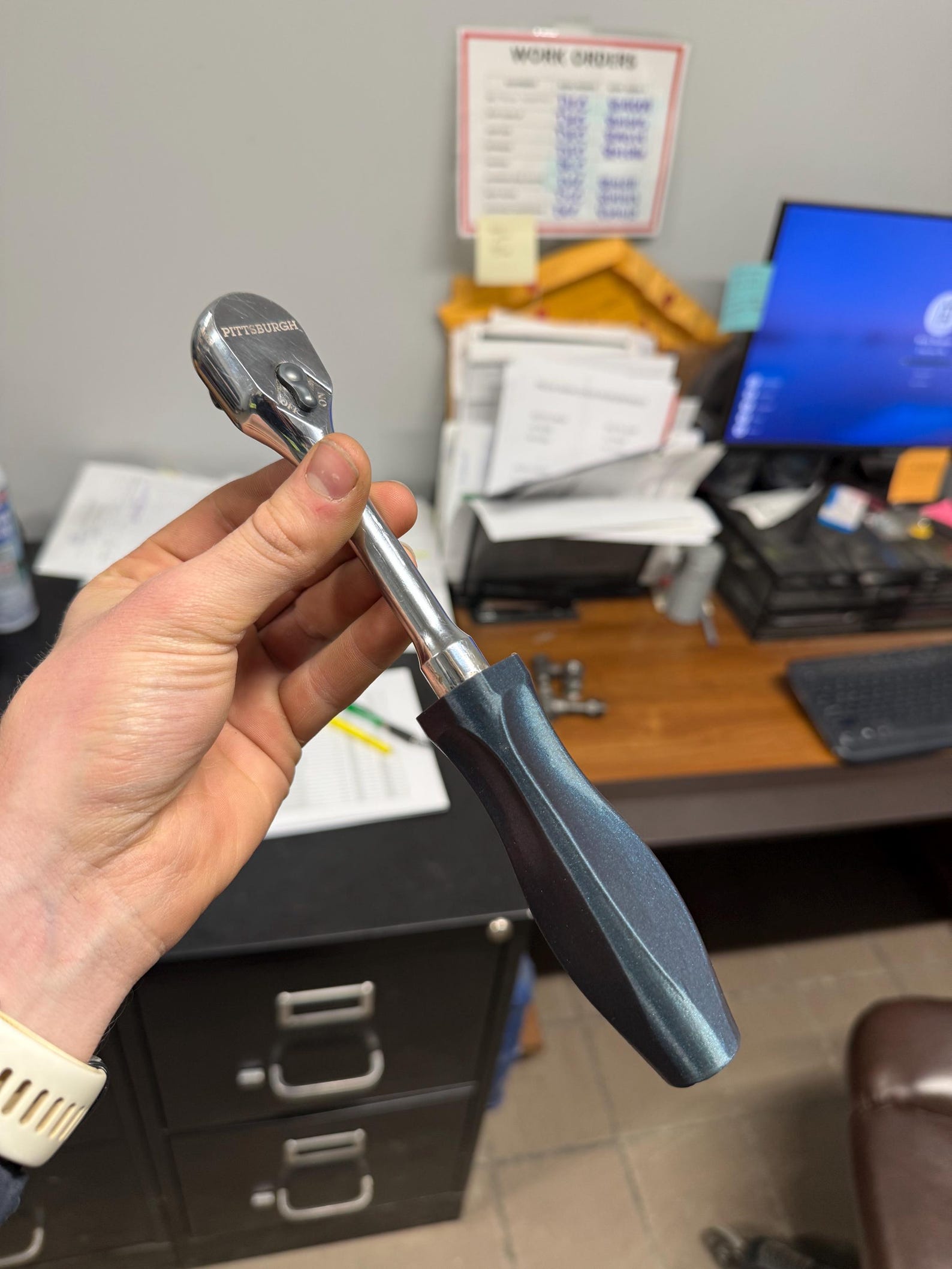
| Ratchets | Worn gears, missing parts, damaged head | Test direction change and smooth operation |
| Pliers | Loose joints, damaged cutters, corrosion | Check pivot movement and cutting edges |
| Cordless impacts | Battery age, motor failure, abuse | Test under load and inspect battery |
| Scan tools | Software, battery, subscription, display | Confirm model, updates, and service status |
| Tool chests | Slides, locks, casters, structural damage | Inspect every drawer and frame joint |
This table is a buying guide, not a guarantee of coverage. The warranty terms for the exact model remain controlling.
Hand tools with visible warranty problems
Be cautious when you see:
- A ratchet head that has been welded
- A wrench with ground-down jaws
- A screwdriver used as a punch
- A socket with a rounded or enlarged drive
- A tool with deep grinding marks
- A handle replaced with an unapproved part
- Heavy rust that affects function
- A missing model number
- A tool sold as “warranty only” with no inspection allowed
These signs suggest misuse, modification, or an attempt to pass a damaged tool to the next buyer.
A simple value calculation
Suppose a used hand tool costs $80, but a new replacement costs $150. The possible savings are:
$150 − $80 = $70
That $70 is only a real saving if the used tool works and the warranty risk is acceptable. If a warranty claim fails and paid repair costs $40, your effective cost becomes:
$80 + $40 = $120
You would then save only $30, before shipping, travel, or lost work time.
For a high-use tool, buying from a seller who allows testing may matter more than buying at the lowest price.

Common Reasons Snap-On May Deny a Warranty Claim
A claim may be denied when the problem is caused by misuse rather than a manufacturing defect.
Common examples include:
- Using a hand ratchet with an impact gun
- Applying a cheater bar beyond the tool’s intended use
- Striking a non-striking tool with a hammer
- Using the wrong socket for an impact application
- Overloading a torque wrench
- Using a screwdriver as a pry bar
- Modifying a tool
- Replacing parts with unsuitable components
- Dropping or crushing electronic equipment
- Exposing tools to chemicals or water
- Failing to maintain or store the product properly
- Claiming normal wear as a manufacturing defect
A tool can fail during normal work and still be outside warranty if it has reached the end of its normal service life. Wear on teeth, tips, cutting edges, batteries, and moving parts may not be treated the same as a sudden material defect.
Safety boundary
Do not keep using a cracked socket, damaged ratchet, split wrench, swollen battery, frayed power cord, or tool that slips under load. A warranty question is not worth an injury.
Remove the tool from service, label it as defective, and ask Snap-on or a qualified repair provider how to proceed.

How to Buy Second-Hand Snap-On Tools With Less Risk
The safest approach is to verify the tool before money changes hands.
Ask the seller for proof
Request:
- A receipt, if available
- The model and serial number
- A clear statement of the known defect
- The tool’s repair history
- Photos of all sides
- Confirmation that the tool was not modified
A seller who refuses to provide basic identification may be offering a tool that cannot be verified.
Test the tool correctly
Use the tool for its intended purpose. Do not test a ratchet by forcing it beyond its rating. Do not test a torque wrench without a suitable method and a known reference.
For a ratchet, check:
- Direction selector movement
- Gear engagement
- Head looseness
- Handle cracks
- Smooth operation
For a socket, check:
- Correct drive size
- Cracks
- Deformed walls
- Worn markings
- Damage inside the drive
For a cordless tool, check:
- Battery fit
- Trigger operation
- Unusual noise
- Heat
- Chuck or drive condition
- Charger compatibility
- Battery swelling or damage
Ask Snap-on before buying
If warranty coverage is a major reason for the purchase, contact Snap-on before completing the sale. Give the representative the exact model and serial number.
A seller’s promise is not a substitute for written confirmation from the manufacturer. If Snap-on cannot confirm coverage, price the item as an out-of-warranty used tool.
Prefer a return option
A short return period gives you time to inspect the tool. This is especially useful for electronic tools, torque tools, and cordless equipment.
A “no returns” sale transfers nearly all risk to the buyer. The lower price should reflect that risk.
Second-Hand Snap-On Warranty: Quick Decision Guide
Use this guide before you buy:
- Simple hand tool, good condition, modest price: Often a reasonable used purchase, even if warranty status is uncertain.
- High-priced ratchet or specialty tool: Confirm coverage and replacement cost first.
- Cordless tool with an old battery: Treat the battery as a separate possible expense.
- Diagnostic tool: Verify software, subscriptions, updates, battery health, and service support.
- Modified or heavily damaged tool: Assume warranty coverage may be refused.
- Tool with no model or serial marking: Buy only if the price makes sense without warranty support.
- Seller claims “lifetime warranty” but offers no details: Verify the claim with Snap-on before paying.
- Tool needed for daily professional work: Consider downtime, paid repair, and replacement availability.
The best used-tool purchase is not always the cheapest one. It is the one whose condition, price, and warranty risk are clear.
FAQs
Will Snap-on replace a used ratchet?
It may, if the ratchet has a covered defect and meets the applicable warranty terms. Snap-on may ask for an inspection, model information, or proof of purchase. A modified, abused, or heavily worn ratchet may not qualify.
Can I get Snap-on warranty service without a receipt?
Possibly. The answer depends on the product and the warranty rules. A model number, serial number, and inspection may help, but the absence of a receipt can make ownership and warranty dates harder to verify.
Does Snap-on warranty cover tools bought on eBay or Facebook Marketplace?
The sale channel does not automatically prove warranty coverage. The tool may be genuine, but coverage can depend on the original purchase, seller status, model, condition, and transfer rules. Verify the tool with Snap-on before buying.
Are Snap-on batteries covered like Snap-on hand tools?
Usually, batteries and hand tools should not be assumed to have identical coverage. Batteries are wear items and may have separate terms or time limits. Check the battery model and its warranty information.
What should I do if a Snap-on dealer refuses my warranty claim?
Ask why the claim was declined and request the applicable warranty condition. Gather the model number, photos, purchase information, and any service record. You can then contact Snap-on U.S. customer care for a second review.
Is a used Snap-on tool still worth buying without a warranty?
It can be, if the tool is in good condition and the price reflects the risk. Compare the used price with the cost of a new tool, likely repair charges, shipping, and the value of your work time.
Key Takeaways
- A second-hand Snap-on tool may receive warranty service, but coverage is not automatic.
- The exact model and current U.S. warranty terms control the result.
- Hand tools, power tools, batteries, diagnostic products, and storage equipment may have different rules.
- A lifetime warranty does not necessarily mean unlimited coverage for every owner.
- Do not modify or repair the tool before asking Snap-on to inspect it.
- Verify coverage with an authorized Snap-on representative before paying a premium for a used tool.
- If coverage cannot be confirmed, value the tool as an out-of-warranty purchase.
Conclusion
Snap-on’s reputation for tool support makes used tools attractive, but a second-hand buyer should separate possible warranty service from guaranteed transferable coverage.
For a used hand tool, inspect the tool, confirm the model, and contact Snap-on if warranty protection affects the price. For electronic, battery-powered, diagnostic, and specialty equipment, verify coverage before buying because the risks and warranty limits can be greater.
Your next step is to record the tool’s model and serial number, then ask Snap-on U.S. customer care or an authorized franchisee whether that exact product is eligible for service.
