What Size Torque Wrench Should I Get: Find The Right Fit
For most car owners in the United States, a 1/2-inch-drive torque wrench with a range of about 30 to 250 lb-ft is the best first choice. It covers many common jobs, including wheel lug nuts, brake work, suspension fasteners, and engine repairs.
But the right torque wrench is not chosen by drive size alone. You must also match its torque range to the specification in your vehicle, equipment, or repair manual. A wrench that is too large, too small, or used outside its rated range may give poor results or damage a fastener.
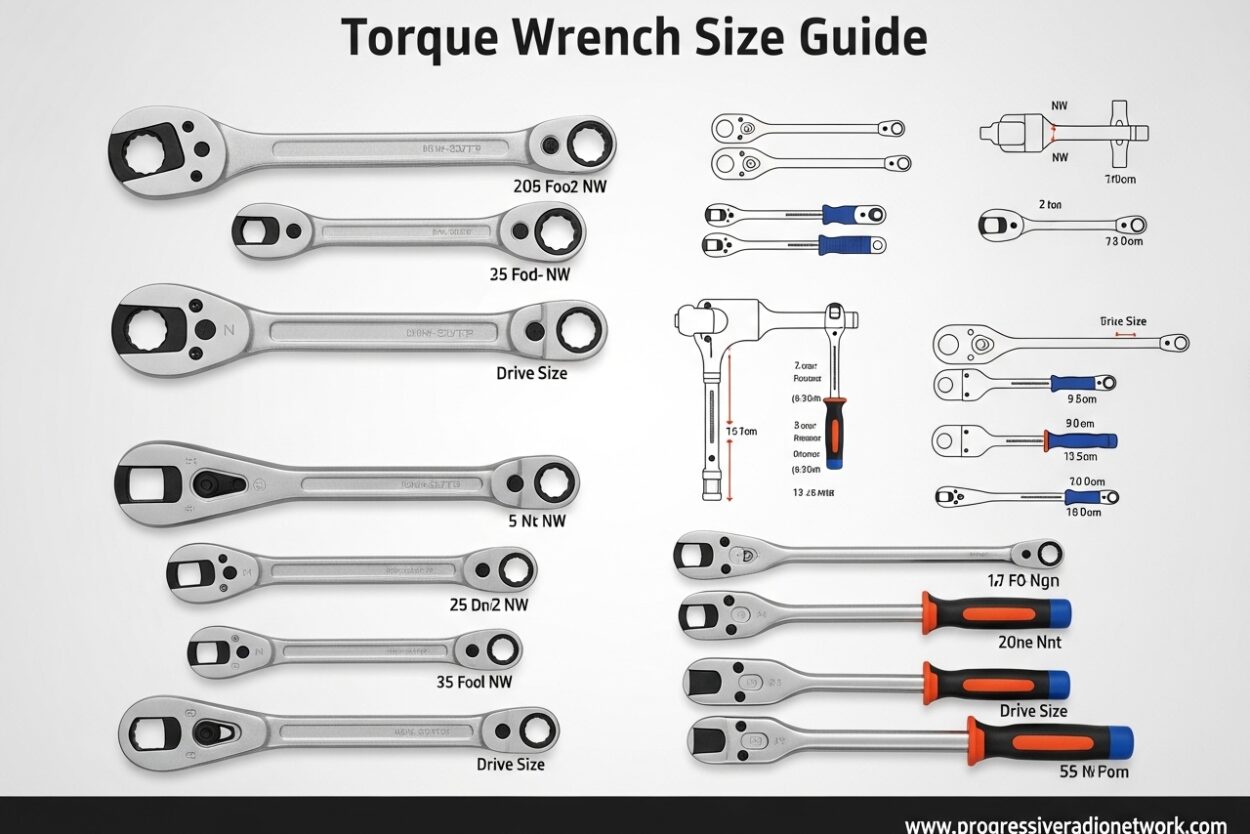
Quick answer: Which torque wrench size is right for you?
Choose the wrench based on the torque values you need most often:
| Main use | Useful torque range | Common drive size |
|---|---|---|
| Bicycles, small engines, electronics | 10–100 in-lb | 1/4 inch |
| Motorcycles, cars, light repair | 10–100 ft-lb | 3/8 inch |
| Wheel lug nuts and general automotive work | 30–250 ft-lb | 1/2 inch |
| Large trucks, farm equipment, heavy machinery | 100–600+ ft-lb | 3/4 inch or larger |
These ranges are examples, not universal rules. Torque wrench models vary, so check the tool’s published range before buying.
For many American home garages, the most useful setup is:
- A 1/2-inch-drive wrench for lug nuts and high-torque fasteners.
- A 3/8-inch-drive wrench for engine, brake, motorcycle, and general repair work.
- A 1/4-inch-drive inch-pound wrench for bicycles, small fasteners, and delicate parts.
If you can buy only one, choose the wrench that covers your most important job without forcing you to use it near the bottom or top of its range.
Drive size and torque range are not the same thing
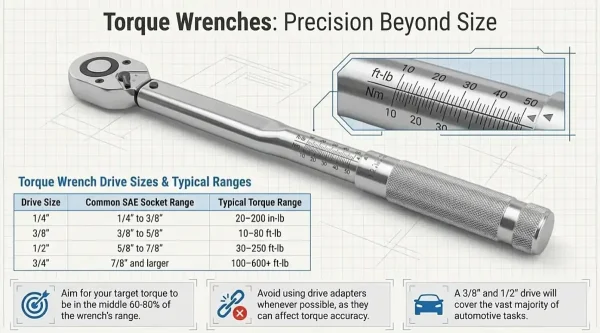
The drive size describes the square fitting that connects the torque wrench to a socket. Common sizes are 1/4 inch, 3/8 inch, 1/2 inch, and 3/4 inch.
The torque range tells you how much turning force the wrench can measure. A 3/8-inch wrench may cover 10 to 80 lb-ft, while another 3/8-inch wrench may cover a different range.
This means a larger drive does not automatically mean a more accurate wrench. It mainly affects:
- The torque range the tool can handle
- The socket size it accepts
- The physical strength of the tool
- How easy it is to use in tight spaces
A socket adapter can change the drive size. For example, you can use a 3/8-inch socket on a 1/2-inch torque wrench with an adapter. However, an adapter does not change the wrench’s torque range or make it suitable for low-torque work.
Inch-pounds versus foot-pounds
Low-torque work is often listed in inch-pounds, written as in-lb or lb-in. Automotive work is more often listed in foot-pounds, written as lb-ft or ft-lb.
The conversion is:
- 12 in-lb = 1 lb-ft
- 1 lb-ft = 12 in-lb
For example, 60 in-lb equals 5 lb-ft. Do not confuse 60 in-lb with 60 lb-ft. That mistake can apply 12 times the intended torque.
Some manuals use newton-meters, or Nm. Use the conversion shown in the manual or the scale on your wrench. Do not guess when the value is safety-related.

How to choose the correct torque range
start with the manufacturer’s torque specification. Look in the vehicle owner’s manual, factory service manual, equipment manual, or official repair information.
Then choose a wrench whose working range includes that value comfortably. Avoid selecting a wrench that reaches the specification only at the very bottom or very top of its scale.
For example:
- A 15 lb-ft specification is a poor match for a wrench rated from 50 to 250 lb-ft.
- A 100 lb-ft specification fits well within many 1/2-inch automotive wrenches.
- A 1,200 in-lb specification equals 100 lb-ft, so a wrench marked only in inch-pounds may still work if its range supports that value.
A useful buying rule is to keep common torque values away from the ends of the wrench’s range. Many click-type torque wrenches provide their stated accuracy over a defined part of the scale, often near the middle. The exact limit depends on the manufacturer and standard.
A simple selection method
- List the torque values you expect to use.
- Convert them all to the same unit.
- Find the lowest and highest values.
- Select a wrench that covers those values with room on both ends.
- Confirm that the wrench’s accuracy specification applies to those values.
- Check that the drive size accepts the sockets you need.
Do not buy a 1/2-inch wrench just because it looks stronger if most of your work calls for 10 to 25 lb-ft. A smaller wrench may give better control and a clearer scale for that job.
What size torque wrench do I need for car lug nuts?
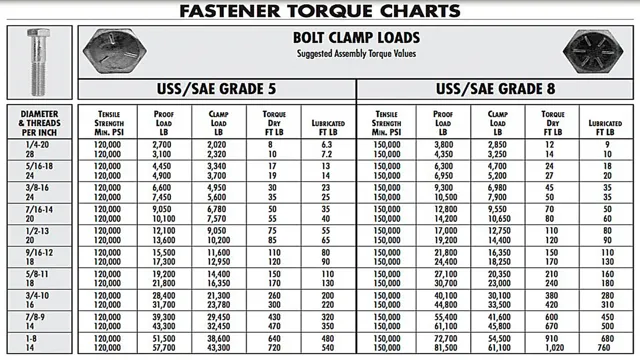
For most passenger cars, crossovers, and light trucks in the United States, a 1/2-inch-drive torque wrench is usually the most practical choice for wheel lug nuts.
Many lug nut specifications fall somewhere around 70 to 150 lb-ft, but the correct value depends on the vehicle. Always use the specification in the owner’s manual or the vehicle maker’s service information.
A suitable wrench should:
- Reach the required lug nut torque
- Use the correct socket size
- Have enough handle length for controlled use
- Be rated for the required torque
- Fit between the wheel and surrounding parts when needed
A 3/8-inch wrench may work if its range includes the lug nut specification. However, a 1/2-inch wrench is often more useful for wheel work because it commonly offers a higher torque range and accepts common impact-socket sizes.
Safe lug nut procedure
- Clean the wheel’s hub and mounting surface.
- Install the wheel and start each lug nut by hand.
- Tighten the nuts in a crisscross or star pattern.
- Lower the vehicle until the tire cannot spin freely.
- Set the torque wrench to the specified value.
- Pull smoothly until the wrench signals that the setting has been reached.
- Recheck the pattern if the vehicle maker calls for it.
Do not lubricate wheel studs unless the vehicle manufacturer specifically permits it. Oil or anti-seize can change the friction between the threads and cause more clamping force than intended at the same torque setting.
Do not use a torque wrench to loosen stubborn lug nuts. Use a breaker bar first, then use the torque wrench for final tightening.
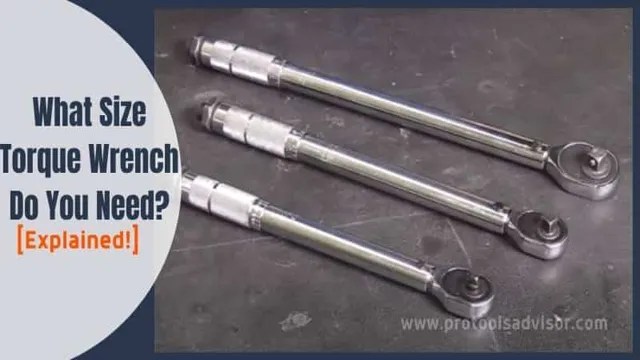
What size torque wrench is best for general automotive work?
A 3/8-inch-drive torque wrench is a strong choice for many engine and repair jobs. It is often easier to handle than a 1/2-inch model and can fit into tighter spaces.
Use a 3/8-inch wrench for jobs such as:
- Intake and exhaust components, when the specification fits
- Brake caliper and bracket bolts, when specified
- Valve cover fasteners
- Spark plugs, if the wrench range and socket fit
- Motorcycle fasteners
- Small suspension and engine hardware
A 3/8-inch wrench is not automatically better for every automotive job. If the required value is above its range, use a 1/2-inch wrench. If the required value is very low, use an inch-pound wrench designed for that range.
Many automotive repairs need more than one torque wrench because specifications can vary widely. An engine may contain fasteners measured in inch-pounds, while wheel and suspension fasteners may require more than 100 lb-ft.
What size torque wrench is best for bicycles?
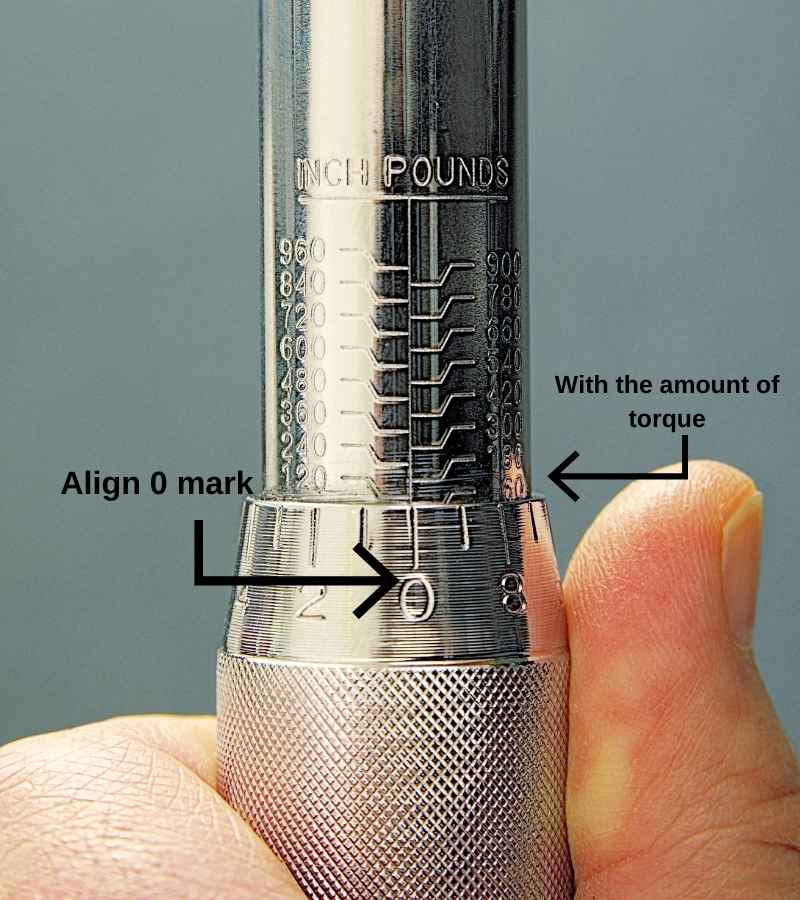
For bicycles, use a 1/4-inch-drive torque wrench measured in inch-pounds or newton-meters. A common useful range is about 20 to 100 in-lb, though the best range depends on the bicycle and its parts.
Bicycle components can be damaged by excess torque. This is especially true for:
- Carbon-fiber handlebars
- Seatposts
- Stem clamps
- Brake levers
- Derailleurs
- Small aluminum bolts
Use the torque value printed on the component, supplied by the manufacturer, or listed in the bicycle service instructions. If the component says “5 Nm,” make sure your wrench can measure 5 Nm accurately.
A large automotive wrench is a poor choice for bicycle work. Its scale may be difficult to read at low values, and its lowest setting may still be too high for delicate parts.
What size torque wrench is best for motorcycles?
Most motorcycle owners will benefit from two torque wrenches:
- A 1/4-inch or small 3/8-inch wrench for low-torque controls, covers, and small fasteners
- A 3/8-inch or 1/2-inch wrench for axles, brake parts, suspension parts, and other higher-torque fasteners
Motorcycle torque specifications vary greatly by model and component. A handlebar clamp may require a low setting, while an axle nut may require much more torque.
Use the factory service manual for the exact value and tightening order. Some parts require a special method, such as tightening in stages, using an angle after a torque setting, or measuring axle alignment separately.

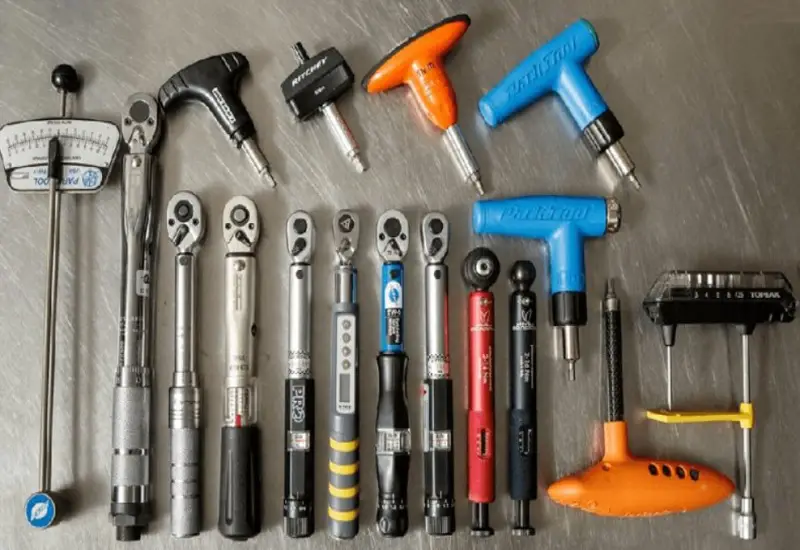
Should I buy a click, digital, or beam torque wrench?
The torque range and accuracy matter more than the display type. Each design has practical strengths.
Click-type torque wrench
A click wrench is the most common choice for home mechanics. You set the desired value, apply force, and stop when the wrench clicks.
Advantages include:
- Simple operation
- Wide availability
- Easy use in a garage
- No batteries on most models
Limitations include:
- It must be reset after use if the manual requires it
- The scale can be hard to read
- It can lose accuracy if dropped or misused
- You must stop pulling after the click
Digital torque wrench
A digital wrench shows the torque value on a screen and may provide an audible or visual alert.
Advantages include:
- Clear readings
- Easy unit conversion
- Useful for changing torque values
- Some models support torque-angle measurements
Limitations include:
- Battery dependence
- Higher cost
- More electronic parts to protect
- The need to follow the calibration and storage instructions
Beam-type torque wrench
A beam wrench uses a pointer and scale. It does not usually need to be “stored” at a low setting because it has no loaded spring mechanism like many click wrenches.
Advantages include:
- Simple design
- No battery
- Useful for learning how torque is measured
- Often lower cost
Limitations include:
- The scale must remain visible while you pull
- It can be awkward in tight spaces
- The handle must be held at the correct point
- It may be less convenient for wheel work
For most people, a good click wrench is the simplest starting point. Pick the type that lets you read the setting, apply force smoothly, and follow the manufacturer’s instructions.
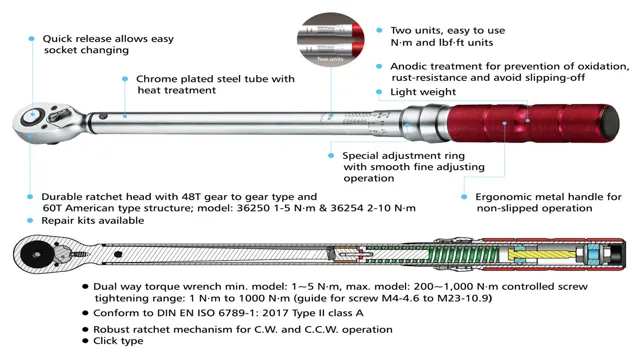
Does a longer torque wrench give more torque?
A longer handle gives you more leverage, but it does not automatically make the wrench more accurate.
Torque is calculated as:
Torque = force × distance
If you apply 20 pounds of force at the end of a 1-foot handle, the result is about 20 lb-ft of torque. A longer handle can reach a higher torque value with less hand force.
Do not add a pipe, breaker bar, or other extension to a torque wrench handle unless the manufacturer specifically approves it. The added leverage can overload the tool or change the force applied to the mechanism.
Socket extensions usually do not change the torque setting when they remain straight with the drive. However, a crowfoot wrench or other offset attachment can change the effective lever length. Follow the tool maker’s instructions or use the appropriate correction formula.

Common torque wrench mistakes to avoid
Using the wrong unit
Confirm whether the manual says in-lb, lb-ft, or Nm. Unit errors are common and can cause broken fasteners or loose joints.
Choosing a wrench by drive size alone
A 1/2-inch drive does not tell you whether the wrench works for a 15 lb-ft fastener. Always check the rated torque range.
Using a torque wrench to break fasteners loose
Breaking loose a seized fastener can exceed the wrench’s design limits. Use a breaker bar or suitable impact tool instead.
Pulling past the click
A click-type wrench signals that the target torque has been reached. Continuing to pull can apply more torque than intended.
Holding the wrong part of the handle
Use the grip point marked by the manufacturer. Holding the wrench near the head or adding force outside the intended grip can affect the result.
Ignoring thread condition
Rust, dirt, damaged threads, oil, and anti-seize can change the relationship between torque and clamping force. Follow the repair manual’s instructions about cleaning and lubrication.
Failing to check calibration
Torque wrenches can become inaccurate after a drop, overload, or long period of use. Many manufacturers recommend periodic calibration. For critical work, use a calibration service that can document the result.
Using the wrench outside its rated range
Never set a wrench below its minimum or above its maximum value. Choose another wrench when the specification falls outside the tool’s range.
How should I store and care for a torque wrench?
Follow the specific storage instructions supplied with your wrench. For many adjustable click-type wrenches, the manufacturer recommends returning the setting to the lowest marked value after use. Do not force the setting below the minimum.
Good care includes:
- Keep the tool clean and dry.
- Store it in its case when possible.
- Avoid dropping it.
- Do not use it as a ratchet or breaker bar.
- Do not add a cheater pipe.
- Check the mechanism if it has been overloaded.
- Have it calibrated according to the manufacturer’s schedule or after suspected damage.
Do not assume that a new torque wrench is perfect for every job. Read its accuracy statement, operating range, direction of use, and calibration guidance before relying on it for critical fasteners.
A practical buying guide
Use this short decision path:
Choose a 1/4-inch wrench if:
- Your work involves bicycles or small machinery.
- Most specifications are below 10 lb-ft.
- You need inch-pound accuracy.
- You work with small aluminum or carbon-fiber parts.
Choose a 3/8-inch wrench if:
- You perform general engine or motorcycle repairs.
- Your common specifications range from about 10 to 80 lb-ft.
- You need a tool that fits in tighter spaces.
- You want a useful second wrench for automotive work.
Choose a 1/2-inch wrench if:
- You need to tighten car or truck wheel lug nuts.
- Your common specifications are above about 80 lb-ft.
- You work on suspension, hubs, or larger engine fasteners.
- You want one main wrench for a home garage.
Choose a 3/4-inch wrench if:
- You repair heavy trucks, agricultural equipment, or industrial machinery.
- Your fasteners require several hundred lb-ft.
- A smaller wrench cannot cover the required torque safely.
The best first purchase for many U.S. vehicle owners is a 1/2-inch-drive wrench covering roughly 30 to 250 lb-ft, followed by a smaller inch-pound or 3/8-inch wrench when the work requires it.

Frequently asked questions
Can I use a 1/2-inch torque wrench for small bolts?
Only if the required torque falls within the wrench’s approved range and accuracy specification. A large wrench is not suitable for a low-torque fastener simply because the socket fits.
Is a 3/8-inch torque wrench enough for lug nuts?
Sometimes. If the lug nut specification falls inside the wrench’s range, it can work. A 1/2-inch wrench is often more practical because many models cover common wheel torque values and accept larger sockets.
Do I need a torque wrench for changing a tire?
You should use one when reinstalling a wheel. Correct lug nut torque helps provide the intended clamping force and reduces the risk of loose, damaged, or unevenly tightened wheel hardware.
Can I use an impact wrench as a torque wrench?
An impact wrench is useful for removing and quickly installing fasteners, but its final torque can vary with battery charge, air pressure, socket condition, fastener friction, and operating time. Use a calibrated torque wrench for final tightening when the specification matters.
How often should a torque wrench be calibrated?
There is no single schedule for every tool. Follow the manufacturer’s recommendation, and have the wrench checked after a drop, overload, misuse, or questionable reading. Critical industrial or safety-related work may require documented calibration at a defined interval.
Conclusion
For most U.S. car owners, start with a 1/2-inch-drive torque wrench rated around 30 to 250 lb-ft. Add a 3/8-inch wrench for general automotive work and a 1/4-inch inch-pound wrench for bicycles and delicate fasteners.
The key is to match the tool’s torque range, unit, accuracy, and drive size to the manufacturer’s specification. Check the manual, use the correct units, pull smoothly, and never use a torque wrench as a breaker bar.
Recent Tool Guides
 Hammer
How To Hammer Flowers Onto Paper: Easy Guide
Learn how to hammer flowers onto paper with simple steps, helpful tips, and beautiful results for...
Read Guide → Wrench
How To Use A Hex Wrench: Easy Step-By-Step Guide
Learn how to use a hex wrench correctly with simple steps, helpful tips, and common mistakes...
Read Guide → Hacksaw
How To Cut Curtain Pole With Hacksaw: Easy Guide
Learn how to cut curtain pole with hacksaw safely and neatly. Follow simple steps for accurate...
Read Guide → Wrench
How To Use A Husky Torque Wrench: Easy Guide
Learn how to use a Husky torque wrench correctly with simple steps, torque settings, and safety...
Read Guide → Hammer
How To Hold A Hammer: Safe Grip Guide
Learn how to hold a hammer with the right grip, stance, and technique for safer, more...
Read Guide → Hacksaw
How To Cut Flexible Metal Conduit With Hacksaw: Easy Guide
Learn how to cut flexible metal conduit with hacksaw safely and cleanly. Follow simple steps for...
Read Guide →