

You can cut granite with hand tools by scoring, chiseling, and patiently splitting the stone.
Cutting granite by hand takes patience, the right tools, and a steady touch. I’ve seen people rush it and crack a slab in the wrong place, then spend twice as long fixing the damage. If you want clean results without a power saw, this guide on how to cut granite with hand tools will walk you through the process, the tools, the limits, and the safest way to do it well.
What you need to know before cutting granite by hand
Granite is hard, dense, and unforgiving. That is exactly why how to cut granite with hand tools is less about force and more about control. You are not really “sawing” granite in the usual sense. You are weakening it along a line, then using a chisel and hammer to guide the break.
From years of working around stone projects, the biggest mistake I see is treating granite like wood or drywall. It does not bend, and it does not forgive sloppy marks. A careful layout line, proper support, and the right tool choice matter just as much as the cut itself.

Tools and materials for cutting granite with hand tools
Before you start, gather everything you need. Stopping midway through a granite cut is how mistakes happen. The tools below are the core of how to cut granite with hand tools safely and cleanly.
- Masonry pencil or grease pencil for marking the cut line
- Straightedge or metal ruler
- Masking tape for helping protect the surface and improve visibility
- Cold chisel or stone chisel
- Club hammer or small sledgehammer
- Hand file or rubbing stone for smoothing edges
- Clamps and sturdy workbench or sawhorses
- Safety glasses, gloves, hearing protection, and dust mask
- Spray bottle or sponge for controlling dust
A stone-cutting chisel is better than a cheap general-purpose chisel. I learned that the hard way on a countertop trim job, where a soft chisel mushroomed fast and made the edge ragged. Granite demands tools that stay sharp and hold up under impact.
How to cut granite with hand tools step by step
The safest way to approach how to cut granite with hand tools is to move slowly and keep the line predictable. This is the method I trust most for small trim cuts, shaping edges, and splitting thinner pieces.
1. Measure and mark the cut line
Start with exact measurements. Granite is expensive, so even a small mistake can ruin a piece. Use a straightedge and a masonry pencil or grease pencil to draw the line clearly.
If the surface is polished, put masking tape along the line first. The tape gives you better visibility and can help reduce surface chipping. Double-check the measurement before you touch the stone again.
2. Support the granite properly
Set the granite on a flat, stable surface. The cut line should be near the edge of the workbench or sawhorses, but the slab must still be fully supported. If the stone flexes, it can crack in the wrong direction.
Never let the granite hang too far off the support. I’ve watched a slab snap from a tiny vibration because one side was left floating. Support is one of the most important parts of how to cut granite with hand tools.
3. Score the line first
Use a chisel or stone scribing tool to lightly score the line. This is not about cutting deep right away. You are creating a guide that tells the granite where to break.
Make several light passes instead of one hard strike. A shallow groove helps the stone split in a cleaner line. Think of it like teaching the granite where to fail instead of forcing it to fail.
4. Deepen the groove gradually
Once the initial score is set, deepen it with controlled taps from the hammer. Keep the chisel angle consistent and work evenly down the line. If you go too hard in one spot, the cut may wander or chip out.
This stage takes patience. Good stone work is usually quiet work. The best results come from repeated light strikes, not dramatic blows.
5. Break the stone along the line
After the groove is deep enough, place the granite so the cut line is at the edge of the support. Apply steady pressure, or use careful tapping from the underside if the slab is thin enough and the setup allows it. The goal is to encourage a clean split along the scored line.
For thicker granite, you may need to continue chipping rather than expecting a single break. That is normal. In hand-tool work, progress is often slow but controlled.
6. Refine the edge
Once the granite is separated, the edge will likely be rough. Use a hand file, rubbing stone, or masonry abrasive to smooth it. Work in one direction and check the edge often.
If the piece is visible in a finished space, take your time here. A clean edge can make a hand-cut piece look far more professional. This finishing step is part of how to cut granite with hand tools in a way that looks intentional, not improvised.

Best hand tools for granite cutting and shaping
Not every hand tool works well on granite. Some tools are simply too soft, while others give you better control over the break line. The best setup depends on the thickness of the stone and the kind of cut you need.
- Cold chisel: Good for scoring and breaking small sections
- Stone chisel: Better for masonry and natural stone work
- Club hammer: Offers control without the weight of a full sledge
- Small sledgehammer: Useful for thicker granite, but harder to control
- Hand file: Good for edge finishing
- Diamond hand pad: Helpful for smoothing and polishing small edges
If you are learning how to cut granite with hand tools, start with the lightest tools that can do the job. Heavy tools can create shock cracks, and granite often fails farther than you expect once it starts to move.
Safety tips you should not skip
Granite dust is a real concern. Stone dust can irritate your eyes, skin, and lungs, and repeated exposure is not something to take lightly. Good safety habits matter just as much as the cut itself.
- Wear safety glasses at all times
- Use gloves with good grip
- Wear a dust mask or respirator rated for fine dust
- Keep the work area ventilated
- Secure the stone before striking it
- Keep your fingers away from the break line
- Sweep or vacuum dust often
The Occupational Safety and Health Administration and similar workplace safety guidance stress dust control when working with stone materials, especially because silica can be hazardous. That is why wetting the cut area lightly with a spray bottle can help reduce airborne dust during hand-tool work.
Common mistakes when cutting granite by hand
I’ve seen a lot of avoidable damage over the years. Most of it comes from impatience or poor setup. If you are serious about how to cut granite with hand tools, avoid these common mistakes.
- Cutting without measuring twice
- Using a weak or dull chisel
- Striking too hard too soon
- Supporting the slab poorly
- Skipping safety gear
- Trying to force a thick slab to break cleanly
- Ignoring edge cleanup after the cut
Granite teaches humility fast. If the line is wrong, the break will remind you in a very permanent way. Slow, steady, and accurate is the better approach every time.
When hand tools are a good choice
Hand tools are useful when you need a small trim, an edge adjustment, or a rough split on a manageable piece. They are also helpful when power tools are unavailable or when you want maximum control on a delicate cut. For small jobs, how to cut granite with hand tools can be practical and cost-effective.
That said, hand tools are not ideal for large countertops, precise sink openings, or thick slabs that need perfectly square edges. In those cases, a wet saw or professional stone shop is usually the smarter choice. Knowing when not to use hand tools is part of working like a pro.
Limitations of cutting granite with hand tools
It is important to be honest about the limits. Granite is extremely hard, and hand tools are slow. The finish will usually be rougher than a machine-cut edge, and thick material can be difficult to split cleanly.
You should also expect more waste on visible or polished surfaces. If the granite is installed in a high-end kitchen or bath, a hand cut may need extra finishing to blend in. That is why how to cut granite with hand tools works best for smaller, less visible, or rustic-style projects.
Practical tips from real stone work
A few field habits make the job easier.
- Mark the cut on both sides if the piece is thick
- Score lightly first, then deepen the groove
- Keep the hammer swings short and controlled
- Stop and check the line often
- Finish the edge slowly with an abrasive stone
- Test your setup on a scrap piece if possible
One lesson I learned early was that a “nearly right” setup is not good enough with granite. The stone will find the weakness in your plan faster than you will. A careful dry run saves expensive mistakes.
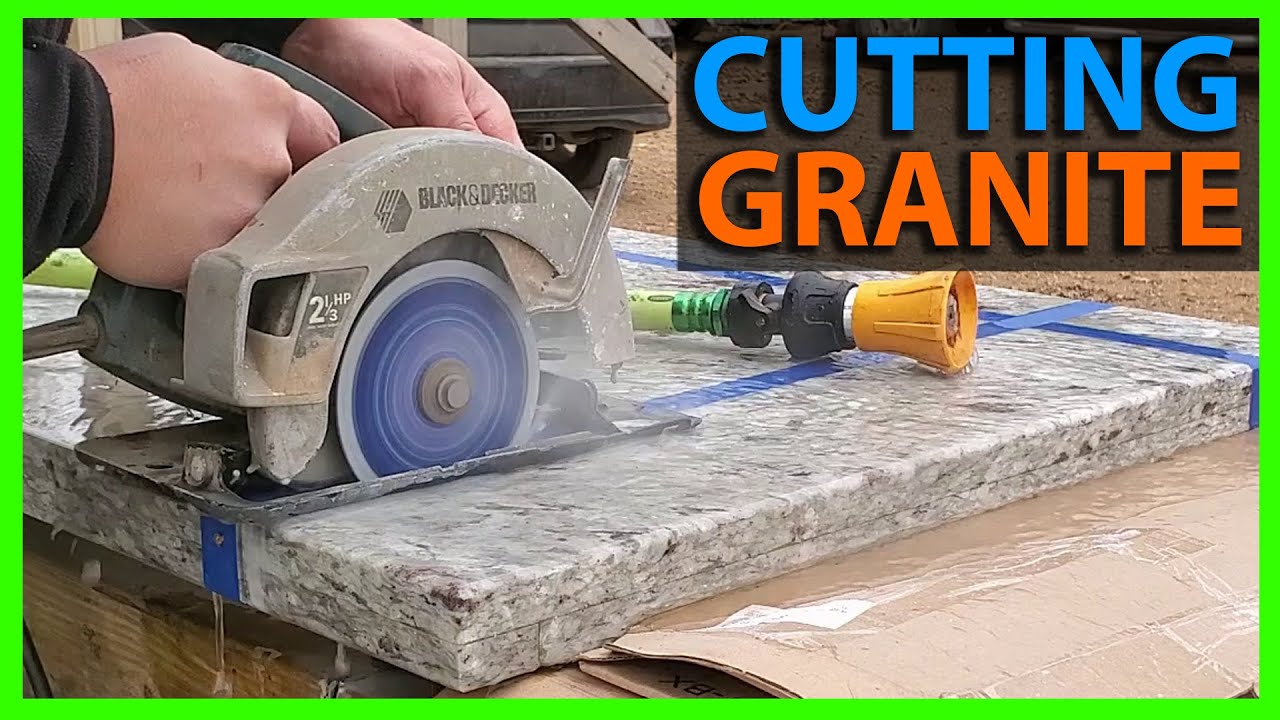
Frequently Asked Questions of how to cut granite with hand tools
Can granite really be cut without power tools?
Yes, granite can be cut with hand tools, especially for small trims and simple splits. The process is slower and less precise than using a saw, but it works when you score the line carefully and break the stone with control.
What is the best chisel for cutting granite by hand?
A stone chisel or cold chisel made for masonry work is the best choice. It needs to be strong enough to hold an edge and withstand repeated hammer strikes without deforming.
Will cutting granite by hand crack it?
It can if the stone is poorly supported, struck too hard, or scored unevenly. The safest method is to make shallow, controlled passes and support the slab fully before attempting the break.
How do I smooth a rough granite edge after cutting?
Use a hand file, rubbing stone, or diamond hand pad to refine the edge. Work slowly and keep the pressure even so you do not create new chips or uneven spots.
Is it safe to cut granite indoors with hand tools?
It is better to work outdoors or in a very well-ventilated space because granite dust can be hazardous. If you must work indoors, use dust control, wear proper respiratory protection, and clean the area thoroughly.
Conclusion
Learning how to cut granite with hand tools is mostly about patience, preparation, and control. When you measure carefully, score the line well, and support the stone correctly, you give yourself the best chance at a clean result. The process may be slow, but it can absolutely work for the right job.
If you are planning a small granite project, start with a test piece and take your time. The more carefully you work, the more professional the result will look. If this guide helped, explore more stone-cutting tips, share your experience, or leave a comment with your project questions.