
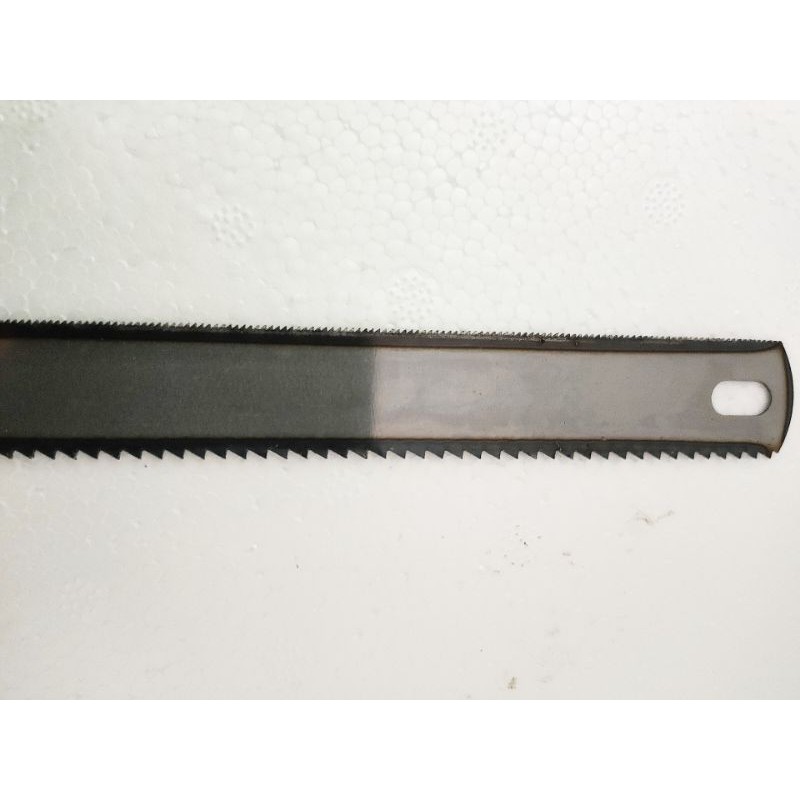
A standard hacksaw blade goes with the teeth pointing away from the handle. In most U.S. hacksaw frames, the blade cuts as you push the saw forward. The smooth return stroke brings the blade back without cutting.
This setup works for common metal-cutting hacksaws used in American homes, garages, workshops, plumbing jobs, and construction work. Some specialty blades and saw frames differ, so check the blade markings and tool instructions before you begin.

Which Way Should the Teeth Face?
The teeth should usually face forward, away from the handle. When you hold the hacksaw in its normal cutting position, the teeth should point in the direction you will push the frame.
A simple check is to look at the blade from the side:
- The teeth should point toward the front end of the hacksaw.
- The rear of the blade should face the handle.
- The blade should cut during the forward stroke.
- The blade should move freely on the return stroke.
If the teeth point toward the handle, the saw may still move through soft material, but it will not work as intended. The blade may catch, bend, or break. It can also make the cut slower and less controlled.
The quick test
Hold the hacksaw as if you are ready to cut. Then ask:
When I push the saw away from my body, are the teeth moving into the material?
If yes, the blade is likely facing the correct way.
How to Install a Hacksaw Blade Correctly
Install the blade with the teeth facing away from the handle, then tighten it until the blade is firm and straight.
Step 1: Release the blade tension
Most full-size hacksaws have a tension knob or wing nut near the front of the frame. Turn it counterclockwise to loosen the old blade.
Some frames use a quick-release lever. Open that lever before removing the blade.
Wear work gloves if the old blade is damaged or rusty. A worn blade can have sharp edges even when its teeth look dull.
Step 2: Remove the old blade
Take the blade out of the mounting pins. Many hacksaw blades have a small hole at each end. These holes fit over pins or posts on the frame.
Do not twist the blade sharply while removing it. A cracked blade can snap when bent.
Step 3: Check the new blade
Before installing the new blade, inspect it for:
- Bent sections
- Cracked metal
- Missing teeth
- Heavy rust
- The correct length for the frame
- The right tooth count for the material
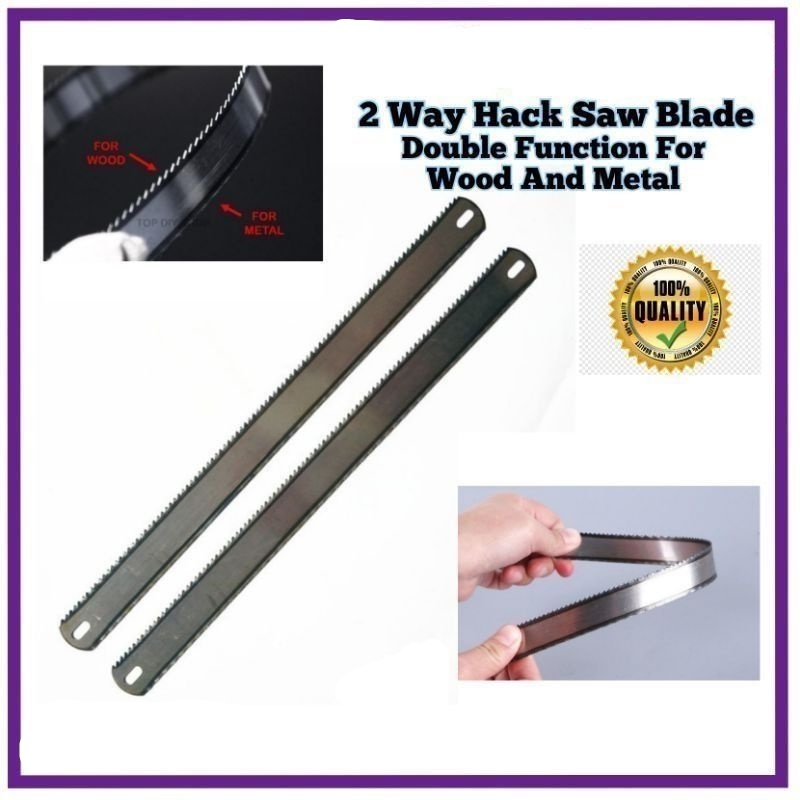
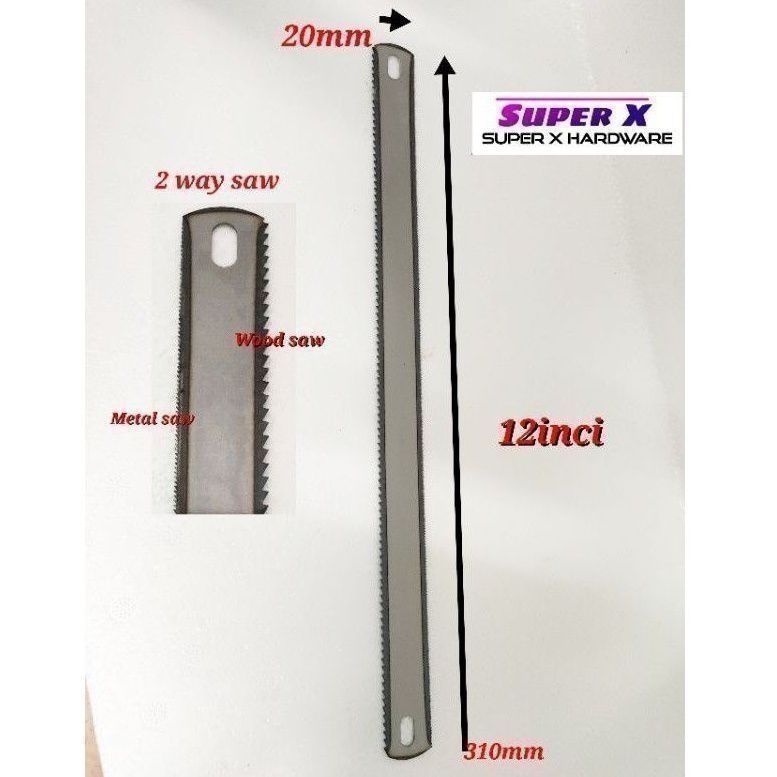
Most common full-size hacksaws use blades about 12 inches long, but the correct size depends on the frame. A blade that is too short or too long may not mount safely.
Step 4: Place the blade on the frame
Put one end of the blade over the mounting pin. Then fit the other end over the opposite pin.
Make sure the teeth point away from the handle. The blade should sit flat in the frame rather than twist from side to side.
Step 5: Tighten the blade
Turn the tension knob or close the tension lever. Tighten the blade until it feels firm.
A properly tensioned blade should not sag. When you lightly pluck the side of the blade, it may give a small, dull twang. It should not feel loose, but avoid tightening it so much that the blade or frame is stressed.
Many manufacturers, including Stanley and Bahco, warn against over-tensioning because excessive force can damage the frame or cause blade failure.
Step 6: Check the alignment
Look down the length of the blade. It should be straight and centered in the frame.
If the blade leans sharply, remove it and check the mounting holes. A blade that is not seated correctly can slip during the cut.

Why Do Hacksaw Teeth Point Forward?
A standard hacksaw uses a push-cut design. The teeth remove material as you push the frame forward.
Each tooth acts like a small cutting edge. The forward stroke presses the tooth into the workpiece and removes a small chip. On the return stroke, the blade should glide back with light pressure.
This design gives the user better control during the cut. It also reduces the chance of pulling the blade into the material on the return stroke.
A hacksaw blade is not normally meant to cut hard on both strokes. If the blade cuts when pulled back, the teeth may be damaged, the blade may be installed incorrectly, or the tool may not be a standard hacksaw.
Push-cut versus pull-cut saws
Not every hand saw works the same way:
| Saw type | Usual cutting stroke | Common blade direction |
|---|---|---|
| Standard hacksaw | Push stroke | Teeth away from handle |
| Japanese pull saw | Pull stroke | Teeth toward the handle |
| Coping saw | Usually pull stroke | Teeth toward the handle |
| Bow saw | Often push and pull | Depends on the blade |
| Reciprocating saw | Machine-driven | Depends on the blade design |
Do not use the tooth direction of a pull saw as a guide for a hacksaw. Each saw is designed around a different cutting motion.

How to Use a Hacksaw After Installing the Blade
Use light, steady pressure and let the teeth do the cutting. Pressing too hard can bend the blade or strip its teeth.
1. Mark the cut
Use a pencil, marker, scribe, or layout tool to mark the cutting line. For metal, a fine marker or scratch line can be easier to see than pencil.
If the cut must be exact, wrap a strip of paper around round stock. Align the paper edges, then trace along the edge to create a square guide line.
2. Secure the material
Clamp the workpiece firmly. The cut should be close to the vise or support point.
A loose piece can vibrate, grab the blade, or produce a crooked cut. Never hold small metal in your hand while sawing it.
3. Start with short strokes
Place the blade on the waste side of the mark. Use short, gentle strokes until you create a shallow groove.
This groove is called a starting kerf. It helps keep the blade from wandering across the surface.
4. Use long strokes
Once the groove is established, use most of the blade length. Long strokes spread wear across more teeth and usually produce a smoother cut.
Keep the frame level unless the job requires an angled cut. Let the blade track in the groove rather than forcing it sideways.
5. Ease up near the end
When only a small amount of material remains, reduce pressure. The final section can break suddenly.
Support the cut-off piece so it does not fall, twist, or tear the last thin section of material.
Signs the setup is working
A correctly installed and properly used hacksaw blade will usually:
- Cut on the forward stroke
- Produce a steady scraping sound
- Stay in the starting groove
- Make a reasonably straight kerf
- Remove small chips or filings
- Remain tight in the frame

Does the Smooth Side of the Blade Face the Handle?
The smooth, non-toothed edge normally faces the same direction as the back of the frame. The teeth face forward, while the smooth spine trails behind them.
This does not mean the smooth edge must touch the frame in a special way. The key points are the mounting pins, blade alignment, and tooth direction.
Some hacksaw blades have teeth on only one edge. Others may have a special shape or printed markings that help show the correct orientation. If the blade has an arrow, follow the arrow unless the tool maker gives different instructions.
Can You Put a Hacksaw Blade on Backward?
You can physically mount many blades backward, but you should not use a standard hacksaw that way.
With the teeth facing the handle:
- The blade will not cut properly on the normal push stroke.
- You may feel the blade drag on the return stroke.
- The blade can catch when you pull back.
- The work may take much longer.
- The teeth can become damaged.
- The blade may bend or snap.
Remove the blade and reinstall it with the teeth facing away from the handle. Do not try to solve poor cutting by forcing a backward blade through the material.

What If the Hacksaw Blade Does Not Fit or Cut?
If the blade is installed correctly but the saw performs poorly, check the most likely causes first.
| Symptom | Likely cause | What to do |
|---|---|---|
| Blade slips or sags | Too little tension | Tighten the tension knob |
| Blade breaks quickly | Too much pressure or over-tension | Reduce pressure and check tension |
| Cut wanders | Workpiece moves or starting groove is poor | Clamp the material and start with short strokes |
| Saw cuts very slowly | Wrong blade or dull teeth | Choose a blade suited to the material |
| Teeth strip off | Tooth pitch is too coarse or pressure is too high | Use finer teeth and lighter pressure |
| Blade binds | Kerf closes or blade twists | Support the work and keep the frame straight |
| Saw cuts on the pull stroke | Blade may be backward or damaged | Inspect the tooth direction and replace it if needed |
Choose the correct tooth pitch
Hacksaw blades are often described by teeth per inch, or TPI. A higher TPI blade has smaller teeth. A lower TPI blade has larger teeth.
As a general guide:
- 14 TPI: Thick metal and heavy stock
- 18 TPI: Medium metal and general shop work
- 24 TPI: Thin metal, tubing, and sheet material
- 32 TPI: Very thin material and fine cuts
A useful rule is to keep at least two or three teeth in the material during the cut. If too few teeth contact thin stock, the blade can snag. If the teeth are too fine for thick stock, the cut may be slow and the gullets can clog.
These values are general starting points, not fixed rules. Follow the blade maker’s chart when one is available.
Hacksaw Blade Safety
A hacksaw is a simple hand tool, but its blade can cause cuts and eye injuries.
Follow these basic safety steps:
- Wear safety glasses when cutting metal.
- Clamp the work securely.
- Keep both hands on the saw handle and frame when possible.
- Keep fingers away from the blade path.
- Do not use a cracked, bent, or heavily worn blade.
- Keep the blade tight, but do not over-tension it.
- Cut away from your body when the work setup allows.
- Remove sharp burrs from the finished cut.
- Store spare blades where they cannot cut skin or clothing.
- Keep sparks and hot metal away from flammable materials.
Cut metal can become hot. Let it cool before touching the cut edge, or use suitable gloves when handling it. Gloves should not replace eye protection or safe clamping.
For stainless steel, hardened steel, or thick structural material, a hacksaw may be slow or unsuitable. Use the tool and blade type recommended for the job, or ask a qualified tool professional for guidance.
Key Takeaways
- A standard hacksaw blade goes with the teeth pointing away from the handle.
- The blade should cut on the forward push stroke.
- Tighten the blade until it is firm and straight, but do not over-tension it.
- Clamp the workpiece and start with short strokes.
- Choose the blade’s TPI based on the thickness and type of material.
- Replace blades that are bent, cracked, rusty, or missing teeth.
FAQs
Should hacksaw teeth face up or down?
The teeth should face toward the direction of the cutting stroke. On a standard hacksaw, that means the teeth point forward and away from the handle. The exact “up” or “down” position depends on how the frame holds the blade.
Which way does a mini hacksaw blade go?
A mini hacksaw blade usually goes with the teeth pointing away from the handle, just like a full-size hacksaw. Check the frame design because some mini tools use a different mounting system.
Can a hacksaw cut wood?
A hacksaw can cut some soft wood, but it is not the best tool for the job. Its fine metal-cutting teeth can clog with wood dust and cut slowly. Use a hand saw or wood-cutting blade when the main material is wood.
How tight should a hacksaw blade be?
The blade should be firm, straight, and free of visible sag. It should not feel loose when you press lightly on the side. Avoid extreme force because over-tension can damage the blade or frame.
Why does my hacksaw blade keep breaking?
Common causes include too much pressure, excessive tension, a loose workpiece, a blade that twists in the cut, or a blade that is too fine or too short for the job. Check the frame, clamp the material, reduce pressure, and install the correct blade.
Can hacksaw blades be installed upside down?
A standard hacksaw blade can be mounted incorrectly, but it should not be used that way. Install it so the teeth point away from the handle and cut on the forward stroke.
Conclusion
For a normal U.S. hacksaw, install the blade with the teeth pointing away from the handle. Tighten it until it is straight and firm, then cut with light pressure on the forward stroke.
If the saw does not cut smoothly, stop and check the blade direction, tension, tooth pitch, and workpiece support before applying more force. A correctly fitted blade and a secure workpiece will make the cut safer, straighter, and easier.