Can You Cut Wood With A Hacksaw: Safe Cutting Tips
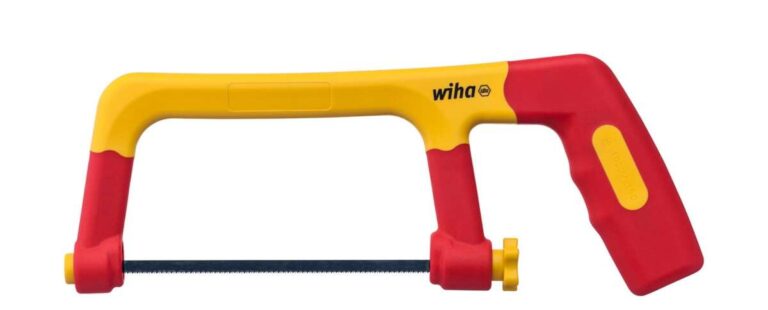
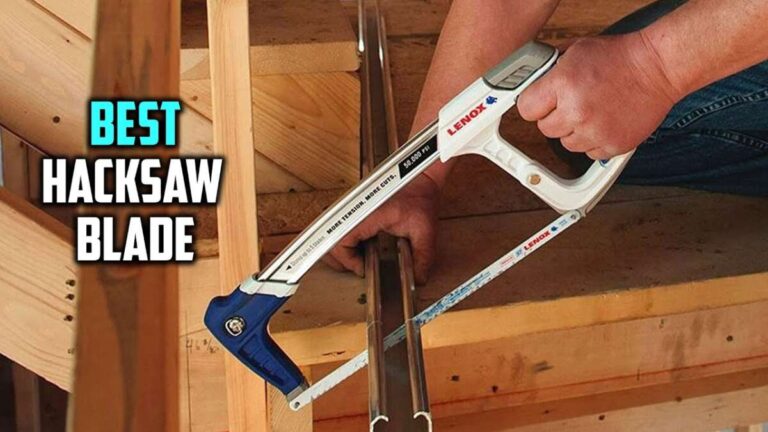
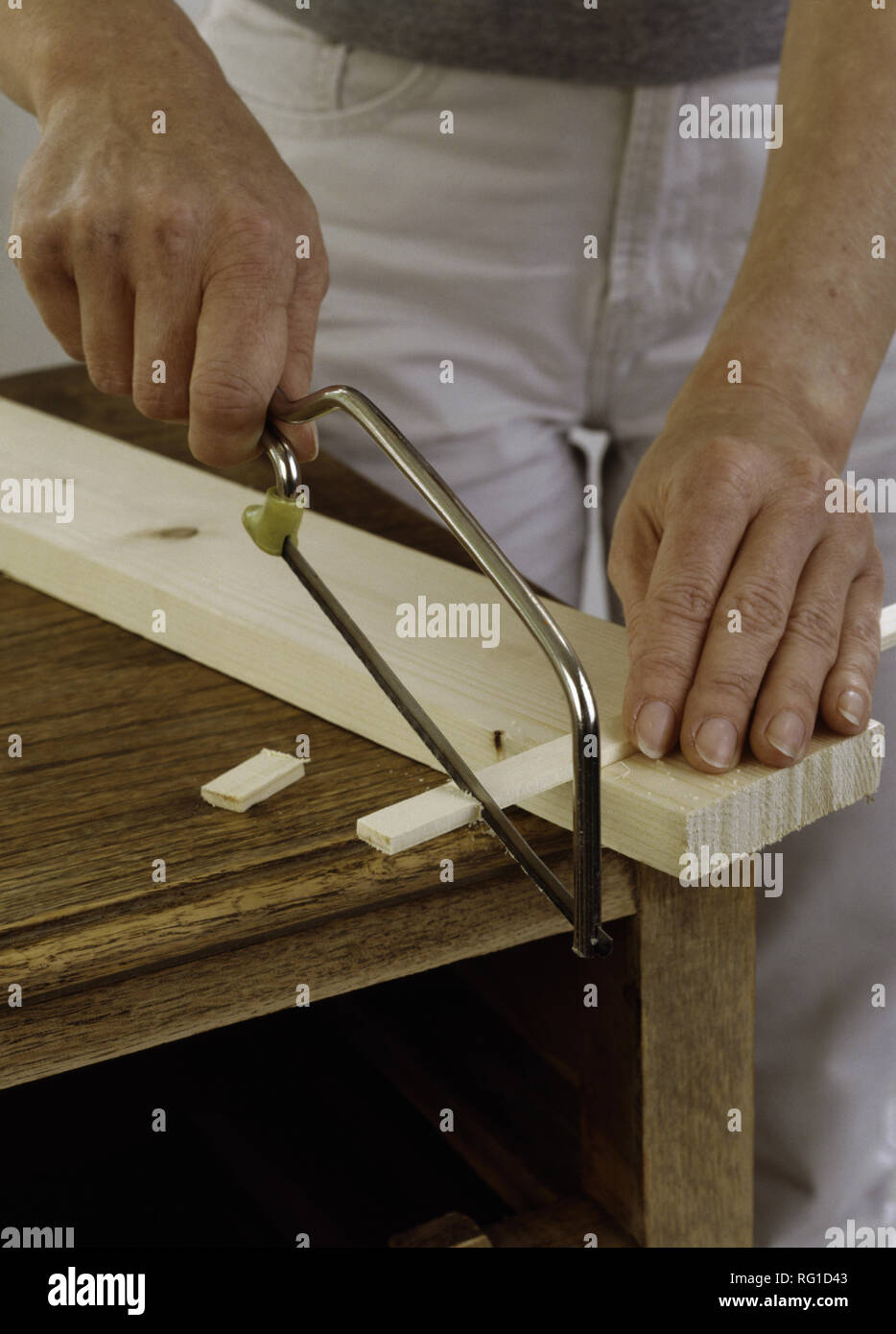
Yes, you can cut wood with a hacksaw, but it is usually slow and rough. A hacksaw works best on metal. Its fine teeth can cut thin wood, small dowels, trim, or a quick notch when no better saw is nearby.
For clean and fast wood cuts, use a hand saw, backsaw, Japanese pull saw, jigsaw, or circular saw. In a typical U.S. home repair, a hacksaw is best treated as a backup tool—not the first choice for cutting boards.
Quick Answer
A hacksaw can cut wood if:
- The wood is thin or small.
- The cut does not need to look perfect.
- The wood is held firmly.
- The blade is sharp and tight.
- You use slow, steady strokes.
A hacksaw is a poor choice for thick lumber, long cuts, hardwood, or finish work. Its fine teeth tend to fill with sawdust. This makes the cut slow and can cause the blade to bind.
Why a Hacksaw Can Cut Wood
A hacksaw cuts by using small teeth to remove material as the blade moves through the wood. The same basic action works on both metal and wood.
The main issue is tooth size. Most hacksaw blades have about 18 to 32 teeth per inch, often called TPI. These fine teeth are useful for thin metal. Wood saws usually have larger, more widely spaced teeth that clear chips from the cut.
When fine hacksaw teeth enter wood, sawdust can pack between them. The blade may then move with more drag. It can heat up, bend, or stop cutting well.
Hacksaw versus wood saw
| Tool | Typical tooth pattern | Best use | Result in wood |
|---|---|---|---|
| Hacksaw | Fine teeth, often 18–32 TPI | Metal, plastic, small repairs | Slow but possible |
| General hand saw | Coarser teeth | Boards and framing lumber | Faster rough cuts |
| Backsaw | Fine, stiff blade | Trim and joinery | Straighter, cleaner cuts |
| Coping saw | Narrow blade | Curves and small shapes | Good for detailed cuts |
| Pruning saw | Large teeth | Branches and green wood | Fast on outdoor wood |
| Jigsaw | Powered blade | Curves and short cuts | Fast, but needs control |
| Circular saw | Large powered blade | Long, straight cuts | Fast and effective |
The blade material also matters. A standard carbon-steel hacksaw blade may cut softwood, but it can dull quickly. A bi-metal blade is stronger, yet its fine tooth pattern still makes it less efficient than a wood-cutting blade.
When a Hacksaw Makes Sense
A hacksaw makes sense when the piece is small, the cut is short, and appearance is not the main concern.
Good examples include:
- Cutting a small wooden dowel.
- Trimming a thin strip of molding.
- Cutting a small piece of softwood.
- Making a shallow notch.
- Trimming a wood shim.
- Cutting a thin bamboo stick.
- Removing a small wood block during a repair.
- Cutting wood when the only available saw is a hacksaw.
A hacksaw may also help when wood contains a small exposed nail or screw. However, cutting metal can damage or dull the blade. Use a blade made for the material, and inspect it after the cut.
When you should choose another saw
Use a different saw when:
- The board is thick.
- The cut is longer than a few inches.
- The wood is hardwood.
- The cut must be straight and clean.
- You need to cut many pieces.
- The wood is pressure-treated and will create a lot of dust.
- The hacksaw blade binds or bends.
- You need to cut curves or large shapes.
For a 2-by-4, a standard hand saw is far more practical. For sheet goods, a circular saw or track saw gives better speed and control. For small curves, a jigsaw or coping saw is a better fit.

How to Cut Wood With a Hacksaw
Use a sharp blade, mark the cut, secure the wood, and let the teeth do the work. Do not force the frame through the material.
What you need
Gather:
- A hacksaw with a sound frame.
- A sharp blade.
- A pencil or marking knife.
- A tape measure or square.
- A clamp or sturdy workbench.
- Eye protection.
- A file or sandpaper for the cut edge.
A dust mask can help when the cut creates fine dust. Use one suitable for the task and follow its instructions. Work in a well-ventilated area, especially when cutting treated, painted, or coated wood.
Step 1: Check the hacksaw
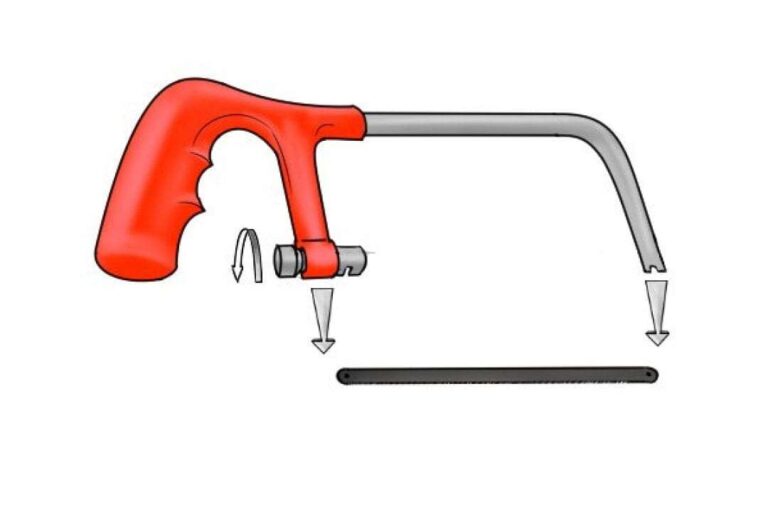
Inspect the frame, pins, handle, and blade. Do not use the saw if the frame is cracked or the handle is loose.
The blade should sit straight in the frame. Many hacksaws place the teeth so they cut on the forward push stroke. Confirm the tooth direction before cutting.
The blade should be tight enough to stay straight. It should not sag in the frame. Do not overtighten it, since too much tension can damage the frame or blade.
Step 2: Mark the cut
Measure the wood and mark the cut line with a pencil. Use a square if the cut must be at 90 degrees.
Mark the waste side of the line. This helps you keep the final piece at the correct size. If the cut needs to be precise, leave a small amount of material and sand to the final line.
Step 3: Secure the wood
Clamp the wood to a workbench or place it in a vise with protective blocks. Keep the cut area close to the support point.
Loose wood can move, twist, or lift as the blade travels. Movement makes the cut rough and increases the chance that the blade will slip.
Do not hold the wood in your hand while cutting. Keep both hands away from the path of the blade.
Step 4: Start a shallow groove
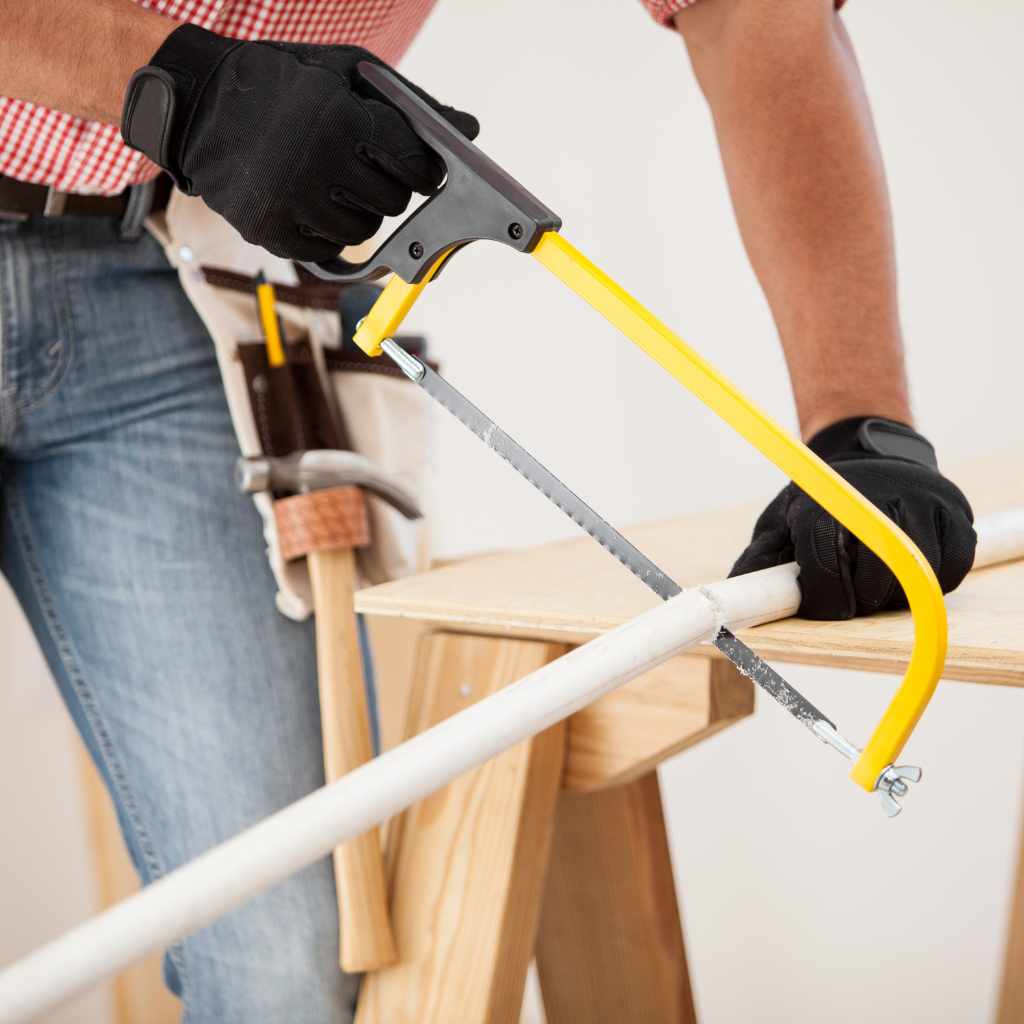
Place the blade on the waste side of the mark. Hold the hacksaw with one hand on the handle and the other on the front of the frame, if the frame design allows it.
Make a few short, light strokes to start a groove. Keep the blade at the desired angle. A shallow groove helps prevent the blade from sliding across the wood.
Step 5: Use steady strokes
After the groove forms, use longer strokes. Keep the blade aligned with the mark and apply light pressure on the forward stroke.
Let the teeth cut. Pressing hard can bend the blade and produce a crooked cut. Lift pressure on the return stroke if the blade cuts only in the forward direction.
Keep the hacksaw level unless the cut requires another angle. Check the line often rather than trying to correct a large error at the end.
Step 6: Support the offcut
As the blade nears the end, support the loose section. This prevents the wood from breaking and pulling fibers from the cut edge.
Slow down for the last part. Use short strokes if needed. Do not twist the hacksaw to finish the cut.
Step 7: Smooth the edge
Inspect the cut. Remove splinters with sandpaper or a file.
If the cut is badly angled, do not try to correct it by forcing the hacksaw sideways. Re-mark the piece or use a suitable wood saw to make a new cut.
Signs the cut is going well
A good cut usually has these signs:
- The blade stays in the starting groove.
- The frame remains straight.
- The wood stays still.
- Sawdust leaves the kerf, or cut slot.
- The blade does not heat quickly.
- The cut follows the marked line.
- The blade moves without heavy force.
If the hacksaw will not cut well
Stop and check these points:
- The blade may be dull. Replace it rather than forcing the cut.
- The teeth may be too fine. A wood blade with larger teeth will clear chips better.
- The wood may be too thick. Choose a hand saw or powered saw.
- The wood may be moving. Improve the clamp or work support.
- The blade may be loose. Tighten it enough to hold a straight line.
- The cut may be pinching the blade. Support the wood on both sides of the cut.
- The blade may be installed backward. Check the tooth direction.
- The blade may be heating. Stop, let it cool, and use less pressure.
Which Hacksaw Blade Is Best for Wood?
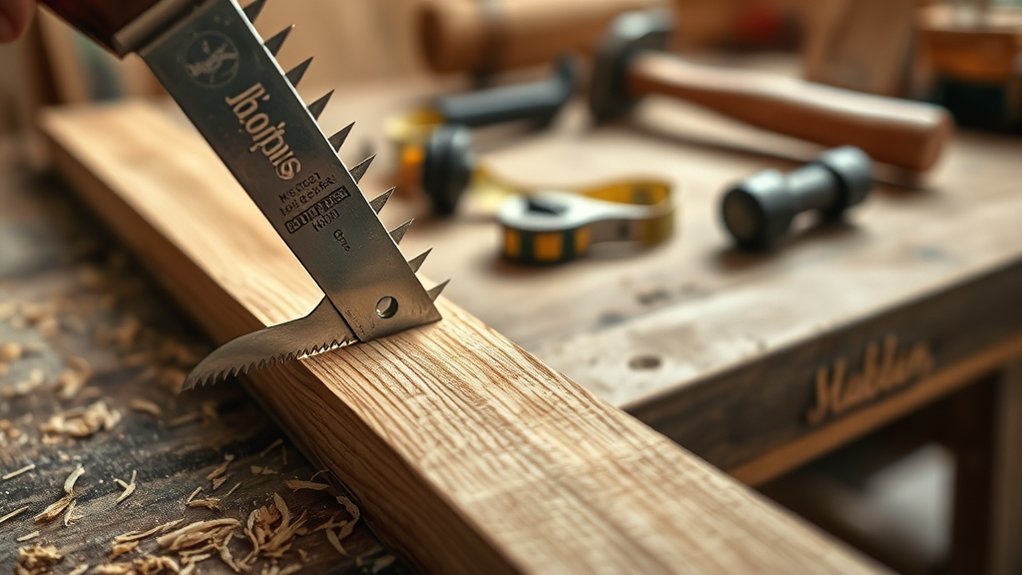
A hacksaw blade with fewer teeth per inch is usually less difficult to use on wood, but even a coarse hacksaw blade may be too fine for thick lumber.
For a small wood cut, consider:
- A 14- to 18-TPI blade for softer, thin wood.
- An 18- to 24-TPI blade for thin material or mixed materials.
- A blade made for wood if the hacksaw frame accepts that blade type.
These ranges are practical guides, not fixed rules. Blade packaging should take priority because tooth patterns and blade designs vary.
A standard hacksaw frame may not accept a wide wood saw blade. Check the blade length and mounting style before buying a replacement.
A simple blade decision table
| Job | Better choice |
|---|---|
| Thin softwood strip | Coarser hacksaw blade or small hand saw |
| Wooden dowel | Hand saw, backsaw, or hacksaw |
| Thick 2-by-4 | General hand saw |
| Hardwood trim | Backsaw, Japanese saw, or fine-tooth wood blade |
| Wood with exposed nails | Specialized nail-cutting blade or careful hacksaw use |
| Curved wood cut | Coping saw or jigsaw |
| Large sheet of plywood | Circular saw, track saw, or panel saw |
The key trade-off is simple: a hacksaw may be available, but a wood saw removes chips more efficiently. That usually means a faster cut, less heat, and a cleaner edge.

Hacksaw Safety for Cutting Wood
Wear eye protection and secure the work before you start. A hacksaw is a hand tool, but its blade can still slip, break, or create sharp splinters.
Follow these safety steps:
- Wear safety glasses that protect from splinters.
- Clamp the wood firmly.
- Keep fingers away from the blade path.
- Keep the blade tight and straight.
- Use slow strokes near the end of the cut.
- Do not use a bent, cracked, or badly worn blade.
- Keep loose clothing and cords away from the work.
- Do not force the blade through a jammed cut.
- Clean sawdust from the work area.
- Wash your hands after cutting treated or coated wood.
The U.S. Occupational Safety and Health Administration treats wood dust as a workplace hazard and provides controls for exposure. A short home cut is not the same as regular shop work, but dust control still makes sense. Use ventilation, avoid breathing the dust, and follow the product label for treated or painted wood.
Do not burn scraps from painted, stained, or pressure-treated wood. Dispose of them according to local rules.
What about cutting wood with nails?
A hacksaw can cut a small exposed nail, bolt, or screw, but the metal may damage the blade. If the fastener is hidden inside the wood, do not assume it is safe to saw through it.
For repeated cuts through wood with nails, a reciprocating saw blade designed for wood with embedded nails is usually a better tool. For one small exposed fastener, a hacksaw can work if you keep the work stable and protect your eyes.

Common Mistakes to Avoid
The most common mistake is using a hacksaw for a job that needs a wood saw. The tool may complete the cut, but it can waste time and leave a rough edge.
Avoid these errors:
Pushing too hard
Heavy pressure can bend the blade. A bent blade cuts at an angle and may snap.
Using a dull blade
A dull blade creates heat and drag. It also encourages you to push harder. Replace the blade when the teeth look worn or the cut becomes unusually slow.
Cutting unsupported wood
If the wood flexes, the kerf can close around the blade. This causes binding. Support the wood near the cut and on the waste side.
Starting without a groove
A blade can skate across a smooth surface. Start with short strokes until a clear groove forms.
Ignoring the cut line
A hacksaw can drift. Stop every few strokes and check the blade position.
Turning the blade sideways
Do not twist the frame to widen the cut. This can buckle or break the blade.
Expecting a finish cut
A hacksaw may leave a rough surface or crushed fibers. If the edge will show, use a proper wood saw and finish with sandpaper.
Can a Hacksaw Cut Different Types of Wood?
A hacksaw can cut many thin wood types, but the results vary with thickness, density, grain, and moisture.
Soft pine and fir are usually easier to cut by hand. Dense hardwoods may take much longer and may dull a fine blade. Plywood can cut unevenly because its layers may splinter as the blade exits.
Wet or green wood can clog fine teeth. It may also flex around the blade. Dry, stable wood is usually easier for a hacksaw, but a proper wood saw remains the better option.
Practical examples
Thin pine strip: A hacksaw can make a short cut with modest effort.
Small hardwood dowel: A hacksaw can work, but a backsaw may leave a cleaner edge.
2-by-4 lumber: A hacksaw can cut it, but the process will be slow. Use a hand saw.
Plywood: A hacksaw can work for a tiny repair, but splinter control may be poor.
Pressure-treated lumber: Use a suitable wood-cutting tool, control the dust, and follow safe handling guidance for the treated material.
Branch or green wood: Use a pruning saw. A hacksaw’s fine teeth can clog quickly.

Key Takeaways
- Yes, a hacksaw can cut wood.
- It works best on thin wood, dowels, small trim, and quick repairs.
- Fine metal-cutting teeth make the process slow.
- A hand saw, backsaw, pruning saw, jigsaw, or circular saw is usually better.
- Secure the wood, wear eye protection, and use light, steady strokes.
- Replace a dull or damaged blade instead of forcing the cut.
- Use a proper wood saw when speed, accuracy, or a clean edge matters.
Frequently Asked Questions
Can a hacksaw cut a 2-by-4?
Yes, but it is not a practical choice. A hacksaw can eventually cut through a 2-by-4, but its fine teeth make the cut slow and tiring. Use a general-purpose hand saw or circular saw instead.
Can you use a hacksaw to cut plywood?
You can cut thin plywood with a hacksaw, but the edge may splinter and the blade may clog with dust. For a cleaner result, use a fine-tooth wood saw, jigsaw, or circular saw with the correct blade.
Will cutting wood damage a hacksaw blade?
Cutting a small amount of thin wood should not harm a sound blade. Thick, hard, wet, or dirty wood can dull the teeth faster. Nails, screws, and grit can cause even more damage.
Should hacksaw teeth face forward or backward?
Most standard hacksaw blades are installed with the teeth facing forward. They usually cut on the push stroke. Check the blade instructions and the frame design before use.
Can you cut a tree branch with a hacksaw?
You can cut a small branch with a hacksaw, but a pruning saw is better. Pruning saws have larger teeth that clear green wood and sawdust more easily.
Is a hacksaw safer than a power saw for wood?
A hacksaw avoids motor noise and electrical hazards, but it is not automatically safe. The blade can slip, break, or cause splinters. Secure the wood, wear eye protection, and keep your hands out of the cutting path.

Conclusion
You can cut wood with a hacksaw when the piece is small and the cut is not demanding. Use a sharp, tight blade, clamp the wood, start with a shallow groove, and cut with light pressure.
For thick boards, long cuts, hardwood, or visible edges, choose a saw designed for wood. The right tooth pattern will save time and give you better control.
Sources and Further Reading
- U.S. Occupational Safety and Health Administration: Woodworking
- OSHA: Wood Dust
- U.S. Consumer Product Safety Commission: Home Workshop Safety
- U.S. Forest Service: Wood Handbook
Recent Tool Guides
 Hammer
How To Hammer Flowers Onto Paper: Easy Guide
Learn how to hammer flowers onto paper with simple steps, helpful tips, and beautiful results for...
Read Guide → Wrench
How To Use A Hex Wrench: Easy Step-By-Step Guide
Learn how to use a hex wrench correctly with simple steps, helpful tips, and common mistakes...
Read Guide → Hacksaw
How To Cut Curtain Pole With Hacksaw: Easy Guide
Learn how to cut curtain pole with hacksaw safely and neatly. Follow simple steps for accurate...
Read Guide → Wrench
How To Use A Husky Torque Wrench: Easy Guide
Learn how to use a Husky torque wrench correctly with simple steps, torque settings, and safety...
Read Guide → Hammer
How To Hold A Hammer: Safe Grip Guide
Learn how to hold a hammer with the right grip, stance, and technique for safer, more...
Read Guide → Hacksaw
How To Cut Flexible Metal Conduit With Hacksaw: Easy Guide
Learn how to cut flexible metal conduit with hacksaw safely and cleanly. Follow simple steps for...
Read Guide →