What Can I Use Instead Of An Allen Wrench: Best Options
In a U.S. home, workshop, or garage, the best substitute for an Allen wrench is usually a correct-size hex bit, hex socket, or Torx bit that fits firmly. For a loose fastener, a flat-head screwdriver, pliers, or an adjustable wrench may work, but each option has limits.
An Allen wrench is also called a hex key or Allen key. It has six flat sides and fits a matching hex-shaped recess in a screw or bolt. Because the fit must be exact, using the wrong substitute can round the fastener and make removal much harder.

Quick answer: the best Allen wrench substitutes
Choose the substitute based on the fastener and how much force it needs:
| Situation | Best substitute | Main limitation |
|---|---|---|
| You have a hex bit set | Matching hex bit | Requires a bit driver or drill |
| The fastener has an external hex head | Socket or adjustable wrench | Does not work on a recessed hex socket |
| The screw is loose | Flat-head screwdriver | Can slip or damage the recess |
| The hex socket is exposed | Locking pliers | May crush or mark the fastener |
| The recess is damaged | Slightly oversized Torx bit | Usually sacrifices the fastener |
| You need high torque | Hex socket with a ratchet | Must match the correct size |
| The fastener is tiny | Precision hex bit | Common household tools may be too large |
The safest choice is always a matching hex tool. If you do not have one, use the alternatives below in order of fit and control.
1. Use a hex bit or hex socket
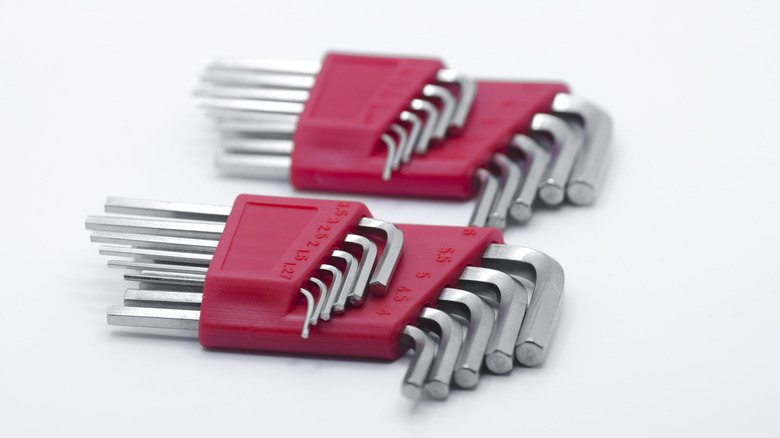
A hex bit is the closest replacement for an Allen wrench. It has the same six-sided tip but fits into a screwdriver handle, bit driver, ratchet, or drill chuck.
A hex socket has the same hex-shaped opening as an Allen wrench. It attaches to a ratchet or socket driver and gives you more leverage. This makes it useful for furniture bolts, bicycle parts, automotive work, and other fasteners that are tight.
Before using one:
- Check whether the fastener uses a metric or SAE size.
- Choose a bit that fills the hex recess completely.
- Push the bit fully into the fastener.
- Turn it slowly by hand before adding a ratchet or driver.
- Stop if the bit rocks, slips, or only touches the corners.
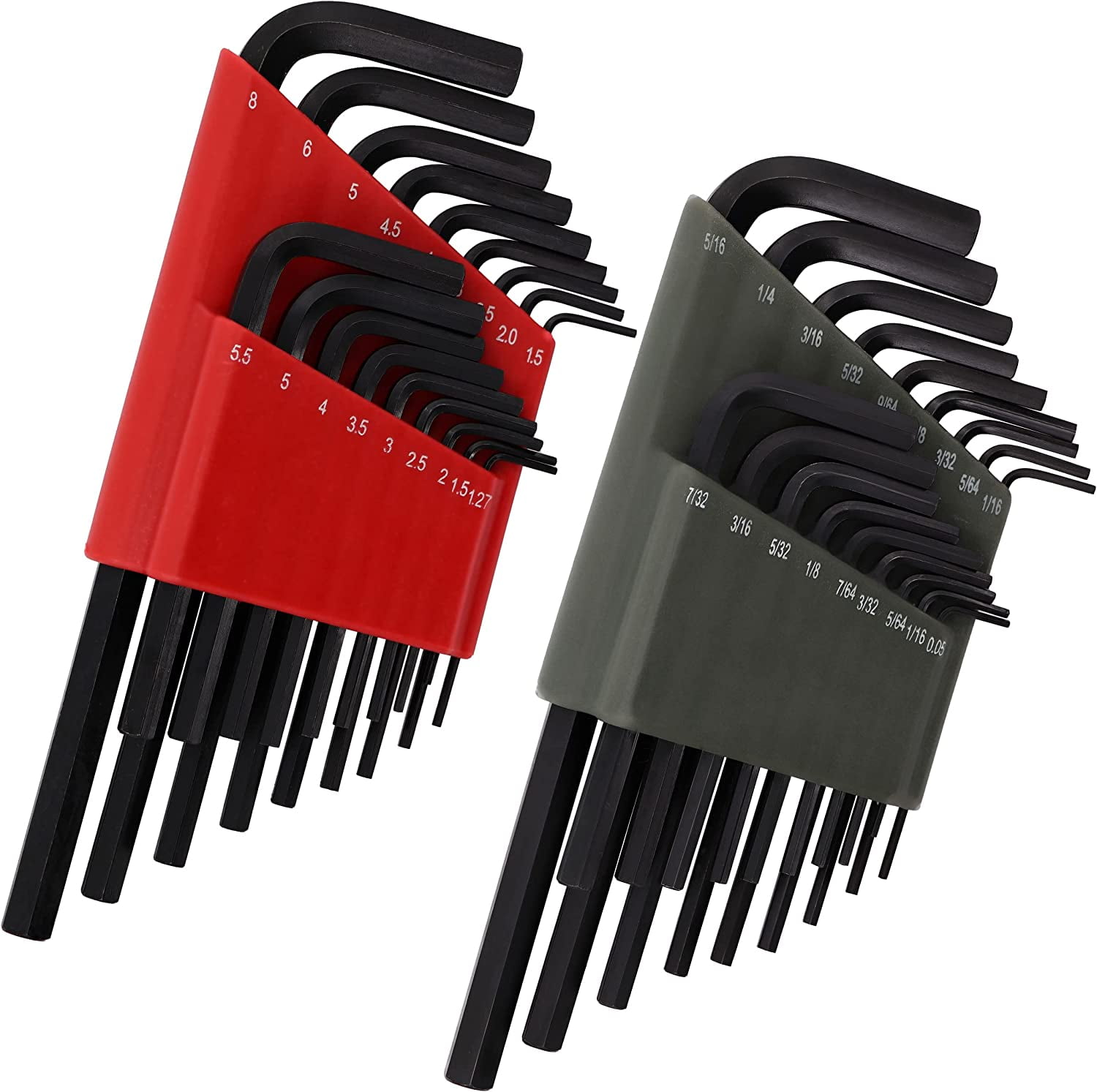
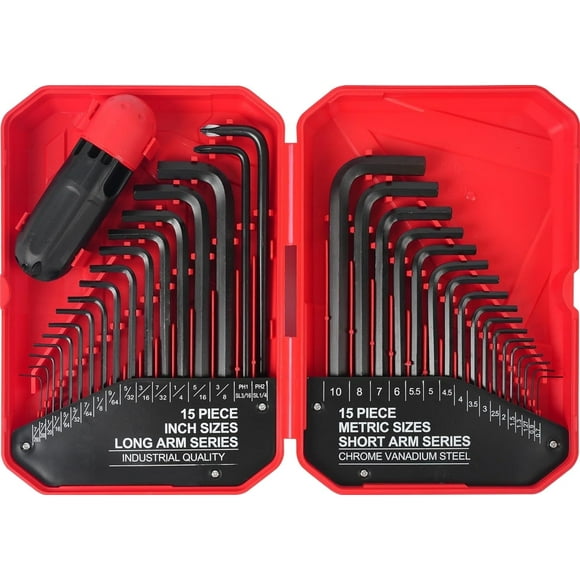
Metric hex sizes are measured in millimeters. SAE hex sizes are measured in fractions of an inch. A nearby size may seem to fit, but even a small difference can damage the recess.
A hex bit is the best substitute when you need to protect the fastener or apply strong force.
2. Try a Torx bit if the hex socket is damaged
A Torx bit has a six-point, star-shaped tip. It is not the same as a hex key, but a Torx bit can sometimes grip a worn or rounded hex socket.
Use this method only when:
- The original hex recess is already damaged.
- You are willing to replace the fastener.
- The Torx bit fits tightly.
- You can tap the bit into place without damaging nearby parts.
Select a Torx bit that is slightly larger than the damaged opening. Place it straight into the recess. If needed, tap it gently with a small hammer so its points bite into the metal. Then turn it slowly with a ratchet or driver.
Do not force a Torx bit into a good hex socket. It may damage the recess and make future removal harder. This approach is mainly an extraction method, not a normal substitute.

3. Use a flat-head screwdriver for a loose screw
A flat-head screwdriver can work if the hex socket is large enough and the screw is not tight. The screwdriver must fit across two opposite sides of the hex opening.
Choose a blade that:
- Fits tightly from side to side.
- Reaches deep enough to stay in the recess.
- Does not wobble when you turn it.
- Has a handle that lets you keep the tool straight.
Press down firmly while turning. Use slow, steady force rather than a quick twist.
This method works best on small screws in furniture, electronics covers, toys, and light-duty household items. It is a poor choice for rusted bolts, bicycle parts, automotive fasteners, or anything tightened with high torque.
If the screwdriver slips, stop. Repeated slipping can round the hex socket and can also send the tool toward your hand.
4. Use locking pliers on an exposed fastener
Locking pliers, often called by the brand name Vise-Grip, can turn a hex fastener when you can grip the outside of its head.
This method works only when the fastener head sticks out far enough for the jaws to grab it. It will not help with a recessed Allen screw.
To use locking pliers:
- Adjust the jaws so they clamp tightly around the fastener.
- Grip the head as close to its base as possible.
- Lock the pliers firmly.
- Turn slowly in the loosening direction.
- Reposition the pliers if they begin to slide.
Locking pliers may scratch, crush, or deform the fastener. Use them when the fastener is already damaged or when appearance does not matter. If the part must be reused, a correct hex tool is safer.

5. Use an adjustable wrench on an external hex head
An adjustable wrench can replace an Allen wrench only when the fastener has a six-sided head on the outside.
This is a key difference:
- An Allen screw has a hex-shaped hole inside its head.
- An external hex bolt has six flat sides on the outside.
An adjustable wrench cannot reach into a recessed Allen screw. It can turn a bolt or nut if the jaws fit the outer flats.
Set the wrench so there is little or no space between the jaws and the fastener. Keep the wrench square to the bolt. Pull smoothly instead of jerking it.
A fixed-size combination wrench or socket is usually better than an adjustable wrench because it grips more securely. An adjustable wrench is useful when you do not know the exact size or have limited tools.
6. Try needle-nose pliers for a small, loose fastener
Needle-nose pliers may turn a small Allen screw if part of the screw head is exposed. They can also help with a rounded fastener that no longer accepts a hex tool.
Grip the outer edge of the screw head, not the center recess. Apply gentle pressure and turn slowly.
This works best when:
- The screw is not very tight.
- The head extends above the surface.
- The pliers have narrow, strong jaws.
- You can see the fastener clearly.
Needle-nose pliers provide less turning power than a wrench. They can slip suddenly, so keep your hand behind the jaws and wear eye protection when working with brittle or rusted parts.

7. Use a drill bit or screwdriver bit only as an emergency option
A drill bit with a suitable hex-shaped shank may fit some fasteners, but it is not a dependable Allen wrench substitute. Many drill bits are round, and their cutting edges can damage the fastener.
A screwdriver bit with a hex shank may work if its shank matches the hex recess. Do not confuse the bit’s outside shape with its working tip. The tip must fit the fastener itself.
If you use a drill or impact driver, set it to low speed and low torque. Keep the tool straight. High speed can strip the fastener before you can react.
For a tight or important fastener, use a real hex bit or hex socket instead.

How to choose the right substitute
The shape, condition, and location of the fastener determine which tool is suitable.
Identify the fastener shape
Look closely at the screw or bolt:
- Hex-shaped hole in the center: Use a hex bit or hex key.
- Star-shaped hole: Use a Torx bit.
- Six flat sides on the outside: Use a socket or wrench.
- Damaged or rounded recess: Consider a Torx extraction method.
- Exposed round or irregular head: Locking pliers may work.
Do not judge only by size. A tool can look close but still fail because its shape is wrong.
Check whether the fastener is metric or SAE
U.S. furniture and tools may use either metric or SAE fasteners. Imported furniture, bicycles, appliances, and machinery often use metric sizes. Older American equipment may use SAE sizes, though many products use a mixture.
A metric tool may feel almost right in an SAE fastener, and the reverse is also true. If the tool does not seat fully, try another size rather than forcing it.
Consider the amount of torque
Torque is the turning force applied to the fastener. A loose screw needs little torque. A rusted bolt may need much more.
Use this guide:
- Low torque: flat-head screwdriver or needle-nose pliers may work.
- Medium torque: locking pliers or a well-fitting hex bit.
- High torque: hex socket, ratchet, or the correct Allen wrench.
- Very high torque or seized hardware: use penetrating oil and proper extraction tools.

What not to use as an Allen wrench substitute
Several common objects may appear to fit but are unsafe or unreliable.
Avoid using:
- A nail or piece of wire.
- A knife blade.
- Scissors.
- A rounded screwdriver.
- A drill bit that does not fit fully.
- A smaller hex key forced into a larger recess.
- A loose Torx bit in an undamaged hex socket.
- A heated or bent metal object.
These items can slip, break, or damage the fastener. A sharp object can also cause a puncture wound if it suddenly loses contact.
Do not use an impact driver on a small or delicate fastener unless the manufacturer allows it. The sudden force can strip the recess or crack plastic parts.
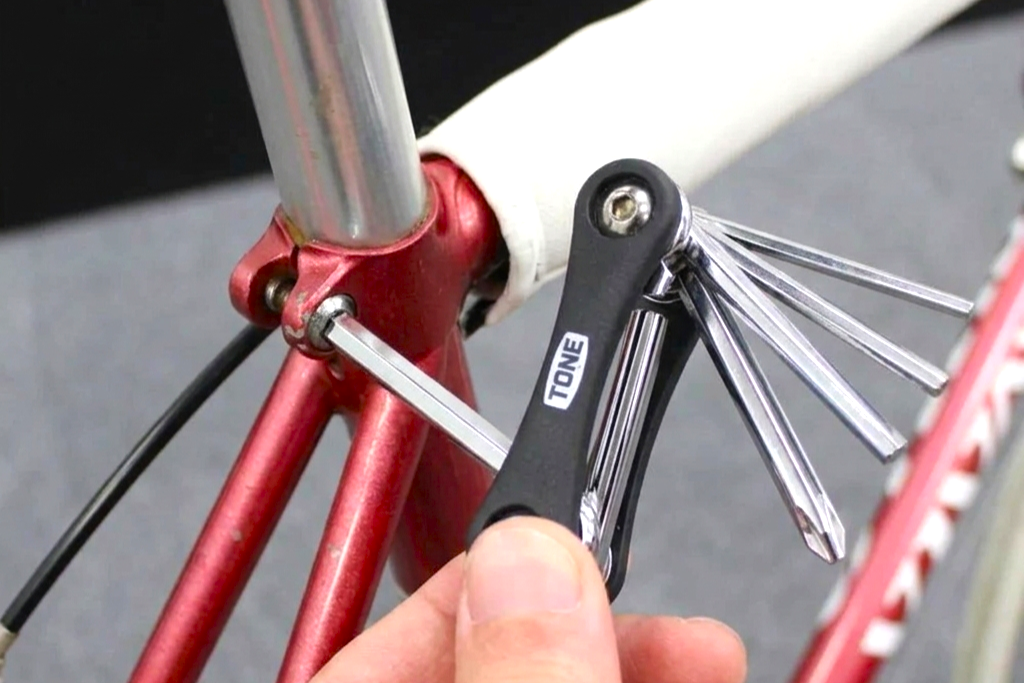
How to remove a stripped Allen screw
If the hex socket is already rounded, begin with the least destructive method.
- Clean the recess. Remove dirt, paint, rust, or debris with a pick or stiff brush.
- Try the next larger hex bit. Tap it lightly into the recess if it can seat securely.
- Try a slightly larger Torx bit. This may create a new grip.
- Use locking pliers. Do this if the head is exposed.
- Apply penetrating oil. Give it time to reach the threads, especially on rusty metal.
- Use a screw extractor. Follow the extractor instructions and drill slowly.
- Drill the head off as a last resort. Protect the surrounding surface and remove the remaining stud with pliers.
Use eye protection during drilling or impact work. If the screw holds a structural part, a brake component, a gas appliance, or an electrical enclosure, stop when removal becomes uncertain and consult a qualified technician.

How to prevent damage when using a substitute
Good technique matters as much as tool choice.
- Clean the fastener before inserting a tool.
- Keep the tool straight and fully seated.
- Apply downward pressure while turning.
- Turn slowly at first.
- Use the correct direction: counterclockwise usually loosens a standard right-hand thread.
- Stop when the tool slips.
- Support the part so it does not move.
- Replace damaged fasteners rather than reinstalling them.
- Use thread-locking compound only when the manufacturer calls for it.
Do not add a long pipe to a small screwdriver or pliers for extra leverage. More leverage can break the fastener, tool, or surrounding part.

Key takeaways
- The closest replacement for an Allen wrench is a matching hex bit or hex socket.
- A flat-head screwdriver may work on a loose, large hex socket.
- Locking pliers work only when you can grip the outside of the fastener.
- An adjustable wrench is for external hex heads, not recessed Allen screws.
- A Torx bit can help remove a damaged hex screw, but it may ruin the fastener.
- Never force a loose-fitting tool. Slipping can strip the screw and cause injury.
Frequently asked questions
Can I use a Phillips screwdriver instead of an Allen wrench?
Usually, no. A Phillips screwdriver has a cross-shaped tip and does not match a hex socket. It may slip immediately and damage the screw. Use a flat-head screwdriver only when it fits tightly across the hex recess.
Can I use a Torx key in place of an Allen key?
Not for routine use. Torx and hex tools have different shapes. A Torx key may work temporarily or help remove a damaged hex screw, but it is not a proper replacement for a correctly sized Allen key.
Can I use a drill to remove an Allen screw?
You can use a drill with a hex bit, screw extractor, or drill bit, depending on the problem. Use low speed and low torque. Drilling should be a last resort when the fastener is stripped or seized.
What can I use for an Allen screw without a tool?
For a loose screw, a tight-fitting flat-head screwdriver may work. For an exposed head, pliers may help. Avoid knives, nails, and other makeshift objects because they can slip or break.
How do I know whether I need a metric or SAE Allen wrench?
Test the suspected size without forcing it. The correct tool should enter fully and have almost no side-to-side movement. If two sizes seem close, compare both carefully and use the one that seats completely.
Conclusion
The best Allen wrench substitute depends on the fastener. Use a hex bit or hex socket whenever possible. For a loose screw, a flat-head screwdriver may be enough; for an exposed bolt, use locking pliers or a wrench. If the fastener is damaged, a Torx bit or screw extractor can help, but expect to replace the fastener afterward.
If the tool slips even once, stop and switch to a better-fitting option. A small hex-bit set is usually inexpensive and prevents the greater cost of a stripped screw, damaged part, or hand injury.
Recent Tool Guides
 Hammer
How To Hammer Flowers Onto Paper: Easy Guide
Learn how to hammer flowers onto paper with simple steps, helpful tips, and beautiful results for...
Read Guide → Wrench
How To Use A Hex Wrench: Easy Step-By-Step Guide
Learn how to use a hex wrench correctly with simple steps, helpful tips, and common mistakes...
Read Guide → Hacksaw
How To Cut Curtain Pole With Hacksaw: Easy Guide
Learn how to cut curtain pole with hacksaw safely and neatly. Follow simple steps for accurate...
Read Guide → Wrench
How To Use A Husky Torque Wrench: Easy Guide
Learn how to use a Husky torque wrench correctly with simple steps, torque settings, and safety...
Read Guide → Hammer
How To Hold A Hammer: Safe Grip Guide
Learn how to hold a hammer with the right grip, stance, and technique for safer, more...
Read Guide → Hacksaw
How To Cut Flexible Metal Conduit With Hacksaw: Easy Guide
Learn how to cut flexible metal conduit with hacksaw safely and cleanly. Follow simple steps for...
Read Guide →