How To Cut Cast Iron Pipe With Hacksaw: Easy DIY Guide
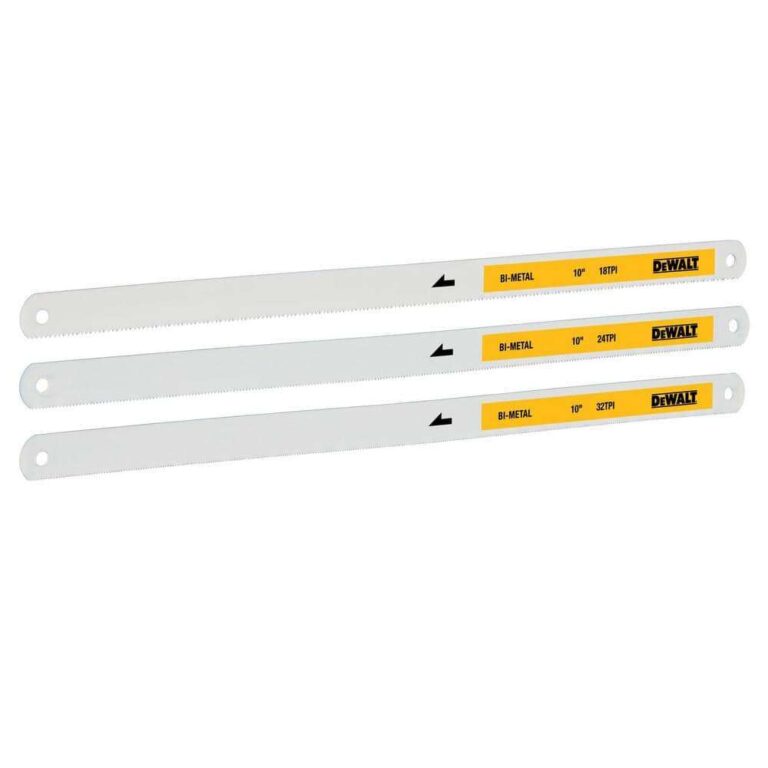
Cutting cast iron pipe with a hacksaw is possible, but it takes patience, firm support, and the right blade. For most small repair jobs in a U.S. home, use a 14- to 18-tooth-per-inch bi-metal hacksaw blade, support the pipe on both sides of the cut, and make slow, steady strokes. Do not strike the pipe with a hammer. Cast iron is hard but brittle, so sudden force can crack more pipe than you planned to remove.
This guide covers how to cut exposed or partly installed cast iron drain, waste, and vent pipe. It also explains when a hacksaw is not the best tool, how to connect the new section, and when a plumber should handle the work.
What You Need Before Cutting Cast Iron Pipe
Gather the tools and safety equipment before you start. A cast iron cut can take much longer than a cut through copper, PVC, or steel pipe.
Tools
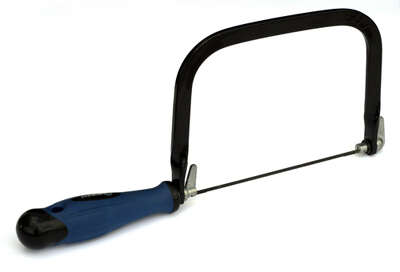
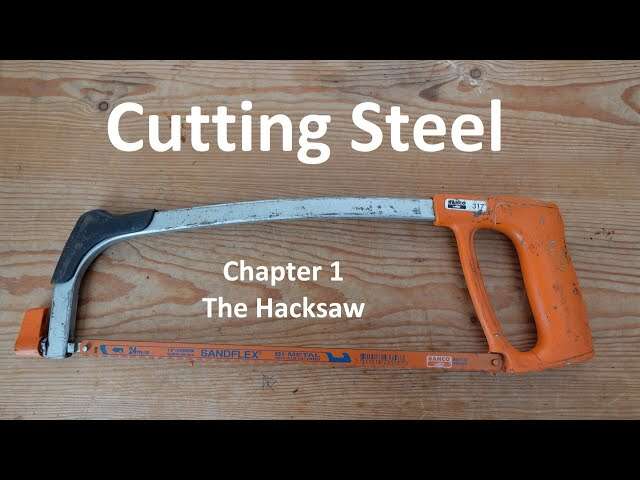
- Hacksaw with a strong frame
- 14- to 18-TPI bi-metal blade
- Extra replacement blades
- Tape measure
- Permanent marker or chalk
- Carpenter’s square or straightedge
- Flat metal file
- Wire brush
- Pliers or a wrench
- Screwdriver or nut driver for the coupling
- Pipe supports, blocks, or a temporary brace
- Flashlight or work light
- A bucket and rags for trapped water
A bi-metal blade has flexible steel backing and hardened teeth. It is less likely to snap than a low-cost, brittle blade.
Safety equipment
Wear:
- Safety glasses with side protection
- Cut-resistant work gloves
- Long sleeves and long pants
- Hearing protection if the work area is noisy
- A dust mask or respirator if old coatings, dirt, or insulation may create dust
A hacksaw does not usually create the fine dust produced by a powered abrasive wheel. Still, old pipe may have dirt, paint, rust, or unknown coatings on its surface. If you see damaged insulation or suspect asbestos-containing material, stop work and have it assessed. Do not sand, scrape, or cut suspected asbestos materials yourself.
If the pipe carries sewage, wear waterproof gloves and clean the area with an appropriate disinfectant after the repair. Never work on a line that may contain trapped sewage without first draining and isolating it.

Check the Pipe and the Work Area First
Before cutting, identify what the pipe does and how much weight it carries. Cast iron drain pipe can be heavy. A section that looks loose may still support a vertical stack or place stress on fittings above it.
Confirm that the pipe is safe to cut
A hacksaw is generally suitable for an exposed, accessible section of cast iron drain pipe. Stop and seek professional help if:
- The pipe is part of a main vertical soil stack.
- The pipe supports fittings, a branch, or another pipe.
- The cut is inside a wall, ceiling, crawl space, or trench with poor access.
- You cannot support both sides of the section being cut.
- The pipe is badly cracked or moving when touched.
- The line carries sewage from several occupied units.
- The pipe is near electrical wiring, gas piping, or structural supports.
- You cannot tell whether the pipe is cast iron, asbestos cement, or another material.
Cast iron pipe used for drainage is not the same as cast iron pressure pipe. Do not apply this method to a pressurized water line.
Shut down and drain the line
For a sink or branch drain, stop using every fixture that drains into the pipe. If needed, close the home’s main water supply and flush fixtures to reduce stored water.
Open a cleanout or disconnect point only if you can control the flow. Place a bucket under the work area. Even a drained line can hold water, sludge, or sewage between fittings.
Ventilate the area. Sewer gas can collect in enclosed spaces. If you smell strong sewer gas, leave the area and improve ventilation before continuing.
Support the pipe
Support the pipe on both sides of the planned cut. Use a solid brace, pipe hanger, or temporary support that cannot slip.
Do not hold the pipe with one hand while sawing with the other. Do not let a long section hang from the remaining fitting. Cast iron can break suddenly when the final wall of metal gives way.

How to Cut Cast Iron Pipe With a Hacksaw
The basic method is simple: mark a square line, start a shallow groove, and deepen it with controlled strokes. The key is to keep the blade straight and prevent pipe movement.
1. Measure and mark the cut
Measure the section you need to remove. Mark the cut with a permanent marker or chalk.
Wrap a strip of paper around the pipe so its edges meet. Trace the paper’s edge to create a guide line. This works well on round pipe because it keeps the mark square around the full circumference.
Use a carpenter’s square or straightedge to check the line. A crooked cut can make a rubber coupling sit unevenly and may reduce the sealing surface.
If you are installing a no-hub replacement section, check the coupling instructions before cutting. The required gap and pipe insertion depth depend on the fitting design.
2. Choose the best starting point
Place the blade so it crosses the marked line at the top or side of the pipe. A top starting point gives you a clear view and helps keep the blade aligned.
Make several light strokes to create a shallow groove. Do not press hard at the start. The groove keeps the teeth from skating across the curved surface.
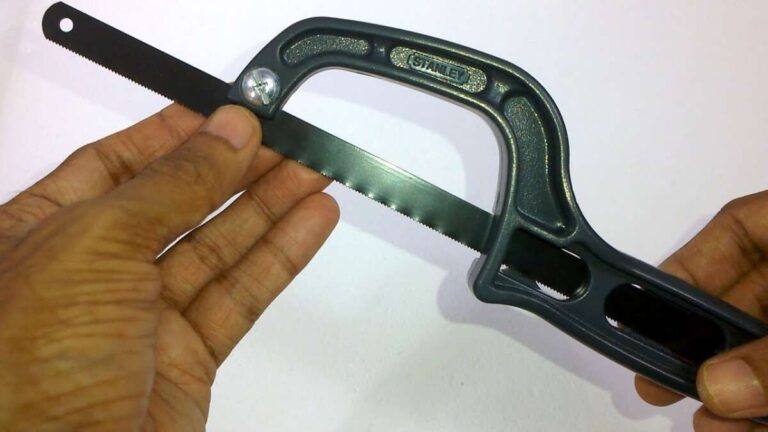
If the pipe is in a tight location, start on the side that gives the best blade travel. You may need to rotate the hacksaw frame or use a compact saw frame.
3. Cut slowly around the pipe
Use long, smooth strokes when space allows. Apply pressure only on the forward cutting stroke, then ease pressure as you pull the blade back.
Keep the blade at a right angle to the pipe. Stop often to check the line. If the cut begins to wander, correct it while the groove is still shallow.
As you work around the pipe:
- Cut through the upper surface.
- Move to one side while keeping the blade on the same line.
- Cut across the lower portion.
- Finish the section you cannot reach from the first position.
You do not need to cut in one continuous pass around the entire pipe. A series of connected cuts is safer than forcing the blade through a difficult angle.
4. Replace a dull or damaged blade
A dull blade makes the job slower and encourages excessive force. Replace it if:
- The teeth no longer remove visible metal.
- The blade slips from the groove.
- The blade bends during normal strokes.
- Several teeth are missing.
- The cut produces only fine powder instead of small chips.
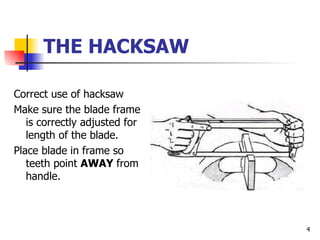
Keep the blade tight in the frame. A loose blade can twist, bind, or break.
5. Finish the final wall carefully
As the cut nears completion, support the section being removed. Reduce pressure and slow the strokes.
Do not twist the pipe to break the last connection. Do not hit it with a hammer or pry against a fitting. Finish the remaining metal with the hacksaw.
When the piece separates, lower it carefully. Cast iron sections are heavy, and sharp edges may remain.
6. Clean and inspect the cut
Use a wire brush to remove loose rust and dirt from the outside of the pipe. File sharp burrs from the cut edge.
Inspect the remaining pipe for:
- Cracks extending beyond the cut
- Thin, flaky metal
- Deep corrosion
- A bell or hub damaged by the work
- A cut that is too uneven for the planned coupling
A small amount of surface rust is common. A pipe wall that flakes away under light pressure may not provide a reliable connection.

How to Join the Replacement Section
For many U.S. residential drain repairs, the replacement is connected with a shielded no-hub coupling made for cast iron and the new pipe material. The coupling uses a rubber sleeve and a stainless-steel shield with tightening bands.
Use a coupling listed for the pipe types and sizes being joined. A generic rubber sleeve without the correct shield may not meet local plumbing requirements or provide adequate resistance to movement.
Basic connection steps
- Clean the outside of the remaining cast iron pipe.
- Check that the pipe ends are round and free of sharp burrs.
- Slide the coupling onto one pipe end.
- Fit the replacement pipe between the existing ends.
- Center the rubber sleeve over both joints.
- Position the metal shield evenly.
- Tighten the bands with the correct nut driver or torque tool.
- Follow the coupling manufacturer’s torque instructions.
- Support the repaired section so it does not pull on the joints.
- Run water through the line and inspect for leaks.
Do not guess the band torque. Some shielded couplings require a specified torque, and overtightening can damage the sleeve or distort the connection. Under-tightening can allow leaks or movement.
A coupling is not a substitute for proper support. Vertical stacks and long horizontal runs may need hangers or braces placed according to local code and the pipe manufacturer’s guidance.

When a Hacksaw Is Not the Best Choice
A hacksaw works when you have access, time, and a manageable section of pipe. It may be the wrong choice when the pipe is thick, buried, badly corroded, or difficult to support.
Consider another method when:
- The pipe is larger than you can comfortably reach around.
- The cut is in a cramped space.
- You need several cuts.
- The pipe must be removed without disturbing nearby fittings.
- The line is a major stack or building drain.
- The pipe wall is so corroded that it may collapse.
- You need a clean cut in a short time.
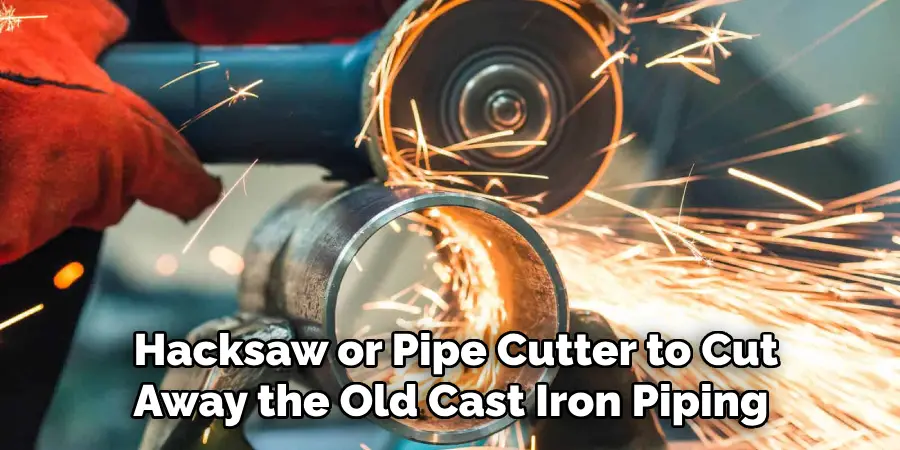
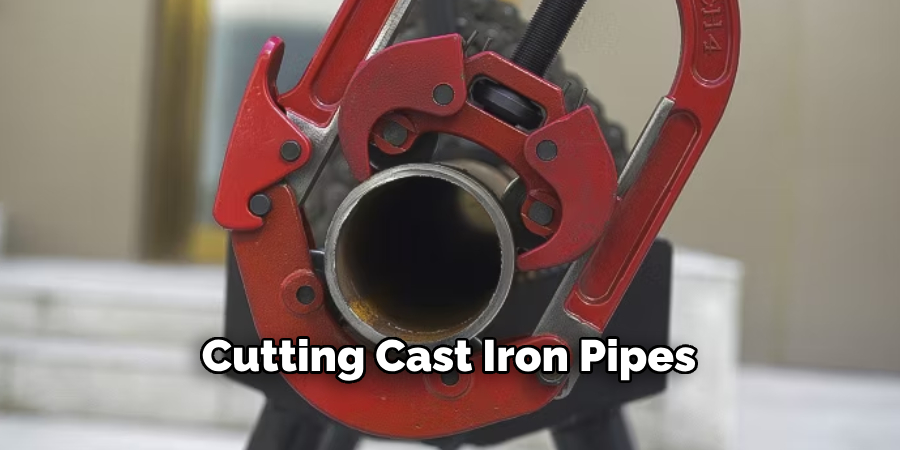
A chain-style soil pipe cutter can make a controlled cut, but it requires correct placement and enough room around the pipe. A reciprocating saw with a metal-cutting blade may be faster, but it creates vibration and can damage nearby fittings or weaken old pipe. An angle grinder cuts quickly but creates sparks, hot fragments, and dust. It requires much more control and stronger site precautions.
For a single accessible cut, the hacksaw has one major advantage: it creates little vibration and does not use electricity. Its trade-off is time and physical effort.

Common Problems and How to Fix Them
The blade keeps slipping
The starting groove may be too shallow, or the blade may be dull. Re-mark the cut, begin with light strokes, and keep the blade square to the pipe.
The cut is not straight
Stop before the groove becomes deep. Use the original mark to guide a new groove on the high side. Do not force the blade to make a sharp correction deep in the cut.
The pipe moves while cutting
Stop immediately and improve the support. Movement wastes effort and can crack a nearby hub or fitting.
The blade breaks
A loose blade, excessive side pressure, or a twisted frame can cause breakage. Wear eye protection, remove the broken blade with pliers, and install a new blade with proper tension.
The pipe cracks beyond the cut
This often means the pipe was already weakened, unsupported, or struck by force. Stop cutting and inspect the full section. If the crack reaches a fitting or continues along the pipe, replace more of the damaged section or call a plumber.
The new coupling leaks
First stop the line and dry the joint. Check that:
- Both pipe ends are clean.
- The sleeve is centered.
- The pipes are fully inserted.
- The shield is straight.
- The bands are tightened to the specified torque.
- The pipe sizes match the coupling.
If the cast iron is too rough, cracked, or thin, tightening the coupling may not solve the problem. Replace the damaged section or obtain professional help.
Hacksaw Versus Other Cast Iron Cutting Methods
The right method depends on access, pipe condition, and the risk of disturbing nearby plumbing.
| Method | Main benefit | Main drawback | Best use |
|---|---|---|---|
| Hacksaw | Low vibration and low equipment cost | Slow and tiring | One accessible cut |
| Chain soil pipe cutter | Designed for cast iron | Needs room around the pipe | Controlled cuts on larger pipe |
| Reciprocating saw | Faster than hand cutting | More vibration and noise | Open areas with good support |
| Angle grinder | Fast cutting | Sparks, dust, and heat | Controlled professional work |
| Cold chisel and hammer | May help with removal | Can crack fittings and create fragments | Limited demolition, not precise cuts |
Do not choose a tool only because it cuts faster. The safest method is the one that lets you support the pipe, control the cut, protect nearby materials, and make a suitable joint afterward.

Signs the Job Should Go to a Plumber
Call a licensed plumber when the pipe is part of a shared building drain, a main stack, or a system that serves several homes or units. Professional help is also wise when the pipe is inside a wall, under a slab, or connected to a fixture that cannot be taken out of service.
A plumber should assess the work if the pipe has severe corrosion, multiple cracks, damaged hubs, or poor support. In older U.S. homes, hidden materials may also require lead-safe or asbestos-related precautions.
Local plumbing codes can control the type of coupling, pipe material, support spacing, cleanout access, and testing method. A successful cut is not enough if the completed repair does not meet the applicable code.

Key Takeaways
- Use a sharp 14- to 18-TPI bi-metal hacksaw blade.
- Shut down and drain the line before cutting.
- Support the pipe on both sides of the cut.
- Mark a square line around the pipe.
- Start with light strokes and keep the blade straight.
- Never hammer, twist, or pry cast iron to finish the cut.
- File sharp edges and inspect for cracks or thin metal.
- Use a properly sized shielded coupling for the replacement joint.
- Follow the coupling maker’s tightening instructions.
- Get professional help for stacks, buried pipe, severe corrosion, or unknown insulation.
Frequently Asked Questions
Can I cut cast iron pipe with a regular hacksaw?
Yes, but a regular hacksaw works best with a new bi-metal blade and a rigid frame. A fine blade designed for thin metal may cut slowly. A 14- to 18-TPI blade is a practical range for many cast iron drain-pipe repairs.
How long does it take to cut cast iron pipe by hand?
The time depends on pipe diameter, wall thickness, access, blade condition, and your cutting position. A small, exposed pipe may take several minutes. A larger pipe or a pipe in a tight space may take much longer. Plan for extra blades and do not rush the final section.
Can I cut cast iron pipe without removing it?
Yes. Many repairs are made in place. The pipe must be exposed, drained, and firmly supported. If you cannot support the remaining pipe and the section being removed, do not cut it in place.
Should I use a no-hub coupling after cutting?
Often, a properly sized shielded no-hub coupling is used to join cast iron to a replacement pipe. The exact connector depends on pipe type, diameter, local code, and the repair layout. Follow the coupling manufacturer’s instructions rather than relying on appearance alone.
Can I use a hacksaw to cut a cast iron pipe hub?
A hub or bell is thicker and shaped differently from the straight pipe. Cutting it may damage the fitting or leave an unsuitable surface for a coupling. If the hub must be removed, a plumber may use a specialized method after checking the condition and support of the system.
What should I do if the pipe breaks instead of cutting cleanly?
Stop work and support the pipe. Inspect for cracks that extend into fittings or adjoining sections. If the break is larger than planned or the remaining pipe is weak, replace the full damaged section rather than trying to seal a cracked edge.
Final Recommendation
For one accessible cast iron drain-pipe cut, a sharp hacksaw, firm support, and slow strokes are usually enough. Mark the line carefully, keep the blade square, and finish the last part without force. If the pipe is structural to the plumbing system, badly corroded, concealed, or connected to a main stack, stop before cutting and have a qualified plumber evaluate it.
Recent Tool Guides
 Hammer
How To Hammer Flowers Onto Paper: Easy Guide
Learn how to hammer flowers onto paper with simple steps, helpful tips, and beautiful results for...
Read Guide → Wrench
How To Use A Hex Wrench: Easy Step-By-Step Guide
Learn how to use a hex wrench correctly with simple steps, helpful tips, and common mistakes...
Read Guide → Hacksaw
How To Cut Curtain Pole With Hacksaw: Easy Guide
Learn how to cut curtain pole with hacksaw safely and neatly. Follow simple steps for accurate...
Read Guide → Wrench
How To Use A Husky Torque Wrench: Easy Guide
Learn how to use a Husky torque wrench correctly with simple steps, torque settings, and safety...
Read Guide → Hammer
How To Hold A Hammer: Safe Grip Guide
Learn how to hold a hammer with the right grip, stance, and technique for safer, more...
Read Guide → Hacksaw
How To Cut Flexible Metal Conduit With Hacksaw: Easy Guide
Learn how to cut flexible metal conduit with hacksaw safely and cleanly. Follow simple steps for...
Read Guide →