Can A Hammer Drill Be Used As A Screwdriver: Safe Tips
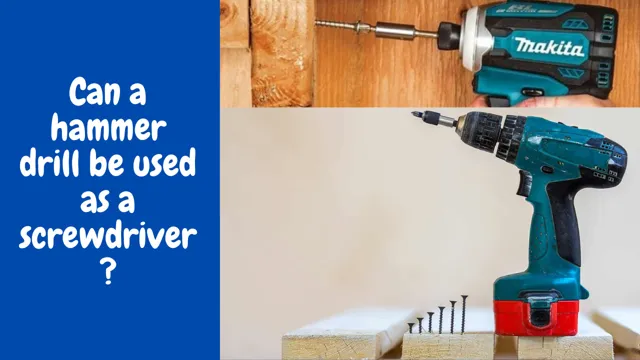
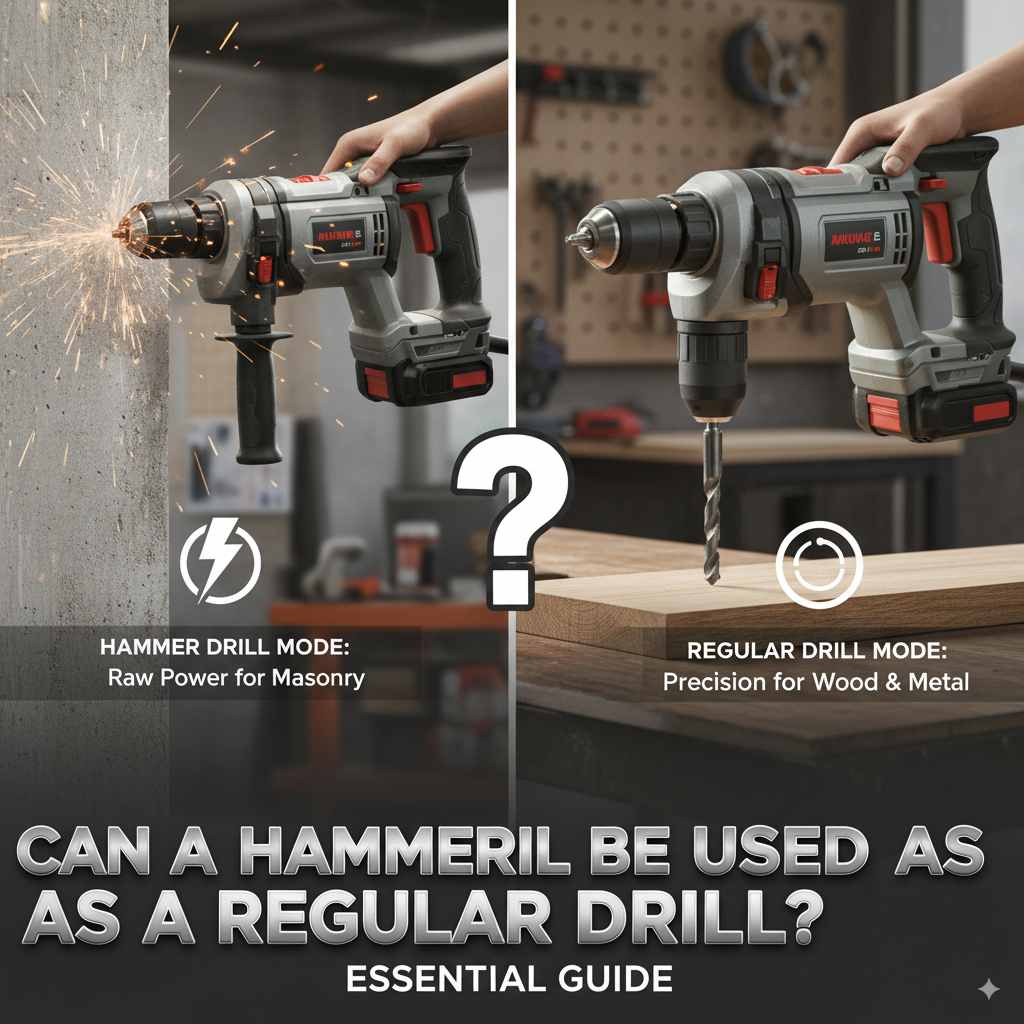
Yes, you can use a hammer drill as a screwdriver—but only when the hammer action is turned off. A hammer drill can drive screws in wood, drywall, plastic, and some metal when fitted with the right bit.
For most jobs around a U.S. home, a regular drill or impact driver is easier to control. A hammer drill is still useful when you need one tool for both screwdriving and drilling into brick, block, or concrete.
How a Hammer Drill Drives Screws
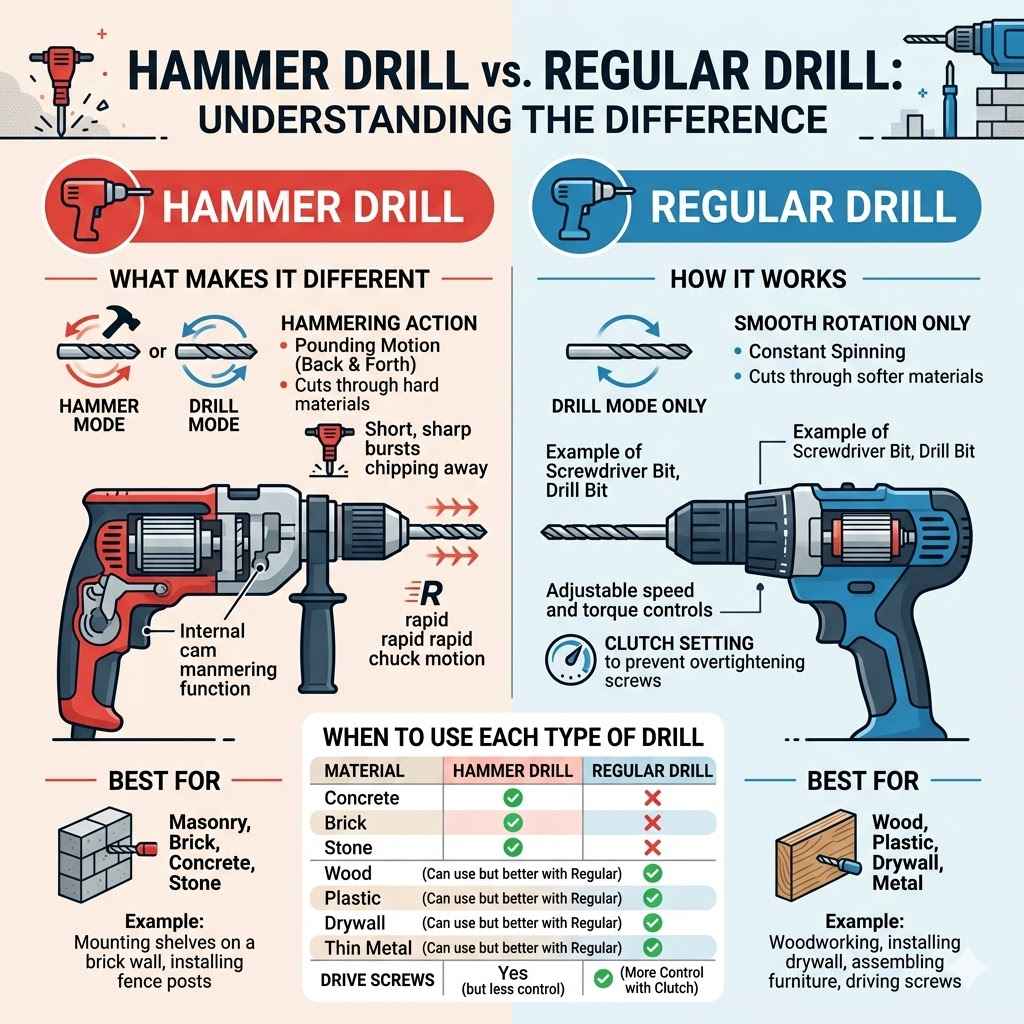
A hammer drill works like a standard drill when its hammer mode is off. The motor turns the chuck, which turns the screwdriver bit. This lets you drive or remove screws.
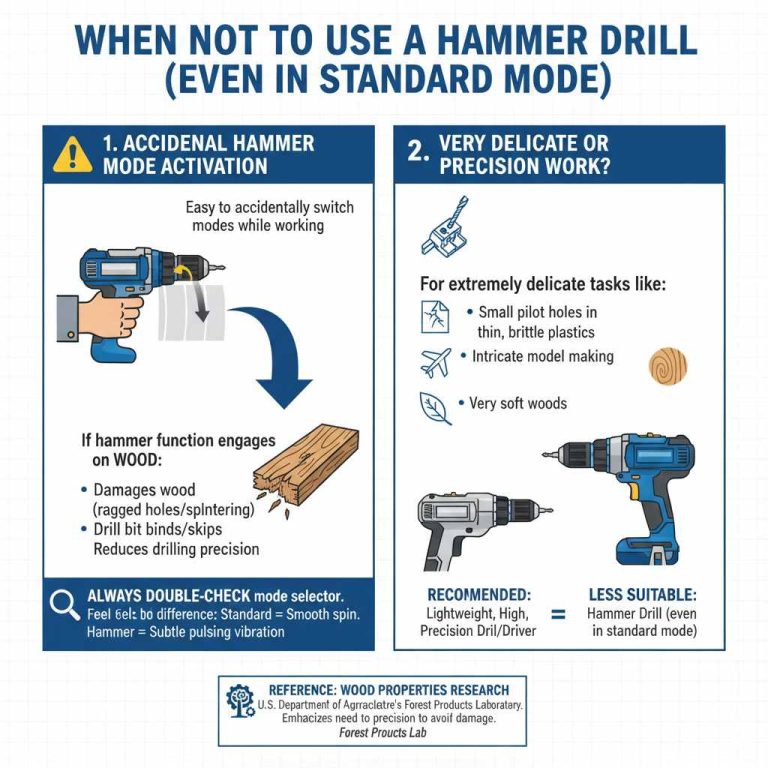
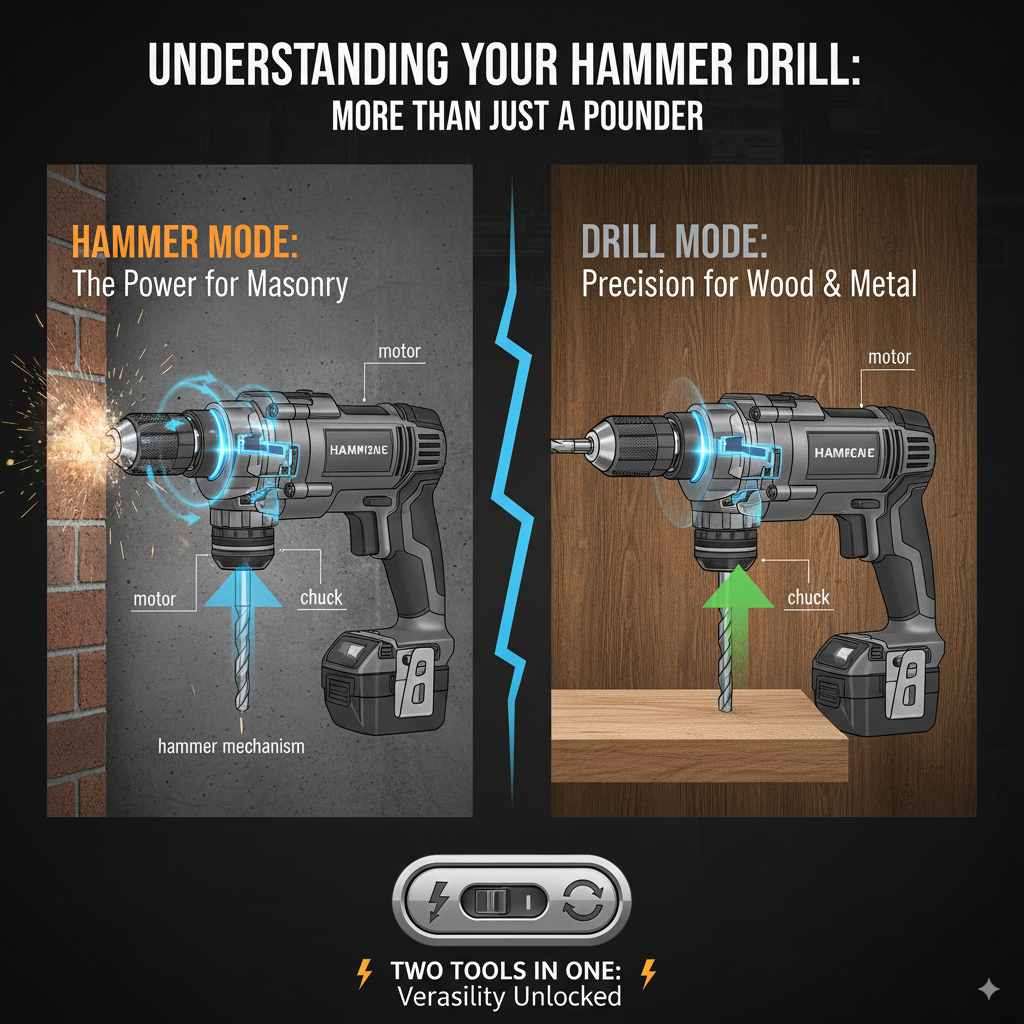
The hammer setting adds a rapid forward pulsing action. That action helps break up masonry as the bit turns. It is useful for concrete and brick, but it is not suitable for normal screwdriving.
If the hammer mode stays on, the pulsing force can:
- Damage the screw head
- Strip the bit
- Crack plastic parts
- Mark or split wood
- Reduce control
- Overload the screw or fastener
The key point is simple: use rotation only for screws, not rotation plus hammering.
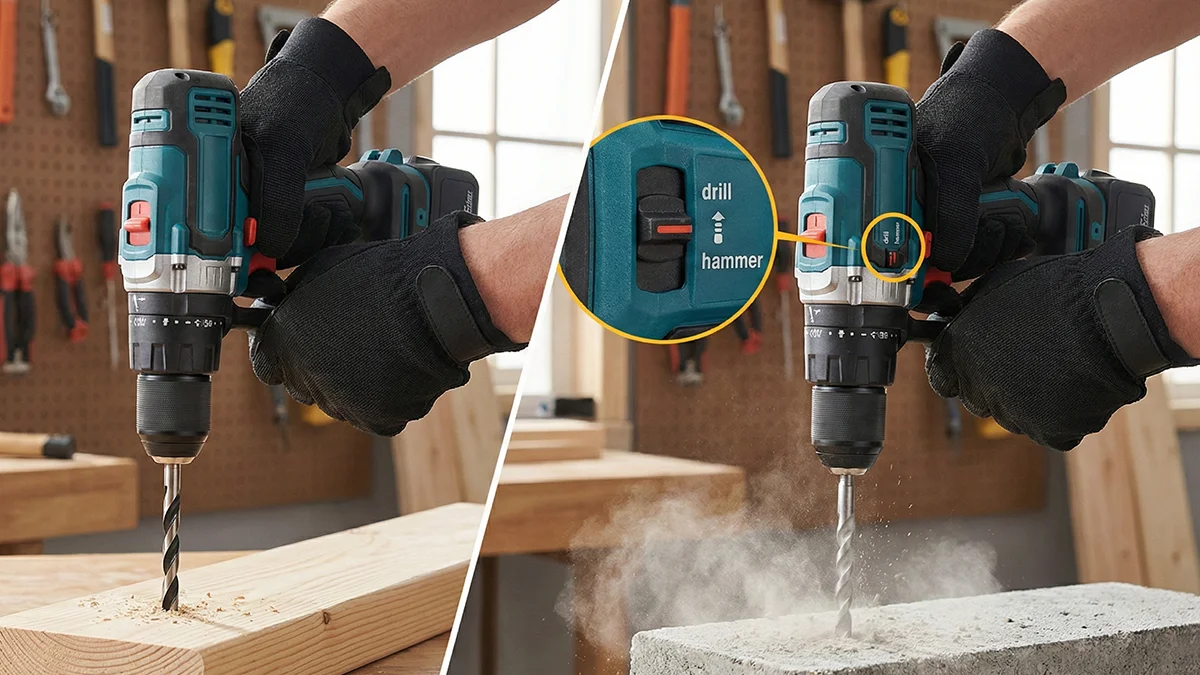
Most hammer drills have a mode selector with symbols. Common symbols include:
- A screw symbol for driving
- A drill-bit symbol for normal drilling
- A hammer symbol for masonry drilling
The exact symbols vary by brand and model. Read the manual if the controls are not clear. Manufacturers such as DEWALT, Bosch, and Milwaukee Tool document mode settings in their product manuals.

When Should You Use a Hammer Drill as a Screwdriver?
Use a hammer drill as a screwdriver when you already have the tool and need to complete a small or medium screwdriving task. It can work well for basic home repairs, shelving, furniture assembly, and construction work.
It is a practical choice when:
- You need to drive long screws into wood
- You are installing hardware or brackets
- You need to remove stubborn screws
- You want one tool for masonry drilling and screwdriving
- You have a cordless hammer drill with a clutch
- You are working where a standard drill is not available
A hammer drill may be less convenient for delicate work. Many models are heavier than standard drills. Some also have more torque than you need for small screws.
For example, a hammer drill can drive structural screws into wood. It may be less suitable for assembling a cabinet with small screws, where low speed and gentle clutch control matter more.
Hammer drill versus regular drill
A regular drill is often the better choice for everyday screwdriving. It is usually lighter and easier to control.
A hammer drill has one major advantage: it can switch to hammer mode for masonry. That extra function adds weight and complexity, but it can save you from buying a second tool.
Hammer drill versus impact driver
An impact driver uses rotational impacts to help turn screws. A hammer drill uses forward impacts to help drill masonry. These are different actions.
An impact driver is often better for:
- Long screws
- Large fasteners
- Deck construction
- Repeated screwdriving
- Fasteners that need high turning force
a hammer drill is often better when you need both:
- A drill chuck for many bit types
- A masonry hammer mode
- A clutch for controlled screwdriving
Neither tool replaces the other in every task.
How to Use a Hammer Drill as a Screwdriver
Follow these steps before driving a screw with a hammer drill.
1. Turn off hammer mode
Set the tool to the screw or normal drill symbol. Do not use the hammer symbol for driving screws.
If the tool has no clear mode label, check the owner’s manual. Some models use a sliding collar. Others use a rotating selector.
2. Install the correct driver bit
Use a bit that matches the screw head:
- Phillips bit for Phillips screws
- Torx bit for star-drive screws
- Square bit for square-drive screws
- Slotted bit for flat-head screws
- Hex bit for hex fasteners
The bit should fit the screw head with little movement. A loose fit can cause cam-out, which happens when the bit slips out of the screw head.
Use a bit made for the screw type and size. For example, a Torx T25 bit is not a substitute for a Torx T20 bit.
3. Set the clutch
Set the clutch to a low or medium number at first. The clutch limits the turning force when the screw reaches resistance.
A low clutch setting is useful for small screws and soft materials. A higher setting may be needed for long screws or dense wood.
Start low. Increase the setting only if the screw stops before it reaches the correct depth.
Do not rely on the clutch for every task. Some hammer drills have a clutch, while others have only a drill mode with no torque limit.
4. Select a low speed
Use the low-speed range for better control. Low speed also reduces the chance of stripping the screw head.
Many drills use:
- Speed 1 for high torque and low speed
- Speed 2 for higher speed and lower torque
Choose Speed 1 for most screwdriving tasks. Use Speed 2 only for small screws when you can maintain good control.
5. Align the tool with the screw
Hold the drill straight in line with the screw. Keep the bit centered in the screw head.
Press the bit firmly into the screw before pulling the trigger. Light pressure can cause the bit to skip. Too much pressure can damage the screw, bit, or work surface.
6. Start slowly
Squeeze the trigger gently. Let the bit catch the screw head before increasing speed.
Stop when the screw reaches the desired depth. Do not keep driving after the head is flush unless the material and fastener call for it.
7. Check the result
A properly driven screw should:
- Sit at the correct depth
- Hold the material firmly
- Have an undamaged head
- Avoid crushing or splitting the surface
- Remain straight
If the bit slips, stop and inspect the screw head and bit. Replace damaged parts before trying again.
What Settings Should You Use?
The right setting depends on the screw, material, and required depth. The table below gives a safe starting point, not a universal rule.
| Task | Hammer mode | Speed | Clutch |
|---|---|---|---|
| Small screws in soft wood | Off | Low | Low |
| Cabinet or furniture screws | Off | Low | Low to medium |
| Long wood screws | Off | Low | Medium to high |
| Screws in hardwood | Off | Low | Medium |
| Self-tapping screws in thin metal | Off | Low to medium | Low to medium |
| Masonry screws | Off while driving | Low | Follow fastener guidance |
| Drilling a hole in concrete | On | Low to medium | Drill setting |
The main exception is masonry screws. You may use hammer mode while drilling the pilot hole if the bit and tool support it. Turn hammer mode off when driving the screw.
Always follow the fastener maker’s instructions. Some masonry anchors need a specific hole diameter and depth. A hole that is too large may not hold the anchor correctly.
Can You Drive Screws Into Concrete With a Hammer Drill?
Yes, but the process depends on the fastener. A hammer drill can make a hole for many concrete screws, but it does not make every concrete fastening job easy.
- Choose a masonry bit with the size listed for the screw.
- Mark the hole location.
- Check for hidden wires, pipes, or other hazards.
- Drill the pilot hole with hammer mode on if required.
- Clear dust from the hole as directed by the fastener instructions.
- Switch hammer mode off.
- Install a driver bit that matches the screw.
- Drive the screw at low speed.
- Stop when the screw is secure.
Do not use a standard wood or metal bit on concrete. Use a masonry bit designed for the material.
A hammer drill is not the same as a rotary hammer. A rotary hammer is built for heavier concrete drilling and often uses SDS-style bits. For a few small holes, a hammer drill may be enough. For deep, large, or repeated holes in concrete, use the tool specified for that work.
When a Hammer Drill Is a Poor Choice for Screwdriving
A hammer drill is not the best screwdriver for every job. Its size and power can make small work harder.
Use a regular drill or electric screwdriver instead when:
- You are assembling delicate furniture
- The screws are very small
- The material is soft or easy to split
- You need a light tool for overhead work
- The hammer drill has no clutch
- You need very precise depth control
- You are driving hundreds of small screws
Use an impact driver instead when:
- You are driving many long screws
- The fasteners require high turning force
- You are building a deck
- You are installing structural screws
- The screw repeatedly stalls a drill
An impact driver can also damage small screws or delicate materials if used carelessly. The best tool depends on control, not just power.

Common Problems and How to Fix Them
The screw head strips
A stripped head usually means the bit does not match the screw, the tool is not straight, or the speed is too high.
Try a new bit that fits the head exactly. Set the drill to low speed. Apply firm, straight pressure and use a lower clutch setting.
The screw will not go in
The clutch may be set too low. The bit may also be worn, or the material may be too hard for the chosen screw.
Increase the clutch one step at a time. If the screw still will not enter, drill a suitable pilot hole or use a different fastener.
The wood splits
The screw may be too close to the edge, too large for the material, or installed without a pilot hole.
Move the screw if possible. Drill a pilot hole that matches the screw’s shank and the material. Keep the hammer function off.
The tool jumps
The bit may not be fully seated in the screw head. The trigger speed may also be too high.
Stop the tool. Reposition the bit and begin at low speed. Do not force the drill when the bit is slipping.
The drill feels hot
Some heat is normal during use, but excessive heat can signal overload, a dull bit, or a stalled motor.
Release the trigger and let the tool cool. Check the bit and work material. Do not block the motor vents. If the tool smells burnt, produces smoke, or makes unusual sounds, stop using it and follow the manufacturer’s service instructions.
Safety Rules for Using a Hammer Drill as a Screwdriver
Wear safety glasses when driving screws or drilling. A broken bit, screw fragment, or piece of material can travel quickly.
Keep hands away from the bit and chuck. Remove the battery or unplug the tool before changing bits or making adjustments.
Check the work area before drilling. In U.S. homes, walls may contain electrical cables, plumbing, gas lines, or other hidden services. Use suitable detection methods and avoid drilling where you cannot confirm the area is clear.
Secure loose workpieces. Do not hold a small piece in one hand while driving a screw into it with the other.
Use hearing protection during long periods of drilling, especially with hammer mode. Keep loose clothing, hair, and jewelry away from the rotating chuck.
For corded tools, use a properly grounded outlet and keep the cord away from the bit. For cordless tools, use the battery and charger approved for that tool family. Follow the owner’s manual and the fastener instructions.

Quick Decision Guide
Choose a hammer drill if you need one tool for screwdriving and occasional masonry drilling.
Choose a regular drill if your main work involves wood, plastic, metal, furniture, and small screws.
Choose an impact driver if you often drive long or large screws and need high turning force.
Choose a rotary hammer if you regularly drill larger or deeper holes in concrete and masonry.
The best choice is based on the work, not the label. A hammer drill can drive screws well when its hammer action is off and its torque is controlled.
FAQs
Can I use hammer mode to drive screws?
No. Turn hammer mode off before driving screws. The forward impacts can damage the fastener, bit, material, or tool.
Can a hammer drill remove screws?
Yes. Set the tool to reverse, turn hammer mode off, and use the correct driver bit. Start at low speed to avoid stripping the screw head.
Do I need a clutch to use a hammer drill as a screwdriver?
No, but a clutch makes screwdriving safer and easier. It helps limit torque and reduces the chance of driving a screw too deep or damaging the material.
Can I use a hammer drill for drywall screws?
Yes, but use low speed, a low clutch setting, and light pressure. Stop when the screw head is slightly below the drywall surface without breaking the paper face.
Is a hammer drill stronger than a regular drill?
It may provide more capability for masonry work, but strength depends on the model. Hammer mode helps with forward impacts; it does not automatically make the tool better for screwdriving.
Conclusion
A hammer drill can be used as a screwdriver when the hammer function is off. Install the correct bit, use low speed, start with a low clutch setting, and keep the tool straight.
For occasional screwdriving, it is a useful all-purpose tool. For delicate assembly, choose a regular drill. For repeated heavy screwdriving, an impact driver may offer better control and speed. Always follow the tool manual and fastener instructions before starting work.
Recent Tool Guides
 Hammer
How To Hammer Flowers Onto Paper: Easy Guide
Learn how to hammer flowers onto paper with simple steps, helpful tips, and beautiful results for...
Read Guide → Wrench
How To Use A Hex Wrench: Easy Step-By-Step Guide
Learn how to use a hex wrench correctly with simple steps, helpful tips, and common mistakes...
Read Guide → Hacksaw
How To Cut Curtain Pole With Hacksaw: Easy Guide
Learn how to cut curtain pole with hacksaw safely and neatly. Follow simple steps for accurate...
Read Guide → Wrench
How To Use A Husky Torque Wrench: Easy Guide
Learn how to use a Husky torque wrench correctly with simple steps, torque settings, and safety...
Read Guide → Hammer
How To Hold A Hammer: Safe Grip Guide
Learn how to hold a hammer with the right grip, stance, and technique for safer, more...
Read Guide → Hacksaw
How To Cut Flexible Metal Conduit With Hacksaw: Easy Guide
Learn how to cut flexible metal conduit with hacksaw safely and cleanly. Follow simple steps for...
Read Guide →