Can A Hammer Drill Be Used As A Jackhammer: Yes Or No
A standard hammer drill should not be used as a jackhammer. It can make small holes in brick, block, and light concrete, but it does not deliver the power, stroke, or control needed for serious demolition.
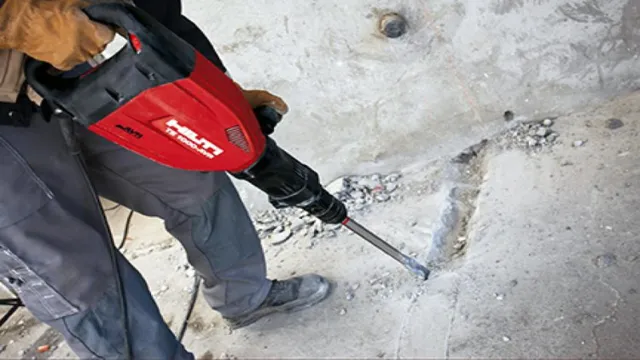
In the United States, a true jackhammer is usually called a pneumatic jackhammer, electric demolition hammer, or concrete breaker. A hammer drill is a lighter tool for drilling. A rotary hammer or demolition hammer is the better choice for breaking concrete, removing tile, or cutting masonry.

Hammer Drill vs. Jackhammer: What Is the Difference?
A hammer drill and a jackhammer both strike a work surface, but they are built for different jobs.
A hammer drill combines:
- Rotary motion
- A light forward hammer action
- A drill chuck or tool holder
- A small masonry bit for making holes
A jackhammer uses repeated, high-force blows to break material. It may not rotate at all. Instead, it drives a pointed, flat, or chisel-shaped tool into concrete, asphalt, stone, or masonry.
A rotary hammer sits between these tools. It can drill holes and, on many models, switch to hammer-only mode for light chiseling. A heavy rotary hammer or demolition hammer can handle much more work than a standard hammer drill.
Basic comparison
| Tool | Main action | Best use | Can break concrete? |
|---|---|---|---|
| Standard hammer drill | Rotation plus light impacts | Small holes in masonry | Only light surface work |
| Rotary hammer | Strong rotation plus piston-driven impacts | Drilling and chiseling | Yes, within its rated limits |
| Demolition hammer | Powerful hammering with little or no rotation | Concrete and masonry removal | Yes |
| Pneumatic jackhammer | High-force air-driven impacts | Heavy concrete, asphalt, and road work | Yes |
The key difference is the impact system. A standard hammer drill often uses a mechanical clutch or toothed plate to create vibration and light blows. A rotary hammer uses a piston and air cushion to create much stronger impacts.
That difference affects both speed and tool life. A hammer drill may survive occasional light chipping, but repeated demolition can damage its chuck, gears, clutch, motor, or housing.
Can You Use a Hammer Drill for Chiseling?
You can use some hammer drills for very light chiseling, but only if the tool has a hammer-only mode and accepts a proper chisel bit. Even then, the tool may not be designed for extended demolition.
Many standard hammer drills have only two settings:
- Drill
- Hammer drill
These settings both rotate the bit. They do not provide a true chisel mode.
Some combination tools have three settings:
- Drill only
- Hammer drill
- Hammer only
A three-mode tool may be marketed as a rotary hammer, not a standard hammer drill. Check the manual before using it for chiseling.
When light chiseling may be reasonable
A compatible rotary hammer can often handle small jobs such as:
- Removing a few wall tiles
- Scraping thin mortar
- Chipping a small section of brick
- Opening a shallow channel in masonry
- Removing loose concrete from an edge
- Breaking small patches of nonstructural concrete
A standard hammer drill is a poor choice for:
- Breaking a concrete slab
- Removing a concrete step
- Demolishing a brick wall
- Cutting through thick masonry
- Removing a large tile floor
- Breaking asphalt
- Driving a chisel for long periods
If the job requires force, speed, or hours of impact work, use a rotary hammer, demolition hammer, or jackhammer.
Why a Hammer Drill Is a Poor Substitute for a Jackhammer
A hammer drill lacks the impact energy needed for efficient demolition. It also has a chuck and gear system that may not tolerate side loads from a chisel.
1. It produces lighter impacts
A hammer drill is designed to help a masonry bit cut into hard material. Its impacts support drilling. They are not meant to drive a wide chisel through concrete.
A demolition hammer sends much stronger blows through a dedicated tool holder. This lets the chisel crush and lift material instead of slowly wearing it away.
2. The bit may rotate when you need control
Rotation is useful for drilling. It is unwanted when you are chiseling. A rotating chisel can twist, bind, or move away from the cut line.
A hammer-only tool keeps the chisel aligned while the piston delivers the blows.
3. The chuck can suffer damage
Most hammer drills use a keyed or keyless chuck. These chucks hold round drill bits. They are not made for the repeated side force created by a chisel.
Rotary hammers use systems such as:
- SDS-Plus
- SDS-Max
- Spline
These holders allow the bit to move back and forth while staying locked against rotation. They are built for impact work.
4. Demolition will take much longer
A weak tool may eventually remove the material, but slow progress can create more heat and strain. You may press harder, which increases vibration and the risk of losing control.
A stronger tool is not always safer by itself. However, the correct tool lets you work at a lower strain level and finish the task sooner.
5. The warranty may not cover misuse
Tool manuals often list approved tasks and accessories. Using a drill as a demolition tool may fall outside those limits.
Read the manual for the exact model. Do not assume that a similar-looking tool has the same impact system or rating.

How to Tell Which Tool You Have
Tool names can be confusing. Some stores and manufacturers use “hammer drill” as a broad term. The controls and tool holder provide better clues.
A standard hammer drill usually has:
- A three-jaw chuck
- A drill bit that rotates in every operating mode
- A hammer-drill selector
- A side handle
- No hammer-only setting
- No SDS tool holder
A rotary hammer usually has:
- An SDS-Plus or SDS-Max holder
- A dedicated hammer-only setting
- A drill-only setting
- A rotary-hammer setting
- A larger body and side handle
- A piston-based impact system
A demolition hammer usually has:
- A large SDS-Max, spline, or hex holder
- Hammer-only operation
- No normal drilling mode
- A long front barrel
- A substantial side or D-handle
- A rating for concrete or masonry removal
Do not rely on the word “hammer” in the product name. Look for the operating modes, bit system, and instructions.
What Can You Use Instead?
Choose the tool based on the material, depth, area, and amount of work.
Use a hammer drill for small holes
Choose a hammer drill when you need to install:
- Concrete screws
- Masonry anchors
- Plastic wall plugs
- Small cable or pipe supports
- Light-duty fixtures
Use a sharp masonry bit. Keep the bit straight. Let the tool do the work instead of forcing it.
Use a rotary hammer for drilling and light breaking
A rotary hammer is a better choice when you need to:
- Drill many holes in concrete
- Drill larger holes
- Use SDS bits
- Remove tile
- Chip mortar
- Break small areas of concrete
For home repairs, an SDS-Plus rotary hammer is often more useful than a standard hammer drill when both drilling and chiseling are needed.
Use a demolition hammer for larger breaking jobs
A demolition hammer is suited to:
- Concrete floor removal
- Thick masonry
- Brick and block demolition
- Removing steps or curbs
- Heavy tile removal
- Chipping foundations or slabs
It is usually heavier and harder to control. Use it only when the work requires that level of force.
Rent a jackhammer for major work
Rental centers in the United States commonly offer electric or pneumatic breakers. Renting may make sense when:
- The job is too large for a rotary hammer
- You need to remove a slab
- The material is reinforced or very thick
- The task will last more than a short repair
- You do not want to store a large demolition tool
For structural concrete, load-bearing walls, foundations, or areas near buried utilities, get professional advice before breaking anything.

How to Use a Hammer Drill Safely for Masonry Work
If your task only involves drilling, use the hammer drill as the manufacturer directs.
- Check the material. Confirm that you are drilling into nonstructural masonry or concrete.
- Check for hazards. Look for electrical wires, plumbing, gas lines, and embedded metal.
- Read the manual. Confirm the bit type, operating mode, and duty limits.
- Fit the correct bit. Use a masonry bit rated for the material.
- Install the side handle. Hold the tool with both hands.
- Wear protective equipment. Use safety glasses, hearing protection, work gloves, and suitable footwear.
- Start slowly. Keep the bit steady until it forms a clear hole.
- Clear dust often. Pull the bit out from time to time to remove dust and reduce binding.
- Stop if the tool overheats. Let it cool before continuing.
- Inspect the hole. Stop if the material cracks or behaves differently than expected.
The Occupational Safety and Health Administration warns that drilling and breaking concrete can create respirable crystalline silica dust. Use dust control methods, ventilation, or a suitable respirator program where required. Follow OSHA’s silica standard and your tool maker’s dust instructions.
Never use a hammer drill near water with an extension cord unless the electrical setup has proper protection. A ground-fault circuit interrupter, or GFCI, can reduce shock risk, but it does not make unsafe work safe.
Can You Put a Chisel Bit in a Hammer Drill?
Only use a chisel bit if the drill is designed to accept it and has a hammer-only mode.
A standard three-jaw chuck is not the same as an SDS holder. Do not clamp an improvised chisel, screwdriver, punch, or metal rod into a drill chuck. It can slip, bend, shatter, or become a dangerous projectile.
Do not use adapters to turn a normal drill into a jackhammer unless the manufacturer specifically approves that setup. An adapter may fit physically but still exceed the chuck, bearing, or gear limits.
If the tool has an SDS-Plus holder and hammer-only mode, use the chisel type listed in the manual. Common options include:
- Point chisel for starting a break
- Flat chisel for splitting and lifting material
- Tile chisel for thin tile and adhesive
- Scaling chisel for scraping
Match the accessory to the tool size. A large SDS-Max chisel can overload a small SDS-Plus rotary hammer.

Warning Signs That You Are Using the Wrong Tool
Stop the work if you notice any of these signs:
- The drill housing becomes very hot
- The motor slows sharply
- The chuck loosens
- The bit slips
- The tool makes a new grinding sound
- The handle twists sharply
- The bit binds in the material
- The cord, plug, or battery becomes hot
- Cracks spread beyond the work area
- Dust clouds become difficult to control
A tool that struggles is not always a tool that needs more pressure. It may need a sharper bit, a different setting, a better dust method, or a different class of tool.
Common Mistakes to Avoid
Forcing the drill
Pressure does not turn a hammer drill into a jackhammer. Excess force can stall the motor and increase heat.
Using the wrong bit
Wood, metal, and general-purpose bits are not designed for concrete impact work. Use a masonry bit or the approved SDS accessory.
Holding the tool by one hand
A bit can bind without warning. Use the side handle and keep your body out of the tool’s possible movement path.
Ignoring hidden services
Before drilling or chiseling, check for wires, pipes, radiant heating, and post-tension cables. A building plan, detector, or qualified professional may be needed.
Breaking structural material without advice
Removing concrete from a beam, column, foundation, load-bearing wall, or suspended slab can affect the building. Stop and consult a qualified contractor or structural engineer.
Treating dust as harmless
Concrete dust can contain respirable crystalline silica. A simple paper mask may not provide the protection required for the task. Use a tested dust-control method and follow current OSHA requirements.
Quick Decision Guide
Use this guide before starting:
| Your task | Better tool |
|---|---|
| Drill a few small holes in brick | Hammer drill |
| Drill many holes in concrete | Rotary hammer |
| Remove a few wall tiles | Rotary hammer with tile chisel |
| Remove a tile floor | Rotary hammer or demolition hammer |
| Break a small concrete patch | Rotary hammer |
| Break a thick slab | Demolition hammer or jackhammer |
| Remove asphalt | Pneumatic or heavy electric jackhammer |
| Work on structural concrete | Qualified professional assessment first |
The area and thickness matter as much as the material. A small repair may need only a rotary hammer. A large slab can require a dedicated breaker, dust control, debris handling, and a plan for hidden utilities.

Frequently Asked Questions
Will a hammer drill break concrete?
A hammer drill can chip or slowly break small amounts of concrete, especially at an edge or around an existing hole. It is not an efficient tool for thick concrete, slabs, foundations, or extended demolition.
Is a rotary hammer the same as a jackhammer?
No. A rotary hammer can drill and often chisel. A jackhammer or demolition hammer is made mainly for breaking material and usually delivers much stronger impacts.
Can I remove tile with a hammer drill?
You may remove a small amount of tile with a tool that has a hammer-only mode and a suitable chisel. A standard hammer drill that rotates in every mode is usually less controlled and more likely to damage the tool or surface.
Does a bigger drill bit make a hammer drill work like a jackhammer?
No. A larger bit increases the cutting area and load. It does not increase the tool’s impact energy. The wrong bit can make the drill overheat or bind.
Should I use a jackhammer on a concrete foundation?
Do not begin without checking the foundation’s role, embedded utilities, reinforcement, and structural design. Breaking structural concrete can cause serious damage. Ask a qualified contractor or structural engineer first.
Final Answer
A standard hammer drill cannot replace a jackhammer. It is suitable for small masonry holes and very light chipping, but serious concrete or masonry removal calls for a rotary hammer, demolition hammer, or jackhammer.
Check the tool’s manual, operating modes, bit holder, and impact rating. If the tool lacks a hammer-only mode and a purpose-built impact holder, use it for drilling only. For large, thick, structural, or dusty demolition work, choose the correct breaker and use proper safety controls.
Recent Tool Guides
 Wrench
How To Store A Torque Wrench: Smart Storage Guide
Learn how to store a torque wrench correctly to protect its calibration, prevent damage, and extend...
Read Guide → Hammer
How To Hammer Flowers Onto Paper: Easy Guide
Learn how to hammer flowers onto paper with simple steps, helpful tips, and beautiful results for...
Read Guide → Wrench
How To Use A Hex Wrench: Easy Step-By-Step Guide
Learn how to use a hex wrench correctly with simple steps, helpful tips, and common mistakes...
Read Guide → Hacksaw
How To Cut Curtain Pole With Hacksaw: Easy Guide
Learn how to cut curtain pole with hacksaw safely and neatly. Follow simple steps for accurate...
Read Guide → Wrench
How To Use A Husky Torque Wrench: Easy Guide
Learn how to use a Husky torque wrench correctly with simple steps, torque settings, and safety...
Read Guide → Hammer
How To Hold A Hammer: Safe Grip Guide
Learn how to hold a hammer with the right grip, stance, and technique for safer, more...
Read Guide →