What Size Wrenches Do I Need: Complete Size Guide
For most DIY jobs in the United States, start with a combination wrench set from 8 to 19 mm and 1/4 to 1 inch. That range covers many household repairs, bicycles, lawn equipment, and common automotive work. Add larger sizes, deep sockets, or specialty tools only when the job or service manual calls for them.
The right wrench depends on three things:
- The fastener’s measurement system: SAE or metric
- The fastener size, measured across its flats
- The space and force needed for the job
A small set may handle light repairs, but a mixed metric-and-SAE set is more useful in the United States. American-made products often use both systems, and the wrong size can damage the fastener.

SAE and Metric Wrench Sizes
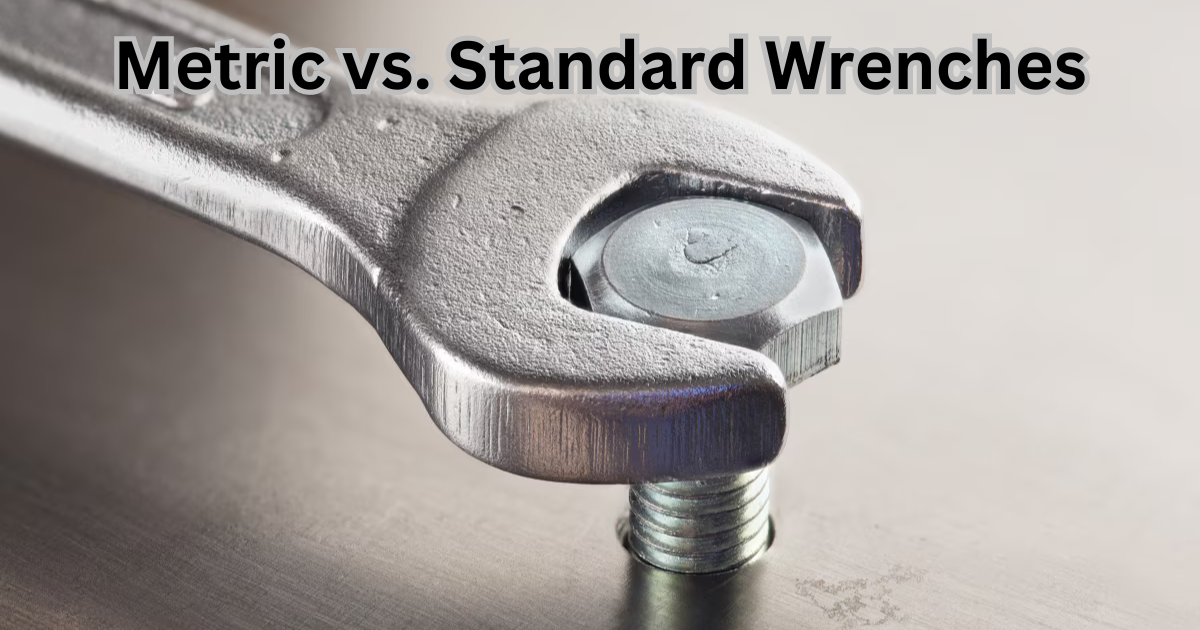
SAE wrenches use fractions of an inch, while metric wrenches use millimeters. The two systems are not interchangeable, even when some sizes seem close.
SAE means Society of Automotive Engineers. In everyday tool use, “SAE” usually means inch-based sizes such as 3/8 inch, 1/2 inch, or 3/4 inch.
Metric tools use millimeters. Common examples include 10 mm, 13 mm, 15 mm, and 18 mm.
A wrench size describes the distance across the flat sides of the nut or bolt head. It does not describe the bolt’s thread diameter.
Common SAE wrench sizes
| SAE size | Approximate metric size | Common uses |
|---|---|---|
| 1/4 inch | 6.35 mm | Small hardware, electronics, light repairs |
| 5/16 inch | 7.94 mm | Small equipment and brackets |
| 3/8 inch | 9.53 mm | Household and light automotive work |
| 7/16 inch | 11.11 mm | Small engines and older vehicles |
| 1/2 inch | 12.70 mm | Automotive and outdoor equipment |
| 9/16 inch | 14.29 mm | Vehicles, trailers, and machinery |
| 5/8 inch | 15.88 mm | Automotive and equipment repairs |
| 11/16 inch | 17.46 mm | Larger brackets and machinery |
| 3/4 inch | 19.05 mm | Suspension, trailers, and heavy hardware |
| 7/8 inch | 22.23 mm | Larger equipment and plumbing hardware |
| 1 inch | 25.40 mm | Large fasteners and structural hardware |
The metric column is only an approximation. For example, a 3/8-inch wrench is close to 10 mm, but it is not the same size.
Common metric wrench sizes
| Metric size | Approximate SAE size | Common uses |
|---|---|---|
| 6 mm | 1/4 inch | Small hardware and bicycles |
| 7 mm | 9/32 inch | Small automotive parts |
| 8 mm | 5/16 inch | Small engines and vehicles |
| 9 mm | 3/8 inch | Some automotive and equipment parts |
| 10 mm | 3/8 inch | Automotive, appliances, and household repairs |
| 11 mm | 7/16 inch | Automotive and machinery |
| 12 mm | 15/32 inch | Equipment and vehicle parts |
| 13 mm | 1/2 inch | Automotive and general repairs |
| 14 mm | 9/16 inch | Vehicles and machinery |
| 15 mm | 19/32 inch | Automotive suspension and equipment |
| 16 mm | 5/8 inch | Vehicles and machinery |
| 17 mm | 11/16 inch | Automotive and structural hardware |
| 18 mm | 11/16 inch | Automotive and equipment |
| 19 mm | 3/4 inch | Automotive and larger hardware |
Do not use the approximate column as a substitute chart. A near-fit wrench can slip, round the fastener, or injure your hand.
The Best Basic Wrench Set for Most U.S. Homes
A useful starter set should include both metric and SAE combination wrenches. Combination wrenches have an open end on one side and a box end on the other.
For general home use, look for:
- Metric sizes from 8 to 19 mm
- SAE sizes from 1/4 to 1 inch
- Both open-end and box-end designs
- A 12-point box end for easier positioning, or a 6-point design for better grip
- Clear size markings
- Chrome or corrosion-resistant finishes
- A case or rack that keeps sizes organized
If you do only light household repairs, a smaller set may be enough:
- 8, 10, 12, 13, 14, 15, and 17 mm
- 1/4, 5/16, 3/8, 7/16, 1/2, 9/16, and 5/8 inch
For vehicle work, add:
- 18 and 19 mm metric wrenches
- 11/16, 3/4, and 7/8 inch SAE wrenches
- A ratchet and socket set
- Deep sockets
- A torque wrench
- Locking pliers for limited emergency use
A wrench set does not need every size to be useful. The best set covers the fasteners you work on and leaves fewer gaps between sizes.
Combination wrench or adjustable wrench?
Use a combination wrench when you know the fastener size. Its fixed jaws fit more securely and are less likely to slip.
Use an adjustable wrench when:
- The fastener size is unusual
- You need one tool for several sizes
- You are working on a fitting that does not match your fixed set
An adjustable wrench is not the best first choice for high torque. Keep the movable jaw on the side that receives the load when possible, and make sure the jaws fit tightly before turning.

How to Choose the Correct Wrench Size
Choose the wrench by measuring the fastener across its flats, then match that measurement to the tool. Do not choose by the bolt’s outside thread diameter.
Follow these steps:
- Clean the fastener. Remove dirt, paint, rust, and grease from the flats.
- Identify the shape. Most nuts and bolt heads are hexagonal, but some use a square, star, or special profile.
- Try the exact size. The wrench should slide fully over the fastener.
- Check the fit. The jaws or box end should contact the flat sides without excessive movement.
- Test by hand first. Turn the fastener gently before applying a long handle.
- Stop if it slips. Try the next correct size rather than forcing the tool.
A properly fitted wrench should feel solid. It should not rock from side to side, sit only on the corners, or require you to hold it at an angle.
What if the size is not marked?
Use a ruler, caliper, or wrench-size gauge if the size marking is missing. Measure the distance across two opposite flats.
If the measurement is near a standard size, test the wrench by fit. Dirt, rust, damaged corners, and plating can affect the measurement, so do not rely on a ruler alone when the fit is uncertain.
How do I tell SAE from metric?
Look at the markings on the tool. SAE sizes usually appear as fractions, such as 1/2 or 9/16. Metric sizes use whole numbers followed by “mm,” such as 10 mm or 15 mm.
You can also compare the fastener to known sizes, but visual guessing is unreliable. A 3/8-inch wrench and a 10 mm wrench are close enough to cause confusion but different enough to damage some fasteners.

Wrench Sizes for Common U.S. DIY Jobs
The correct range changes with the task. The following guide gives a practical starting point, not a guaranteed size list for every brand or model.
| Job | Useful starting sizes |
|---|---|
| Furniture assembly | 8, 10, 12, and 13 mm; 1/4 to 1/2 inch |
| Bicycle repair | 8, 9, 10, 13, 14, 15, and 17 mm |
| Lawn mower repair | 10, 13, 15, and 18 mm; 3/8, 1/2, and 9/16 inch |
| Car battery work | 10 and 13 mm; sometimes 5/16 and 1/2 inch |
| General automotive repair | 8 to 19 mm; 1/4 to 3/4 inch |
| Plumbing repairs | Adjustable wrench plus 1/2, 9/16, 5/8, 11/16, and 3/4 inch |
| Trailer and hitch work | 3/4, 7/8, 15/16, and 1 inch; 19 to 24 mm |
| Small engine work | 8 to 19 mm; 1/4 to 3/4 inch |
| Appliance repair | 8, 10, 11, and 13 mm; 1/4 to 1/2 inch |
Always check the owner’s manual, repair manual, or parts instructions before starting. Manufacturers may use different fastener sizes across model years or production sites.
Vehicle work
Most newer vehicles sold in the United States use metric fasteners, especially on engines, body parts, and suspension components. Older vehicles and aftermarket parts may use SAE fasteners.
For basic car maintenance, a metric set from 8 to 19 mm is a strong starting point. A 10 mm wrench is especially common for battery terminals and small brackets, but it is not the only size you will need.
For wheel lug nuts, use the socket size listed in the vehicle manual or confirm the fit before lifting the vehicle. A lug wrench or breaker bar may be more suitable than a small combination wrench.
Plumbing work
Plumbing uses many fittings that do not match normal nut-and-bolt sizes. Pipe fittings are often described by nominal pipe size, which is not the same as the wrench size across the fitting.
An adjustable wrench, basin wrench, pipe wrench, or specialized fitting tool may be more useful than a standard wrench set. Avoid using a pipe wrench on finished or plated surfaces unless the fitting is designed for that tool.

Wrench, Socket, or Ratchet: Which Tool Should You Use?
Use a wrench when you need a slim tool or when the fastener is easy to reach from the side. Use a socket when you need more reach, speed, or control.
Combination wrench
A combination wrench works well when:
- You have side access to the fastener
- The fastener is not deeply recessed
- You need a slim tool
- You want to loosen or tighten without a ratchet
The box end usually gives a better grip than the open end. Use the open end when you cannot slide a closed tool over the fastener.
Socket and ratchet
A socket set is often faster for repeated turns. It also works well in tight spaces when paired with an extension.
Choose a 6-point socket for tight or damaged fasteners. Its walls contact the flats more directly and can reduce corner damage. A 12-point socket offers more starting positions, which helps in cramped spaces, but it may be less suitable for a badly rounded fastener.
Deep socket
Use a deep socket when the nut sits far down on a threaded stud. A standard socket may bottom out before it reaches the nut.
Torque wrench
Use a torque wrench when the manufacturer specifies a tightening value. This matters for wheel lug nuts, engine parts, suspension components, and other parts where over-tightening or under-tightening can create a safety problem.
A regular wrench tells you the fastener size. A torque wrench helps control the tightening force.

Common Wrench Mistakes to Avoid
The most common mistake is using a wrench that is almost the right size. A close fit is not a safe fit.
Avoid these errors:
- Using a 10 mm wrench on a 3/8-inch fastener
- Using a 3/8-inch wrench on a 10 mm fastener
- Turning a fastener with only the corners engaged
- Using an adjustable wrench with a loose jaw
- Adding a pipe to a wrench handle for extra force
- Striking a wrench that is not designed for impact use
- Using a damaged, bent, or cracked tool
- Pulling toward your face or body
- Working under a vehicle supported only by a jack
- Applying heat near fuel, plastic, wiring, or pressurized systems
Pull toward a stable position when possible. Keep your knuckles clear of nearby parts, and wear eye protection when rust, dirt, or metal chips may fall.
Before working on a vehicle, park it on a firm, level surface. Set the parking brake, use wheel chocks, and support the vehicle with properly rated jack stands. Never rely on a hydraulic jack alone.

What to Do When the Wrench Keeps Slipping
A slipping wrench usually means the size, tool type, or fastener condition is wrong.
Check the following in order:
- Confirm the measurement system. Try the correct SAE or metric size.
- Clean the fastener. Remove rust and packed dirt.
- Inspect the corners. A rounded fastener may need a six-point socket or extractor.
- Use the box end. It usually grips better than the open end.
- Apply penetrating fluid when appropriate. Follow the product label and allow time for it to work.
- Use steady force. Avoid sudden jerks that can damage the fastener or cause a fall.
- Stop if the tool flexes or slips again. Choose a better tool or ask a qualified mechanic.
Do not keep trying larger or smaller wrenches. That often turns a repairable fastener into a rounded one.
If the fastener is part of a brake, steering, suspension, fuel, gas, or pressurized system, use the service procedure for that specific equipment. Seek professional help when you cannot identify the part or cannot work safely.
Frequently Asked Questions
Should I buy metric or SAE wrenches first?
Buy metric first if you mainly work on newer cars, bicycles, appliances, or imported equipment. Buy SAE first if you work on older American vehicles, some farm equipment, or inch-based hardware. For a mixed household, a combination set with both systems is the most flexible choice.
Is a 10 mm wrench the same as a 3/8-inch wrench?
No. A 10 mm wrench measures 10 mm across the flats. A 3/8-inch wrench measures 9.525 mm. They are close, but the fit is not identical.
What wrench sizes are most commonly used?
For general work, common metric sizes include 8, 10, 12, 13, 14, 15, 17, and 19 mm. Common SAE sizes include 1/4, 5/16, 3/8, 7/16, 1/2, 9/16, 5/8, 3/4, and 7/8 inch.
Do I need a full wrench set?
Not always. If you have one specific repair, buy or borrow the exact size listed in the instructions. A full metric-and-SAE set becomes worthwhile when you perform many repairs or work on different machines.
Are ratcheting combination wrenches worth buying?
They can save time when space allows only short turns. They are not a replacement for standard combination wrenches, especially for breaking loose very tight fasteners. Use the tool type and torque limits stated by the manufacturer.
Key Takeaways
- Start with 8–19 mm metric and 1/4–1 inch SAE for broad U.S. DIY coverage.
- Match the wrench to the fastener’s across-flats measurement.
- Do not substitute a near-size SAE wrench for a metric wrench, or vice versa.
- Use a 6-point socket or box end when a fastener is tight or damaged.
- Check the vehicle or equipment manual before choosing a specialty size.
- Use a torque wrench when the manufacturer specifies a torque value.
- Stop when a tool slips, the fastener rounds, or the repair becomes unsafe.
Conclusion
For most people in the United States, a mixed metric-and-SAE combination wrench set is the best starting point. Choose metric sizes from 8 to 19 mm and SAE sizes from 1/4 to 1 inch, then add sockets, deep tools, or larger sizes based on your actual projects.
The correct wrench should fit fully, sit squarely, and turn the fastener without slipping. When the size is uncertain, measure the fastener, check the service manual, and use the exact tool rather than forcing a close substitute.
Recent Tool Guides
 Hammer
How To Hammer Flowers Onto Paper: Easy Guide
Learn how to hammer flowers onto paper with simple steps, helpful tips, and beautiful results for...
Read Guide → Wrench
How To Use A Hex Wrench: Easy Step-By-Step Guide
Learn how to use a hex wrench correctly with simple steps, helpful tips, and common mistakes...
Read Guide → Hacksaw
How To Cut Curtain Pole With Hacksaw: Easy Guide
Learn how to cut curtain pole with hacksaw safely and neatly. Follow simple steps for accurate...
Read Guide → Wrench
How To Use A Husky Torque Wrench: Easy Guide
Learn how to use a Husky torque wrench correctly with simple steps, torque settings, and safety...
Read Guide → Hammer
How To Hold A Hammer: Safe Grip Guide
Learn how to hold a hammer with the right grip, stance, and technique for safer, more...
Read Guide → Hacksaw
How To Cut Flexible Metal Conduit With Hacksaw: Easy Guide
Learn how to cut flexible metal conduit with hacksaw safely and cleanly. Follow simple steps for...
Read Guide →