

Introduction
A milled face hammer is mainly used for driving nails and other fasteners when the user wants extra grip between the hammer face and the nail head. In the United States, it is common on framing hammers used for rough carpentry, deck building, sheds, fences, and general construction.
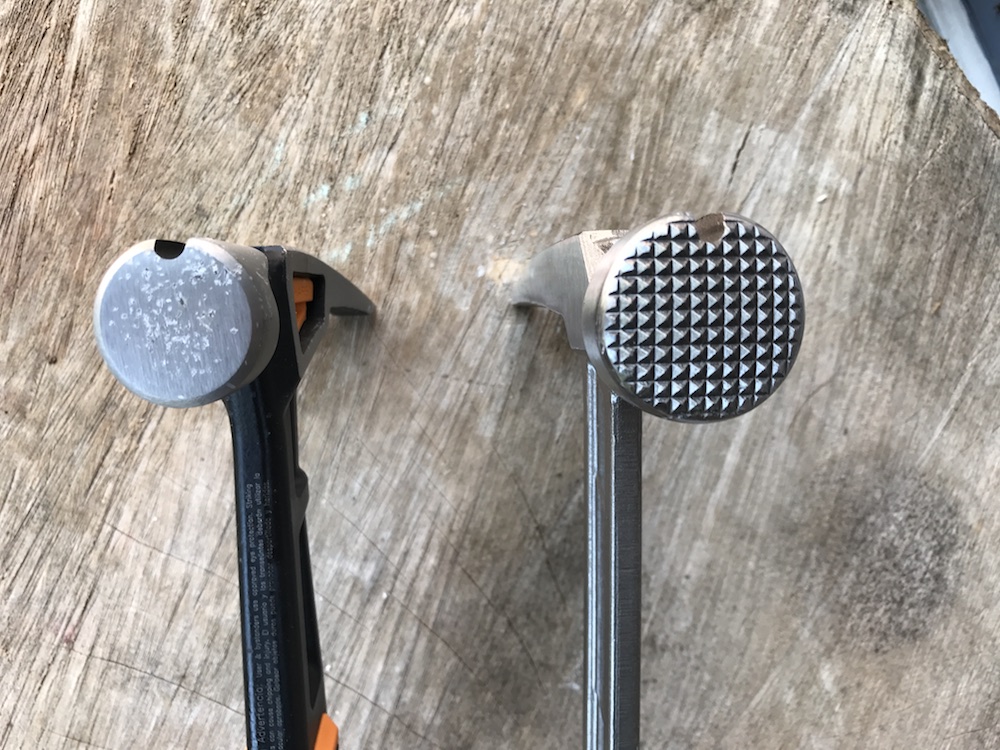
The hammer’s face has a raised or cut pattern, often a grid or crosshatch. That texture helps reduce slipping, but it also leaves a matching mark on the material. For that reason, a milled face hammer suits rough work better than finish carpentry.

What Is a Milled Face Hammer?
A milled face hammer has a textured striking surface. The pattern is cut or formed into the hammer’s face rather than left smooth.
When the face hits a nail, the raised texture can catch the nail head. This gives the user more control, especially when:
- The nail is small or hard to hold
- The work position is awkward
- The user is driving nails quickly
- The wood surface is rough
- The hammer is used for framing or other rough construction
The texture does not make the hammer more powerful. It mainly helps the hammer face stay in contact with the fastener.
The term milled face may describe slightly different patterns from one manufacturer to another. Some faces have fine crosshatching, while others have a deeper waffle-style pattern. Check the product description if the exact face design matters.
What Is a Milled Face Hammer Used For?
A milled face hammer is used most often for rough carpentry and construction work where speed and nail control matter more than a mark-free surface.
Common uses include:
- Framing walls and roofs
- Building decks and porches
- Installing subflooring
- Constructing sheds and outbuildings
- Building fences
- Driving large framing nails
- General repair work
- Demolition and other rough jobs
The textured face can help keep the hammer from sliding off the nail head. That may reduce missed strikes and bent nails. It can also make repeated nail driving feel more controlled.
A milled face hammer is not limited to nails. Some people use it for light shaping or rough metalwork, but its textured face makes it a poor choice when the workpiece must remain smooth.

Why Does the Textured Face Help?
The texture creates small contact points that can catch the nail head. A smooth face can slide more easily if the hammer lands slightly off-center. The milled pattern gives the face more mechanical grip.
This benefit is most useful during the first few strikes. A user can start a nail with light blows, then use firmer blows once the nail stands securely in the wood.
The pattern also helps when the nail head or hammer face is dusty, worn, or slightly dirty. It does not eliminate slipping, though. A poorly aimed strike, damaged nail, loose hammer head, or unsafe work position can still cause a miss.
A milled face is best understood as a control feature, not a substitute for good technique.
Milled Face vs. Smooth Face vs. Waffle Face
The main difference is the trade-off between grip and surface finish.
| Hammer face | Main advantage | Main drawback | Best use |
|---|---|---|---|
| Milled or textured face | Better grip on nail heads | Leaves marks | Framing and rough construction |
| Smooth face | Cleaner surface | More likely to glance off a poorly aimed nail | Finish carpentry and visible trim |
| Deep waffle face | Strong grip on large nails | More noticeable marks | Heavy framing and rough work |
| Slightly crowned face | Helps center the strike | May still mark the surface | General carpentry |
The terms milled face and waffle face are sometimes used as if they mean the same thing. In practice, a waffle face usually has a deeper, more visible pattern. A milled face may have a finer texture.
Manufacturers do not always use these terms in exactly the same way. Look at the actual face design and read the tool specifications before buying.

When Should You Choose a Milled Face Hammer?
Choose a milled face hammer when the job values speed, nail control, and durability over appearance.
It is a good fit for:
- Structural framing
- Large nails
- Rough lumber
- Outdoor construction
- Work where the hammer marks will be covered
- Users who often miss the center of the nail head
A smooth face is usually better when the wood will remain visible. This includes:
- Finish trim
- Cabinet work
- Door and window casing
- Decorative woodworking
- Fine furniture
- Repairs on finished surfaces
If you build both rough and finish projects, owning one hammer of each type may be more practical than trying to use one face for every task.
Can You Use a Milled Face Hammer on Metal?
You can use one for some rough metalwork, but it is usually not the best tool for precise metal shaping.
The textured face can leave dents and patterns in softer metals. It may also damage a finished surface or make later filing and sanding more difficult.
For metalwork, choose the hammer based on the task:
- Ball-peen hammer: shaping and riveting metal
- Cross-peen hammer: starting or forming metal in narrow areas
- Soft-face hammer: striking without heavy surface damage
- Dead-blow hammer: controlled impact with less rebound
- Sledgehammer: heavy demolition or forceful striking
A milled face framing hammer may work for rough, non-finished metal tasks, but it should not replace a hammer designed for that material.
Never strike hardened steel, punches, chisels, or other hardened tools with a general-purpose hammer unless the tool manufacturer allows it. The striking face or the tool can chip, sending fragments toward the user.

How to Use a Milled Face Hammer Correctly
Use the hammer with controlled swings and keep the face aligned with the nail.
1. Check the hammer
Before use, inspect the hammer head, handle, and face. Do not use it if:
- The head is loose
- The handle is cracked or split
- The face is badly mushroomed
- The striking surface has deep chips
- The grip is damaged or oily
OSHA requires hand tools to be maintained in a safe condition. A loose head can fly off during a swing, so remove the hammer from service until it is repaired or replaced.
2. Start the nail carefully
Hold the nail near the top, place it squarely, and use a light strike. Remove your fingers once the nail is stable.
For small nails, use a nail holder, pliers, or another safe method instead of placing fingertips close to the striking area.
3. Keep the face square
The hammer face should meet the nail head as close to straight-on as possible. A tilted blow can glance off the nail and may bend it or strike your hand.
4. Increase force gradually
Use several controlled strikes instead of one uncontrolled swing. Let the hammer’s weight and the speed of the swing do the work.
5. Stop before damaging the surface
A milled face can leave a deep mark if it hits the wood around the nail. Stop when the nail is flush or at the intended depth. Use a nail set when the nail must be recessed without striking the surrounding surface.
Signs of a good strike
- The nail stays straight
- The nail head is not badly deformed
- The wood has no unwanted hammer marks
- The hammer face does not glance away
- Your wrist and elbow remain in a natural position
If the hammer keeps slipping, check the nail size, your striking angle, the condition of the face, and whether the hammer is suitable for the task.
Safety Tips for Milled Face Hammers
Wear safety glasses when using any hammer. A nail, metal fragment, wood chip, or piece of a damaged tool can become airborne.
The OSHA hand and power tools standard states that tools must be kept in safe condition. OSHA also requires suitable eye protection where workers may face flying particles under its construction safety rules.
Follow these safety practices:
- Wear ANSI-rated eye protection appropriate for the work
- Keep both feet stable before swinging
- Keep your free hand away from the nail
- Do not use a hammer with a loose head
- Do not strike a hammer with another hammer
- Do not use the hammer as a pry bar
- Keep the face free of oil and heavy rust
- Replace a damaged fiberglass or wood handle
- Keep bystanders away from the swing path
- Use the correct hammer for the material
Do not use a milled face hammer to drive hardened objects unless the manufacturer specifically approves that use. A hardened object can fracture under impact.

Common Mistakes to Avoid
Using it on visible wood
The milled pattern can leave a grid or waffle mark. If the surface will be painted, stained, or displayed, use a smooth face or protect the surface with a nail set and careful technique.
Assuming more texture means more safety
A textured face may improve contact, but it cannot correct a bad swing. You still need the right angle, stable footing, and controlled force.
Choosing a hammer that is too heavy
A heavy hammer can drive large nails quickly, but it also causes fatigue and makes accuracy harder. Select a weight you can control for repeated strikes.
Ignoring a loose head
A loose hammer head is a serious hazard. Do not try to compensate by swinging more slowly or wrapping the head with tape. Repair or replace the tool.
Using one hammer for every job
A framing hammer is not a finish hammer, masonry hammer, or metalworking hammer. Match the face, weight, and design to the material and the required finish.
How to Choose the Right Milled Face Hammer
Look at five factors before buying:
- Face pattern: Choose a light texture for general work and a deeper pattern for rough framing.
- Hammer weight: Pick a weight you can swing accurately for long periods.
- Handle material: Wood can absorb some vibration and is replaceable on certain models. Fiberglass and composite handles may offer different durability and grip features.
- Balance: A well-balanced hammer should feel controlled, not head-heavy.
- Intended work: Confirm whether the manufacturer describes it for framing, general construction, or another specific task.
For occasional home repairs, a medium-weight general-purpose hammer may be more useful than a large framing hammer. For frequent framing, a dedicated framing hammer can improve speed and control, provided you can manage its weight safely.
Frequently Asked Questions
Does a milled face hammer damage wood?
It can. The raised pattern may leave visible marks around the nail, especially when the hammer hits the wood instead of the nail head. Use a smooth face for visible wood and a nail set for recessed nails.
Is a milled face better than a smooth face?
Neither is better for every job. A milled face offers more grip for rough construction, while a smooth face gives a cleaner finish. The correct choice depends on whether speed or appearance matters more.
Is a milled face hammer good for framing?
Yes. Framing is one of its main uses. The textured face can help maintain contact with large nails during repeated strikes. The trade-off is that it may mark the lumber.
Can a beginner use a milled face hammer?
Yes, if the hammer is the right size and the user follows safe technique. Beginners should start with light strikes, wear eye protection, and practice on scrap wood before working on a finished project.
How do I clean a milled hammer face?
Remove dirt and surface rust with a suitable wire brush or abrasive pad, while avoiding changes to the face shape. Do not grind away the texture or use a damaged hammer. Follow the manufacturer’s care instructions for the specific tool.
Conclusion
A milled face hammer is used mainly for rough carpentry, framing, and construction tasks where a firm grip on the nail matters more than a clean surface. Its textured face can reduce glancing and improve control, but it may leave marks in wood.
Use a milled face for framing, decks, fences, sheds, and similar work. Choose a smooth face for trim, cabinets, and other visible surfaces. Before each job, match the hammer to the material, inspect it for damage, wear eye protection, and use controlled strikes.