Who Invented The Ball Peen Hammer: History And Facts
Introduction
No single inventor can be confirmed for the ball peen hammer. The tool grew from older blacksmith hammers, and the person often credited online—French metalworker Jacques Balp—is not supported by a clear, widely accepted primary record.
For American readers, the modern ball peen hammer became familiar through U.S. blacksmithing, machine-shop, railroad, automotive, and maintenance work. Its rounded peen was made to spread and shape metal, while its flat face handled general striking.
The short answer: who invented the ball peen hammer?
The best evidence-based answer is:
The ball peen hammer was not invented by one clearly documented person. It evolved from earlier pein hammers used by blacksmiths.
Some tool references state that Jacques Balp invented the ball peen hammer in France in 1829. However, that claim is repeated more often than it is documented. Reliable historical accounts do not provide a widely accepted patent, workshop record, or contemporary source that proves Balp created the tool.
That distinction matters. A tool may have a popular origin story without having a verified inventor.
The ball peen hammer is better understood as a development of the older pein hammer. Blacksmiths used peins to move hot metal. One end of the hammer had a narrow or rounded shape that concentrated force and helped draw out, shape, or finish metal.
Over time, manufacturers refined the head, handle, weight, and balance. The rounded ball peen became especially useful for cold metal work, riveting, and forming.
What is a ball peen hammer?
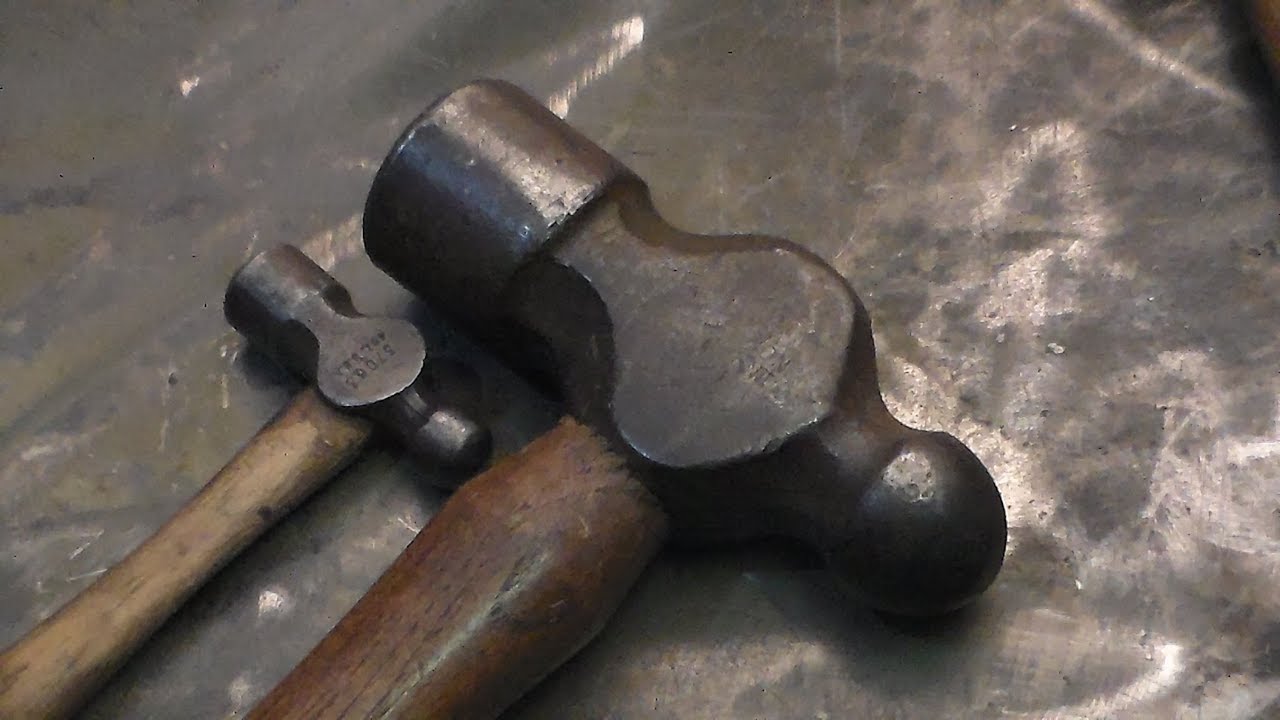
A ball peen hammer is a hand tool with two working ends:
- A flat face for striking.
- A rounded, ball-shaped peen for shaping and spreading metal.
The flat face looks similar to the face of a common claw or machinist’s hammer. The ball end is the feature that gives the tool its name.
A peen is the shaped end of a hammer head opposite the main striking face. Peens may be:
- Ball-shaped
- Cross-peened
- Straight-peened
- Wedge-shaped
- Pointed
The ball peen is not designed mainly for pulling nails. It is a metalworking tool.
What does “peening” mean?
Peening means striking metal so that it spreads or changes shape. The process can also harden or compress a metal surface, depending on the method and material.
For example, a worker may use the ball end to:
- Flatten the end of a rivet.
- Spread a pin so it stays in place.
- Shape sheet metal.
- Blend a metal edge.
- Form a shallow curve.
- Work on a cold chisel or punch.
- Create a textured finish on soft metal.
The rounded end spreads force outward from the point of impact. That makes it different from a flat face, which tends to flatten a larger area at once.
How the ball peen hammer developed
The ball peen hammer came from a long line of metalworking hammers rather than from one sudden invention.
Ancient metalworkers used stone, bronze, and iron hammers with different shapes for different jobs. A blacksmith did not need one universal hammer. The shape of the hammer face helped control how metal moved.
A narrow pein could draw metal out. A flat face could flatten it. A rounded pein could help form a curve or spread a small section.
The ball shape likely became useful because it provided several advantages:
- It offered a smooth contact surface.
- It could spread metal in many directions.
- It reduced the risk of leaving sharp corners in some forming tasks.
- It worked well for riveting and small repairs.
- It was simple to forge and finish.
The exact date when the modern ball peen hammer took its present form is uncertain. Tool designs often changed gradually, and early makers did not always record every shop improvement.
The role of the American machine shop
The ball peen hammer became strongly associated with American industrial work during the growth of machine shops, railroads, factories, and automobile repair.
In the United States, machinists commonly used ball peen hammers with punches, chisels, rivets, and metal parts. Tool catalogs helped standardize hammer weights and names. A small hammer might suit delicate work, while a heavier model could deliver more force to larger parts.
This history explains why many American readers meet the ball peen hammer in a machine shop or automotive setting rather than in a blacksmith forge.

Is Jacques Balp really the inventor?
The Jacques Balp story should be treated as unverified, not as settled history.
Many modern articles repeat the claim that Balp invented the ball peen hammer in 1829. Yet the claim is often presented without a scan of a patent, an original catalog, a dated newspaper report, or another primary source from that period.
That does not prove the story is false. It means the available claim is not strong enough to establish Balp as the sole inventor.
There are several possible reasons for the confusion:
- A maker may have improved an existing tool rather than invented it.
- A regional name may have been attached to a design later used elsewhere.
- A modern reference may have copied an earlier unsourced statement.
- “Invented” may actually mean “popularized” or “manufactured.”
A careful article should separate these ideas. The rounded pein itself belongs to a much older family of blacksmith tools. The modern commercial ball peen hammer may have been refined by several makers over time.
What evidence would prove the claim?
A stronger historical case would include one or more of the following:
- A dated patent that describes the tool.
- A surviving 1829 catalog or advertisement.
- A signed tool made by Balp from that period.
- A trade record connecting Balp to the design.
- A contemporary account naming him as the maker.
- Museum or archive records with a clear chain of evidence.
Without that evidence, “Jacques Balp invented it” remains a popular attribution rather than a confirmed conclusion.
Ball peen hammer versus other pein hammers
The name can cause confusion because several hammers use a pein.
| Hammer type | Shape of pein | Common use |
|---|---|---|
| Ball peen hammer | Rounded ball | Riveting, shaping, and general metalwork |
| Cross-peen hammer | Narrow ridge across the head | Starting nails, shaping small areas, light forging |
| Straight-peen hammer | Ridge aligned with the handle | Drawing and forming metal |
| Blacksmith’s hammer | Often a wedge or cross pein | Hot forging and heavier shaping |
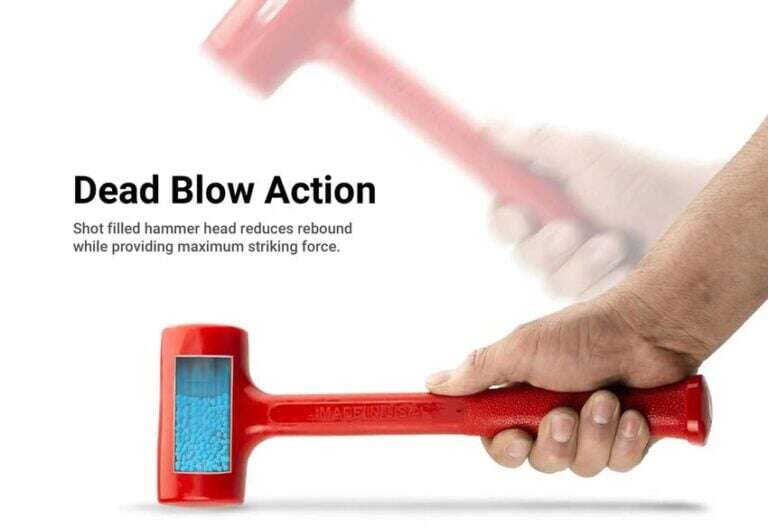
| Dead-blow hammer | Usually no pein | Controlled impact with less rebound |
A ball peen hammer is often the best choice when the user needs a general metalworking hammer with a rounded shaping end. It is not automatically the best tool for every repair.
For example, a soft-face hammer is safer when the workpiece must not be scratched. A dead-blow hammer may be better when rebound could cause loss of control. A sledgehammer is intended for far heavier work and should not be substituted casually.

What is a ball peen hammer used for today?
A ball peen hammer still has many practical uses in the United States, including:
- Setting and finishing rivets.
- Driving punches and chisels.
- Repairing metal brackets.
- Shaping copper or mild steel.
- Adjusting machine-shop parts.
- Removing seized pins with a punch.
- Forming small sheet-metal sections.
- Repairing older mechanical equipment.
The ball end is useful when the goal is to spread metal rather than cut it. The flat face is useful for ordinary striking, but it should not replace a purpose-built soft-face hammer when surface damage is a concern.
How to use one safely
Use the hammer only when the head and handle are in sound condition.
Before striking:
- Wear safety glasses or a face shield.
- Secure the workpiece.
- Choose a hammer weight you can control.
- Check that the handle is tight and free from cracks.
- Make sure the striking surface is suitable.
- Keep other people clear of flying chips or fragments.
Never strike a hardened tool, such as a punch or chisel, with a damaged hammer. A chipped hammer face or mushroomed punch can send small metal fragments into the air.
Do not use the ball peen hammer as a pry bar, wedge, or substitute for a sledgehammer. Use light, controlled blows at first. Let the tool’s weight do the work instead of swinging harder than needed.
Common misconceptions about the ball peen hammer
“It was definitely invented in France in 1829”
That statement is widely repeated, but the supporting historical record is not clear enough to treat it as proven. A more accurate wording is that some secondary sources attribute the design to Jacques Balp in 1829, but the attribution remains unconfirmed.
“The ball end is for hitting hard steel”
The ball end is mainly for shaping and spreading metal. It is not a universal heavy-impact surface. Striking hardened steel can damage the hammer or create dangerous chips.
“Any hammer can be used for riveting”
A ball peen hammer is suitable for some riveting tasks, especially small rivets and light work. Rivet size, material, access, and required finish all affect the result. Large structural rivets require different equipment and methods.
“A bigger hammer is always better”
A heavy hammer can deliver more energy, but it also increases the risk of losing control or damaging the workpiece. Choose the lightest hammer that completes the task with controlled blows.
How to choose the right ball peen hammer
Choose by the work, not just by the largest available size.
| Task | More suitable choice |
|---|---|
| Small rivets and light shaping | Small ball peen hammer |
| General shop repair | Medium ball peen hammer |
| Larger metal parts | Heavier ball peen hammer, if controlled safely |
| Mark-free assembly | Soft-face or plastic hammer |
| Low-rebound impact | Dead-blow hammer |
| Heavy demolition | Sledgehammer or engineer’s hammer |
Look for a secure head, a sound handle, and a face without deep chips or cracks. A smooth, properly finished ball end is useful for controlled metal forming.
The handle material also affects feel and maintenance. Wood can absorb some vibration and can be replaced. Fiberglass and composite handles may resist weather and splitting, but a damaged handle still requires replacement.
Frequently asked questions
Who invented the pein hammer?
No single inventor is known. Pein hammers developed from early metalworking tools used by blacksmiths and other metalworkers.
When was the ball peen hammer invented?
The exact date is not established. The modern form developed through gradual changes in hammer design, especially as metalworking and machine-shop tools became standardized.
Was Jacques Balp a real person?
The name appears in repeated accounts of the ball peen hammer’s history, but the specific claim that he invented the tool in 1829 is not supported by a clearly documented primary record commonly cited by historians.
Why is it called a ball peen hammer?
It is called a ball peen hammer because the end opposite the flat striking face has a rounded, ball-like shape. That end is the peen.
Can a ball peen hammer be used on a punch?
Yes, a ball peen hammer is commonly used with punches. Use a hammer and punch that are in good condition, wear eye protection, and stop using either tool if the striking surfaces become chipped or badly mushroomed.
Conclusion
The ball peen hammer does not have a securely documented single inventor. It evolved from older pein hammers used for shaping metal, then became a standard tool in American machine shops, factories, repair garages, and metalworking trades.
Jacques Balp is often named as its inventor, but that attribution should be described as unverified. The most reliable answer is that the ball peen hammer is the result of gradual tool development rather than a proven one-person invention.
For practical use, remember its central purpose: the flat face strikes, while the rounded peen spreads and shapes metal. Use the correct hammer weight, protect your eyes, and never strike damaged or hardened tools.
Sources for further reading
- Encyclopaedia Britannica: Hammer
- Merriam-Webster: Peen
- The Online Books Page, University of Pennsylvania
- Smithsonian Institution Collections
- U.S. Patent and Trademark Office: Patent Public Search
Recent Tool Guides
 Hammer
How To Hammer Flowers Onto Paper: Easy Guide
Learn how to hammer flowers onto paper with simple steps, helpful tips, and beautiful results for...
Read Guide → Wrench
How To Use A Hex Wrench: Easy Step-By-Step Guide
Learn how to use a hex wrench correctly with simple steps, helpful tips, and common mistakes...
Read Guide → Hacksaw
How To Cut Curtain Pole With Hacksaw: Easy Guide
Learn how to cut curtain pole with hacksaw safely and neatly. Follow simple steps for accurate...
Read Guide → Wrench
How To Use A Husky Torque Wrench: Easy Guide
Learn how to use a Husky torque wrench correctly with simple steps, torque settings, and safety...
Read Guide → Hammer
How To Hold A Hammer: Safe Grip Guide
Learn how to hold a hammer with the right grip, stance, and technique for safer, more...
Read Guide → Hacksaw
How To Cut Flexible Metal Conduit With Hacksaw: Easy Guide
Learn how to cut flexible metal conduit with hacksaw safely and cleanly. Follow simple steps for...
Read Guide →