

Most hand saw blades use high carbon steel, alloy steel, or bi-metal steel for strength, sharpness, and controlled flexibility.
If you have ever watched a hand saw cut cleanly through wood, you have seen a careful balance of hardness and toughness at work. The answer to “what steel are hand saw blades made from” depends on the saw’s job, tooth design, and price. This guide explains the main steel types, how manufacturers heat-treat them, and how to choose the right blade for your work.
What steel are hand saw blades made from?
Most hand saw blades are made from one of these steel groups:
• High carbon steel for common wood saws
• Alloy steel for greater strength and wear resistance
• Spring steel for blades that need to flex without breaking
• Bi-metal steel for durable professional and specialty saws
• Stainless steel for some corrosion-resistant tools
• Tool steel or carbide-tipped steel for demanding cutting work
The steel is rarely used in one simple condition. A maker may harden the teeth while leaving the blade body softer and more flexible. This design lets the teeth hold an edge while the blade bends slightly during use.
Traditional hand saws often use carbon steel sheet. Modern saws may use several steel grades in one blade. For example, a bi-metal blade can combine a tough spring-steel body with a harder high-speed steel cutting edge.
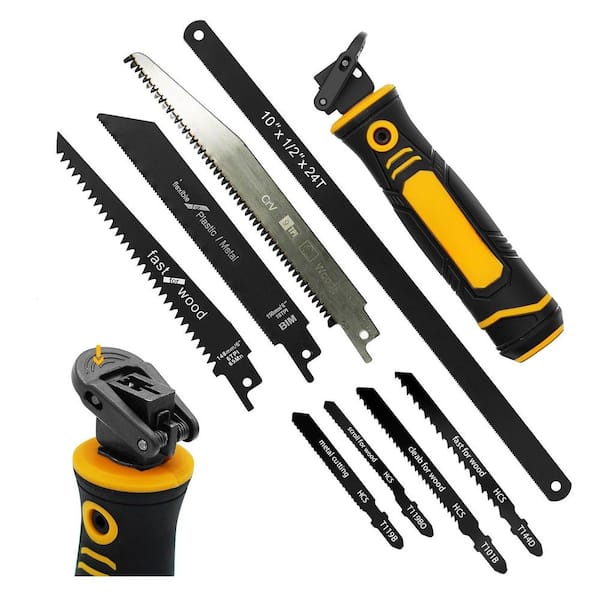
Why steel choice matters in a hand saw blade
A hand saw blade must perform several jobs at once. Its teeth must stay sharp, the blade must resist bending, and the body must survive repeated stress. No single steel property solves every problem.
Hardness helps the teeth cut. Toughness helps the blade resist cracks and sudden breakage. Flexibility helps the blade follow the cut without kinking. These properties often compete with one another.
A very hard blade can hold its edge well, but it may snap if bent. A very soft blade may bend safely, but its teeth can dull quickly. Good hand saw design is like making a reliable spring: it must move under stress and return to shape.
The answer to what steel are hand saw blades made from also depends on the material being cut. A coarse wood saw does not need the same steel as a fine metal-cutting hacksaw blade.
Key steel properties
• Hardness measures resistance to wear, dents, and tooth damage.
• Toughness measures resistance to cracks and sudden failure.
• Tensile strength measures how much pulling force the steel can withstand.
• Elasticity allows the blade to flex and return to its original shape.
• Hardenability describes how well steel responds to heat treatment.
Manufacturers balance these properties through steel chemistry, rolling, heat treatment, and tooth setting. The final blade is more than just a piece of sharpened metal.
High carbon steel in traditional hand saws
High carbon steel is one of the most common answers to what steel are hand saw blades made from. It contains more carbon than mild steel, which allows it to become hard when heated and rapidly cooled.
Many traditional panel saws, back saws, coping saws, and general-purpose wood saws use high carbon steel. Typical grades may be similar to 1050, 1075, 1080, or 1095 carbon steel, although the exact grade varies by manufacturer.
The numbers in these designations generally relate to carbon content. For example, 1095 steel contains roughly 0.95% carbon under the SAE/AISI numbering system. The actual blade may also contain small amounts of manganese, silicon, or other elements.
High carbon steel offers several benefits:
• It can produce sharp, clean teeth.
• It is relatively easy to grind and sharpen.
• It costs less than many specialty alloys.
• It performs well in wood-cutting applications.
• It has a long history in woodworking tools.
It also has limits. High carbon steel can rust if left damp or stored without protection. It may become brittle if overheated or hardened too aggressively. A thin blade can also lose its shape if exposed to excessive heat during sharpening.
A common mistake is to treat every carbon steel blade as the same. Carbon content, thickness, temper, and tooth treatment all affect performance.

Spring steel and flexible saw blades
Spring steel is designed to flex and return to its original shape. It is useful in coping saws, flexible pull saws, pruning saws, and other tools that may experience side pressure.
Spring steel is often a medium-carbon or alloy steel. It may contain elements such as chromium, manganese, or silicon to improve strength and fatigue resistance. The exact recipe depends on the required flexibility and cutting load.
When people ask what steel are hand saw blades made from, they often expect one universal answer. In practice, flexible saws need a different balance than rigid back saws. The blade body may be tempered to a lower hardness so it can bend without cracking.
A flexible blade should still be used correctly. Bending it sharply, twisting it in the cut, or forcing it through a knot can cause permanent damage. Flexibility is a safety margin, not permission to misuse the tool.
Bi-metal and alloy steel hand saw blades
Bi-metal construction joins two steel types in one blade. The body usually uses a flexible alloy or spring steel. The cutting edge may use high-speed steel or another harder alloy.
This arrangement gives the blade a tough backbone and durable teeth. It is common in hacksaw blades, specialized hand blades, and some premium cutting tools.
Alloy steel may include chromium, molybdenum, vanadium, nickel, or tungsten. These elements can improve hardenability, wear resistance, heat resistance, or toughness. The effect depends on the full chemical mix and the heat treatment.
High-speed steel, often called HSS, is harder and more heat-resistant than ordinary carbon steel. It is especially useful when cutting metal or other hard materials. However, HSS is more costly and can be less forgiving if the blade is twisted.
Bi-metal blades usually cost more than plain carbon steel blades. The extra cost can make sense when you need long tooth life, frequent use, or a blade that can survive vibration and changing loads.

Tooth hardness and blade-body hardness
Many hand saw blades do not have the same hardness from edge to back. Manufacturers may harden the teeth more than the body. This process gives the teeth wear resistance while preserving body flexibility.
Induction hardening is one method used to heat a narrow area near the teeth. The heated edge is then cooled quickly. This creates a hard tooth zone without making the entire blade brittle.
Some disposable wood saws use impulse-hardened teeth. The tooth tips become very hard and can stay sharp for a long time. The trade-off is that these teeth are difficult or impossible to resharpen with a normal saw file.
Traditional saws may use teeth that are hard but still fileable. This matters to woodworkers who maintain their own tools. A softer, properly tempered tooth can often be sharpened many times during the blade’s life.
The steel grade alone does not tell you how a hand saw will perform. Tooth hardness, tooth geometry, set, rake angle, blade thickness, and heat treatment matter just as much.
How manufacturers make hand saw blades
The manufacturing process affects the blade as much as the raw steel. A typical process includes several careful stages.
Steel is rolled into sheet or strip with a controlled thickness.
The blade shape is stamped, cut, or ground from the strip.
Teeth are formed by milling, stamping, grinding, or precision machining.
The blade is heat-treated to reach the intended hardness and toughness.
Teeth may receive separate hardening for longer wear life.
Teeth are set or shaped to create the correct cutting path.
The blade is straightened, polished, coated, and inspected.
Tooth set is the slight outward bend of alternating teeth. It creates a kerf, or cut width, wider than the blade body. Without enough set, the blade can bind in the material.
Heat treatment commonly includes hardening followed by tempering. Hardening increases strength and hardness. Tempering reduces brittleness and gives the blade a more useful balance of toughness and flexibility.
A quality blade should also be straight and evenly tensioned. Even excellent steel will perform poorly if the blade has uneven teeth or poor alignment.
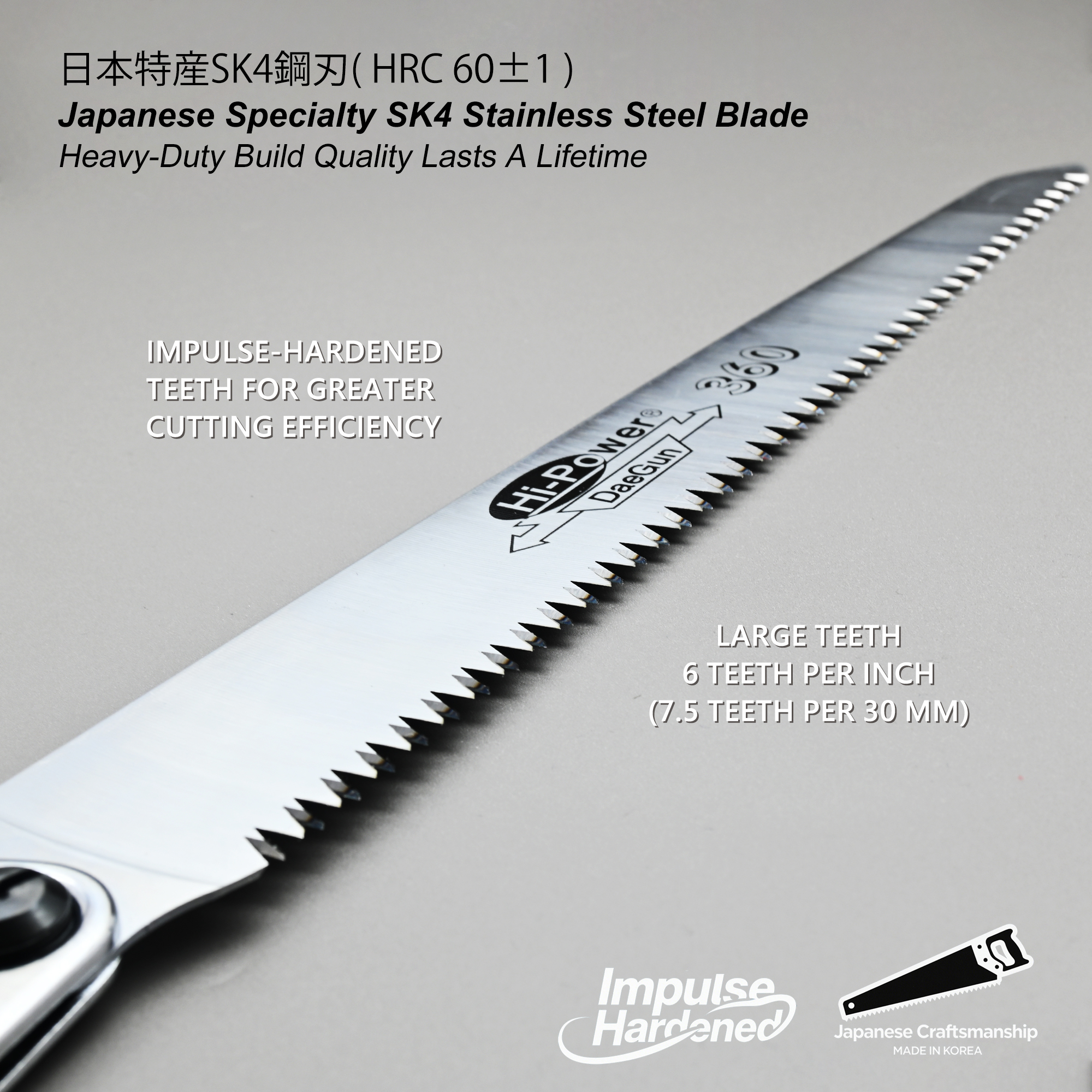
Steel types used for different hand saws
The best answer to what steel are hand saw blades made from changes with the type of saw.
Wood hand saws
Wood saws often use high carbon steel or alloy carbon steel. Their teeth may be filed for sharpening or hardened for longer service. A coarse crosscut saw and a fine dovetail saw can use similar steel but different tooth shapes and heat treatment.
Hacksaw blades
Hacksaw blades commonly use carbon steel, alloy steel, bi-metal steel, or HSS edge material. Bi-metal blades are popular because metal cutting creates heat, vibration, and tooth shock.
Pruning saws
Pruning saws often use hardened carbon steel or alloy steel. Some have impulse-hardened teeth that resist wear from green wood, bark, and dirty branches.
Coping saws
Coping saw blades are thin and flexible. They may use spring steel or high carbon steel with a carefully controlled temper. Their narrow shape makes flexibility especially important.
Japanese pull saws
Many Japanese pull saws use thin, hardened alloy or carbon steel. Some have replaceable blades and impulse-hardened teeth. Their thin profile reduces the effort needed for a clean pull cut.
Keyhole and drywall saws
These saws commonly use hardened carbon steel or alloy steel. Some models include a pointed tip for starting holes and a thick spine for added control.
How to identify the steel in a hand saw blade
Many manufacturers do not print the exact steel grade on the blade. Packaging may only say “high carbon,” “hardened,” “bi-metal,” or “alloy steel.”
You can learn more by checking:
• The manufacturer’s technical sheet
• Product packaging and catalog data
• The blade’s intended material
• Whether the teeth can be filed
• Whether the blade is flexible or rigid
• The tool’s price and professional rating
A spark test can sometimes suggest a steel family, but it is not a reliable way to identify an exact grade. It can also damage the blade and create sparks or burns. Laboratory methods such as optical emission spectroscopy provide better chemical identification.
A magnet test is not very useful because most common blade steels are magnetic. Stainless steel can also be magnetic, depending on its structure.
Do not assume a shiny finish means stainless steel. Many carbon steel blades have nickel, chrome, paint, or other coatings that improve appearance and corrosion resistance.
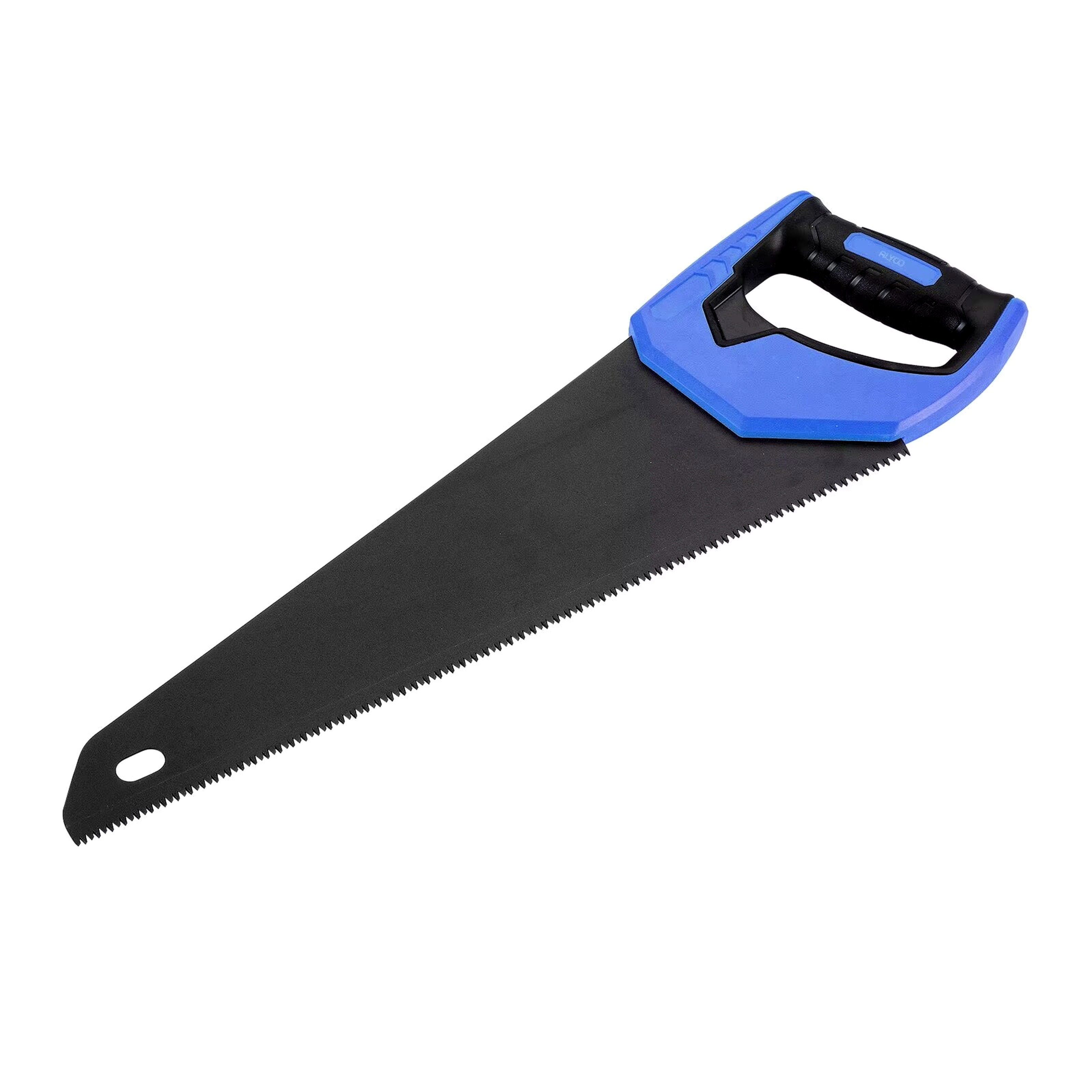
Carbon steel versus stainless steel
Carbon steel is often preferred for saw teeth because it can be hardened effectively and sharpened with relative ease. It also offers a strong value for woodworking and general repairs.
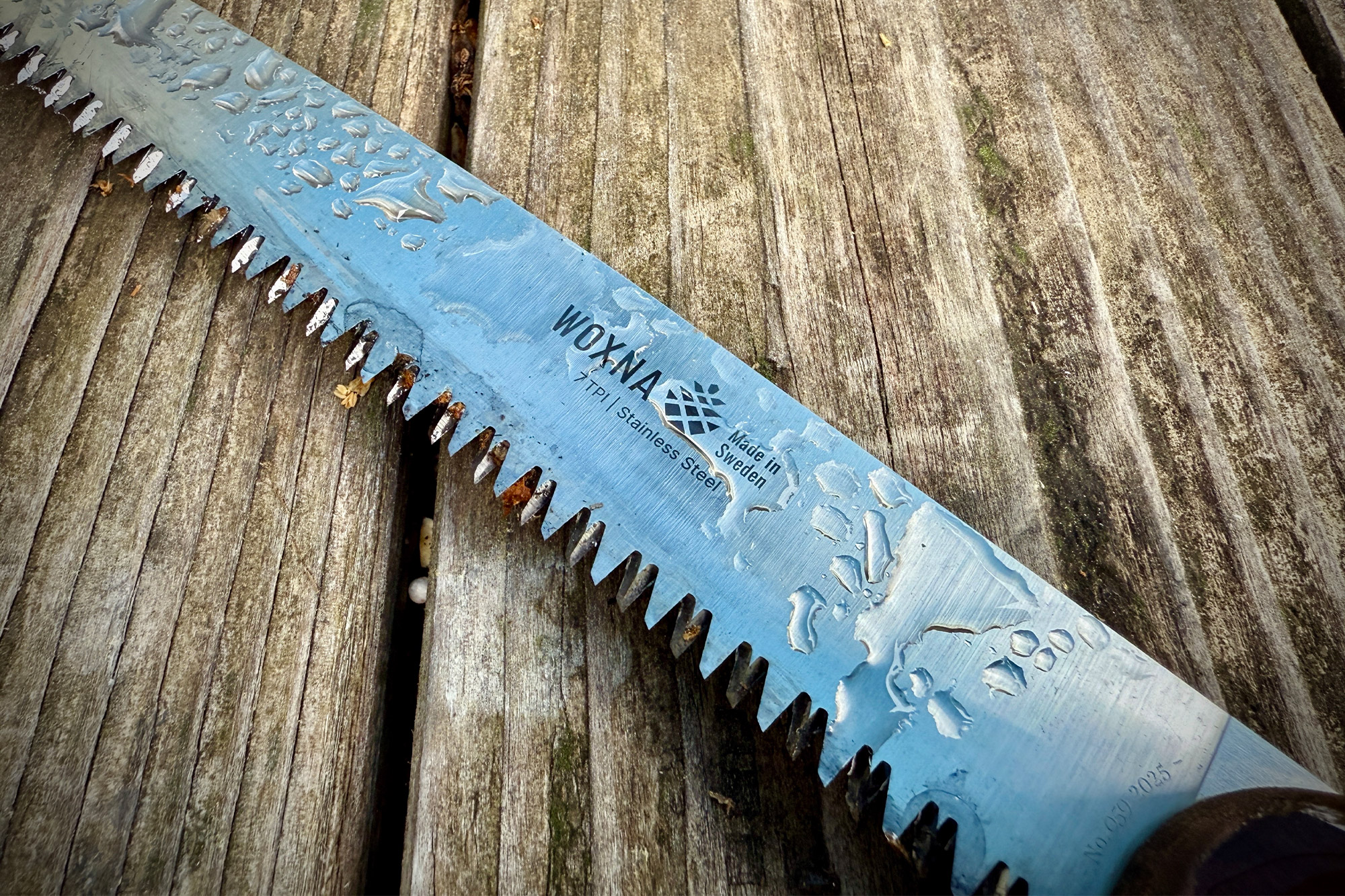
Stainless steel contains enough chromium to improve resistance to rust. In the United States, stainless steel is generally understood to contain at least about 10.5% chromium, though specific grades vary.
Stainless steel is useful in wet, coastal, food-related, or outdoor settings. Yet not every stainless grade makes an ideal saw blade. Some stainless steels are harder to sharpen, less wear-resistant, or less suitable for thin flexible tools.
This is why the answer to what steel are hand saw blades made from should not focus only on rust resistance. Cutting performance, edge retention, flexibility, and maintenance all matter.
For most indoor woodworking, a high carbon blade with light oil protection may outperform a basic stainless blade. For wet outdoor work, corrosion resistance may be worth the trade-off.
Can hand saw blades be sharpened?
Many traditional high carbon steel saw blades can be sharpened. A saw file removes a small amount of metal from each tooth and restores the cutting edge. The teeth may also need jointing, shaping, and resetting.
Impulse-hardened or very hard teeth may not accept a standard file. If a file skates across the tooth without cutting, the tooth is likely too hard for normal hand sharpening.
A practical sharpening routine includes:
Clean the blade and inspect it for cracks.
Joint uneven tooth tips with a flat file if needed.
Shape each tooth with the correct saw file.
Keep the filing angle consistent.
Check and restore tooth set.
Test the blade on scrap material.
One lesson worth remembering is that a dull saw often feels like a bad steel problem. In many cases, the real issue is a clogged kerf, poor tooth set, or incorrect sharpening angle.
Use light pressure when filing. Heavy pressure can round the tooth edge and remove more metal than necessary.

How to choose the right hand saw blade steel
Start with the material and cutting conditions. Do not choose a blade only because the label says “high carbon” or “premium alloy.”
Choose a blade based on these factors:
• For ordinary dry wood, use a carbon steel or alloy steel wood saw.
• For frequent metal cutting, consider a bi-metal or HSS-edge blade.
• For wet outdoor work, look for a corrosion-resistant coating or suitable stainless alloy.
• For fine joinery, choose a thin blade with precise, fileable teeth.
• For rough pruning, choose tough hardened teeth with enough body strength.
• For heavy daily use, pay more for a bi-metal or professional-grade blade.
A good blade should match your cutting speed, maintenance habits, and budget. A replaceable hardened blade may be best for occasional users. A traditional fileable blade may be better for someone who enjoys maintaining tools.
Look for clear product information. Trustworthy makers often state whether the blade is carbon steel, bi-metal, HSS, spring steel, or impulse hardened.
Common mistakes that damage saw blades
Even a well-made blade can fail early when used incorrectly. The most common mistakes are simple to avoid.
• Twisting the blade while cutting can bend the body or snap teeth.
• Pushing too hard can cause binding and overheating.
• Cutting dirty wood can dull teeth quickly.
• Storing a carbon steel blade while wet can cause rust.
• Using the wrong tooth pitch can clog the cut or make sawing slow.
• Filing hardened teeth with the wrong tool can ruin the edge.
• Cutting metal with a wood saw can destroy the tooth shape.
Keep the blade clean and dry after use. A light coat of tool oil can help protect exposed carbon steel. Store the saw where the teeth will not strike other tools.
In workshop testing, a small amount of cleaning and correct storage often makes a larger difference than moving from one decent steel grade to another. Maintenance protects the edge you already paid for.
Frequently Asked Questions About What Steel Are Hand Saw Blades Made From
What steel are hand saw blades made from most often?
Most general-purpose hand saw blades use high carbon steel or alloy carbon steel. The exact grade varies, and the teeth may receive a separate hardening treatment.
Are hand saw blades made from hardened steel?
Yes, many hand saw blades use hardened steel teeth or a hardened blade body. Some designs harden only the teeth so the cutting edge stays durable while the blade body remains flexible.
Are hand saw blades stainless steel?
Some are, but stainless steel is not the standard for every hand saw. Many blades use carbon steel with a coating because it can provide excellent hardness, sharpness, and value.
What steel are hand saw blades made from if they are flexible?
Flexible hand saw blades often use spring steel or a tempered alloy steel. These materials can bend slightly and return to shape without cracking under normal use.
Can you sharpen a high carbon steel hand saw blade?
Usually, yes. Traditional high carbon steel teeth can often be sharpened with a suitable saw file, but impulse-hardened teeth may be too hard for ordinary hand filing.
Is bi-metal steel better for a hand saw blade?
Bi-metal steel can be better for demanding work because it combines a tough body with a hard cutting edge. It usually costs more, so it may not be necessary for light household woodworking.
How can you tell what steel a saw blade uses?
Check the manufacturer’s product details, packaging, or technical sheet. Appearance and magnet tests cannot reliably identify the exact steel grade.
Conclusion
The answer to what steel are hand saw blades made from includes high carbon steel, spring steel, alloy steel, bi-metal steel, and, in some cases, stainless steel or high-speed steel. The best choice depends on hardness, toughness, flexibility, corrosion resistance, tooth design, and heat treatment.
For basic woodworking, a quality carbon steel blade is often enough. For metal cutting or heavy use, bi-metal construction may provide longer service. Choose the blade for the material you cut, keep it clean, and avoid twisting or forcing it through the work.
Use this knowledge the next time you shop for a hand saw, and compare the blade material as carefully as the tooth count. Explore the manufacturer’s specifications, try the blade on suitable material, and share your own saw-maintenance tips in the comments.
