

Lenox, Bahco, and Starrett make the best hacksaw blades for most cutting jobs and budgets.
Choosing who makes the best hacksaw blades depends on what you cut, how often you cut it, and how much control you need. After comparing blade materials, tooth patterns, durability, cutting speed, and real workshop use, a few brands stand out clearly. This guide breaks down the best manufacturers, their strengths, their limits, and the right blade for your next job.
Who Makes the Best Hacksaw Blades?
For most users, Lenox makes the best all-around hacksaw blades. Its bi-metal blades offer a strong mix of sharp cutting, long life, and resistance to tooth breakage.
Bahco is another excellent choice, especially for smooth hand cutting and professional metalwork. Starrett is known for accurate, dependable blades that perform well in demanding shop settings.
Here is a quick comparison:
| Brand | Best for | Main strength | Possible limitation |
|---|---|---|---|
| Lenox | General and heavy-duty work | Tough bi-metal construction | Premium price on top models |
| Bahco | Smooth hand cutting | Excellent tooth design | Some models cost more |
| Starrett | Professional precision | Consistent quality | Fewer low-cost options |
| Milwaukee | Jobsite use | Easy availability and durable blades | Performance varies by model |
| Nicholson | Home and light shop use | Good value | Not every line has the same durability |
| Bosch | Specialty cutting | Useful material-specific options | Less focused on traditional hacksaw blades |
If someone asks me who makes the best hacksaw blades for one dependable purchase, I usually point to Lenox or Bahco. For precision work, Starrett is often the safer choice.

Best Hacksaw Blade Brands Reviewed
Lenox
Lenox is one of the strongest answers to the question, “Who makes the best hacksaw blades?” Its most popular blades use bi-metal construction. This means a flexible alloy steel body supports a harder high-speed steel cutting edge.
That design gives the blade two useful traits. The back can flex without snapping, while the teeth stay hard enough to cut steel, stainless steel, copper, aluminum, and many other materials.
Lenox blades are especially useful when:
• You cut thick steel or tough pipe
• You work on repair jobs with mixed materials
• You want fewer broken teeth
• You need a blade that lasts through repeated use
Lenox Gold blades are widely chosen for heavy-duty work. They are not always the cheapest option, but the higher price can make sense when one blade cuts through several jobs instead of failing halfway through the first.
Bahco
Bahco makes some of the best hacksaw blades for clean, controlled hand cutting. The company is well known for Sandflex bi-metal blades, which combine flexibility with a durable tooth edge.
Bahco blades often feel smooth during the cut. They tend to start well, track nicely, and produce less chatter when the frame is held correctly.
They are a strong fit for:
• Plumbers
• Maintenance workers
• Automotive technicians
• Fabricators
• Home users who want a high-quality blade
A key benefit is tooth consistency. Even tooth spacing helps the blade stay engaged instead of skipping across the metal. That matters when you want a straight cut or work near a finished surface.
Starrett
Starrett is a respected name in precision tools, and its hacksaw blades reflect that focus. Starrett blades are made for users who care about consistent performance, accurate cuts, and dependable quality.
Starrett’s Intenss line, for example, is designed for professional cutting work. Its blades are commonly used on steel, stainless steel, tool steel, and other difficult metals.
Starrett is often the best choice when:
• The cut must be straight
• You work with expensive materials
• You use a hacksaw every day
• You want predictable tooth life
The main drawback is price. A Starrett blade may cost more than a basic hardware-store blade. However, the extra cost can be worthwhile when accuracy and reduced downtime matter more than the lowest shelf price.
Milwaukee
Milwaukee makes hacksaw blades that are easy to find in many home centers and tool stores. Its blades suit contractors, maintenance workers, and DIY users who need a reliable option without special ordering.
Milwaukee blades are often sold in useful multipacks. This makes them convenient for jobs where blades may wear quickly or where several workers need replacements.
Their best uses include:
• General construction work
• Cutting threaded rod
• Cutting conduit and pipe
• Repair work
• Occasional metal projects
Milwaukee is a practical answer to who makes the best hacksaw blades for jobsite convenience. Still, check the exact product line because performance can differ between standard, bi-metal, and specialty models.
Nicholson
Nicholson remains a familiar choice for home workshops and general repair work. Its blades are often affordable and widely available.
For light cutting, a Nicholson blade can perform well. It may be enough for aluminum, thin-wall tubing, plastic, mild steel, and small bolts.
The limitation is long-term durability. Basic carbon steel blades may wear or break sooner than premium bi-metal blades. If you only use a hacksaw a few times each year, that tradeoff may be reasonable.
Bosch
Bosch is better known for power-tool accessories, but some of its metal-cutting products can serve specialty needs. Its strength is material-focused design rather than being the first choice for every traditional hand hacksaw.
Bosch may be worth considering when you need:
• A specific tooth pattern
• A specialty metal-cutting accessory
• A blade for a powered cutting system
• A product matched to a particular tool
Always confirm that the blade fits your hacksaw frame or powered tool. Brand reputation cannot overcome a poor fit.
What Makes a Hacksaw Blade Good?
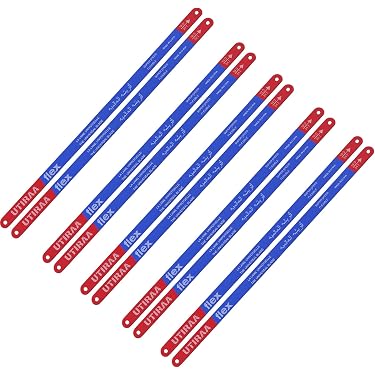
The best hacksaw blade is not simply the sharpest blade. It must balance tooth hardness, body flexibility, tooth spacing, blade length, and the material being cut.
A good blade should:
• Start a cut without excessive slipping
• Remove metal at a steady rate
• Resist broken or missing teeth
• Stay straight under hand pressure
• Avoid excessive vibration
• Match the thickness of the material
Blade quality comes from both design and manufacturing control. A poorly hardened blade may lose its edge fast. A blade that is too brittle may snap. A blade with uneven teeth may chatter or produce a crooked cut.
This is why the answer to who makes the best hacksaw blades is not based on brand name alone. The best brand still needs the right blade type and tooth count for the job.

Blade Materials: Carbon Steel, Bi-Metal, and Carbide
Carbon steel blades
Carbon steel blades are usually the least expensive option. They work well for light jobs and softer materials.
They can cut:
• Soft steel
• Aluminum
• Copper
• Plastic
• Thin tubing
Their main weakness is durability. Carbon steel blades can lose their teeth faster when cutting hard steel or stainless steel. They may also break if the frame twists during use.
Bi-metal blades
Bi-metal blades are the best general-purpose choice for most metal cutting. They combine a flexible backing with hardened cutting teeth.
This construction helps prevent two common failures: tooth breakage and blade snapping. Bi-metal blades also handle interrupted cuts well, such as cutting through a pipe with a seam or a bolt with damaged threads.
Most professional users looking for who makes the best hacksaw blades should begin with a bi-metal model.
Carbide-grit blades
Carbide-grit blades use abrasive particles rather than traditional saw teeth. They can cut hard, brittle, or abrasive materials that may damage standard teeth.
They are useful for:
• Hardened steel
• Cast iron
• Ceramic materials
• Fiberglass
• Some masonry-related materials
They often cut more slowly than a sharp toothed blade. They can also create more dust and heat, so eye protection and proper ventilation are important.
Choosing the Right Teeth Per Inch
Teeth per inch, or TPI, is one of the most important hacksaw blade specifications. The wrong TPI can make a simple cut slow, rough, or damaging to the blade.
14 TPI blades
A 14 TPI blade has large teeth and wide gullets. It removes material quickly and works best on thick stock.
Use it for:
• Thick steel plate
• Large pipe
• Heavy angle iron
• Thick aluminum
18 TPI blades
An 18 TPI blade is a useful medium choice. It works well on general steel, medium pipe, brackets, and common repair jobs.
Many home users should start with 18 TPI because it handles a wide range of materials.
24 TPI blades
A 24 TPI blade is suited to thinner metal. It gives a smoother cut and reduces the chance of catching on thin walls.
Use it for:
• Thin tubing
• Small bolts
• Sheet metal
• Conduit
• Narrow brackets
32 TPI blades
A 32 TPI blade has fine teeth for very thin materials. It produces a controlled cut but removes material more slowly.
Use it for thin-wall tubing, small fasteners, and delicate work. Do not use it on thick stock, because the gullets can fill quickly and the blade may overheat.
A useful rule is to keep at least two or three teeth in the material at all times. If only one tooth touches the work, the blade may snag. If too many teeth are buried, the cut can become slow and clogged.

The Best Hacksaw Blade for Different Materials
Best blade for steel
For ordinary steel, choose an 18 or 24 TPI bi-metal blade. Lenox, Bahco, and Starrett all offer strong choices.
Use steady strokes and let the blade do the work. Pressing too hard can bend the blade and damage the teeth.
Best blade for stainless steel
Stainless steel is tough and can work-harden under excess pressure. A quality bi-metal blade with 18 to 24 TPI is usually the best option.
Starrett and Lenox are strong choices for stainless steel. Keep the blade moving, use moderate pressure, and avoid rubbing the blade in one place without cutting.
Best blade for aluminum
Aluminum is soft, but it can clog fine teeth. Choose a coarser blade, often around 14 to 18 TPI, when the material is thick.
Clean the teeth if chips build up. A blade with wider gullets can remove aluminum chips more effectively.
Best blade for pipe
For thick pipe, use 14 or 18 TPI. For thin-wall pipe, use 24 or 32 TPI.
Bahco blades are a popular choice for plumbing and maintenance work because they offer smooth tracking and flexible construction.
Best blade for hardened metal
Hardened metal may require a premium bi-metal blade or a carbide-grit blade. Standard carbon steel blades often struggle and may lose their teeth quickly.
Test the blade on a small area first. If the teeth skate across the surface, the material may be too hard for a normal hacksaw blade.
How to Get Longer Life From a Hacksaw Blade
Even who makes the best hacksaw blades cannot prevent damage caused by poor technique. A few simple habits can greatly extend blade life.
Install the blade with the teeth facing forward. Most hacksaw frames cut on the forward stroke.
Tighten the frame firmly. A loose blade can twist, vibrate, and break.
Start with short strokes. Once the groove forms, use longer strokes that use most of the blade length.
Keep the frame straight. Side pressure is a common cause of broken teeth.
Use moderate force. Heavy pressure can cause heat and tooth damage.
Match the TPI to the stock thickness. Fine teeth on thick metal clog and wear quickly.
Wear eye protection. Small metal chips can leave the cut at surprising speed.
Replace a dull blade. A dull blade wastes time and encourages unsafe pressure.
One mistake I often see in hands-on shop work is using a fine 32 TPI blade on thick steel because it “looks stronger.” It usually cuts slowly, heats up, and loses its edge. The better approach is to choose the largest tooth size that still keeps several teeth engaged in the material.

Hacksaw Blade Buying Guide
Before buying, check these specifications:
Length
Common hand hacksaw blades are 12 inches long, but some compact frames use shorter blades. Measure the frame or check its manual before ordering.
TPI
Choose the tooth count based on material thickness, not only material type. Thin material needs fine teeth. Thick material needs coarse teeth.
Construction
For regular metal work, bi-metal is usually worth the extra cost. Carbon steel is acceptable for occasional light use.
Tooth pattern
A standard tooth pattern works for many jobs. A variable-pitch design can reduce vibration and improve cutting in mixed materials.
Quantity
Multipacks can reduce cost per blade. However, buying a large pack of poor blades is not a bargain if they break quickly.
Brand consistency
Buying from a trusted manufacturer helps reduce variation. This is one reason Lenox, Bahco, and Starrett appear so often in professional workshops.
Common Hacksaw Blade Mistakes to Avoid
Using the wrong TPI
This is the most common mistake. The blade may cut, but it will not cut efficiently or last well.
Cutting with a loose frame
A loose blade flexes and wanders. It can also strip teeth or snap near the mounting holes.
Pushing too hard
A hacksaw is not a pry bar. Excess pressure can cause the blade to buckle, especially during the return stroke.
Reusing a damaged blade
A blade with missing teeth may snag and produce a rough cut. Replace it rather than trying to finish a difficult job.
Ignoring the workpiece support
Clamp the material close to the cut. Unsupported pipe or bar can vibrate and make the blade chatter.
Choosing price over construction
The cheapest blade may cost more when you count wasted time and replacements. For frequent use, a good bi-metal blade usually offers better value.

Are Premium Hacksaw Blades Worth the Cost?
Premium hacksaw blades are often worth the cost for frequent users. They tend to cut faster, resist tooth loss, and remain stable under pressure.
For occasional home use, a lower-cost carbon steel blade may be enough. The right choice depends on the number of cuts you make and the material you handle.
A simple value test is useful:
• Occasional light work: Choose a basic carbon steel or affordable bi-metal blade.
• Monthly repair work: Choose a reliable bi-metal blade.
• Daily professional work: Choose a premium Lenox, Bahco, or Starrett blade.
• Hardened or abrasive material: Consider a specialty carbide-grit blade.
The cheapest purchase price is not always the lowest total cost. A blade that lasts twice as long can save both money and frustration.
Frequently Asked Questions About Who Makes the Best Hacksaw Blades
Who makes the best hacksaw blades overall?
Lenox makes the best all-around hacksaw blades for many users because its bi-metal models combine durability, sharp cutting, and good tooth retention. Bahco and Starrett are close alternatives, especially for smooth cutting and professional precision.
Are Lenox hacksaw blades better than Bahco blades?
Neither brand is best for every task. Lenox often has an advantage in heavy-duty durability, while Bahco is widely praised for smooth hand cutting and controlled tracking.
What is the best TPI for a hacksaw blade?
An 18 TPI blade is a useful general-purpose choice for medium metal stock. Use 14 TPI for thick material, 24 TPI for thin material, and 32 TPI for very thin tubing or sheet metal.
Are bi-metal hacksaw blades worth buying?
Yes, bi-metal blades are usually worth buying for regular metal work. They resist tooth breakage and blade snapping better than many basic carbon steel blades.
How long should a hacksaw blade last?
Blade life depends on the material, tooth count, pressure, and cutting technique. A quality bi-metal blade may last through many cuts, while a low-cost blade can wear quickly on hard steel or stainless steel.
Should hacksaw blade teeth face forward or backward?
The teeth should normally face forward, away from the handle, because most hand hacksaws cut on the forward stroke. Check the frame design if you use a specialty saw.
Can a hacksaw blade cut stainless steel?
Yes, but stainless steel needs a sharp, durable blade and steady technique. A premium 18 or 24 TPI bi-metal blade is usually a good starting point.
Conclusion
Lenox, Bahco, and Starrett are the strongest answers to who makes the best hacksaw blades. Lenox is an excellent all-around choice, Bahco offers smooth and reliable hand cutting, and Starrett is a smart pick for precision and demanding shop work.
Choose bi-metal construction for regular metal cutting, then match the TPI to the thickness of the material. Install the blade tightly, keep the frame straight, and use steady pressure instead of force.
The best hacksaw blade is the one that matches your material and working style. Compare the options above, choose the right tooth count, and put the advice to work on your next cutting project.
