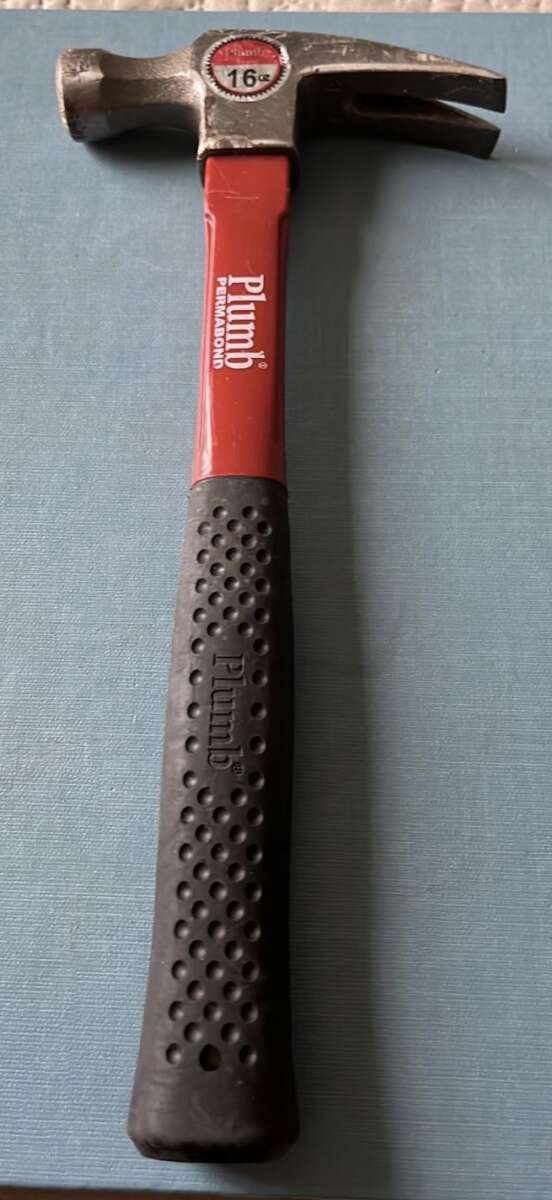
Can A Rotary Hammer Break Concrete: Expert Guide
Yes. A rotary hammer can break concrete, especially when it has a hammer-only or chipping mode and the right bit. It works well for removing small slabs, breaking up steps, opening holes, and chipping away damaged concrete.
A rotary hammer is not the same as a small hammer drill. Its piston creates a stronger impact, so it can fracture concrete with less effort. Still, thick reinforced slabs, foundations, footings, and large demolition jobs may need a larger demolition hammer, concrete saw, or professional equipment.
For homes and job sites in the United States, the main concerns are hidden utilities, structural damage, flying debris, noise, vibration, and respirable crystalline silica dust. Plan the work before you start.

What Is a Rotary Hammer?
A rotary hammer is a power tool that combines rotation with a hammering action. A piston strikes the bit inside the tool, and the bit transfers that impact into masonry or concrete.
Most rotary hammers have three settings:
- Rotary mode: Drills holes in wood, metal, or other materials when the correct chuck and bit are used.
- Hammer-drill mode: Rotates the bit while striking it. This is useful for drilling masonry holes.
- Hammer-only mode: Stops the rotation and uses impact alone. This is the setting used for chipping and breaking concrete.
Many rotary hammers use SDS-plus or SDS-max bits. These systems let the bit slide into the chuck while still moving slightly to absorb and transfer impact.
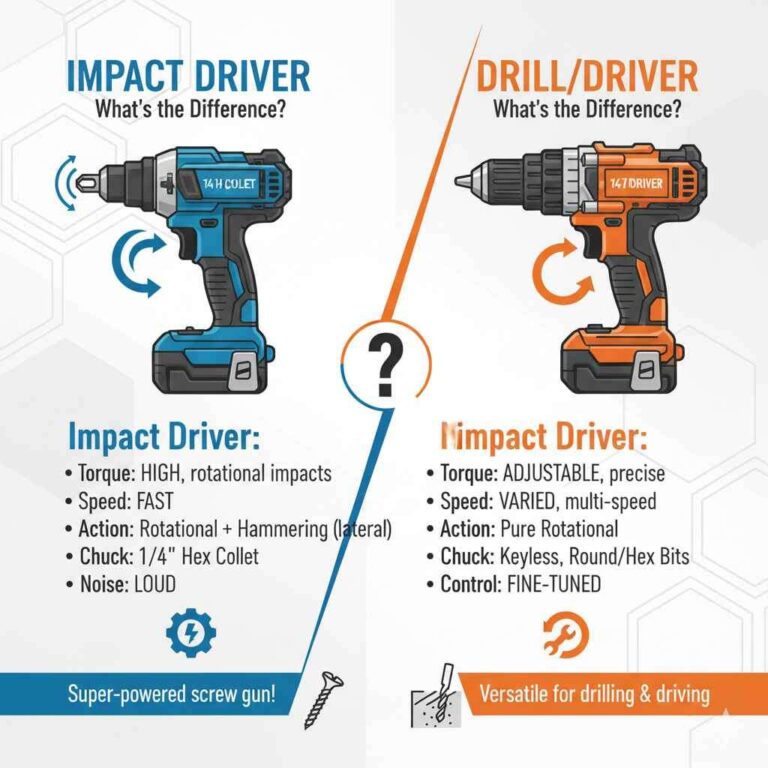
A hammer drill uses a lighter, mechanical hammering action. It can drill small holes in concrete, but it is usually a poor choice for breaking concrete. A rotary hammer has a separate piston and generally delivers much stronger blows.
A demolition hammer goes one step further. It is designed mainly for hammer-only work and often delivers more impact energy than a rotary hammer. The trade-off is greater weight, noise, vibration, and cost.
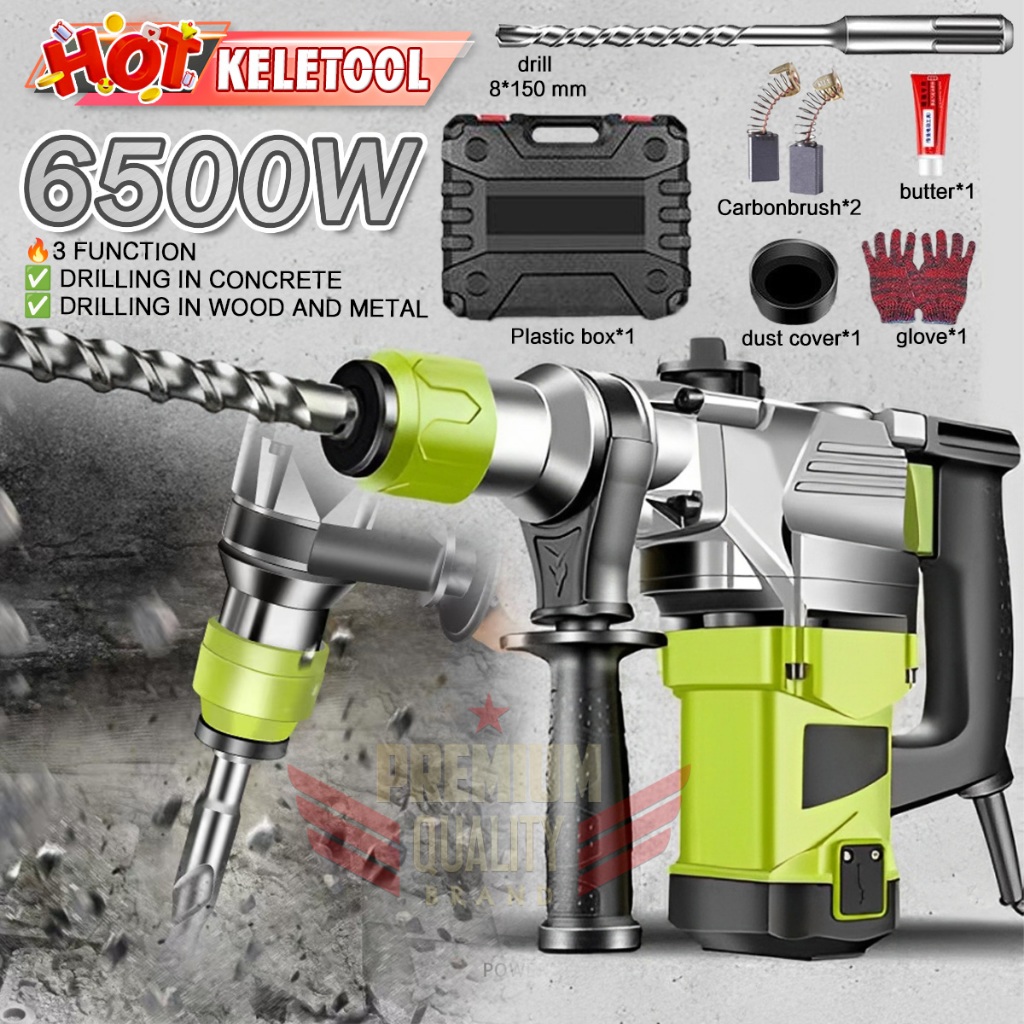
How Well Can a Rotary Hammer Break Concrete?
A rotary hammer can break concrete well when the material is not too thick and the tool has enough impact energy. The result depends on more than the tool’s advertised power.
Important factors include:
- Concrete thickness
- Concrete age and strength
- Presence of wire mesh or rebar
- Tool impact energy
- Bit shape and condition
- Operator technique
- Access to the work area
- Whether the concrete is attached to a foundation or other structure
A small SDS-plus rotary hammer may handle anchor holes, narrow channels, small pads, and light chipping. A larger SDS-max tool is better for heavy chipping and thicker sections.
The concrete may crack quickly, or it may resist for several minutes. That does not always mean the tool is defective. Reinforcing steel can hold broken pieces together, and concrete that is well supported may absorb much of the impact.
Typical tool choices
| Job | Suitable tool |
|---|---|
| Drill a few holes for anchors | Hammer drill or small rotary hammer |
| Remove tile or thin mortar | Small rotary hammer with a chisel |
| Break a small concrete step | Rotary hammer or small demolition hammer |
| Cut a narrow trench in a slab | Rotary hammer after making relief cuts |
| Remove a thick patio section | Large rotary hammer, demolition hammer, or concrete saw |
| Break a footing, foundation, or structural wall | Qualified contractor and structural review |
These examples are general. Concrete thickness and reinforcement can change the correct choice.
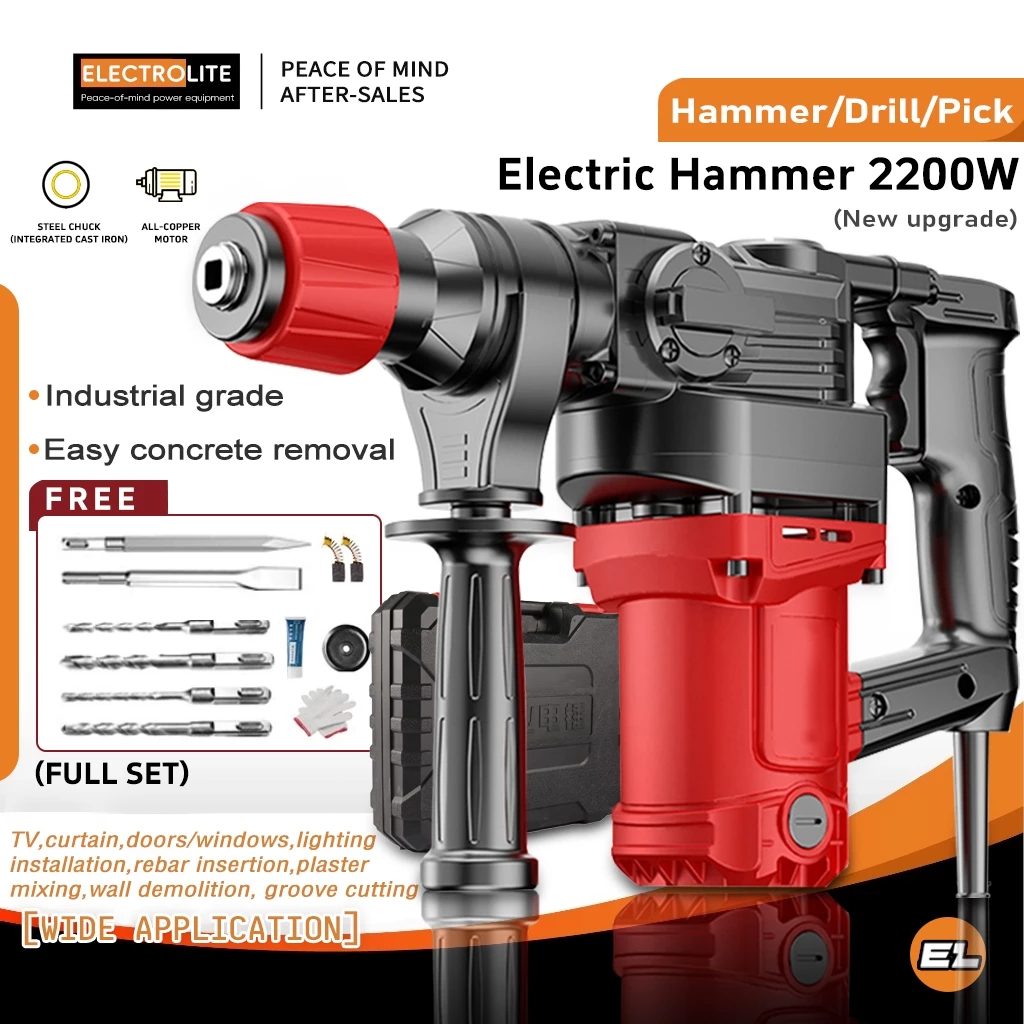
Which Bit Should You Use?
Use a bit made for concrete and matched to the tool’s chuck system. The bit shape determines whether you drill, split, or chip the material.
Point chisel
A point chisel concentrates force in a small area. Use it to:
- Start a crack
- Break hard spots
- Split a concrete edge
- Reach into a drilled hole
- Chip away small sections
A point chisel can dig into concrete rather than slide across its surface.
Flat chisel
A flat chisel spreads force across a wider edge. It is useful for:
- Removing thin layers
- Cutting shallow channels
- Breaking concrete along an existing crack
- Chipping tile, mortar, or old patch material
Scaling chisel
A scaling chisel has a wider blade. It works best for surface removal, such as loose concrete, coatings, and damaged overlays. It is not usually the best bit for breaking a thick slab apart.
Drill bit
Use an SDS masonry bit when you need holes. Drilling a series of holes can weaken a small section before you switch to a chisel.
Do not use a wood bit, metal bit, or ordinary drill bit for concrete. The bit may overheat, dull quickly, or fail to cut.

How to Break Concrete With a Rotary Hammer
Before using the tool, confirm that the concrete is safe to remove. A slab may cover electrical conduit, plumbing, gas lines, radiant-heating tubes, or post-tension cables.
1. Check the concrete and surrounding area
Find out whether the concrete is:
- A nonstructural patio or walkway
- Part of a foundation
- A load-bearing wall
- A footing
- A garage floor
- A slab with post-tension cables
- Near a utility or drainage line
Do not break structural concrete based only on appearance. Ask a qualified contractor or structural engineer when removal could affect a house, retaining wall, foundation, beam, column, or load-bearing wall.
In the United States, contact 811 before digging or cutting where underground utility lines may be present. Utility marking rules vary by state, and private lines may require additional locating work.
2. Mark the section
Mark the area with a clear line. Keep people, pets, vehicles, and fragile objects away from the work zone.
If you want a clean edge, use a concrete saw to make a controlled relief cut first. A rotary hammer alone tends to create a rough, irregular edge.
3. Control dust before it starts
Concrete dust can contain respirable crystalline silica. Fine silica particles can reach deep into the lungs and cause serious disease.
Use one or both of these controls:
- Apply a small amount of water to the work area when the tool and electrical setup permit it.
- Use a dust-collection system designed for the rotary hammer and bit.
Avoid spraying water near an unprotected electric connection. Follow the tool manual and the dust-control equipment instructions. A household vacuum may not provide the filtration or durability required for concrete dust.
OSHA’s construction silica standard, 29 CFR 1926.1153, includes requirements for exposure control. Employers may need a written exposure control plan, competent-person oversight, training, housekeeping controls, and respiratory protection when required. A homeowner should still use strong dust controls, eye protection, and suitable respiratory protection.
4. Fit the chisel
Unplug a corded tool or remove the battery before installing the bit. Insert the correct SDS chisel and check that it locks into place.
Set the rotary hammer to hammer-only mode. Do not use rotary mode with a chisel unless the tool maker specifically allows it.
5. Start near an edge or weak point
Place the chisel near an edge, corner, crack, or drilled relief hole. Starting in the middle of a large slab can waste time because the surrounding concrete supports the impact.
Hold the tool firmly with both hands. Keep your feet stable and allow the tool to strike. Do not force your body weight onto it.
6. Work in short passes
Break a small section at a time. Move the chisel as the concrete loosens instead of holding it in one spot for too long.
If the bit stops making progress:
- Stop the tool.
- Check whether the bit is blunt or stuck.
- Look for rebar, wire mesh, or a hard aggregate pocket.
- Try a different angle or a nearby relief hole.
- Use a concrete saw or cutting tool for steel reinforcement if the job allows it.
Never twist the tool aggressively to free a stuck bit. That can damage the bit, chuck, or your wrists.
7. Remove the broken pieces safely
Small chunks can be heavy and sharp. Use gloves that provide suitable protection, but do not place your fingers under a suspended piece.
After removing the concrete, collect dust and fragments with a method approved for the material. Do not dry sweep fine concrete dust. OSHA and NIOSH favor methods that prevent dust from becoming airborne.

How to Break a Concrete Slab More Efficiently
The fastest approach is usually to create a planned failure line rather than attack the entire slab at random.
For a small nonstructural slab:
- Mark the removal area.
- Make relief cuts if a clean boundary matters.
- Drill several holes near the planned break line if appropriate.
- Start at an edge.
- Use a point chisel to open the crack.
- Switch to a flat chisel to lift and separate pieces.
- Cut exposed reinforcement with a suitable tool.
This method reduces the amount of concrete the rotary hammer must fracture. It also gives you better control over the size of the pieces.
Do not drill into a slab if you do not know what is below it. Drilling can damage plumbing, electrical systems, radiant heat, or post-tension cables.
Concrete breaking versus concrete removal
Breaking concrete creates fragments. Removing concrete cleanly may require:
- A concrete saw
- A wall saw
- A core drill
- A demolition hammer
- A skid steer or other equipment
- Reinforcement cutting tools
A rotary hammer is most useful when the work area is small, access is limited, and rough edges are acceptable.
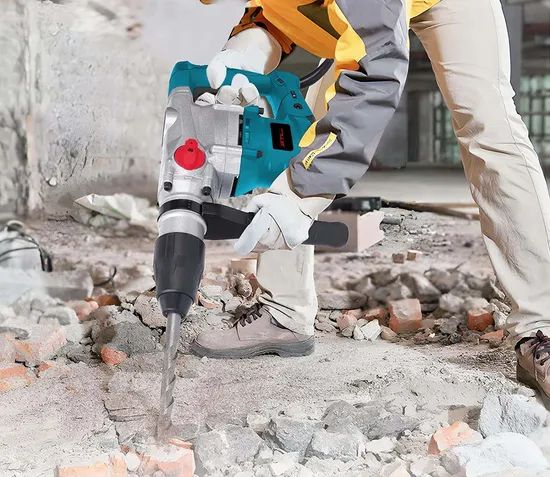
Rotary Hammer Versus Other Concrete Tools
The right tool depends on the size and type of work.
| Tool | Best use | Main limitation |
|---|---|---|
| Hammer drill | Small holes for anchors | Too weak for serious breaking |
| SDS-plus rotary hammer | Small holes and light-to-medium chipping | Limited against thick, reinforced concrete |
| SDS-max rotary hammer | Larger holes and heavier chipping | Heavier and more tiring |
| Demolition hammer | Extended hammer-only breaking | Does not drill in standard hammer-only form |
| Concrete saw | Straight, controlled cuts | Creates dust or slurry and needs access |
| Core drill | Round holes through concrete | Not suited to general demolition |
| Jackhammer | Large slabs and heavy removal | High noise, vibration, and handling demands |
A rotary hammer is often the middle-ground tool. It can drill and chip, but it is not automatically the best tool for every demolition job.

Safety Rules for Breaking Concrete
Concrete demolition can cause more than dust exposure. Use controls for the full work area.
Wear suitable personal protective equipment
At minimum, consider:
- Safety glasses with side protection
- Hearing protection
- Work gloves suited to the task
- Safety-toe footwear
- Long pants and durable work clothing
- Respiratory protection when required by the dust conditions
A face shield can add protection from flying chips, but it does not replace safety glasses.
Control noise and vibration
Rotary hammers can produce harmful noise. Use hearing protection and limit exposure time.
Vibration can cause hand and arm discomfort. Take breaks, keep your hands warm and dry, and avoid gripping the tool harder than needed. Stop if you develop numbness, tingling, unusual pain, or loss of hand control.
Protect against electric shock
Inspect the cord, plug, battery, and tool housing before use. Keep water away from electrical connections. For corded tools, use a properly grounded circuit and the ground-fault protection required for the work environment.
Do not use a damaged cord or a tool with a cracked case.
Watch for hidden reinforcement
Rebar and wire mesh can stop a chisel suddenly. The tool may kick or shift when the bit reaches steel.
Do not use the rotary hammer as a lever. If you expose reinforcement, stop and choose a cutting method designed for the material.
Avoid structural damage
Never assume a concrete wall or slab is nonstructural. Removing part of a foundation, footing, beam, column, or load-bearing wall can cause cracking, settlement, or collapse.
For post-tensioned slabs, a damaged cable can release stored energy with extreme force. Get the slab evaluated before drilling or breaking it.

Common Problems and Fixes
The rotary hammer will not break the concrete
Possible causes include:
- The tool is in rotary mode instead of hammer-only mode.
- The chisel is blunt or incorrect.
- The concrete is thicker or stronger than expected.
- The bit is placed in the center of a well-supported slab.
- Rebar or wire mesh is holding the section together.
- The tool has too little impact energy.
Try a sharp point chisel near an edge or relief hole. If progress remains poor, use a larger tool or change the method.
The bit gets hot
A hot bit may result from long continuous operation, friction, a dull edge, or a jammed bit. Stop and let the tool cool. Inspect the bit and chuck.
Do not cool a hot bit by putting it directly into water unless the manufacturer specifically permits that method. Sudden cooling can affect some materials, and water can create an electrical hazard.
The concrete only powders
Powdering may mean the chisel is scraping instead of striking effectively. The angle may be wrong, the bit may be dull, or the surface may be a thin topping over a stronger base.
Try a point chisel and a different starting location. If you need a clean channel, make saw cuts first.
The rotary hammer kicks back
Kickback can occur when the bit binds, strikes reinforcement, or catches at an angle. Release the trigger and keep the tool under control.
Do not push harder to overpower a jam. Remove the bit according to the manual and inspect the hole and chisel.

Key Takeaways
- A rotary hammer can break concrete in hammer-only mode.
- Use an SDS point or flat chisel made for the tool.
- Start at an edge, crack, or relief hole.
- A hammer drill is usually not a good concrete-breaking tool.
- Thick, reinforced, or structural concrete may require other equipment and professional assessment.
- Control silica dust with water or suitable dust collection.
- Locate utilities and check for reinforcement before drilling or breaking.
- Do not disturb foundations, footings, load-bearing members, or post-tensioned slabs without qualified guidance.
Frequently Asked Questions
Can a rotary hammer break a concrete floor?
Yes, a rotary hammer can break parts of a concrete floor, especially a thin, nonstructural slab. Use relief cuts or drilled holes to guide the break. Before starting, confirm that the floor does not contain utilities, radiant heat, or post-tension cables.
Can a rotary hammer break rebar?
A rotary hammer can expose rebar, but its chisel is not meant to cut steel. Stop when you reach reinforcement and use a suitable metal-cutting tool if cutting is permitted. Cutting structural reinforcement may weaken the concrete member.
Is a rotary hammer better than a jackhammer?
Not always. A rotary hammer is easier to control and more useful when you need both drilling and light chipping. A jackhammer or demolition hammer is usually better for large areas and thick concrete, but it creates more vibration, noise, and fatigue.
Can I use a regular drill to break concrete?
A regular drill is not designed for concrete demolition. A hammer drill can make small masonry holes, but it usually lacks the impact energy needed to break concrete efficiently. A rotary hammer with a chisel is the better choice for small breaking work.
How thick of concrete can a rotary hammer break?
There is no single safe thickness limit. Tool impact energy, concrete strength, reinforcement, support, and access all matter. A small rotary hammer may handle light chipping and small slabs, while thick or reinforced concrete often needs a larger demolition hammer, saw, or professional equipment.
Conclusion
A rotary hammer can break concrete, but it works best on small or medium nonstructural sections. Put the tool in hammer-only mode, use the correct chisel, begin at an edge, and break the concrete in controlled stages.
The deciding questions are not only “How powerful is the tool?” and “How thick is the slab?” Also ask what lies below the concrete, whether reinforcement is present, and whether the concrete supports a building or other structure. If the work involves a foundation, footing, load-bearing element, post-tensioned slab, or unknown utility, stop and get qualified help before breaking it.
Recent Tool Guides
 Hammer
How To Hammer Flowers Onto Paper: Easy Guide
Learn how to hammer flowers onto paper with simple steps, helpful tips, and beautiful results for...
Read Guide → Wrench
How To Use A Hex Wrench: Easy Step-By-Step Guide
Learn how to use a hex wrench correctly with simple steps, helpful tips, and common mistakes...
Read Guide → Hacksaw
How To Cut Curtain Pole With Hacksaw: Easy Guide
Learn how to cut curtain pole with hacksaw safely and neatly. Follow simple steps for accurate...
Read Guide → Wrench
How To Use A Husky Torque Wrench: Easy Guide
Learn how to use a Husky torque wrench correctly with simple steps, torque settings, and safety...
Read Guide → Hammer
How To Hold A Hammer: Safe Grip Guide
Learn how to hold a hammer with the right grip, stance, and technique for safer, more...
Read Guide → Hacksaw
How To Cut Flexible Metal Conduit With Hacksaw: Easy Guide
Learn how to cut flexible metal conduit with hacksaw safely and cleanly. Follow simple steps for...
Read Guide →