What Is A Masonry Hammer: Uses And Tips
Introduction
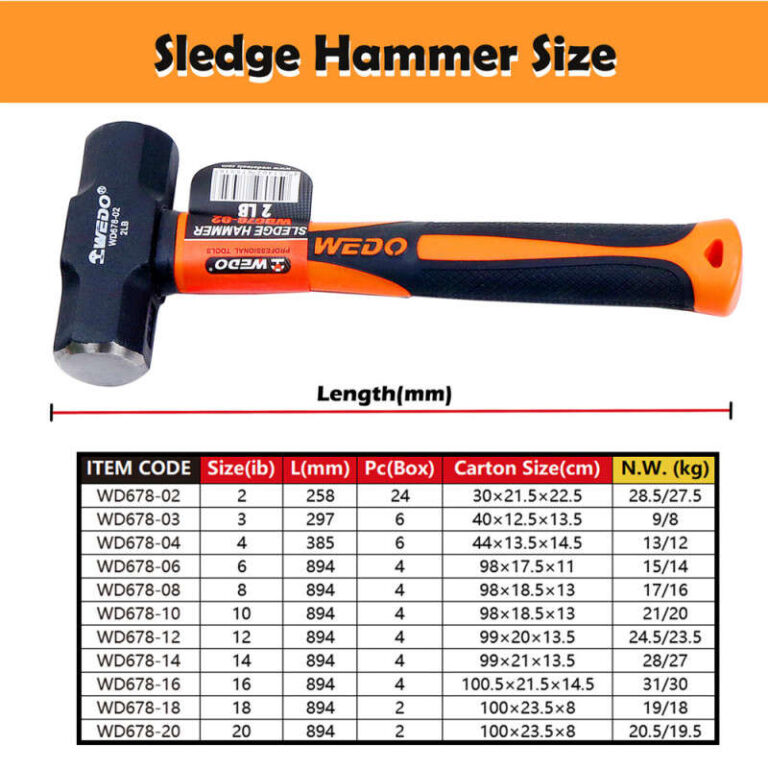
A masonry hammer is a hand tool used to split, shape, trim, and set brick, block, stone, and other masonry materials. In the United States, masons, bricklayers, landscapers, and DIY homeowners often use it for small jobs that need more control than a regular claw hammer can provide.
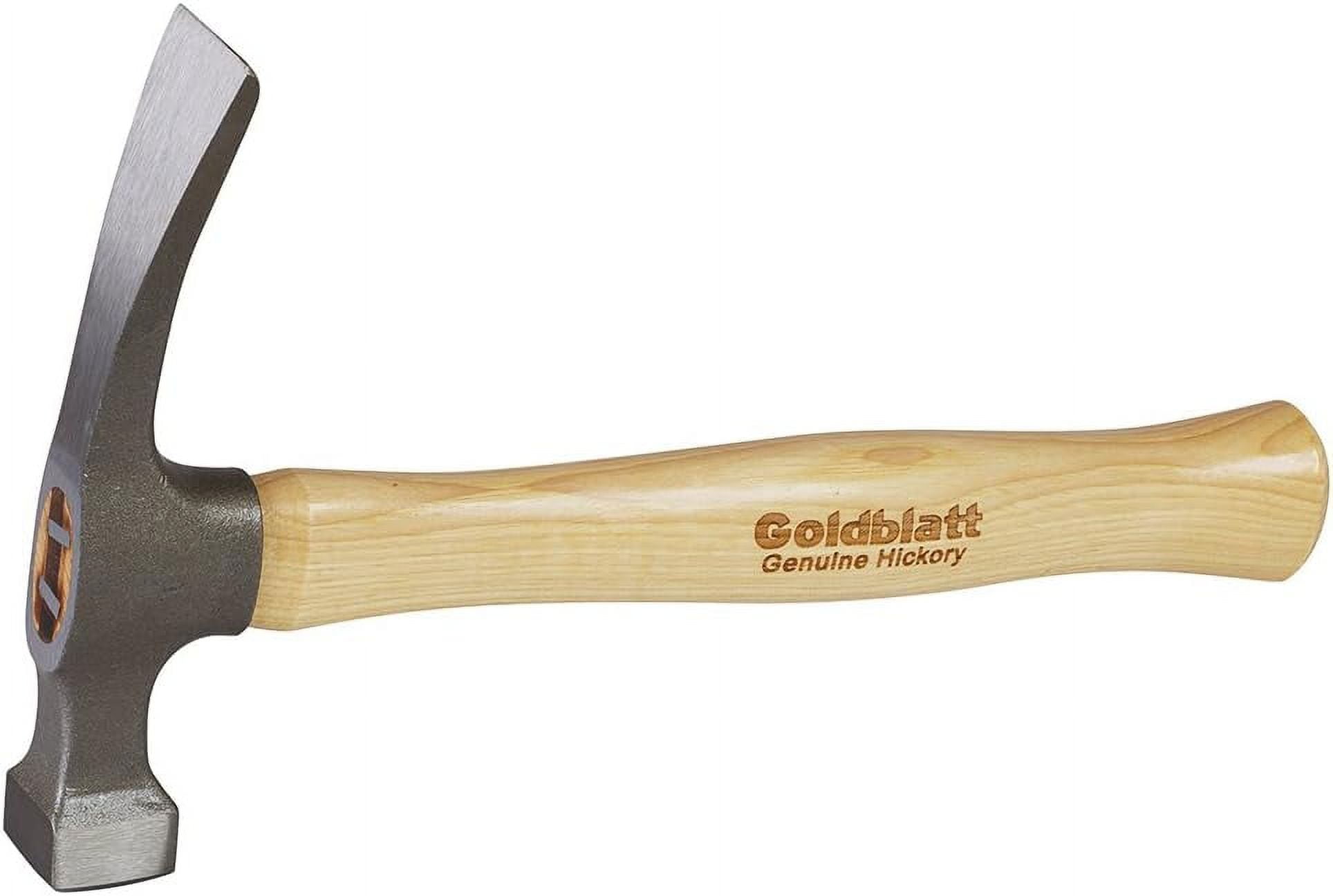
Most masonry hammers have two working ends: a striking face and a narrow blade, edge, or chisel end. The face drives masonry tools or taps a piece into place. The blade scores, chips, or trims brick and similar materials.
A masonry hammer is not the same as a rotary hammer. A masonry hammer uses hand force. A rotary hammer uses a motor and a masonry bit to drill into concrete, brick, or block.

What Is a Masonry Hammer?
A masonry hammer is a purpose-built hammer for working with brick, concrete block, stone, mortar, and related materials. Its head is made to deliver focused blows without the claw found on a common carpentry hammer.
The tool usually includes:
- A striking face: The flat end delivers blows.
- A blade or chisel end: The narrow end scores and breaks masonry.
- A steel head: This provides the mass needed for controlled impact.
- A handle: The handle absorbs some vibration and gives the user control.
- A balanced design: The weight sits along the tool’s center line for accurate strikes.
Masonry hammers are also called brick hammers, bricklayer’s hammers, or mason’s hammers. These names can overlap. Tool makers may use them in slightly different ways, so the shape matters more than the label.
How a masonry hammer differs from a regular hammer
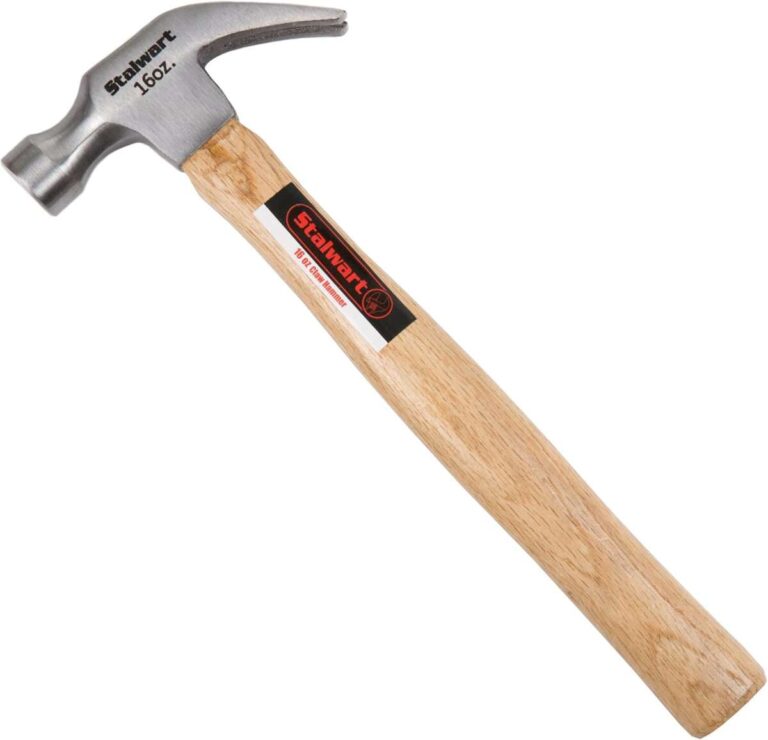
A claw hammer is made mainly for driving and pulling nails. Its curved claw can catch wood and fasteners, but it is not designed for clean masonry cuts.
A masonry hammer has a more rugged face and a sharp or narrow end. That end concentrates force into a small area. The concentrated force helps create a controlled break in a brick or block.
A masonry hammer is not a replacement for every masonry tool. A brick chisel, bolster chisel, club hammer, lump hammer, or power tool may be better for larger or harder work.
What materials can it handle?
A masonry hammer may work well for:
- Standard clay brick
- Concrete masonry units, often called CMUs or concrete blocks
- Mortar joints
- Soft or moderately hard stone
- Thin masonry pieces
- Small concrete edges, when the tool is suitable
Results depend on the material. Dense natural stone and cured concrete can resist hand tools. Trying to force a small masonry hammer through them can damage the tool or send sharp chips toward the user.
What Is a Masonry Hammer Used For?
A masonry hammer is used for small, controlled masonry tasks rather than heavy demolition. It helps the user shape material by striking a line, trimming an edge, or tapping a piece into position.
Common uses include:
Cutting and trimming brick
A mason can score a brick along a marked line with the blade end. Repeated, controlled strikes can then split the brick along that line.
The cut may not be as smooth as one made with a brick saw. However, a masonry hammer can be useful for quick adjustments on a job site.
Breaking concrete block
The chisel end can remove small sections from a concrete block. This may help create space around a pipe or adjust a block at the end of a wall.
For large cuts, use a masonry saw or another tool made for the material. Hand work becomes slow and less predictable as the block gets thicker.
Removing old mortar
A masonry hammer can help loosen small areas of cracked or loose mortar. Strike lightly and work along the joint rather than directly into sound brick.
Heavy blows can damage the edges of the brick. For large repointing jobs, a proper joint raker, cold chisel, or powered tool may offer better control.
Setting brick or stone
The flat face can tap a brick, paver, or stone into a bed of mortar or sand. Use light blows. The goal is to adjust position, not crush the material.
A rubber mallet may be safer for finished surfaces because it lowers the chance of sharp impact marks.
Driving a masonry chisel
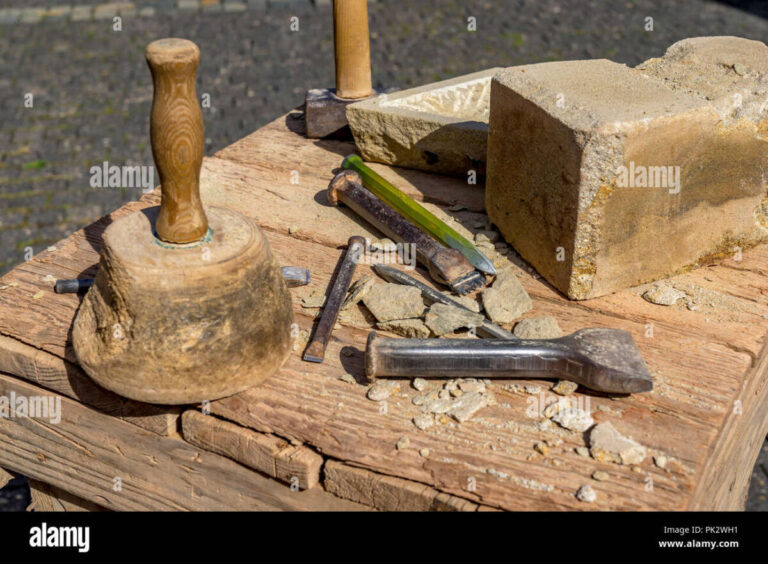
Some masonry hammers have a face suited to striking a separate cold chisel or brick chisel. The hammer’s weight helps transfer force through the chisel.
Use a chisel with a sound striking head. Do not use a chisel with a mushroomed head, because damaged metal can break away during impact.

How to Use a Masonry Hammer
Use a masonry hammer with short, controlled strikes. Accuracy matters more than raw force.
What you need before starting
Gather:
- The masonry hammer
- A brick chisel or masonry chisel, if needed
- A pencil, crayon, or chalk
- A straightedge or square
- Safety glasses or a face shield
- Hearing protection for repeated impact work
- Work gloves that allow a firm grip
- A stable work surface
- A dust mask or respirator when dust control requires it
Check the tool before use. The head should be tight. The handle should not be cracked, loose, or badly worn. The striking face and blade should not have deep cracks or dangerous metal damage.
Steps for scoring and splitting a brick
- Mark the cut line. Use a square or straightedge to mark all needed sides.
- Place the brick on a stable surface. Support it so it will not rock.
- Score the line. Hold the blade end on the mark and tap it with controlled blows.
- Work around the brick. Score each face along the same line.
- Deepen the groove. Repeat the process instead of using one very hard strike.
- Split the brick. Place the blade in the groove and strike with a firm, direct blow.
- Inspect the break. Remove loose fragments and smooth small high spots if needed.
The cut may fail if the line is shallow, the brick is poorly supported, or the material contains a defect. If the break wanders, stop and make a new mark rather than forcing the tool.
Signs of good technique
Good technique usually produces:
- A clear groove along the marked line
- Small chips instead of large flying pieces
- A stable workpiece
- Little movement of the hammer head at impact
- No damage to the tool or handle
- A break that follows the scored path
Keep your non-striking hand away from the impact area. Never hold a small brick directly in your hand while striking it.
When to choose another tool
Choose a brick saw when you need clean, repeatable cuts. Use a rotary hammer or demolition tool for many holes or large areas of hard material. Use a club hammer and chisel when you need more striking weight.
A masonry hammer is best when the work is small, accessible, and controlled. It is not automatically the best tool just because the material is masonry.
Types of Masonry Hammers
Masonry hammers vary in head shape, weight, handle design, and intended work. The names are not always used consistently across U.S. tool catalogs.
Brick hammer
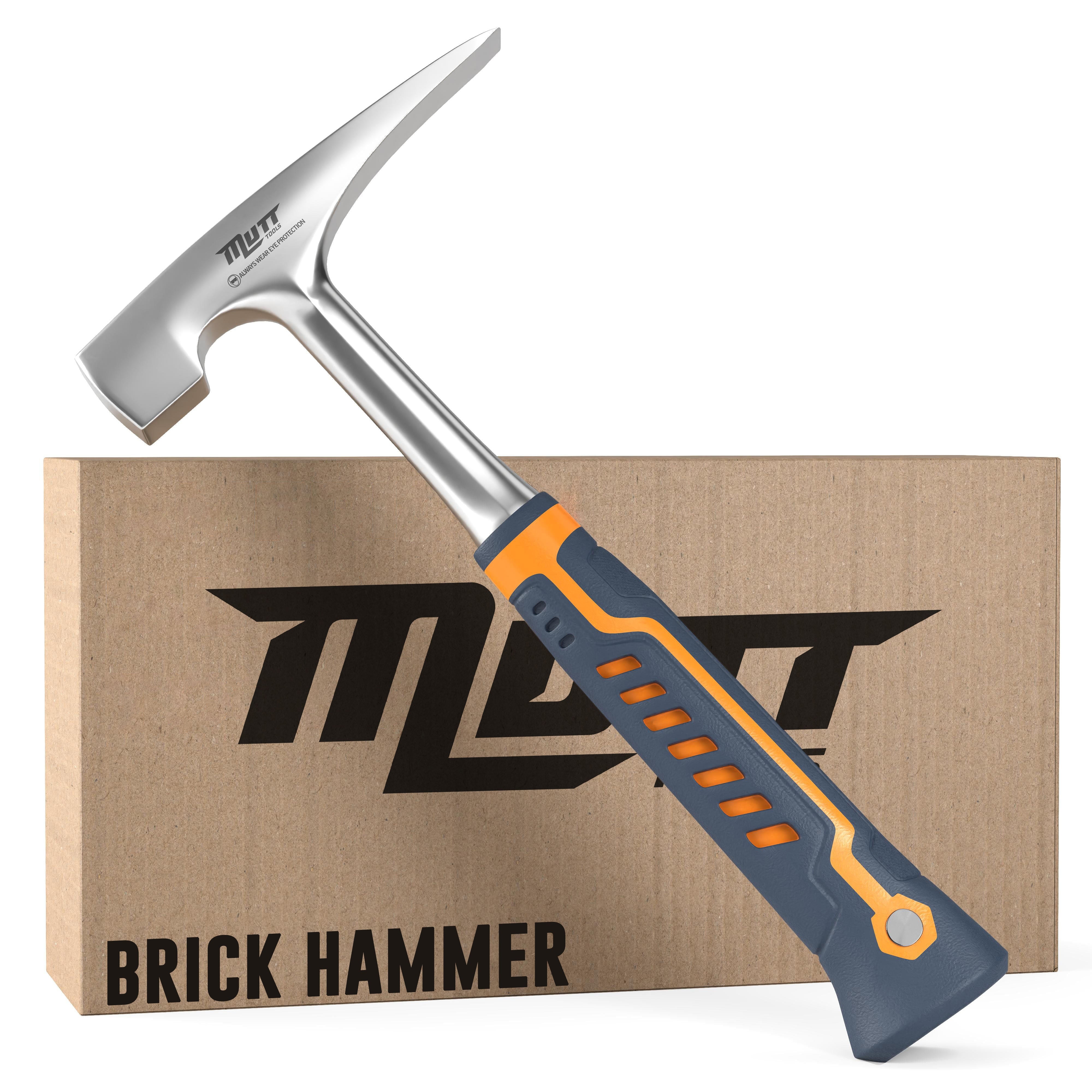
A brick hammer often has a flat striking face on one side and a narrow, sharp blade on the other. It is a common choice for trimming and splitting brick.
The blade may be straight, tapered, or slightly angled. A narrow blade gives focused force, while a broader blade can remove more material but may offer less precision.
Mason’s hammer
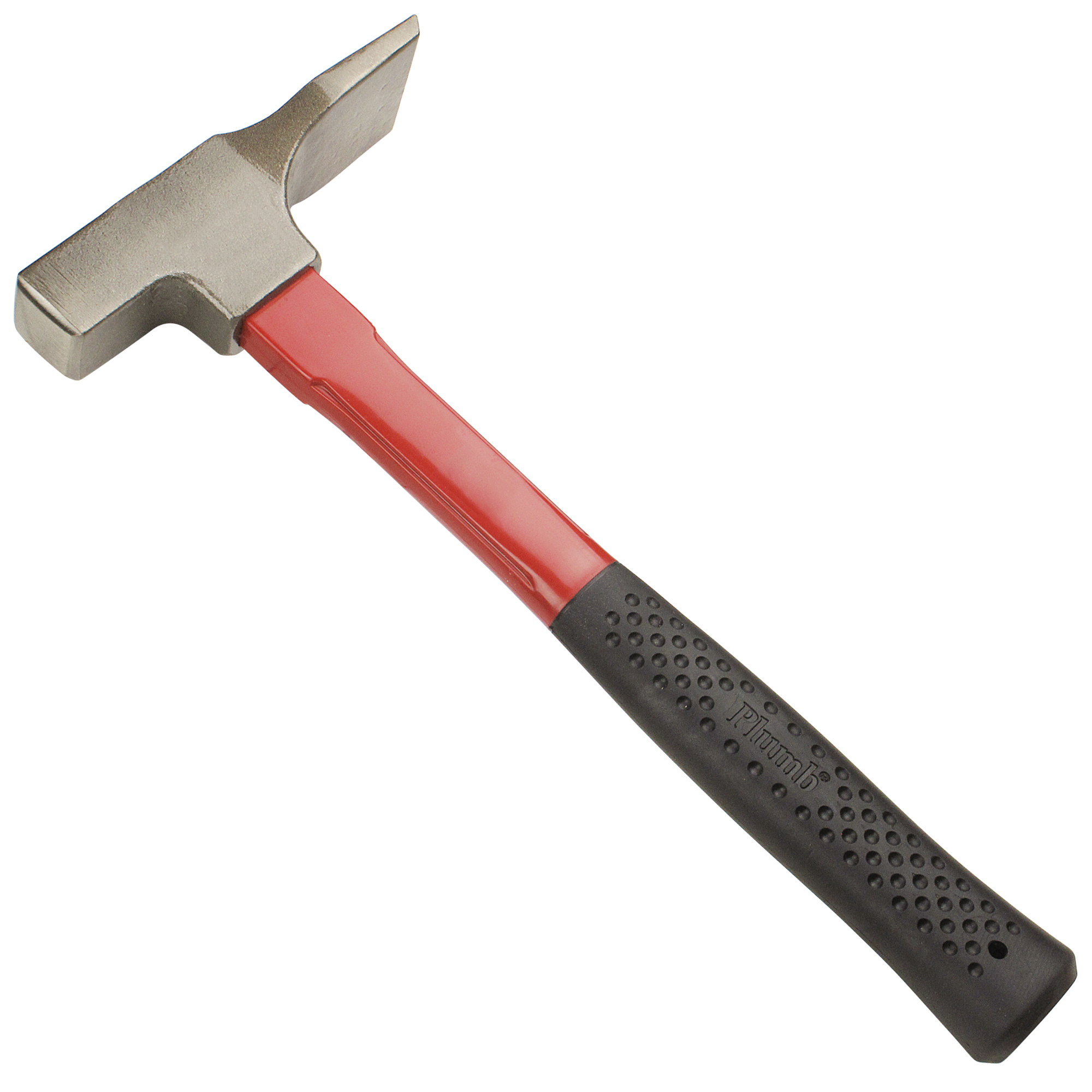
A mason’s hammer is a broad term for a hammer designed for brick, stone, and block work. Some models look much like brick hammers. Others have a heavier head or a different cutting edge.
Check the actual head shape and weight rather than relying only on the name.
Stone hammer
A stone hammer is built for shaping or breaking stone. It may have two striking faces, or it may combine a face with a pointed or chisel end.
Stone work can create large, sharp fragments. Use eye and face protection, and confirm that the tool is rated for the material.
Club hammer
A club hammer has a short handle and a heavy, double-faced head. It is often used with cold chisels and masonry chisels.
It is useful for concentrated demolition and hard material. It is less suitable than a brick hammer for fine brick trimming.
Lump hammer
A lump hammer is heavier than many brick hammers and is used for more forceful striking. It can help with demolition or heavy chiseling.
Its extra weight increases impact force but can also increase fatigue and the chance of overstriking. Use it only when the material and task call for it.
Quick comparison
| Tool | Main design | Best suited to | Main limitation |
|---|---|---|---|
| Masonry or brick hammer | Face plus blade or chisel end | Brick trimming and small masonry work | Not ideal for large cuts |
| Brick chisel | Separate cutting tool | Straight brick and block cuts | Needs a hammer |
| Club hammer | Short handle and heavy head | Chisel work and small demolition | Less precise for trimming |
| Lump hammer | Heavier striking head | Harder demolition tasks | More tiring and forceful |
| Rubber mallet | Resilient, non-metal face | Setting pavers or finished pieces | Cannot cut masonry |
| Rotary hammer | Powered impact and rotation | Drilling and light demolition | Needs power, bits, and dust control |
The main choice is simple: use a brick hammer for control, a heavier hammer for force, and a powered tool for repeated or deep work.

Masonry Hammer Safety
Masonry work can produce sharp chips, silica-containing dust, loud impact noise, and sudden tool movement. Use the right protection and stop when the tool or material behaves unpredictably.
Wear eye and face protection
At minimum, wear safety glasses with side protection. A face shield can add protection when you expect many chips, but it should be worn over safety glasses, not instead of them.
Masonry fragments can travel farther than expected. Keep other people away from the strike zone.
Control dust
Cutting, grinding, and breaking masonry can release respirable crystalline silica. The U.S. Occupational Safety and Health Administration provides construction requirements for silica exposure control, including methods such as wet cutting, local exhaust, and respiratory protection when required.
Avoid dry cutting or grinding indoors without a suitable dust-control plan. Do not sweep fine dust into the air. Use the control method required for the task and workplace.
Protect hands and hearing
Gloves can help with sharp edges and rough materials, but they do not make a hand safe to place near a strike. Keep your fingers out of the tool path.
Repeated hammer blows can be loud enough to harm hearing. Use hearing protection, especially in enclosed spaces or during long work periods.
Inspect the hammer and chisel
Do not use the tool if:
- The head is loose
- The handle is cracked or split
- The blade has a deep crack
- The striking face is badly deformed
- The chisel head has a mushroomed edge
- The grip is oily or too damaged to hold securely
Replace damaged tools. Do not weld, grind, or reshape a cracked hammer head unless a qualified tool professional confirms that repair is safe.
Know when to call a professional
Stop and seek qualified help if the work may affect:
- A load-bearing wall
- A foundation
- A retaining wall
- A chimney
- A fire-rated assembly
- Hidden electrical, gas, plumbing, or structural components
A small-looking cut can weaken a wall or expose a hazard. A masonry hammer is a hand tool, not a substitute for structural assessment.
How to Choose a Masonry Hammer
Choose a masonry hammer by matching the head shape and weight to the material and task. A heavier hammer is not always better.
Consider the work
For light brick trimming, choose a balanced brick hammer with a clear cutting edge. For frequent chisel work, consider a club hammer. For stone shaping, choose a model designed for stone and use the maker’s instructions.
If you need clean cuts, a saw may matter more than the hammer. If you need to remove a large volume of material, a powered tool may save time and reduce repeated impact.
Consider weight
Heavier heads deliver more impact with each blow. They can also cause more fatigue and make it harder to control the strike.
A lighter hammer may suit short repairs and precise trimming. A heavier model may suit a separate chisel and tougher material. The right weight is the heaviest one you can control accurately for the full task.
Consider the handle
Common handle materials include:
- Wood: Comfortable and often easy to replace, but it can split or loosen.
- Fiberglass: Often resists splitting and can reduce some vibration.
- Steel or composite designs: May be strong, but grip comfort varies.
Look for a secure head, a grip that stays stable, and a handle length that gives you control. A longer handle can increase leverage but may reduce accuracy in tight spaces.
Check the cutting end
The cutting end should match the work. A narrow blade can score a line. A broader end may remove more material. The edge should be sound and free from cracks or severe deformation.
Do not assume a sharp edge is always safer. A damaged or brittle edge can chip. Follow the tool maker’s care instructions.
A simple decision guide
- Need to split a few bricks? Use a brick or masonry hammer.
- Need to drive a separate chisel? Use a club hammer of suitable weight.
- Need clean, repeated cuts? Use a masonry saw.
- Need holes in concrete or block? Use a rotary hammer with the correct bit.
- Need to tap finished pavers into place? Use a rubber mallet.
- Need structural demolition? Use a planned method and qualified advice.

Care and Maintenance
Proper care keeps a masonry hammer safer and more useful. Clean dust and mortar from the head after use, then dry the tool before storage.
Inspect the handle and head each time you use the hammer. If a wooden handle becomes loose, replace or properly refit it before work. Do not keep using a tool because the damage seems minor.
Store the hammer in a dry place. A light protective coating on bare steel can help limit rust, but keep oil away from the grip and striking surfaces when it could reduce control.
Do not use a masonry hammer as a pry bar, wedge, punch, or nail puller unless the tool is specifically designed for that purpose. Side loading can bend the blade or damage the head.

Key Takeaways
- A masonry hammer is a hand tool for brick, block, stone, mortar, and small masonry tasks.
- Most models have a striking face and a narrow blade or chisel end.
- It is useful for scoring, trimming, splitting, setting, and light chipping.
- A brick hammer favors control; a club or lump hammer provides more striking force.
- Use eye protection, control masonry dust, and inspect the tool before every job.
- Choose a saw, rotary hammer, or professional service when the work is large, precise, dusty, or structural.
Frequently Asked Questions
Is a masonry hammer the same as a brick hammer?
Often, yes. In U.S. tool catalogs, the terms can describe a hammer with a striking face and a blade for brick work. However, names vary by manufacturer, so check the head design instead of the label alone.
Can you use a masonry hammer on concrete?
You can use one for small chips or light edge work when the tool is suitable. It is usually inefficient for thick, cured concrete. A chisel and club hammer, rotary hammer, or demolition tool may be more appropriate.
Can a masonry hammer cut brick cleanly?
It can split some bricks along a scored line, but the result may have a rough edge. A masonry saw provides cleaner and more repeatable cuts.
Should a masonry hammer be sharp?
The blade or chisel end should be properly formed and free of cracks. It should not be dangerously thin, brittle, or badly damaged. Follow the manufacturer’s maintenance guidance rather than sharpening it aggressively.
What is the safest way to split a brick?
Mark the cut, support the brick on a stable surface, score all sides with controlled blows, and then split it with a firm strike. Wear eye protection and keep your free hand away from the impact area.
Conclusion
A masonry hammer is a compact tool for controlled work on brick, block, stone, and mortar. Its face delivers impact, while its blade or chisel end helps score and trim masonry.
Use it for small tasks where control matters. Choose a chisel, saw, rotary hammer, or professional help when the material is thick, the cut must be precise, or the work may affect a structure. The best results come from the right tool, light controlled blows, stable support, and proper protection.
Recent Tool Guides
 Hammer
How To Hammer Flowers Onto Paper: Easy Guide
Learn how to hammer flowers onto paper with simple steps, helpful tips, and beautiful results for...
Read Guide → Wrench
How To Use A Hex Wrench: Easy Step-By-Step Guide
Learn how to use a hex wrench correctly with simple steps, helpful tips, and common mistakes...
Read Guide → Hacksaw
How To Cut Curtain Pole With Hacksaw: Easy Guide
Learn how to cut curtain pole with hacksaw safely and neatly. Follow simple steps for accurate...
Read Guide → Wrench
How To Use A Husky Torque Wrench: Easy Guide
Learn how to use a Husky torque wrench correctly with simple steps, torque settings, and safety...
Read Guide → Hammer
How To Hold A Hammer: Safe Grip Guide
Learn how to hold a hammer with the right grip, stance, and technique for safer, more...
Read Guide → Hacksaw
How To Cut Flexible Metal Conduit With Hacksaw: Easy Guide
Learn how to cut flexible metal conduit with hacksaw safely and cleanly. Follow simple steps for...
Read Guide →