When Was The Ball Peen Hammer Invented: History & Origins
Introduction
In American workshops, the ball peen hammer is a common tool for shaping metal, setting rivets, and driving punches. But its exact invention date is not firmly documented.
The date most often linked to the ball peen hammer is about 1750. Many tool-history references credit French inventor Jacques de Vaucanson with creating the rounded, ball-shaped peen. However, surviving records do not prove that he invented the modern hammer as we know it.
The safest answer is this: the ball peen hammer likely developed during the 18th century, and the modern form became widely recognized in the 19th century.
The short answer: Was the ball peen hammer invented in 1750?
About 1750 is the commonly cited date, but it is not a confirmed invention date.
The claim comes from repeated tool-history accounts that credit Jacques de Vaucanson, a French inventor and engineer. Those accounts often say he developed the ball peen hammer for metalwork.
There are two limits to that claim:
- A clear original patent or dated drawing for Vaucanson’s ball peen hammer is difficult to identify.
- Blacksmiths used peen-style hammers long before the modern tool received a standard name.
So, 1750 should be treated as an estimated milestone, not a proven birthday for the tool.
A more accurate timeline is:
| Period | What likely happened |
|---|---|
| Before the 18th century | Blacksmiths used hammers with shaped peens for forging and metal work. |
| Around 1750 | Vaucanson is often credited with developing the ball-shaped peen. |
| 19th century | Ball peen hammers became more common in industrial metalwork and machine shops. |
| Late 19th and early 20th centuries | American tool catalogs helped standardize the hammer’s familiar form and uses. |
| Today | The ball peen hammer remains a basic tool for riveting, shaping, and light metal work. |
The key point is that the tool evolved over time. It probably was not invented in one moment by one person.
What is a ball peen hammer?
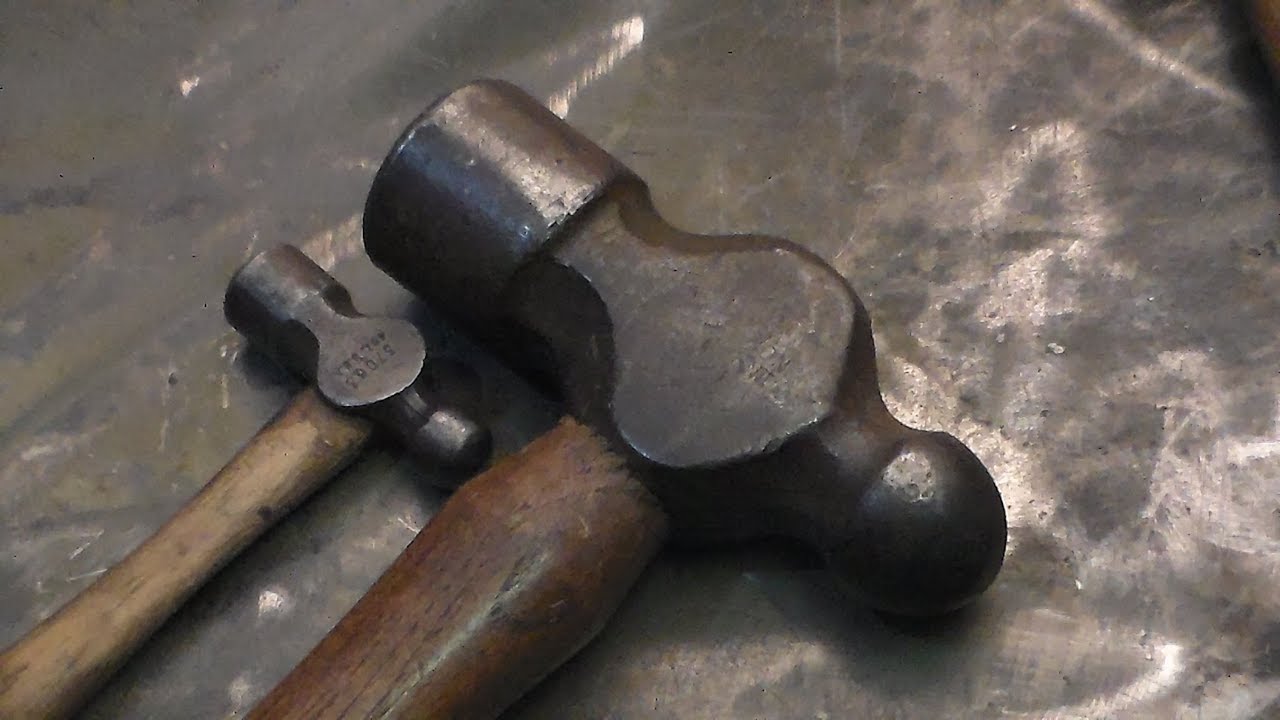
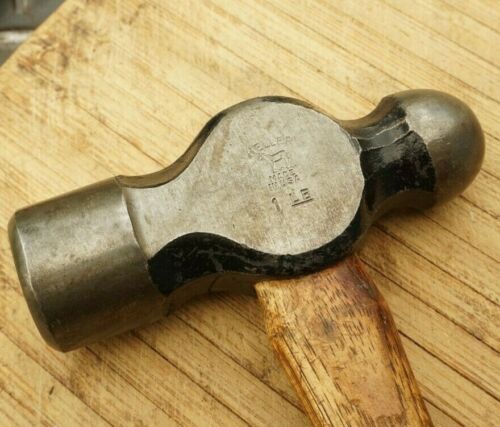
A ball peen hammer has two working ends:
- A flat face for striking.
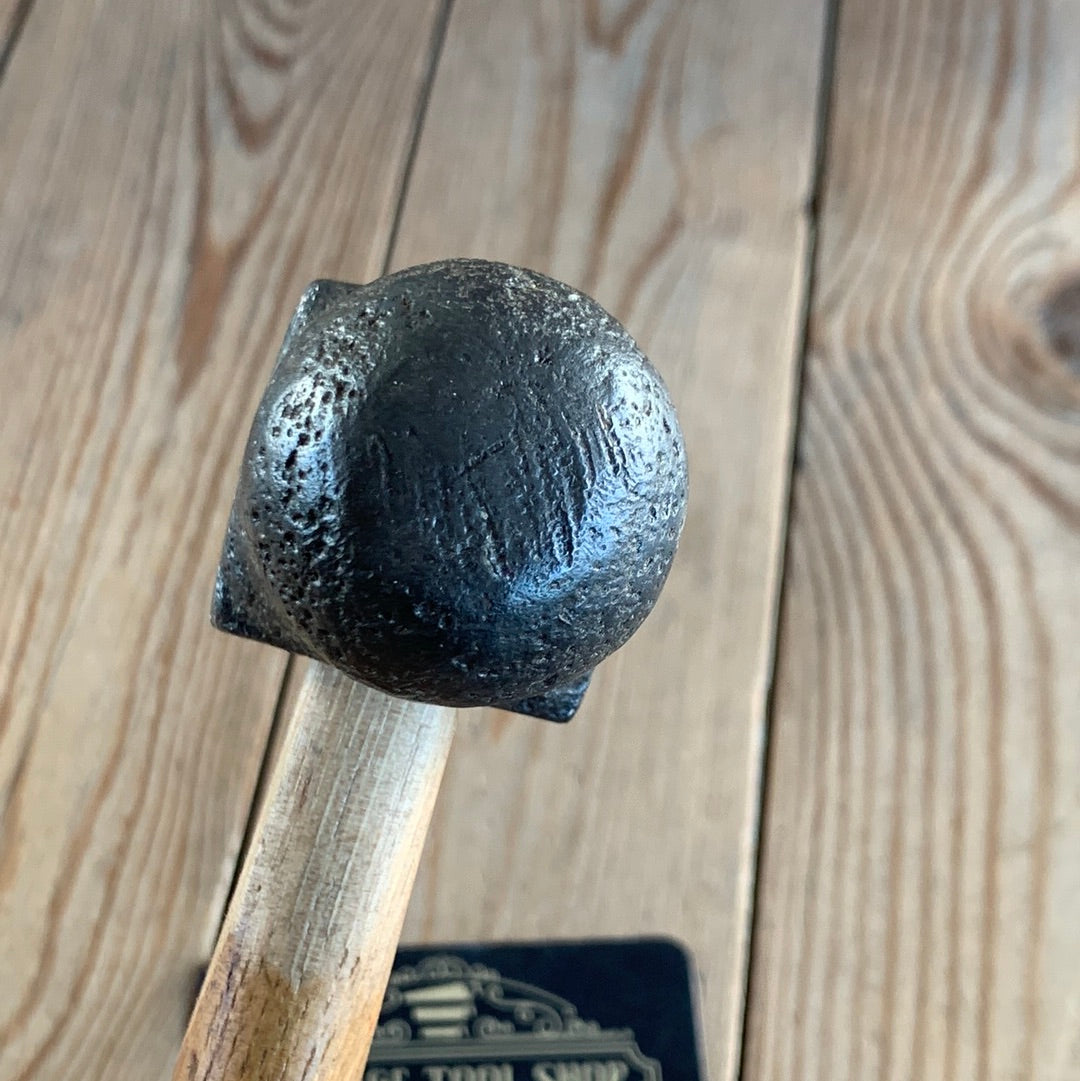
- A rounded ball-shaped peen for shaping metal and finishing rivets.
The word peen means the shaped end of a hammer used to move or form metal. A ball peen has a round peen. Other hammers may have a cross peen, straight peen, or diagonal peen.
The ball end is not meant for normal nail driving. Its main purpose is controlled metal work.
Common uses include:
- Rounding the end of a rivet.
- Expanding metal around a hole.
- Shaping thin sheet metal.
- Starting or finishing a metal surface.
- Driving punches and chisels when the tool maker allows it.
- Light work on machinery and small metal parts.
When a worker strikes a rivet with the flat face, the rivet head spreads. When the worker uses the ball peen, the metal can be pushed outward in a more controlled way.
That is why the hammer became useful in blacksmith shops, carriage shops, machine shops, and American manufacturing plants.

How did the ball peen hammer develop?
The ball peen hammer grew from older forging hammers.
Early smiths needed more than a flat striking face. They also needed a shaped end that could move hot metal into a desired form. A narrow peen could draw metal out. A rounded peen could spread metal without leaving sharp corners.
This design solved a practical problem. A flat hammer face compresses metal mainly at the point of impact. A rounded peen concentrates force into a smaller area. That makes it useful for:
- Stretching a section of metal.
- Creating a curve.
- Spreading a rivet.
- Smoothing a raised spot.
- Reaching small areas.
The modern ball shape may have developed from the need to make this work more predictable. A rounded peen leaves fewer sharp edges than a square or narrow peen.
The design also fit the rise of ironworking and machine production. As metal parts became more common, workers needed small hand tools for repair and assembly. The ball peen hammer was compact, simple, and easy to produce in many sizes.
Who was Jacques de Vaucanson?
Jacques de Vaucanson was a French inventor who lived from 1709 to 1782. He is best known for mechanical devices and automated machines, including elaborate mechanical figures.
Some tool-history sources credit Vaucanson with inventing the ball peen hammer around 1750. This claim is often repeated, but it should be presented with care.
The available historical record does not clearly show:
- A surviving patent that names the ball peen hammer.
- A dated technical drawing that proves the first design.
- A complete record showing that Vaucanson created the tool from scratch.
It is possible that Vaucanson improved or popularized a hammer design rather than inventing the basic idea. Rounded peens and other shaped hammer ends were useful in metalworking before the 18th century.
Therefore, the best wording is:
Jacques de Vaucanson is commonly credited with developing the ball peen hammer around 1750, but the exact origin of the design is uncertain.
That wording separates a widely repeated historical claim from a documented fact.

What evidence supports the history of the ball peen hammer?
The strongest evidence comes from the tool’s design, older metalworking practices, and later trade records.
Older metalworking traditions
Blacksmiths in Europe and North America used different hammer shapes for different jobs. A peen was not a new idea in the 18th century. The shape could vary based on the metal, the job, and the worker’s method.
This makes a single invention date unlikely. The ball peen hammer may have developed gradually from earlier peen hammers.
The meaning of “peen”
The word “peen” has long been linked to the end of a hammer used for shaping metal. This supports the view that the ball peen hammer belongs to a broader family of older forging tools.
The name describes the tool’s function. It does not necessarily identify one inventor.
Industrial tool catalogs
By the 19th century, American and European tool makers sold hammers with specialized shapes. Catalogs from this period helped establish standard names, sizes, and uses.
These records are useful because they show when the tool became a commercial product. They do not always prove when the design was first created.
Modern tool references
Current tool references generally describe the ball peen hammer as a metalworking hammer with a flat face and rounded peen. Many repeat the 1750 attribution to Vaucanson, but often without a primary historical document.
This is why the date should be reported as commonly credited, rather than certain.
When did the ball peen hammer become common in the United States?
The ball peen hammer became widely useful in the United States during the growth of industrial manufacturing in the 19th century.
American railroads, factories, carriage makers, shipyards, and repair shops all needed hand tools for metal work. The hammer was especially useful for small repairs and for joining metal parts with rivets.
Its popularity grew for several reasons:
- It was inexpensive to make.
- It worked on many small metal tasks.
- It did not require a powered machine.
- Workers could carry it easily.
- Different weights suited different jobs.
- Its flat face and ball peen gave one tool two functions.
By the late 19th and early 20th centuries, American hardware catalogs commonly listed peen hammers in various weights. This helped make the tool familiar to machinists, mechanics, metalworkers, and home users.
The U.S. did not necessarily invent the ball peen hammer. However, American industry played a major role in making the tool a standard part of the workshop.

What is the difference between a ball peen hammer and other peen hammers?
The main difference is the shape of the second striking end.
| Hammer type | Shape of the peen | Common use |
|---|---|---|
| Ball peen | Round ball | Riveting, light shaping, and metal finishing |
| Cross peen | Narrow ridge across the handle | Starting small dents, shaping, and light forging |
| Straight peen | Ridge in line with the handle | Drawing and shaping metal |
| Diagonal peen | Ridge set at an angle | Reaching corners and narrow spaces |
| Claw hammer | Curved claw | Pulling nails and general wood work |
| Sledgehammer | Large, heavy faces | Heavy breaking and driving work |
A ball peen hammer is not a replacement for every other hammer. The rounded end works well for small metal tasks, but it is not the right choice for pulling nails or striking very hard materials.
The hammer’s weight also matters. A small hammer offers better control. A heavy hammer delivers more force but can damage thin metal or a delicate part.
How is a ball peen hammer used safely?
Use the hammer only when the tool, workpiece, and striking surface are suitable.
Follow these basic steps:
-
Inspect the hammer.
Do not use it if the head is loose, cracked, mushroomed, or badly damaged. -
Wear eye protection.
Metal chips can break away from the workpiece, hammer, or punch. -
Secure the workpiece.
Use a vise, clamp, or other stable support when possible. -
Choose the correct hammer weight.
Use the lightest hammer that can do the job safely. -
Strike with the proper face.
Use the ball peen for metal shaping and riveting. Do not use it as a general-purpose nail hammer. -
Keep your hand clear.
Hold small parts with pliers or a clamp instead of placing fingers near the impact point. -
Use a proper punch for hard driving work.
A damaged punch can split or send fragments outward. -
Replace damaged tools.
Grinding a badly mushroomed hammer head may change its shape and heat treatment. Follow the tool maker’s repair guidance.
Never strike a hardened steel surface with a regular hammer unless the tool maker permits that use. Hardened surfaces can cause dangerous chips.

Why does the ball peen hammer have a rounded end?
The rounded end spreads force over a curved path and helps move metal without creating a sharp corner.
When a worker strikes the end of a rivet, the ball peen pushes the rivet material outward. Repeated light blows can form a rounded rivet head.
The shape also helps with metal shaping. A worker can use the ball end to create a shallow curve or smooth a small raised area.
The result depends on several factors:
- Metal type.
- Metal thickness.
- Hammer weight.
- Strike force.
- Peen size.
- Support beneath the workpiece.
- Skill and control of the user.
A ball peen hammer does not automatically create a smooth finish. Heavy blows can dent, stretch, or crack thin material.
Is a ball peen hammer still useful today?
Yes. The tool remains useful for small metalwork, even though many factories now use presses, pneumatic tools, and powered riveters.
It is still found in:
- Automotive repair.
- Motorcycle repair.
- General machine work.
- Blacksmithing.
- Metal sculpture.
- Equipment maintenance.
- Bicycle repair.
- Restoration work.
- Small riveting tasks.
Modern versions may use different handle materials, head finishes, and grip designs. Those changes improve comfort or durability, but they do not change the basic function of the tool.
For occasional home use, a small or medium ball peen hammer is often easier to control than a large model. For repeated shop work, the correct weight and handle fit matter more than the claimed invention date.

Common mistakes about the ball peen hammer’s invention
Mistake 1: Treating 1750 as a proven date
The year 1750 is widely repeated, but it is not supported by a universally accepted primary record. Use “commonly credited” instead of “definitively invented.”
Mistake 2: Saying one person created all peen hammers
Peen hammers existed as a broader tool type before the modern ball peen form. Vaucanson may have improved or popularized a design rather than creating the entire concept.
Mistake 3: Assuming the tool was invented in the United States
The ball peen hammer is strongly associated with American machine shops, but the common historical attribution points to France. American manufacturing later helped spread and standardize the tool.
Mistake 4: Using the ball end for every metal job
The rounded peen is useful for controlled metal shaping. It is not ideal for heavy demolition, nail pulling, or striking every type of hardened tool.
Mistake 5: Ignoring tool condition
A loose head or damaged striking face can be more dangerous than the task itself. Inspect the hammer before use.
Frequently asked questions
When was the ball peen hammer invented?
The ball peen hammer is commonly dated to around 1750, but the exact invention date is uncertain. Jacques de Vaucanson is often credited with developing it.
Who invented the ball peen hammer?
Many tool-history accounts name Jacques de Vaucanson, a French inventor. The claim is not supported by a clearly identified original patent or document that proves he invented the modern tool.
Is a ball peen hammer the same as a machinist’s hammer?
In many American tool catalogs, “machinist’s hammer” can refer to a ball peen hammer. However, the terms are not always identical. A machinist’s hammer may also have a different peen shape or design.
What does “peen” mean?
A peen is the shaped end of a hammer used to move, stretch, or form metal. A ball peen has a rounded peen.
Can a ball peen hammer be used on a punch?
It can be used with a punch when the punch and hammer are designed for that work. Wear eye protection and stop using the punch if its striking end becomes mushroomed or damaged.
Why is the ball peen hammer important?
It combines a flat striking face with a rounded shaping end. That makes it useful for riveting, light forging, metal repair, and small machine-shop tasks.
Evidence and further reading
The history of the ball peen hammer is difficult because the tool developed from older hammer forms and because many modern references repeat the same attribution without showing the original record.
Useful sources for checking the history and terminology include:
- Encyclopaedia Britannica: Jacques de Vaucanson
- U.S. National Park Service: Blacksmithing and historic metalwork resources
- Smithsonian Libraries and Archives
- Internet Archive: Historic trade catalogs and tool books
- The Henry Ford Digital Collections
These sources help establish the inventor’s background, the history of American industry, and the way tools were described in older records. They do not turn the commonly cited 1750 date into a confirmed invention date.
Conclusion
The ball peen hammer was probably not invented on one precise day. Its design grew from older peen hammers used by blacksmiths and metalworkers.
About 1750 is the date most often associated with the tool, and Jacques de Vaucanson is the person most often credited. Still, the evidence does not prove that he invented the modern ball peen hammer in that exact year.
The most accurate summary is:
The ball peen hammer likely emerged in the 18th century, became established in industrial workshops during the 19th century, and was widely standardized through later tool manufacturing.
If you need to use one, choose the correct weight, inspect the head and handle, secure the workpiece, and wear eye protection.
Recent Tool Guides
 Hammer
How To Hammer Flowers Onto Paper: Easy Guide
Learn how to hammer flowers onto paper with simple steps, helpful tips, and beautiful results for...
Read Guide → Wrench
How To Use A Hex Wrench: Easy Step-By-Step Guide
Learn how to use a hex wrench correctly with simple steps, helpful tips, and common mistakes...
Read Guide → Hacksaw
How To Cut Curtain Pole With Hacksaw: Easy Guide
Learn how to cut curtain pole with hacksaw safely and neatly. Follow simple steps for accurate...
Read Guide → Wrench
How To Use A Husky Torque Wrench: Easy Guide
Learn how to use a Husky torque wrench correctly with simple steps, torque settings, and safety...
Read Guide → Hammer
How To Hold A Hammer: Safe Grip Guide
Learn how to hold a hammer with the right grip, stance, and technique for safer, more...
Read Guide → Hacksaw
How To Cut Flexible Metal Conduit With Hacksaw: Easy Guide
Learn how to cut flexible metal conduit with hacksaw safely and cleanly. Follow simple steps for...
Read Guide →