What Makes A Claw Hammer Different: Key Differences
Introduction
A claw hammer is a specific type of hammer made for driving and removing nails. Its defining feature is the split claw on the back of the head. A “general hammer” is a loose term that may mean a basic household hammer or any hammer used for common tasks.
In U.S. homes, workshops, and construction sites, a claw hammer is often the most useful all-purpose choice for wood projects, repairs, trim work, and light framing. However, it is not the right tool for every job. A ball-peen hammer, rubber mallet, sledgehammer, and tack hammer each serve different needs.
The key difference is simple: a claw hammer combines a striking face with a nail-pulling claw, while a general hammer may have a different head shape and purpose.

Claw Hammer vs. General Hammer: The Main Difference
A claw hammer has two working ends:
- A striking face for driving nails and similar fasteners.
- A claw for pulling nails, prying boards, and doing light removal work.
The claw is usually split into two curved or straight points. These points fit under a nail head. By rocking the handle, the user creates leverage and pulls the nail from the wood.
The term general hammer does not describe one exact tool design. People may use it to mean:
- A basic household hammer
- A standard utility hammer
- A hammer used for several light tasks
- Any hammer that is not made for a specialized job
Because the term is broad, a general hammer may or may not have a claw. It may instead have a smooth face, a ball-shaped peen, a soft striking surface, or a heavy head.
| Feature | Claw hammer | General hammer |
|---|---|---|
| Definition | A hammer with a nail-pulling claw | A broad, informal term |
| Main use | Drive and remove nails | Depends on the hammer type |
| Back of head | Split claw, often curved or straight | May have a peen, flat face, wedge, or soft head |
| Typical materials | Wood, trim, framing, repair work | Metal, wood, masonry, upholstery, or general repair |
| Best advantage | One tool handles striking and nail removal | May be better for a specific material or task |
| Main limitation | Not ideal for every material or heavy demolition | Performance varies by design |
The important point is that “general hammer” is not a precise category. A claw hammer is a defined hammer type. A general hammer is usually a description of intended use.

What Is a Claw Hammer?
A claw hammer is a hand tool with a hardened face on one end and a nail-removing claw on the other. The head is commonly made from forged or cast steel, while the handle may use wood, fiberglass, or a composite material.
The striking face
The face hits the nail head. Many claw hammers have a slightly domed face. This shape helps reduce sharp edge marks when the hammer is used correctly, although it can still dent wood if the user misses or strikes too hard.
Some hammers have a smooth face. Others have a textured or milled face. A textured face can reduce slipping on a nail head, but it may leave more marks on finished wood.
The claw
The claw is the feature that sets this hammer apart. It can:
- Pull common nails
- Lift small boards
- Separate light wood joints
- Open crates
- Remove trim
- Create a small gap between materials
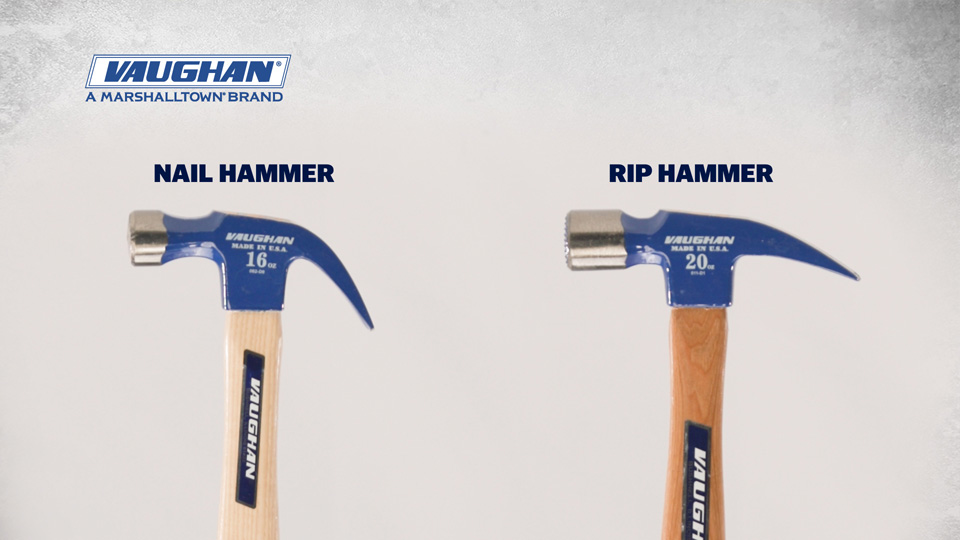
A curved claw gives more leverage and is common on household and finish hammers. A straight claw, also called a rip claw, is more useful for prying and demolition. It can provide strong leverage but may damage wood more easily.
The handle
The handle affects comfort, control, vibration, and striking power. Common handle materials include:
- Wood: Light, traditional, and easy to replace on some models
- Fiberglass: Often resistant to splitting and designed to reduce some vibration
- Composite materials: May combine shock reduction with strength
A longer handle can increase swing power. A shorter handle can offer better control in tight spaces. The best length depends on the task, the user’s grip, and the available room.
The eye and head connection
The eye is the opening in the hammer head where the handle fits. A secure connection matters because a loose head can fly off during use.
Before each job, check that:
- The head does not move on the handle.
- The handle has no cracks or deep damage.
- The striking face is not badly chipped.
- The claw is not bent or cracked.

How a Claw Hammer Differs From Other Common Hammers
A claw hammer is versatile, but other hammers work better for certain materials and jobs.
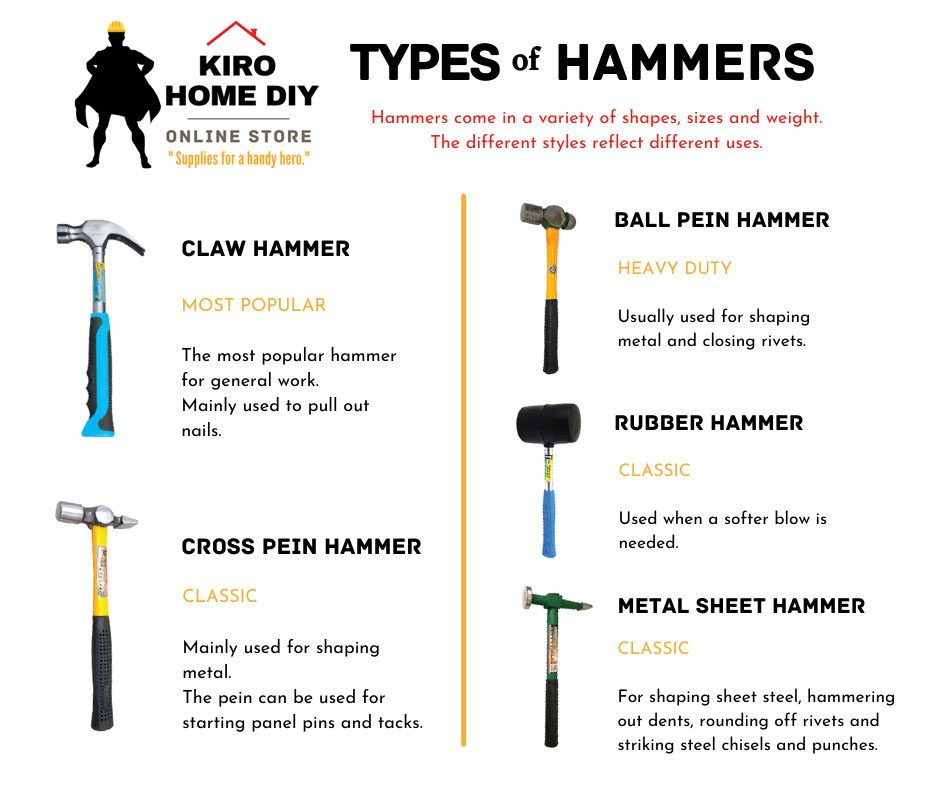
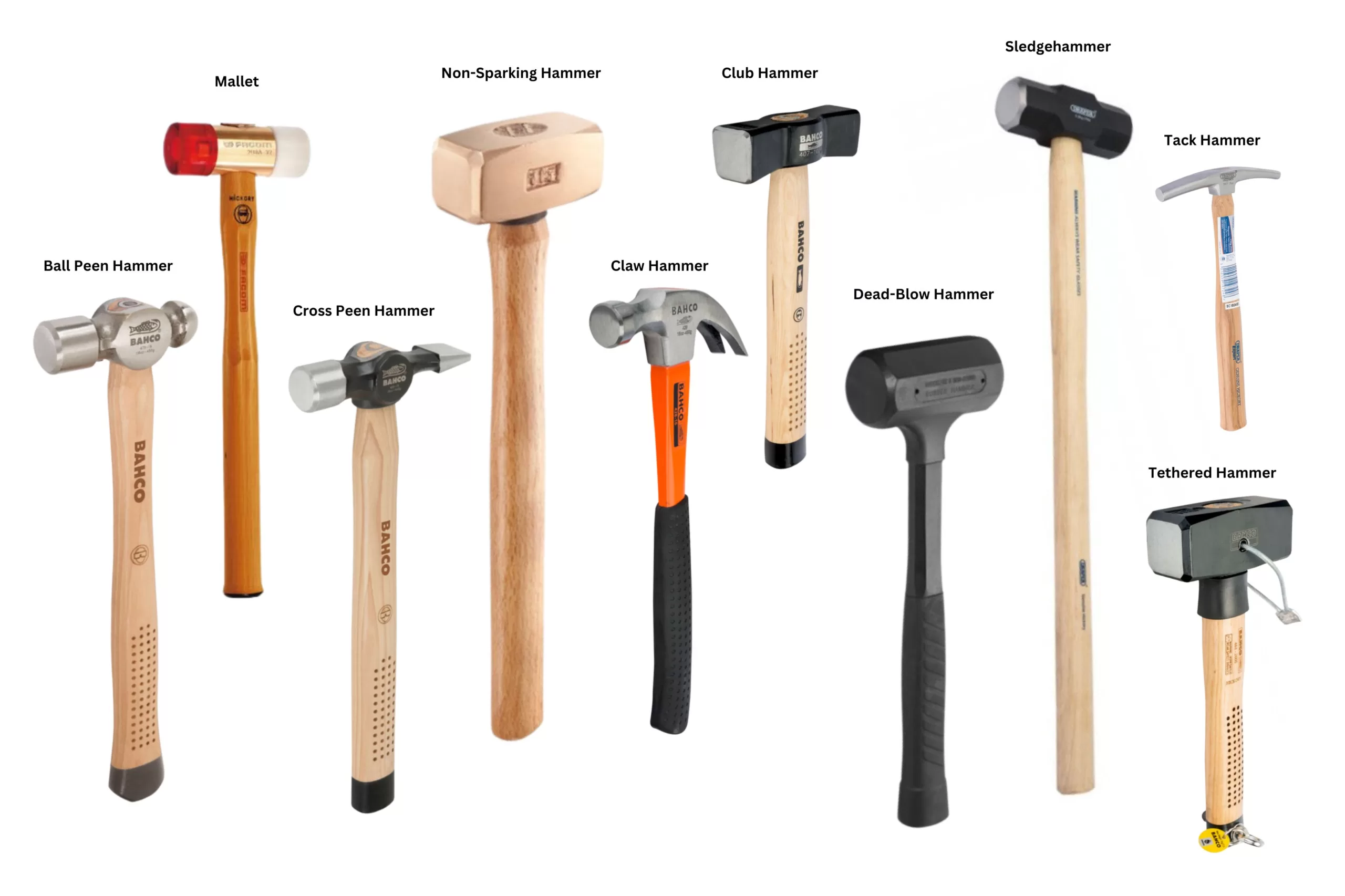
Ball-peen hammer
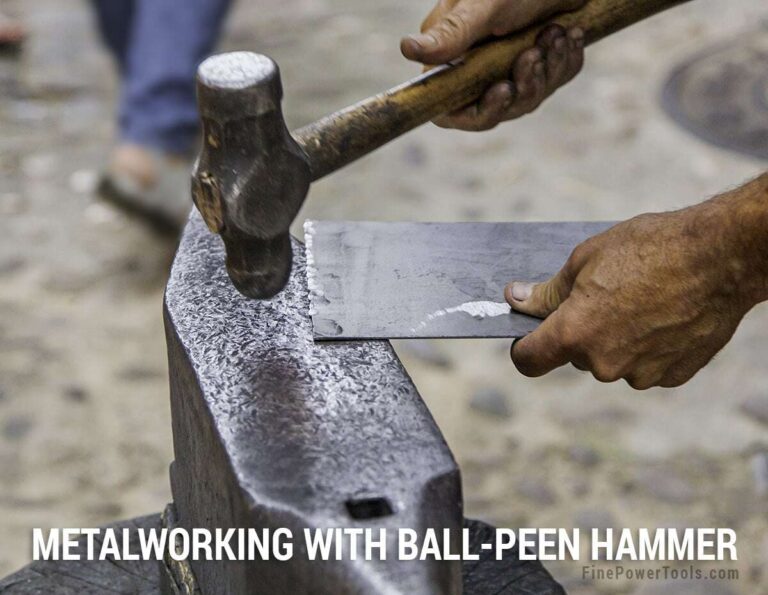
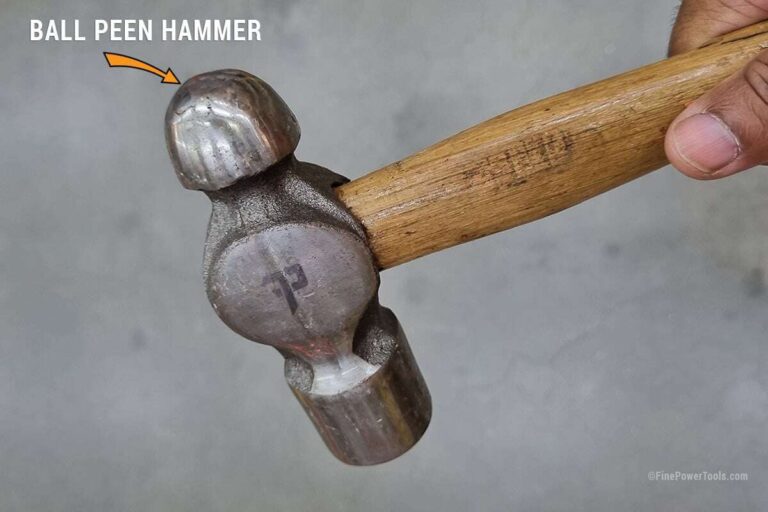
A ball-peen hammer has one flat striking face and one rounded ball-shaped end. Metalworkers use it to shape, peen, and harden metal. It does not have a nail-pulling claw.
Do not use a ball-peen hammer as a direct replacement for a claw hammer when removing nails. The rounded end is not designed for that task.
Framing hammer
A framing hammer is a heavier claw hammer designed for assembling wood frames. Many have:
- A heavier head
- A longer handle
- A straight claw
- A textured face
- A design suited to repeated nail driving
The extra weight can drive large framing nails faster. It can also cause more fatigue and leave deeper marks on finished wood.
Finish hammer
A finish hammer is usually lighter than a framing hammer. It often has a smooth face and a curved claw. Its design suits trim, cabinetry, furniture repair, and other work where surface damage matters.
Tack hammer
A tack hammer is small and light. It is made for upholstery tacks, small nails, and delicate work. Some have a magnetic face that helps hold a small tack during placement.
A tack hammer is easier to control than a standard claw hammer for tiny fasteners. It is not intended for large nails or heavy prying.
Sledgehammer
A sledgehammer has a large, heavy head and is made for demolition, driving stakes, breaking hard materials, or moving stubborn objects. It is not a substitute for a claw hammer in household repair.
Rubber or soft-face mallet
A mallet uses a softer head to reduce damage to tile, wood, plastic, or assembled parts. It is useful when the goal is to tap an object into place without leaving a steel mark.
A rubber mallet cannot replace the nail-pulling function of a claw hammer.
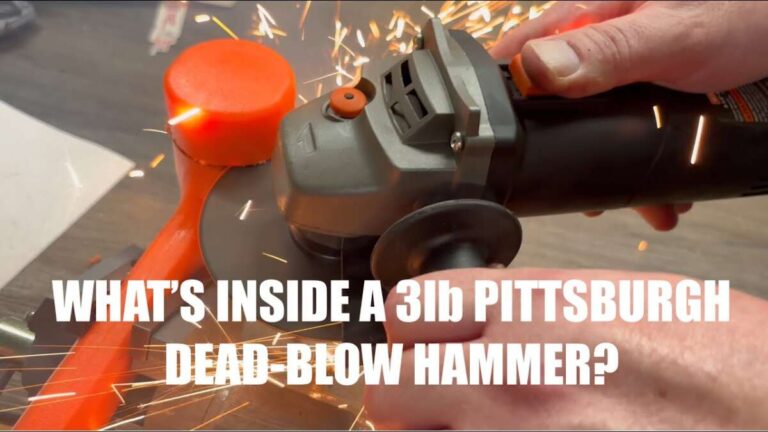
Dead-blow hammer
A dead-blow hammer contains internal material that reduces bounce after impact. It is common in automotive, machinery, and assembly work. Its controlled impact is different from the sharp strike of a claw hammer.

Curved Claw vs. Straight Claw
The shape of the claw changes how the hammer behaves.
Curved claw
A curved claw bends toward the handle. It is well suited to:
- Pulling nails
- Removing trim
- Light household repairs
- Finish carpentry
- General woodworking
The curve acts like a built-in lever. It can pull a nail with less hand force, but it may leave a larger mark in the wood.
Straight claw
A straight claw extends more directly from the head. It is common on framing and demolition hammers.
It works well for:
- Prying boards apart
- Pulling larger nails
- Removing nailed wood
- Light demolition
- Reaching into narrow gaps
A straight claw can apply strong prying force. Use care because it may split wood or damage drywall, trim, flooring, and other finished surfaces.
Which claw should you choose?
Choose a curved claw if you mainly repair furniture, install trim, or perform household maintenance. Choose a straight claw if you often frame walls, remove nailed materials, or need more prying ability.
Neither design is automatically better. The right choice depends on whether you value surface protection and nail removal or leverage and demolition power.

How Hammer Weight Changes Performance
Hammer weight affects both force and control. Manufacturers usually list the head weight, not the total weight of the tool.
Common claw hammer head weights include:
- 8 to 12 ounces: Small nails, light repairs, and tight spaces
- 16 ounces: A common general-purpose size
- 20 to 24 ounces: Framing and heavier woodwork
- More than 24 ounces: Specialized heavy work and demolition
These ranges are general examples, not fixed rules. Handle length, head shape, user strength, and nail size also affect performance.
A heavier hammer can drive a nail with fewer swings. It also creates more impact and may increase fatigue or damage if the user lacks control.
A lighter hammer offers better precision and may be more comfortable for short repairs. It can require more swings for large nails.
For many U.S. homeowners, a claw hammer with a head near 16 ounces provides a practical balance for common repair work. A smaller model may suit light-duty work or users who need lower swing weight. A larger model may suit framing but can be excessive for trim or furniture.

When a Claw Hammer Is the Better Choice
A claw hammer is usually the better choice when you need to both drive and remove nails.
Typical uses include:
- Hanging picture frames
- Repairing wooden furniture
- Installing small trim pieces
- Building simple wood projects
- Removing common nails
- Opening wooden crates
- Pulling loose boards
- Performing basic home repairs
The tool is especially useful when space is limited and carrying several tools is inconvenient.
However, a claw hammer is not the best choice for every task. Use a different hammer when:
- You need to shape metal.
- You must avoid marks on a finished surface.
- You need to break concrete or masonry.
- You are driving large stakes.
- You are striking a hardened steel tool.
- You need very delicate control over small tacks.
- You need a controlled automotive or machine-building impact.
A claw hammer can perform many jobs, but versatility does not mean universal suitability.
Common Mistakes When Using a Claw Hammer
The most common problems come from poor tool condition, poor aim, or using the claw for more force than it can safely handle.
Using the hammer as a pry bar
A claw can pry light wood, but it is not a replacement for a heavy pry bar. Excessive force can bend the claw, split the handle, or cause the tool to slip.
Use a pry bar for stubborn boards, nailed flooring, or heavy demolition.
Striking hardened steel
Do not use a claw hammer to strike hardened steel punches, chisels, or similar tools unless the tool manufacturer specifically allows it. A hard steel face can chip and send fragments into the air.
Use the hammer recommended for that tool and wear eye protection.
Ignoring a loose head
Stop using the hammer if the head moves, rocks, or rattles. A loose head can separate from the handle during a swing.
Wooden handles may need proper replacement or fitting. Fiberglass and composite handles usually require replacement when badly damaged. Follow the manufacturer’s instructions.
Holding the hammer too close to the head
A grip near the head gives control but reduces leverage and striking speed. A grip near the end of the handle produces more force but requires better aim.
For ordinary nail driving, hold the handle firmly near the lower end and adjust your grip when working in a tight space.
Striking at an angle
A glancing blow can bend the nail or make the hammer slip. Keep the striking face aligned with the nail head. Start with light taps until the nail stands securely, then use firmer swings.
Using the claw on finished surfaces
The claw can dent wood, drywall, flooring, and painted trim. Place a thin scrap of wood or another suitable pad under the claw when the surface needs protection.
Claw Hammer Safety
Basic safety practices reduce the risk of eye injuries, hand injuries, and flying fragments.
- Wear safety glasses when striking, prying, or removing nails.
- Inspect the hammer before use.
- Keep the striking face clean and free of oil.
- Do not use a hammer with a chipped face.
- Keep your other hand clear of the impact area.
- Secure small workpieces instead of holding them near the strike.
- Use the right hammer for the material.
- Do not strike a hammer with another hammer.
- Replace damaged handles and heads.
- Keep bystanders away from the swing path.
When removing old nails, watch for hidden nails, splintered wood, and brittle material. Pull slowly if the wood may break. If a nail will not move, use a larger pry tool rather than adding uncontrolled force to the hammer.
The Occupational Safety and Health Administration states that hand tools must be maintained in safe condition in workplaces covered by its rules. Home users should follow the same basic principle: a damaged hammer is not a safe hammer.

How to Choose the Right Hammer
Choose the hammer based on the work, not only on its name.
For basic household repairs
Choose a curved-claw hammer with a medium-weight head, often around 16 ounces. A smooth face is useful when you want to limit marks on wood.
For trim and finish work
Choose a lighter finish hammer with a smooth face and a curved claw. Work slowly and use a nail set when the nail must sit below the wood surface.
For framing
Choose a heavier framing hammer with a straight claw if you drive large nails often. A textured face may help keep the hammer from sliding off the nail, but it can mark the wood.
For small tacks and delicate work
Choose a tack hammer or another light hammer made for small fasteners. A full-size claw hammer may be too heavy and difficult to control.
For metalwork
Choose a ball-peen hammer or another hammer designed for metal. A claw hammer is not a metalworking hammer.
For demolition
Choose a pry bar, wrecking bar, or sledgehammer when the work calls for heavy removal. A claw hammer can handle light prying, but forcing it beyond its design can cause damage or injury.
Quick Decision Table
| Your task | Better tool |
|---|---|
| Drive and remove common nails | Claw hammer |
| Install trim or repair furniture | Finish claw hammer |
| Build wood frames | Framing hammer |
| Remove nailed boards | Straight-claw framing hammer or pry bar |
| Work with upholstery tacks | Tack hammer |
| Shape or peen metal | Ball-peen hammer |
| Tap parts without marks | Rubber or soft-face mallet |
| Break or demolish heavy material | Sledgehammer |
| Drive stakes | Sledgehammer or purpose-built stake driver |
The deciding question is: Do you need a nail-pulling claw, a special striking surface, or more impact force? If you need a claw, choose a claw hammer. If you need a different impact or material response, choose the specialized tool.

Frequently Asked Questions
Is a claw hammer the same as a regular hammer?
Not always. A claw hammer is a specific type of regular hand hammer with a split claw for pulling nails. “Regular hammer” is an informal term and may refer to several designs.
Can I use a claw hammer for all household jobs?
You can use it for many light household tasks, especially nail driving and removal. You should not use it for metal shaping, heavy demolition, striking hardened steel, or jobs that require a soft face.
Is a curved claw or straight claw stronger?
Neither is always stronger. A straight claw often gives better access and prying leverage. A curved claw usually offers convenient nail removal with less surface contact. Strength depends on the hammer’s design, materials, and intended use.
What size claw hammer should a homeowner buy?
A medium claw hammer with a head around 16 ounces is a practical starting point for many common repairs. Choose a lighter model for small tasks or limited strength, and a heavier model for repeated framing work.
Can a claw hammer remove screws?
A claw hammer is made for nails, not screws. The claw may damage a screw head or the surrounding material. Use a screwdriver or screw extractor for screws.
Conclusion
A claw hammer differs from a general hammer because it has a dedicated nail-pulling claw behind its striking face. That combination makes it useful for driving nails, removing nails, and handling light wood repairs with one tool.
The phrase “general hammer” is not a precise tool class. It may describe a basic claw hammer, but it may also refer to a ball-peen hammer, mallet, tack hammer, or another design. Before choosing, match the hammer to the material, fastener, required force, and risk of surface damage.
For most basic U.S. household repairs, a medium-weight claw hammer with a secure handle and a suitable claw shape is a sensible starting point. Use a specialized hammer when the task involves metal, soft surfaces, heavy demolition, or unusually small or large fasteners.
Recent Tool Guides
 Hammer
How To Hammer Flowers Onto Paper: Easy Guide
Learn how to hammer flowers onto paper with simple steps, helpful tips, and beautiful results for...
Read Guide → Wrench
How To Use A Hex Wrench: Easy Step-By-Step Guide
Learn how to use a hex wrench correctly with simple steps, helpful tips, and common mistakes...
Read Guide → Hacksaw
How To Cut Curtain Pole With Hacksaw: Easy Guide
Learn how to cut curtain pole with hacksaw safely and neatly. Follow simple steps for accurate...
Read Guide → Wrench
How To Use A Husky Torque Wrench: Easy Guide
Learn how to use a Husky torque wrench correctly with simple steps, torque settings, and safety...
Read Guide → Hammer
How To Hold A Hammer: Safe Grip Guide
Learn how to hold a hammer with the right grip, stance, and technique for safer, more...
Read Guide → Hacksaw
How To Cut Flexible Metal Conduit With Hacksaw: Easy Guide
Learn how to cut flexible metal conduit with hacksaw safely and cleanly. Follow simple steps for...
Read Guide →