Who Is Responsible For Hand And Power Tool Safety: OSHA
In the United States, the employer has the main legal responsibility for hand and power tool safety in the workplace. Under the Occupational Safety and Health Act and OSHA rules, employers must provide tools that are safe to use, keep them in good condition, train workers, and correct hazards.
Workers also have important duties. They must follow training, use tools as directed, wear required personal protective equipment (PPE), inspect tools before use, and report defects. Supervisors must enforce safe work practices. Tool makers and rental companies also affect safety through product design, instructions, guards, and warnings.
The short answer is simple: the employer is ultimately responsible for the workplace safety program, but safe tool use is a shared responsibility.
What OSHA Requires for Hand and Power Tool Safety
OSHA places the primary duty on the employer because the employer controls the workplace, equipment, training, and work methods.
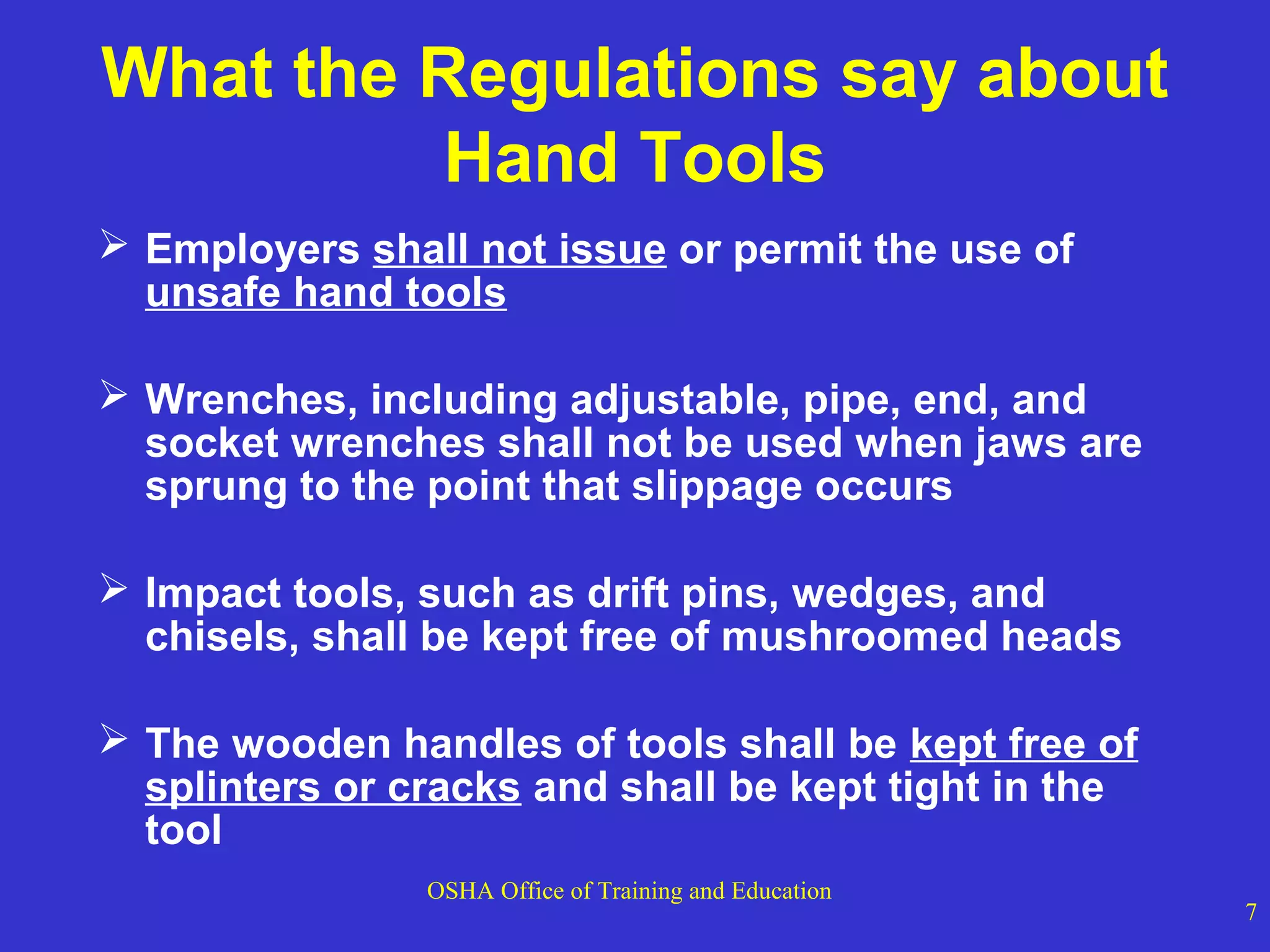
For general industry, OSHA’s hand and power tool rule, 29 CFR 1910.242, requires employers to provide safe tools and equipment. The rule also says that employers must keep tools in safe condition. This applies to tools supplied by the company, workers, contractors, and other sources when those tools are used for work.
OSHA standards also cover related hazards, including:
- Machine guarding
- Electrical shock
- Damaged cords and plugs
- Compressed air
- Nail guns
- Abrasive wheels
- Lockout and tagout
- Personal protective equipment
- Noise and flying particles
Construction employers must also follow OSHA’s construction rules in 29 CFR Subpart I, Tools—Hand and Power. These rules include requirements for guards, electric tools, pneumatic tools, powder-actuated tools, jacks, and other equipment.
An employer cannot avoid responsibility by saying that a worker brought the tool from home. If the tool is used for work, the employer must address its condition and suitability.
What “safe tools” means
A safe tool is not simply a tool that turns on. It must be:
- The right tool for the task
- In good repair
- Used with required guards
- Suitable for the work environment
- Operated according to instructions
- Inspected at suitable intervals
- Removed from service when defective
For example, a circular saw with a missing lower guard is not safe just because the motor works. A grinder with a cracked wheel is not safe just because it can still spin.
Federal OSHA and state-plan differences
Most private-sector employers follow federal OSHA. Some states operate OSHA-approved state plans. These states may use standards that are identical to federal OSHA rules or may have stricter requirements.
Employers should check the rules that apply in their state, industry, and work setting. Public agencies may also follow different requirements depending on the state.

What Employers Are Responsible For
Employers carry the broadest responsibility for hand and power tool safety. Their duties begin before a worker picks up a tool and continue throughout the tool’s service life.
1. Choose the right tool
The employer must select tools that match the task. A tool that is too small, too powerful, or designed for another job can create unnecessary risk.
Selection should consider:
- The material being cut, drilled, fastened, or shaped
- The tool’s speed and power
- Guarding and safety features
– The work location - Dust, moisture, heat, and flammable materials
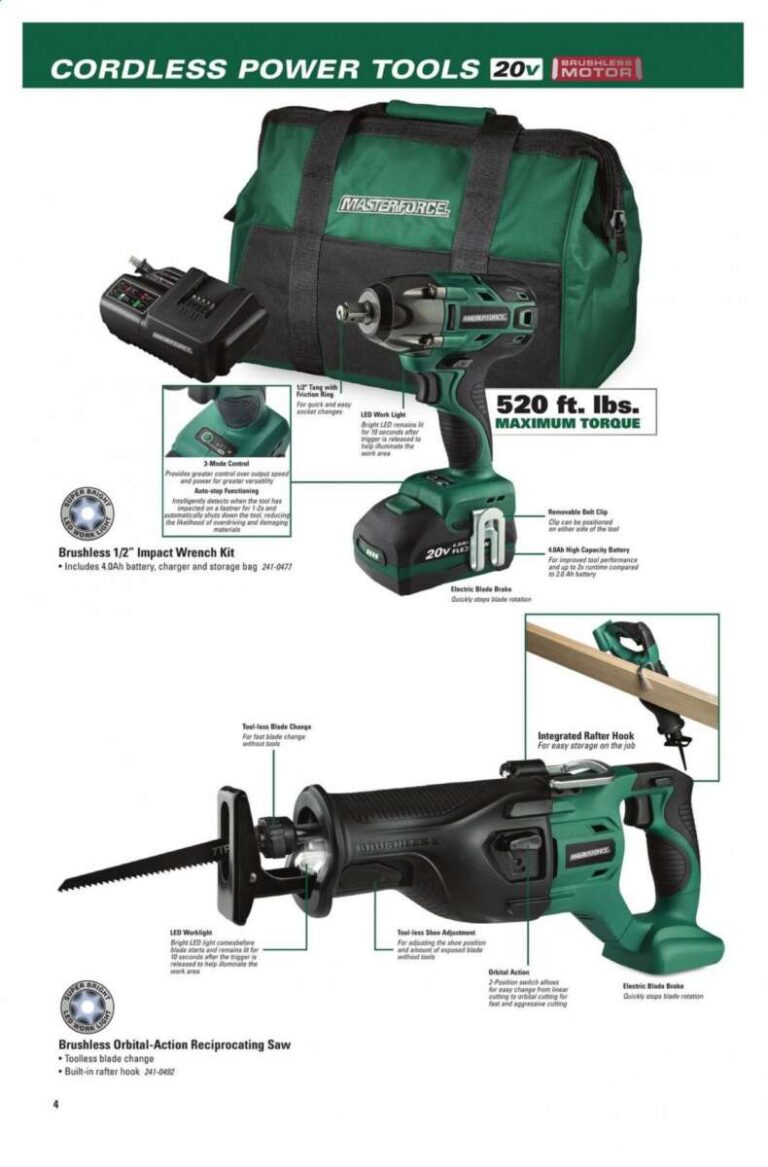
- Whether the tool is corded, cordless, pneumatic, or hydraulic
- The worker’s training and ability
A portable electric tool used in a wet area may need additional protection, such as a ground-fault circuit interrupter (GFCI), depending on the work setting and applicable OSHA rule.
2. Inspect and maintain tools
Employers must establish a system for checking tools before use and during scheduled maintenance.
The inspection should look for problems such as:
- Cracked housings
- Loose parts
- Missing guards
- Damaged cords
- Bent blades
- Dull or broken bits
- Worn switches
- Oil or air leaks
- Damaged plugs
- Defective batteries
- Incorrect accessories
A damaged tool should be tagged, removed from service, and repaired or discarded. Workers should not place a defective tool back on a shelf for someone else to find.
OSHA generally does not require one universal inspection schedule for every tool. The correct frequency depends on the tool, how often it is used, the work environment, and the manufacturer’s instructions.
3. Provide guards and safety devices
Employers must not remove or bypass guards unless a specific, recognized procedure allows it. Guards help keep workers away from moving parts, cutting surfaces, pinch points, and flying fragments.
Examples include:
- Saw blade guards
- Grinder tongue and work-rest guards
- Drill press guards
- Belt and pulley guards
- Trigger locks or safety switches
- Nail gun sequential-trip devices
A guard that is inconvenient does not become optional. If the guard prevents the job from being done, the employer should evaluate a safer tool or method.
4. Train and supervise workers
Training must cover more than the location of the tool. Workers should understand:
- The tool’s intended use
- Main hazards
- Required PPE
- Inspection steps
- Safe operating limits
- How to install and remove accessories
- How to control dust and debris
- What to do when a tool fails
- When to stop work
Training should be in a language and format workers can understand. A worker may need hands-on instruction, a demonstration, or supervised practice before working alone.
Supervisors must also correct unsafe behavior. A written policy has little value if supervisors allow workers to use missing guards, damaged cords, or improvised accessories.
5. Provide PPE and a safe work area
The employer must assess hazards and provide required PPE when applicable. Depending on the task, PPE may include:
- Safety glasses or goggles
- Face shields
- Hearing protection
- Cut-resistant gloves
- Respiratory protection
- Protective footwear
- Hard hats
- Flame-resistant clothing
PPE does not replace safe tools or guards. It is the last line of defense, not the first.
The work area also matters. Employers should control clutter, poor lighting, wet floors, unstable platforms, loose clothing, and nearby workers who could be struck by debris.

What Workers Are Responsible For
Workers share responsibility for preventing injuries. They must use tools only when they are trained, authorized, and physically able to use them safely.
Before using a hand or power tool, a worker should:
- Read the instructions and required warnings.
- Check the tool, cord, plug, guard, switch, and accessory.
- Confirm that the tool fits the task.
- Wear the required PPE.
- Secure the workpiece.
- Keep bystanders away from the hazard zone.
- Disconnect power before changing blades, bits, wheels, or attachments.
- Report defects or unsafe conditions.
- Stop work if conditions change or the tool becomes unsafe.
Workers should never defeat a safety feature to save time. They should also avoid carrying a power tool by its cord, pulling a plug by the cord, or leaving a running tool unattended.
What workers should do with a defective tool
A worker who finds a dangerous tool should:
- Stop using it.
- Disconnect it if doing so is safe.
- Mark or tag it as defective.
- Notify a supervisor.
- Keep others from using it.
- Follow the employer’s repair or disposal process.
The worker should not attempt a repair unless trained and authorized to do so. A quick fix with tape, wire, or an unapproved part may create a greater hazard.
Workers also have rights under OSHA. They may report hazards and, in certain circumstances, file a safety complaint or use protections against retaliation. Workers should not be punished for raising a genuine safety concern.
What Supervisors and Safety Managers Are Responsible For
Supervisors turn the employer’s safety program into daily practice. Their role is more active than simply handing out tools.
A supervisor should:
- Confirm that workers are trained
- Match workers to tasks safely
- Check that guards and PPE are used
- Conduct jobsite inspections
- Stop unsafe work
- Report and investigate incidents
- Make sure defective tools stay out of service
- Track repeated tool problems
- Communicate changes in procedures
Safety managers may create policies, training, inspection forms, and audits. However, assigning safety duties to a safety manager does not remove the employer’s legal responsibility.
A useful program gives supervisors clear authority to stop work and provides a simple way to report hazards. If workers believe reporting a defect will slow production or lead to blame, they may hide problems.

Do Tool Manufacturers Have Responsibility?
Tool manufacturers are responsible for designing and producing tools that are reasonably safe when used as intended. They must provide instructions, warnings, and safety information for foreseeable uses and hazards.
Manufacturers may also issue:
- Recalls
- Safety notices
- Updated manuals
- Replacement-part instructions
- Guard requirements
- Accessory compatibility limits
However, a manufacturer’s instructions do not transfer workplace safety duties away from the employer. The employer still must select suitable equipment, train workers, maintain tools, and enforce safe use.
A worker should use only accessories approved or specified for the tool. A cutting wheel, blade, battery, charger, or attachment that fits physically may still be unsafe or incompatible.
Who Is Responsible on a Construction Site?
On a construction site, responsibility may be divided among several parties, but each employer remains responsible for its own workers and operations.
The general contractor may coordinate site-wide safety. Subcontractors remain responsible for hazards created by their work and for training and protecting their employees. A host employer, staffing agency, or controlling contractor may also have duties depending on the work arrangement and the hazard.
A practical construction safety plan should identify:
- Who supplies each tool
- Who inspects it
- Who controls defective equipment
- Who provides training
- Which employer supplies PPE
- How workers report hazards
- Who can stop unsafe work
A contract may divide tasks between companies, but a private agreement does not automatically eliminate an employer’s OSHA duties.
Homeowners and do-it-yourself users are usually outside OSHA’s private-employer jurisdiction when working on their own property. They are still responsible for making safe choices and should follow the tool manual, use guards, wear PPE, and seek help when a task exceeds their skill.
Hand Tool and Power Tool Safety Responsibilities Compared
The same general responsibility applies to both tool types, but the hazards differ.
| Tool type | Common hazards | Main safety controls |
|---|---|---|
| Hand tools | Cuts, punctures, struck-by injuries, overexertion | Use the right tool, keep edges maintained, inspect handles, wear PPE |
| Corded power tools | Shock, cuts, entanglement, flying debris | Inspect cords, use guards, ground or use approved protection, control the workpiece |
| Cordless power tools | Cuts, battery damage, unexpected start-up | Use the correct battery and charger, inspect batteries, remove the battery before service |
| Pneumatic tools | Hose whip, noise, flying fasteners, injection injuries | Secure hoses, use approved fittings, wear eye protection, follow pressure limits |
| Grinders | Wheel failure, sparks, burns, fragments | Use the correct wheel, inspect it, keep guards in place, use face and eye protection |
| Nail guns | Puncture wounds, unintended discharge | Use the required trigger system, keep hands clear, never point at people |
| Saws | Lacerations, kickback, dust, flying pieces | Use the correct blade, maintain guards, secure material, stand out of the kickback path |
The best control depends on the hazard. PPE alone is not enough when a guard, isolation method, or safer work process can control the danger more effectively.
Common Mistakes That Create Responsibility Problems
Several mistakes make tool injuries more likely and can also show that a safety program is weak.
“The worker used the tool, so the worker is responsible”
This is incomplete. Workers must use tools safely, but employers control training, equipment, supervision, and work pressure. Responsibility should be assessed based on who had the ability and duty to prevent the hazard.
“The tool worked yesterday”
A tool can become dangerous after one drop, a damaged cord, a worn blade, or a failed guard. A quick pre-use check is still needed.
“PPE makes the tool safe”
Gloves and eye protection cannot correct a missing guard, bad switch, unstable workpiece, or damaged power cord.
“The manufacturer manual is the whole safety program”
Manuals provide important instructions, but employers must also account for the jobsite, worker training, local hazards, inspections, and applicable OSHA rules.
“A verbal warning is enough”
A verbal warning may help, but it does not replace training, supervision, maintenance, and documented hazard correction.
“Only the safety manager can stop the job”
Every worker should be able to stop and report work that presents an immediate danger. Supervisors should support that process rather than encourage workers to continue with defective equipment.

A Simple Workplace Tool Safety Checklist
Use this checklist before work begins:
- Is the tool designed for this task?
- Is the worker trained and authorized?
- Are guards installed and working?
- Are the cord, plug, battery, hose, and fittings sound?
- Is the blade, bit, wheel, or fastener correct?
- Is the workpiece stable?
- Are bystanders protected?
- Is the required PPE available and worn?
- Is the area dry, clean, and well lit?
- Can the tool be disconnected before adjustments?
- What is the plan if the tool fails?
If any answer raises concern, stop and correct the problem before using the tool.

Key Takeaways
- The employer has the primary legal responsibility for workplace hand and power tool safety in the United States.
- Employers must provide suitable tools, maintain them, keep guards in place, train workers, and correct hazards.
- Workers must inspect tools, follow instructions, use PPE, report defects, and stop unsafe work.
- Supervisors must enforce the safety program in daily operations.
- Manufacturers must provide safe designs, instructions, and warnings, but their duties do not replace the employer’s duties.
- A defective tool should be removed from service until it is properly repaired or discarded.
Frequently Asked Questions
Who is ultimately responsible for tool safety at work?
The employer is ultimately responsible for the workplace safety program and for meeting applicable OSHA requirements. Workers and supervisors still have specific duties that support safe tool use.
Are employees responsible for inspecting tools?
Yes. Employees should perform a pre-use inspection and report defects. The employer must also maintain an inspection, repair, and replacement system suitable for the workplace.
Who is responsible if a worker brings a personal tool to work?
The employer remains responsible for controlling workplace hazards involving that tool. The tool should be inspected, approved for the task, and used only by a trained worker.
Can an employer require a worker to use a tool without a guard?
Generally, no. Required guards and safety devices should remain in place. If a guard is missing or damaged, the tool should be removed from service until the hazard is corrected.
What should I do if my supervisor tells me to use an unsafe tool?
Do not use the tool. Explain the hazard, report it through the company’s safety process, and ask for a safe replacement or repair. Workers may also contact OSHA or the appropriate state-plan agency when workplace hazards are not corrected.
Does OSHA regulate tools used by homeowners?
OSHA generally regulates employers and workplaces, not private individuals doing work in their own homes. Homeowners should still follow the manufacturer’s instructions and use appropriate safety controls.
Official U.S. Sources
- OSHA: Hand and Power Tools
- 29 CFR 1910.242: Hand and Portable Powered Tools and Equipment, General
- 29 CFR Part 1926, Subpart I: Tools—Hand and Power
- OSHA: Personal Protective Equipment
- OSHA: Workers’ Rights and Protections
Conclusion
Employers carry the main responsibility for hand and power tool safety in U.S. workplaces. They must provide the right tools, keep them safe, train workers, and correct hazards. Workers and supervisors make the system work by inspecting tools, following procedures, reporting problems, and stopping unsafe tasks.
The next practical step is to review your workplace tool policy and confirm that every tool has a clear process for selection, inspection, use, repair, and removal from service.
Recent Tool Guides
 Hammer
How To Hammer Flowers Onto Paper: Easy Guide
Learn how to hammer flowers onto paper with simple steps, helpful tips, and beautiful results for...
Read Guide → Wrench
How To Use A Hex Wrench: Easy Step-By-Step Guide
Learn how to use a hex wrench correctly with simple steps, helpful tips, and common mistakes...
Read Guide → Hacksaw
How To Cut Curtain Pole With Hacksaw: Easy Guide
Learn how to cut curtain pole with hacksaw safely and neatly. Follow simple steps for accurate...
Read Guide → Wrench
How To Use A Husky Torque Wrench: Easy Guide
Learn how to use a Husky torque wrench correctly with simple steps, torque settings, and safety...
Read Guide → Hammer
How To Hold A Hammer: Safe Grip Guide
Learn how to hold a hammer with the right grip, stance, and technique for safer, more...
Read Guide → Hacksaw
How To Cut Flexible Metal Conduit With Hacksaw: Easy Guide
Learn how to cut flexible metal conduit with hacksaw safely and cleanly. Follow simple steps for...
Read Guide →