Where Can I Donate Old Hand Tools: Easy Options
Introduction
You can donate old hand tools to Habitat for Humanity ReStore, Goodwill, The Salvation Army, local trade schools, community repair programs, tool libraries, veterans’ groups, or neighborhood reuse networks. The best choice depends on the tool’s condition, your location, and whether you need a receipt or free pickup.
In the United States, many groups accept usable hammers, screwdrivers, pliers, wrenches, saws, clamps, levels, and garden hand tools. Policies differ by location, so check the local branch before loading your car. A quick call can prevent a wasted trip.

Best Places to Donate Old Hand Tools
The right donation site depends on what you want to happen next. Some groups sell tools to support local programs. Others put tools directly into the hands of students, workers, or neighbors.
1. Habitat for Humanity ReStore
Habitat ReStore is often the first place to check for usable tools. Many ReStore locations accept hand tools, power tools, building supplies, hardware, and home improvement items.
ReStore outlets sell donated goods to raise money for local Habitat for Humanity housing work. Your tools may help fund home repairs or affordable housing projects.
Acceptance rules vary by store. Before you go:
- Search for your nearest Habitat ReStore.
- Call the store.
- Ask if it accepts hand tools.
- Ask about rust, missing parts, and large tool collections.
- Confirm whether pickup is available.
Clean, complete tools usually have the best chance of acceptance.
2. Goodwill
Local Goodwill organizations often accept household goods, including hand tools. However, Goodwill stores are run by separate regional organizations, so one location may accept an item that another declines.
Use the Goodwill locator to find a nearby store. Ask whether the location accepts:
- Hand tools
- Garden tools
- Tool sets
- Metal toolboxes
- Damaged or incomplete tools
Goodwill may sell the tools in its store or online. The sale supports its local job training and employment programs.
3. The Salvation Army
Some Salvation Army thrift stores accept household tools and hardware. The Salvation Army may also offer donation pickup in certain areas.
Use the Salvation Army donation center locator to find a local site. Call first if you have a large box, a full workshop, or heavy tool chests.
Do not assume that every truck or store accepts tools. Local rules, storage space, and safety limits can affect acceptance.
4. Local trade schools and career programs
Trade schools can be a strong direct-donation option for usable tools. Students in construction, automotive, welding, HVAC, and maintenance programs often need basic tools for practice.
Contact:
- Community colleges
- High school career and technical education programs
- Adult education centers
- Union apprenticeship programs
- Workforce development offices
- Vocational rehabilitation programs
Ask for the instructor or program coordinator. Explain what you have and include photos if the collection is large.
A school may prefer matched sets or tools that students can use safely. It may not have room for heavily rusted, broken, or duplicate items.
5. Tool libraries and community repair groups
Tool libraries lend tools to local residents. Community repair programs may use donated tools during repair events or workshops.
Search for:
- “Tool library near me”
- “Community workshop near me”
- “Repair cafe near me”
- “Community makerspace near me”
- “Volunteer repair program near me”
These groups often value common hand tools because many people need them for small home repairs. A tool library may also tell you which tools are in short supply.
6. Veterans’ and community service organizations
Some veterans’ groups, housing programs, and community service organizations accept tools for home repair projects or vocational support. Policies differ widely.
The Vietnam Veterans of America donation program offers pickup in many areas and lists accepted items by location. Because accepted goods can change, confirm that hand tools are included in your area before scheduling a pickup.
Local housing nonprofits may also use tools for volunteer repair work. Search for groups that build or repair homes rather than sending tools to a general thrift store.
7. Buy Nothing, Freecycle, and neighborhood reuse groups
If you want the tools to go directly to a person nearby, try:
- Buy Nothing groups
- Freecycle
- Local Facebook groups
- Nextdoor
- Community bulletin boards
- Library or neighborhood listservs
These are usually gifting or reuse networks, not charitable donations. They may not provide a tax receipt. Still, they can be a fast way to help a neighbor, renter, student, or new homeowner.
Use clear photos and list flaws. For example, write “surface rust, works well” instead of simply calling a tool “like new.”
Where Should You Donate Different Types of Tools?
The tool type and condition can change the best destination. Use this table as a starting point, then verify the local policy.
| Tool or condition | Good first choice | Why |
|---|---|---|
| Clean, working hand tools | Habitat ReStore or Goodwill | These stores often resell household tools |
| Basic tools for students | Trade school or apprenticeship program | Tools may go directly to learners |
| Large workshop collection | Habitat ReStore, Salvation Army, or veterans’ pickup service | Pickup may be available |
| Rare or high-quality tools | Specialty reuse group or direct local gift | A knowledgeable user may value them more |
| Rusty but usable tools | Community repair group or tool library | These groups may restore or use them |
| Broken tools with recyclable metal | Local scrap metal recycler | Recycling may be better than donation |
| Unused drill bits and blades | School, maker space, or reuse group | Small parts can support projects |
| Tools with fuel or oil | Hazardous waste program after preparation | Many donation centers will refuse them |
| Contaminated or unsafe tools | Household hazardous waste authority | Safety takes priority over reuse |
Do not place sharp tools loose in a cardboard box. Wrap blades and pointy ends with cardboard, tape, or a sturdy cover.
A simple condition test
A tool is usually a good donation candidate if it passes these checks:
- It has a clear purpose.
- It is safe to hold and use.
- Its working parts move or grip as intended.
- It is not covered in hazardous material.
- A new user could understand what it does.
Light surface rust does not always prevent donation. Deep rust, cracked handles, bent jaws, stripped heads, and loose parts may make a tool unsafe.
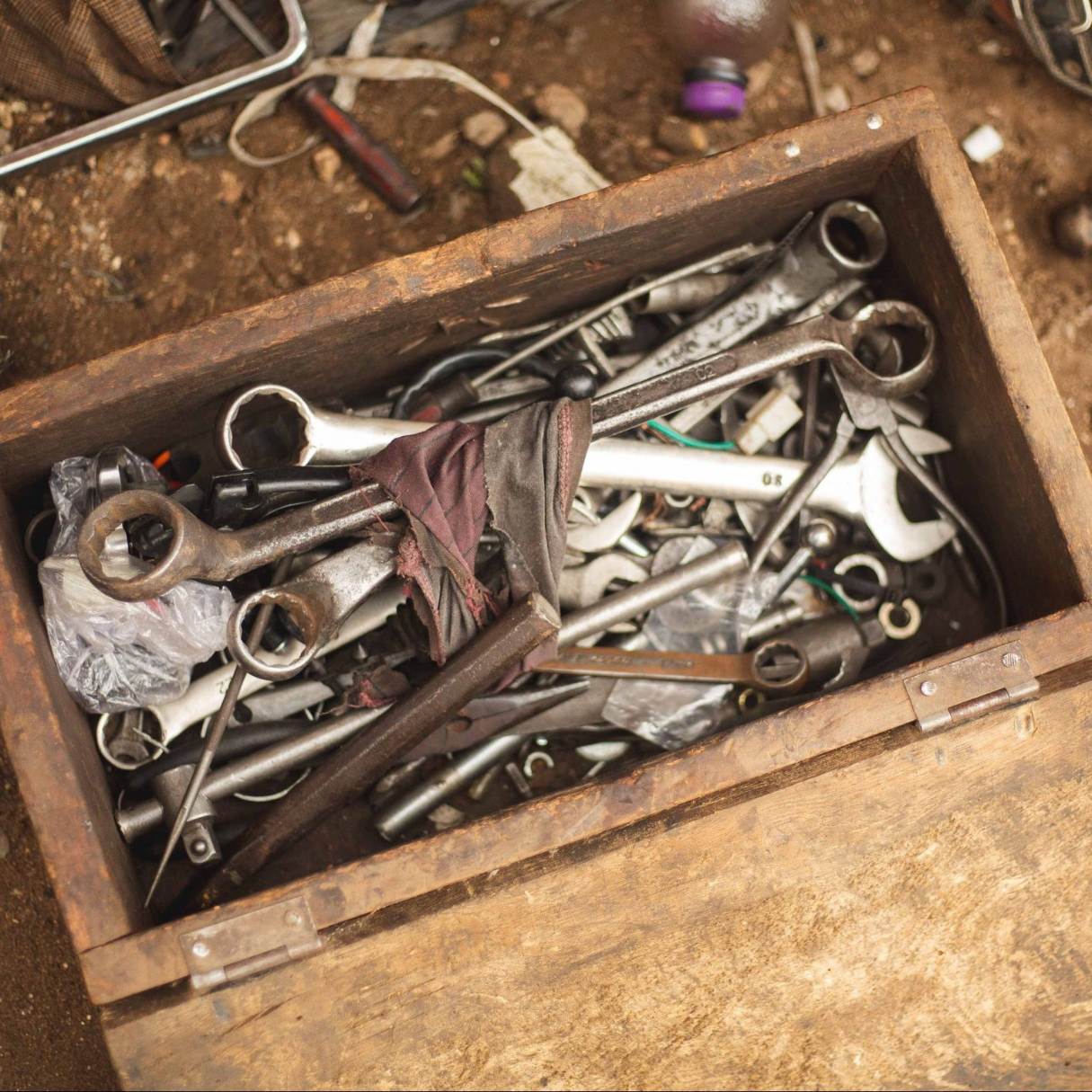
How to Prepare Old Hand Tools for Donation
A little preparation can turn a dusty box into a useful donation. It can also help the receiving group sort your items faster.
Step 1: Sort the tools
Make separate groups for:
- Working tools
- Tools that need minor cleaning
- Incomplete tools
- Broken tools
- Sharp tools
- Tools with oil, paint, or chemicals
- Items that are not tools
Do not mix usable tools with hazardous waste. A donation center may reject the entire box if it contains unsafe items.
Step 2: Clean off loose dirt
Wipe away dust, soil, and loose grime with a dry cloth. For ordinary metal tools, a damp cloth and mild soap may be suitable.
Dry the tools fully to help prevent new rust. Do not soak tools with wooden handles unless you know the handle can tolerate it.
Avoid aggressive cleaning if it could remove labels, weaken a handle, or create sharp edges.
Step 3: Check for safety problems
Look for:
- Cracked wooden handles
- Loose hammer heads
- Bent blades
- Sharp burrs
- Split plastic grips
- Damaged locking parts
- Missing guards
- Heavy structural rust
- Oil or chemical residue
A tool that may injure someone should not go into a general donation bin. Mark it clearly for repair or recycling, or dispose of it through the proper local program.
Step 4: Group similar items
Keep sets together. For example:
- Socket sets
- Wrench sets
- Screwdriver sets
- Woodworking tools
- Gardening hand tools
- Masonry tools
- Automotive tools
Use a sturdy box and label it. A short label such as “clean hand tools” or “garden tools—usable” can save staff time.
Step 5: Include useful parts
Keep a tool with its case, bits, blades, charger, or manual when those parts belong together. Do not add random hardware unless you identify it.
If a tool is incomplete, label it honestly. A broken set may still help a repair class, but only if the recipient knows what is missing.

Can You Donate Tools That Are Rusty, Broken, or Incomplete?
You can donate lightly rusty tools if they remain safe and useful, but broken or incomplete tools require more care.
Light surface rust may come off with basic cleaning. A tool with deep pits, a cracked handle, a loose head, or a bent working end may not be safe for a new user.
Contact the destination before donating items that need repair. A tool library, school, maker space, or repair group may welcome them. A standard thrift store may refuse them because it cannot inspect or repair each item.
Donate, repair, recycle, or discard?
Use this quick decision guide:
- Donate: The tool works and is safe.
- Donate with a note: The tool works but has cosmetic rust or a known minor issue.
- Ask a repair group: The tool may be restorable.
- Recycle: The tool is mostly metal but no longer practical to use.
- Dispose through local guidance: The tool is contaminated, unsafe, or contains hazardous material.
Do not donate tools coated with lead paint, asbestos dust, unknown chemicals, or other hazardous substances. Contact your city, county, or state household hazardous waste program for instructions.
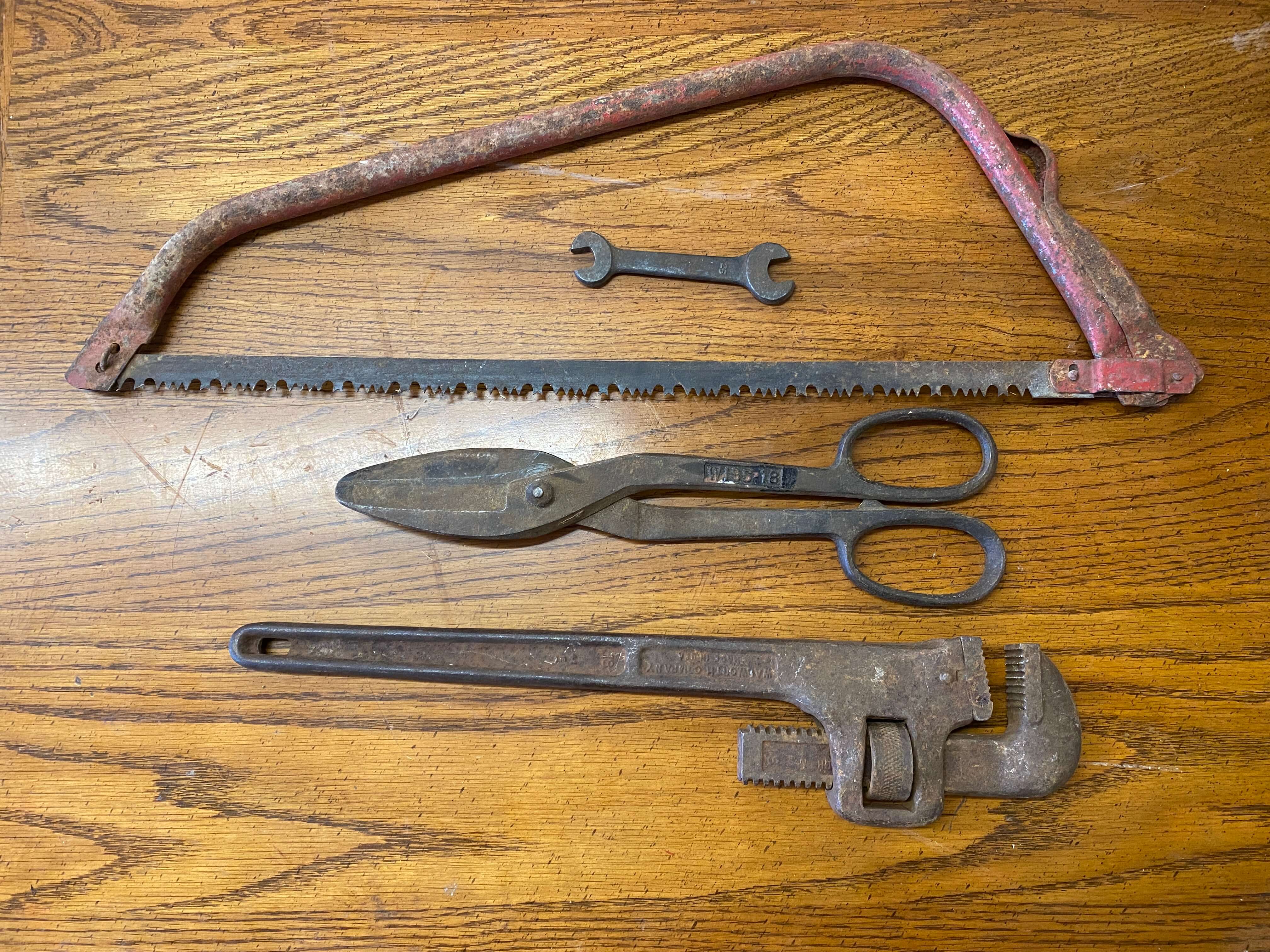
How to Donate a Large Tool Collection
For a full workshop, call before moving anything. Ask whether the organization offers pickup and whether it accepts the whole collection.
Have this information ready:
- Your ZIP code
- The number of boxes
- Approximate weight
- Whether stairs are involved
- Whether a tool chest is included
- Whether any tools contain fuel, oil, or batteries
- Photos of the collection
Some organizations accept only items that staff can safely lift. A heavy metal tool chest may require special handling even when the hand tools inside are acceptable.
If no charity can take the full collection, divide it among several recipients. For example, send basic tools to a trade program, specialty tools to a repair group, and scrap metal to a recycler.
Never leave tools outside a closed donation center. Rain can damage wooden handles and create slip or rust hazards.
Do Donation Centers Pick Up Old Hand Tools?
Some charities offer pickup, but availability depends on your ZIP code, item volume, vehicle capacity, and local staffing.
Pickup is more likely for:
- A large workshop collection
- A full estate cleanout
- A heavy tool chest
- Multiple boxes of household goods
- A bundled donation with furniture or appliances
Pickup may not be available for one small box of screwdrivers or pliers. Ask about minimum quantities, scheduling, fees, and accepted items before booking.
If a group offers pickup through a third-party contractor, confirm the organization’s name and the items it will take. Keep tools dry and accessible, but do not place them at the curb until the pickup instructions say to do so.

Can You Claim a Tax Deduction for Donated Tools?
A donation may qualify for a federal charitable deduction if you itemize deductions and give the tools to an eligible organization. The IRS provides rules in Publication 526 and recordkeeping guidance in Publication 561.
Key points include:
- The organization must generally be eligible to receive deductible contributions.
- You must keep a receipt or written acknowledgment.
- You are responsible for determining the tools’ fair market value.
- A value is not the same as the original purchase price.
- Special documentation rules apply to larger donations.
For donations of $250 or more, the IRS generally requires a written acknowledgment from the charity. Other rules may apply based on the value and type of property.
Do not inflate the value of old tools. Consider their age, condition, brand, completeness, and local resale price. If the value is substantial, ask a qualified tax professional how the rules apply to your situation.
A receipt proves that you made a donation. It does not automatically prove the value of the tools.

Safety Rules for Donating Hand Tools
Safety comes before convenience. Do not donate an item simply because you want it out of your garage.
Follow these rules:
- Wrap saw blades, chisels, awls, and other sharp edges.
- Secure loose hammer heads and axes.
- Drain fuel from gas-powered equipment according to local disposal rules.
- Do not donate leaking, damaged, or swollen batteries.
- Keep chemicals, solvents, pesticides, and oily rags out of ordinary donation boxes.
- Do not mix broken glass or scrap metal with usable tools.
- Tell the recipient about known defects.
- Use a strong box that will not split under the weight.
- Ask before donating heavy machinery or large tool chests.
If a tool has been exposed to lead dust, asbestos, mold, medical waste, or an unknown substance, stop and seek local hazardous-waste guidance. A charity is not a substitute for a hazardous-materials disposal service.

A Fast Decision Plan
Use this five-minute plan if you need to clear out tools today:
- Keep safe, usable tools together.
- Separate broken, sharp, oily, and contaminated items.
- Call Habitat ReStore or Goodwill first.
- Contact a local trade school if the tools could help students.
- Use a neighborhood gifting group for direct reuse.
- Take unusable metal tools to a qualified recycler.
- Request a receipt if you may claim a deduction.
For most households, Habitat ReStore is a practical first call. For tools that need to reach a specific person, school, or repair program, direct donation may create more value.

Frequently Asked Questions
Does Home Depot accept old hand tools for donation?
Home Depot stores are not generally a standard drop-off point for used hand-tool donations. Some stores may host local recycling or community programs, but policies vary. Call the specific store before bringing tools.
Does Lowe’s accept used tools?
Lowe’s locations do not generally operate as regular donation centers for used hand tools. A local store may support a special community or recycling event, but you should verify before visiting.
Can I donate tools with surface rust?
Often, yes, if the tools remain safe and functional. Wipe off loose rust, dry the tools, and tell the receiving group about their condition. Deep rust that weakens the tool is a different matter.
Can I donate tools without a receipt?
Yes. A receipt is not required to give tools to a charity, but it is useful if you need proof of the donation for tax records. Ask for written acknowledgment at the time of donation.
What should I do with tools that no charity will accept?
Try a repair group, trade school, tool library, or neighborhood gifting network. If the tools are unsafe or beyond repair, contact a local metal recycler or your city’s waste program. Do not place fuel, chemicals, or contaminated tools in a normal donation bin.
Is it better to sell old tools or donate them?
Selling may make sense for rare, collectible, or high-value tools. Donation is often easier for common household tools and may support a local program. Compare the likely resale value with the time needed to clean, photograph, list, and ship the items.
Conclusion
The best places to donate old hand tools in the United States are Habitat for Humanity ReStore, Goodwill, The Salvation Army, trade schools, community repair groups, tool libraries, and local reuse networks. Call first because acceptance rules and pickup services vary by location.
Donate tools that are safe and usable. Separate hazardous or broken items, protect sharp edges, and request a receipt if you need one. Start by sorting the tools, then contact the closest ReStore or community program with a short list and clear photos.
Recent Tool Guides
 Hammer
How To Hammer Flowers Onto Paper: Easy Guide
Learn how to hammer flowers onto paper with simple steps, helpful tips, and beautiful results for...
Read Guide → Wrench
How To Use A Hex Wrench: Easy Step-By-Step Guide
Learn how to use a hex wrench correctly with simple steps, helpful tips, and common mistakes...
Read Guide → Hacksaw
How To Cut Curtain Pole With Hacksaw: Easy Guide
Learn how to cut curtain pole with hacksaw safely and neatly. Follow simple steps for accurate...
Read Guide → Wrench
How To Use A Husky Torque Wrench: Easy Guide
Learn how to use a Husky torque wrench correctly with simple steps, torque settings, and safety...
Read Guide → Hammer
How To Hold A Hammer: Safe Grip Guide
Learn how to hold a hammer with the right grip, stance, and technique for safer, more...
Read Guide → Hacksaw
How To Cut Flexible Metal Conduit With Hacksaw: Easy Guide
Learn how to cut flexible metal conduit with hacksaw safely and cleanly. Follow simple steps for...
Read Guide →