

A hacksaw tool is used for cutting metal, plastic pipe, bolts, screws, and other hard materials.
If you have ever needed to shorten a metal rod, remove a rusty bolt, or cut plastic pipe without power tools, you have seen why this simple hand saw matters. Understanding what is a hacksaw tool used for helps you choose the right blade, make cleaner cuts, work safely, and avoid damaging the material.
What Is a Hacksaw?
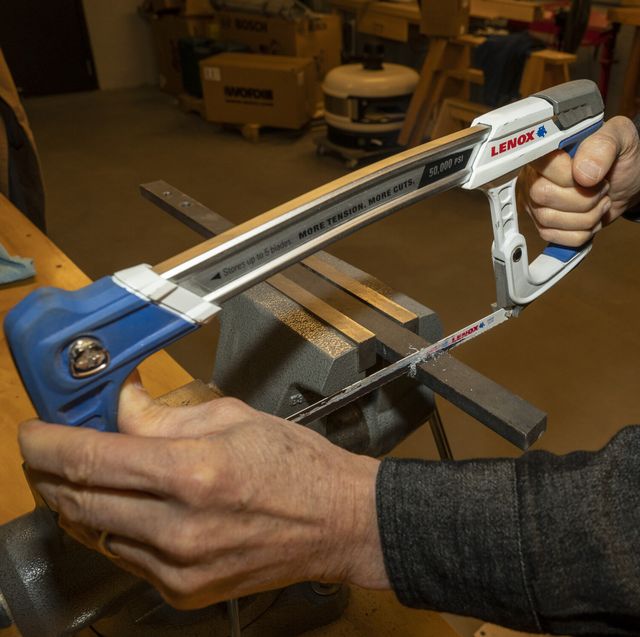
A hacksaw is a hand-operated saw with a narrow, fine-toothed blade held under tension in a rigid frame. Most hacksaws have a handle at one end and an adjustable frame that holds blades of different lengths.
The blade usually contains hardened teeth made for cutting metal. However, the tool can also cut plastic, wood in some cases, drywall screws, and other materials when you use a suitable blade.
A standard hacksaw has these main parts:
• Frame: Holds the blade straight and keeps it tight.
• Handle: Gives you a firm and comfortable grip.
• Blade: Contains the cutting teeth.
• Blade tension screw: Tightens or loosens the blade.
• Blade pins: Fit into the holes at each end of the blade.
• Front and rear blade mounts: Keep the blade secure in the frame.
Most household hacksaws use a 12-inch blade. Smaller junior hacksaws work well in tight spaces, while larger frames can offer more cutting depth and control.
:max_bytes(150000):strip_icc()/SPR-types-of-saws-5409526-7-X-Hacksaw-8a18e4b2946e4d16b3a40789e9656359.jpg)
What Is a Hacksaw Tool Used For?
The main purpose of a hacksaw is to cut hard materials by moving a toothed blade back and forth across the surface. It is especially useful when a power saw is not available or when a job needs slow, controlled cutting.
Here are the most common uses of a hacksaw:
Cutting metal pipe
A hacksaw can cut copper, aluminum, steel, brass, and thin-wall metal pipe. Plumbers often use one to shorten pipe or remove a damaged section.
For example, if a copper pipe is too long for a fitting, you can mark the cut line and use a hacksaw to trim it. The cut may need light filing before the fitting is installed.
Cutting threaded rod and bolts
A hacksaw is useful for cutting threaded rod, machine screws, carriage bolts, and long bolts. It can help when a fastener extends too far through a nut or bracket.
Place the nut on the bolt before cutting. After the cut, unscrewing the nut can help restore damaged threads near the end.
Removing damaged fasteners
A hacksaw can cut through a seized bolt, screw, or metal clamp. It is also useful for cutting a slot into a rounded screw head so a flat screwdriver can remove it.
This method needs care. A deep cut can damage the surface below the fastener, so use short strokes and check your depth often.
Cutting plastic pipe
With a fine blade, a hacksaw can cut PVC, CPVC, ABS, and some other plastic tubing. It is a practical choice for small plumbing repairs and home projects.
The cut may leave plastic burrs. Remove them with a utility knife, deburring tool, or fine sandpaper before joining the pipe.
Cutting metal sheet and thin stock
A hacksaw can cut thin metal strips, angle brackets, conduit, aluminum channel, and light steel stock. It works best when the material is supported close to the cut.
Thin sheet metal may bend or vibrate during cutting. Clamp it between pieces of scrap wood or support it firmly to reduce movement.
Cutting cable and wire products
A hacksaw can cut some types of wire rope, threaded cable, metal mesh, and small chain. The correct blade and strong clamping are important because these materials can flex or catch.
Do not assume a hacksaw is suitable for every cable. Heavy cable may need cable cutters, while hardened chain may require an abrasive wheel or bolt cutters.
Cutting small wood pieces in limited cases
Although a hacksaw is designed mainly for metal, it can cut soft wood or plastic lumber in an emergency. The cut will usually be slower and less clean than one made with a wood saw.
Use a wood-cutting handsaw for regular woodwork. Hacksaw teeth can clog with wood dust, and the blade may not provide the right cutting action.

How Does a Hacksaw Work?
A hacksaw cuts through material as its teeth remove small pieces during each forward stroke. The blade must stay tight, and the teeth must point in the correct direction.
On most hacksaws, the teeth point away from the handle. The blade cuts when you push the saw forward, not when you pull it back. Let the blade do the work instead of forcing it.
Follow these steps for a clean cut:
Measure the material and mark the cut line clearly.
Select a blade that matches the material and its thickness.
Secure the material in a vise or clamp.
Install the blade with the teeth facing forward.
Tighten the blade until it feels firm and straight.
Start with a few slow strokes to create a shallow groove.
Continue with steady, full-length strokes.
Keep the blade aligned with the marked line.
Slow down as the blade approaches the final section.
File or sand away sharp edges after cutting.
A good starting angle is close to 90 degrees against the material. For thin stock, keep enough teeth in contact with the work to prevent snagging. A common workshop rule is to keep at least three teeth engaged with the material.
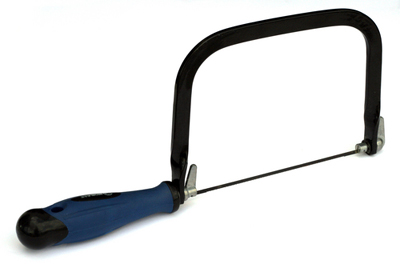
Choosing the Right Hacksaw Blade
Blade choice affects cutting speed, control, and finish. Hacksaw blades are often described by teeth per inch, or TPI.
Coarse blades
Coarse blades commonly have about 14 to 18 teeth per inch. They remove material quickly and work well on thicker metal, aluminum, and softer materials.
They are not ideal for thin sheet metal because the teeth may catch or tear the edge.
Medium blades
Blades with about 20 to 24 teeth per inch are useful for general-purpose work. They can cut common pipe, bolts, brackets, and medium-thickness metal.
For most home repairs, a 24-TPI blade is a practical choice.
Fine blades
Fine blades commonly have about 28 to 32 teeth per inch. They work well on thin sheet metal, small tubing, conduit, and delicate parts.
Fine blades cut more slowly, but they reduce vibration and help prevent the teeth from grabbing thin material.
Blade material
Common hacksaw blade materials include:
• Carbon steel: Affordable and suitable for light work.
• High-speed steel: Holds its edge better during demanding cuts.
• Bi-metal: Combines a flexible body with harder teeth and often lasts longer.
Choose a bi-metal blade when you expect to cut tough steel, stainless steel, or many fasteners. The extra cost can be worthwhile because the blade is less likely to snap during normal use.
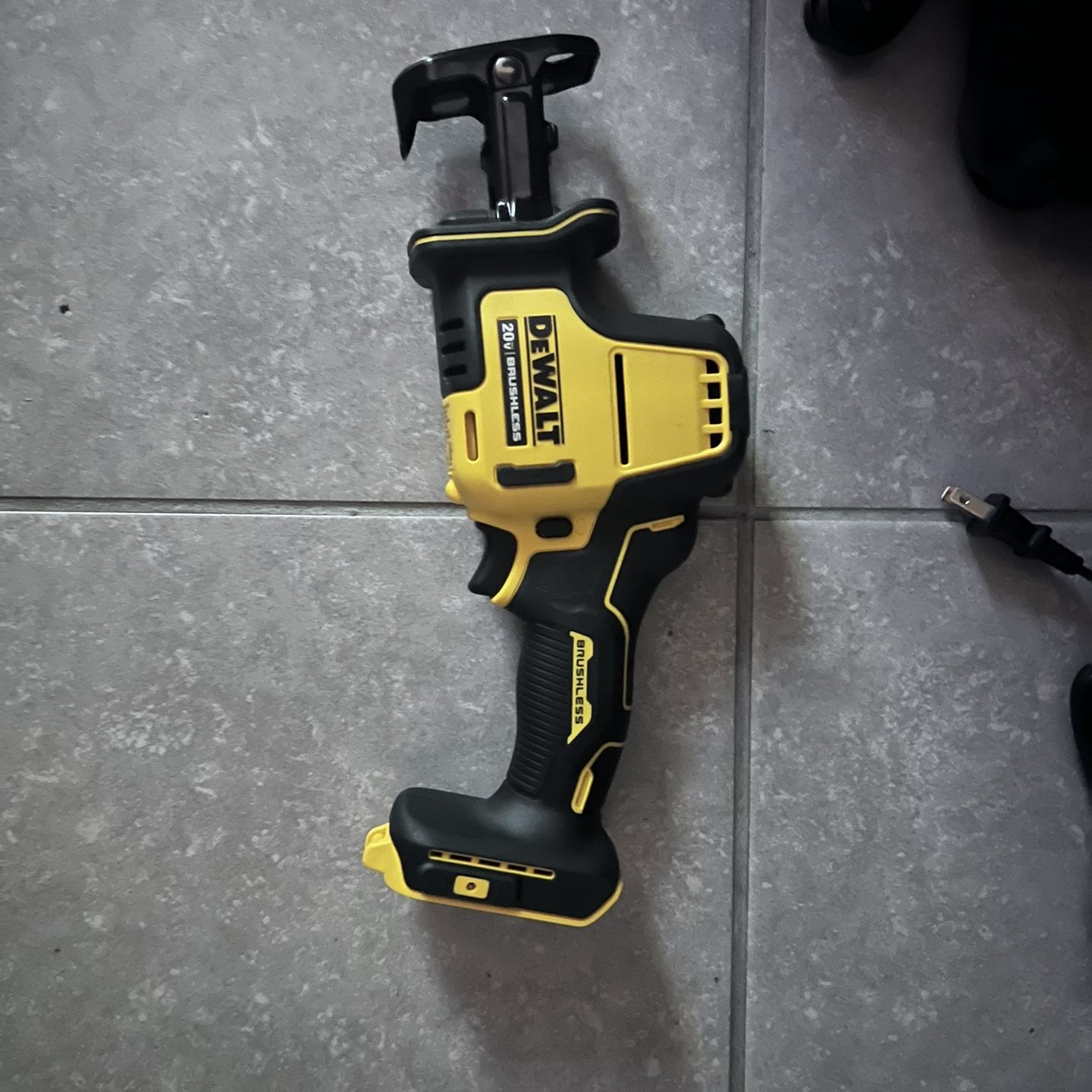
How to Use a Hacksaw Safely
A hacksaw is simple, but its blade can cause cuts, punctures, and eye injuries. Safe technique starts with stable work and proper protection.
Use these safety practices:
• Wear safety glasses to protect against metal chips.
• Wear work gloves when handling sharp metal, but keep them away from moving power tools.
• Clamp the workpiece firmly before cutting.
• Check that the blade is tight and free from cracks.
• Keep both hands on the saw when the cut requires extra control.
• Keep your fingers away from the blade path.
• Cut away from your body when possible.
• Remove burrs from the finished edge.
• Replace a dull or damaged blade instead of forcing it.
• Keep the work area clean and well lit.
Never hold a small metal part in your hand while cutting it. The blade can slip at the end of the stroke and cut your fingers. A vise, clamp, or bench fixture makes the cut safer and more accurate.
Avoid excessive pressure. Too much force can bend the blade, break the teeth, or cause the saw to jump. Smooth strokes are safer and usually produce a straighter cut.
:max_bytes(150000):strip_icc()/SPR-types-of-saws-5409526-7-X-Hacksaw-8a18e4b2946e4d16b3a40789e9656359.jpg)
Hacksaw Cutting Tips for Better Results
A few small habits can make a major difference. I have found that most poor hacksaw cuts come from loose work, a dull blade, or starting too quickly.
Try these practical tips:
• Mark the cut with a permanent marker or metal scribe.
• Wrap masking tape around a pipe to create a clear guide line.
• Place the cut close to the vise jaws to reduce vibration.
• Use the full length of the blade rather than short, choppy strokes.
• Keep the frame square to the material.
• Apply light pressure on the forward stroke.
• Release pressure on the return stroke.
• Use cutting oil on tough steel when appropriate.
• Clean the blade after use and store it in a dry place.
When cutting a pipe, rotate it as the cut becomes deeper if the workpiece allows it. This can help keep the cut even around the full surface.
One mistake I often see is using a fine blade on thick steel. The cut becomes slow, the blade heats up, and the user presses harder. A medium or coarse blade usually gives better control and saves time.
Another mistake is using a worn blade because it still appears intact. A dull blade creates heat, slips more easily, and can damage the material. If cutting feels unusually hard, inspect the teeth before applying more force.
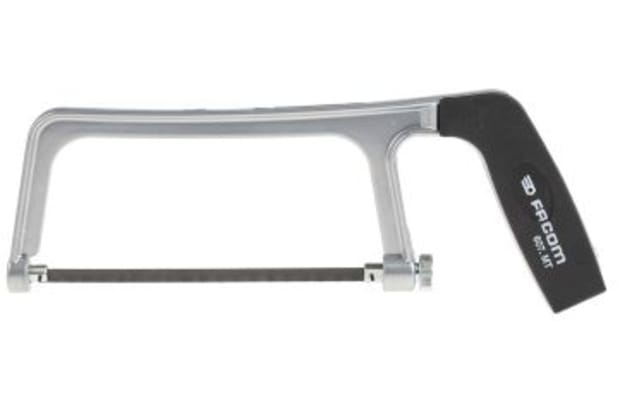
Hacksaw vs. Other Cutting Tools
A hacksaw is not the best tool for every job. Its main strengths are low cost, portability, and control. Its main weakness is speed.
Hacksaw vs. reciprocating saw
A reciprocating saw uses a powered blade and cuts much faster. It is useful for demolition, large pipes, and repeated cuts.
A hacksaw is quieter, easier to control, and does not need electricity or a battery. It is often better for small repairs and precise work.
Hacksaw vs. angle grinder
An angle grinder can cut thick metal quickly and may also grind or polish surfaces. However, it produces sparks, noise, heat, and airborne particles.
A hacksaw creates fewer hazards and gives you more control, but it requires more time and physical effort.
Hacksaw vs. pipe cutter
A pipe cutter creates a neat, round cut on certain types of pipe. It is often the best choice for copper and some plastic pipe.
A hacksaw is more flexible because it can cut pipe, bolts, brackets, threaded rod, and many other shapes.
Hacksaw vs. bolt cutters
Bolt cutters work well on soft or medium-hard bolts, chain, and some wire products. They are fast but can crush the cut area and may not work on hardened steel.
A hacksaw makes a narrow, controlled cut and can handle jobs that do not fit between bolt cutter jaws.

Common Hacksaw Problems and Solutions
Even a good hacksaw can perform poorly when the setup is wrong. These problems are common in home workshops.
The blade keeps breaking
The blade may be too loose, installed backward, or forced into the material. It can also break if the frame twists during the cut.
Tighten the blade, check the tooth direction, and use steady strokes. Replace the blade if it has visible damage.
The cut is not straight
A loose workpiece or crooked starting groove often causes an uneven cut. Short strokes can also make the blade wander.
Clamp the material near the cut line and start slowly. Keep the frame square throughout the cut.
The blade gets hot
Heat often comes from too much pressure, a dull blade, or cutting tough metal too quickly. Let the teeth cut at their own pace.
For suitable metals, a small amount of cutting lubricant can reduce friction. Keep oil away from areas where contamination could affect later bonding or painting.
The saw will not cut
Check whether the teeth are facing forward. If the blade is dull or has the wrong TPI, it may slide over the surface rather than remove material.
Try a new blade with the right tooth size. Also make sure the material is supported and that you are not cutting hardened steel beyond the blade’s ability.
The material moves while cutting
Movement wastes energy and makes the cut inaccurate. It can also cause the blade to catch.
Use a bench vise or strong clamp. Add a piece of scrap wood under thin sheet material to reduce vibration.
Frequently Asked Questions About What Is a Hacksaw Tool Used For
What is a hacksaw tool used for in plumbing?
A hacksaw is used in plumbing to cut copper, plastic, steel, and other types of pipe. It can also shorten threaded rod, remove damaged fittings, and cut through old brackets or clamps.
Can a hacksaw cut wood?
A hacksaw can cut soft wood in some situations, but it is not the best choice for regular woodwork. Its fine metal-cutting teeth can clog and produce a slower, rougher cut than a wood saw.
Can a hacksaw cut stainless steel?
Yes, a hacksaw can cut stainless steel when fitted with a sharp, durable blade, such as a bi-metal blade. Use steady strokes, secure the work firmly, and avoid pressing too hard because stainless steel can harden when overheated.
Which hacksaw blade is best for general use?
A blade with about 20 to 24 teeth per inch is a good general-purpose choice. It can handle many common jobs, including cutting bolts, pipe, brackets, and medium-thickness metal.
Should hacksaw teeth point toward the handle?
No. On a standard hacksaw, the teeth should point away from the handle because the blade cuts on the forward push stroke. Always check the blade direction before starting.
How tight should a hacksaw blade be?
The blade should be tight enough to stay straight and produce a clear tone when lightly tapped. Do not overtighten it, because excessive tension can damage the frame or cause the blade to snap.
Is a hacksaw safe for cutting bolts?
Yes, a hacksaw is commonly used to cut bolts. Secure the bolt, wear eye protection, and thread a nut onto it before cutting so the nut can help restore the threads afterward.
Conclusion
A hacksaw is a simple but highly useful hand tool for cutting metal, plastic pipe, bolts, threaded rod, brackets, wire products, and other hard materials. Its success depends on the right blade, firm support, steady strokes, and safe handling.
Now that you understand what is a hacksaw tool used for, choose a suitable blade and practice on scrap material before starting an important repair. Keep the tool clean, replace worn blades, and take your time for a straighter and safer cut. Explore more tool guides, and share your own hacksaw tips or workshop experience in the comments.
