What Size Oil Filter Wrench Do I Need: Find The Right Fit
You need an oil filter wrench that matches the outside diameter and shape of your oil filter. The right size is not based only on your vehicle’s make or engine size. It depends on the exact filter installed.
For many spin-on filters, an adjustable strap, chain, or three-jaw wrench can fit several sizes. A cap-style wrench must match the filter’s end exactly. Cartridge-style filters usually need a special cap socket that matches the plastic filter housing.
Before buying a wrench, check the owner’s manual, the filter maker’s fit guide, or the number printed on the filter.

Quick answer: how do I find the right oil filter wrench size?
Use this simple process:
- Find the oil filter number on the filter or in the vehicle manual.
- Look up that number on the filter maker’s website.
- Check whether the filter is a spin-on filter or a cartridge filter.
- Match the wrench to the filter’s outside diameter, end shape, or cap design.
- Choose a wrench with the correct drive size for your ratchet.
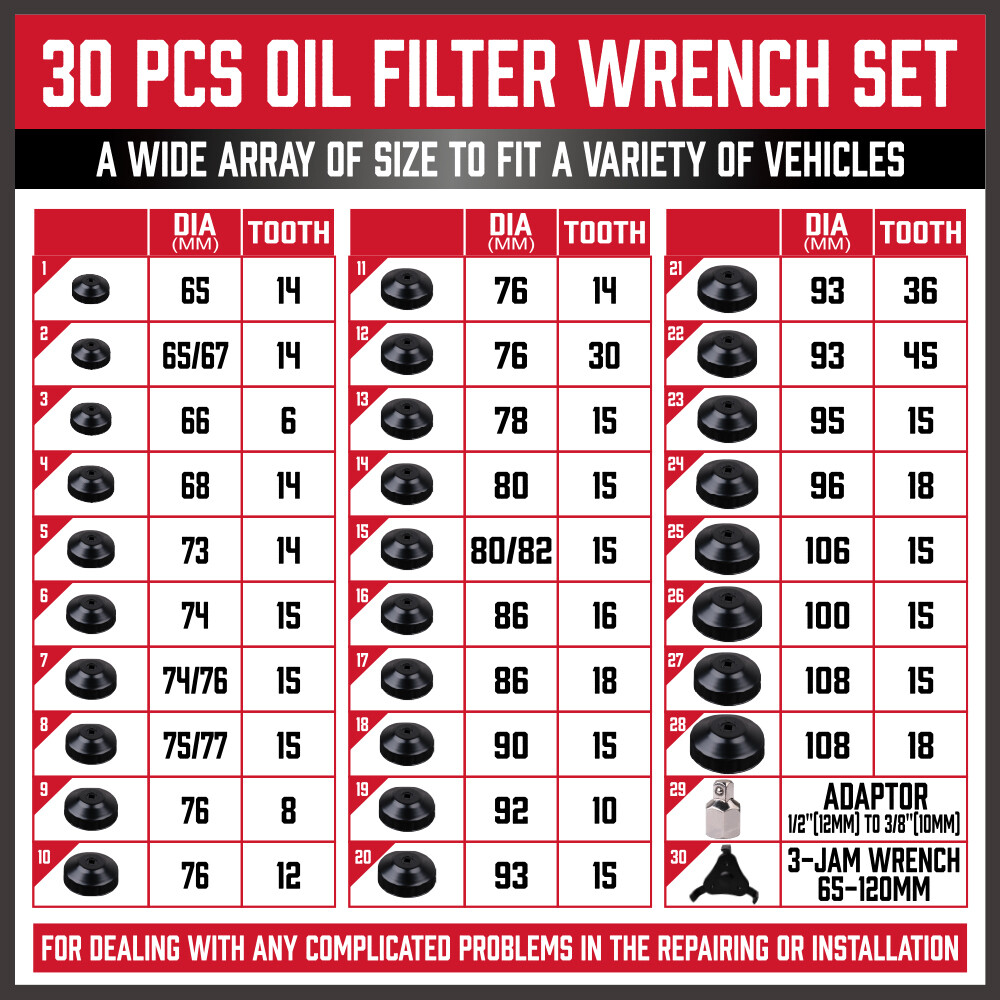
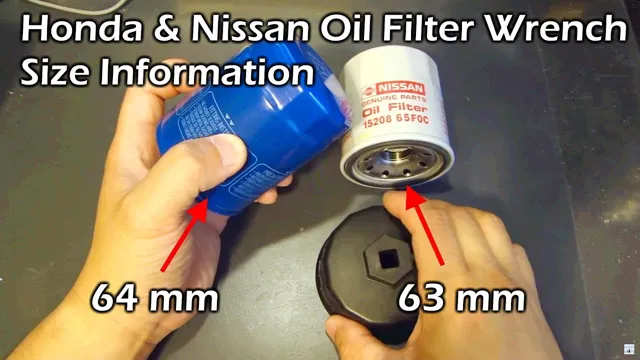
A cap wrench may be listed as 65 mm, 67 mm, 74 mm, 76 mm, or 86 mm, but these sizes are not universal. Two filters with a similar diameter may have different numbers of flutes, corners, or end shapes.
A universal strap wrench is more forgiving. It can be useful when the filter size is unknown. However, it may slip if the filter is very tight or oily.
What determines oil filter wrench size?
The main factor is the filter’s physical design. Most oil filters used in U.S. vehicles fall into one of two groups.
Spin-on oil filters
A spin-on filter is a sealed metal canister. You remove the whole filter by turning the canister counterclockwise.
For this type, the wrench may fit:
- The filter’s outer diameter
- The flat sides on the filter
- The end cap or flutes
- The full canister with a strap or chain
A strap wrench does not need an exact diameter. It only needs a working range that includes the filter. A cap wrench does need an exact fit.
Cartridge oil filters
A cartridge filter uses a replaceable paper element inside a separate housing. You remove the housing cap, not a metal filter canister.
The cap often has a hex-shaped drive or molded outer shape. Many cartridge caps require a special socket. The correct size may be listed in millimeters, even on a vehicle sold in the United States.
Do not grip a plastic cartridge cap with large pliers. That can crack the cap or round its edges. Use the size and torque listed in the service information.
The wrench drive size is different
An oil filter wrench may use a:
- 3/8-inch ratchet drive
- 1/2-inch ratchet drive
- 3/4-inch or 1-inch hex
- Direct hand grip
- Adjustable handle
This is separate from the filter size. For example, a wrench may fit a 74 mm filter but use a 3/8-inch drive. The 74 mm describes the filter end. The 3/8 inch describes the tool connection.

How can I measure the oil filter for a wrench?
The best method is to identify the filter number first. measuring the filter is useful when the number is missing, dirty, or hard to read.
Method 1: Measure the outside diameter
Use a ruler or caliper to measure across the widest part of the filter. Measure from one outside edge straight across to the other.
This gives you an estimate in millimeters or inches. It does not always identify the correct cap wrench because the end shape may differ.
For example, a filter may measure close to 74 mm across but require a cap with a particular flute pattern. The diameter alone may not be enough.
Method 2: Measure the circumference
A flexible tape can measure around the outside of a spin-on filter.
If you only know the circumference, use this calculation:
Diameter = circumference ÷ 3.14
Example:
- Measured circumference: 232 mm
- 232 ÷ 3.14 = about 74 mm
- Start by checking a 74 mm wrench
This is only a starting point. The filter may taper, have raised ribs, or use a different end pattern.
Method 3: Count the flutes or corners
Cap-style oil filter wrenches often match more than the diameter. They may also match:
- Number of flutes
- Shape of the flutes
- Number of sides
- Raised or recessed areas
- Filter brand and part number
Take a clear photo of the filter end. Compare it with the wrench maker’s fit chart. This is often more reliable than guessing from diameter alone.

Oil filter wrench size chart
The chart below shows how common wrench types work. It is a selection guide, not a universal fit list.
| Wrench type | How size is stated | Best use | Main limit |
|---|---|---|---|
| Strap wrench | Adjustable range | Unknown or varied filter sizes | Can slip on tight filters |
| Chain wrench | Adjustable range | Very tight metal filters | Can crush the filter |
| Three-jaw wrench | Adjustable range | Filters with limited access | Needs room to tighten |
| Cap wrench | Exact mm or inch size | Matching a known spin-on filter | Wrong pattern will not fit |
| End-cup wrench | Exact filter model or size | Lightly stuck filters | Must match the end |
| Cartridge-cap socket | Exact mm size | Plastic cartridge housings | Wrong size can damage the cap |
| Pliers-style wrench | Adjustable | Emergency use or loose filters | May puncture or crush the filter |
Common cap sizes include 64, 65, 67, 74, 76, 86, and 93 mm, but this list does not mean any one size fits every filter in that range.
Some filter brands publish their own wrench charts. For example, filter makers such as FRAM, WIX, and K&N provide product information for specific filter families. Always match the exact filter part number when possible.
Which type of oil filter wrench should I buy?
Choose the wrench based on how often you change oil, how much access you have, and whether the filter is known.
Choose a cap wrench when the filter number is known
A cap wrench is often the cleanest choice for a filter that is easy to identify. It fits over the end of the filter and turns it with a ratchet.
It works well when:
- The filter has a known part number
- You change the same vehicle often
- The filter is not badly damaged
- You want a low-slip fit
The trade-off is limited flexibility. A 65 mm cap wrench may not fit a filter that is only slightly larger or smaller.
Choose an adjustable strap wrench when the size is unknown
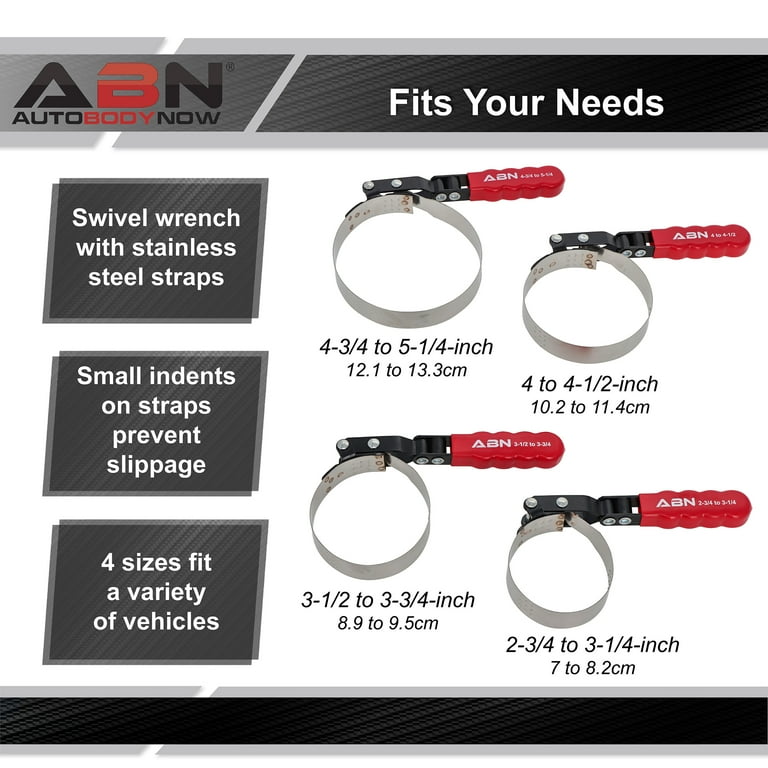
A strap wrench is a practical first tool for a home garage. It can cover several filter diameters.
It works best when:
- The filter has open access
- You do not know the exact size
- The filter is not extremely tight
- You want one tool for several vehicles
Keep the strap square to the filter. Pull it in the tightening direction. A loose angle can make the strap slip.
Choose a cartridge-cap socket for cartridge systems
If the vehicle uses a cartridge filter, use the proper cap socket. The socket should sit fully on the housing cap before you apply force.
Check the service procedure for:
- Cap socket size
- Removal direction
- Tightening torque
- O-ring location
- O-ring lubrication
- O-ring replacement instructions
Do not assume that a nearby metric socket is safe. A close fit can still round or crack the cap.
Use a claw or three-jaw wrench with care
A claw or three-jaw tool can remove a filter that is stuck. It often grips harder as you turn it.
The risk is damage. It may puncture the filter or crush the canister. Oil can spill quickly if the filter is pierced. Use this type only when you have room and a replacement filter is ready.
How do I remove an oil filter safely?
Gather the correct filter wrench, a drain pan, gloves, shop towels, and the new filter. Let the engine cool enough to avoid burns, but slightly warm oil may drain more easily. Never work beneath a vehicle supported only by a jack.
Follow these steps:
- Park on a level surface and set the parking brake.
- Raise and support the vehicle with jack stands if needed.
- Place the drain pan below the filter.
- Confirm the wrench fits before applying force.
- Turn the filter counterclockwise when viewed from the filter end.
- Loosen it slowly by hand after it breaks free.
- Check that the old gasket came off with the filter.
- Clean the mounting surface.
- Lightly coat the new gasket with clean engine oil.
- Install the new filter by hand.
- Tighten it to the filter maker’s instructions.
Many spin-on filters are tightened by hand after the gasket touches the base. Some specify a fraction of a turn. Do not add extra turns simply because the filter feels loose. Follow the printed instructions or the vehicle service information.
For a cartridge filter, install the new O-ring in the correct groove. Do not place it over the old O-ring. A doubled O-ring can leak badly after the engine starts.
After the oil change, run the engine for a short time and inspect the filter area. Shut the engine off, wait for the oil to settle, and check the oil level. Look for leaks before driving.
What if the oil filter wrench does not fit?
Stop if the tool rocks, slips, or only touches part of the filter. A poor fit can deform the filter or damage a cartridge cap.
Use this troubleshooting order:
The filter wrench is too small or too large
Recheck the filter number. The filter may not be the part listed for the vehicle. A prior owner may have installed a different brand or model.
Measure the filter end again. If the measurement is close to a common size, confirm the flute pattern before buying a cap wrench.
The wrench fits but slips
Clean oil from the filter and tool. Press the wrench fully onto the filter. Keep the ratchet in line with the filter.
If it still slips, switch to a strap wrench or a correctly matched cap wrench. Do not keep forcing a tool that is chewing into the filter.
The filter will not loosen
Make sure you are turning counterclockwise from the filter end. Improve access if possible. A longer ratchet may help, but avoid excessive force on a thin filter or plastic housing.
Do not heat the oil filter with a torch. Oil and nearby vehicle parts can catch fire. If the filter is badly stuck or access is unsafe, a repair shop can remove it with the proper equipment.
The filter is crushed or punctured
Stop the engine if it is running. Place the drain pan under the filter. If the filter still will not come off, professional help may be the safest option.
Never start the engine with a damaged filter or a missing filter. Engine oil can escape within seconds.
Common mistakes when choosing an oil filter wrench
The most common mistake is buying a wrench from the vehicle model alone. The same vehicle may use different filters by engine, model year, trim, or filter supplier.
Avoid these errors:
- Assuming every filter uses a universal size
- Confusing wrench drive size with filter size
- Measuring the canister but ignoring the filter end
- Using a metric socket on a cartridge cap without checking the fit
- Choosing a cap wrench by diameter only
- Using pliers on a plastic filter housing
- Reusing a crushed or damaged filter
- Forgetting to check whether the old gasket came off
- Over-tightening the new filter
- Working under a car held only by a jack
The safest choice is the tool named in the service procedure or the tool listed for the exact filter part number.

Frequently asked questions
Is an oil filter wrench universal?
No. An adjustable strap or chain wrench can fit many filters, but no single wrench fits every oil filter. Cap wrenches and cartridge sockets usually require an exact size or pattern.
Can I use a socket wrench on an oil filter?
Yes, if the oil filter wrench has a compatible drive or if the filter housing has a service hex. Do not place a normal socket over a thin spin-on filter and expect it to work. Use an oil filter tool made for that filter.
What size oil filter wrench fits a 3/8-inch ratchet?
A 3/8-inch ratchet describes the drive connection, not the filter diameter. The wrench may fit a 65 mm, 74 mm, 76 mm, or another filter size. Check both measurements before buying.
Can I remove an oil filter by hand?
Sometimes. A recently installed filter that was tightened correctly may come off by hand. A stuck filter may need a wrench. Do not use excessive hand force if the vehicle is unstable or access is poor.
Do oil filter wrenches work on motorcycle filters?
Some do, but motorcycle filters vary widely. Check the motorcycle manual and the exact filter part number. Space around the filter can also determine whether a strap, cap, or socket tool will work.
Final recommendation
If you know the filter number, buy the exact cap wrench or cartridge socket listed for that filter. If you do not know the size, start with an adjustable strap wrench and confirm the filter before the next oil change.
For a reliable match, use this rule: identify the filter first, then choose the wrench—not the other way around.
Recent Tool Guides
 Hammer
How To Hammer Flowers Onto Paper: Easy Guide
Learn how to hammer flowers onto paper with simple steps, helpful tips, and beautiful results for...
Read Guide → Wrench
How To Use A Hex Wrench: Easy Step-By-Step Guide
Learn how to use a hex wrench correctly with simple steps, helpful tips, and common mistakes...
Read Guide → Hacksaw
How To Cut Curtain Pole With Hacksaw: Easy Guide
Learn how to cut curtain pole with hacksaw safely and neatly. Follow simple steps for accurate...
Read Guide → Wrench
How To Use A Husky Torque Wrench: Easy Guide
Learn how to use a Husky torque wrench correctly with simple steps, torque settings, and safety...
Read Guide → Hammer
How To Hold A Hammer: Safe Grip Guide
Learn how to hold a hammer with the right grip, stance, and technique for safer, more...
Read Guide → Hacksaw
How To Cut Flexible Metal Conduit With Hacksaw: Easy Guide
Learn how to cut flexible metal conduit with hacksaw safely and cleanly. Follow simple steps for...
Read Guide →