How To Use A Husky Torque Wrench: Easy Guide
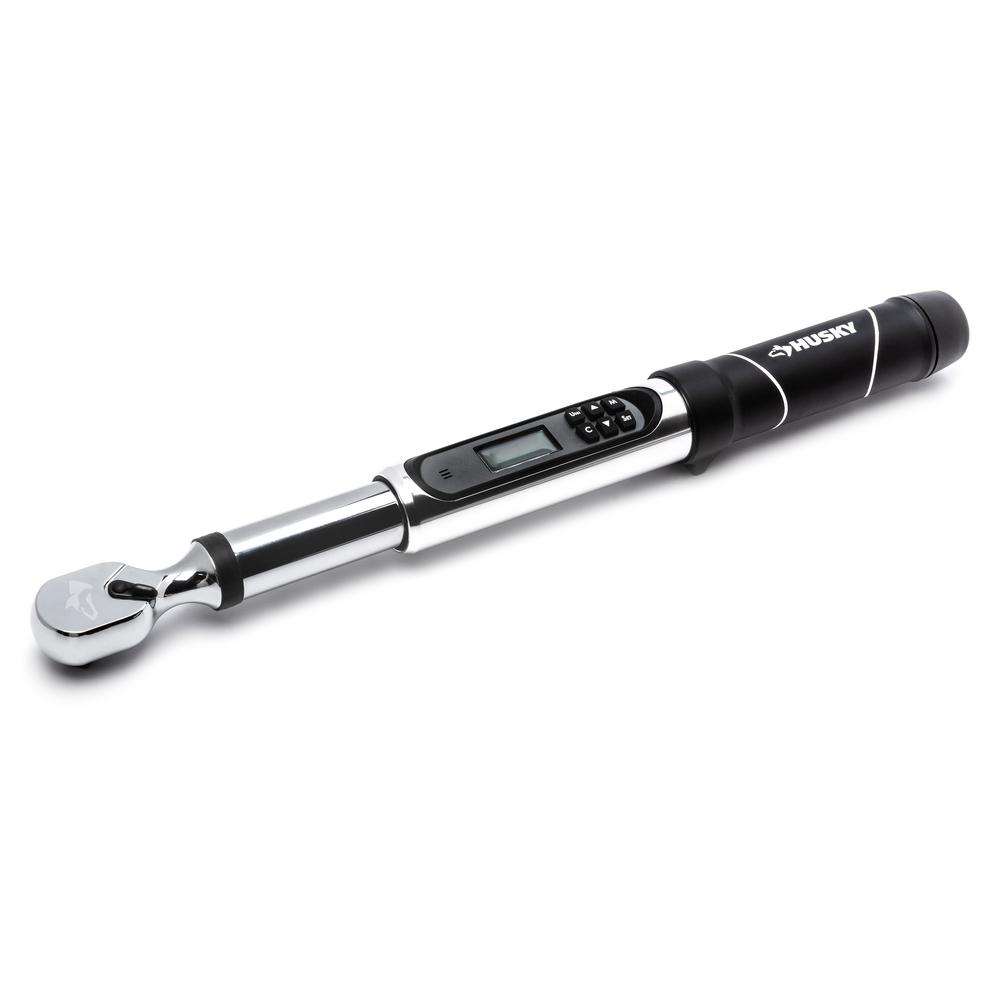
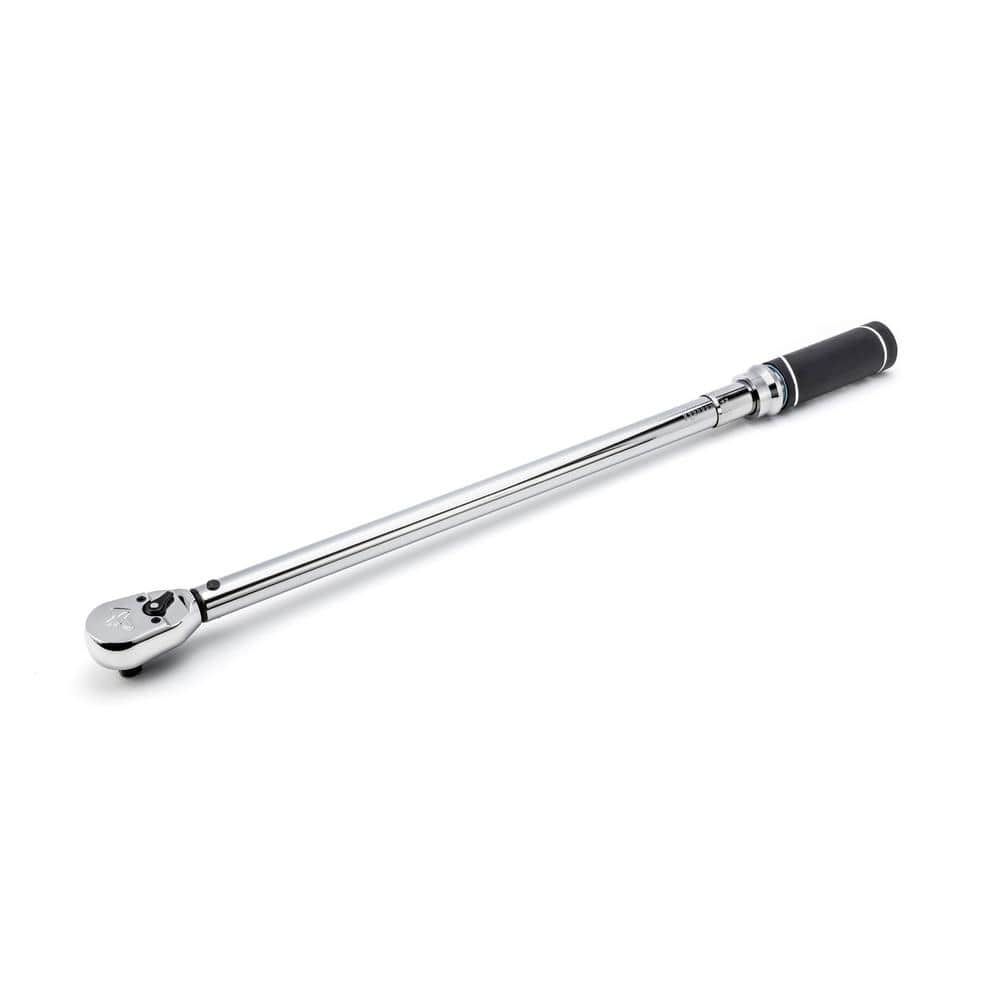
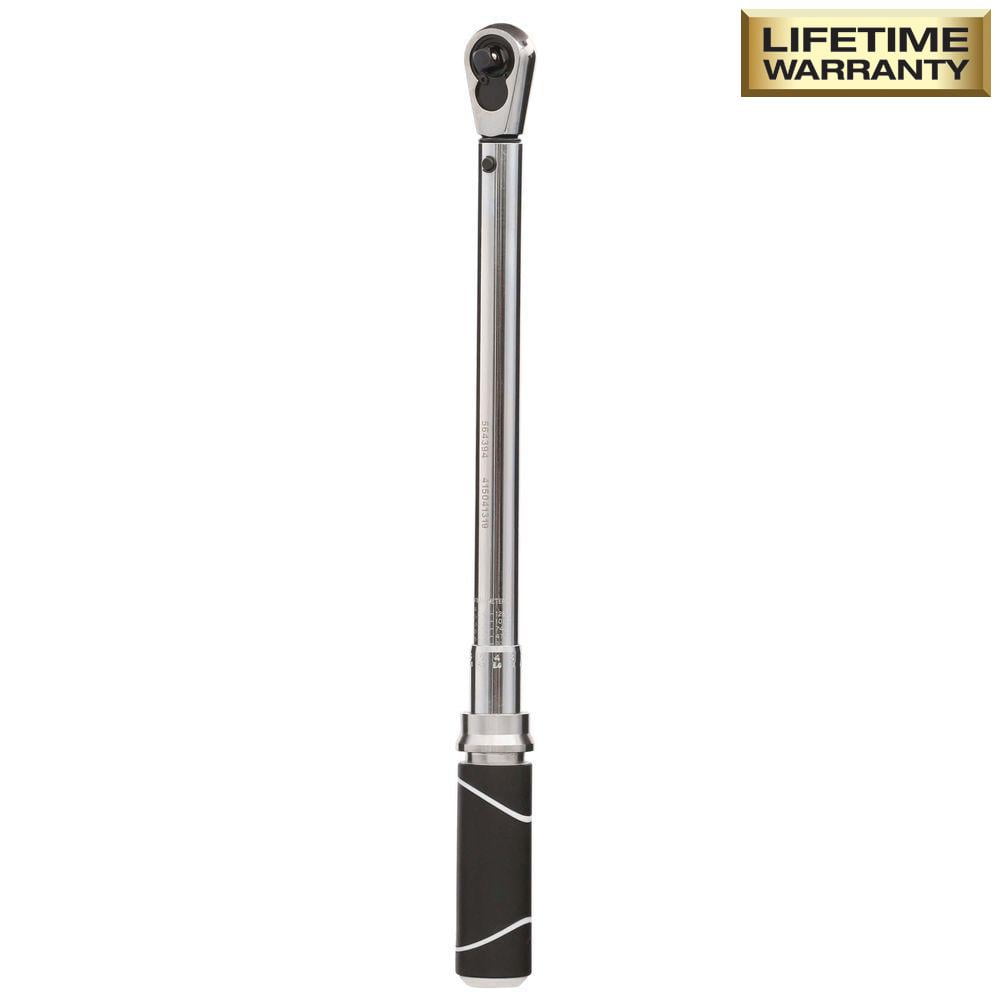
A Husky torque wrench lets you tighten a nut or bolt to a set torque value. In the United States, most Husky models use foot-pounds (ft-lb) or inch-pounds (in-lb). Set the correct value, place the socket on the fastener, and pull the handle slowly until the wrench clicks. Stop at the first click.
Using the right torque helps prevent loose fasteners, broken bolts, damaged threads, and uneven clamping. Always check the service manual for the vehicle, machine, or part before you begin.
What You Need Before You Start
Before using a Husky torque wrench, gather the correct tools and specifications:
- The Husky torque wrench
- The correct drive-size socket
- The correct torque value from the service manual
- A clean, dry fastener unless the manual says to use lubricant
- Safety glasses
- A stable work area with good lighting
Check the wrench before use. Look for cracks, bent parts, damaged threads, or a loose head. Make sure the direction switch works and that the scale is easy to read.
Husky sells several types of torque wrenches. The most common are click-style wrenches with a preset handle scale. Some models use a dual scale, such as ft-lb and Nm. Smaller models may use in-lb.
Do not guess the unit. A setting of 50 in-lb is not the same as 50 ft-lb. Since 1 ft-lb equals 12 in-lb, confusing the two can damage parts.

How to Set a Husky Click Torque Wrench
Set the wrench while looking straight at the scale. This helps prevent parallax error, which can make the value look higher or lower than it is.
-
Find the torque range.
Check the markings on the handle and barrel. Do not set the wrench below its minimum or above its maximum value. -
Unlock the handle.
Many Husky click wrenches have a locking collar at the end of the handle. Pull down, twist, or release the collar according to your model. -
Choose the main value.
Turn the handle until its top edge lines up with the main torque value on the barrel. For example, if you need 70 ft-lb, align the handle with 70. -
Add the smaller value.
Use the rotating scale on the handle to add the smaller amount. If the main scale is at 70 and the handle scale adds 4, the final setting is 74 ft-lb. -
Lock the setting.
Release or twist the locking collar. The handle should stay fixed when you try to turn it lightly. -
Check the setting again.
Confirm the unit, number, and scale. This short check can prevent a costly mistake.
Example: Setting 85 ft-lb
Suppose the wrench has a main scale in 10 ft-lb steps and a rotating handle scale in 1 ft-lb steps:
- Set the main scale to 80 ft-lb.
- Turn the handle until the added scale reads 5.
- The final setting is 85 ft-lb.
- Lock the handle before tightening.
The exact scale layout can differ by model. If the marks are hard to read, use the instructions supplied with your wrench rather than guessing.

How to Tighten a Bolt With a Husky Torque Wrench
After setting the wrench, tighten the fastener with a smooth and steady pull.
-
Install the correct socket.
Push the socket fully onto the square drive. Use only a socket that fits the fastener correctly. -
Check the direction.
Set the direction lever for clockwise tightening unless the repair instructions call for another direction. Most torque wrenches measure torque in only one direction. -
Seat the socket fully.
Keep the socket straight on the fastener. A tilted socket can slip and damage the bolt or nut. -
Hold the handle correctly.
Grip the marked handgrip area. Do not hold the wrench near the head or at the very end unless the manufacturer identifies that point as the control grip. -
Pull slowly.
Pull in a smooth motion. Do not jerk the wrench or use your full body weight. -
Stop at the click.
A click means the wrench reached its set torque. Stop pulling at once. Do not pull again unless the service procedure specifically requires another pass. -
Complete the required sequence.
Some parts need a cross pattern, several stages, or a final angle turn. Follow the service manual in the order given.
A click wrench measures best when the handle stays close to the intended grip point and the force is steady. The wrench does not tell you whether the fastener has the correct thread condition, washer, or lubricant. Those details come from the repair instructions.

How to Tighten Lug Nuts With a Husky Torque Wrench
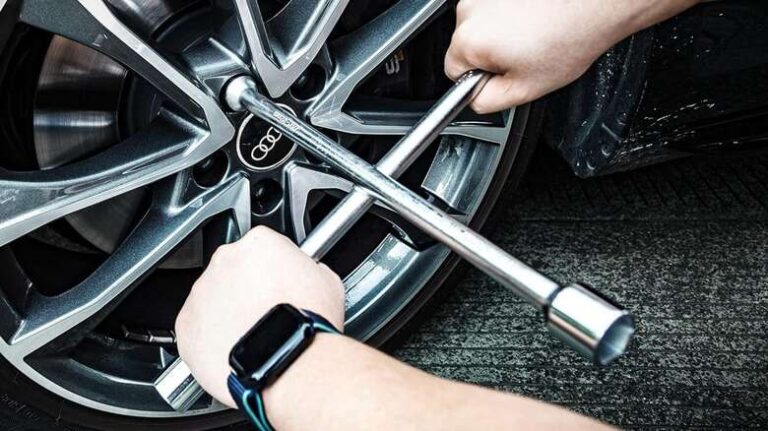
Use a torque wrench for final lug-nut tightening, not for breaking loose tight lug nuts.
First, hand-start each lug nut. Make sure the wheel sits flat against the hub. Tighten the nuts in a star or crisscross pattern in two or more steps if the vehicle manual recommends it.
A safe general process is:
- Snug the lug nuts with the vehicle on the ground or with the wheel supported as directed.
- Lower the vehicle enough to keep the wheel from turning, if needed.
- Set the Husky wrench to the vehicle maker’s torque value.
- Tighten each lug nut in a crisscross pattern.
- Stop at the first click.
- Check every lug nut once more in the same pattern.
- Recheck after driving only when the vehicle maker or wheel maker requires it.
The correct torque is not universal. It can change with the vehicle, wheel, stud, nut type, wheel material, and thread condition. Use the owner’s manual, service manual, or wheel manufacturer’s instructions.
Do not apply anti-seize or oil to wheel studs unless the manufacturer specifically allows it. Lubrication changes the friction in the threads and may cause more clamp force than the torque value predicts.
How to Use a Husky Torque Wrench With Extensions and Adapters
A straight socket extension usually does not change the torque setting when it stays in line with the wrench. A universal joint, angled adapter, or crowfoot can change the result.
A crowfoot adapter changes torque because it increases the distance from the handle pivot to the fastener. If the adapter points straight in line with the wrench, the effect is usually small. If it sits at 90 degrees to the wrench, the effective length changes.
For an inline adapter, use this calculation:
[
T_{\text{wrench}} = T_{\text{desired}} \times \frac{L}{L + A}
]
Where:
- (T_{\text{wrench}}) is the setting on the torque wrench
- (T_{\text{desired}}) is the required fastener torque
- (L) is the wrench length from the drive center to the handgrip point
- (A) is the adapter length in the same direction
Example calculation
Assume:
- Required torque: 100 ft-lb
- Wrench length: 18 inches
- Inline crowfoot length: 2 inches
[
100 \times \frac{18}{18+2} = 90 \text{ ft-lb}
]
In this example, the wrench would be set to about 90 ft-lb. Measure the wrench length according to the manufacturer’s method. If the adapter is at 90 degrees, the calculation changes.
For most routine work, use the correct socket instead of adding an adapter. If the service manual gives a special procedure, follow it.

What the Click Means
The click is a mechanical signal that the wrench has reached its preset torque. It is not a signal to keep pulling.
When the wrench clicks:
- Stop immediately.
- Keep the wrench in position for a moment.
- Do not add a second hard pull.
- Do not use the wrench as a breaker bar.
If you hear a weak click, feel no click, or see the handle move in an unusual way, stop using the wrench. Check the setting, direction, socket fit, and condition of the tool.
A click does not prove that the fastener is safe in every situation. The threads may be dirty, damaged, cross-threaded, stretched, or lubricated. Torque is an indirect way to control clamp force, so the fastener and joint must also be correct.

Common Mistakes When Using a Husky Torque Wrench
Avoid these errors:
Using the wrong unit
Always confirm whether the specification uses ft-lb, in-lb, Nm, or another unit.
Useful conversions include:
- 1 ft-lb = 12 in-lb
- 1 ft-lb ≈ 1.356 Nm
- 1 Nm ≈ 0.738 ft-lb
Do not rely on a phone conversion alone without checking the unit shown on the wrench.
Pulling past the click
The first click is the stopping point. Extra force can over-tighten the fastener.
Using a torque wrench to loosen bolts
Breaking loose a stuck fastener can exceed the tool’s design. Use a breaker bar instead. Then reset or inspect the torque wrench before using it for final tightening.
Adding a pipe for more leverage
A pipe over the handle can overload the wrench and affect accuracy. It can also damage the mechanism.
Holding the wrench in the wrong place
A click wrench is calibrated around a specific grip area. Holding it near the head or adding force at another point can change the applied torque.
Double-clicking every fastener
Repeated clicks do not make the torque more accurate. They can add torque after the first release.
Setting the wrench outside its range
Never force the setting below the lowest mark or above the highest mark.
Ignoring the fastener condition
A torque value cannot correct a damaged thread, wrong nut, poor washer, or dirty mounting surface.

How to Store and Maintain a Husky Torque Wrench
Store the wrench in a dry case or cabinet where it will not fall or receive a hard impact.
For many mechanical click-style torque wrenches, the recommended storage setting is the lowest marked value on the scale. Follow the manual for your exact Husky model. Do not force the handle below the minimum setting unless the manual says that this is allowed.
Good care includes:
- Wipe off dirt and oil after use.
- Keep the drive and adjustment parts clean.
- Do not drop the wrench.
- Do not disassemble the calibration mechanism.
- Keep the tool away from high heat and moisture.
- Have it checked after a hard drop or overload.
A torque wrench can lose accuracy over time. The inspection interval depends on use, storage, impact, and the manufacturer’s instructions. Heavy shop use calls for more frequent checks than occasional home use.
If the wrench is used for safety-critical work, have it checked by a qualified calibration service. Keep the calibration record with the tool.
What to Do if the Wrench Does Not Click
If a Husky torque wrench does not click, stop and check the simple causes first.
- Confirm that the handle is unlocked and set to a value above its minimum.
- Check that the setting scale is aligned correctly.
- Make sure the direction switch is set for tightening.
- Confirm that the socket is fully seated.
- Pull slowly and smoothly.
- Test the click without a load only if the instructions allow it.
- Stop using the wrench if the mechanism feels rough, slips, or does not release.
Do not try to repair the internal mechanism with household oil or by opening the handle. A damaged torque wrench needs inspection or service.
If the wrench clicks far before or after the expected point, treat it as unreliable. Use another verified torque wrench for the job and contact Husky or the retailer for model-specific support.

Husky Torque Wrench Quick Reference
| Task | Correct practice |
|---|---|
| Set the value | Match the service specification and unit |
| Install the socket | Use the correct drive and a fully seated socket |
| Tighten | Pull slowly and smoothly |
| Stop point | Stop at the first click |
| Loosen a bolt | Use a breaker bar, not the torque wrench |
| Store the tool | Follow the model manual, often at the lowest marked value |
| Inspect after a drop | Stop use until the wrench is checked |
| Use an adapter | Recalculate when the adapter changes effective length |
| Tighten wheel nuts | Use the vehicle or wheel maker’s torque and pattern |
The model number matters. A 1/4-inch-drive inch-pound wrench does not work the same way for every task as a 1/2-inch-drive foot-pound wrench. Select a wrench whose range places the needed value within its marked operating range.
Frequently Asked Questions
Should I set a Husky torque wrench before or after putting on the socket?
Set the torque value before or after installing the socket; the order does not normally change the setting. Install the socket securely before applying force.
Can I use a Husky torque wrench as a regular ratchet?
You can use the ratcheting head for some light positioning, but do not use the wrench for high-force loosening. Use a normal ratchet or breaker bar for that work.
Do I need to reset a Husky torque wrench after every use?
Follow the manual for your model. Many click-style torque wrenches should be returned to their lowest marked setting for storage. Do not force the adjustment below the marked range.
How often should a Husky torque wrench be calibrated?
There is no single interval for every user. Follow the Husky instructions and consider how often the wrench is used, whether it has been dropped or overloaded, and whether it is used for safety-critical work.
Can I use a torque wrench on plastic parts?
Only if the manufacturer provides a torque value for the plastic part. Plastic can crack or deform even when the wrench reaches the stated value.
Why does my torque wrench click but the bolt still feels loose?
The wrong unit, wrong setting, poor socket fit, damaged threads, or a loose joint may be the cause. Check the specification and fastener condition. If the wrench may be inaccurate, use a known-good wrench.
Final Checklist
Before you tighten:
- Confirm the exact torque value.
- Confirm the unit.
- Check the wrench range.
- Inspect the fastener and threads.
- Use the correct socket.
- Set the direction.
- Lock the handle.
- Pull smoothly.
- Stop at the first click.
- Store the wrench as directed.
The best next step is to find the exact Husky model number and read its scale instructions. Then match that setting to the vehicle, equipment, or part manufacturer’s torque specification.
Recent Tool Guides
 Hammer
How To Hammer Flowers Onto Paper: Easy Guide
Learn how to hammer flowers onto paper with simple steps, helpful tips, and beautiful results for...
Read Guide → Wrench
How To Use A Hex Wrench: Easy Step-By-Step Guide
Learn how to use a hex wrench correctly with simple steps, helpful tips, and common mistakes...
Read Guide → Hacksaw
How To Cut Curtain Pole With Hacksaw: Easy Guide
Learn how to cut curtain pole with hacksaw safely and neatly. Follow simple steps for accurate...
Read Guide → Hammer
How To Hold A Hammer: Safe Grip Guide
Learn how to hold a hammer with the right grip, stance, and technique for safer, more...
Read Guide → Hacksaw
How To Cut Flexible Metal Conduit With Hacksaw: Easy Guide
Learn how to cut flexible metal conduit with hacksaw safely and cleanly. Follow simple steps for...
Read Guide → Wrench
How To Use An Inch Pound Torque Wrench: Easy Guide
Learn how to use an inch pound torque wrench correctly with simple steps, accurate settings, and...
Read Guide →