Can A Hammer Drill Go Through Metal: Safe Drilling Guide
Yes, a hammer drill can drill through metal—but you must turn the hammer action off. In hammer mode, the tool strikes forward as it spins. That impact helps break masonry, but it can damage metal, dull the bit, and make the drill hard to control.
For most steel, aluminum, and sheet metal jobs in U.S. homes, garages, and workshops, use the drill’s standard rotation mode, a sharp cobalt or high-speed steel (HSS) bit, slow speed, and cutting oil.

What Is a Hammer Drill?
A hammer drill is a power drill with two operating actions:
- Rotary mode: The chuck spins the bit.
- Hammer mode: The chuck spins while the tool adds rapid forward impacts.
The rotary action cuts metal. The hammer action does not improve metal drilling. It is designed mainly for brick, block, concrete, and some stone.
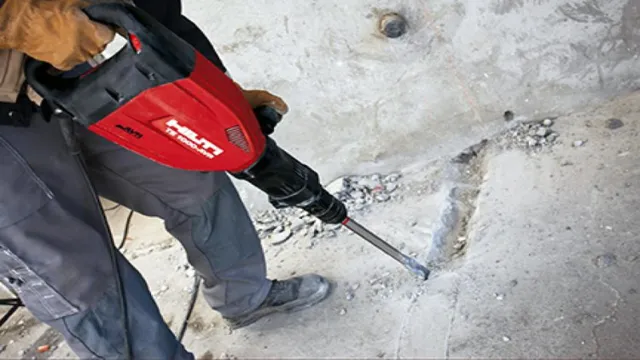
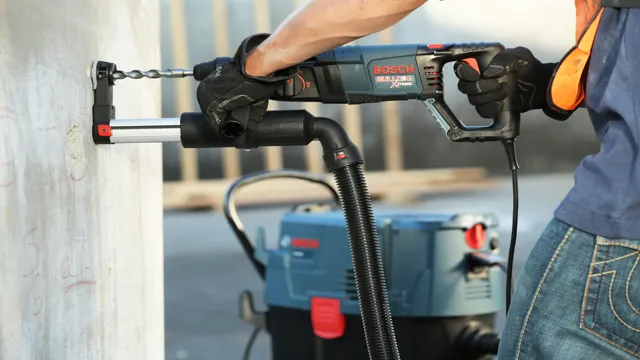
A hammer drill is not the same as a rotary hammer. A rotary hammer is larger and uses a piston system to break masonry. Some rotary hammers can drill metal when fitted with the correct chuck or adapter, but they must also be set to rotation-only mode.
Hammer drill versus standard drill
A standard drill only rotates the bit. A hammer drill adds an impact setting for masonry.
| Tool setting | Best use | Use for metal? |
|---|---|---|
| Standard drill mode | Wood, plastic, metal, and general drilling | Yes |
| Hammer drill mode | Brick, block, concrete, and masonry | No |
| Rotary hammer mode | Heavy masonry and concrete work | Only in rotation-only mode |
| Impact driver mode | Driving screws and bolts with impact | Usually no for drilling metal |
A hammer drill can be useful for metal because it works like a normal drill when the hammer feature is disabled. The key is the setting, the bit, the speed, and the pressure.

How to Drill Through Metal With a Hammer Drill
Use these steps for mild steel, sheet metal, aluminum, and similar materials. For hardened steel, thick structural steel, or load-bearing parts, use the material maker’s instructions or ask a qualified metalworker.
1. Check the drill and the material
Before you start, confirm that:
- The drill has a normal drilling setting.
- The hammer symbol is switched off.
- The drill’s chuck can hold the bit you need.
- The workpiece is not hiding wiring, plumbing, gas lines, or other hazards.
- The hole will not weaken a structural part.
Do not drill a steel beam, vehicle frame, pressure vessel, firearm part, or other safety-critical item without proper guidance. A hole can change how a part carries force.
2. Choose the right bit
Use a bit made for metal. Common options include:
- HSS bits: Suitable for many mild steel and general metal jobs.
- Cobalt bits: Better for tougher steel and heat resistance.
- Step bits: Useful for thin sheet metal and enlarging existing holes.
- Annular cutters: Efficient for larger holes in suitable equipment.
- Carbide bits: Used for very hard materials, but they are brittle and need careful control.
Do not use a basic wood bit for steel. Wood bits may have a point and side spurs that do not cut metal well. A masonry bit is also the wrong choice for ordinary metal.
For a clean hole, use a bit with the correct diameter and keep it sharp. A dull bit creates heat, needs more force, and may grab the workpiece.
3. Mark and center-punch the hole
Measure the hole location. Mark it with a permanent marker or scribe. Then make a small dent with a center punch.
The punch mark keeps the bit from walking across smooth metal. This matters most with sheet metal and polished steel.
For a very small hole, the bit may start without a pilot hole. For a large hole, begin with a smaller bit and enlarge the opening in steps. Avoid using a very small pilot hole if the final bit is designed to cut directly; some step bits work best when used according to their own instructions.
4. Secure the metal
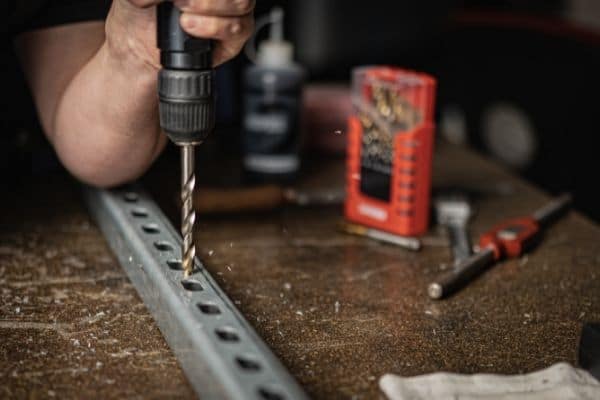
Clamp the workpiece to a solid bench or use a drill press when practical. Do not hold loose metal in your hand while drilling.
A loose piece can spin when the bit catches. That can cut fingers or throw the workpiece. Place scrap wood under thin sheet metal to reduce bending and limit burrs as the bit exits.
5. Set a slow speed
Metal drilling usually works best at a slower speed than wood drilling. The exact speed depends on the bit diameter, metal type, and bit material.
A useful rule is:
- Small bits can run faster.
- Large bits should run slower.
- Harder metals need slower speeds.
- Thin sheet metal often needs controlled speed to prevent grabbing.
If your drill has a two-speed gearbox, use the lower range for large holes or tough steel. Use the trigger gently. Full speed is not automatically better.
A basic cutting-speed calculation can help when the bit maker provides a recommended surface speed:
[
\text{RPM}=\frac{\text{cutting speed} \times 12}{\pi \times \text{bit diameter in inches}}
]
For example, this is a planning formula, not a universal setting. The correct cutting speed changes with HSS versus cobalt bits, steel type, lubrication, and drill rigidity.
6. Apply cutting oil
Cutting oil reduces heat and friction. Put a small amount on the cutting edges or the surface around the hole. Add more when the area becomes dry.
For many general steel jobs, a metal-cutting fluid or suitable cutting oil works well. Aluminum may need a lubricant that is compatible with aluminum and the bit. Follow the product label.
Do not use flammable liquids near sparks, hot surfaces, or an active motor. Wipe up oil after drilling so the work area does not become slippery.
7. Drill with steady pressure
Place the bit in the punch mark. Start slowly until the bit forms a groove. Then increase pressure enough to keep the cutting edges engaged.
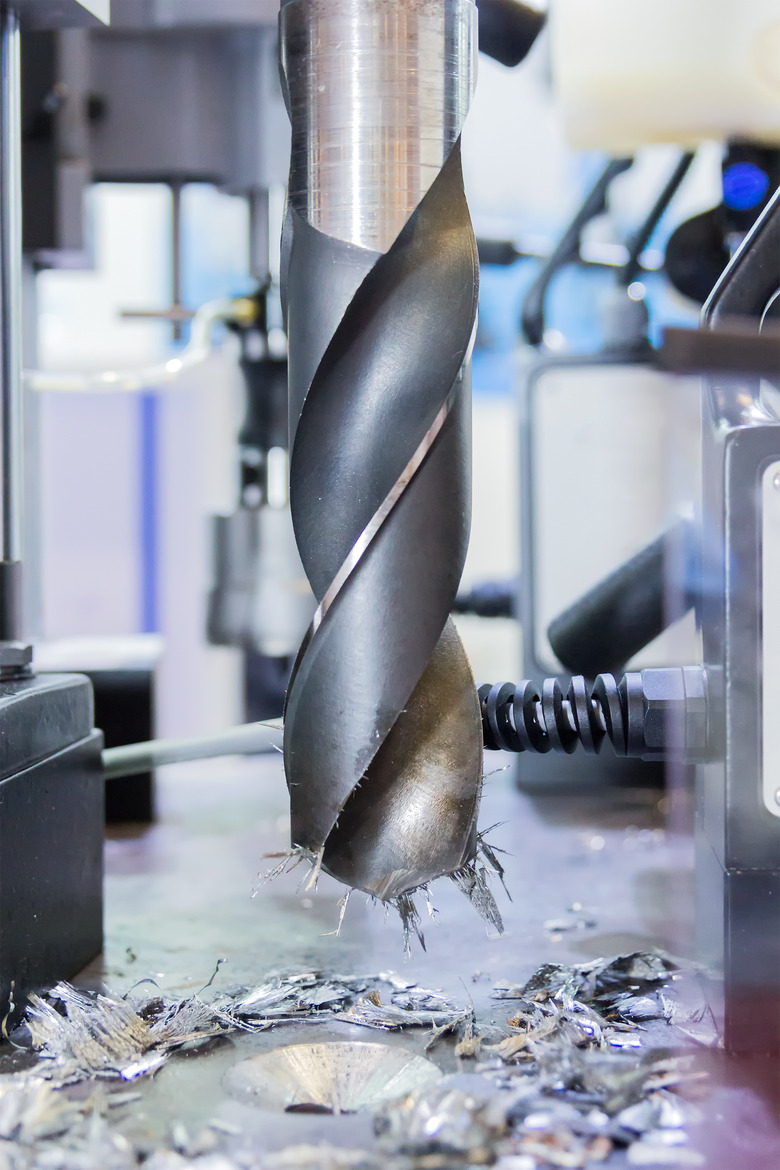
The bit should produce chips. It should not simply rub and make a high-pitched squeal. If the bit turns blue, smokes, or becomes too hot to touch, stop and let it cool.
Near breakthrough, reduce pressure. The bit can grab when it exits the metal. A backing board can also help prevent a rough exit.
8. Deburr and inspect the hole
After drilling, remove sharp edges with a deburring tool, countersink, file, or a larger dull bit turned by hand. Wear eye protection while removing burrs.
Check that:
- The hole is in the right place.
- The edge is not cracked or badly distorted.
- The material did not spin or shift.
- The bit is still sharp and undamaged.
- No loose chips remain in the work area.

What Happens If You Use Hammer Mode on Metal?
Hammer mode can make metal drilling worse, not better. The repeated impacts may cause several problems:
- The bit can chip or break.
- The cutting edge can lose its shape.
- The drill can bounce across the surface.
- Thin metal can dent or tear.
- The hole may become oversized or irregular.
- The chuck and internal mechanism may receive unnecessary shock.
- The operator may lose control.
Hammer action is useful when the bit must fracture a brittle material such as masonry. Metal usually needs a controlled cutting action instead. The bit should shear and remove material, not strike it.
Some specialized tools use impact to make holes in metal, but those systems use purpose-built tooling and controlled processes. A household hammer drill in hammer mode is not a substitute for that equipment.
Which Drill Bit Is Best for Metal?
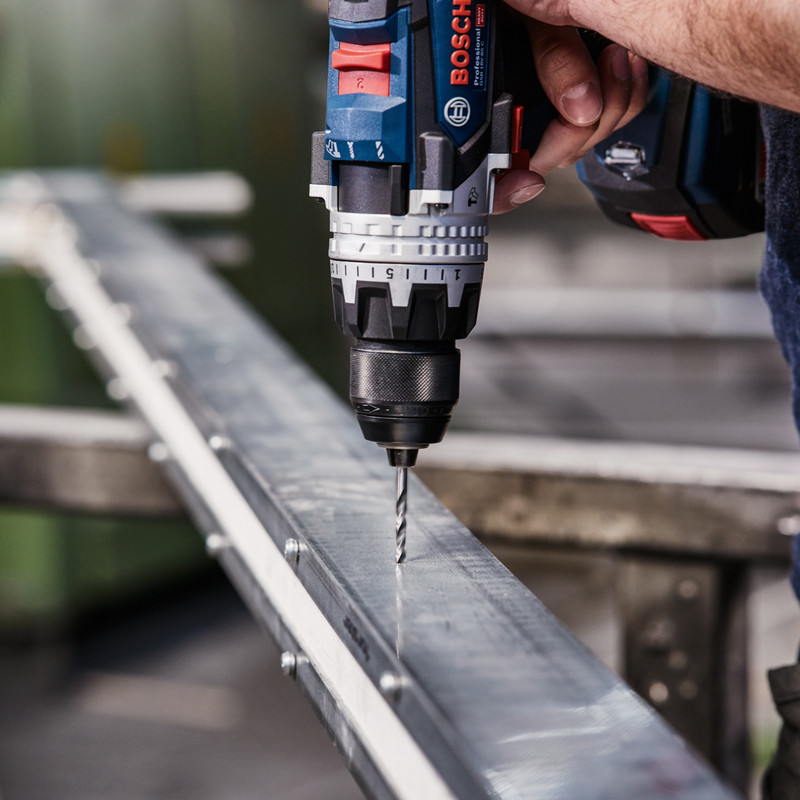
The best bit depends on the metal, hole size, and amount of work.
| Bit type | Suitable materials | Main advantage | Main limit |
|---|---|---|---|
| HSS twist bit | Mild steel, aluminum, brass | Affordable and widely available | Loses hardness when overheated |
| Cobalt twist bit | Stainless steel and tougher steel | Better heat resistance | More brittle and often more costly |
| Step bit | Thin sheet metal | Makes several hole sizes with one bit | Not ideal for thick stock |
| Black oxide HSS bit | General metal work | Improved wear resistance over basic HSS | Still needs correct speed and cooling |
| Carbide bit | Very hard materials | Extremely hard cutting edge | Brittle and easy to damage |
For a one-time hole in mild steel, a sharp HSS bit is often enough. For repeated holes or stainless steel, cobalt may be a better choice. Stainless steel work demands careful speed control because friction and heat can harden the surface.
Do not force a dull bit through metal. Sharpen it correctly or replace it. More pressure cannot restore a damaged cutting edge.
How Fast Should You Drill Metal?
There is no single safe speed for every metal. Bit diameter and material have a major effect.
As a general starting point:
- Use slower speeds for larger bits.
- Use slower speeds for stainless steel and hard steel.
- Use moderate speed for small holes in mild steel.
- Use controlled speed for aluminum to prevent grabbing.
- Use cutting fluid when the bit maker allows it.
The table below gives practical starting guidance, not exact engineering limits:
| Job | Starting approach |
|---|---|
| Small hole in thin mild steel | Low to moderate trigger speed |
| Large hole in mild steel | Low gear and firm, steady pressure |
| Stainless steel | Low speed, sharp cobalt bit, cutting fluid |
| Thin sheet metal | Moderate speed with a step bit |
| Aluminum | Moderate speed with suitable lubricant |
| Hardened steel | Specialized bit, careful speed, and expert guidance |
Stop if the bit produces dust instead of chips, squeals, smokes, or changes color. These signs usually mean the bit is too hot, the speed is too high, the pressure is too low, or the bit is worn.
Safety Rules for Drilling Metal
Metal drilling creates sharp chips, heat, noise, and sometimes sparks. Use basic shop safety every time.
Wear eye protection
Use safety glasses with side protection. Metal chips can fly when the bit enters or exits the workpiece. A face shield can add protection, but it should not replace safety glasses.
Keep hands away from the bit
Never touch the bit immediately after drilling. It can remain hot even when it looks normal. Use pliers or a brush to remove chips.
Do not clear chips with your bare hand. Do not wipe spinning material with a cloth.
Secure the workpiece
Clamp the metal. If the piece can rotate, it can injure you even at a modest drill speed.
Avoid loose clothing and gloves near rotation
Loose sleeves, jewelry, hair, and gloves can catch in a rotating chuck or bit. Follow the drill maker’s safety instructions. Gloves may help during handling, but they can create an entanglement risk near rotating tools.
Control sparks and fire risk
Some metals and coatings can create sparks. Keep flammable liquids, sawdust, cardboard, and gas cylinders away from the drilling area. Check for paint, coatings, or plating that may produce harmful fumes when heated.
If the material has an unknown coating, stop and identify it before drilling. Older painted metal may contain hazardous substances.
Protect hearing and breathing
Use hearing protection when noise levels are high. If drilling creates dust, fumes, or coating particles, improve ventilation and use respiratory protection selected for that hazard.
OSHA’s general hand and power tool rules require employers to protect workers from tool hazards. Home users should follow the same basic principle: use the correct tool, guard against chips and moving parts, and follow the manufacturer’s instructions.
Why Won’t the Hammer Drill Go Through the Metal?
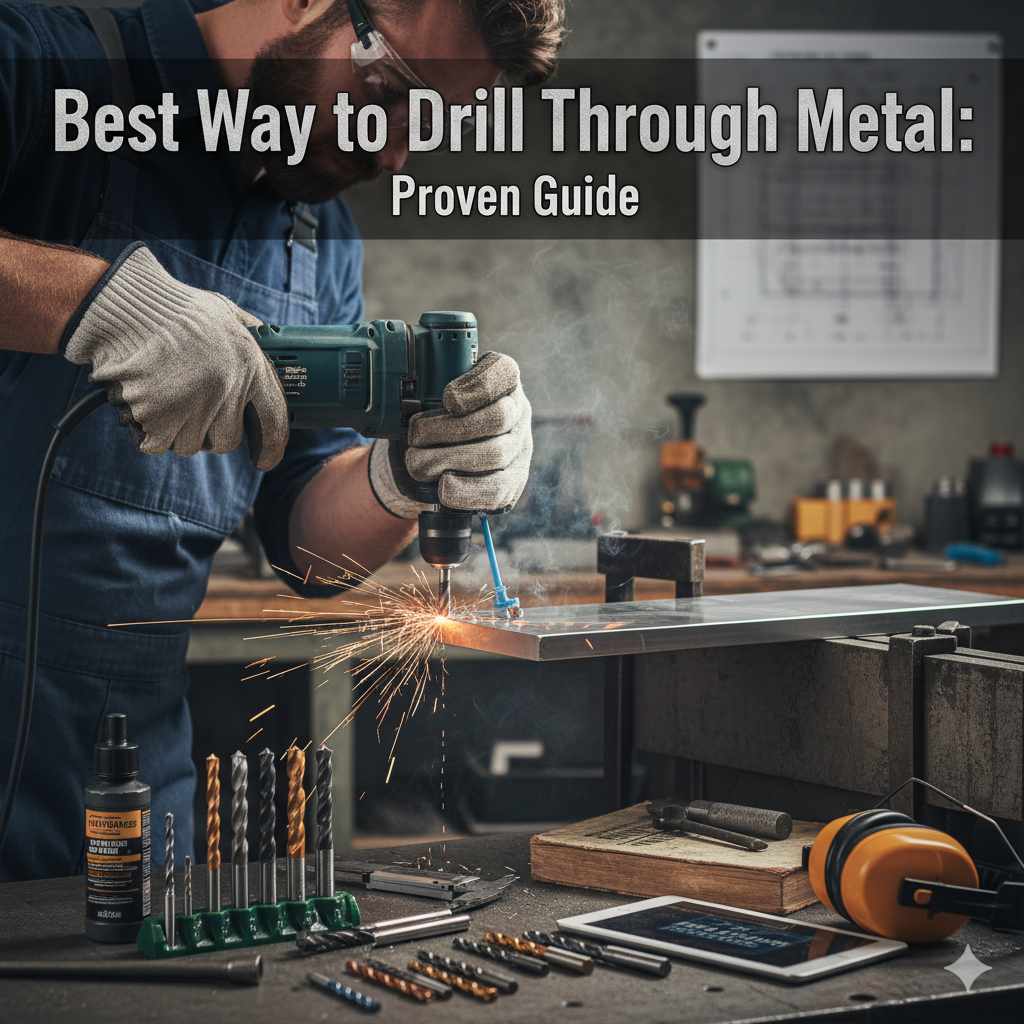
If the hole is not forming, check the simplest causes first.
The hammer setting is on
Turn off the hammer symbol. Hammer action does not replace cutting speed or a proper metal bit.
The bit is dull
A dull bit rubs instead of cutting. Replace or sharpen it. Excess pressure can overheat the bit and damage the drill.
The speed is too high
High speed creates heat quickly. Move to a lower setting and use cutting fluid.
The bit is wrong
A masonry bit, wood bit, or general-purpose bit may not cut steel properly. Use HSS or cobalt tooling made for metal.
The metal is hardened
A file can give you a rough clue: if a file slides across the surface without cutting, the metal may be hardened. Hardened steel may require a carbide tool, special technique, or machining equipment.
The workpiece is moving
A shifting part prevents steady cutting and makes the bit wander. Clamp it firmly and support thin material.
The drill lacks power or control
A small cordless drill may handle thin sheet metal but struggle with thick steel and large holes. A drill press gives better alignment and control for repeated or precise work.
When Should You Use a Drill Press Instead?
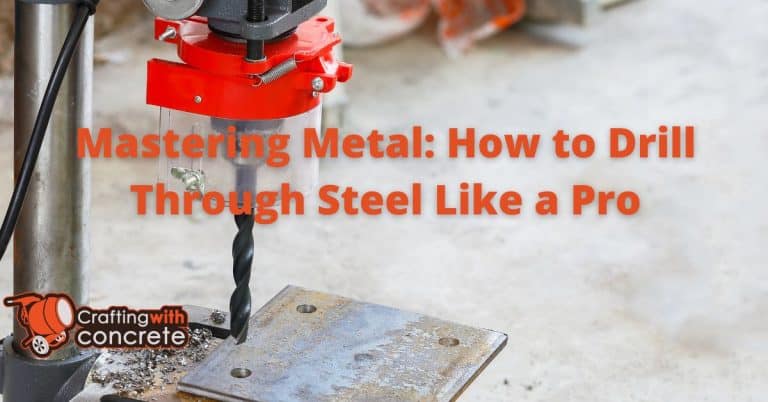
A drill press is the better choice when accuracy, repeatability, or thick material matters. It holds the bit square to the workpiece and lets you set a more consistent speed.
Use a drill press when you need:
- Several holes with the same spacing.
- A precise hole diameter.
- A hole through thick steel.
- Better control with large bits.
- Less hand strain.
- More stable cutting pressure.
A hand-held hammer drill is fine for many repair and DIY tasks. It becomes less suitable as the hole gets larger, the metal gets harder, or the position becomes more critical.

Can a Hammer Drill Drill Through Stainless Steel?
Yes, but stainless steel requires more care than mild steel. Use a sharp HSS or cobalt bit, low speed, firm pressure, and cutting fluid.
Do not let the bit spin against the surface without cutting. Stainless steel can work-harden when overheated or rubbed. Once the surface hardens, drilling becomes much more difficult.
Use a pilot hole only when appropriate for the bit and final hole size. Keep the workpiece secure, and stop if the bit becomes hot or begins to squeal.

Can a Hammer Drill Drill Through Cast Iron?
Usually, yes, in rotary mode with a proper metal bit. Cast iron is hard and brittle, so support the part well and avoid excessive force.
Cast iron can produce sharp chips and may crack if the workpiece is thin or poorly supported. Use eye protection, a controlled feed, and a cutting method suited to the exact grade of cast iron.
Key Takeaways
- A hammer drill can drill metal when set to rotation-only mode.
- Never use the hammer function for ordinary metal drilling.
- Choose an HSS, cobalt, step, or other bit made for the material.
- Clamp the workpiece and wear eye protection.
- Use low speed, steady pressure, and suitable cutting oil.
- Stop if the bit smokes, turns blue, squeals, or fails to make chips.
- Use a drill press or professional help for thick, hardened, structural, or safety-critical parts.
FAQs
Can I use a masonry bit on metal with a hammer drill?
No. A masonry bit is made to abrade and break mineral materials. It is not the right cutting tool for ordinary steel or aluminum. Use a metal-cutting HSS or cobalt bit instead.
Can I drill metal with a cordless hammer drill?
Yes. A cordless hammer drill can handle many small metal holes if it has enough battery power, the hammer function is off, and the bit and speed are correct. Thick steel and large holes may require a corded drill or drill press.
Should I use water to cool a metal drill bit?
Do not apply water to an energized power tool. Use a cutting fluid made for the material and tool operation. Water can create an electrical hazard and may not provide the lubrication needed for clean cutting.
Why does my drill bit turn blue?
Blue color usually means the bit became too hot. Stop drilling, let it cool, and check the speed, pressure, lubrication, and bit condition. A blue HSS bit may have lost some of its hardness and may need replacement.
Can I enlarge a hole in metal with a hammer drill?
Yes, if the drill is in rotary mode and you use a suitable larger bit, step bit, or reamer. Secure the workpiece and reduce pressure near breakthrough. A reamer is often better when the final hole must be smooth and accurate.
Conclusion
A hammer drill can go through metal, but only as a rotary drill. Switch off hammer action, use a sharp metal bit, set a controlled speed, apply suitable cutting fluid, and clamp the work securely.
For thin sheet metal and small holes, a hand-held hammer drill may work well. For thick, hard, precise, structural, or safety-critical work, use a drill press, specialized tooling, or qualified professional guidance.
Recent Tool Guides
 Hammer
How To Hammer Flowers Onto Paper: Easy Guide
Learn how to hammer flowers onto paper with simple steps, helpful tips, and beautiful results for...
Read Guide → Wrench
How To Use A Hex Wrench: Easy Step-By-Step Guide
Learn how to use a hex wrench correctly with simple steps, helpful tips, and common mistakes...
Read Guide → Hacksaw
How To Cut Curtain Pole With Hacksaw: Easy Guide
Learn how to cut curtain pole with hacksaw safely and neatly. Follow simple steps for accurate...
Read Guide → Wrench
How To Use A Husky Torque Wrench: Easy Guide
Learn how to use a Husky torque wrench correctly with simple steps, torque settings, and safety...
Read Guide → Hammer
How To Hold A Hammer: Safe Grip Guide
Learn how to hold a hammer with the right grip, stance, and technique for safer, more...
Read Guide → Hacksaw
How To Cut Flexible Metal Conduit With Hacksaw: Easy Guide
Learn how to cut flexible metal conduit with hacksaw safely and cleanly. Follow simple steps for...
Read Guide →