

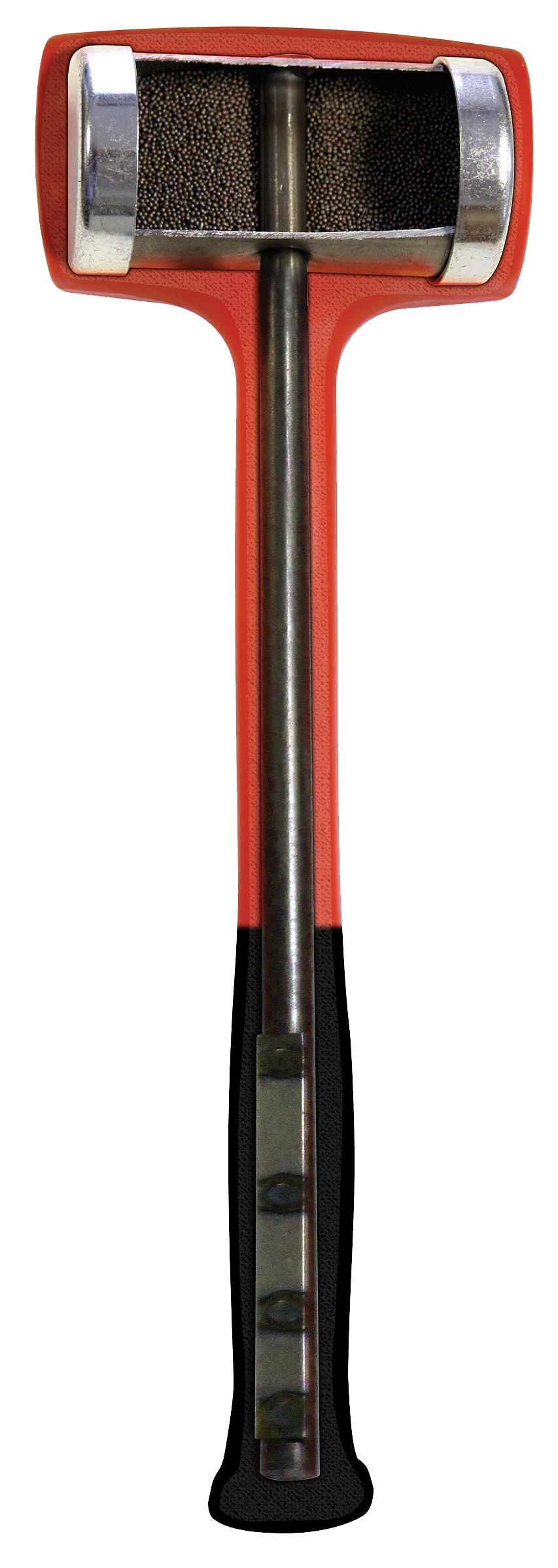
A dead blow hammer is called that because its head delivers a controlled strike with very little rebound. The hollow head contains loose shot, such as steel or other dense material. When the hammer hits a surface, the shot moves inside the head and helps absorb impact energy.
The result is a strike that feels more “dead” than a normal steel hammer. It transfers force to the workpiece while reducing bounce, vibration, noise, and accidental follow-up movement.
In the United States, dead blow hammers are common in auto repair, machinery work, metal fabrication, woodworking, and home maintenance. They are useful when a steel hammer could damage a surface or bounce into nearby parts.

What Does “Dead Blow” Mean?
“Dead blow” describes the hammer’s behavior after impact. A normal hammer can rebound because its solid head sends energy back into the tool and the user’s hand. A dead blow hammer limits that rebound through its hollow, weighted head.
The word dead does not mean the hammer has no force. It means the hammer has little lively bounce after the blow. The hammer still strikes with enough force to move, seat, loosen, or align parts.
The design usually combines three features:
- A hollow hammer head
- Loose shot or weight inside the head
- A softer or non-marring face material
When the head hits a part, the internal shot shifts forward and spreads the impact over a short period. This helps the hammer stay in contact with the target instead of springing away.
Why Loose Shot Reduces Rebound
A solid steel hammer head stops suddenly when it hits a surface. That sudden stop creates a strong return force. Some of that force can send the hammer back toward the user.
In a dead blow hammer, the internal shot keeps moving after the outer head touches the workpiece. This movement absorbs part of the impact and slows the return force. The effect is similar to adding a small cushion inside the hammer.
The shot also adds weight without making the outer head extremely large. That gives the tool useful striking power while keeping the face softer than steel.
Is the Name a Brand or a General Term?
“Dead blow” is a general tool term. It refers to a hammer design, not just one company or one model. Different manufacturers may use different fillings, face materials, handle designs, and weight ratings.
A hammer may be marketed as a dead blow hammer, dead-blow mallet, or non-rebound hammer. These terms often describe similar ideas, but the exact design can vary.
How Does a Dead Blow Hammer Work?
A dead blow hammer works by combining impact force with internal weight movement. The head strikes the target first. The loose material inside the head then moves into the impact area and helps reduce rebound.
The basic impact sequence is:
- The user swings the hammer toward the workpiece.
- The outer face contacts the surface.
- The hammer head begins to slow down.
- The internal shot continues moving inside the head.
- That movement absorbs and spreads some energy.
- The hammer settles against the workpiece with less bounce.
This design does not eliminate all vibration or recoil. It reduces them compared with many solid-head hammers. Results depend on the hammer’s weight, face material, internal filling, and the material being struck.
Why the Hammer May Feel Heavy
The internal shot gives the hammer a high effective mass. A dead blow hammer may feel different from a standard mallet of the same outside size because much of its weight is concentrated in the head.
A heavier model can deliver more force, but it also needs more control. A light dead blow hammer may be better for trim, small assemblies, or delicate parts. A heavier model may suit automotive or machinery work.
Why the Face Is Usually Soft
Many dead blow hammers use a face made from rubber, polyurethane, plastic, nylon, or another replaceable material. These faces help protect finished surfaces from dents and scratches.
The face is not always soft enough for every job. A plastic face can still mark painted metal, soft aluminum, wood, or plastic if the blow is too hard. Test the tool on a hidden area when the surface finish matters.
Some models use interchangeable faces. This lets the user select a harder or softer contact surface for the job.
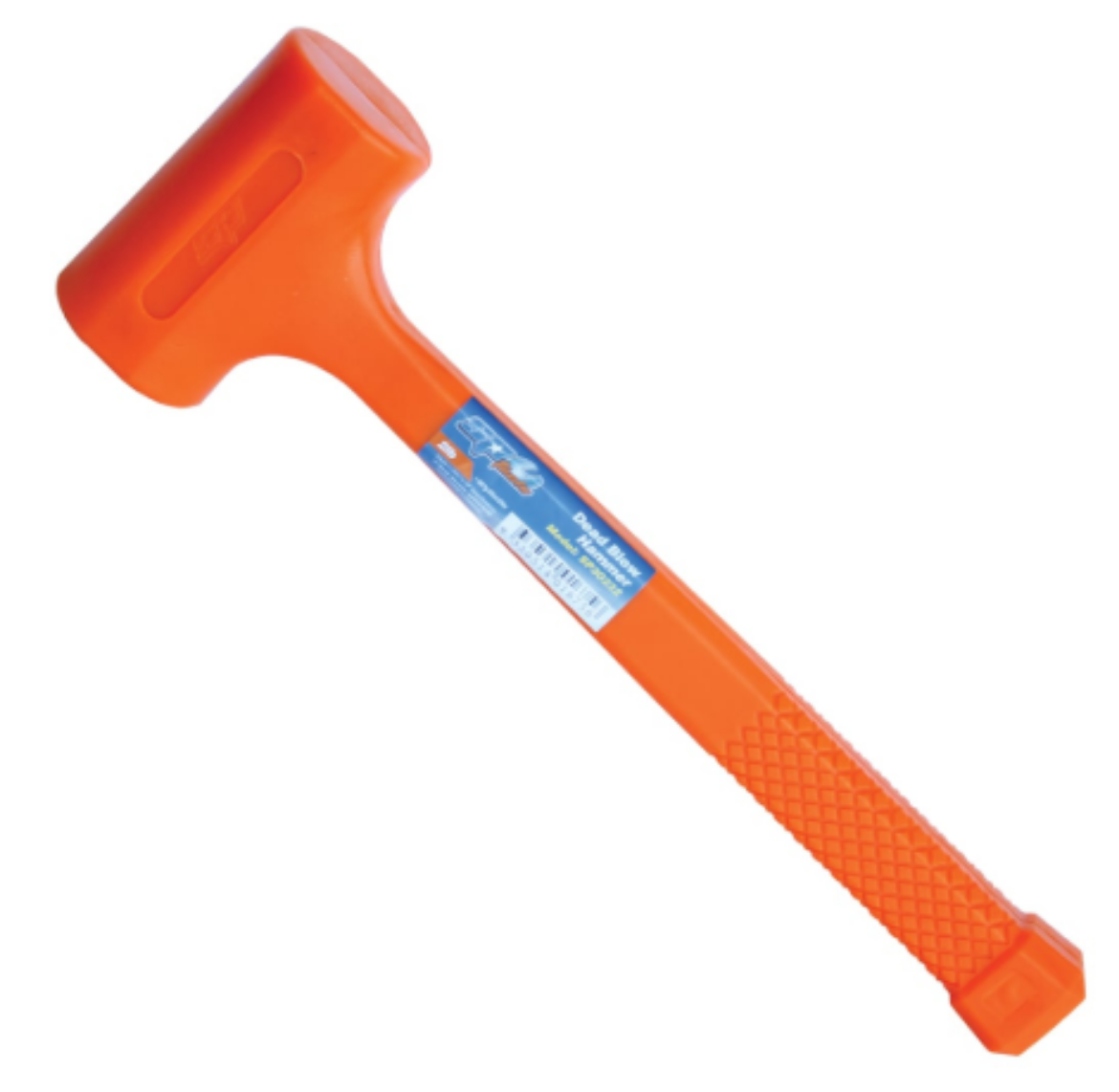
What Is a Dead Blow Hammer Used For?
A dead blow hammer is used when you need controlled impact without the full rebound and surface damage of a steel hammer.
Common uses include:
- Aligning machine parts
- Seating bearings and bushings
- Adjusting automotive components
- Removing stuck parts
- Fitting pipes and couplings
- Assembling furniture
- Shaping sheet metal
- Setting tile or pavers
- Positioning cabinets and countertops
- Tapping parts into place during repair work
In auto repair, a dead blow hammer can help move parts without leaving the sharp dents that a steel hammer may create. In machine work, the low rebound can make it easier to align parts in a tight area.
The tool is also useful when a workpiece must move but should not be crushed. For example, a controlled tap may seat a component without the sudden shock of a hard steel face.
What It Should Not Be Used For
A dead blow hammer is not a universal replacement for every hammer. It may be the wrong tool for:
- Driving hardened steel punches
- Breaking concrete or masonry
- Striking chisels not approved for soft-faced hammers
- Removing large rusted parts that need high impact
- Driving nails
- Heavy demolition
- Striking live electrical equipment
- Any job that exceeds the tool’s rated use
Always check the manufacturer’s instructions. A soft face can split or deform under heavy use. A damaged hammer should not be used for impact work.
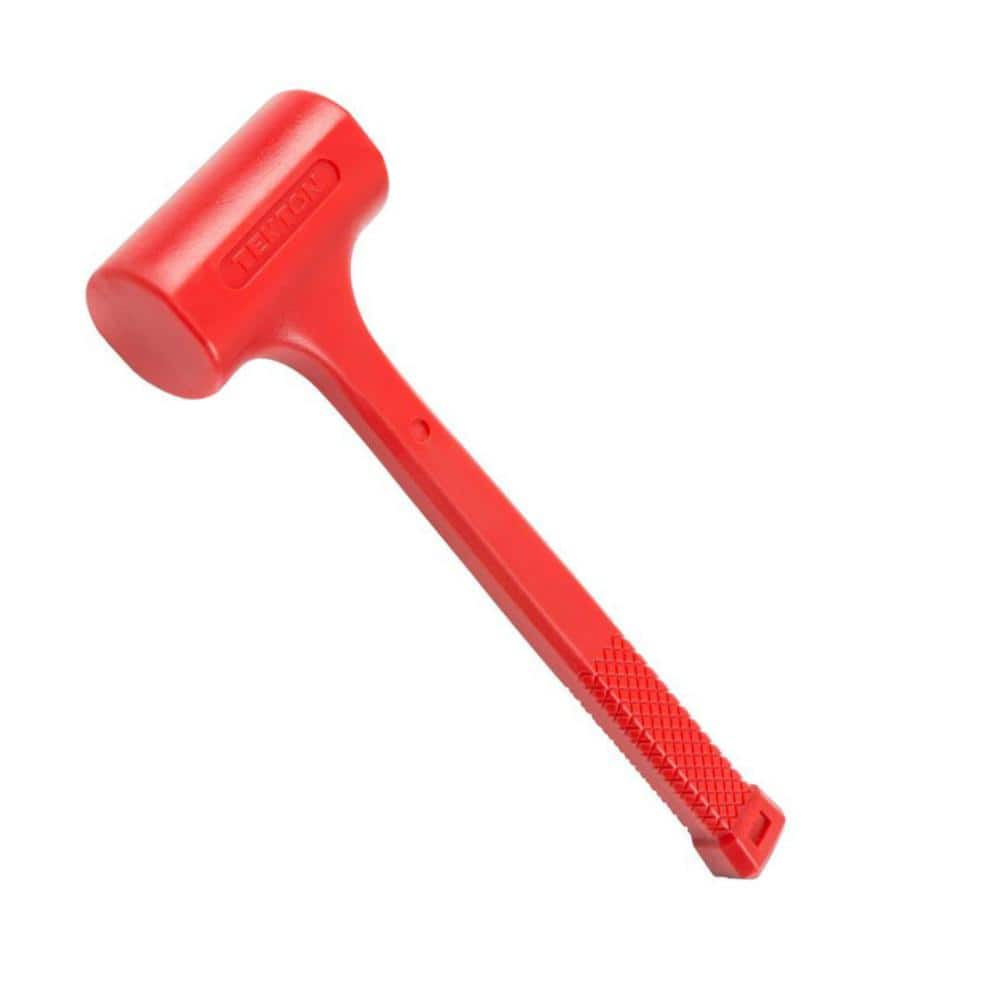
Dead Blow Hammer vs. Rubber Mallet
A dead blow hammer and a rubber mallet both protect surfaces, but they do not work in exactly the same way.
| Feature | Dead blow hammer | Rubber mallet |
|---|---|---|
| Main design | Hollow head with internal shot | Solid or molded rubber head |
| Rebound | Usually low | Low to moderate |
| Impact control | High | Moderate |
| Striking force | Often higher for its size | Usually lower |
| Typical use | Parts, machinery, automotive work | Assembly, flooring, light shaping |
| Surface protection | Depends on face material | Depends on rubber hardness |
| Internal weight movement | Yes | Usually no |
A rubber mallet is often the better choice for light assembly and broad, gentle taps. A dead blow hammer is usually better when you need more force with less bounce.
Neither tool is automatically safer for every surface. Rubber may leave marks, especially on light-colored material or finished flooring. A dead blow hammer with a hard plastic face may also cause damage if used with too much force.
Dead Blow Hammer vs. Soft-Face Hammer
A soft-face hammer has a non-steel striking face, but it may not contain internal shot. A dead blow hammer normally has both a soft or semi-soft face and a weighted, non-rebound head.
Some soft-face hammers are designed for interchangeable faces. They can be useful when you need different levels of hardness. A dead blow model adds the benefit of internal weight movement.
The deciding factor is the job:
- Choose a dead blow hammer when low rebound and controlled impact matter.
- Choose a rubber mallet for light assembly and broad surface contact.
- Choose a soft-face hammer when face material or replaceable faces matter most.
- Choose a steel hammer only when the workpiece and task allow hard impact.

Does a Dead Blow Hammer Hit Harder?
A dead blow hammer does not automatically hit harder than a standard hammer. Its main benefit is better control and less rebound.
The force of a strike depends on several factors:
- Hammer mass
- Swing speed
- Face hardness
- Contact area
- Workpiece material
- Angle of impact
- User control
A dead blow hammer can feel powerful because its weight continues moving into the target instead of rebounding quickly. That does not mean it creates unlimited force. It still has a practical limit.
For a simple comparison, a heavier hammer moving at the same speed generally carries more momentum than a lighter hammer. However, swinging harder is not always the right answer. Too much force can bend a part, damage a bearing, crack a casting, or deform a soft surface.
Use the lightest hammer that can complete the task. Increase hammer size only when the smaller tool cannot move the part with controlled blows.
How to Use a Dead Blow Hammer Safely
Use a dead blow hammer with the same basic care required for other striking tools. The reduced rebound lowers one risk, but it does not remove the chance of injury.
Follow these steps:
Inspect the hammer.
Look for cracks, loose faces, split handles, deep cuts, or bulges in the head.Choose the correct face.
Use a face that will not damage the workpiece. Replace worn or damaged faces when the design allows it.Secure the workpiece.
Do not hold a small part in your hand while striking it. Use a vise, clamp, fixture, or stable support.Wear suitable eye protection.
Chips can come from the workpiece, the hammer face, or nearby tools.Keep your other hand clear.
Position your fingers away from the impact path and from pinch points.Use controlled swings.
Start with light taps. Increase force only when the part does not move.Strike squarely.
A glancing blow can damage the face and send the hammer or workpiece sideways.Stop if the tool changes shape.
A mushroomed face, split cover, or damaged head means the hammer may no longer be safe.
Do not strike a hardened punch, chisel, or other tool unless the hammer and accessory are designed for that use. Flying fragments can cause serious eye injuries.

Common Mistakes When Choosing or Using One
The most common mistake is assuming every dead blow hammer works the same way. Weight, face hardness, head shape, handle length, and internal filling all affect performance.
Choosing a Hammer That Is Too Heavy
A heavy hammer may move a stuck part, but it can also cause damage. Start with a smaller model when working with aluminum, plastic, wood, thin sheet metal, or finished surfaces.
Using the Wrong Face
A face that is safe for steel may not be safe for paint or plastic. Check the face material and test it before using strong blows on a visible surface.
Expecting Zero Rebound
Dead blow hammers reduce rebound; they do not remove it completely. A hard target, worn face, poor swing angle, or high impact can still produce movement.
Treating It Like a Sledgehammer
A dead blow hammer is not meant for unlimited heavy striking. Repeated blows against sharp edges or hardened parts can damage the face or outer cover.
Ignoring the Internal Noise
The shot inside the head may rattle during use. That sound is normal for many designs. A sudden change in sound, loose internal parts, or a bulge in the head may indicate damage.

How to Choose the Right Dead Blow Hammer
Choose the hammer by the workpiece, required force, and level of surface protection.
| Job condition | Useful choice |
|---|---|
| Delicate finish or soft material | Light hammer with a soft face |
| General repair and assembly | Medium-weight polyurethane or rubber-faced model |
| Automotive or machinery alignment | Heavier dead blow model with a durable face |
| Tight space | Short handle or compact head |
| Frequent professional use | Replaceable-face model with a strong handle |
| Very hard impact work | A tool specifically rated for that task |
Look for clear information about:
- Head weight
- Total tool weight
- Face material
- Replaceable faces
- Handle construction
- Approved uses
- Warnings and limitations
Do not judge strength by appearance alone. A larger head may offer more weight, but the face and handle still determine whether the tool fits the job.

Frequently Asked Questions
Why is it called a dead blow hammer instead of a non-rebound hammer?
“Dead blow” is a common trade name for a hammer that gives a low-rebound strike. “Non-rebound” explains the same feature in more direct language, but no hammer eliminates rebound completely.
What is inside a dead blow hammer?
Many models contain loose steel shot or another dense filling inside a hollow head. The exact material depends on the manufacturer and model. Check the product specifications if the internal material matters for your work.
Can a dead blow hammer damage metal?
Yes. A dead blow hammer can dent, bend, scratch, or deform metal if the face is too hard or the strike is too strong. Soft aluminum, thin sheet metal, and finished parts need extra care.
Is a dead blow hammer better than a steel hammer?
It is better for controlled, low-rebound impact and surface protection. A steel hammer may be better for heavy work that requires a hard face. The correct choice depends on the task and the material.
Can you replace the face on a dead blow hammer?
Some models have replaceable faces, while others do not. Use only replacement parts approved for that hammer. Do not improvise a face with a material that may split or detach.
Conclusion
A dead blow hammer gets its name from the way it strikes: the hollow, weighted head reduces rebound and makes the blow feel “dead” rather than springy. Internal shot absorbs and spreads part of the impact, while the soft or semi-soft face helps protect the workpiece.
Use one when you need controlled force, low bounce, and less risk of surface damage. Choose the hammer’s weight and face material for the job, inspect it before use, and remember that reduced rebound does not make the tool risk-free.
