Ball Peen Hammer Vs Claw Hammer: Key Differences
A ball peen hammer is made for metalwork, shaping, and peening. A claw hammer is made mainly for driving and pulling nails in wood. Both have a flat striking face, but their opposite ends serve different jobs.
For most home repairs in the United States, choose a claw hammer. Choose a ball peen hammer for tasks such as forming metal, setting rivets, or working with punches and chisels.
Quick answer
| Feature | Ball peen hammer | Claw hammer |
|---|---|---|
| Main use | Metalwork and shaping | Driving and removing nails |
| Opposite end | Rounded ball-shaped peen | Split claw |
| Best materials | Metal and machine parts | Wood and framing materials |
| Nail pulling | Poor choice | Designed for it |
| Metal shaping | Designed for it | Not the right tool |
| Common users | Machinists, mechanics, metalworkers | Carpenters, contractors, homeowners |
| Typical home use | Occasional or specialized | General repair and DIY work |
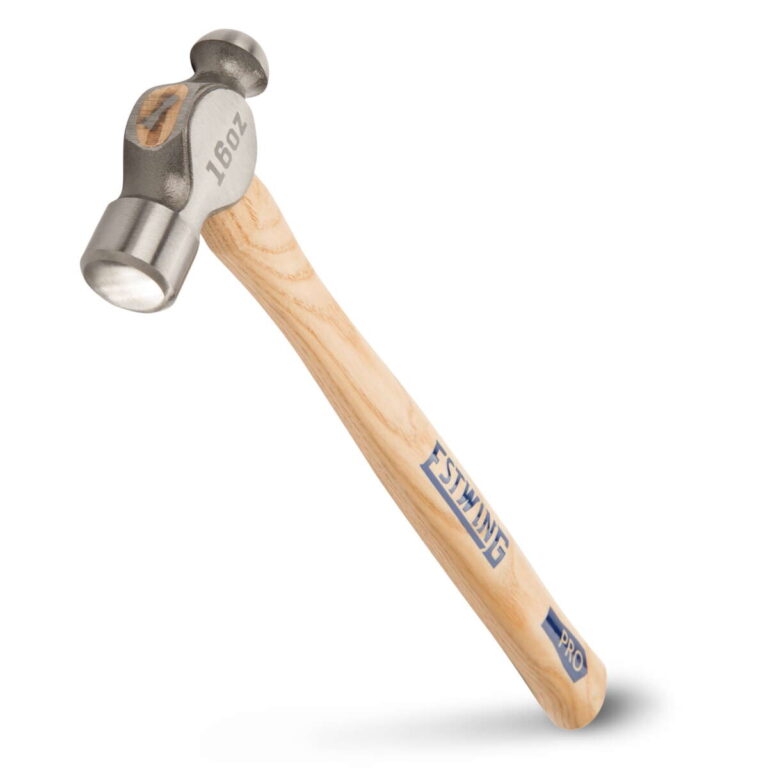
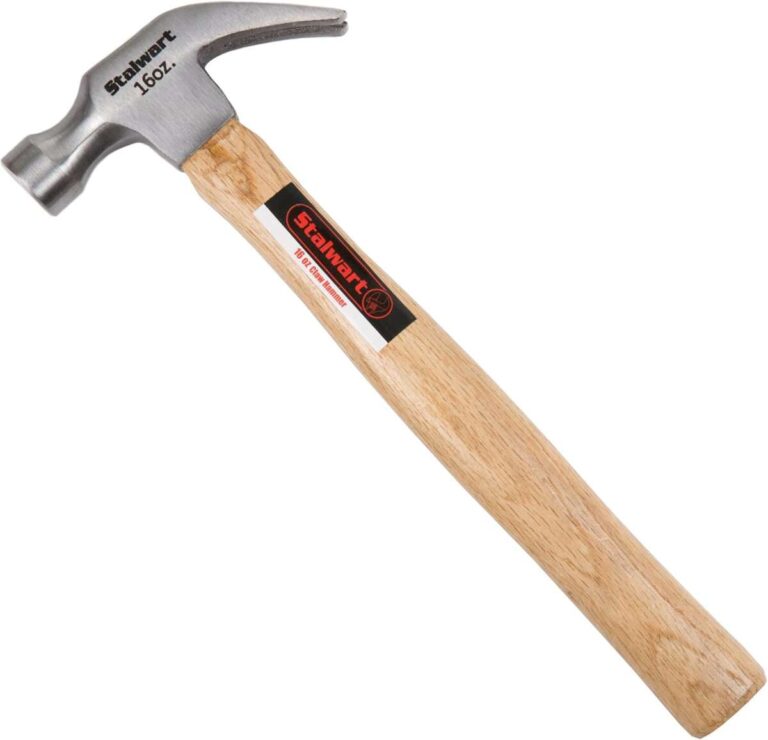
The key difference is the working end opposite the face. A ball peen hammer has a rounded metal peen. A claw hammer has a curved or straight claw that grips and pulls nails.

What is a ball peen hammer?
A ball peen hammer has one flat face and one rounded end called a peen. The ball-shaped peen lets a metalworker spread, shape, or harden metal through repeated blows.
The flat face drives punches, small pins, and some fasteners. The rounded end is not meant to pull nails. It is used to move metal rather than remove fasteners.
Common uses for a ball peen hammer
A ball peen hammer is useful for:
- Shaping sheet metal
- Rounding the end of a rivet
- Setting or expanding rivets
- Working with punches and chisels
- Straightening small metal parts
- Repairing some machinery and tools
- Peening metal edges
- Light blacksmithing tasks
“Peening” means striking metal so it spreads or becomes more compact. For example, a worker may use the ball end to flatten and widen the end of a rivet after it passes through two pieces of metal.
The size of the hammer matters. A small ball peen hammer gives better control for light work. A larger hammer delivers more force but also increases the risk of damaging the part.
What the ball end is not for
Do not use the rounded end as a general-purpose nail puller. It has no claw, and its shape does not provide a secure grip on a nail head.
Also, avoid striking hardened steel directly unless the tool maker permits it. A hardened punch, chisel, or other steel part can chip under impact. Those chips can become dangerous flying fragments.
What is a claw hammer?
A claw hammer has a flat face for striking nails and a split claw for pulling them. The claw may be strongly curved or nearly straight, depending on the hammer’s design.
The claw fits under a nail head. When you pull back on the handle, the claw acts as a lever and lifts the nail from the wood.
Common uses for a claw hammer
A claw hammer is useful for:
- Driving common nails
- Pulling nails
- Removing small pieces of trim
- Separating light wood joints
- Starting or removing staples in some cases
- Light household repairs
- Framing and general carpentry
Claw hammers come in several forms. A curved-claw hammer gives more leverage for pulling nails. A straight-claw hammer can work better for rough framing and light prying.
A framing hammer often has a heavier head and a textured face. That face helps reduce slipping when driving large framing nails. It can also leave marks in the wood, so it is not always the best choice for finish work.
What the claw is not for
The claw is not a substitute for a pry bar. It can bend or break if you use it to move heavy objects or pry against hard materials.
A claw hammer is also a poor choice for shaping metal. The face is designed to strike nails, not to create controlled metal forms. Its claw can bend, and the metal part may suffer damage.
Main differences between a ball peen hammer and a claw hammer
The main differences involve the hammer’s second end, intended material, control, and risk of damage.
1. The opposite end has a different purpose
The ball peen hammer has a rounded striking end. The claw hammer has a split pulling end.
This single design difference changes the tool’s main job:
- The ball peen moves and shapes metal.
- The claw hammer drives and removes nails.
2. They are made for different materials
Ball peen hammers are mainly used on metal parts. Claw hammers are mainly used on wood and wood fasteners.
This does not mean that a claw hammer can never touch metal. It can drive some metal fasteners. However, the work should match the tool’s design.
3. They provide different types of force
A ball peen hammer delivers a focused blow through its rounded peen. This helps spread metal in a controlled area.
A claw hammer delivers impact through its flat face. Its claw then changes the hammer into a lever for nail removal.
The ball peen is mainly an impact and forming tool. The claw hammer is both an impact tool and a light extraction tool.
4. They produce different results
A ball peen hammer may leave a small rounded mark in metal. That mark can be useful when forming or peening a part.
A claw hammer may dent wood around a nail. A smooth face reduces this damage, while a textured face improves grip but leaves a more visible mark.
5. Their balance and feel differ
Many ball peen hammers have a compact head and a fairly balanced feel. This helps with controlled metalwork.
Claw hammers vary more widely. A light tack hammer, finish hammer, and heavy framing hammer can feel very different. Weight, handle length, head shape, and claw design all affect control.

Ball peen hammer vs. claw hammer: which one should you use?
Choose the hammer based on the material and the job.
| Task | Better choice | Reason |
|---|---|---|
| Drive a nail into wood | Claw hammer | Flat face and proper balance |
| Pull a nail | Claw hammer | Claw grips the nail head |
| Shape a small metal part | Ball peen hammer | Rounded peen spreads metal |
| Set a rivet | Ball peen hammer | Ball end forms the rivet |
| Remove a stuck nail | Claw hammer | Claw gives leverage |
| Strike a punch | Ball peen hammer | Compact face gives controlled impact |
| Build a wood frame | Framing claw hammer | Heavy head and strong claw |
| Install small finish nails | Finish claw hammer | Better control and less surface damage |
| Perform general home repairs | Claw hammer | Handles more common household tasks |
Choose a claw hammer when:
- You work mostly with wood.
- You install or remove nails.
- You need one hammer for basic home repairs.
- You want a built-in nail-pulling function.
- You are doing trim, furniture, or framing work.
Choose a ball peen hammer when:
- You work with metal.
- You set rivets.
- You use punches or chisels.
- You need to spread or shape a metal edge.
- You repair machinery or perform basic metalwork.
If you do both types of work, owning both hammers is practical. They are not interchangeable in the jobs where their special ends matter.
Can you use a ball peen hammer to drive nails?
You can use the flat face of a ball peen hammer to drive some nails, but it is usually not the best choice.
The flat face can strike a nail head. However, the handle, balance, and head shape may not provide the control you want for carpentry. You also lose the nail-pulling function of a claw hammer.
For a small emergency repair, the flat face may work. For regular woodwork, use a claw hammer that matches the nail size and material.
Can you use a claw hammer for metalwork?
You can use a claw hammer for very light metal tasks, but it is not a good replacement for a ball peen hammer.
The claw hammer’s flat face may dent metal without giving you the control needed for shaping. Its claw can also bend if you use it as a metalworking tool.
For metalwork, use the correct hammer and support the work on a stable surface. A metalworking vise, anvil, or suitable block can help prevent unwanted movement.
How hammer weight changes performance
Hammer weight affects force, speed, and control.
A heavier hammer can deliver more energy with the same swing. It can also cause more damage if the blow misses or the workpiece moves. A lighter hammer is often easier to control for small nails, delicate parts, and short tasks.
For a claw hammer:
- Light hammers suit trim, small nails, and household repairs.
- Medium hammers suit general carpentry.
- Heavy framing hammers suit large nails and structural woodwork.
For a ball peen hammer:
- Light models suit small parts and precise work.
- Medium models suit general shop work.
- Heavy models suit larger metal pieces and stronger blows.
Use the lightest hammer that can complete the task without excessive effort. This can improve control and reduce fatigue.
Safety tips for both hammers
Wear safety glasses when striking metal, punches, chisels, or any object that could chip. The Occupational Safety and Health Administration requires suitable protection where hand tools can create flying particles or other hazards.
Follow these basic rules:
- Inspect the hammer before use.
- Do not use a hammer with a loose head.
- Replace a handle that is split, crushed, or badly worn.
- Keep the striking face clean and free of oil.
- Hold the work securely.
- Keep your other hand out of the striking path.
- Use the correct hammer for the material.
- Do not strike hardened steel unless the tool instructions allow it.
- Do not use a hammer as a pry bar unless it was designed for that purpose.
- Keep bystanders away from the work area.
A damaged hammer can fail without much warning. A loose head may fly off. A chipped face may send sharp pieces into the air.
When using a claw hammer to pull a nail, place a small wood block under the head if the surface could be damaged. The block spreads the load and gives the claw a better angle.

Common mistakes to avoid
Using the ball end to pull nails
The rounded peen cannot grip a nail. It may slip and damage the workpiece or your hand.
Using the claw as a heavy pry bar
The claw can bend when it meets too much resistance. Use a pry bar for heavy removal work.
Striking a punch with the wrong hammer
A claw hammer may work in limited cases, but a ball peen hammer often provides better control for punches and similar tools. Always inspect the punch for mushrooming or cracks.
Choosing a textured face for finish work
A milled or textured face helps prevent slipping. It also leaves marks in wood. Use a smooth-faced hammer when the surface must look clean.
Ignoring handle condition
Wood handles can loosen, split, or become weak with age. Fiberglass and composite handles can also become damaged. Replace a hammer that no longer feels secure.
Using too much force
A hard blow is not always a better blow. Excess force can bend nails, dent wood, crack a part, or cause the hammer to glance off the target.
How to choose a hammer for home use
For a typical American household tool kit, start with a medium claw hammer. A smooth face and a comfortable handle cover many common tasks, such as hanging pictures, assembling wood items, and making small repairs.
Add a ball peen hammer if you:
- Repair bicycles, tools, or machinery
- Work with sheet metal
- Use punches and chisels
- Set rivets
- Build or repair metal parts
Before buying, check these details:
- Hammer weight
- Handle length
- Handle material
- Face type
- Claw shape
- Head and handle fit
- Grip comfort
- Intended work
Do not choose only by weight. A hammer that feels balanced and secure is often easier to use than a heavier model that causes fatigue.
Frequently asked questions
Is a ball peen hammer stronger than a claw hammer?
Not automatically. Strength depends on the hammer’s materials, construction, weight, and condition. The two hammers are designed for different tasks, so “stronger” is not a useful general comparison.
Why is it called a ball peen hammer?
It is called a ball peen hammer because one end has a rounded, ball-shaped peen. The peen is used to spread, shape, or harden metal through controlled blows.
Is a ball peen hammer good for automotive work?
It can be useful for some automotive tasks, such as working with punches, small metal parts, and certain rivets. Use care around finished surfaces, bearings, precision parts, and hardened components.
What type of claw hammer is best for general DIY work?
A medium-weight, smooth-faced claw hammer is a practical general choice. A curved claw helps with nail removal, while a comfortable handle improves control during repeated use.
Can either hammer replace a rubber mallet?
No. A rubber mallet is designed to deliver softer impacts with less risk of scratching or denting many surfaces. A metal hammer can damage parts that need a nonmarring blow.
Final recommendation
Use a claw hammer for nails, wood, and most household repairs. Use a ball peen hammer for metal shaping, rivets, punches, and controlled metalwork.
If you are building a basic tool kit, buy a claw hammer first. Add a ball peen hammer when your work involves metal or when you need a dedicated tool for forming and peening. The safest and most effective choice is the hammer designed for the material in front of you.
Recent Tool Guides
 Hammer
How To Hammer Flowers Onto Paper: Easy Guide
Learn how to hammer flowers onto paper with simple steps, helpful tips, and beautiful results for...
Read Guide → Wrench
How To Use A Hex Wrench: Easy Step-By-Step Guide
Learn how to use a hex wrench correctly with simple steps, helpful tips, and common mistakes...
Read Guide → Hacksaw
How To Cut Curtain Pole With Hacksaw: Easy Guide
Learn how to cut curtain pole with hacksaw safely and neatly. Follow simple steps for accurate...
Read Guide → Wrench
How To Use A Husky Torque Wrench: Easy Guide
Learn how to use a Husky torque wrench correctly with simple steps, torque settings, and safety...
Read Guide → Hammer
How To Hold A Hammer: Safe Grip Guide
Learn how to hold a hammer with the right grip, stance, and technique for safer, more...
Read Guide → Hacksaw
How To Cut Flexible Metal Conduit With Hacksaw: Easy Guide
Learn how to cut flexible metal conduit with hacksaw safely and cleanly. Follow simple steps for...
Read Guide →