Why Is It Called A Ball Peen Hammer: Meaning Explained
In the United States, a ball peen hammer is named for the shape and job of one end of its steel head. “Ball” describes the rounded end, while “peen” means the end used to shape, spread, or harden metal by repeated blows. The other end is the flat striking face used for general hammering.
The name is practical, not symbolic. A ball peen hammer is a hammer with a flat face on one side and a rounded, ball-shaped peen on the other.

What Does “Peen” Mean on a Hammer?
A peen is the shaped end of a hammer head that is opposite the main striking face. It may be round, wedge-shaped, or another specialized form.
The word is also used as a verb. To peen metal means to strike it in a controlled way so the metal changes shape or its surface becomes harder.
On a ball peen hammer, the peen is rounded. That rounded surface lets the user:
- Spread the end of a metal pin or rivet
- Form a small dome or curve
- Smooth and shape sheet metal
- Work in tight areas
- Harden some metal surfaces through repeated light impacts
The term appears in standard American tool definitions, including entries from Merriam-Webster, which defines a peen as the end of a hammerhead opposite the face. The same word also describes the process of shaping metal with hammer blows.
The two parts of the name
| Part of the name | What it describes |
|---|---|
| Ball | The rounded shape of the peen |
| Peen | The metal-shaping end of the hammer |
| Hammer | The tool that delivers the striking force |
So, “ball peen hammer” means a hammer with a ball-shaped peen.
Is “peen” the same as “peen hammer”?
In everyday tool use, people may say peen, peening end, or peen hammer. The word “peen” refers to the working end of the hammer, while “ball peen hammer” identifies the specific hammer design.
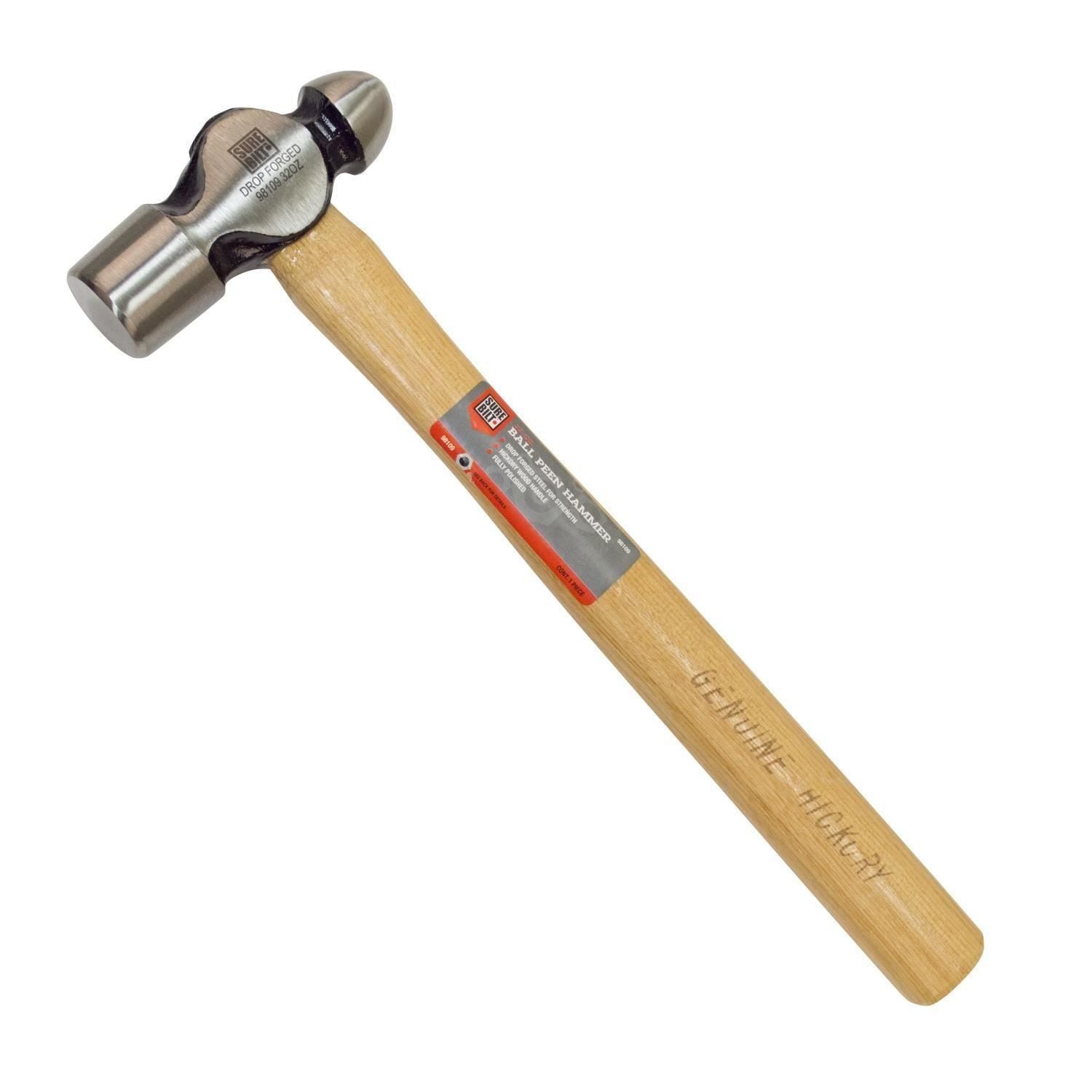
Why Is the End Shaped Like a Ball?
The ball shape gives the user a curved contact point. Instead of spreading metal in one wide, flat strike, the rounded peen concentrates force over a smaller area.
That focused contact makes it easier to move metal gradually. A craftsperson can work around the end of a rivet, for example, and form it into a wider head without using a flat face.
The ball does not create a perfect shape in one strike. The user normally makes many light blows while turning or supporting the work. This gives better control and reduces the risk of bending the part or leaving deep dents.
Example: forming a rivet
Suppose a rivet passes through two pieces of metal. The rivet may have a factory-formed head on one side and a plain stem on the other.
A worker can use the ball peen end to:
- Support the metal on a solid surface.
- Tap around the edge of the rivet stem.
- Move the metal outward a little at a time.
- Create a second head that locks the pieces together.
The rounded peen helps spread the rivet stem in several directions. A flat hammer face would not provide the same control.
Why not use a flat hammer face?
A flat face works well for driving nails, pins, and other parts. It is less useful when the goal is to spread metal outward or create a rounded form.
A flat face can also leave a broad, flat mark. The ball peen end leaves a smaller contact mark, although improper use can still damage the work.

What Is a Ball Peen Hammer Used For?
A ball peen hammer is mainly used for metalwork, machine repair, riveting, and shaping tasks. The flat face handles ordinary strikes, while the ball peen handles forming and spreading work.
Common uses include:
- Setting and expanding rivets
- Shaping small metal parts
- Removing or installing some pins
- Starting metalwork in a confined area
- Creating rounded forms in sheet metal
- Peening tools and components when the material and procedure allow it
- Repairing or adjusting machinery in a workshop
The tool is often associated with machinists, mechanics, metalworkers, and blacksmiths. It can also appear in general American home workshops.
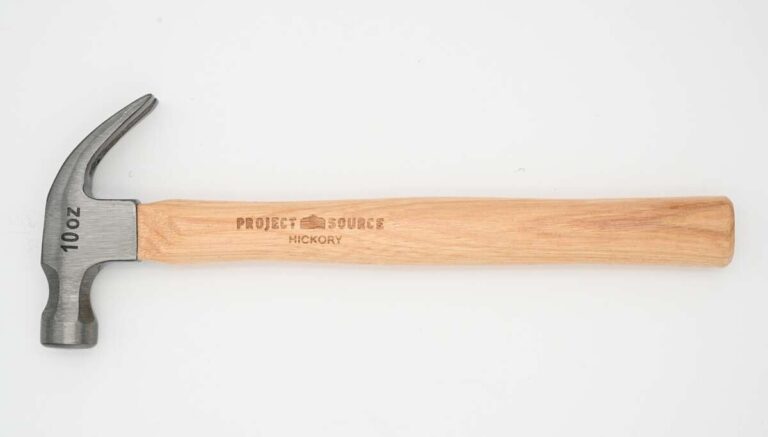
Ball peen hammer vs. claw hammer
A claw hammer is made mainly for driving and pulling nails. Its curved claw is designed for prying.
A ball peen hammer has no nail-pulling claw. Its second end is a rounded peen for metalwork.
| Feature | Ball peen hammer | Claw hammer |
|---|---|---|
| Main purpose | Shaping and working metal | Driving and removing nails |
| Second end | Rounded ball peen | Curved claw |
| Typical users | Machinists, mechanics, metalworkers | Carpenters, builders, homeowners |
| Best material | Metal parts and fasteners | Wood framing and trim |
| Nail removal | Poor choice | Designed for this task |
Ball peen hammer vs. cross-peen hammer
A cross-peen hammer has a narrow wedge-shaped end. That shape directs force along one line and can help with starting small nails, shaping metal, or working in narrow spaces.
A ball peen hammer spreads metal more gradually around a point. A cross-peen hammer moves metal more strongly in one direction.
Neither design is always better. The correct choice depends on the shape you need and the material you are striking.
Ball peen hammer vs. engineer’s hammer
In the United States, engineer’s hammer may describe a short-handled hammer with a flat face and a peen. The peen can be ball-shaped, cross-shaped, or another form.
This means the terms can overlap, but they are not always exact synonyms. “Ball peen hammer” is more specific because it identifies the rounded peen.

How Does Peening Work?
Peening works by applying repeated impacts to a metal surface. Each blow can move a small amount of material or change the condition of the surface.
The result depends on several factors:
- The type and thickness of the metal
- The hardness of the hammer
- The force of each blow
- The shape of the peen
- The support beneath the work
- The number and location of the strikes
A light, controlled blow is usually better than a hard swing. Metalworkers often use many small impacts to guide the material instead of trying to form it in one step.
Cold peening
Most hand-hammer peening is done while the metal is at room temperature. This is called cold working.
Cold working can make some metals harder in the struck area. It can also make the metal less able to bend before it cracks. For that reason, repeated peening is not automatically harmless.
If a part is critical to safety, follow the repair procedure for that part. Do not assume that a ball peen hammer can safely repair any crack, hole, shaft, bracket, or fastener.
Peening is not the same as hitting harder
More force does not always produce a better result. A heavy blow can:
- Dent the work
- Flatten the ball
- Bend a pin
- Crack a brittle part
- Create sharp metal fragments
- Damage a bearing or precision surface
The goal is controlled movement, not maximum impact.

Why Is It Called a Ball Peen Hammer Instead of a Ball-Peen Hammer?
Both ball peen hammer and ball-peen hammer appear in American writing. The hyphen helps show that “ball” modifies “peen,” not “hammer.”
In other words, the phrase describes a hammer whose peen is ball-shaped.
Tool makers, dictionaries, catalogs, and style guides may use slightly different forms. The meaning is the same when the tool has a flat striking face and a rounded peen.
You may also see these related terms:
- Ball-peen hammer
- Ball pein hammer
- Ball pein
- Peening hammer
- Machinist’s hammer
“Pein” is a common variant spelling of “peen,” especially in some technical and historical tool references. In the United States, ball peen hammer is the most familiar modern spelling.
Does the name come from a person?
There is no good reason to read the name as a person’s surname. The name describes the tool itself:
- Ball: the rounded end
- Peen: the metal-shaping end
- Hammer: the striking tool
The deeper history of the word “peen” is less clear than its tool meaning. Reliable modern definitions agree on what the word means in this context, even when etymology sources differ on its earliest linguistic root.

How to Use a Ball Peen Hammer Safely
Use eye protection and make sure the hammer is in sound condition before striking metal. Small chips can break from the hammer face or workpiece, especially when hardened steel is involved.
Follow these basic safety steps:
- Inspect the hammer. Do not use it if the head is cracked, badly mushroomed, loose, or damaged.
- Check the handle. Replace a split handle or a head that moves on the handle.
- Wear safety glasses. Use a face shield when the work may create flying fragments.
- Secure the work. Hold small parts with a clamp or vise rather than your fingers.
- Use a proper support. A solid anvil or suitable metalworking surface gives the work a stable base.
- Start with light blows. Increase force only when the material responds safely.
- Keep the striking faces aligned. Glancing blows can send the hammer or workpiece sideways.
- Keep hands away from the impact zone. Use tools or clamps for small parts.
- Do not strike hardened surfaces casually. Hardened steel can chip or damage the hammer.
- Stop if the part cracks or behaves strangely. Find the correct repair method before continuing.
Never use a ball peen hammer as a substitute for a specialized tool when the manufacturer specifies another method. A precision bearing, firearm component, pressure part, vehicle safety component, or load-bearing part may require controlled equipment and trained service.

Common Misunderstandings About Ball Peen Hammers
The name causes a few common errors.
“Ball” does not mean the whole hammer is round
Only one end of the hammer head is ball-shaped. The main striking face is usually flat.
The ball is not for hitting everything
The peen is intended for controlled metalwork. It is not a general-purpose replacement for a claw hammer, dead-blow hammer, rubber mallet, or soft-face hammer.
Peening does not always strengthen a part
Peening can change surface hardness and stress in some materials and processes. But uncontrolled hand peening can also deform, weaken, or crack a part.
The safe result depends on the material, process, and purpose. A repair instruction or engineering specification should control the decision for important parts.
A larger hammer is not always better
A heavier hammer delivers more energy. That can improve productivity in some metalwork, but it also increases the chance of damage and loss of control.
Choose the smallest hammer that can complete the task with controlled blows.

Frequently Asked Questions
Why does a ball peen hammer have a flat side?
The flat side is the main striking face. It is useful for driving pins, tapping parts into place, and performing general metalwork. The ball end is for spreading and shaping metal.
What is the difference between peening and riveting?
Riveting joins materials with a rivet. Peening is one method used to spread or form the end of that rivet. Peening can also be used for other metal-shaping and surface-treatment tasks.
Can I use a ball peen hammer to drive nails?
You can strike a nail with the flat face, but a claw hammer is usually better. A ball peen hammer lacks the claw needed to pull nails and may not offer the best balance for construction work.
What size ball peen hammer should I use?
Use a size that gives you control and enough force for the material. A small hammer suits light sheet metal and small pins. A heavier model may suit larger work, but it also raises the risk of dents, bent parts, and missed strikes.
Is a ball peen hammer safe for hardened steel?
Use caution. Striking hardened steel can damage the hammer or send chips into the air. Wear eye protection and follow the tool and workpiece manufacturer’s instructions. Do not strike hardened parts unless the procedure allows it.
Conclusion: The Name Describes the Tool
A ball peen hammer is called that because it has a ball-shaped peen opposite its flat striking face. The peen is the end used to spread, shape, or work metal.
The name also tells you how the tool differs from a claw hammer or cross-peen hammer. Use the flat face for ordinary strikes and the rounded end for controlled metal forming. For safe results, match the hammer to the material, support the work well, and use light blows before increasing force.
Recent Tool Guides
 Hammer
How To Hammer Flowers Onto Paper: Easy Guide
Learn how to hammer flowers onto paper with simple steps, helpful tips, and beautiful results for...
Read Guide → Wrench
How To Use A Hex Wrench: Easy Step-By-Step Guide
Learn how to use a hex wrench correctly with simple steps, helpful tips, and common mistakes...
Read Guide → Hacksaw
How To Cut Curtain Pole With Hacksaw: Easy Guide
Learn how to cut curtain pole with hacksaw safely and neatly. Follow simple steps for accurate...
Read Guide → Wrench
How To Use A Husky Torque Wrench: Easy Guide
Learn how to use a Husky torque wrench correctly with simple steps, torque settings, and safety...
Read Guide → Hammer
How To Hold A Hammer: Safe Grip Guide
Learn how to hold a hammer with the right grip, stance, and technique for safer, more...
Read Guide → Hacksaw
How To Cut Flexible Metal Conduit With Hacksaw: Easy Guide
Learn how to cut flexible metal conduit with hacksaw safely and cleanly. Follow simple steps for...
Read Guide →