
A drywall hammer is a small hand tool made for hanging and finishing gypsum wallboard, often called drywall in the United States. It helps you cut panels, drive drywall nails, set nail heads below the surface, and pull out misplaced fasteners. Its light weight and shaped head give better control than a general claw hammer.
For most home projects, a drywall hammer is useful when you install or repair drywall with nails. If you use drywall screws and a screw gun, you may use the hammer less often. Still, it can help with small cuts, nail removal, and clean-up work.

What Is a Drywall Hammer?
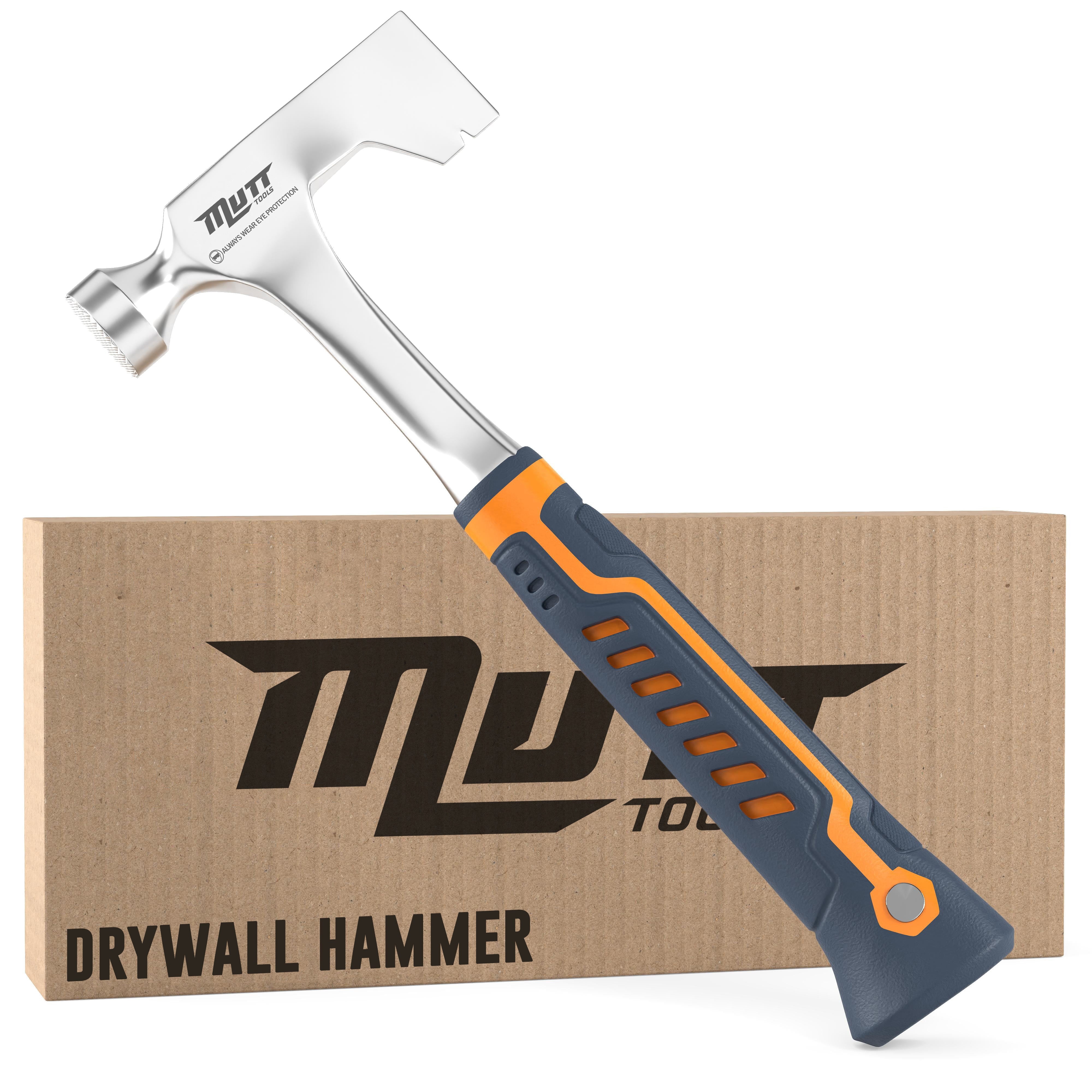
A drywall hammer, also called a drywall hatchet, is a specialized hammer for gypsum board work. It usually has:
- A flat or slightly convex striking face
- A sharp blade or hatchet edge
- A notch for pulling nails
- A light head and balanced handle
- A textured face or small dimple on some models
The face drives nails into studs. The blade cuts or trims drywall. The notch pulls nails from wood framing. The dimple helps set a nail head just below the paper surface without making a large hole.
A drywall hammer is not the same as a standard framing hammer. A framing hammer is heavier and built for wood framing. Its face and claw can damage drywall paper and crush the gypsum core.

What Is a Drywall Hammer Used For?
A drywall hammer is mainly used to fasten, cut, adjust, and repair drywall panels.
1. Driving drywall nails
The most direct use is driving drywall nails into a wallboard panel and the wood framing behind it. The hammer lets you attach the panel without a power tool.
Many U.S. drywall jobs now use screws. Nails are still useful for some repairs, small jobs, and certain framing conditions. Always use fasteners that match the panel, framing, and local building requirements.
2. Setting nail heads
A drywall hammer can sink a nail head slightly below the paper face. This creates a shallow dimple that can be covered with joint compound.
The goal is a small recess, not a deep crater. If you break the paper, the fastener may lose holding power and the area may need extra repair.
3. Cutting drywall
The sharp end can cut through gypsum board for:
- Electrical outlet openings
- Switch boxes
- Small access holes
- Door and window adjustments
- Damaged panel sections
For long, straight cuts, a utility knife and drywall saw usually give better control. The hammer blade works best for short cuts, rough openings, and quick trimming.
4. Pulling nails
The notch in the head can remove exposed drywall nails. This helps when:
- A nail is in the wrong place
- A panel must be removed
- A fastener sticks out
- A repair requires access behind the wall
Place a thin piece of wood or a putty knife under the hammer head when possible. This spreads pressure and reduces damage to the drywall surface.
5. Trimming and fitting panels
Drywall panels often need small changes before they fit. A drywall hammer can chip away a small amount of gypsum or trim a rough edge.
Use light taps. Heavy blows can crack the board or tear the paper face.
6. Tapping a panel into position
a light tap can close a small gap or bring a panel edge into line. Do not use the hammer to force a badly miscut panel into place. Cut the panel again instead.
7. Removing damaged drywall
The blade can help break and remove small damaged sections. Before cutting, check for pipes, wires, and other hidden services. A drywall hammer does not make hidden utilities safe to strike.

How Does a Drywall Hammer Work?
The tool combines the jobs of a light hammer, a small hatchet, and a nail puller.
Its striking face transfers force to the nail. Its sharp edge concentrates force along a narrow line, which lets you cut gypsum board with less effort. Its notch gives you leverage when pulling a nail.
The shape also protects the work. A drywall hammer has a smaller face than a general-purpose hammer, so it is easier to place the strike near a nail head. Some models have a rounded or textured face that helps create a neat recess.
The hammer does not replace every drywall tool. A utility knife makes cleaner long cuts. A drywall saw works better for enclosed openings. A screw gun is faster for large installations that use screws.

How to Use a Drywall Hammer Safely
Use the hammer with light, controlled strikes. Drywall is strong enough to form a wall but weak enough to crack under a hard blow.
To drive a drywall nail
- Place the panel against the framing.
- Confirm that the nail location is over solid wood.
- Hold the nail straight.
- Tap it until it is secure.
- Set the head just below the paper surface.
- Stop if the paper tears or the panel begins to crush.
The nail should hold the panel without breaking the face paper. A torn paper face can cause a visible bump or weak spot after joint compound dries.
To cut drywall
- Mark the cut with a pencil.
- Check both sides of the wall for wires and pipes.
- Score the face paper with a utility knife when possible.
- Use the drywall hammer or a drywall saw for the opening.
- Support the panel so it does not break in an uncontrolled way.
- Smooth loose paper and gypsum before finishing.
Wear safety glasses when cutting or striking drywall. Drywall dust can irritate the eyes and lungs. Use a dust mask or respirator that is suitable for the dust level, and improve ventilation.

Drywall Hammer vs. Regular Hammer
A drywall hammer is better for wallboard because it is light, narrow, and shaped for controlled work. A regular claw hammer can drive nails, but it may dent the panel or tear its paper face.
| Feature | Drywall hammer | Regular claw hammer |
|---|---|---|
| Main use | Drywall installation and repair | General construction |
| Head weight | Usually light | Varies from light to heavy |
| Face | Narrow and often shaped for drywall | Broad striking face |
| Cutting edge | Common on drywall hatchets | Usually absent |
| Nail puller | Small notch | Larger claw |
| Best control for drywall | High | Moderate to low |
| Risk of surface damage | Lower when used correctly | Higher |
A light trim hammer may work for a small repair. A drywall hammer becomes more useful when you need to set many nails, cut board, or remove old fasteners.

Drywall Hammer vs. Drywall Screw Gun
A drywall hammer is a manual tool. A drywall screw gun is a powered tool designed to drive drywall screws to a set depth.
Choose a drywall hammer when you:
- Need to make a small repair
- Work without power
- Remove nails
- Make a quick rough cut
- Install a few panels with nails
Choose a screw gun when you:
- Install many drywall panels
- Use screws rather than nails
- Need a steady fastening depth
- Want to reduce hand strain
- Need faster production
A screw gun does not replace the hammer for nail removal or small cuts. Likewise, a drywall hammer is slow for a large room with many panels.
What Features Should You Look For?
The best drywall hammer depends on your work, hand comfort, and level of control.
Weight
A lighter head reduces fatigue during long drywall jobs. A heavier head may drive nails with fewer swings but can cause more damage if your aim is poor.
For home repairs, control is usually more useful than maximum force.
Face shape
A rounded or textured face can help set nail heads. A flat face may provide a more familiar feel. The face should be narrow enough to reach the nail without striking a wide area of the panel.
Blade design
A sharp blade helps with rough cuts and trimming. It should have a safe, sturdy shape and a handle that gives you a firm grip.
Do not treat the blade as a general-purpose chisel. It can be damaged by striking metal, concrete, or hard framing hardware.
Nail notch
A strong notch makes nail removal easier. Check that the notch is large enough for the fasteners you expect to remove.
Handle and grip
A secure grip lowers the chance of glancing blows. Wood, fiberglass, and composite handles each have different feel and shock control. Look for a handle that stays comfortable during repeated use.

Common Mistakes to Avoid
Hitting too hard
Drywall does not need strong blows. Hard strikes can crush the gypsum core, break the paper, or drive the fastener too deep.
Breaking the paper
The paper face supports the surface finish. If you break it, cut away loose paper and fill the damaged area with the correct joint compound or repair product.
Using the wrong fastener
Drywall nails and screws come in different lengths and finishes. The fastener must suit the panel thickness and framing. Do not assume one size works for every wall.
Striking near hidden utilities
A hammer can puncture a pipe or damage a wire behind drywall. Check the wall before cutting or striking. Turn off power before working near electrical boxes, and stop if you find signs of a hidden service.
Using a drywall hammer on metal framing
Metal studs need fasteners and tools suited to metal framing. A drywall hammer may help with the board, but it is not a substitute for the correct screw or drill setup.
Treating the tool as a pry bar
The blade and nail notch can remove small fasteners. Do not pry large panels or heavy objects with the hammer. You may bend the tool or damage the wall.

When Should You Use a Drywall Hammer?
Use a drywall hammer for small to medium drywall tasks where control matters more than speed. It is especially helpful for nail-based work, patch removal, small cuts, and setting fastener heads.
For a large installation, combine tools:
- Use a utility knife for long scores.
- Use a drywall saw for openings.
- Use a screw gun for many screws.
- Use the drywall hammer for trimming, nail removal, and small adjustments.
- Use a taping knife and joint compound for finishing.
This tool works best as part of a set. It is not a complete drywall installation kit.

Key Takeaways
- A drywall hammer is made for installing and repairing gypsum wallboard.
- Its main jobs are driving nails, setting nail heads, cutting board, pulling nails, and trimming edges.
- Its light head and narrow face give better control than a standard framing hammer.
- Use light strikes to avoid crushing the gypsum or tearing the paper.
- A utility knife, drywall saw, or screw gun may be better for specific tasks.
- Check for wires and pipes before cutting or striking a wall.
- Wear eye protection and control drywall dust.
Frequently Asked Questions
Can you use a drywall hammer for drywall screws?
No. A hammer should not drive drywall screws. Use a screwdriver, drill, or drywall screw gun. A hammer can damage the screw head, the board, or the framing.
Is a drywall hammer the same as a drywall hatchet?
Usually, yes. “Drywall hatchet” describes the blade-like edge found on many drywall hammers. Names can vary by brand, but both tools are designed for similar drywall work.
Do professionals still use drywall hammers?
Yes, but their use depends on the job. Many professionals use screws and power tools for panel installation. They may still carry a drywall hammer for trimming, nail removal, small repairs, and setting fasteners.
Can a drywall hammer cut wood?
Its blade may make a small notch in soft wood, but that is not its intended use. A handsaw, utility knife, or wood-cutting tool is safer and more effective for wood.
What should you do if a nail sinks too deep?
Stop striking it. If the paper is intact, apply joint compound over the shallow recess. If the paper is torn or the gypsum is crushed, remove loose material and repair the damaged area before finishing.
Do you need a drywall hammer for a small wall repair?
Not always. A utility knife, drywall saw, screwdriver, and putty knife may be enough. A drywall hammer helps when the repair includes nails, rough cuts, or fastener removal.
Conclusion
A drywall hammer is a focused tool for gypsum wallboard work. It drives and sets drywall nails, makes rough cuts, pulls fasteners, and helps fit panels with controlled taps.
For a small U.S. home repair, it can save time and reduce surface damage compared with a heavy general-purpose hammer. Use light force, check for hidden utilities, protect your eyes and lungs, and switch to a knife, saw, or screw gun when that tool fits the task better.